
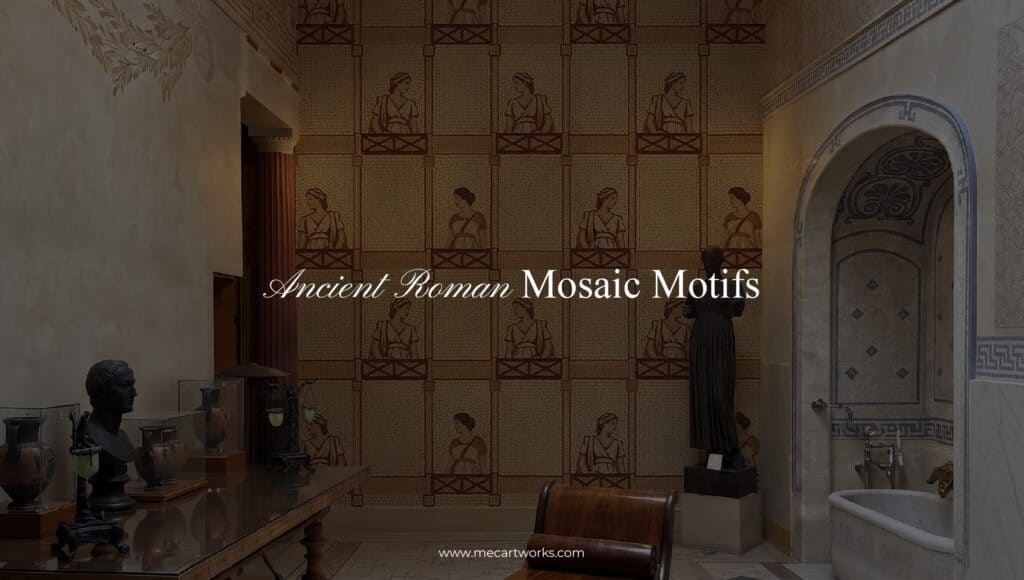
Ancient Roman mosaic motifs have a visual vocabulary that is easily recognized yet remarkably diverse. They include large-scale geometric borders, botanical and figurative designs, animals, sea creatures, and human figures. Their visual impact comes not only from the imagery but also from the craftsmanship behind each tessera, including its size, color, and direction.
These Roman mosaic motifs can be successfully used today as well. The repetition of wave motifs can serve to accentuate a swimming pool, the Greek key can decorate the marble floor, and figurative motifs will make any dull wall a work of art. In this blog, we will look into the patterns, materials, techniques, and imagery of Roman motifs and give tips on how to use them in contemporary interior design and architecture.
Table of Contents
What Are Ancient Roman Mosaic Motifs?
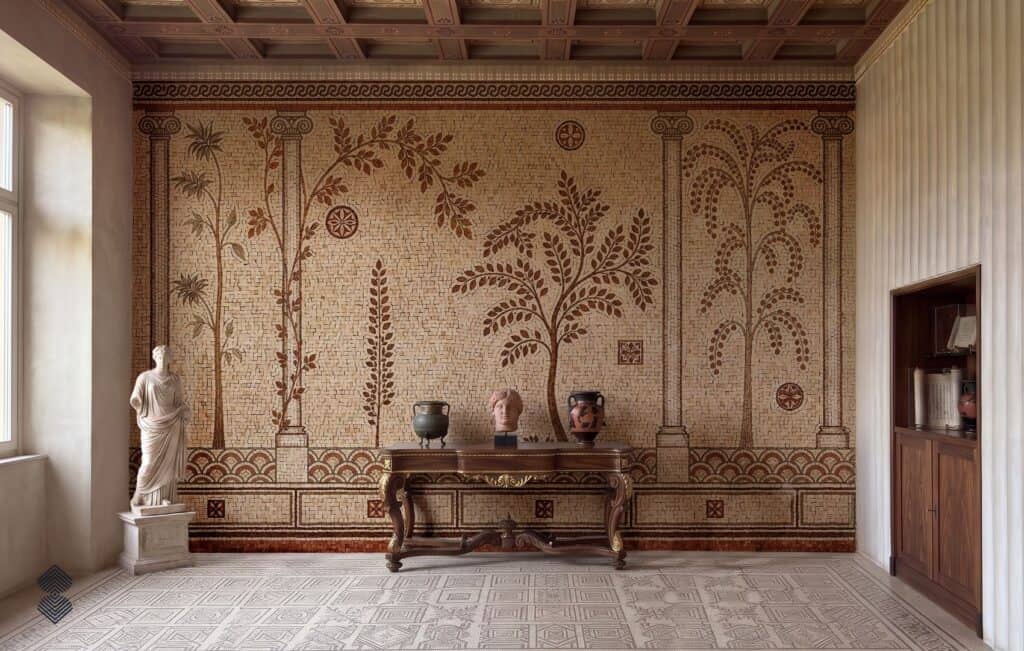
A motif is a recognizable visual element that forms part of a larger composition. In Roman mosaics, that could be something as simple as a repeating wave or as elaborate as a mythological figure. Common Roman motif families included:
- Geometric: Meanders, keys, stars, circles, checkerboards
- Botanical: Vines, laurel, leaves, flowers, acanthus
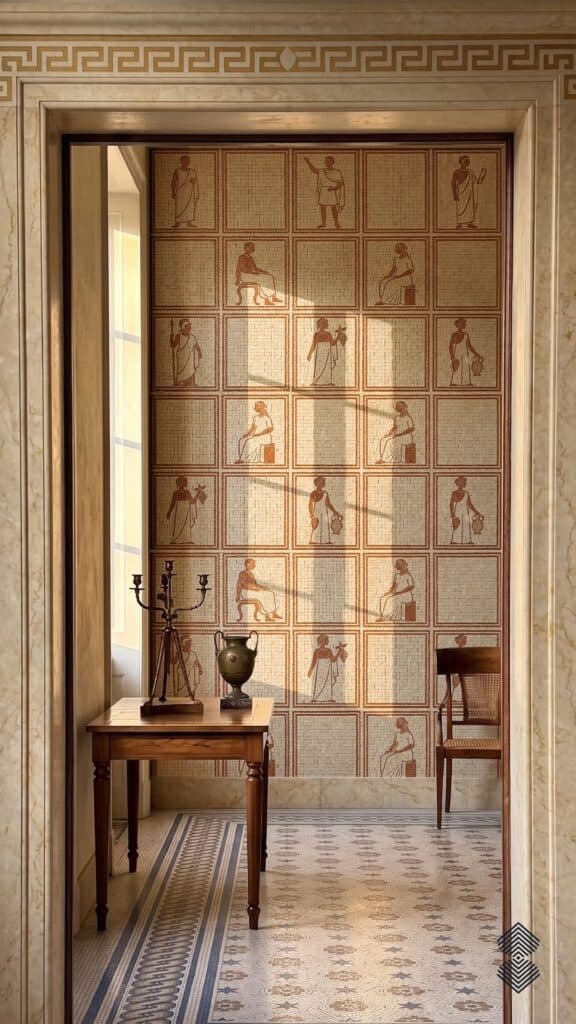
- Figurative: Human figures, gods, heroes, musicians
- Animal: Horses, birds, lions, hunting animals
- Marine: Fish, dolphins, waves, sea creatures
- Architectural: Columns, temples, niches, frames
- Decorative: Guilloche, waves, keys, braided bands
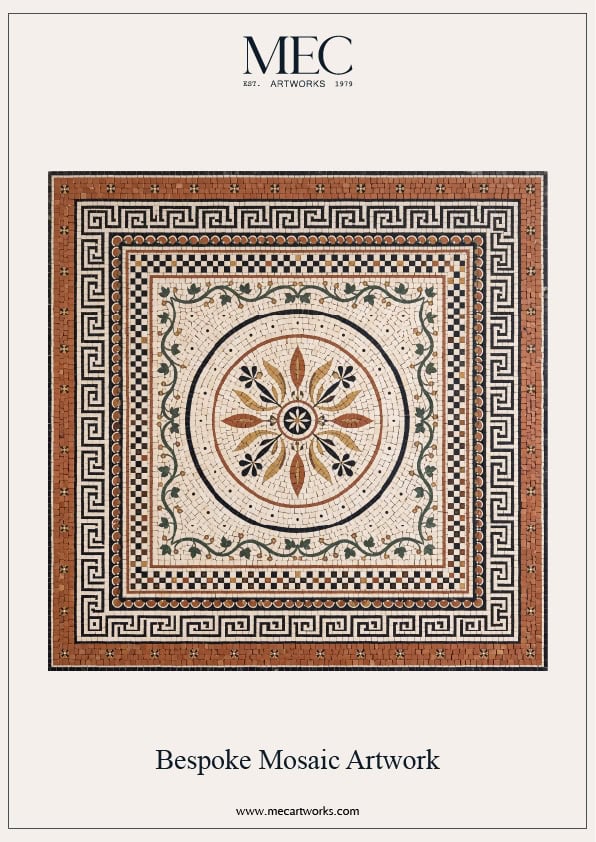
Roman designers tended to incorporate more than one of these groups into their designs. For instance, a Roman floor could feature a geometric frame that incorporates botanical details and culminates in a medallion in the form of figurative or floral design. This helps create balance and guide the viewer’s gaze towards the center of the design. Instead of enlarging one pattern across an entire foyer, several coordinated motifs can create a more balanced and visually detailed Roman mosaic art.
A Short History of Roman Mosaic Art
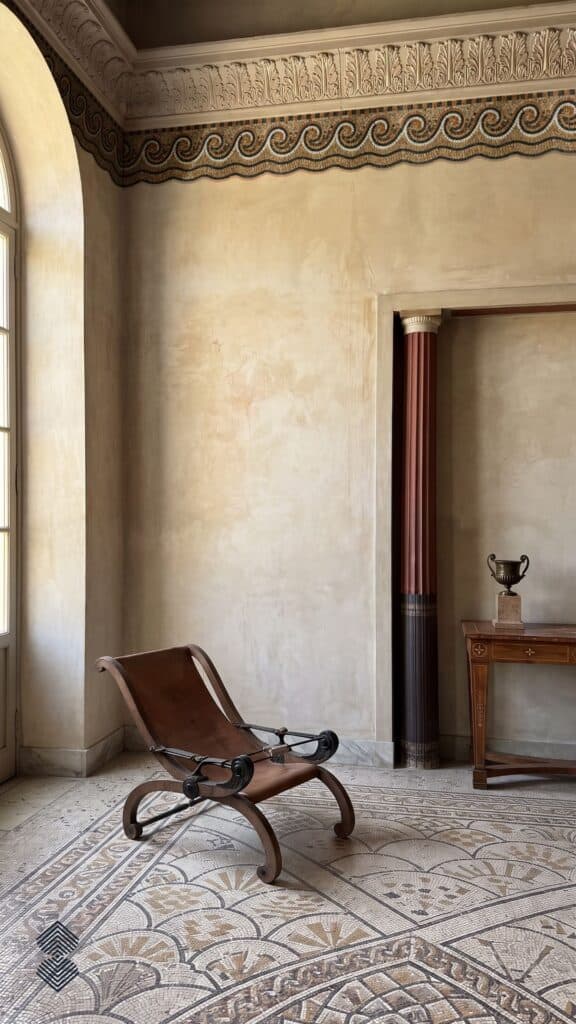
Roman mosaics did not just spring up out of thin air. They were made by a technique that was derived from previous Mediterranean mosaic-making techniques and later became an intrinsic part of Roman architecture. Early Greek pebble mosaics were made with stones that had their natural, smooth surface. With time, however, the practice emerged of cutting stone and marble into tesserae.
By the Roman period, mosaic had become a remarkably flexible architectural medium. The Getty notes that mosaic floors became closely associated with Roman culture, while surviving examples demonstrate a wide range of decorative and figurative compositions across the empire.
From Greek Influence to a Distinctly Roman Style
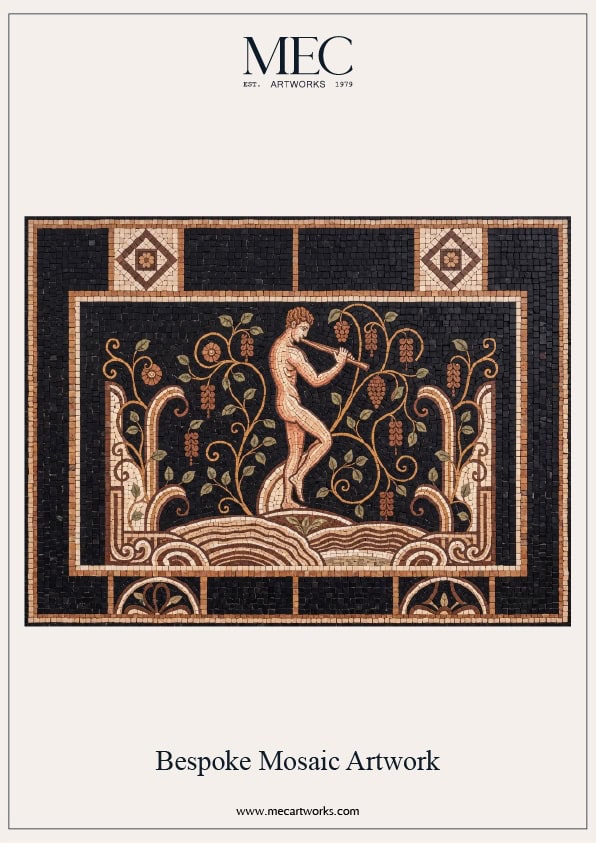
Greek and Hellenistic artists had already developed sophisticated pictorial mosaics before Roman workshops expanded the medium. The Romans adopted those traditions, but they also adapted mosaic to a much wider architectural vocabulary.
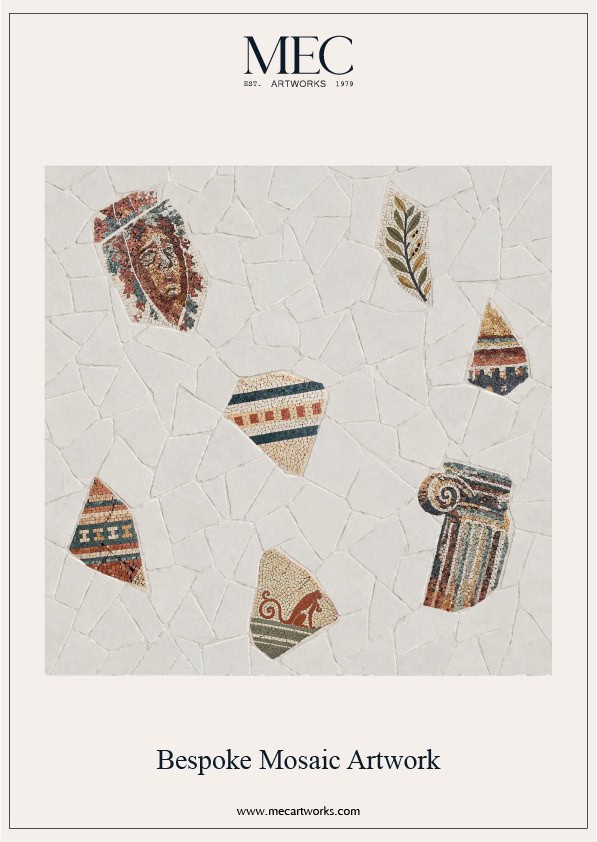
Some floors were highly pictorial. Others relied on black-and-white geometry. Many combined the two. This elaborate depiction, referred to as the emblema, may also occur on a more extensive flooring that is created using a greater number of tesserae. The design concept is refreshingly contemporary: create the most detailed area where you want the eye to focus, and keep the other areas simple. For instance, the Alexander Mosaic from Pompeii demonstrates the heights pictorial mosaic could reach.
How Mosaics Spread Across the Roman Empire
As Roman influence expanded, mosaic workshops operated across Italy, North Africa, Syria, Gaul, and other parts of the Mediterranean world. That didn’t create one universal Roman style. With each region, local mosaic materials mattered. So did workshop traditions, wealth, architectural setting, and regional taste. This is why imperial mosaics can share a recognizable visual language without looking identical. Over time, the Romans also expanded mosaic beyond flooring, using it across walls and other architectural surfaces. Today, ancient Roman mosaic motifs can be adapted for feature walls, alcoves, bathroom panels, pool surfaces, and decorative mosaic wall art.
The Materials and Techniques Behind Ancient Roman Mosaics
The subject alone does not define ancient Roman mosaic motifs. Tessera size, color, and placement also shape the final design. Larger tesserae create bold forms, while smaller pieces allow finer lines, shading, curves, and intricate details.
Tesserae Cut From Stone, Marble, and Glass
The Romans employed a variety of substances in their mosaic art, such as stone, marble, terracotta, and glass. The choice of materials differed depending on the job at hand and the location. Stone and marble proved ideal for flooring purposes since they could give a range of colors such as pale creams, ochres, reds, browns, gray, green, and almost black.
Glass expanded the available color and reflective possibilities. Roman artisans also used glass in architectural wall and ceiling mosaics. The difference becomes clear in design terms. A contemporary interpretation can also combine materials selectively rather than treating every area equally. MEC’s materials guide for mosaic tiles provides further context for choosing materials according to the intended surface and design.
Opus Vermiculatum and Opus Tessellatum Explained
There are two terms that frequently come up when discussing historic Roman mosaic technique: opus tessellatum and opus vermiculatum. Opus tessellatum involved the use of larger cut tesserae, which were commonly employed on floors and geometric borders. Opus vermiculatum, in contrast, used much smaller tesserae arranged closely around forms. This allowed artisans to create finer curves, detailed figures, facial features, shading, and more painterly effects.
The Roman Mosaic Patterns Found on Floors and Borders
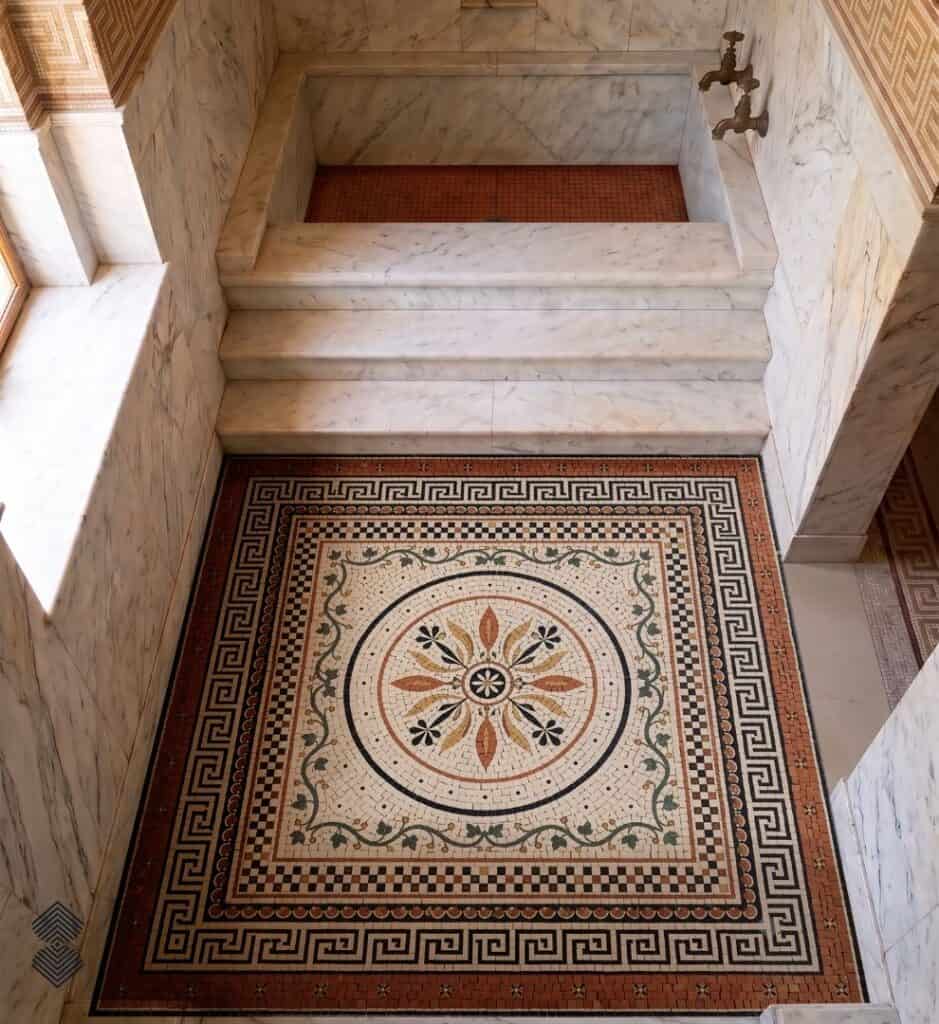
Patterns in Roman mosaics were varied, ranging from basic geometric borders to complex botanical and historic representations. The patterns served the purpose of demarcating spaces, framing focal points, and introducing rhythm.
Geometric Borders and Guilloche Designs
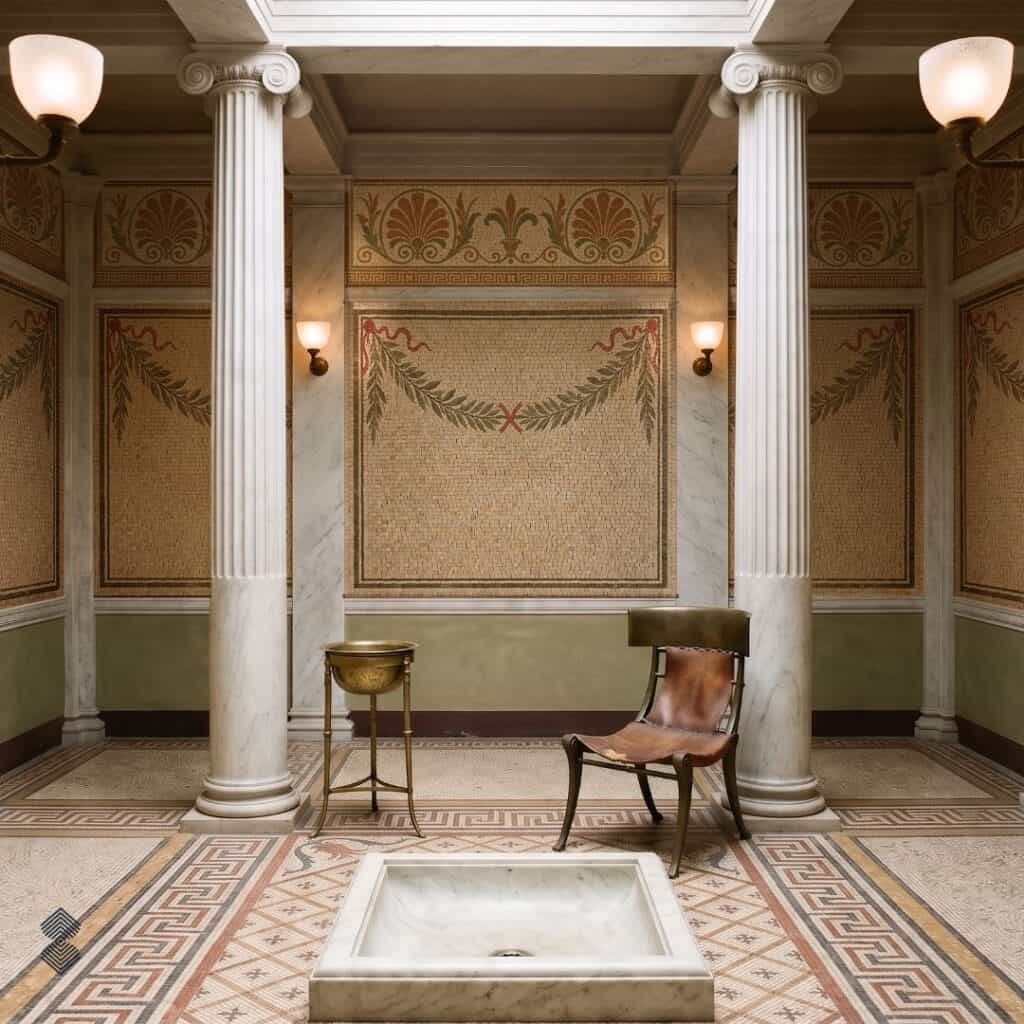
A border does more than decorate an edge. It tells your eye where one visual zone stops and another begins. A guilloche or braided band can create continuous movement. Checkerboard bands add sharper contrast. Circular motifs interrupt long straight runs. Floral scrolls can soften a rigid rectangular framework. One floor can contain several borders without looking excessive if each band has a job. The Eubea Bruno Roman mosaic floor demonstrates how a Roman-inspired floor treatment can turn pattern into a complete architectural composition rather than a thin decorative outline. For a large room, think in layers:
architecture → perimeter → secondary border → field → medallion.
That sequence helps a detailed floor feel controlled.
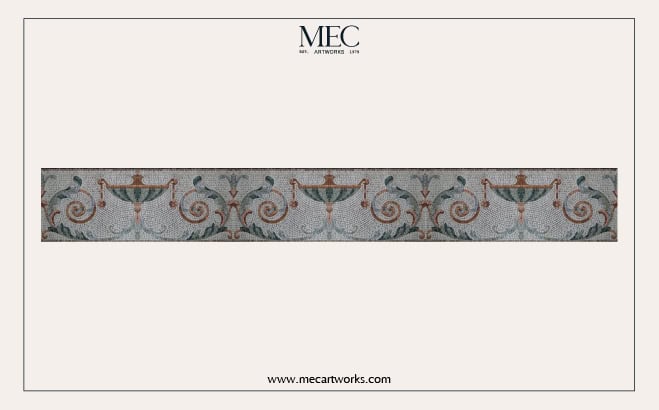
Key, Wave, and Meander Motifs
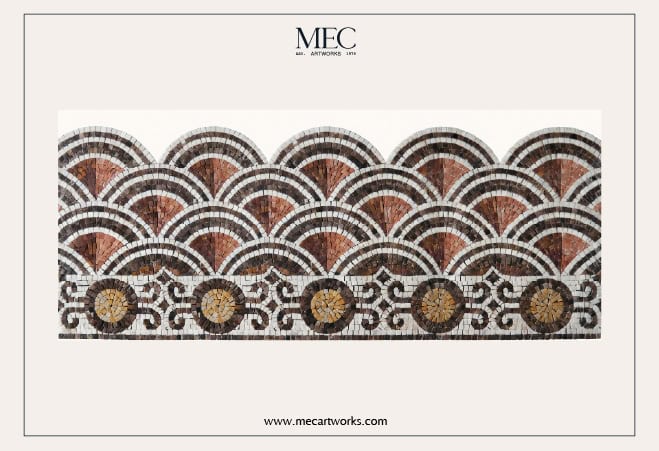
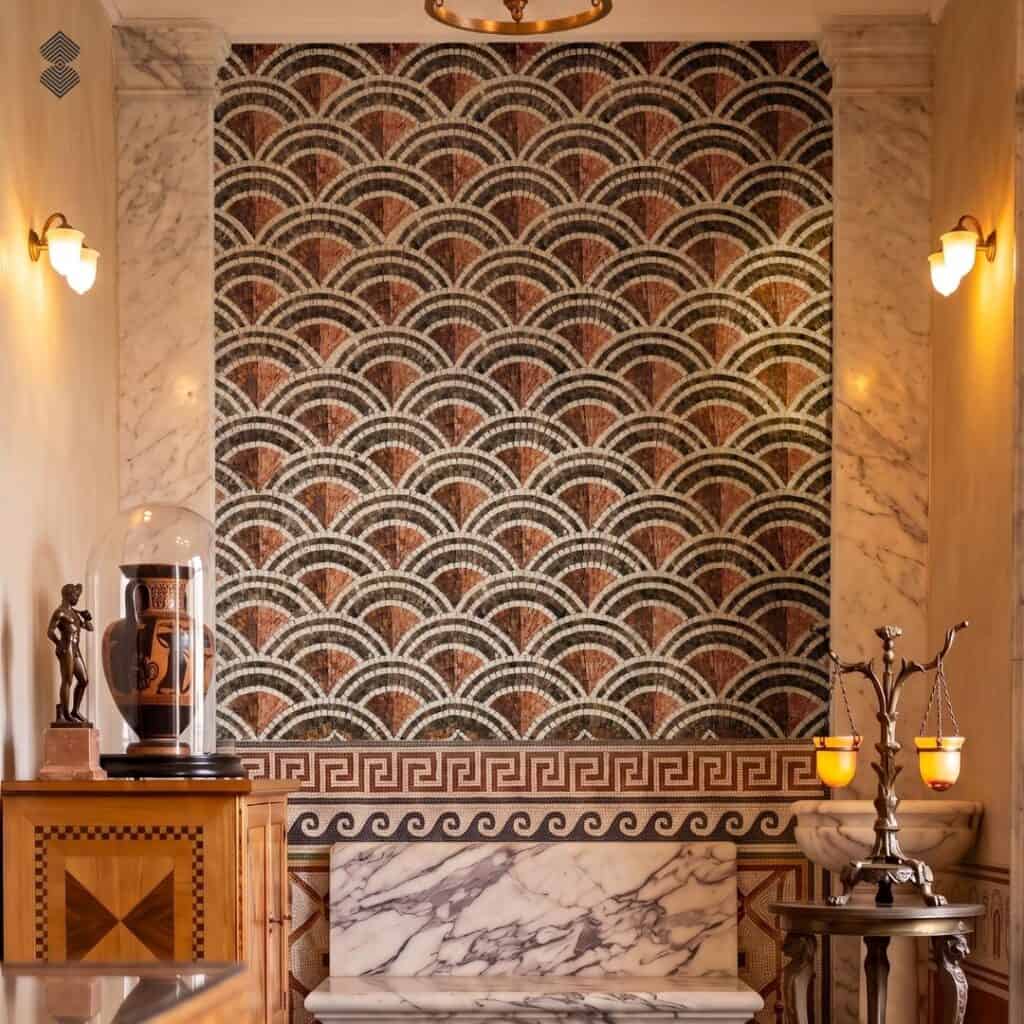
The meander, often called the Greek key, creates movement using right angles. Its strength lies in repetition. A wave border does almost the opposite. Instead of turning sharply, it rises and falls continuously. These designs work because repetition creates continuity.
If a corridor measures several yards long, you don’t necessarily need a large narrative scene stretching across it. A repeating wave, guilloche, or meander can carry the eye through the architecture more naturally. The Laurel Frieze mosaic offers another way to treat a long linear area. Botanical repetition can provide rhythm without the rigidity of pure geometry. The Palladian Star mosaic can likewise inform projects where the design needs a stronger geometric focal point.
Mythological and Figurative Scenes in Roman Mosaics
Roman mosaics depicted mythology, nature, arena spectacles, daily life, and other subjects. These images didn’t exist separately from the architecture. Their placement could influence how visitors encountered them.
Gods, Heroes, and Epic Narratives
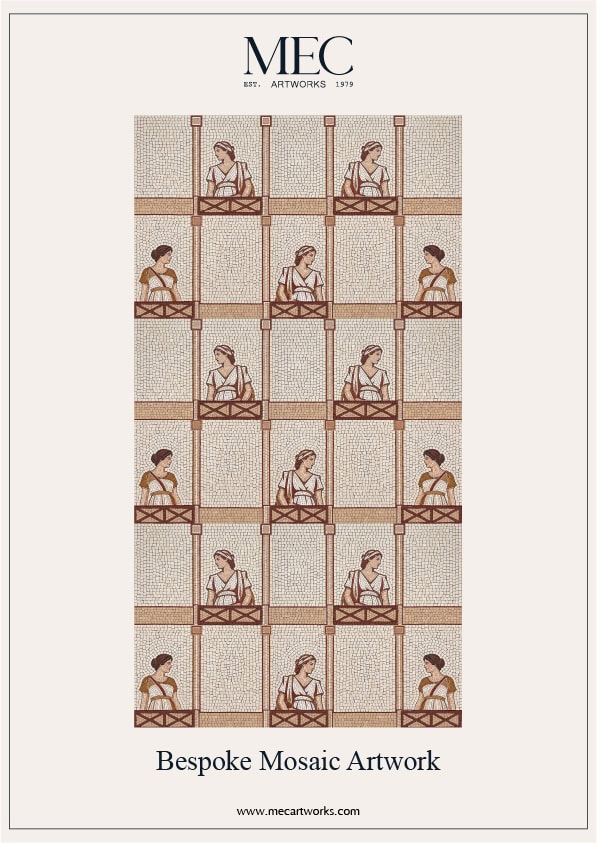
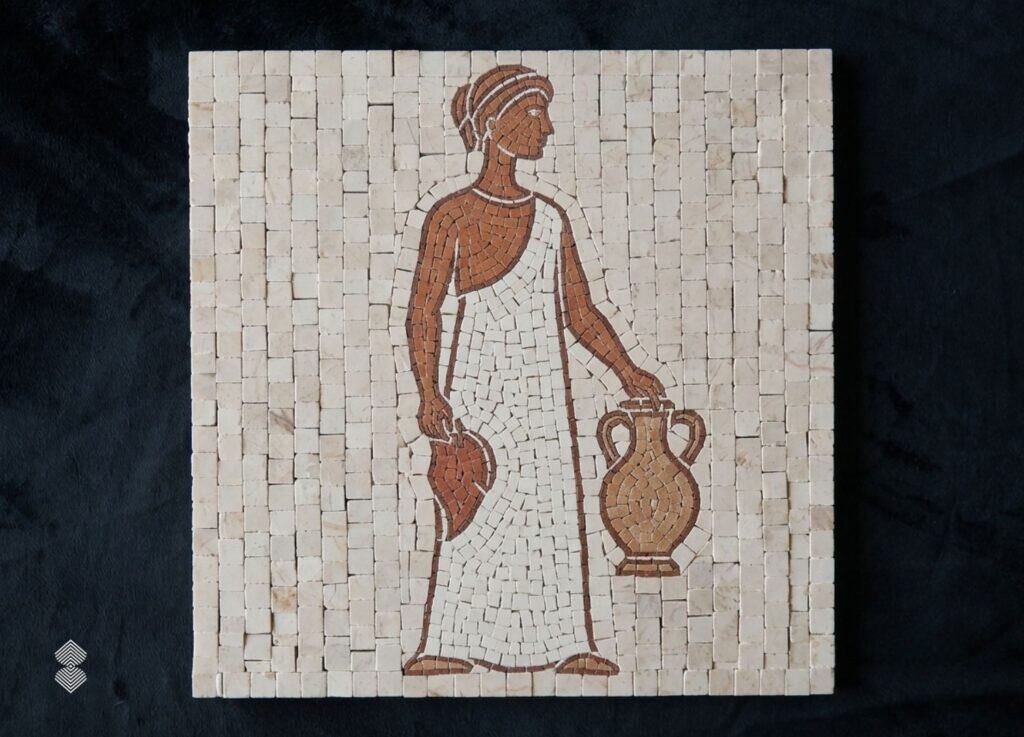
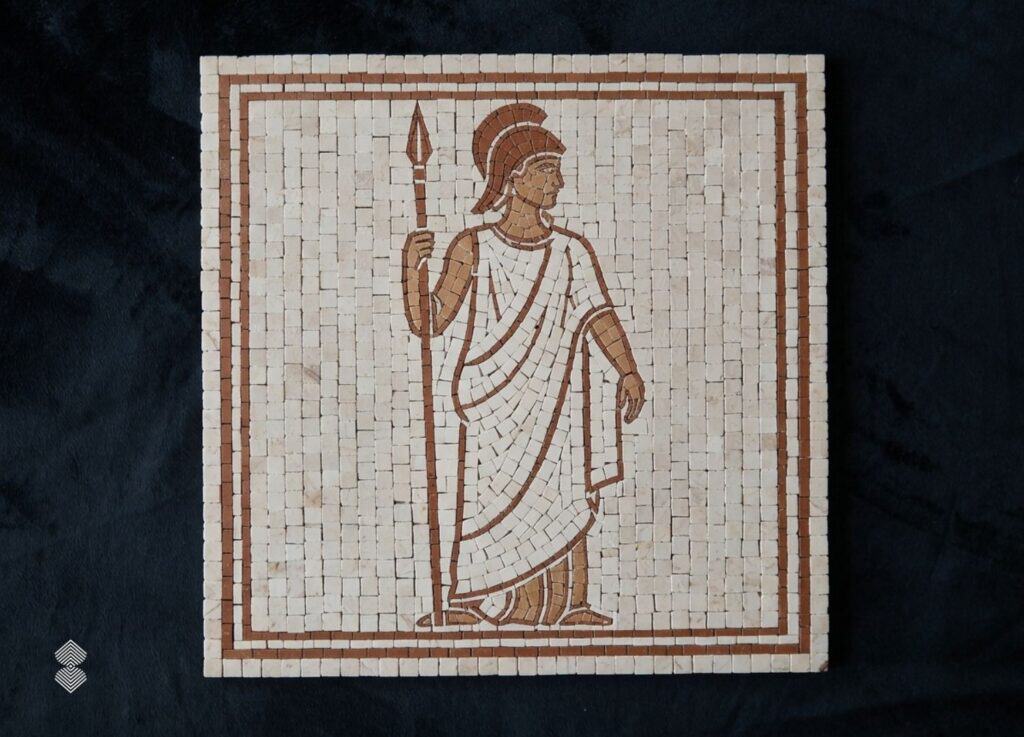
Myth offered Roman mosaicists an enormous visual vocabulary. Gods, heroes, monsters, personifications, and legendary episodes could occupy central panels or larger narrative compositions. But figurative design requires restraint.
If you’re developing a Roman-inspired interior today, first decide what should be read from across the room. Don’t begin by asking how much detail can physically fit into the mosaic.
- A standing figure may need a strong silhouette.
- A face needs finer tesserae.
- Clothing needs directional movement.
- Architectural details need clear perspective.
- Backgrounds may need less information so they don’t compete with the subject.
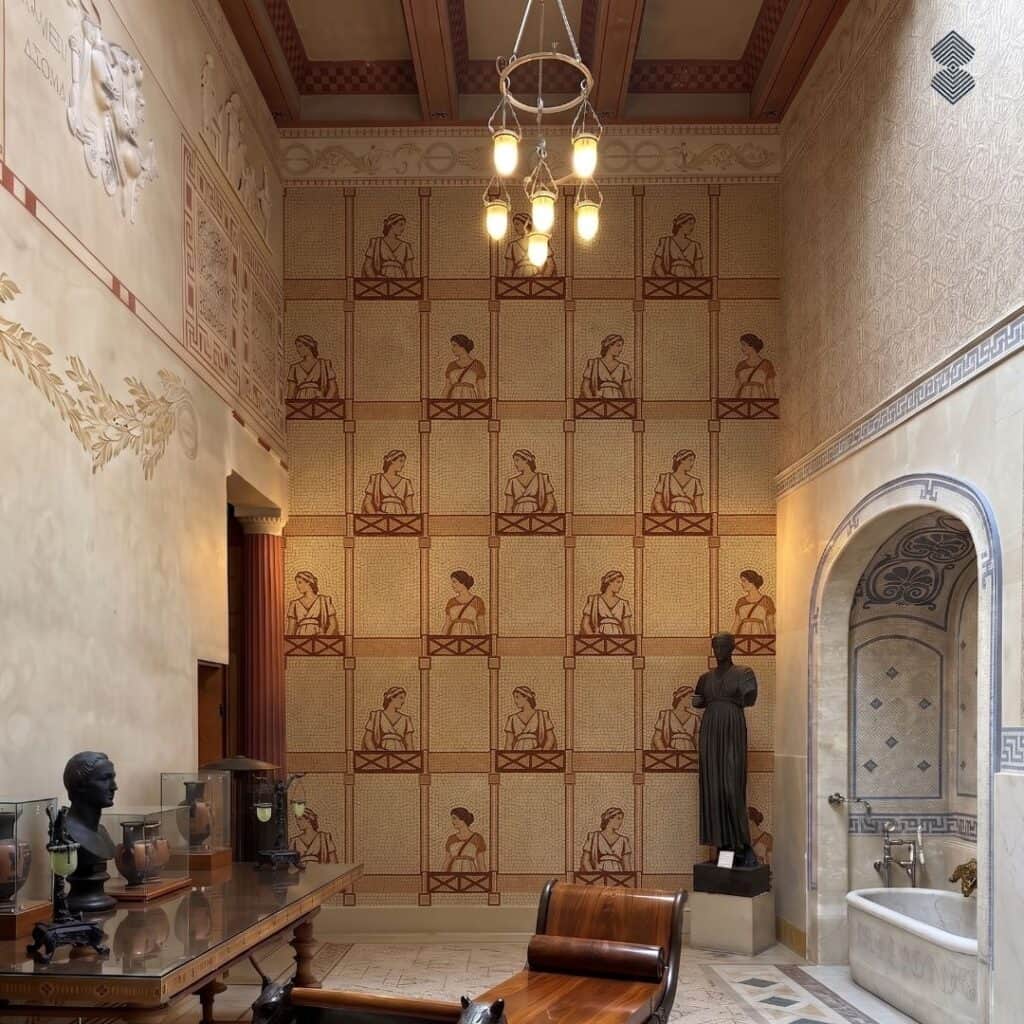
The Roman Temple Scene mosaic mural is useful in this context because architectural imagery can provide structure around the figurative subject. The Roman Sanctuary art mosaic provides another example of translating Roman visual references into a complete scene.
Gladiators and Amphitheater Scenes
Roman entertainment also supplied subjects for mosaics. Arena spectacles, athletes, hunters, and animals could document public entertainment while creating highly animated compositions. These subjects require different visual pacing from a standing portrait.
Spears, shields, horses, running animals, and turning figures create strong diagonal movement within ancient Roman mosaic motifs. These lines can make a rectangular floor feel more dynamic. When adapting such scenes today, leaving open space around the action helps the main figures remain clear and visually engaging.
Marine Life and the Roman Ocean Mosaic Tradition
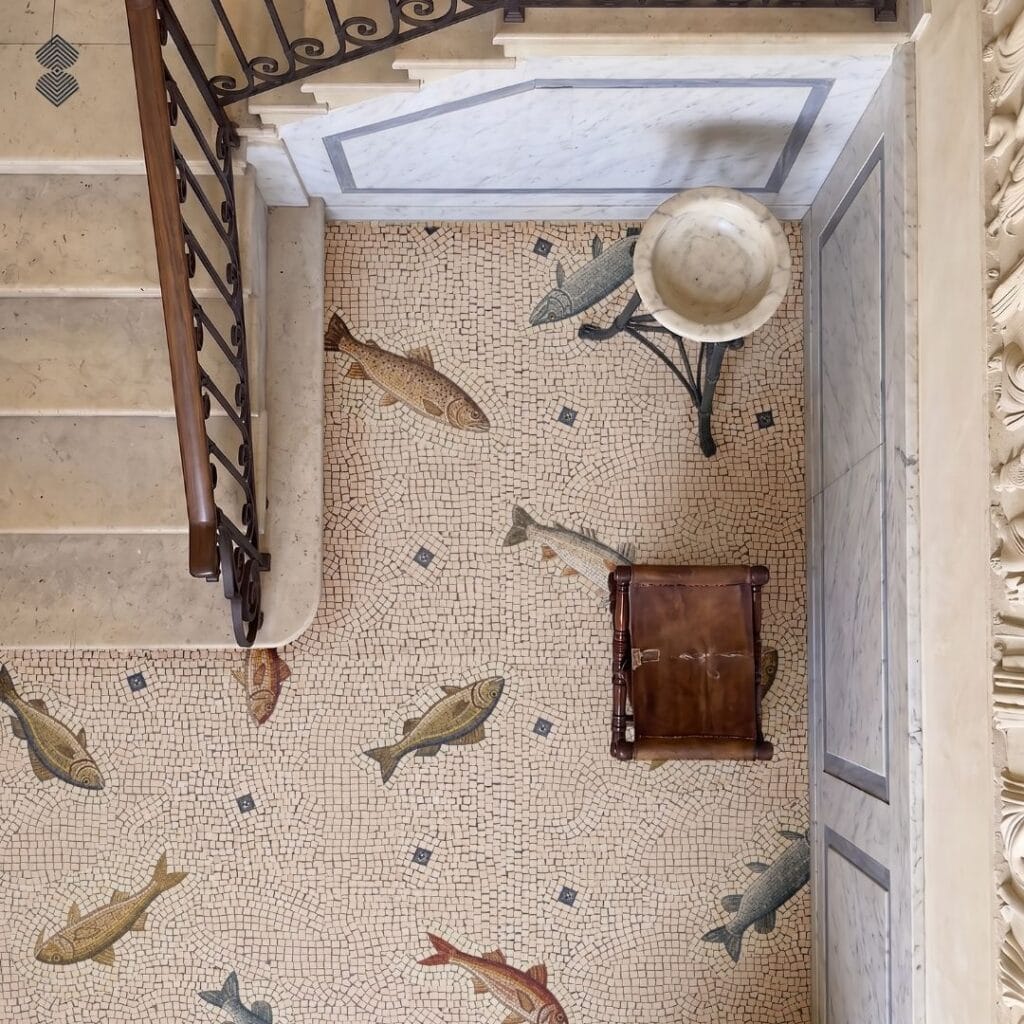
Fish, dolphins, sea creatures, water forms, and marine divinities suited Roman mosaic particularly well. Curving rows of tesserae naturally describe fins, tails, ripples, and waves. The subject also made contextual sense in baths and water-related spaces. The Met notes that marine themes commonly appeared in Roman baths.
This historic relationship makes marine Roman imagery especially relevant to contemporary pools. A Roman mosaic designed for a swimming pool can borrow the language of antiquity while adapting the scale, material, and layout to a modern water environment. Moreover, you don’t need to cover the entire pool with a figurative scene. A wave border at the waterline, a central medallion, or a restrained marine motif can communicate the reference more quietly.
How Roman Mosaic Motifs Varied by Region
The Roman Empire covered a vast territory, so ancient Roman mosaic motifs did not follow one universal style. Workshops across different regions adapted Roman design traditions to local materials, subjects, client preferences, and artistic practices.
Pompeii and the Bay of Naples
Pompeii is also one of the richest sources for the use of mosaics in Roman domestic interiors. In Pompeii, geometric floors can exist side-by-side with extremely elaborate pictorial schemes. The Alexander Mosaic shows that the translation of paintings into tesserae can be quite ambitious.
For designers, the Pompeian examples remind us that details need somewhere to rest. A highly detailed central panel gains impact when simpler fields or borders surround it. That same principle can guide a contemporary Roman mosaic floor medallion design. Rather than filling the entire floor with equal complexity, reserve the finest work for the medallion. Use quieter geometry to connect it with the room.
North African Mosaic Workshops
North African workshops developed particularly rich mosaic traditions. Most mosaics survive from the Roman provinces of North Africa than from any other part of the empire. Early examples drew from Italian black-and-white geometric traditions. Regional workshops later developed colorful figural and decorative styles with vegetal forms and strong polychromy.
Local access to colored limestone and marble helped support that richer palette. Hunting scenes, animals, estates, daily life, and other narrative subjects became particularly notable. This regional variation matters when selecting a historical reference. If a client says, “We want a Roman mosaic,” that’s only the beginning of the design conversation. The next questions should be:
- Do you prefer geometry or figures?
- Should the palette feel restrained or polychrome?
- Is the reference Italian, North African, or broadly classical?
- Do you want a central medallion or an all-over field?
- Should the mosaic look archaeological or newly composed?
- Will it sit on a floor, wall, niche, or pool surface?
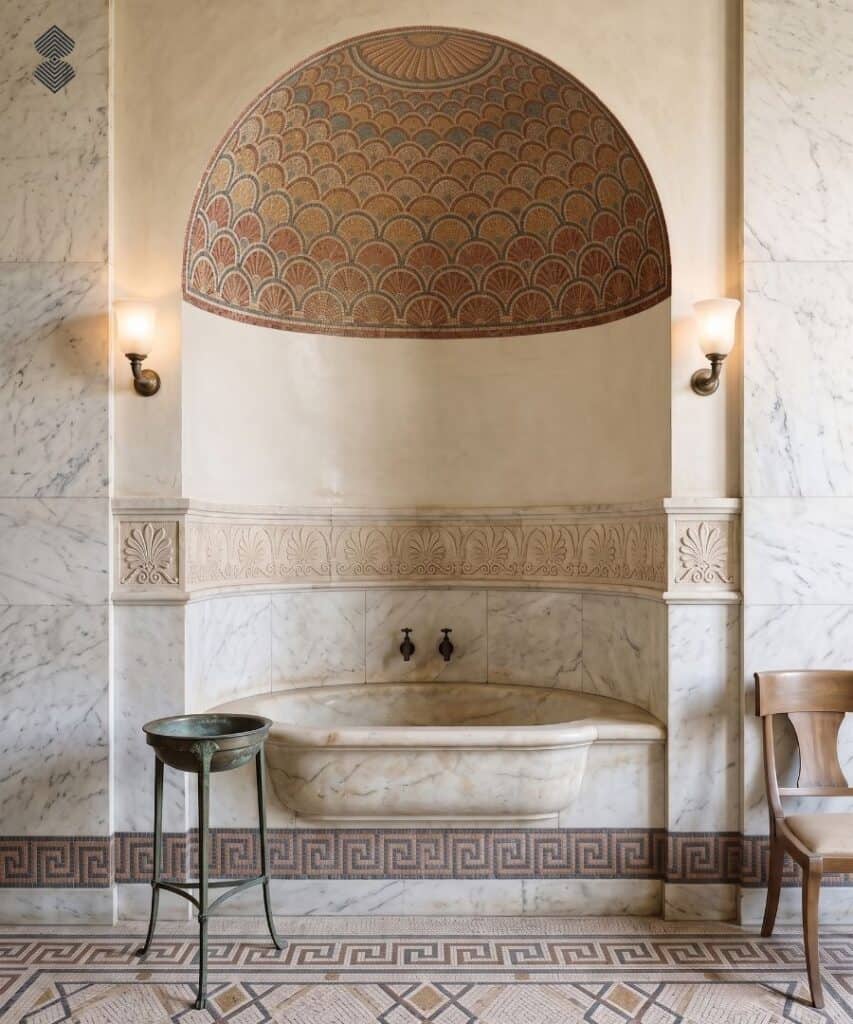
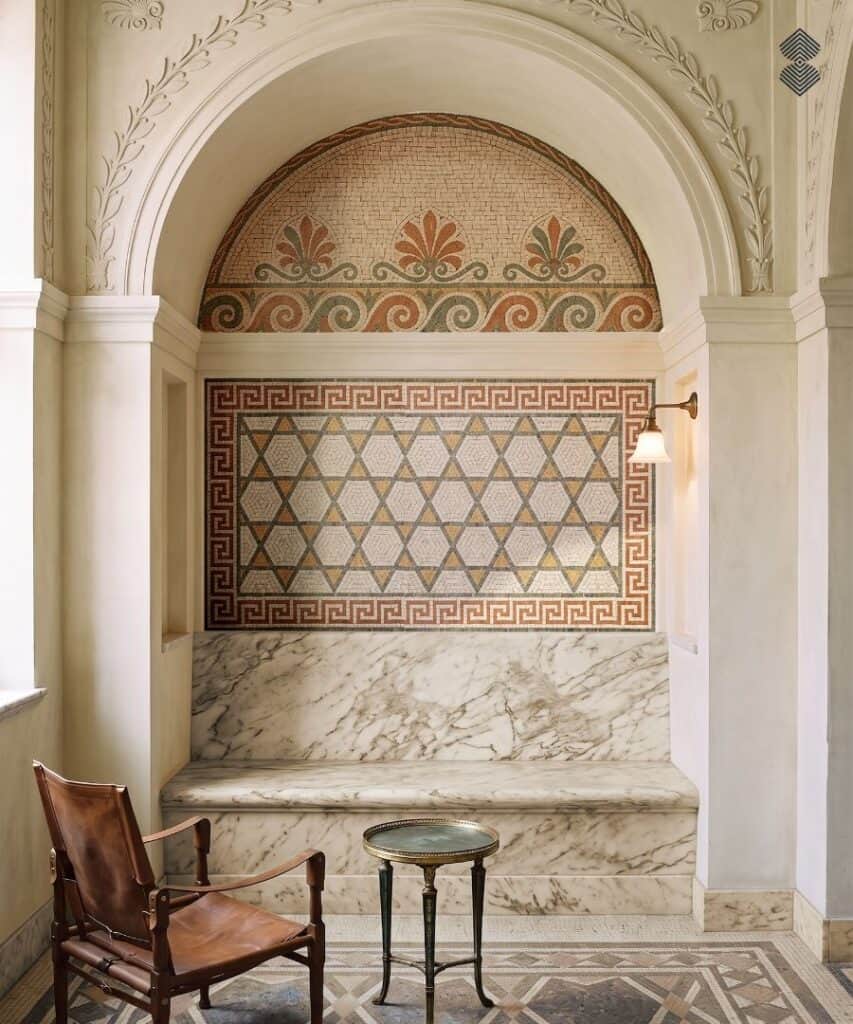
Bringing Ancient Roman Mosaic Motifs Into a Modern Space
A modern Roman-inspired mosaic doesn’t need to copy an ancient design exactly. Instead, you can adapt key elements such as geometric borders, botanical motifs, classical figures, or marble medallions to suit the space. This is how to recreate Roman mosaic motifs today while keeping the design contemporary.
Roman Motifs on Floors, Medallions, and Wall Panels
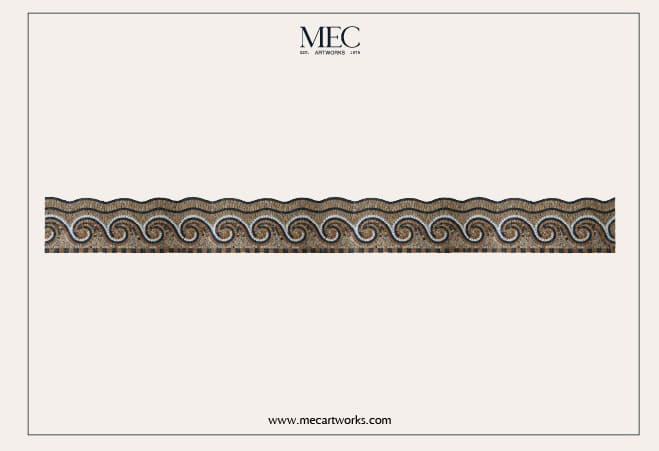
Floors remain one of the most natural places for Roman patterns. Historically, mosaics could communicate with visitors as they moved through a space. The Met describes elaborate Roman floors as a visible part of domestic life and a way for wealthy owners to impress guests. In a modern project, start with the room rather than the motif. Measure:
- Overall floor dimensions
- Door openings
- Furniture placement
- Main viewing direction
- Thresholds
- Columns
- Fixed cabinetry
- Changes in flooring
- Intended border width
Then establish hierarchy. A large entrance hall may support a substantial central medallion. A narrow corridor probably needs a directional border. A dining room could benefit from a rug-like mosaic composition that relates to the furniture footprint. The Silvio Roman marble rug mosaic shows how the idea of a Roman patterned floor can become a defined rug-like architectural feature.
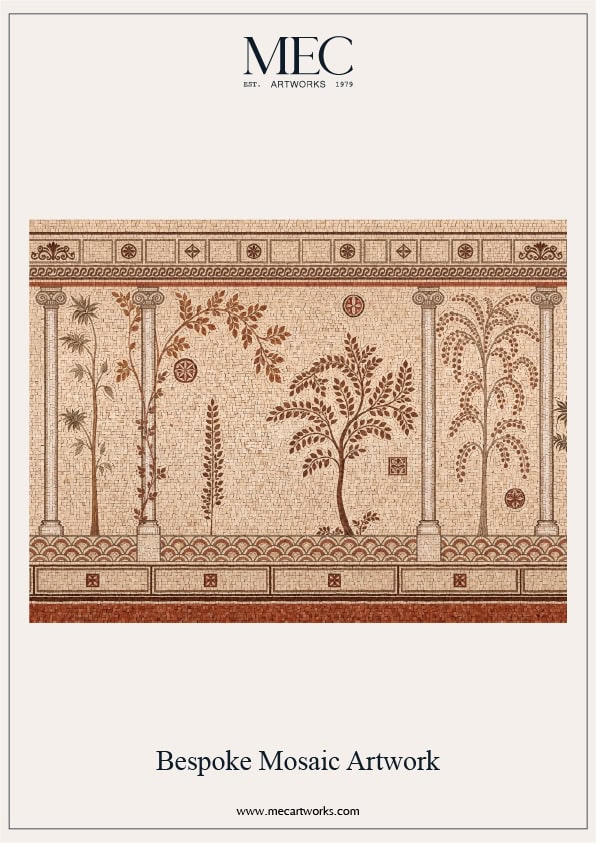
Additionally, a wall changes how you read mosaic. You don’t walk over it. You face it. That makes finer figurative detail easier to appreciate and opens possibilities for portraits, temples, botanical scenes, and architectural compositions. The Roman niche mosaic for a wall feature demonstrates how Roman references can move vertically rather than remaining tied to floors. When designing wall art with ancient Roman mosaic motifs, viewing distance is important. A large mural viewed from 15 feet away needs larger tesserae and clearer forms, while a niche viewed up close can support finer details. The tessera scale should always match how the artwork will be experienced.
Choosing Materials That Match the Ancient Palette
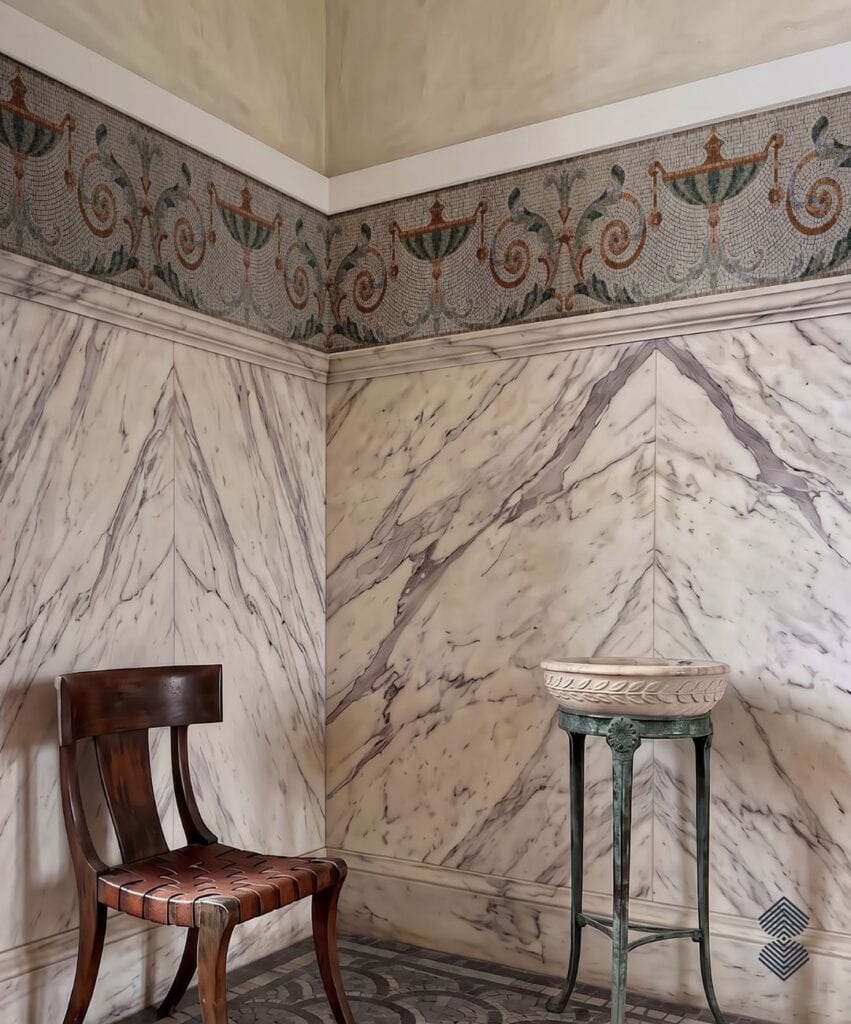
If historical character matters, start with the palette before obsessing over the motif. Cream, ivory, terracotta, black, warm brown, muted green, ochre, and stone red can establish a Roman character even before a recognizable pattern appears. The supplied artworks demonstrate this well.
Their colors don’t scream. Instead, dark outlines control the drawing while warm earth tones establish hierarchy. Pale stone provides breathing room. A project doesn’t need artificial aging to feel historically informed. Natural stone variation already introduces small changes in tone. Hand cutting adds another layer of irregularity. Together, those differences prevent the surface from feeling mechanically printed. The Timeless Roman mosaic art in marble provides a useful reference for carrying this material character into a contemporary piece.
Final Thoughts: Why Roman Mosaic Motifs Still Endure
Ancient Roman mosaic motifs have endured because their design principles still work. Repetition creates rhythm, borders add structure, contrast guides the eye, and tesserae create movement. Today, these motifs can be adapted as geometric borders, classical figures, floor medallions, or marine-inspired pool designs without simply copying the past.
FAQs
What Do the Colors in a Roman Mosaic Traditionally Mean?
The colors used in Roman mosaic art were not always associated with only one particular symbolic meaning. The color selection would often depend on the subject matter, the materials available, and the desired effect. The colors black and white formed excellent geometric designs, while red, yellow, green, and blue aided in creating depth in people, flora, fauna, and architecture.
Can a Roman mosaic motif be recreated for a modern floor?
Yes. Ancient Roman mosaic motifs can be adapted to the dimensions and architecture of a modern floor. A designer can recreate a complete composition or select individual elements such as a meander, botanical border, wave, medallion, or figurative centerpiece. Before fabrication, you can also use the MEC AI Mosaic Studio to visualize how a Roman-inspired motif could look within your space. This helps explore the pattern, placement, scale, and overall design direction before developing the final mosaic.
What materials are used to recreate an ancient Roman mosaic pattern today?
Marble and other stone materials can provide the mineral color variation associated with historic Roman floors. Glass can add stronger color and reflection, particularly on walls and water-related surfaces. The final choice depends on the design, location, exposure, substrate, and desired finish.
How long does a custom Roman mosaic take to make?
There isn’t one reliable production time for every custom Roman mosaic project. A simple repeating border requires far less design and fabrication work than a large hand-cut figurative scene. The time required depends on the dimensions, size of the tesserae, materials used, level of detail, number of people involved, color scheme, number of changes, fabrication techniques used, and logistical planning. A specific timetable for the project should, therefore, be set once the artwork and its dimensions have been decided upon.
Are Roman mosaic designs suitable for pools or outdoor spaces?
Yes, but only if the system of mosaic is appropriate for the use. When used for pools and outdoor applications, the material used, waterproofing, substrate preparation, grouting, movement joints, and exposure conditions must be carefully considered. You can also book a consultation with our designers to discuss your space, preferred Roman motif, materials, and the best approach for your project.