
Mosaic tile for cafe interiors works best on counter fronts, backsplashes, entrance floors, feature walls, and other surfaces where material, pattern, and detail can become part of the café’s identity. Glass and marble can be selected according to the surface, level of wear, and overall design concept.
In modern cafés, mosaic pairs well with clean layouts, sculptural furniture, light color palettes, and carefully selected materials. This contrast brings the character of a centuries-old craft into a contemporary setting.
Thereby, designers can combine an old craft with the contemporary cafe interior. For those who work with the modern interiors of cafes, there appears to be an opportunity to discuss the use of mosaic art in the interior design of modern cafes. The blog is all about you. It will discuss where mosaic is most suitable, what design trends complement cafes today, and how the use of glass and marble affects the entire aesthetic.
Table of Contents
Why Mosaic Tile for Café Interiors Works So Well
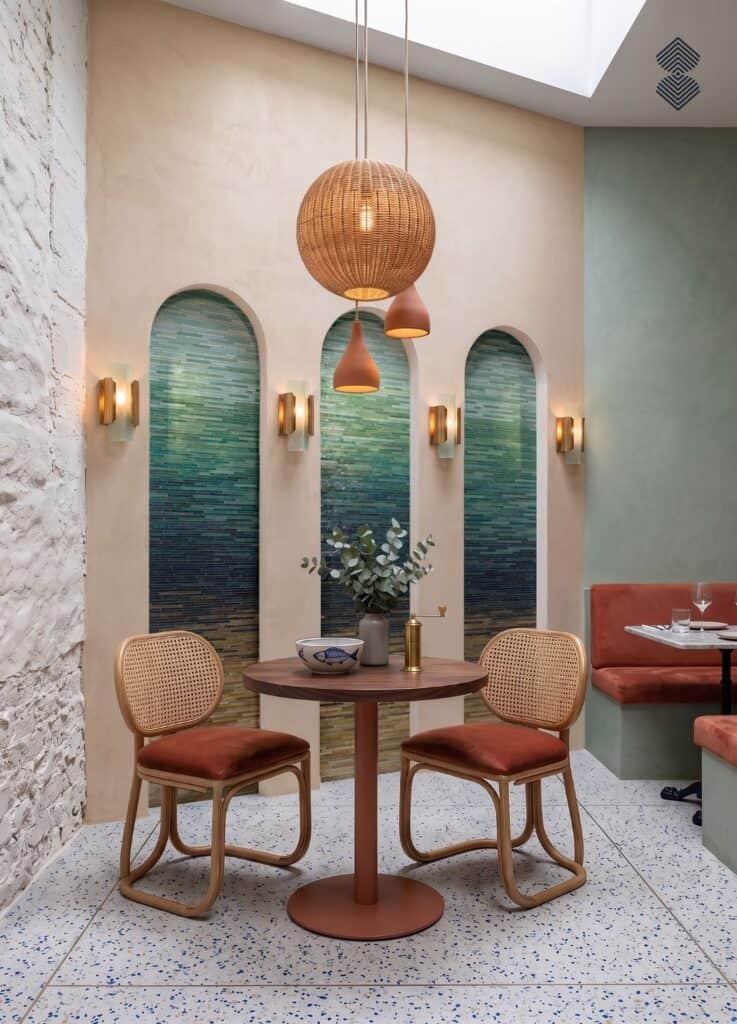
Today, people connect with cafés through more than coffee. They start noticing the mood of the place, the colors, the materials, art, and other small design elements. Since a customer might stay at a café for up to an hour in order to chat, work, read, or just rest, the interior will become part of the total experience.
Modern cafe design often prefers minimalistic furniture, cozy lighting, natural textures, and well-selected accents. Mosaic art is one more thing that can be used to make this experience even richer. This way, mosaic provides color, texture, and high-quality craftsmanship and offers customers something to see during their stay. For example, a large mosaic wall composition can become a focal point on a blank wall. A patterned floor can direct a visitor’s view throughout the cafe space, while tiny tesserae can create images, text, or other details.
For designers, the key is balance. Mosaic doesn’t need to cover every surface to make an impression. In fact, one thoughtfully designed feature often creates a stronger connection when the surrounding materials remain quieter. This allows the mosaic to feel like a piece of contemporary art within the café rather than simply another decorative finish.
Where to Use Mosaic Tile in a Café
Not every surface needs the same treatment. A floor experiences shoes, grit, spills, furniture movement, and cleaning. A backsplash has different demands. A decorative wall can prioritize visual detail because it doesn’t receive the same wear. Designers should therefore specify mosaic according to location first and appearance second. Some of the mosaic applications we commonly recommend to our clients, as well as those frequently requested for café projects, include:
Counter Fronts and Bar Facades
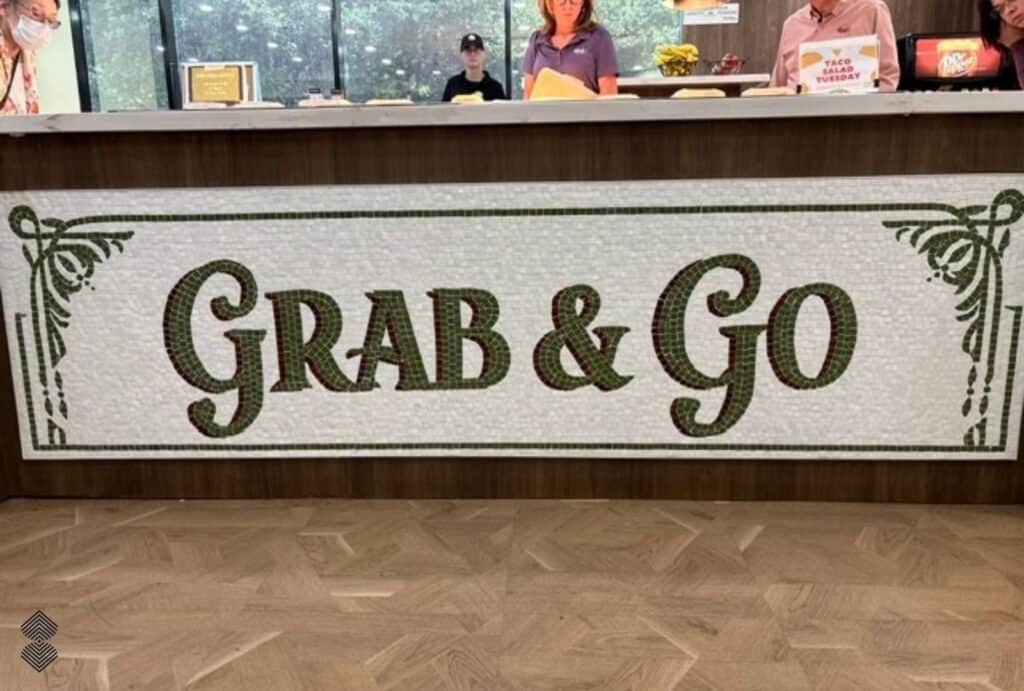
The counter can be one of the best places where mosaic art can be introduced in a café. All customers have to visit the counter to order their drinks or pay for them; therefore, this can be one of the most viewed surfaces in the café. A hand-cut mosaic backsplash on the counter or mosaic facade of the counter can make the counter an eye-catching element for the customers.
Moreover, the size and shape of the counter should guide the pattern when using mosaic tile for cafe interiors. A long counter can carry larger repeats or sweeping forms, while a compact coffee bar often works better with smaller patterns. Countertop edges, trims, corners, toe kicks, and access panels should also be considered so the artwork flows naturally across the surface. On curved counters, smaller tesserae can follow the form more smoothly.
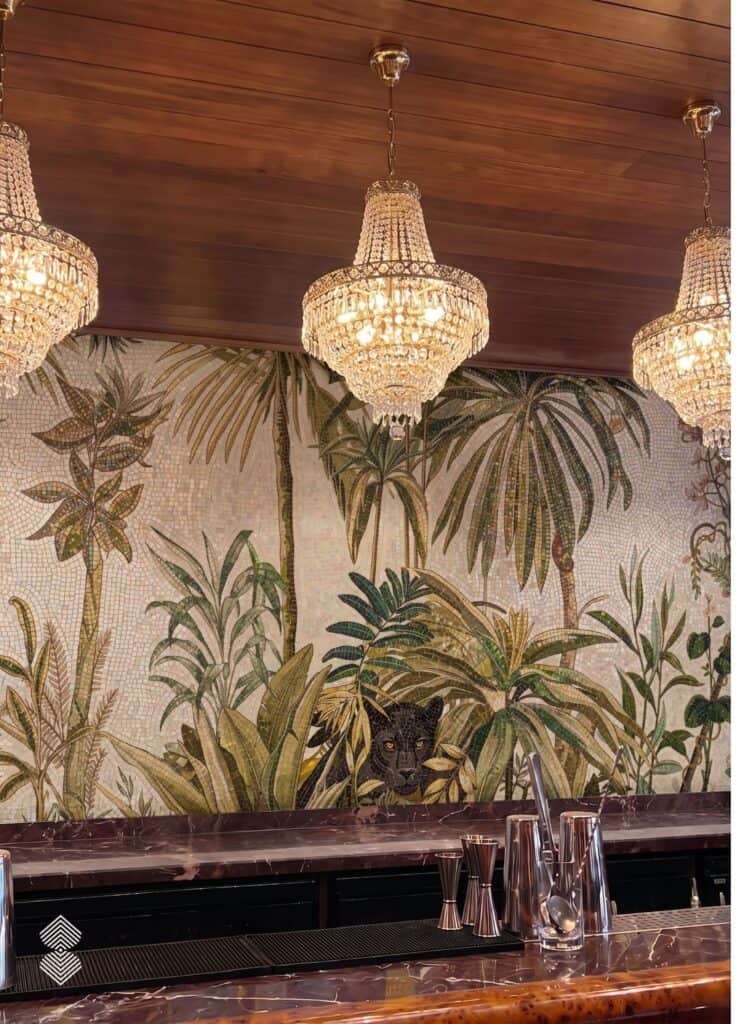
For example, a tropical palm mosaic mural can turn a café feature wall into an immersive design element, with dense palms and broadleaf greenery creating a rich backdrop for the seating or bar area.
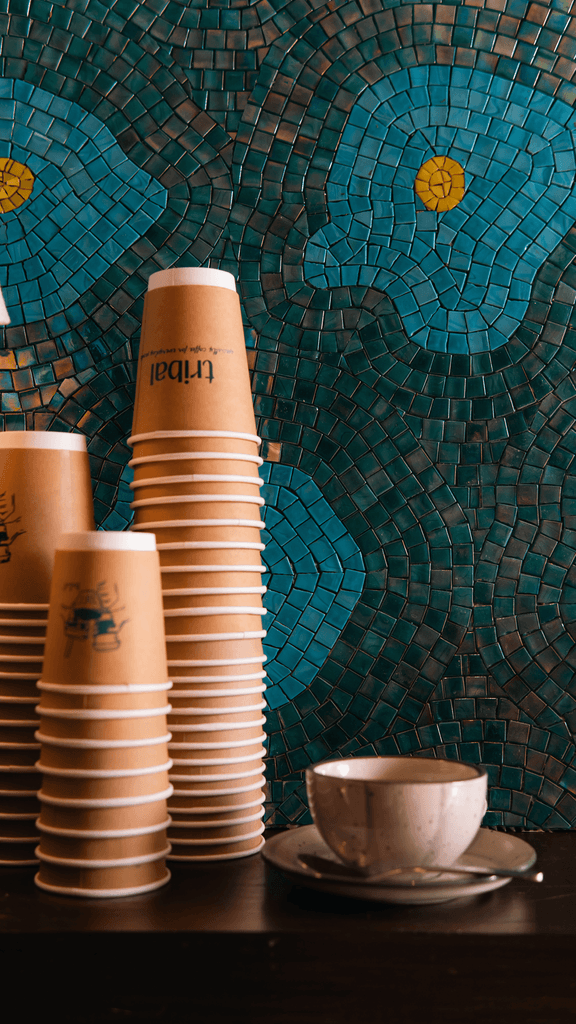
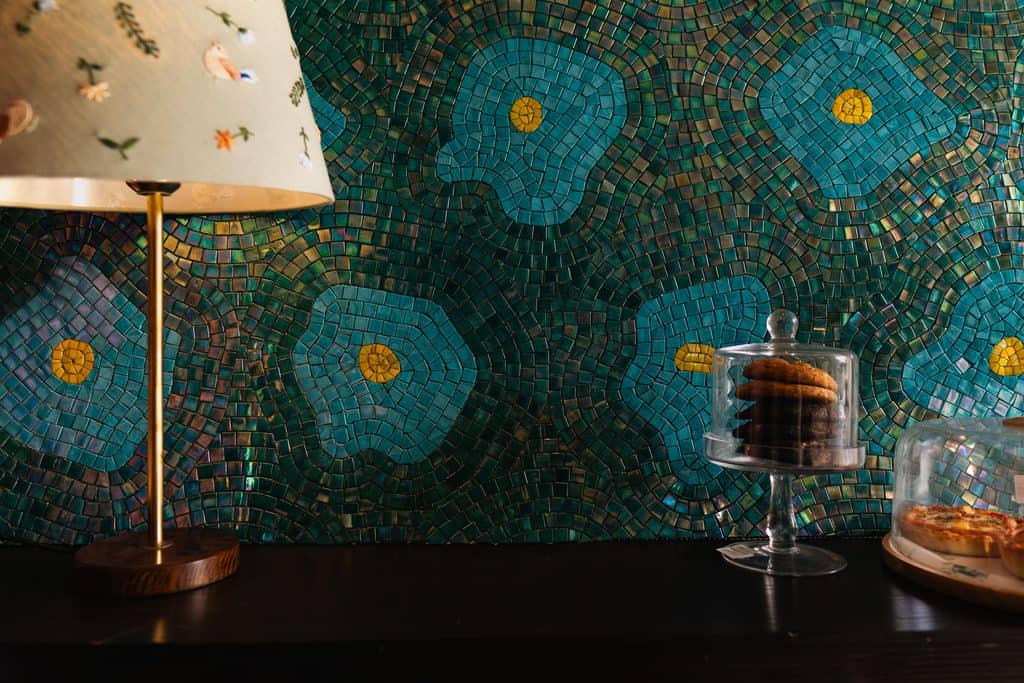
This green and blue contrasting mosaic wall makes a striking addition to a coffee shop. The design featured is from our own collection, released this year.
A black panther sits low within the foliage, while its yellow eyes provide a small but striking point of contrast. Designed as a continuous jungle composition, the mural can extend along a long café wall or behind the counter, adding artwork, color, and character without relying on separate wall décor.
Kitchen and Service Backsplash
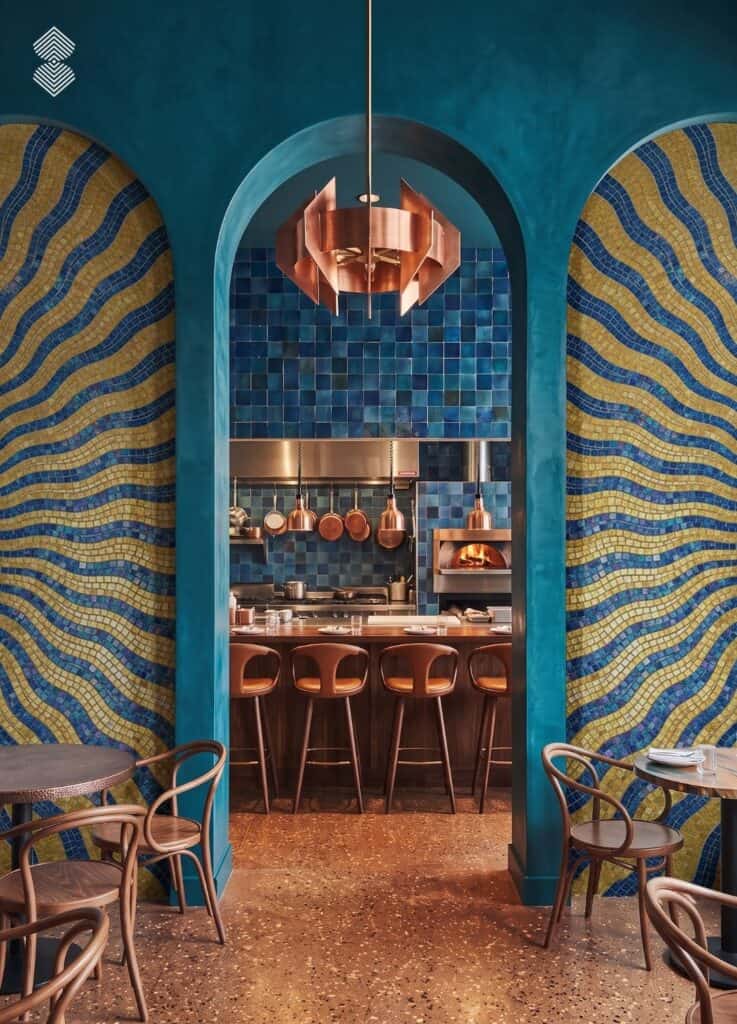
A backsplash may be a smaller surface, but it sits directly behind one of a café’s busiest areas. This makes mosaic kitchen backsplash tile a good way to connect the counter with the wider interior.
If the café already has bold marble, colorful cabinetry, or statement lighting, a subtle pattern can create balance. In a simpler setting, a decorative modern mosaic tile backsplash can become the feature through stronger colors or geometry. Material also changes the effect. Glass mosaic adds color and reflection, while marble creates a softer, more natural look. In service areas, designers should also consider grout, cleaning, substrate, and installation requirements so the backsplash works as well as it looks.
Entrance Floors and Feature Medallions
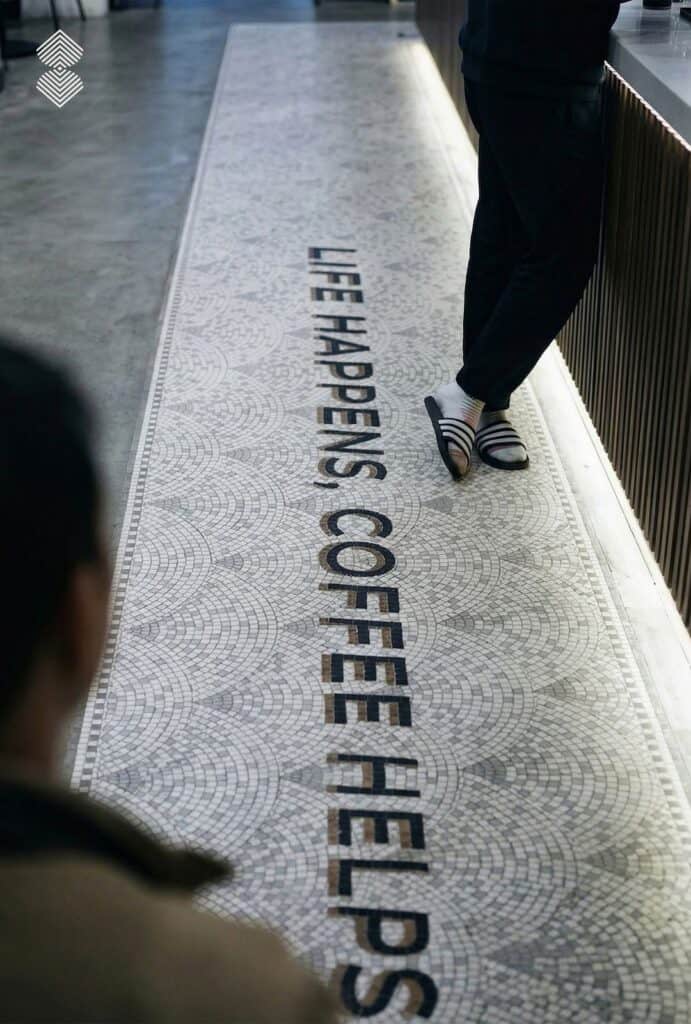
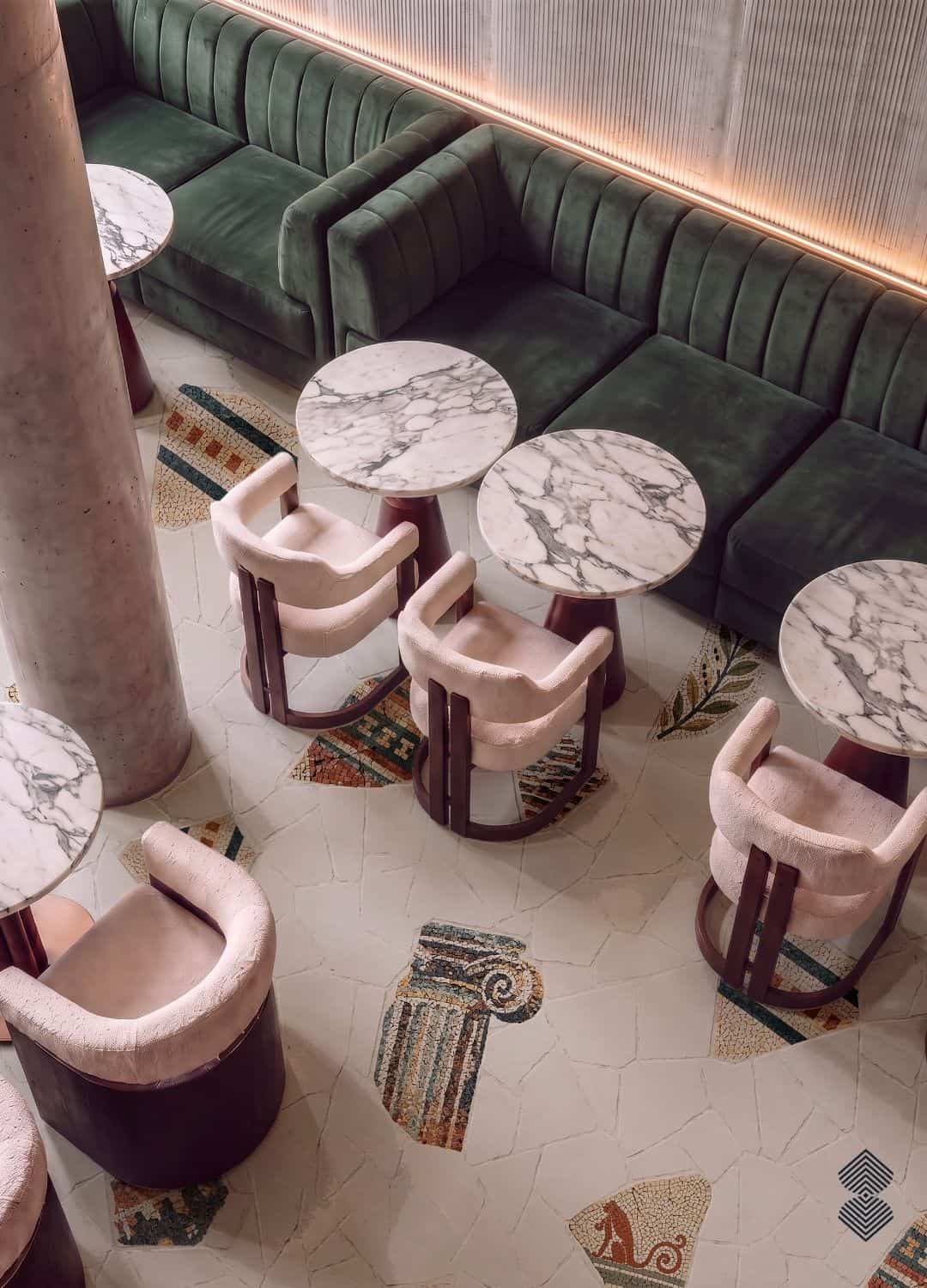
The entrance creates the café’s first impression, making it a strong place for custom mosaic. Designers can integrate a logo, border, medallion, or geometric pattern directly into the floor rather than adding separate signage. Placement should follow the main sightline and customer movement through the entrance.
For example, a classical column fragment mosaic floor brings an artistic, collected feel to a café interior. Irregular stone-like sections feature small classical details, including an Ionic column, a mythical sea creature, and an olive branch, all set against a soft cream background. For designers, this type of mosaic can work particularly well in an entrance, seating area, or feature floor where the goal is to introduce old-world character within a modern café setting.
Restroom and Powder Room Walls
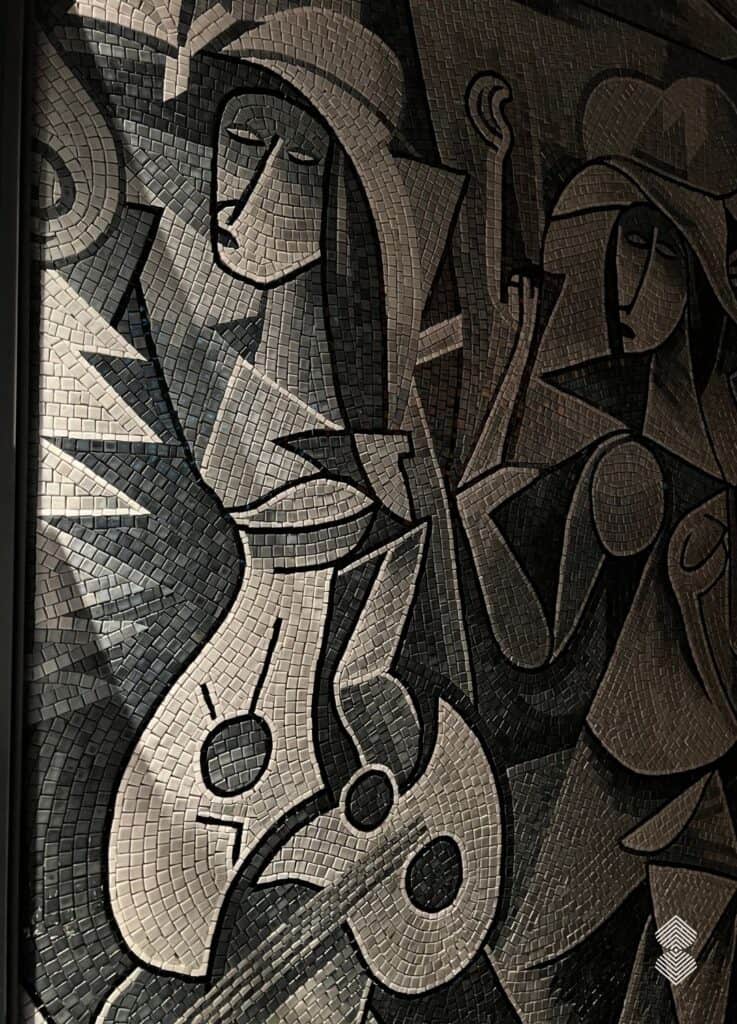
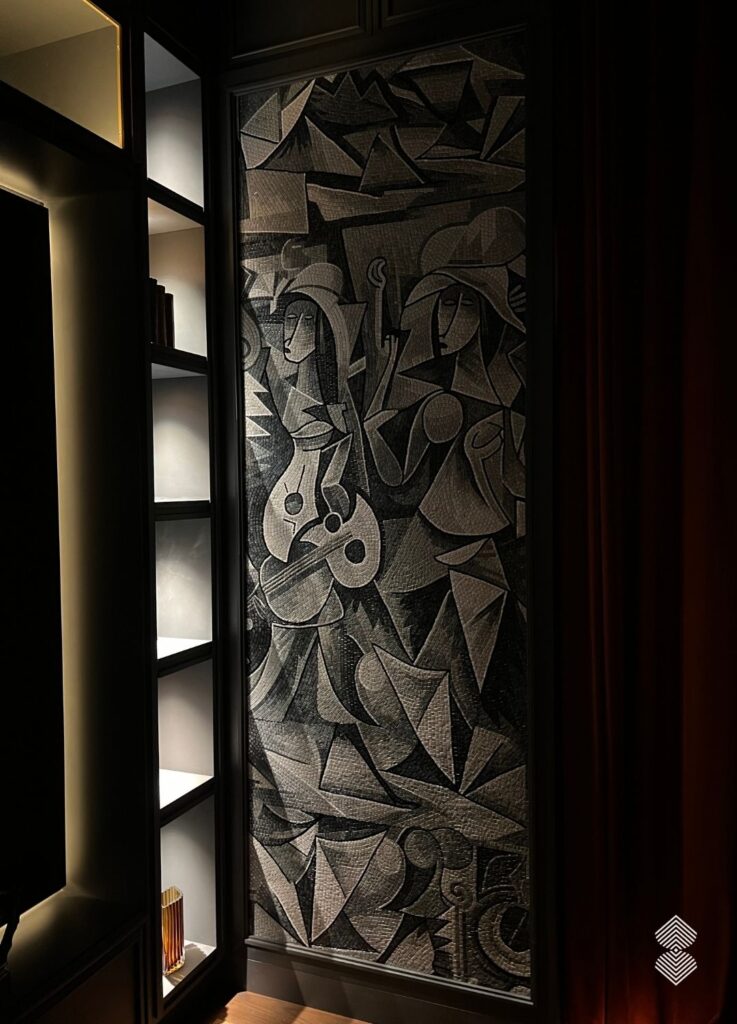
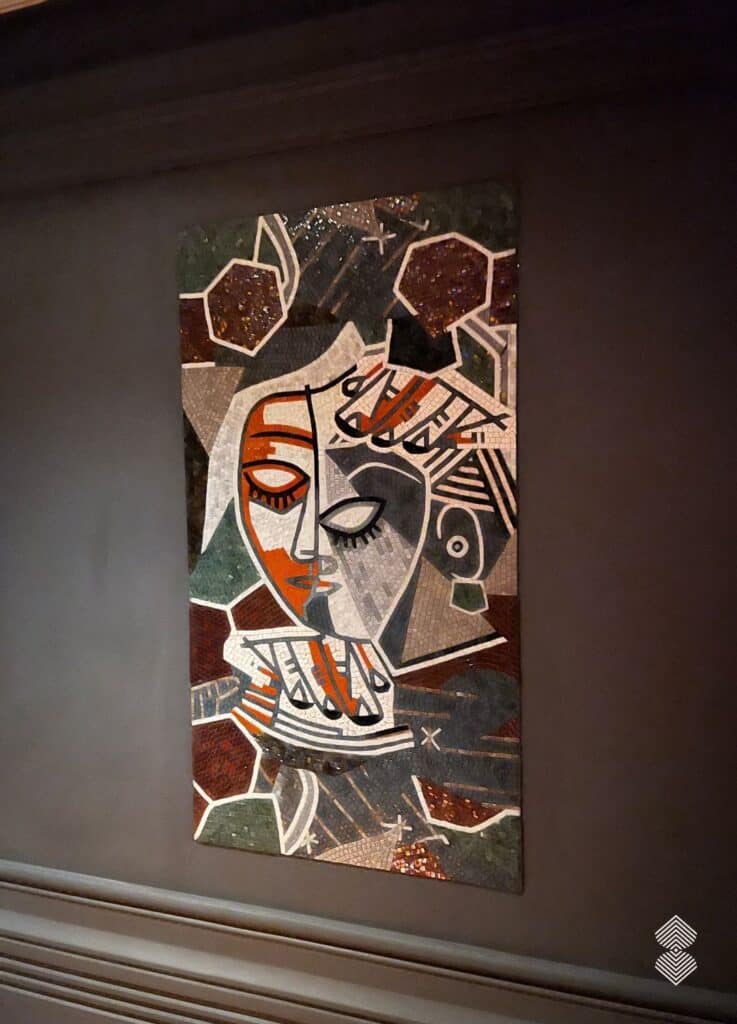
Restrooms give designers more freedom to experiment with bold colors, patterns, and custom mosaic wall art. Mosaic tile for café interiors can take on a stronger design concept in these spaces since they sit slightly apart from the main dining area. A neutral café, for example, might introduce a rich glass mosaic or a detailed botanical composition in the restroom, or a really bold mosaic portrait design and colors.
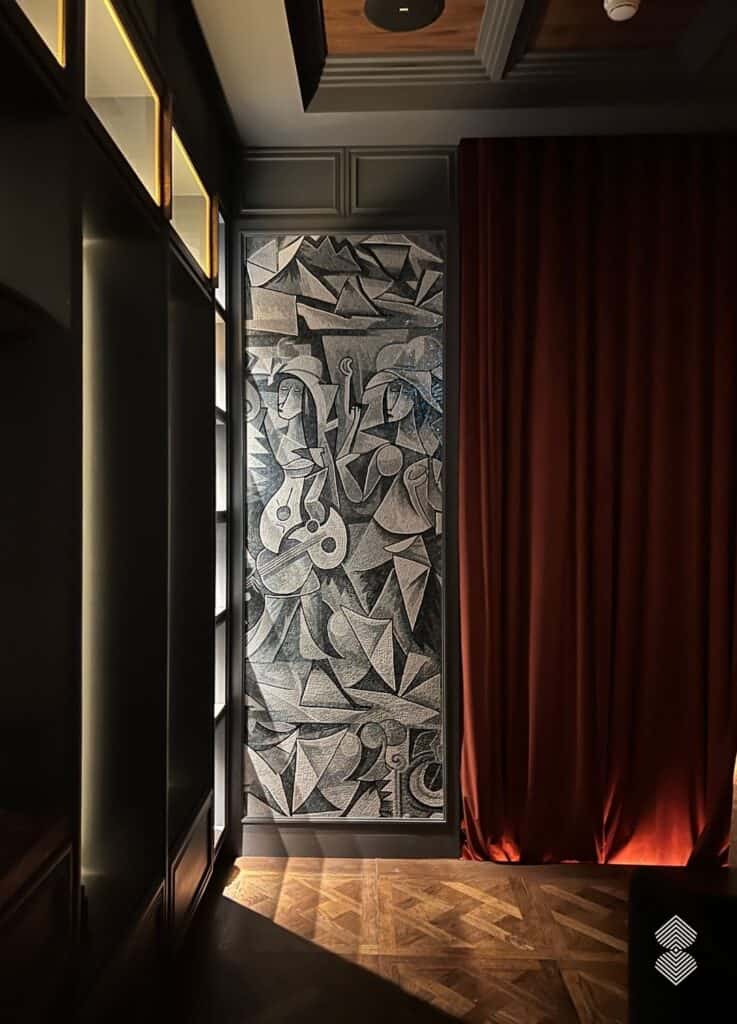
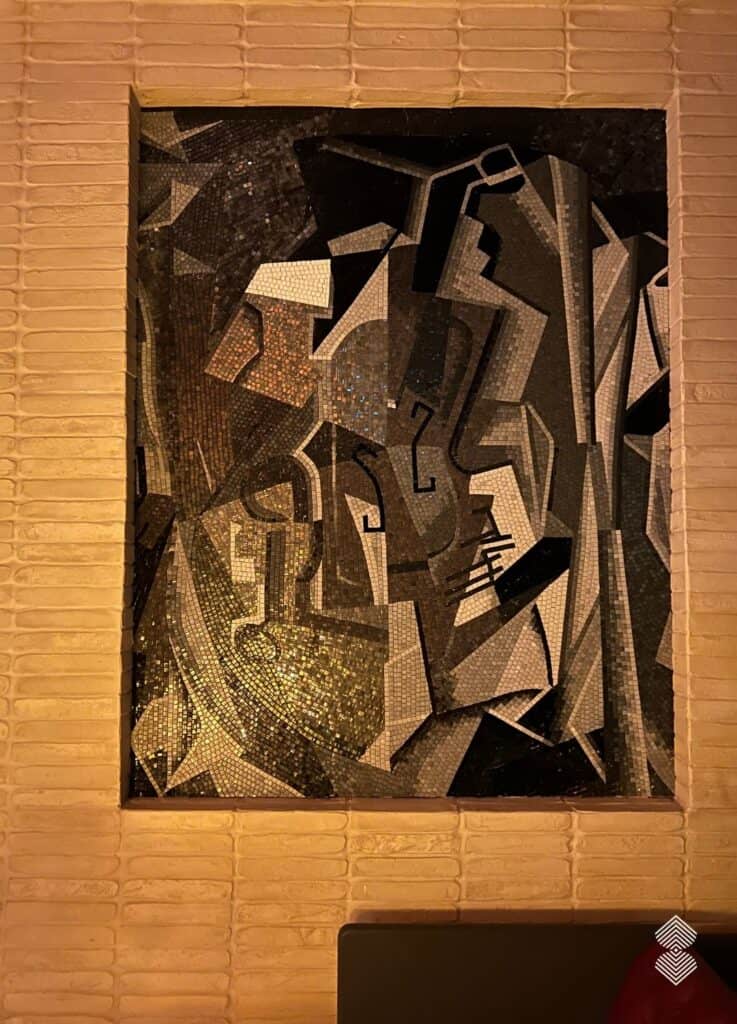
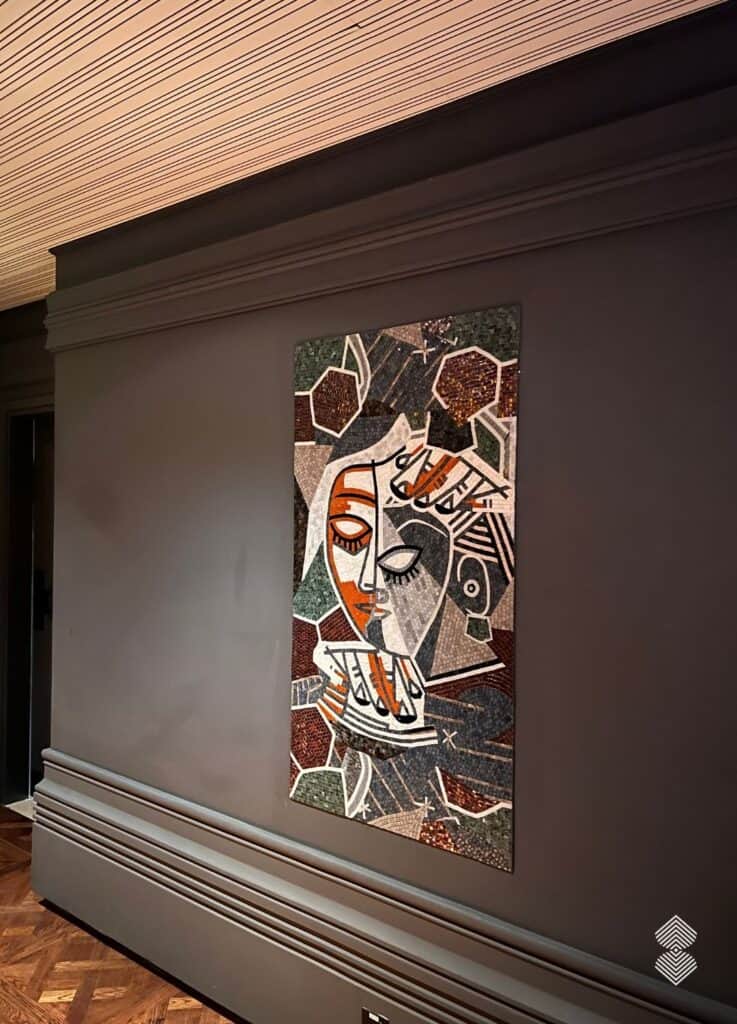
Moreover, our cubist musicians wall mosaic panel can turn a café restroom wall into an unexpected artistic feature. The two seated musicians are formed through fragmented shapes, angular lines, and layered stone tesserae, creating a composition that works well on a tall, narrow wall. In a restroom setting, the detailed surface can be appreciated up close while adding character beyond the main café interior.
Mosaic Design Styles That Suit a Café Aesthetic
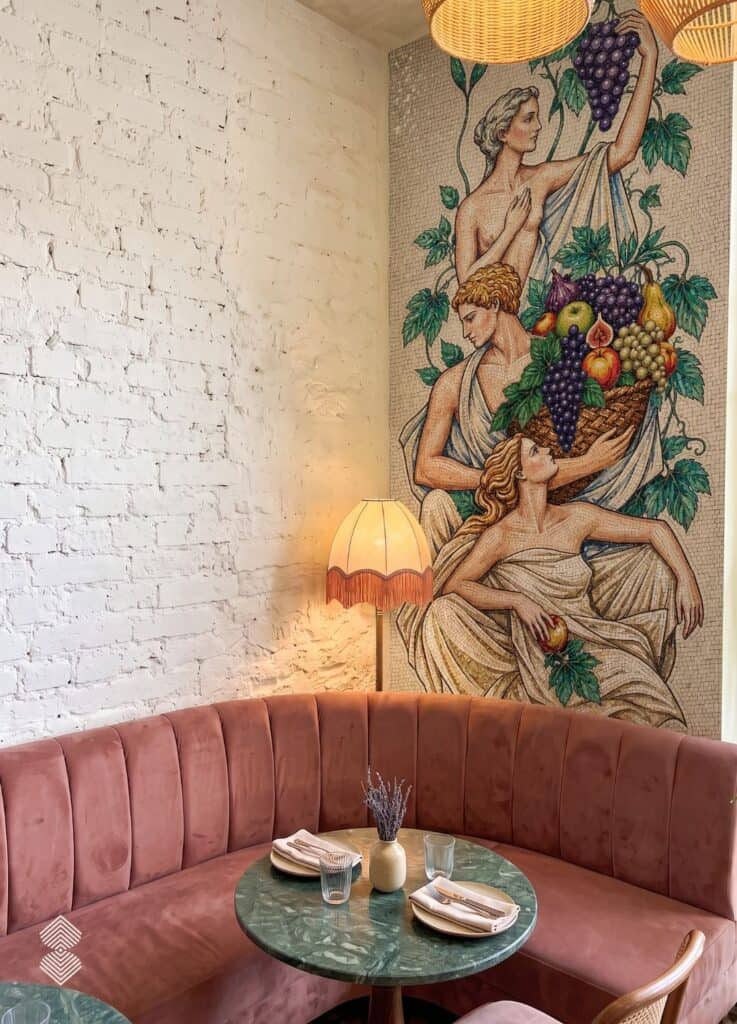
A mosaic doesn’t automatically create a particular style. The same material can look classical, playful, minimalist, Art Deco, Mediterranean, contemporary, or figurative mosaic design depending on geometry, palette, tessera size, and layout. This flexibility makes mosaic design particularly useful when a café has a defined brand identity. Some of the design options are:
Art Deco Mosaic Tile for Café Interiors
From the viewpoint of a designer, the use of Art Deco will be most effective if you use its visual cues and not try to recreate a historic interior. Powerful geometry, symmetry, repetition of borders, fans, arches, and black-and-white contrasts can bring the flavor of vintage into your modern café.
The most important thing here is understanding the amount of Deco elements that your place needs. Art Deco mosaic tiles can serve as the centerpiece for the entrance floor, bar front, border, wall in the bathroom, or any other decorative element in your café interior. Black and white petal mosaic tile can help you achieve this effect through the repetition of monochrome patterns. Consider the materials used around before choosing your mosaic. If there is fluted timber, brass, statement lighting, or vein marble in your café, make sure your Art Deco tile is less expressive.
Moroccan Tile Backsplash for a Warm, Layered Feel
Those who want to find some warmth and variety in their designs will appreciate Moroccan mosaic ideas, as there is much one can play with here in terms of different shapes, interlocking figures, stars, polygons, and geometrical flowers.
Moroccan mosaic walls are particularly suitable for café walls that go well with plaster, timber, brass, stones, and other natural materials. Then one may choose some colors to create a connection between the mosaic and the interior of the place. Such colors include deep blue, turquoise, green, cream, and others, but one should not necessarily use all of them. In order to make a contemporary café, it is better to limit the number of colors of the Moroccan tile backsplash to just two or three that are used in the interior.
Geometric and Abstract Patterns for a Modern Café
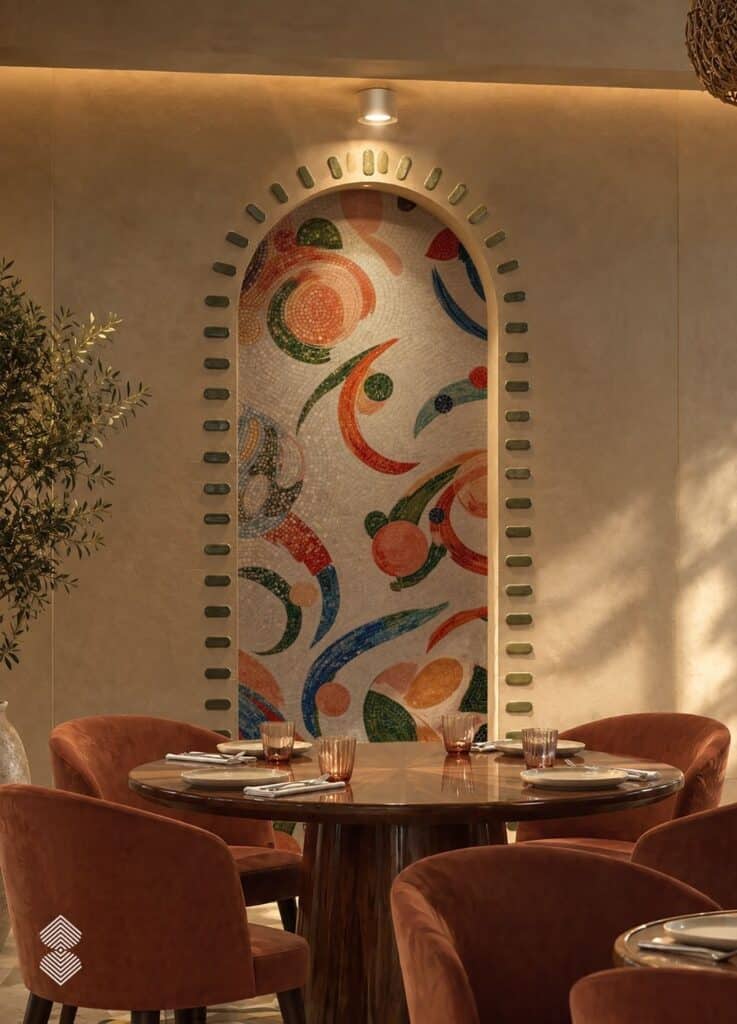
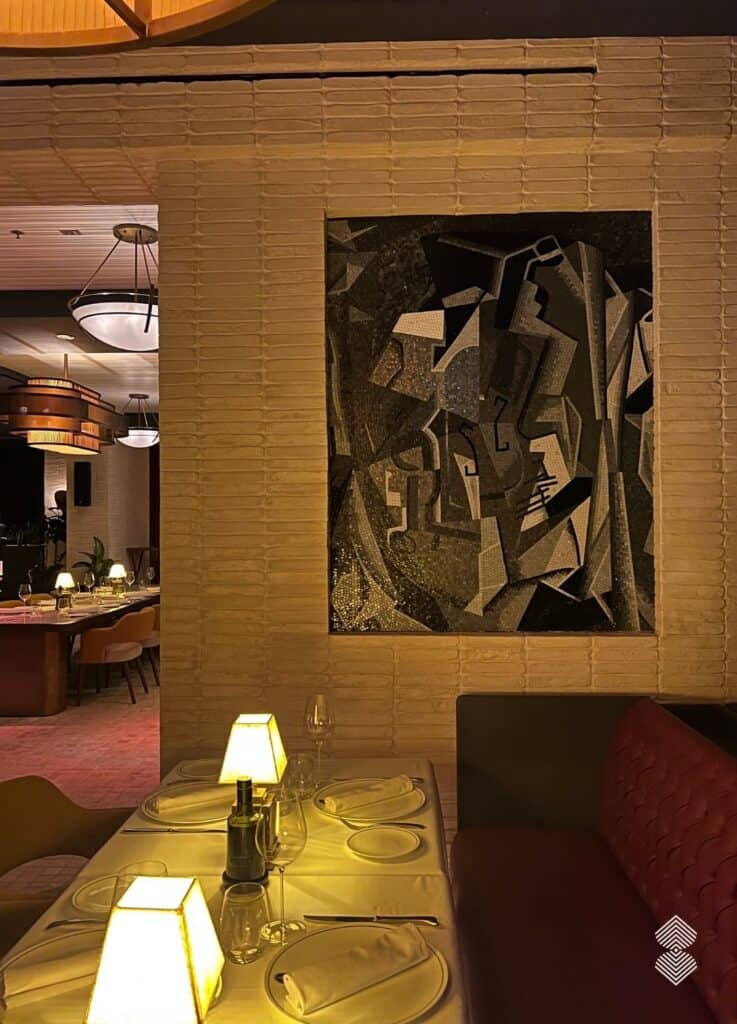
For modern café interiors, geometric mosaics are a good choice when you want pattern without introducing a strong historical style. Lines, arcs, grids, diamonds, and abstract forms can add movement while keeping the overall space contemporary. Like our abstract floral arch mosaic panel, it shows how botanical forms can be reinterpreted for a modern café interior. Instead of realistic flowers, curved petals, circular forms, and flowing lines create an abstract composition within the arched niche. For designers, this approach can bring color and movement into a feature wall while allowing the mosaic to respond naturally to the architecture of the space.
Materials That Hold Up in a High-Traffic Café
Material selection should always respond to where the mosaic will be installed. We provide suggestions for the material that should be used in the interior of our customers’ interiors depending on the location, the amount of traffic, finishes in the vicinity, design, and requirements for the material. In the case of the interiors of cafés, this information is particularly relevant since floors, counters, wall splashes, and accent walls are exposed to completely different conditions. In custom architectural mosaics, we mainly use glass and marble.
Glass Mosaic for Color and Easy Cleaning
Glass works particularly well when color drives the concept. Because light interacts with the surface, blues, greens, ambers, whites, and other tones can gain a sense of depth that paint or a flat printed surface can’t reproduce in quite the same way. That makes glass mosaic tiles useful for:
- Café feature walls
- Decorative backsplashes
- Typography and branding
- Counter fronts
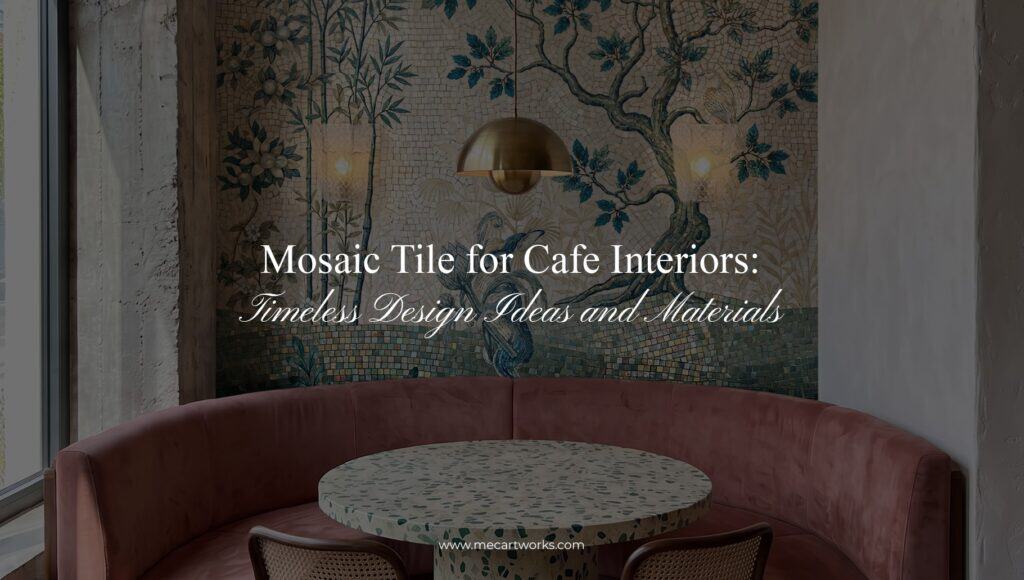
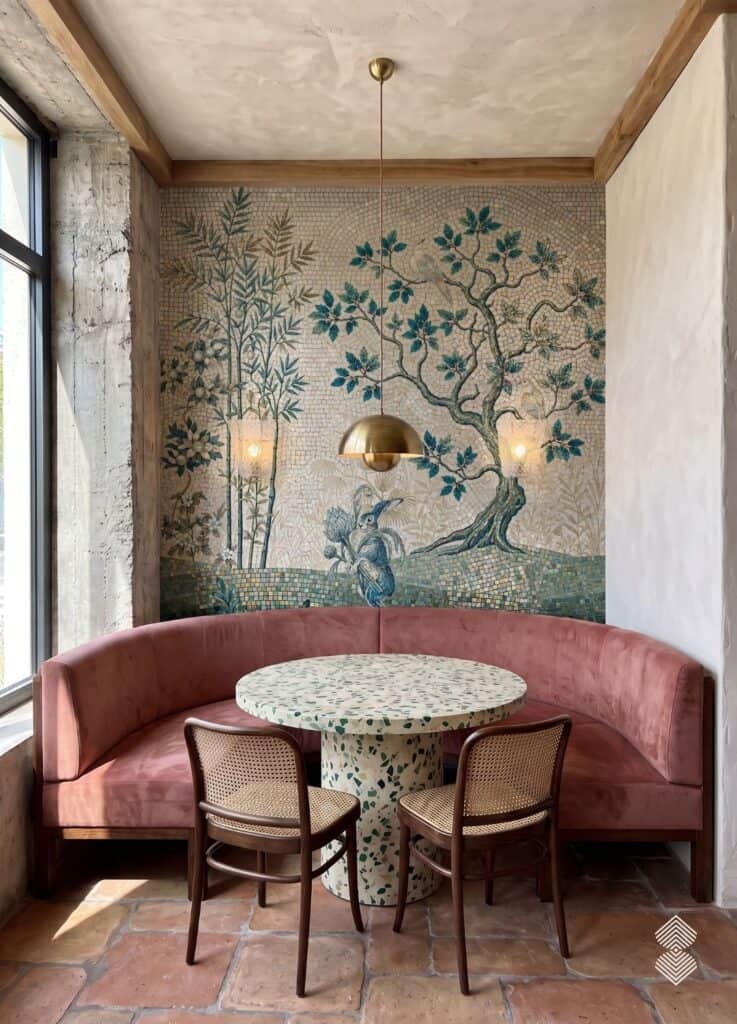
Our chinoiserie tree and hare mural shows how glass mosaic can bring rich color, detail, and visual depth to a café interior. Blue-green foliage, bamboo, flowering branches, birds, and a small hare are built from individual tesserae across the feature wall. For designers, glass works particularly well for detailed compositions like this because its varied tones and reflective surface can make botanical artwork feel more layered under café lighting.
Natural Stone and Marble for a Softer, Textured Look
Marble behaves differently. Rather than relying primarily on reflection, it brings natural variation and texture into the composition. Veining, subtle tonal changes, and individual stone characteristics can keep a large patterned area from feeling mechanically repeated. Marble and natural stone mosaic works particularly well in cafés that use:
- Timber
- Limewash or plaster
- Natural fabrics
- Brushed metal
- Stone countertops
- Restrained architectural palettes
Marble can also bridge traditional and modern design. Use it for a classical border, and it can feel historic. Cut the same material into crisp abstract geometry, and the result can feel contemporary.
Branding a Café Through Mosaic: Logos and Signage
As far as designers are concerned, branding for a café doesn’t necessarily have to be restricted to menus, packages, and signs. The branding itself can be an integral part of the interior design. A custom mosaic tile logo for café branding can convert a logo, monogram, quote, image, or any other brand element right into an interior element such as a wall, floor, or counter surface. The key here is not to duplicate the logo on a mosaic but to create it specifically for the environment.
MEC Artworks’ coffee-shop typography mosaic project is a good example. The typography was developed in relation to the café’s logo while considering letter spacing, tile reflectivity, branding, and the surrounding architecture. This approach allows the branding to feel integrated into the café rather than applied afterward. The result becomes both mosaic art and a recognizable part of the interior identity.
Grout, Cleaning and Everyday Maintenance in a Café Setting
Grout plays both a visual and practical role in a café mosaic. When selecting mosaic grout colours for commercial kitchens or customer-facing areas, designers should consider how much they want the grout lines to stand out.
A matching grout creates a softer, more continuous look, while contrasting grout makes individual tesserae and geometric patterns more visible. The final choice of mosaic tile for café interiors should also consider the mosaic material, cleaning routine, installation system, and conditions of the space. Maintenance should be planned early as well. Marble and glass have different cleaning requirements, so the products and methods used by café staff should suit the selected material. Keeping material, grout, and maintenance information on record can also make long-term care easier.
Final Thoughts on Mosaic Tile for Cafe Interiors
The most successful mosaic tile for cafe interiors feels like part of the architecture rather than decoration added later. Designers should consider customer sightlines, movement, lighting, pattern scale, surrounding materials, and the café’s brand before developing the artwork. Whether it’s an entrance medallion, geometric counter, Art Deco floor, glass backsplash, or custom typography, the goal is the same: create a mosaic that belongs to the space. When thoughtfully designed, it becomes more than a surface finish. It becomes part of how customers experience and remember the café.
FAQs
Where does mosaic tile for cafe interiors work best?
Mosaics work particularly well on counter facades, backsplashes, entryway floors, feature walls, restroom walls, floor medallions, branding walls, and selected architectural details. The best location for mosaic tile for cafe interiors depends on what you want the mosaic to achieve. For branding, the entrance or counter can create an immediate visual connection. For atmosphere, consider a feature wall or backsplash, while restrooms and niches are ideal for more intricate details. The MEC AI Mosaic Studio can help designers see how mosaic looks in the café interior.
Is mosaic tile durable enough for a high-traffic café floor?
Yes, mosaic tile can be durable enough for a high-traffic café floor when the right materials and installation system are specified. Commercial flooring mosaics should use materials and finishes suited to regular foot traffic, along with the correct substrate, setting system, grout, and maintenance approach. Not every mosaic is suitable for flooring, so designers should specify the mosaic based on the demands of the application rather than appearance alone.
Can a mosaic backsplash be matched to existing café tile or décor?
Yes. A custom mosaic project can be developed around existing colors, material samples, countertops, joinery, furniture, lighting, or reference imagery. It doesn’t always need to match exactly. For mosaic tile for cafe interiors, a better approach is often to identify two or three colors already present in the space and develop the mosaic around those tones. This creates a visual connection without making every surface look identical.
How is a custom café mosaic installed without closing the space?
The installation strategy depends on the size of the mosaic, substrate, site conditions, location, and broader construction schedule. Custom mosaics can be fabricated off-site and prepared in organized sections or panels. Large custom mosaic tile for café interiors may also be divided into sections for easier transportation and installation. For an operating café, the project team can coordinate the work around closures, construction phases, or restricted working periods where practical. However, whether the café can remain open depends on the project scope and site requirements.
Does MEC Artworks ship mosaic commissions internationally?
Yes, MEC Artworks ships custom mosaic commissions internationally for clients and design professionals across different markets. Project dimensions, drawings, materials, design approvals, fabrication, packing, shipping, and installation information can be coordinated as part of the commission.