
Renaissance mosaic art brings the beauty of classical paintings into handcrafted tile compositions. From Raphael’s The School of Athens to Leonardo da Vinci’s The Last Supper, these artworks are known for their expressive figures, rich colours, and remarkable attention to detail. Recreating them in mosaic requires careful craftsmanship to capture the artistic character of each original masterpiece.
In this blog, we’ll explore our six Renaissance-inspired mosaic masterpieces, including two iconic portraits, and discover what makes each design unique. We’ll also explain how traditional paintings are transformed into Renaissance wall art and share important considerations for commissioning a custom mosaic for your space.
Table of Contents
1. The School of Athens in Mosaic
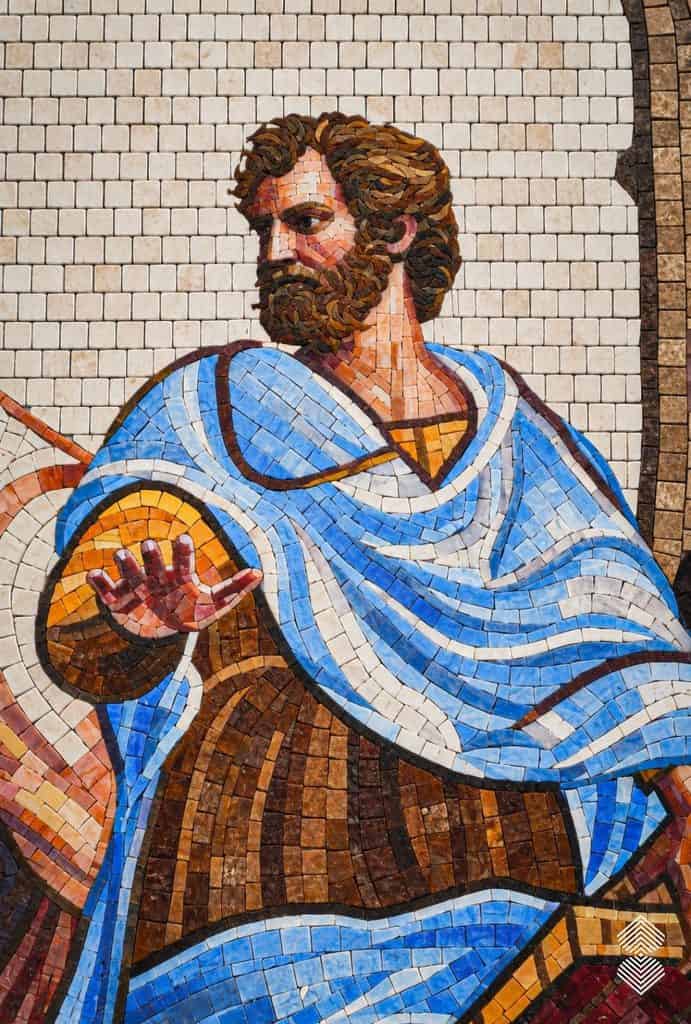
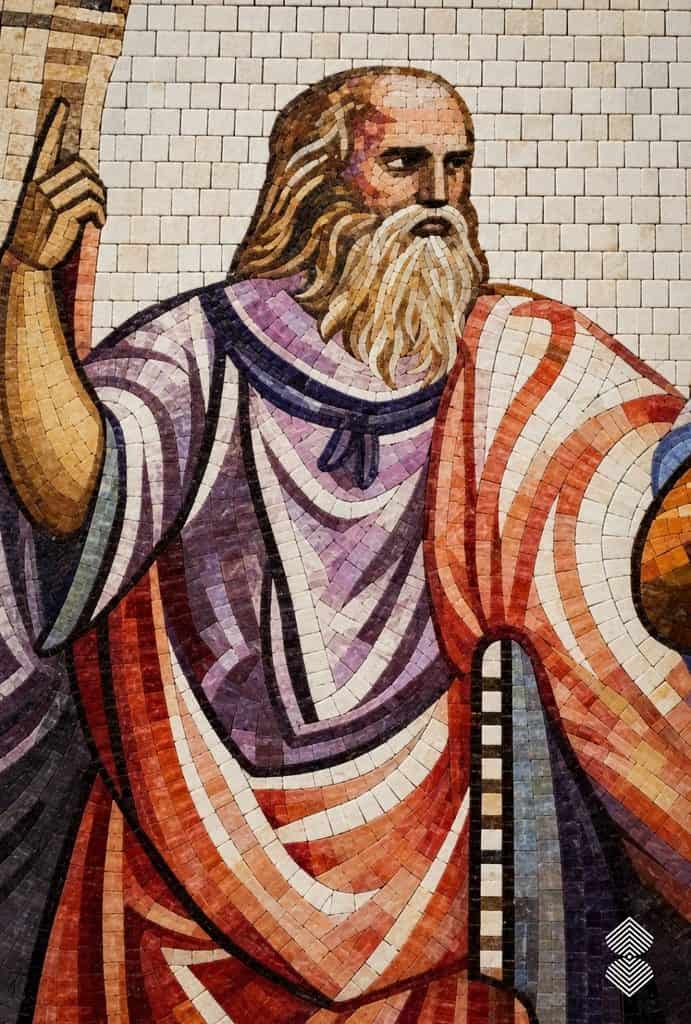
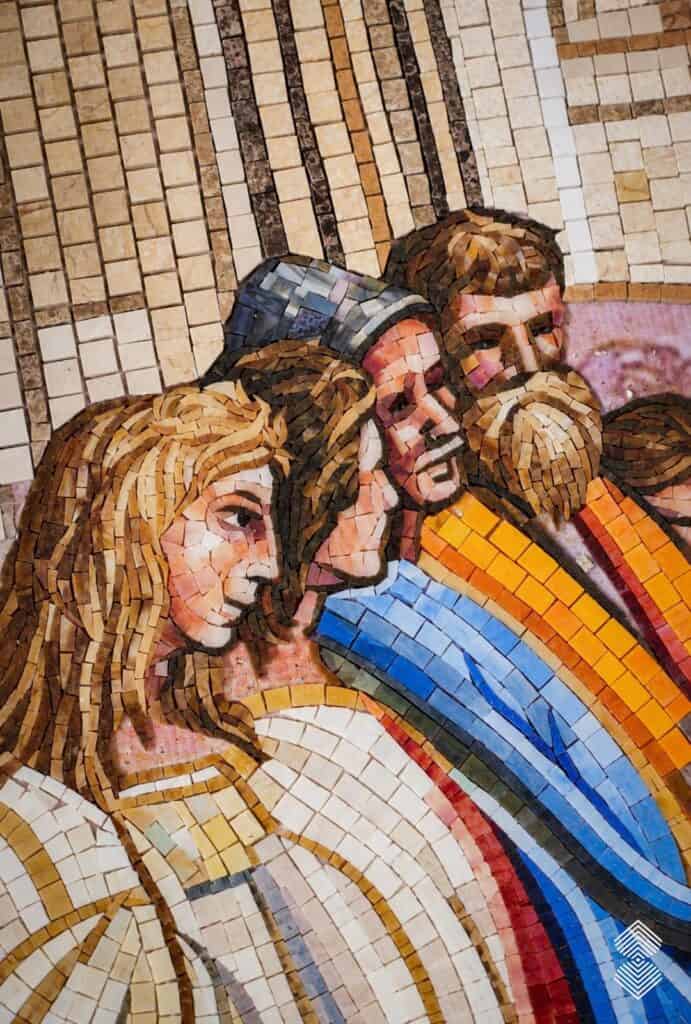
Few Renaissance paintings capture classical philosophy and architectural beauty as beautifully as The School of Athens. The original painting was done by Raphael from 1509 to 1511 and depicts classical philosophers, mathematicians, and scientists. In the middle are the philosophers Plato and Aristotle, surrounded by people discussing and studying.
The School of Athens mosaic is a recreation of this painting using bright colors, figures, and tesserae. Large columns, a high ceiling, and the main arch that leads to the blue sky make the mosaic look deep, while geometric patterns on the floor guide the eyes to the philosophers.
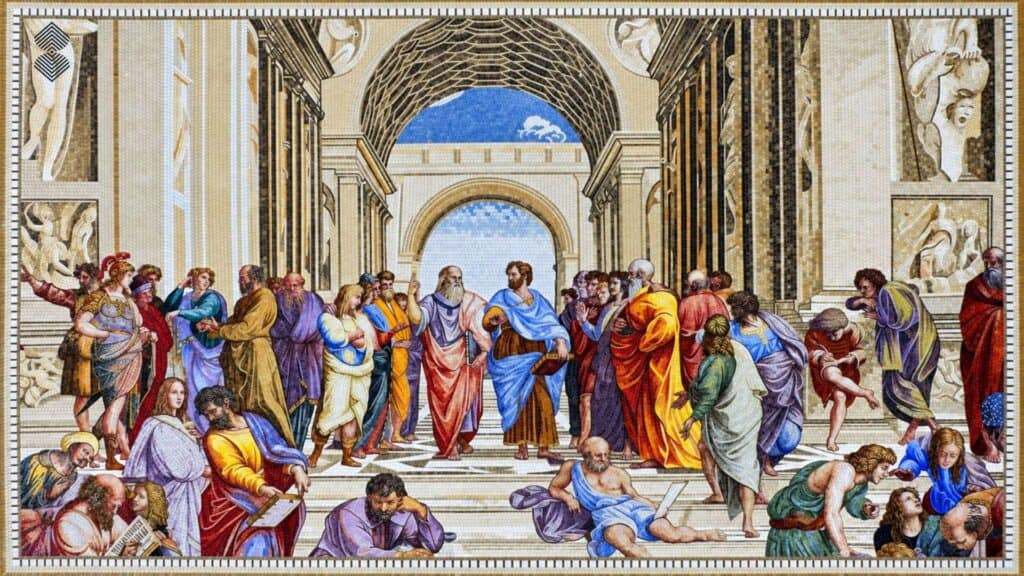
Creating architectural perspective in Raphael’s painting took much attention to detail and proportions. Our designers focused on several elements:
- Perspective in architecture: Precisely placed tesserae complement the arches, columns, and geometric flooring to maintain depth.
- Figural elements: Mosaic tiles help in capturing facial expressions, gestures, and body language of the philosophers.
- Color scheme: The use of dark blue, red, yellow, and purple colors makes the clothes stand out against neutral architecture.
- Ornamental elements: Side panels and decorative borders add to the classical style of the composition.
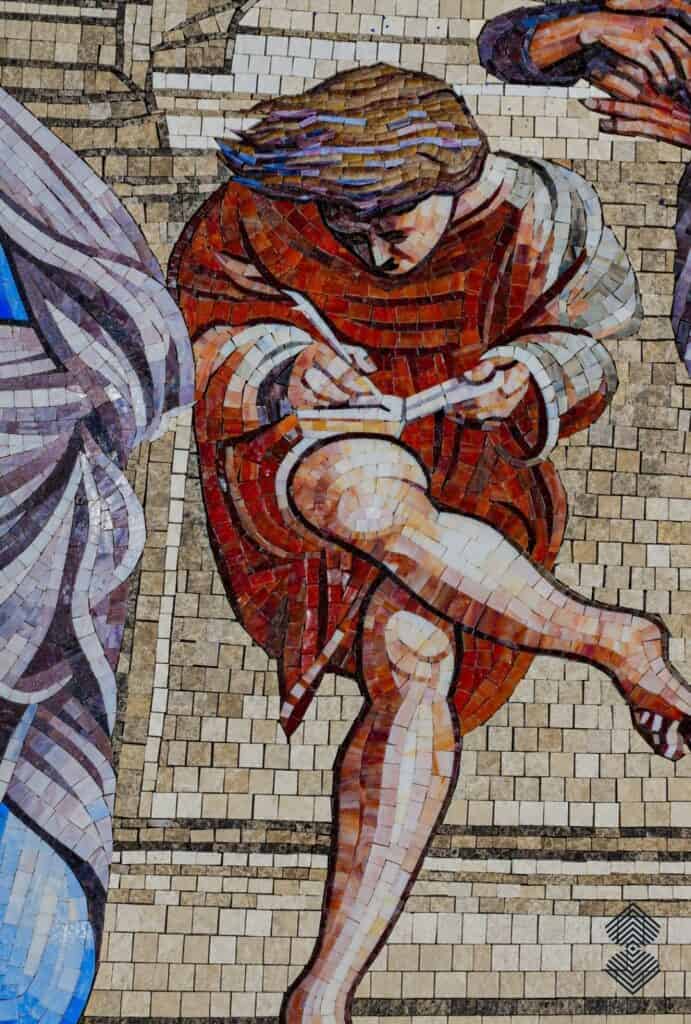
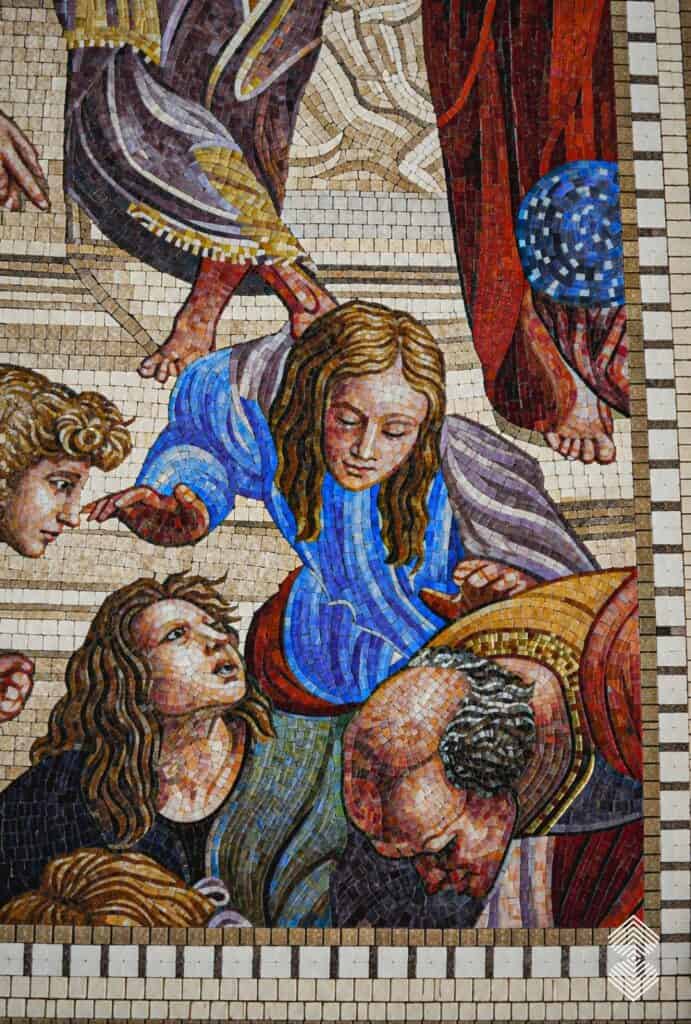
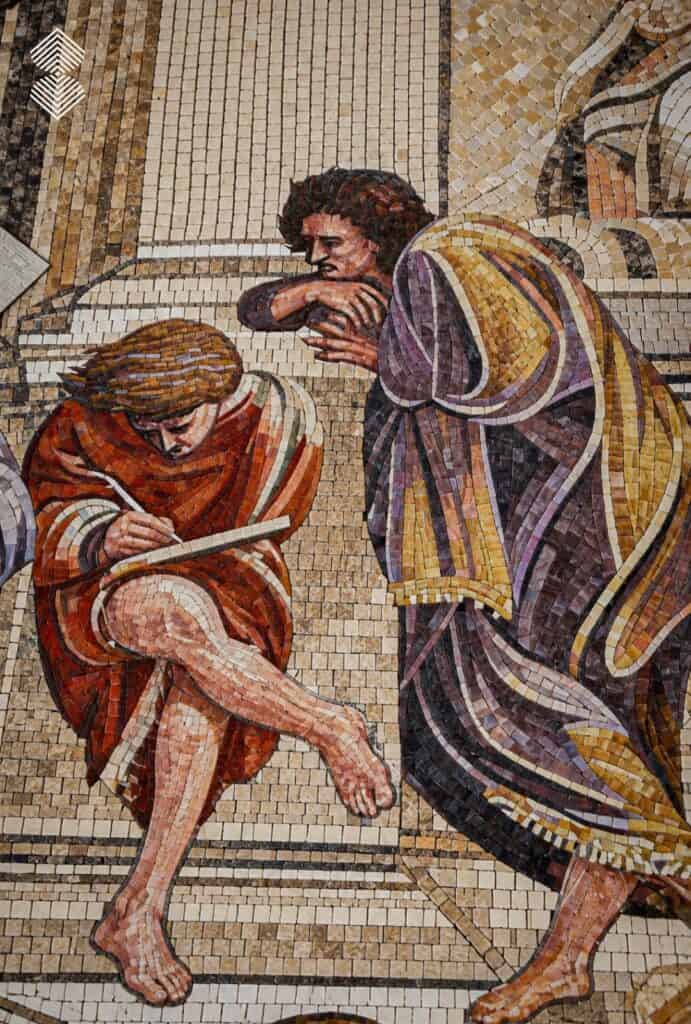
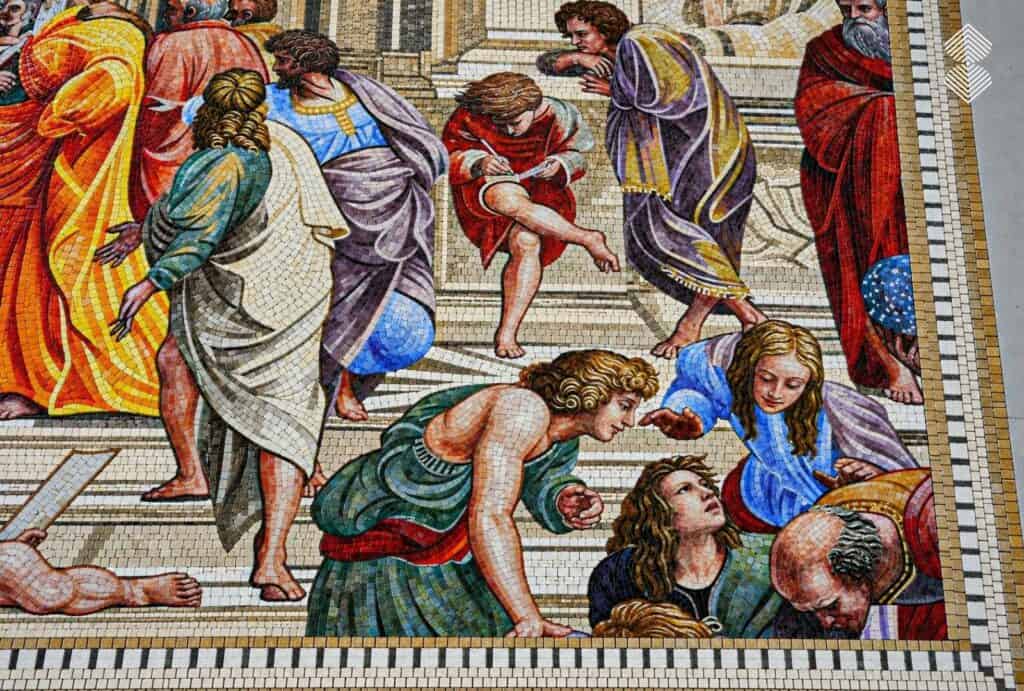
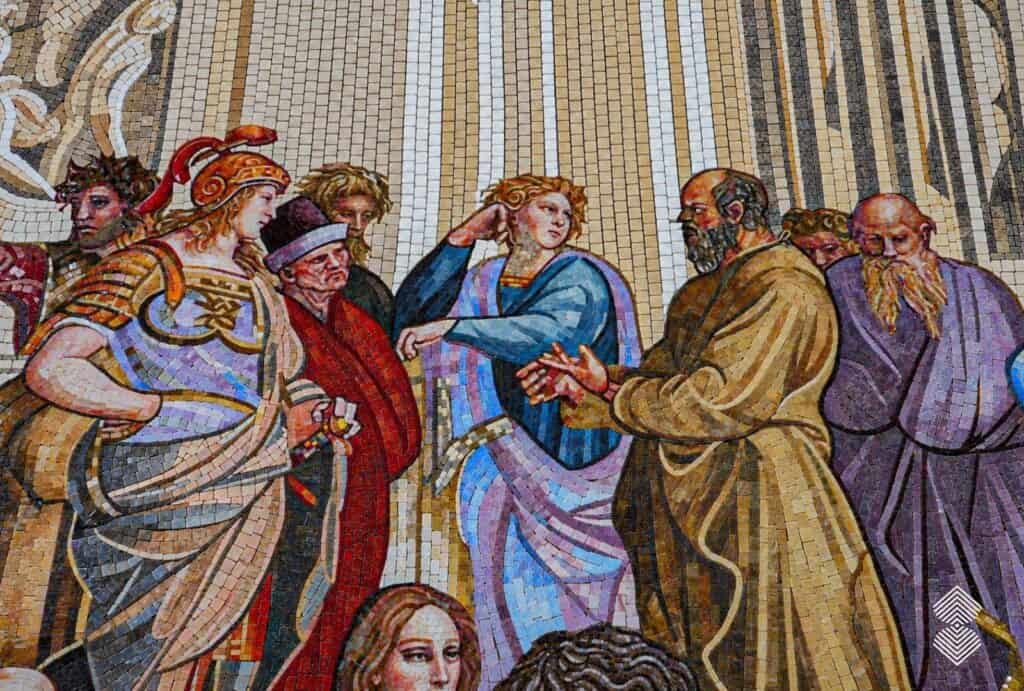
In this way, a Renaissance mosaic is created, which reveals some new things when viewed from different distances. When viewed from afar, the figures of the philosophers along with the architecture constitute a single picture. The same style of art is also evident in the Renaissance mosaic wall art project created by MEC Artworks in collaboration with a Dallas private home. Drawing inspiration from the work of Raphael, the project combines classical motifs into decorative art on walls and ceilings.
2. The Creation of Adam in Mosaic
The Creation of Adam, by Michelangelo, was painted in approximately 1511, and it is located on the ceiling of the Sistine Chapel. The painting is one of the most famous works of art from the Renaissance period.
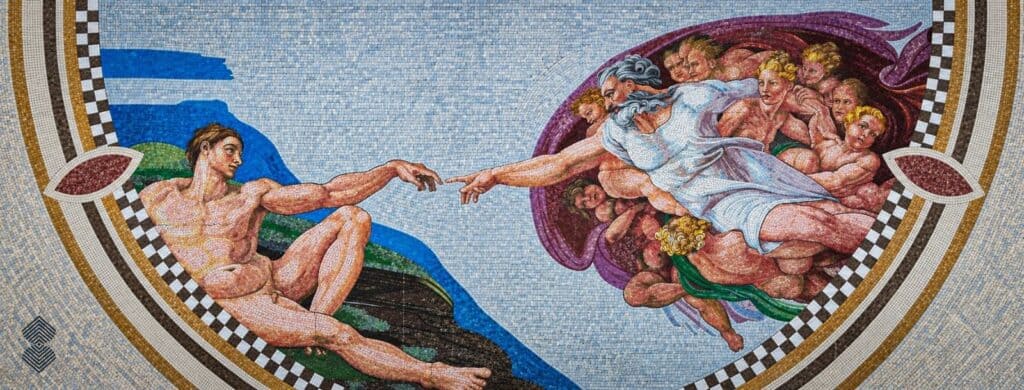
Recreating that, our Creation of Adam mosaic depicts this famous composition in mosaic tiles and highlights the natural anatomy, dramatic gestures, and fluid drapery. Contrary to the architectural paintings of the Renaissance period, this composition relies on shading and proportion to maintain the connection of the figures.
To recreate the artwork in mosaic, we have to focus on several elements:
- Human anatomy: The smaller tesserae are used to describe the figures’ muscles, fingers, and the contours of their bodies.
- Gesture: Precise arrangement helps maintain the small space between the fingertips of God and Adam.
- Expressions: Smooth transitions between skin colors help convey the expressions on the faces of the figures.
- Movement of drapery: The tesserae are oriented along the lines of fabric folds to create a sense of motion.
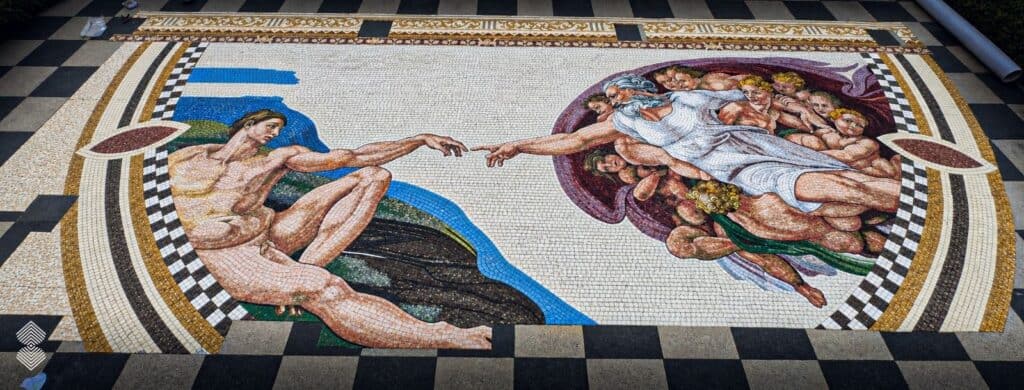
The beauty of the Renaissance mosaic is in the ability of individual pieces to reflect the softness of figures depicted by Michelangelo in his painting while giving them the feeling of handmade tiles. Even though the fresco is painted on the ceiling, the composition can also work well as wall decor. When designing classical mosaic wall art, our designers consider the available dimensions, viewing distance, and surrounding architecture to ensure the artwork retains its original character.
3. Renaissance Mosaic Portraits
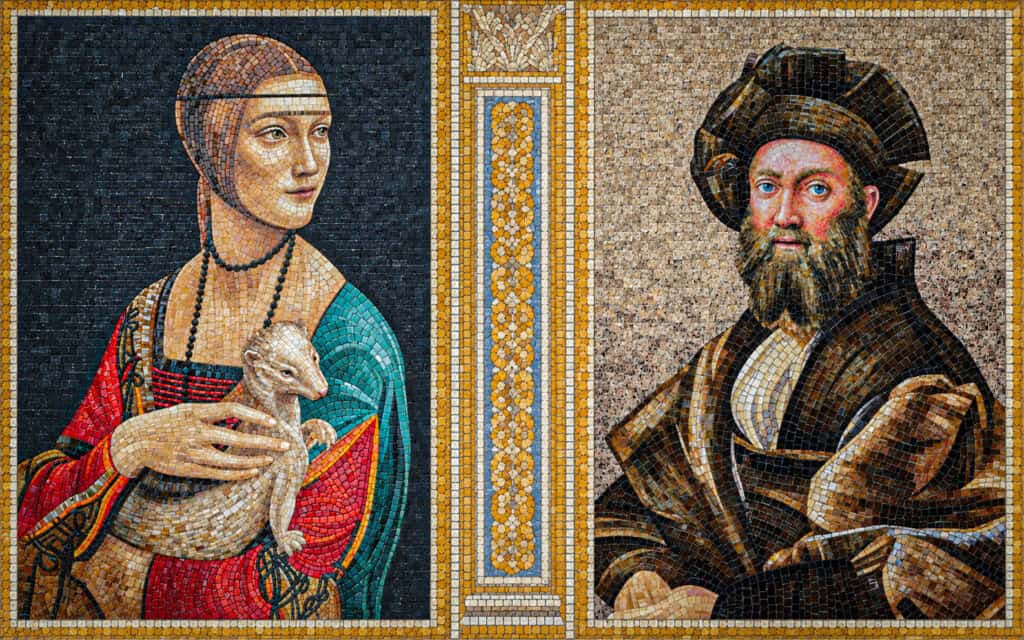
Renaissance mosaic portraits convey personality through facial expression, body language, and the manipulation of light. In contrast to narrative large-scale painting, this genre is based on small elements that become evident for viewers instantly. Therefore, mosaic portrait is one of the most difficult techniques of figurative mosaic art. The shift of an eye can transform expression; an abrupt color change in the cheek can flatten the face; even the orientation of tesserae affects the naturalness of the face. Two well-known examples of Renaissance portraits are:
Lady With an Ermine in Mosaic
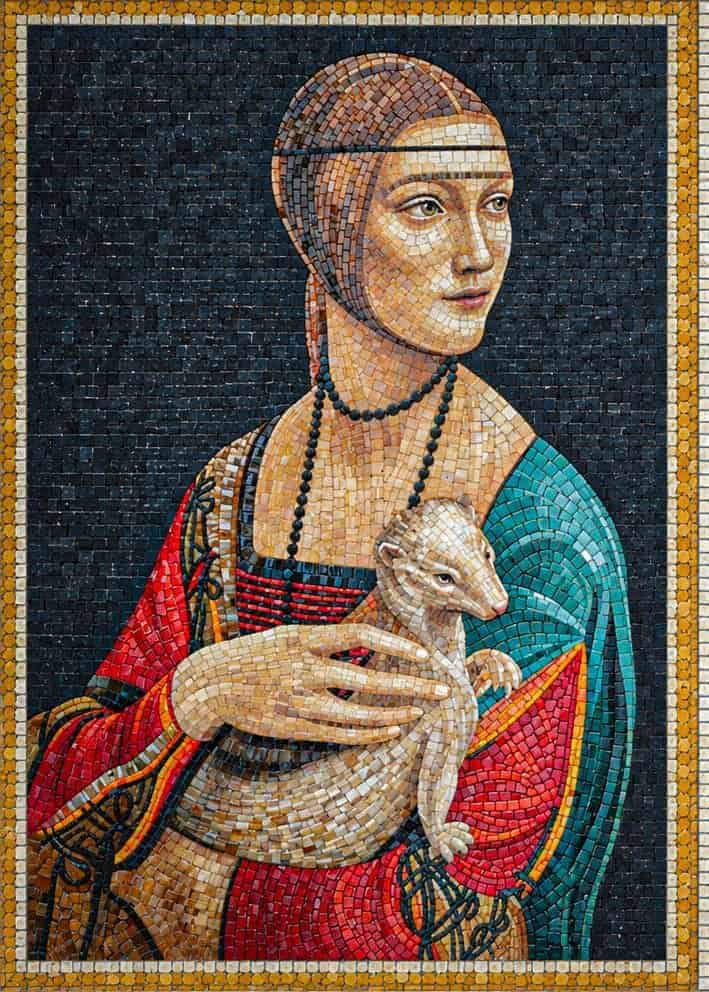
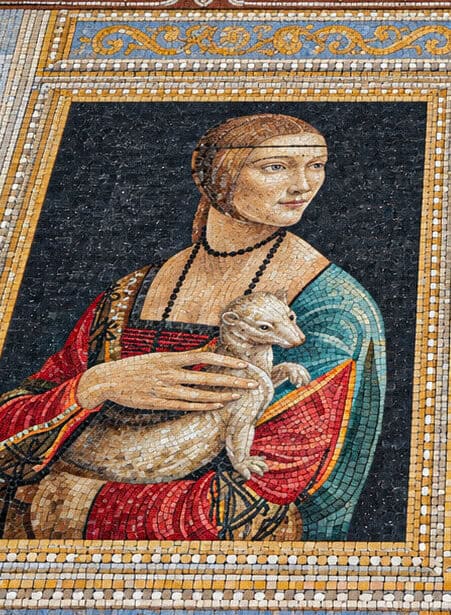
Cecilia Gallerani, depicted in Leonardo da Vinci’s painting “Lady with an Ermine” (1489-1490), is looking sideways while gently petting a white ermine. Her soft look and smooth body language, together with the fluffy fur of the ermine, make this portrait appealing for rendering in mosaics.
This project aims to highlight all those elements by arranging tesserae properly. Smaller tesserae would be used for the depiction of eyes, lips, and hands, whereas light shades of ivory, gray, and white could be used for depicting the ermine’s fur.
Portrait of Baldassare Castiglione in Mosaic
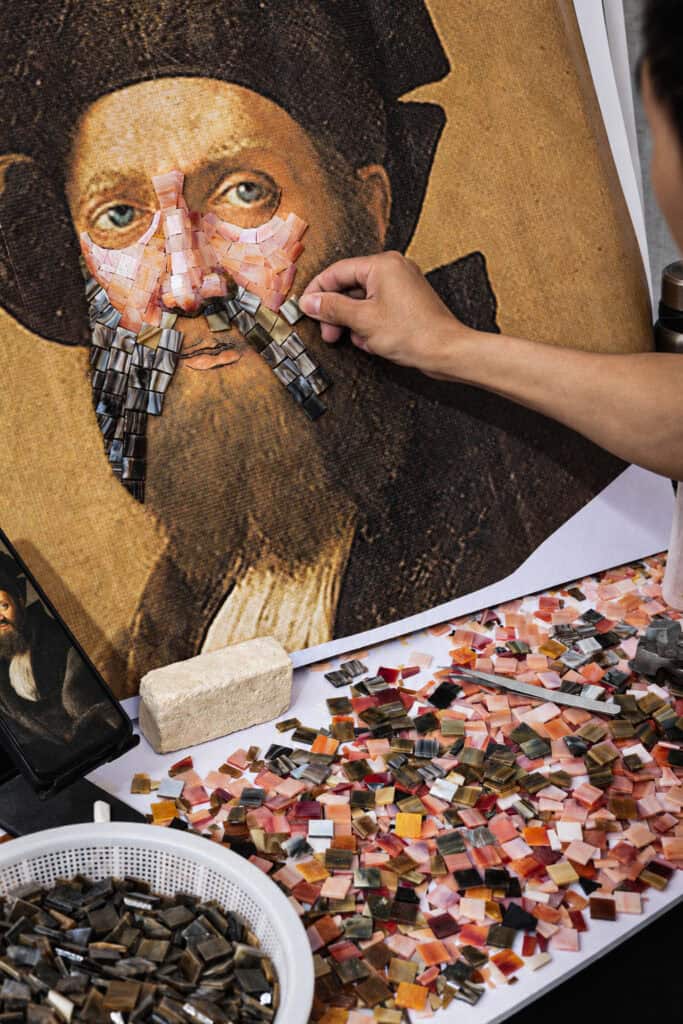
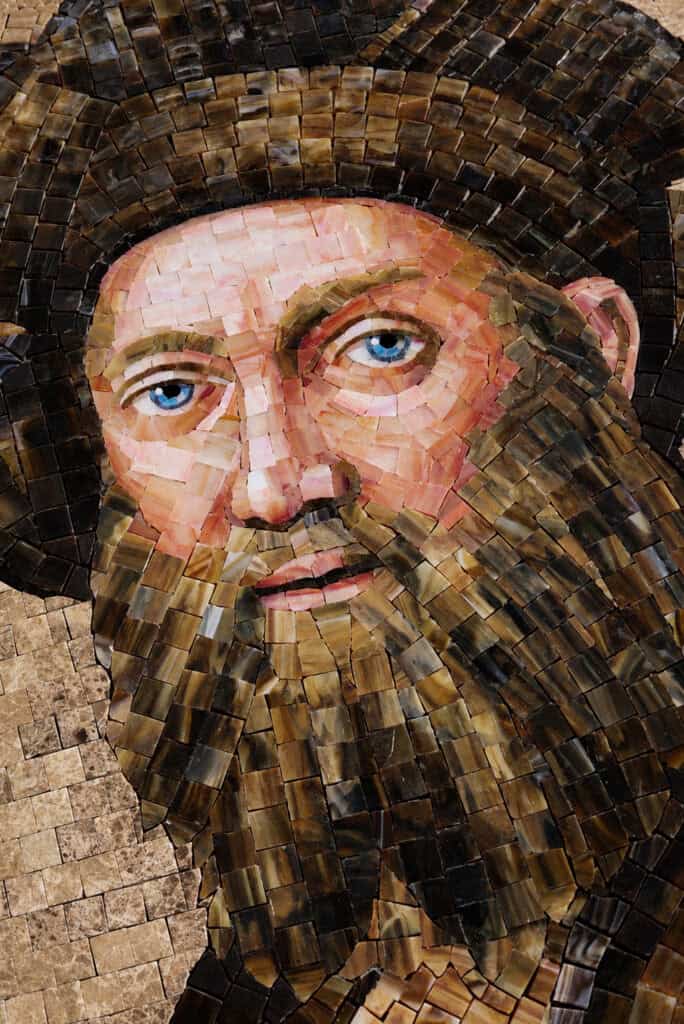
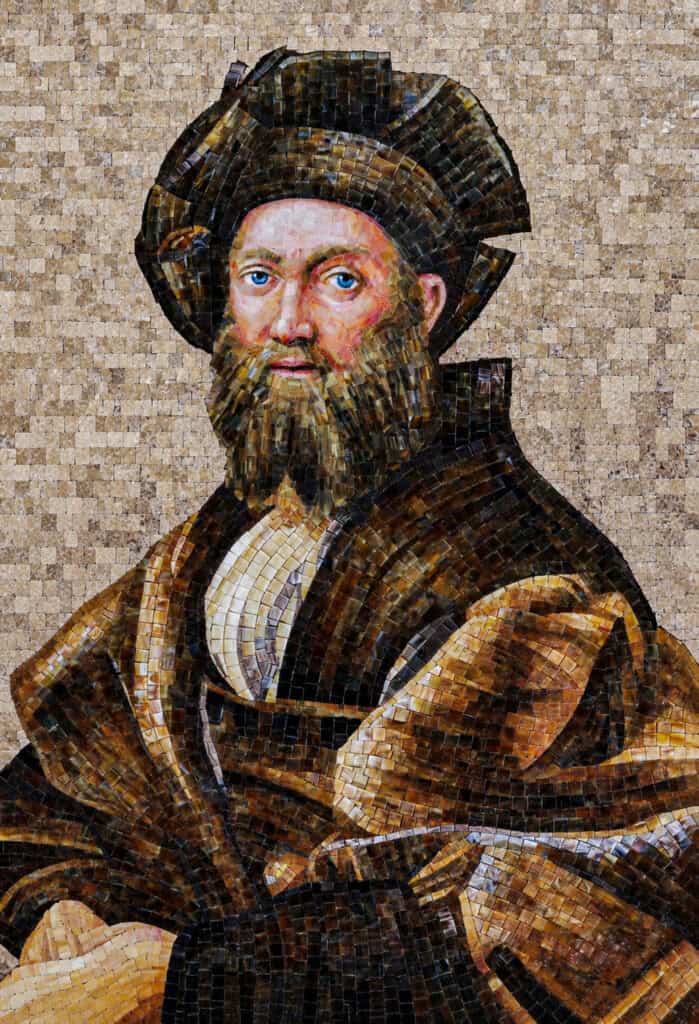
In Raphael’s Portrait of Baldassare Castiglione, created circa 1514 to 1515, there is a peaceful and contemplative-looking figure in grayish, black, and brown shades. Unlike other colorful paintings of the Renaissance period, this portrait relies on shading and facial expressions only.
The process of making a mosaic portrait requires proper balance between charcoal, taupe, beige, and warm tones of skin. Small tiles form the details of his eyes, beard, and face contours, while bigger groups of tiles depict the folds of his clothes. Mosaic portraits of both Leonardo and Raphael demonstrate how handmade mosaics can keep the personality of well-known Renaissance characters. From afar, the facial expressions seem complete, whereas up close, one can see the tiles in every aspect. Such creations are perfect Renaissance wall art for personal collections and studies.
4. The Last Supper Mosaic
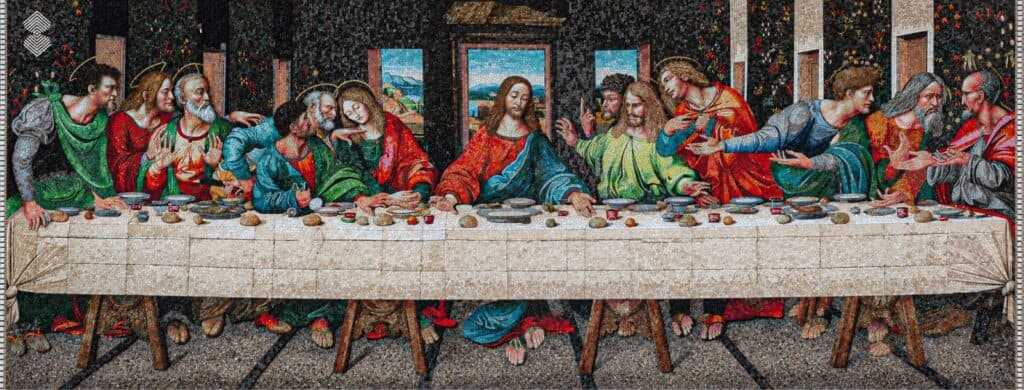
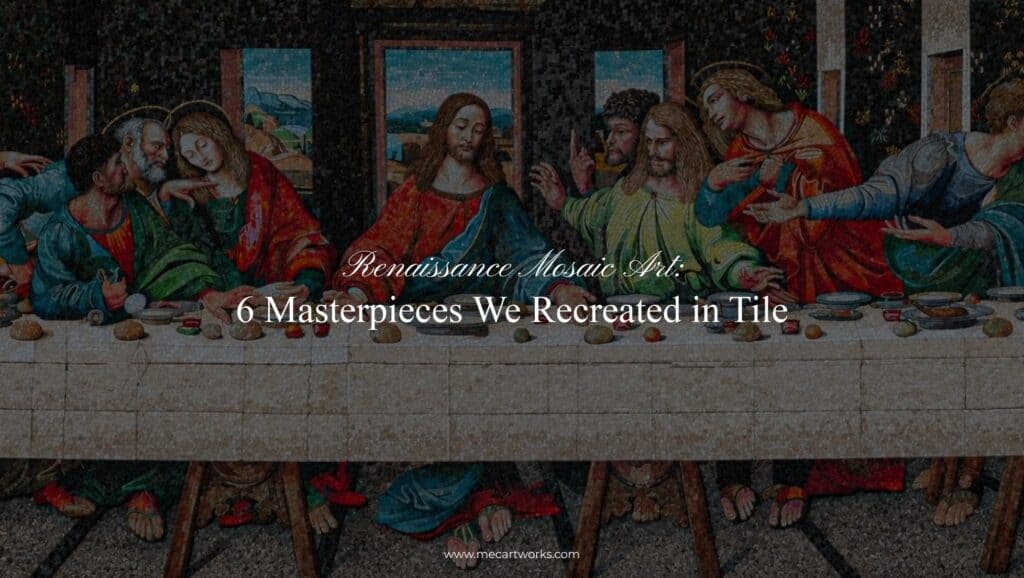
One of the most famous Renaissance religious paintings is Leonardo da Vinci’s The Last Supper, which was created in 1495-1498. It depicts the intense moment when Jesus tells his apostles that he will be betrayed. The apostles show their emotions and reactions in different ways; thus, the painting becomes expressive and full of action and narration.
Our mosaic, The Last Supper, repeats this famous composition using colorful figures and well-selected pieces of tesserae. In the middle of a long table, we see Jesus surrounded by twelve apostles who express emotions in their gestures and expressions. Our designers paid attention to many artistic aspects while designing this mosaic:
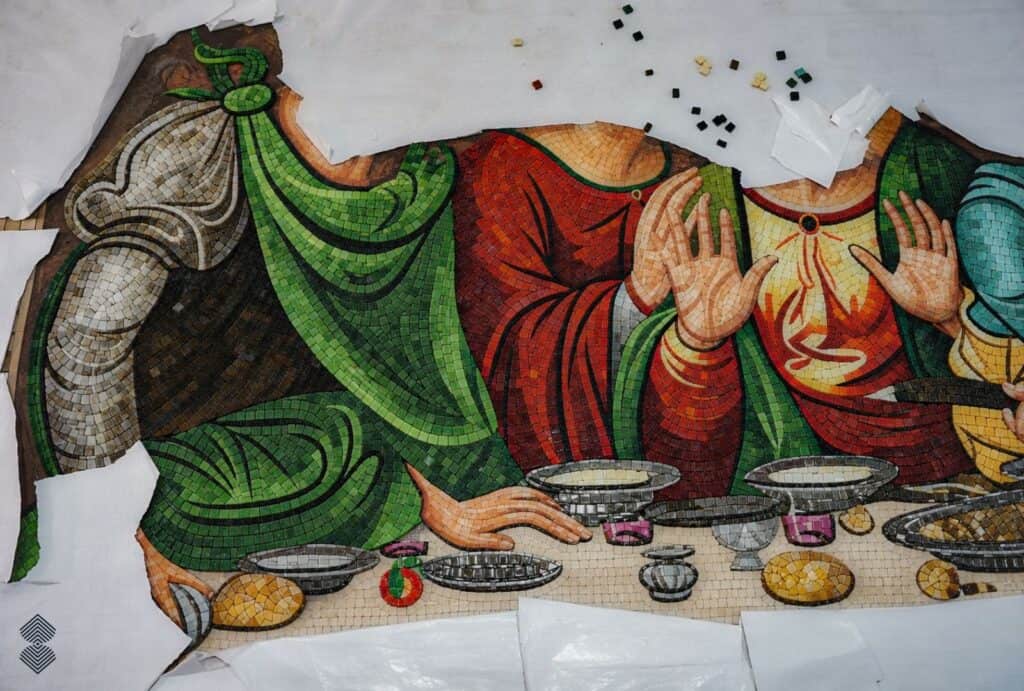
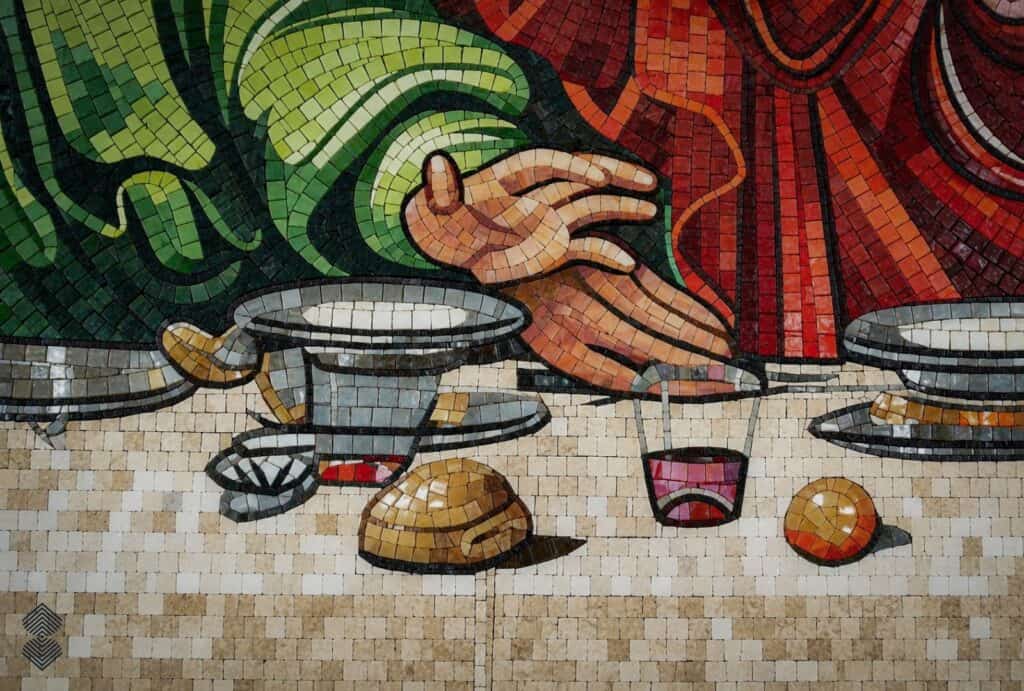
- Expressive figures: The smaller tiles depict the facial expressions, hand movements, and the natural movement of the apostles.
- Clothing colors: Rich reds, blues, greens, and golds serve to contrast against the darker tones of the architecture.
- Detailed dining table: A white tablecloth, bread, dishes, and goblets make up the dining scene with proper shading.
- Architectural depth: Darker walls and rectangular windows that lead out to blue scenery give it a sense of depth.
- Decorative borders: A geometric pattern forms the border around the whole picture.
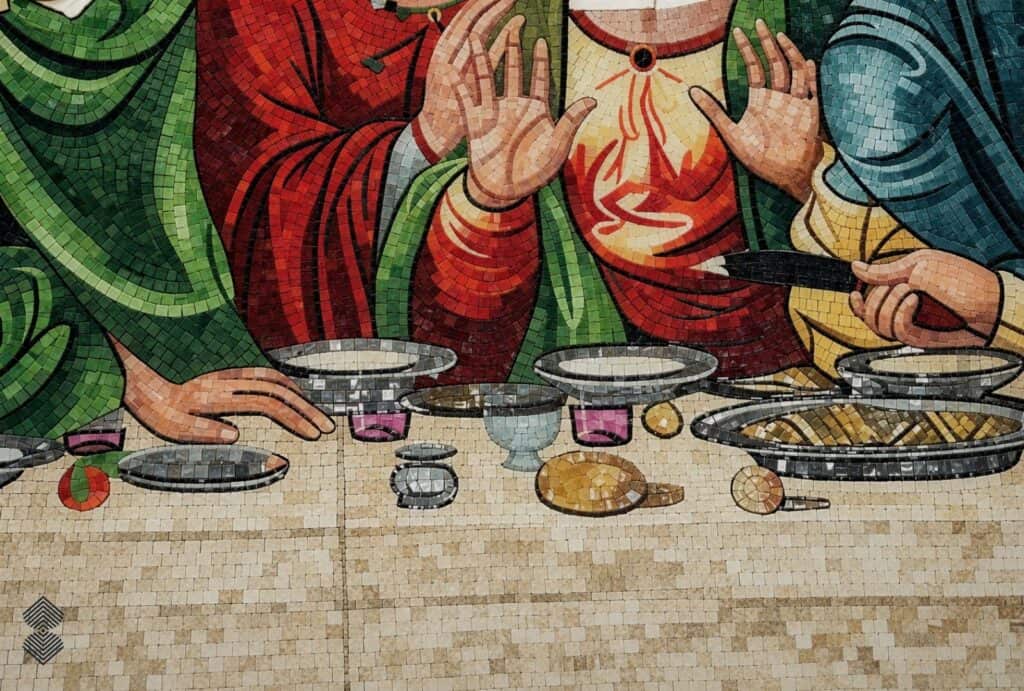
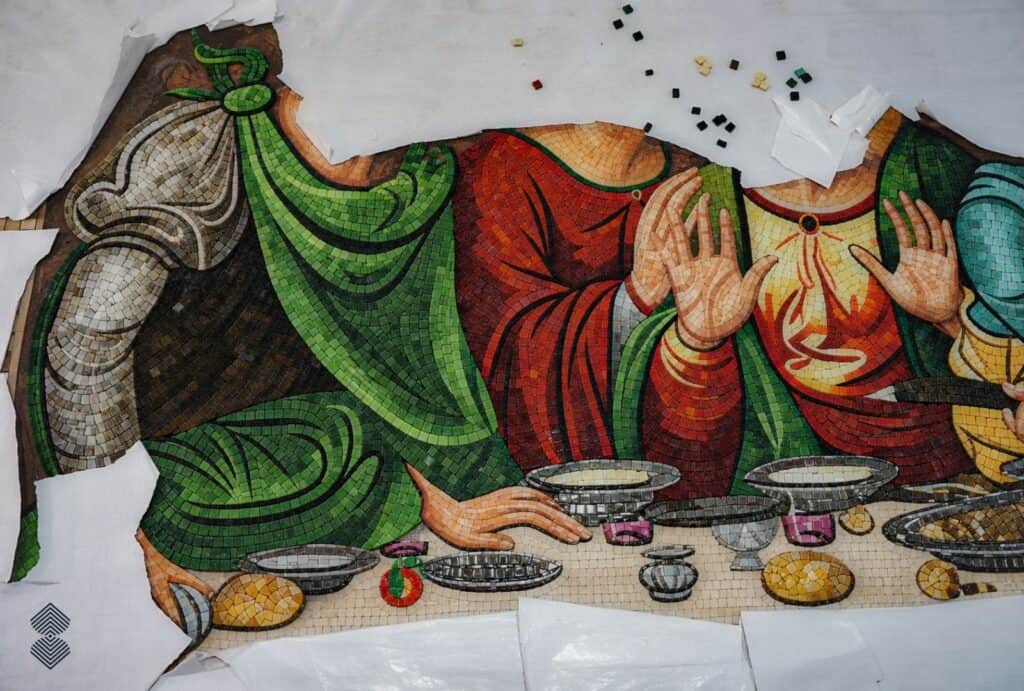
Among the most remarkable details of this mosaic is the colorfulness of the characters in contrast to the lightness of the dining table. It is amazing how the skillfully placed stones reflect the folds of the clothes and how the poses of the apostles preserve the mood of the original painting. Considering the spacious format of the piece and its many details, this painting becomes an ideal decoration for a dining room, a private collection, or a room where one can enjoy religious art. Our specialists take into account all the characteristics of the wall when designing the wall art.
5. The Annunciation in Mosaic
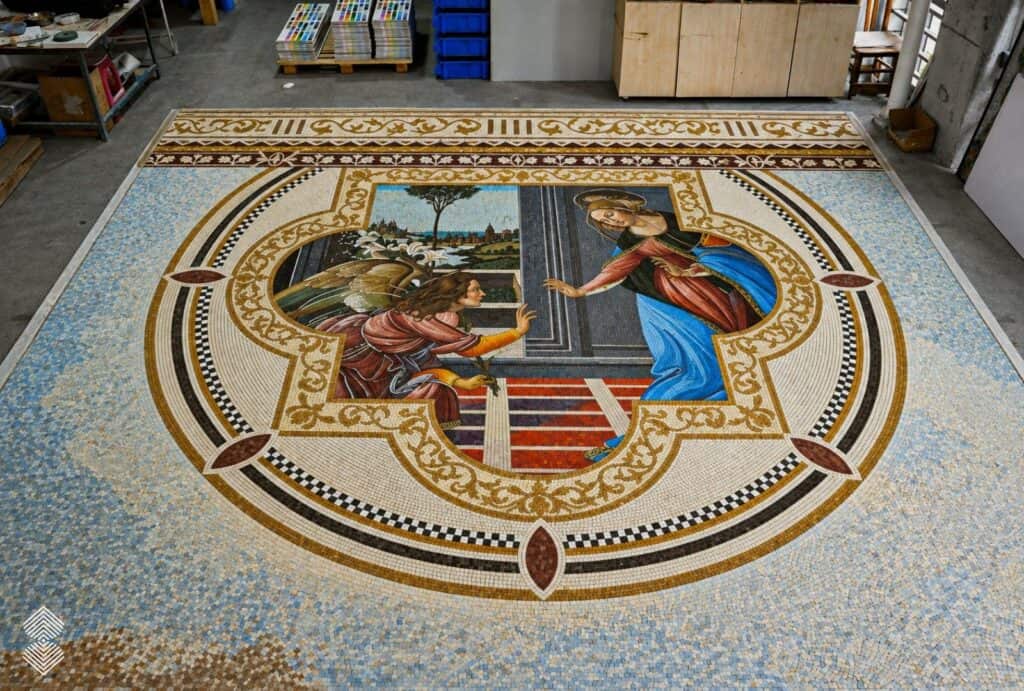
The Annunciation has become one of the most popular topics in Renaissance religious art; it shows the meeting of the angel Gabriel announcing to the Virgin Mary that she will give birth to Jesus Christ. Such compositions are characterized by elegance, beautiful poses, and luxurious architecture.
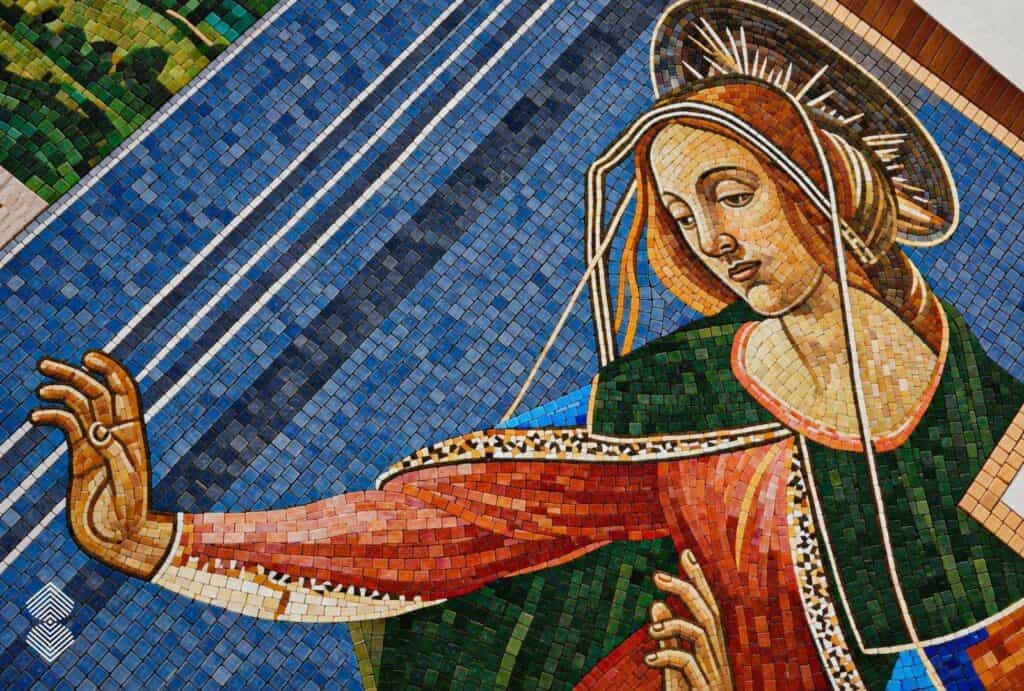
Our Annunciation Mosaic captures this spiritual scene in a highly decorative way. In particular, at the center of the composition, we can see Gabriel kneeling before Mary with golden wings. Mary wears beautiful blue and red clothes. The architecture of the background and the landscape make the composition more voluminous.
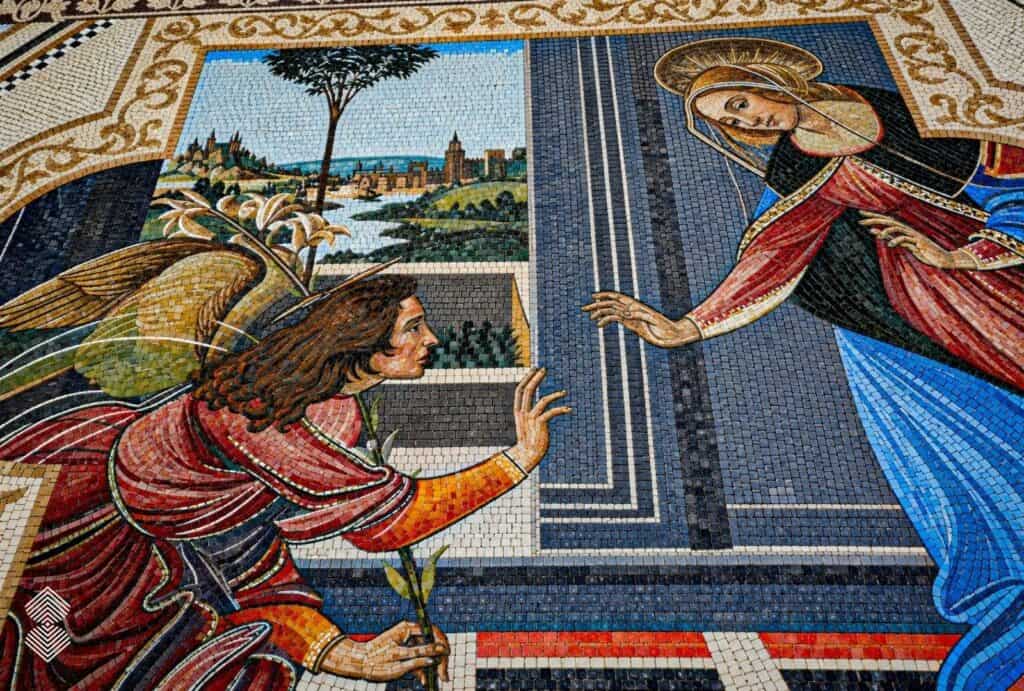
The peculiarity of our Renaissance mosaic lies in the decoration of the composition. Instead of painting it in a regular rectangle, this scene was made in a quatrefoil medallion pattern. The following are some of the artistic features emphasized by our designers:
- Figurative design: Use of small tesserae to depict the gesture of Gabriel, the serene look of Mary, and the natural folds of their clothes.
- Colorful design: The use of deep red, blue, and gold colors for the religious design.
- Medallion design: Use of rounded edges and gold scrollwork for the framing of the main work.
- Background design: Use of light blue tesserae and geometric design to add to the classical touch.
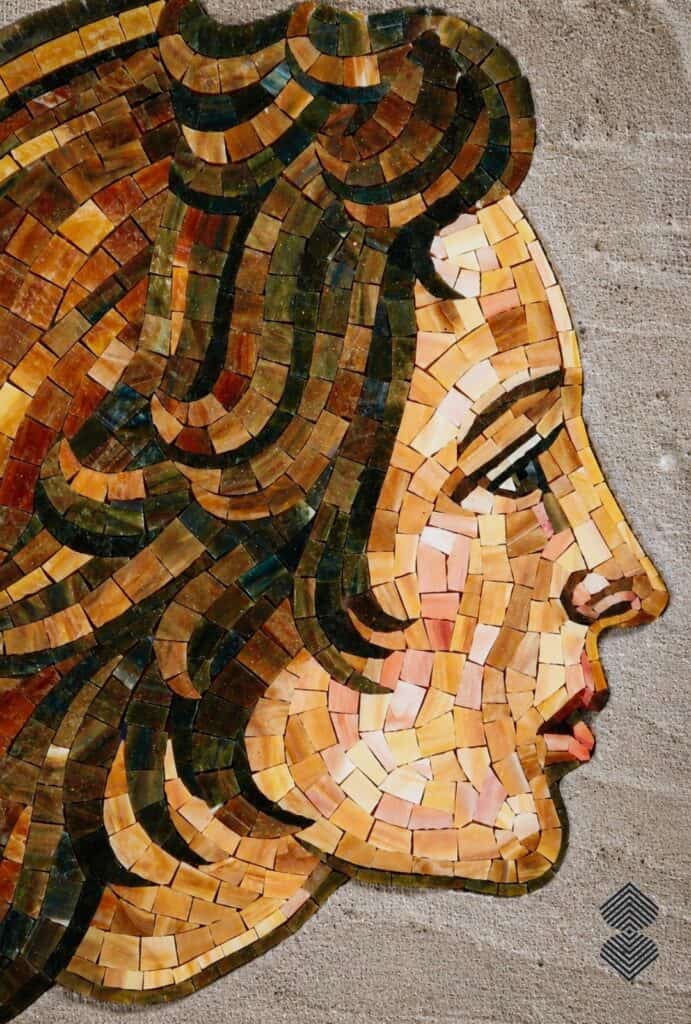
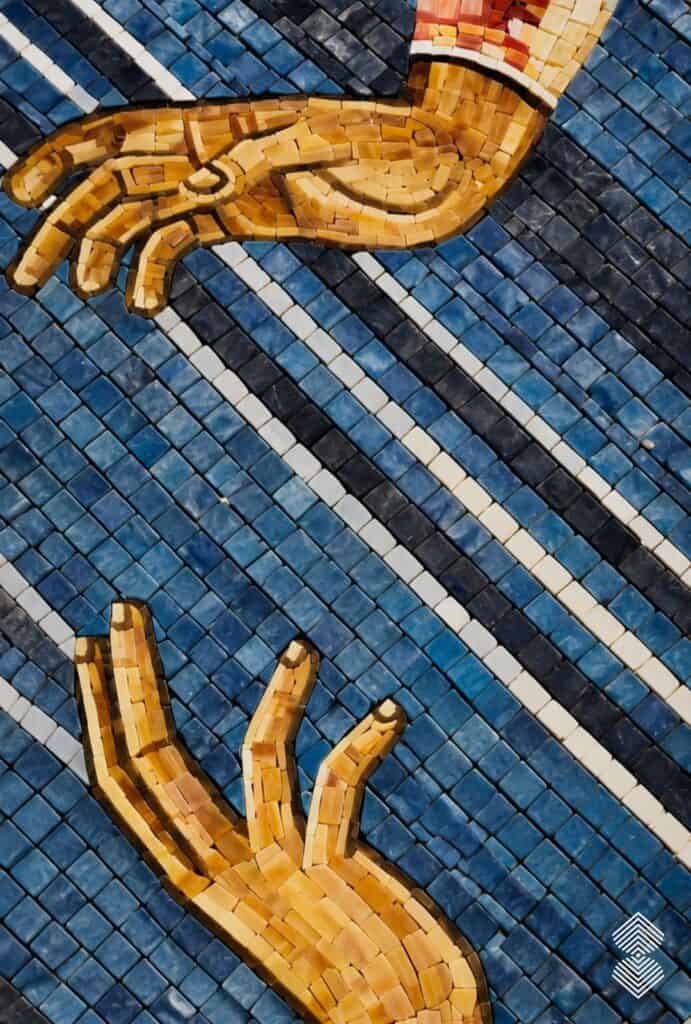
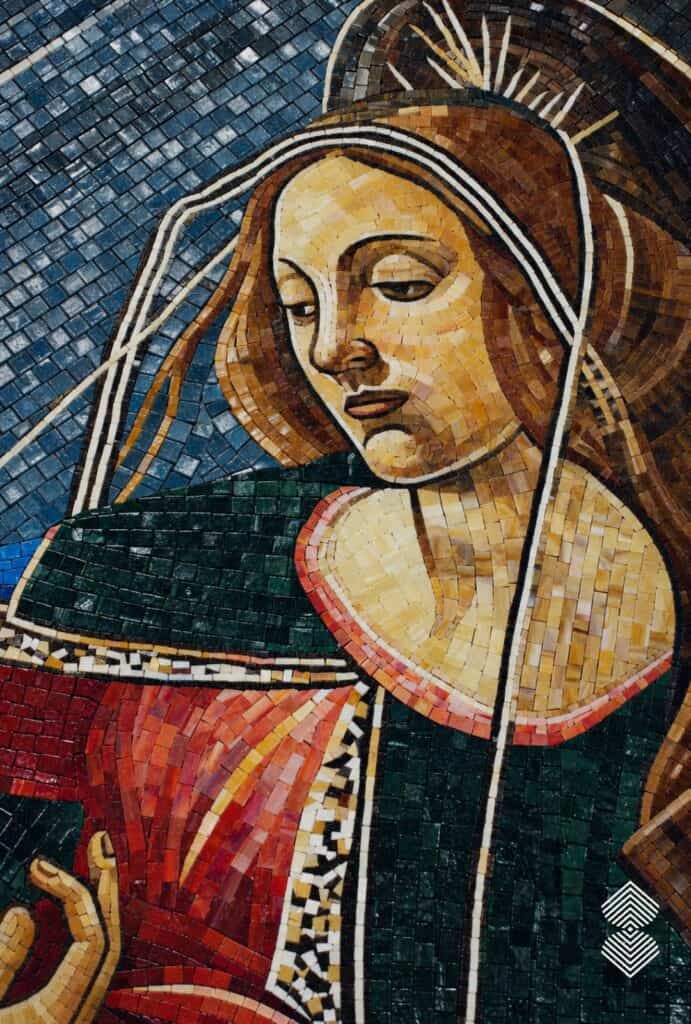
The combination of figurative art and decorative framing makes this mosaic religious artwork have an architectural uniqueness. The focal point in this mosaic is the main picture, while the pattern around it enhances the elegance without overpowering the figures. This design is very much appropriate for homeowners who have a classical theme of interior design. Our designers will modify the proportions, borders, and colors of the artwork to match your architecture, but still maintain its Renaissance style.
6. The Virgin of the Rocks in Mosaic
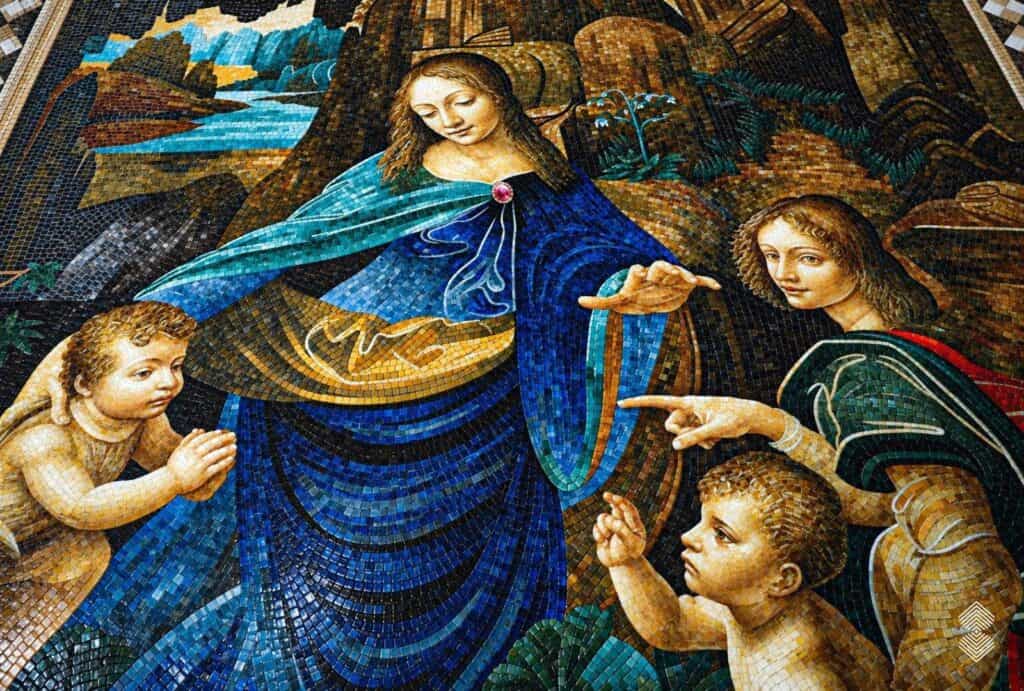
One of the most enthralling paintings of the Renaissance period is the painting Virgin of the Rocks by Leonardo da Vinci. The painting is distinguished by its gentle characters, enigmatic rocky landscape, and deep atmosphere. In the composition, there are characters of the Virgin Mary, infant Jesus, John the Baptist, and an angel.
The mosaic painting Virgin of the Rocks reflects the classic composition, using colors such as blues, turquoise highlights, and earth tones, as well as the arrangement of tesserae. Mary is presented in the central part of the picture in blue clothes and in company with the children and an angel.
Another unique characteristic that distinguishes this Renaissance mosaic from others is the combination of the colorful people against a textured rocky background. Our artists paid attention to many elements of the design, including:
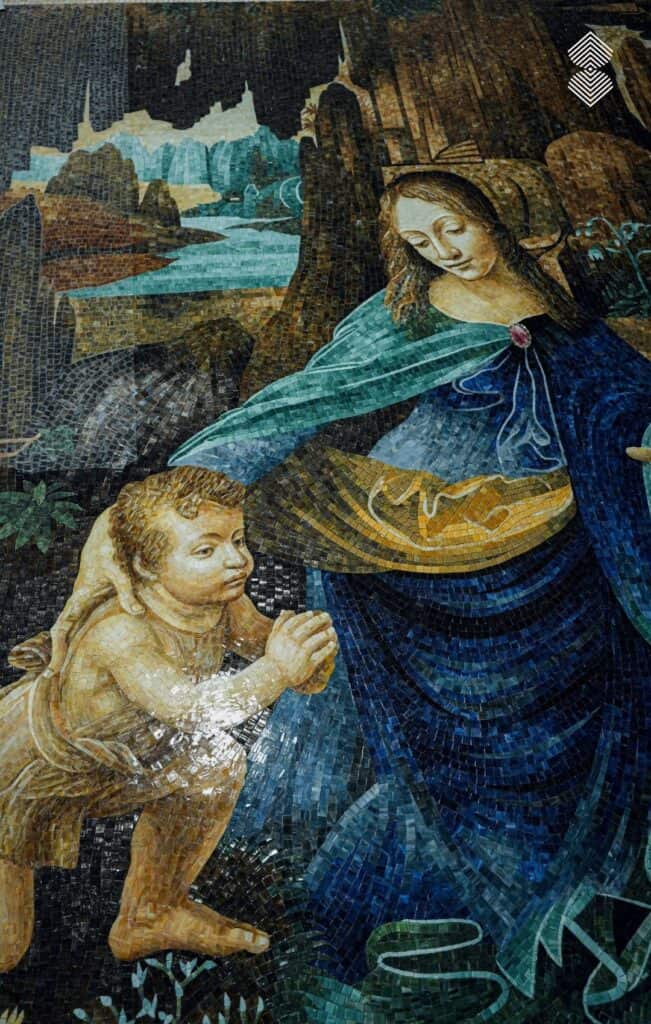
- Expressive characters: Smaller pieces are used to depict the mild appearance of Mary and the children and their realistic hand movements.
- Blue flowing drapery: Curved patterns made from cobalt blue, teal, and turquoise tiles give a sense of flow in Mary’s clothes.
- Rocky landscape: Uneven tiles in brown, gold, and black colors imitate the natural formations.
- Depth of space: Cooler blue and turquoise colors remind one of distant water and scenery.
- Plants: Small green elements serve as botanical decorations for the landscape.
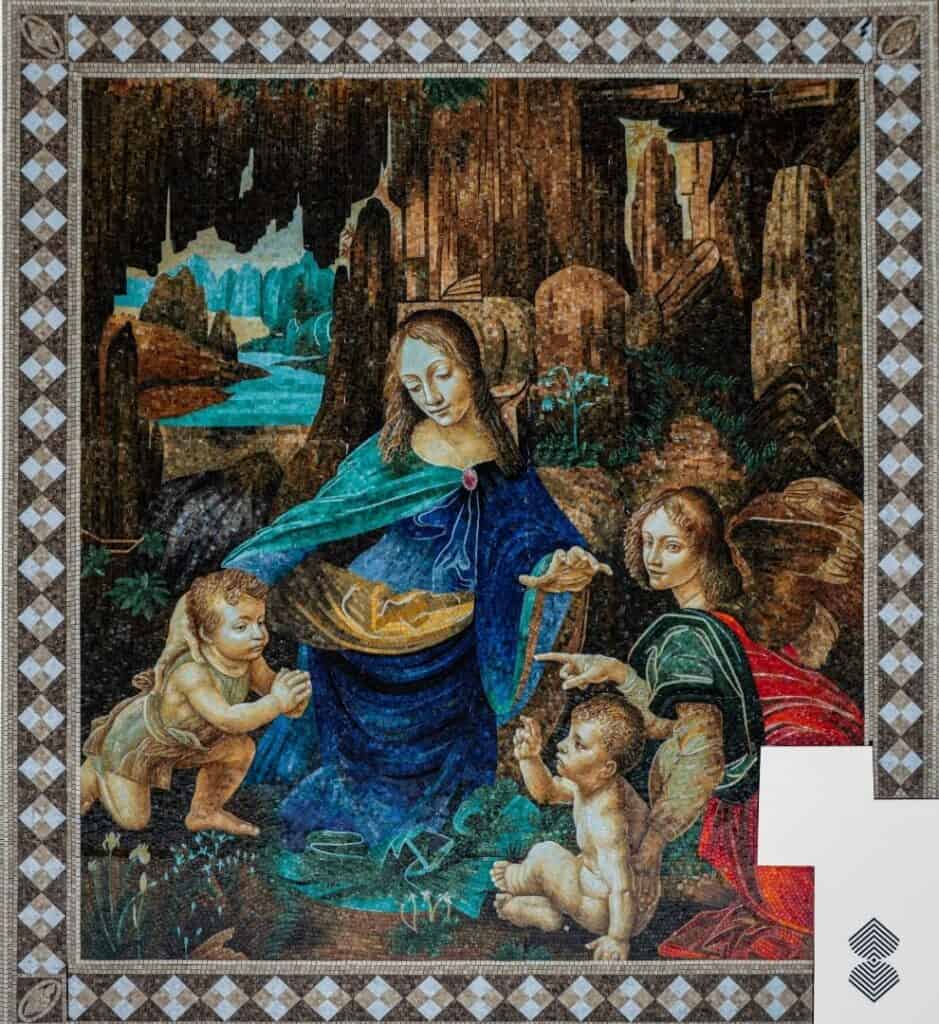
What is beautiful about the mosaic is the relationship between the characters and the scenery. From afar, the mosaic reflects the mood of the painting by Leonardo. On a closer look, one gets to see the details in shading and patterns that make up the mosaic. Because of its colors and themes, this piece of art is suitable for a private gallery or living room décor. It will be customized to fit the size of the walls while retaining its authenticity as a Renaissance piece.
How We Turned Six Renaissance Paintings Into Mosaic
Designing mosaic versions of renowned Renaissance paintings starts way before cutting the tiles becomes an issue. Each piece poses an artistic challenge in itself, where one has to deal with the right perspective in Raphael’s architecture, the right facial expressions in Leonardo’s portraits, and the right human anatomy in Michelangelo’s sculptures.
The purpose of our design work is to combine all these artistic challenges along with the necessary technical details for a custom mosaic installation.
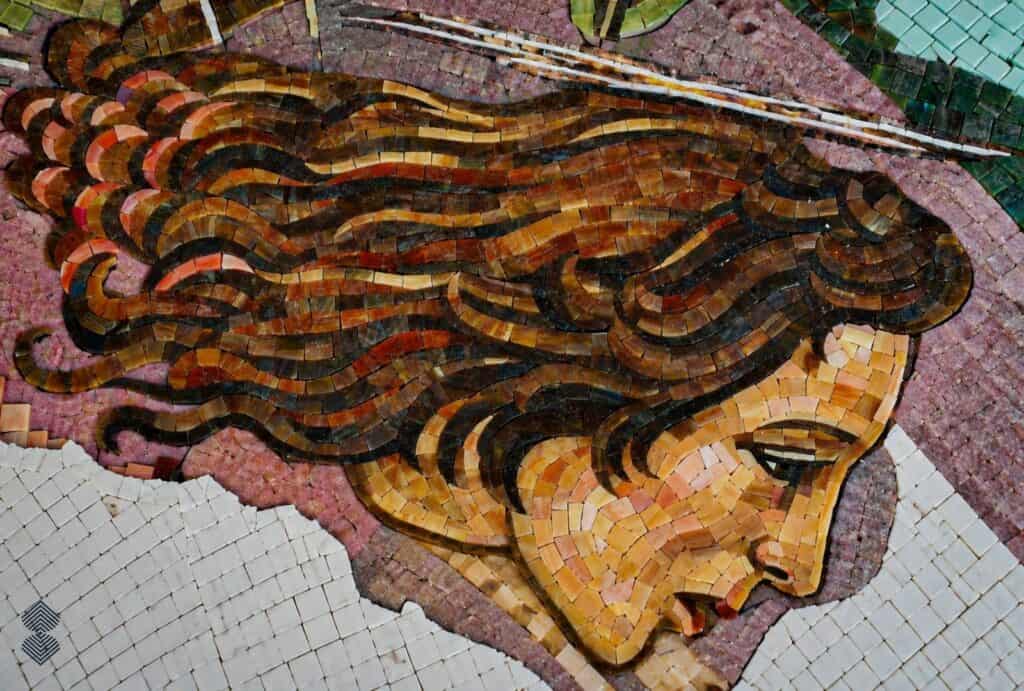
Studying the Original Painting
Every design starts from a thorough analysis of the chosen painting. Our designers analyze such elements as the composition, color scheme, proportions, and the connection of figures with the space surrounding them.
A Renaissance mural can include skillfully created perspective. Alteration of proportions without an understanding of the initial composition would make it less effective. The School of Athens is a good example of such a painting since it employs architectural means in order to direct the viewer’s attention to Plato and Aristotle.
In the same way, the painting ‘The Last Supper’ is based upon the arrangement of the apostles at the dining table. The first step would thus involve the identification of the key elements that must remain intact and those that could be changed. Some of the factors to be considered include:
- Original work of art and composition
- Size of the installation
- Arrangement of the main characters
- Color scheme and choice of materials
- Environment in which the mosaic is installed
- Distance from where it will be viewed
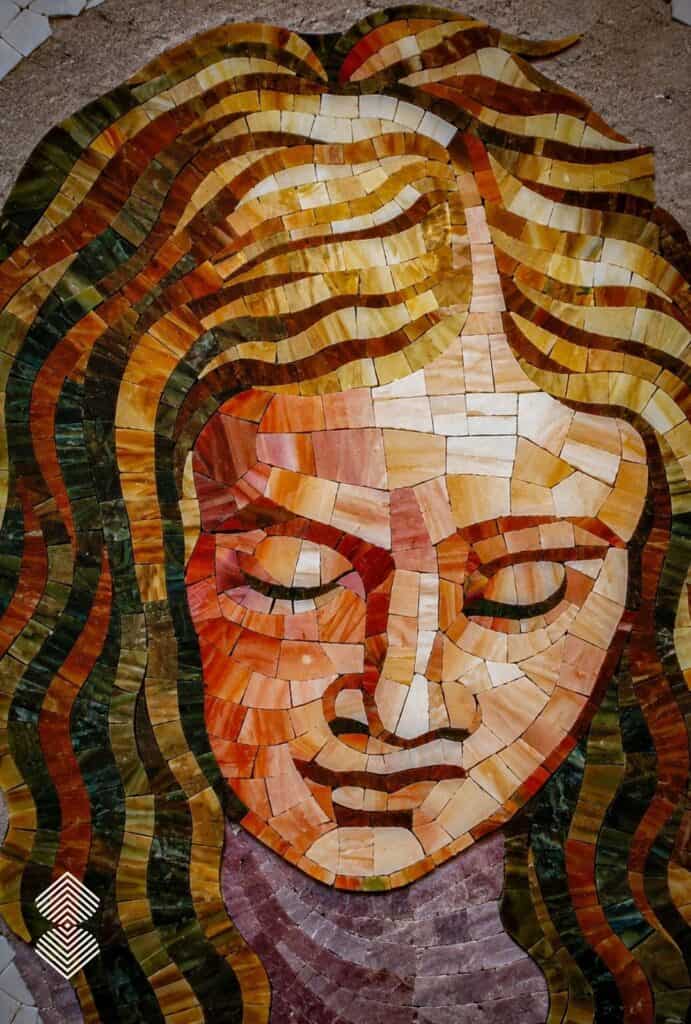
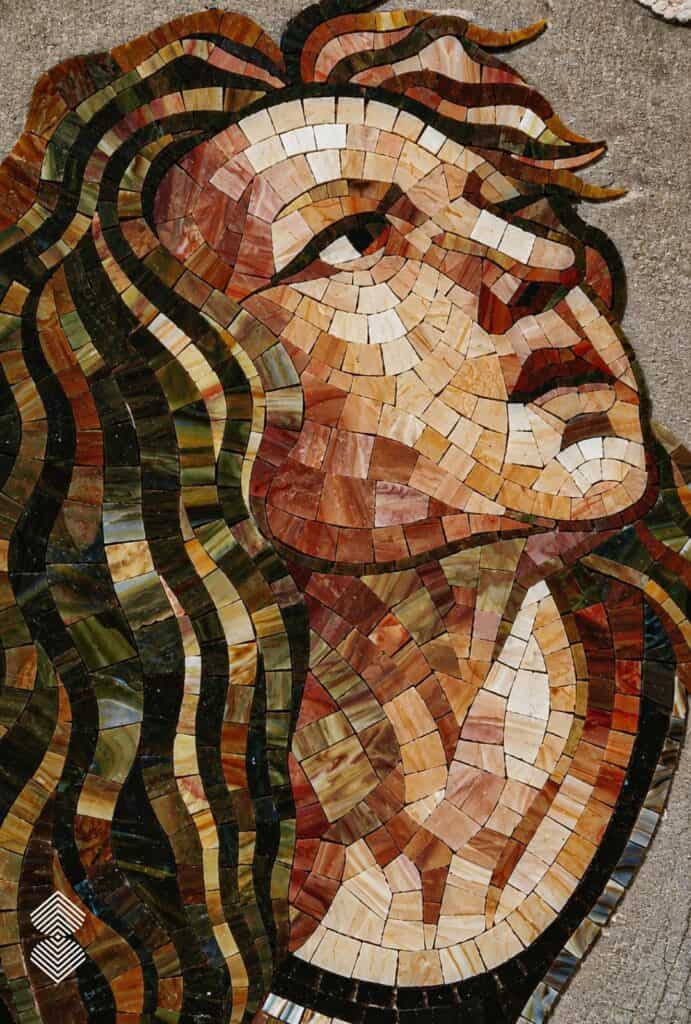
Hand-Cutting Faces, Hands, and Drapery in Tesserae
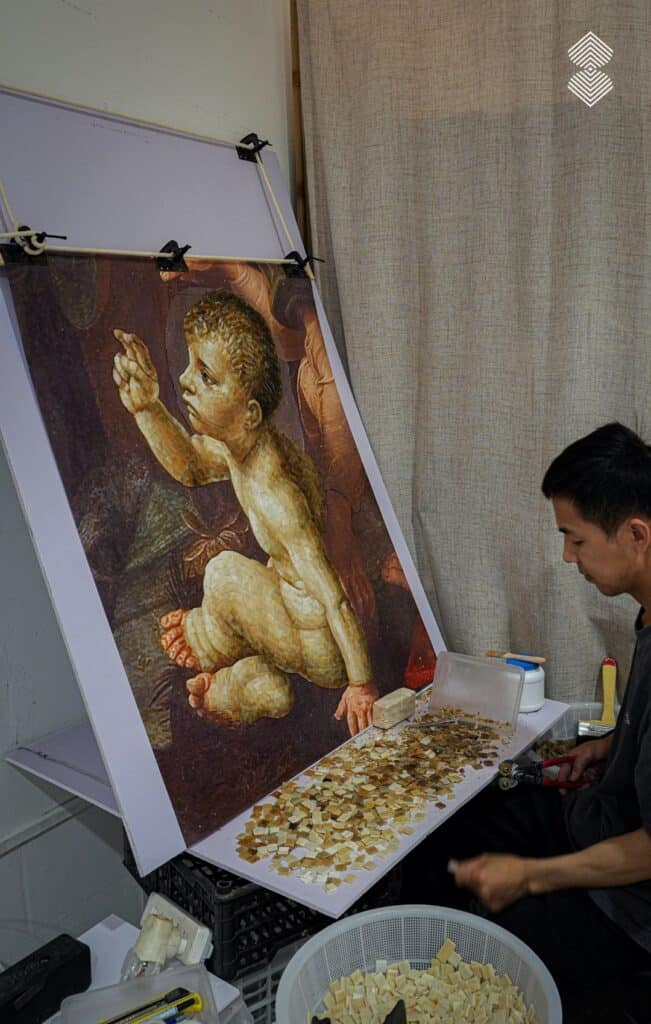
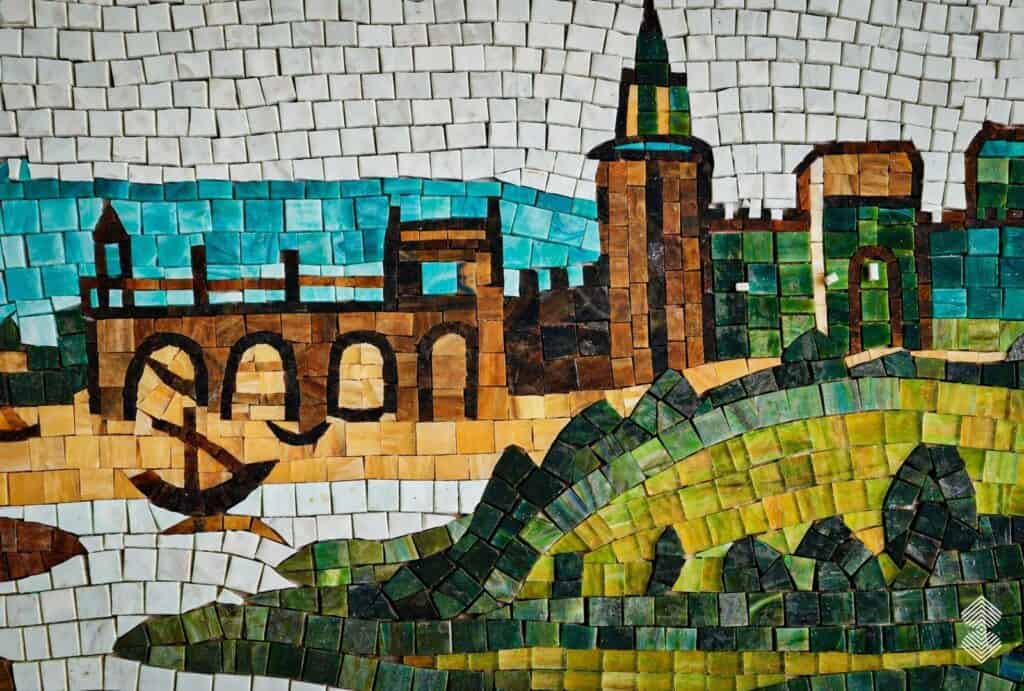
The Renaissance artworks feature smooth blending of colors and minute detailing of elements, such as faces, hands, and drapery. For an accurate reproduction of the elements, mosaic needs tiny and precisely cut tiles. For this, our artisans position the tiles along the curves of faces, fingers, and drapery, thus giving rise to the phenomenon called andamento. Explore our custom photo-to-mosaic process to see how detailed images become handcrafted mosaic artwork.
Choosing Materials for Renaissance Mosaic Art
Material selection plays an important role in determining the appearance of the final product. For example:
- Glass Mosaics: Vibrant colors with a shiny texture, good for detailed painting, decoration purposes, and colorful dresses.
- Marble Mosaics: Smooth texture with soft colors, great for classical architecture, portraits, and backgrounds with stones.
- Use Different Materials: Create variation in texture and finish to make a difference between the figure and surroundings.
- Water Jet Cut Material: Helps to get accurate shapes for outlines and architectural designs.
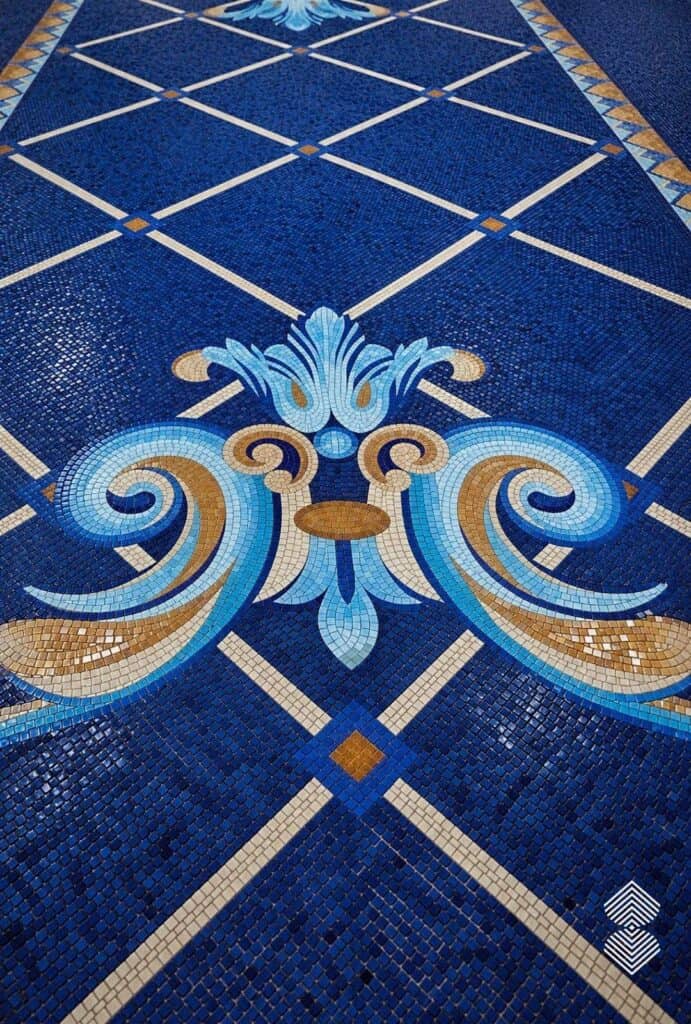
Ornamental Borders and Ceiling Medallions
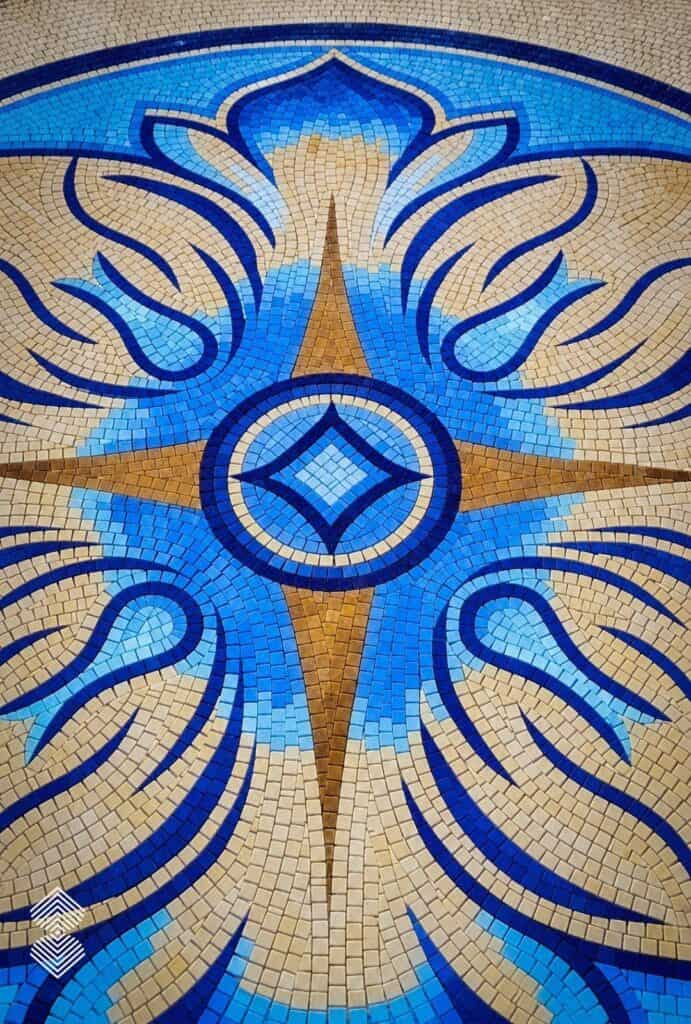
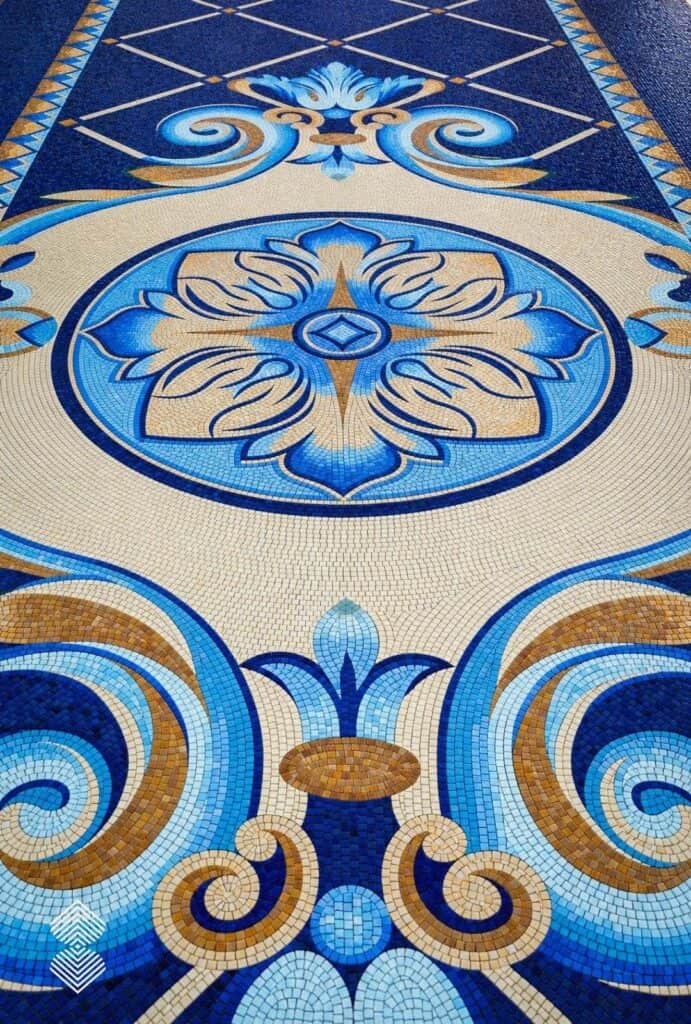
Borders and medallions play an important role in relating Renaissance mosaics to classic architecture. For example, our Annunciation mosaic is an excellent example of this; it includes a religious image surrounded by gold designs, arched borders, and geometrical shapes. We design these to complement the piece but not dominate it.
Moreover, the placement of the mosaic is important for deciding upon its size and composition. The following factors need to be considered:
- Feature walls: Proportion of artwork and placement of furniture.
- Personal galleries: Light and detail.
- Staircases: Viewing angle and visual harmony.
- Ceilings: Weight, visibility, and safety of art installation.
- Dining rooms: Dimensions of wall and focus.
- Religious spaces: Placement of artwork and architecture.
Final Thought: Commission a Renaissance Mosaic for Your Home
If you find yourself attracted to the beauty of The School of Athens, the characters depicted in The Creation of Adam, or the colors used in The Virgin of the Rocks, you will be able to create a different type of wall art from each piece of artwork. Our artists at MEC Artworks design your customized mosaic in accordance with your artistic references, desired dimensions, and interior demands.
You can start with a whole painting, some part of a painting, or even your own concept that is inspired by the art of the Renaissance. Your composition can then be customised according to the materials you prefer, desired colors, and the place where you will install the mosaic.
FAQs
What Is the Most Famous Piece of Mosaic Art?
One of the best-known works of mosaic art is the Alexander mosaic of Pompeii, which dates back to the second century BC. This mosaic illustrates a battle scene featuring Alexander the Great and Darius III, the king of Persia. Some other examples that are famous include Byzantine mosaics of Ravenna and Hagia Sophia.
Can Any Famous Painting Be Recreated in Mosaic?
Certainly, it is possible to reproduce numerous world-renowned paintings in mosaic by means of choosing appropriate materials and cutting tesserae with hands. The degree of detail will depend on the size, palette of colors, and intricacy of the painting. Explore our famous artworks recreated in mosaic to see how classical paintings can become handcrafted artwork.
How Detailed Can a Mosaic Portrait Be?
A mosaic can be used to create a portrait that expresses minute facial expressions, different tones of skin, and the design of clothing. Small tesserae are useful in defining the eyes, mouth, and other facial features, whereas large tesserae help in creating a soft background.
Can a Renaissance Mosaic Be Installed on a Ceiling?
Certainly, there is an opportunity to create Renaissance mosaics for ceilings with decorative medallions and classic compositions. The design should be done taking into account the size of the ceiling, the angle at which it will be observed, and its structure.
How Much Does a Custom Renaissance Mosaic Cost?
This will be determined based on the dimensions of the piece, its complexity, the materials used, and the need for installation. Portraits with intricate details and large Renaissance pieces may require hand-cutting that will take longer to complete. Explore our custom mosaic pricing guide or request a personalized quotation for your project.