

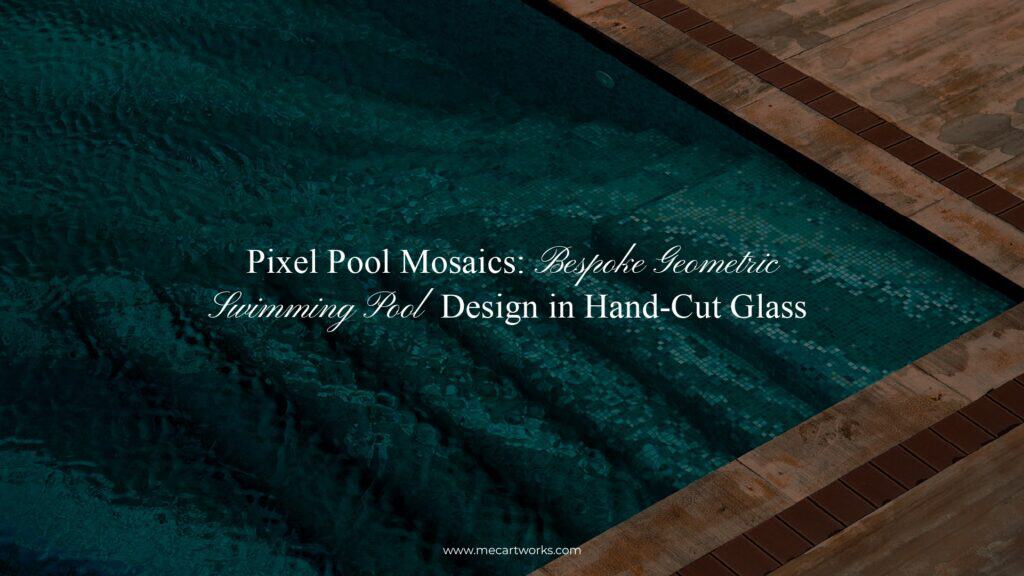
Most pools use the same design principle: blue tiles, clear water, and plain decoration. Nothing is wrong with it. However, when the pool becomes one of the central elements of a villa, a hotel, or an open-air area, its visual potential can be increased. In this situation, pixel pool mosaics appear as an ideal solution. To decorate such a pool not with one repeating tile, but with a big geometric image composed of hundreds and even thousands of tiny tesserae.
Up close, you see the individual tesserae. From a distance, pixel pool mosaics form gradients, shapes, patterns, or abstract artwork. Once the pool is filled, sunlight, water movement, and depth continually change how the design appears. This makes geometric pools especially interesting, as a precise pattern can become softer and more fluid underwater.
Table of Contents
What Is a Pixel Pool Mosaic?
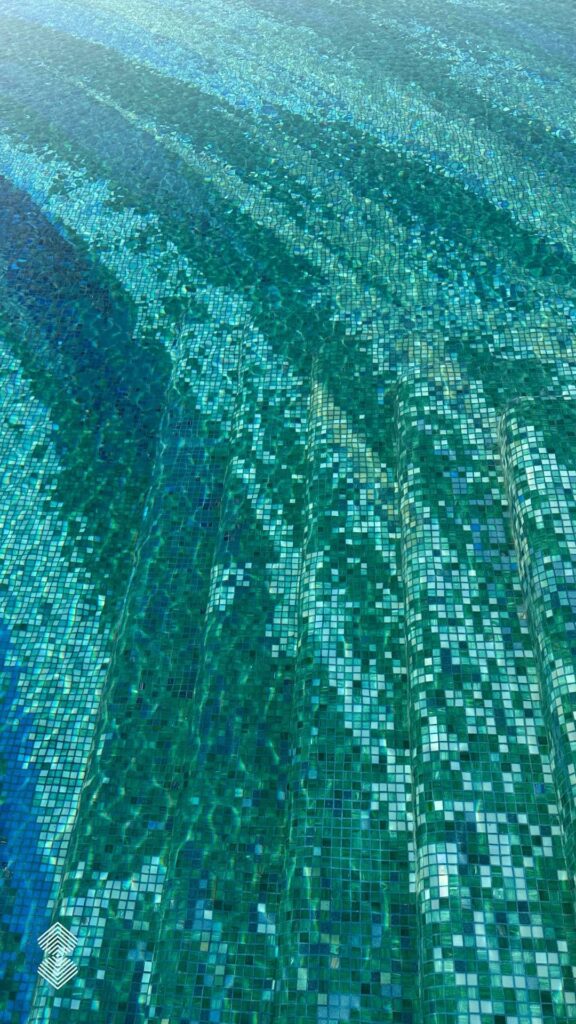
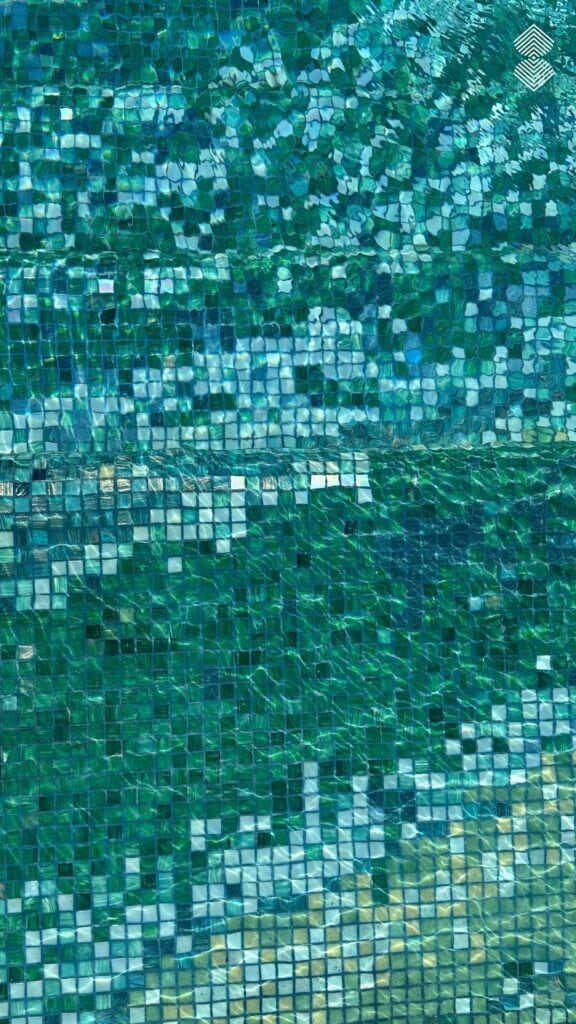
The simplest way to explain pixel pool mosaics is to compare them to a digital image. Once you zoom in on a photograph, at some point, you will begin to see little squares. These pixels are what make up the whole image. This is how the mosaic operates as well; however, the pixels used in a mosaic are real physical elements referred to as tesserae. They can be made out of such materials as glass or marble and put together piece-by-piece to create something much bigger. With the pixelation of the pool tile, sometimes these elements remain visible.
This is exactly what the bespoke pixel pattern pool mosaic design entails. The pixel mosaic does not necessarily need to be smooth or realistic. On the contrary, it is often the very blocks and steps that make the design unique.
Pixel Pattern Versus Photorealistic Mosaic
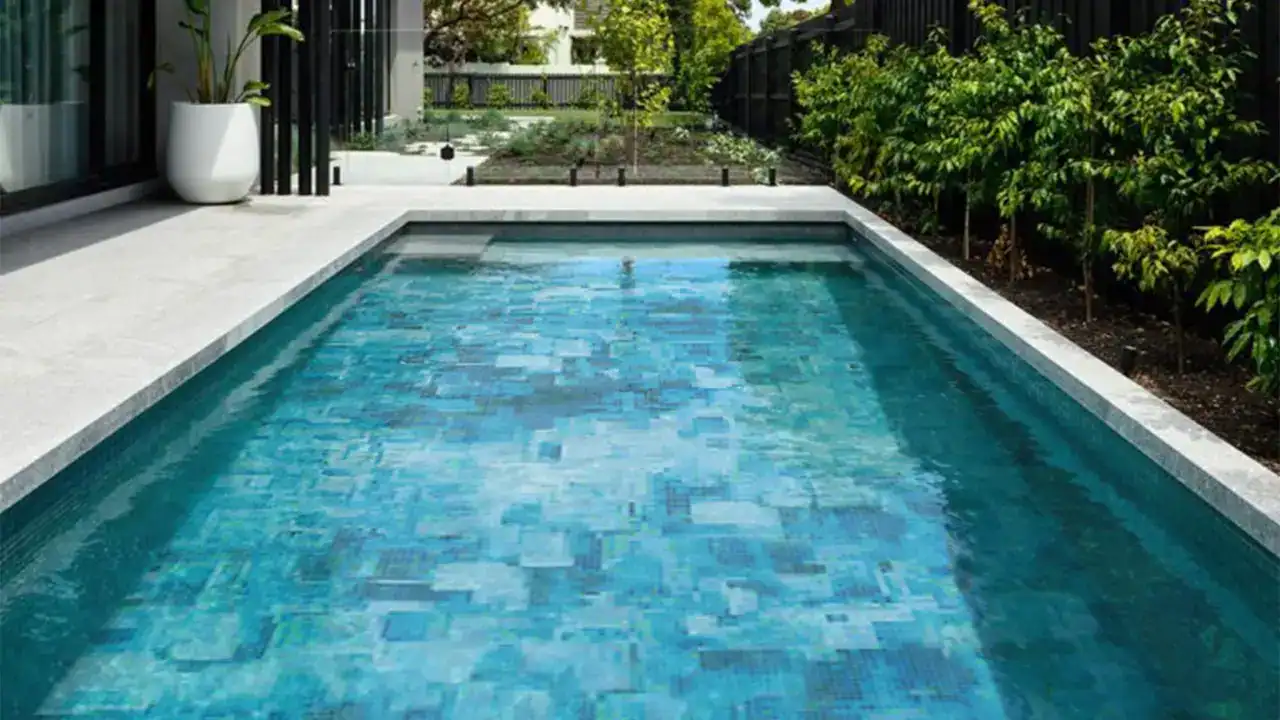
The materials used for a pixel mosaic and a photorealistic mosaic are identical; however, their goals differ. Usually, a photorealistic mosaic requires that viewers focus on the picture first. Tesserae blend seamlessly with the artwork itself. In a pixel mosaic, one may observe the structure clearly. It is possible to keep the grid visible along with its sharp edges and steps. This approach helps give the pixel mosaic a modern and graphic look. Additionally, pixel pool mosaics can complement the clean architecture of a modern villa. For a more traditional or landscaped property, an organic mosaic design may be a better fit.
Why Geometric Pools Are Replacing Plain Blue Tile
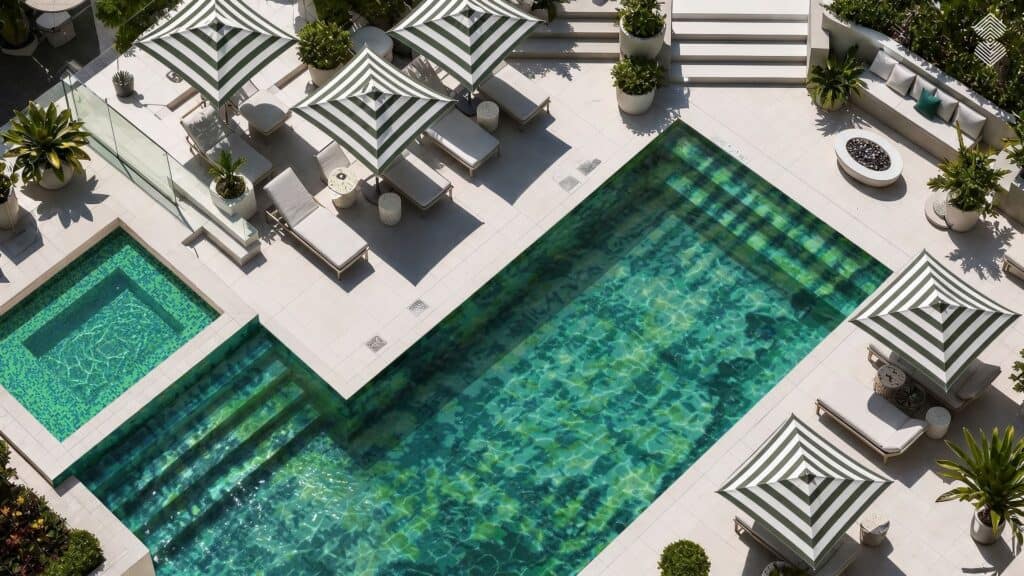
Plain blue pools will probably never disappear. They are simple, familiar, and easy to design around. However, more homeowners, architects, and hospitality designers are using pixel pool mosaics to make the pool feel like part of the overall design rather than something added at the end.
Think about where a luxury pool sits today. It may be visible through full-height windows, from a rooftop terrace, from a hotel balcony, or directly from a living room. From those angles, the pool floor becomes a large visible surface. That creates room for something more interesting. A geometric pool mosaic can pick up colors, shapes, or lines already used in the architecture and bring them into the water.
For example, the pool design might reflect:
- Lines in the facade
- Patterns in the stone flooring
- Brass or bronze details
- Interior floor geometry
- Landscape shapes
- Colors used inside the property
The pattern does not have to be loud. Some of the best pixel pool mosaics use only a few related shades. From a distance, the pool looks calm and balanced, while up close, the pixel structure becomes much more noticeable.
How a Pixel Grid Is Designed for a Pool Floor and Waterline
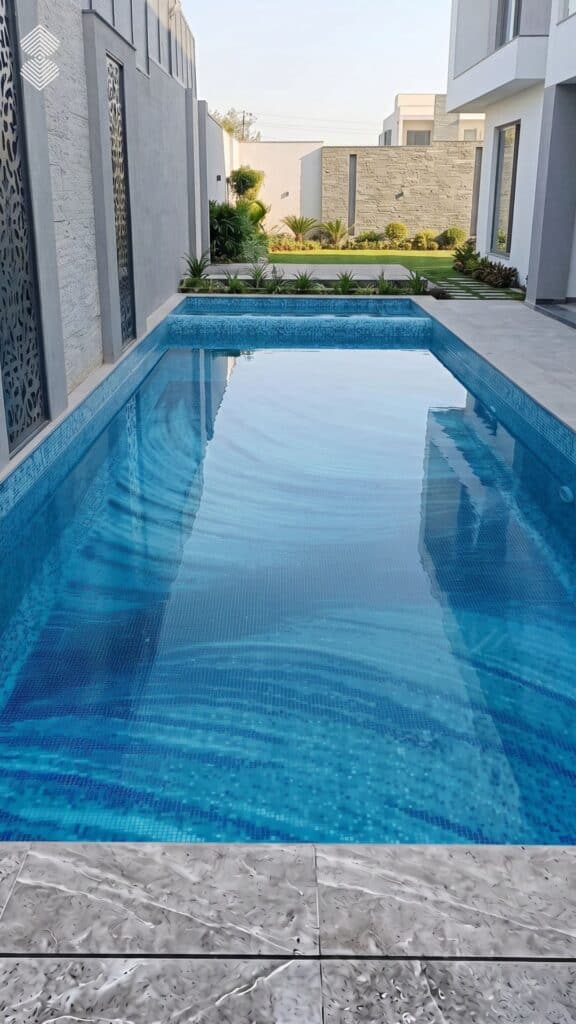
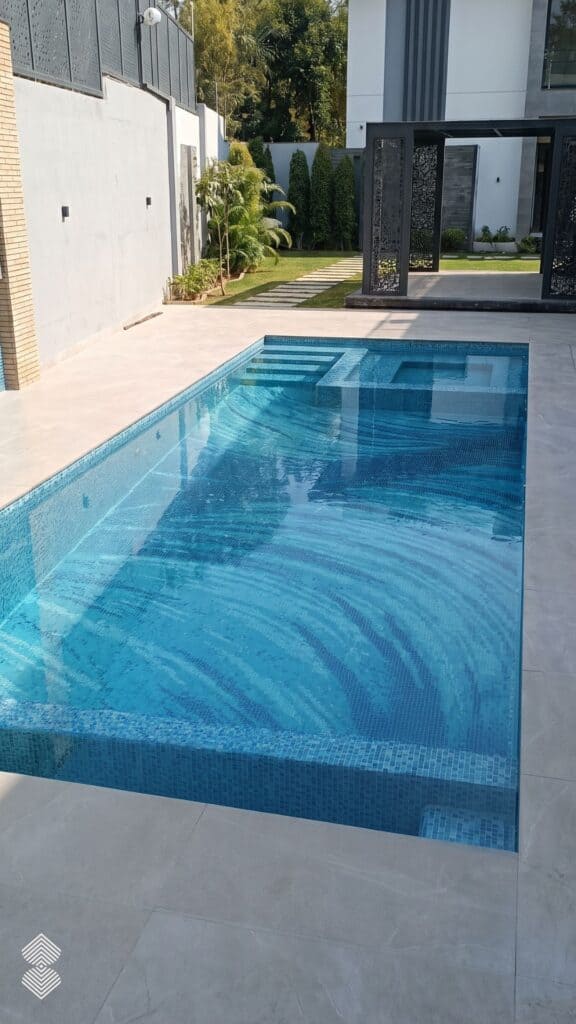
A pattern can look perfectly straight on a computer screen. A real pool is another story. You have slopes, steps, curves, benches, drains, waterlines, and sometimes an infinity edge to work around. This is where the actual swimming pool mosaic design starts to become more technical. The pattern needs to fit the real shell, not just look good as a flat image.
Designers usually start with the information available from the project. For pixel pool mosaics, this may include pool plans, measurements, CAD drawings, photographs, or material samples. These details help define the actual size and shape of the area before the mosaic design is developed further. Useful pool mosaic project information can include:
- Pool dimensions
- Sections and elevations
- Step locations
- Curves and corners
- Bench and ledge positions
- Drain locations
- Surrounding materials
- Reference images
Mapping the Grid to Pool Curves and Steps
Curves and steps need extra planning in pixel pool mosaics. A straight grid can meet a curved pool edge as it is or gradually adjust to follow the shape. The same applies to steps, ledges, and submerged benches. The pattern can continue across them, change color or scale, form a border, or stop at a planned point. This keeps the mosaic connected to the pool’s shape instead of looking randomly placed.
Choosing Tile Size for a Crisp Pixel Edge
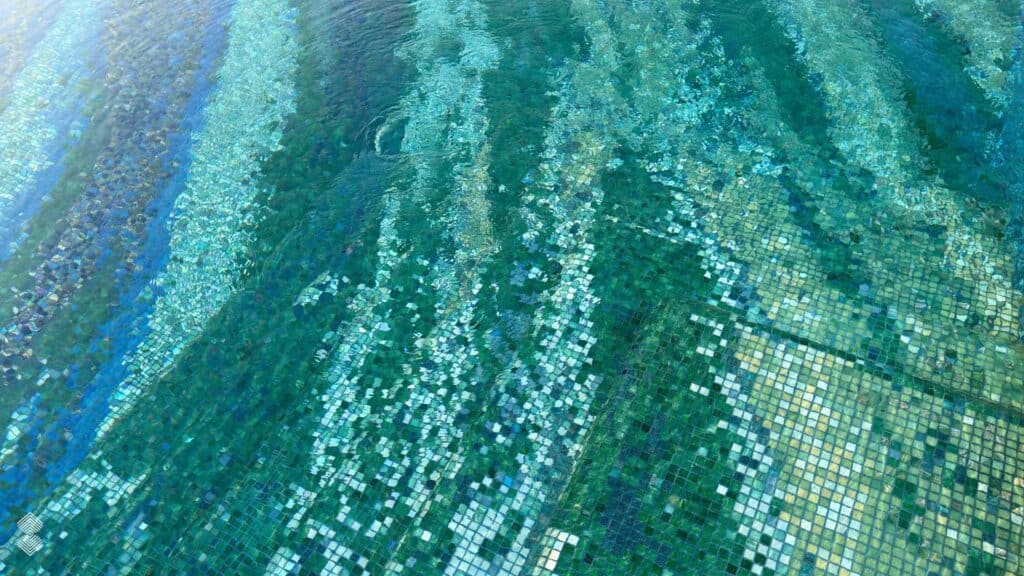
The change of tile size affects the appearance of the pixel mosaic. Small tiles provide detailed images with smoother color blending, while large tiles result in bolder and more graphic pictures. The shape of the pool is another important factor when designing pixel pool mosaics. Smaller tesserae can follow curves more easily, while larger pieces work well across broad, flat areas. For geometric designs, careful grid alignment is essential to keep the pattern consistent.
Materials for a Bespoke Geometric Pool Mosaic
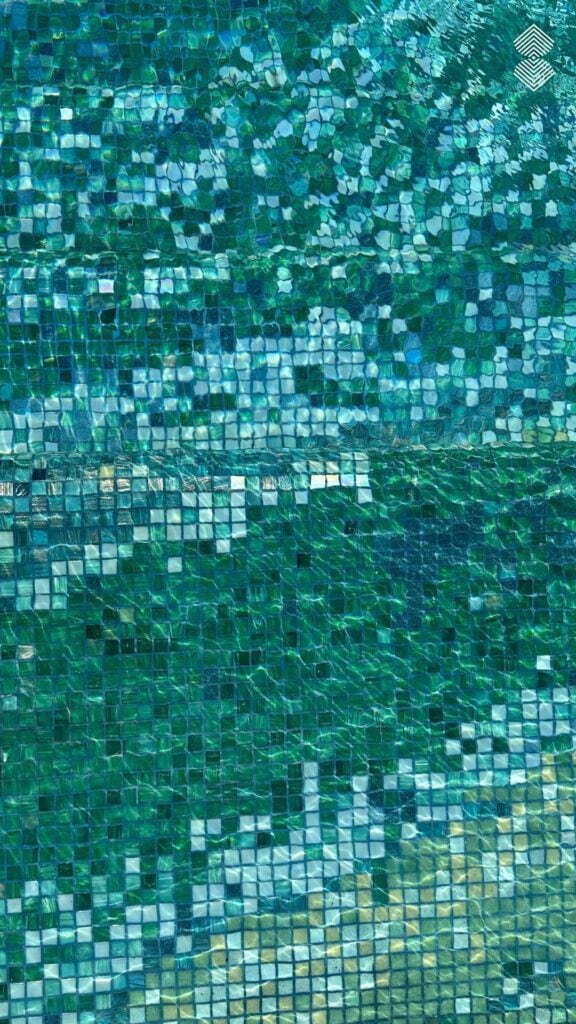
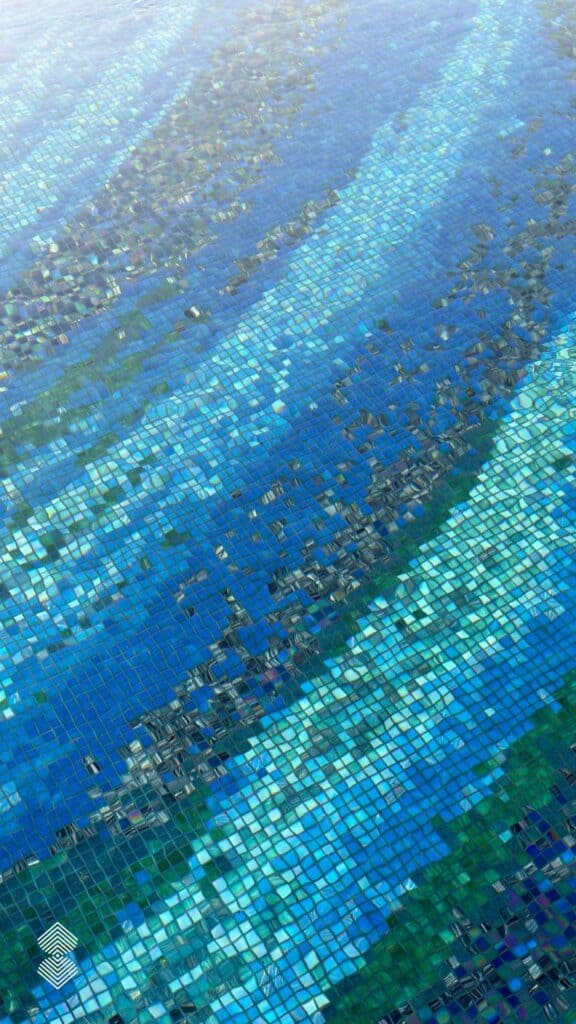
The same pattern can feel completely different depending on the mosaic material you use. Glass tends to make the colors brighter and more reflective. Marble gives the pattern a softer and more architectural look. Before choosing any material between them, think about what you actually want the pool to feel like. Should it be vivid and eye-catching? Or should it blend more quietly with the stone, landscape, and architecture around it?
In fact, appearance is only one part of the decision when choosing pixel pool mosaics. The selected mosaic also needs to work with the pool’s substrate, waterproofing, setting material, grout, and installation system.
Glass Tesserae for Colour Saturation Underwater

Glass is one of the most natural choices for pixel pool mosaics because it holds strong colors well. Shades can move from pale aqua and turquoise to cobalt, navy, and almost black without losing the pattern. Glass also reacts beautifully to light, with some pieces reflecting more while others appear deeper or more opaque. Once the pool is filled, these variations make a structured pixel pattern feel more alive.
A hand-cut glass mosaic for geometric swimming pools works particularly well for:
- Blue gradients
- Emerald details
- Turquoise fields
- High-contrast designs
- Bold geometric patterns
- Pixel-style artwork
Natural Stone and Marble for a Softer Pixel Fade
If the desired look for the design is not a bright one, you may try to achieve a completely different feel using natural stone and marble. You can keep the geometric pattern in the mosaic but add the element of nature through small veins and variations in color. This kind of look will go best next to limestone terraces, neutral architecture, and interiors rich in stone. Rather than adding a brightly colored and contrasting swimming pool, the mosaic could pick up some of the colors already present in the area.
For pixel pool mosaics, shades of cream, gray, charcoal, green, and blue stone can work beautifully. The pattern remains visible but creates a more subdued look. However, not every type of stone performs the same way underwater, so material selection is important.
How Water and Sunlight Change the Way a Pixel Pattern Reads
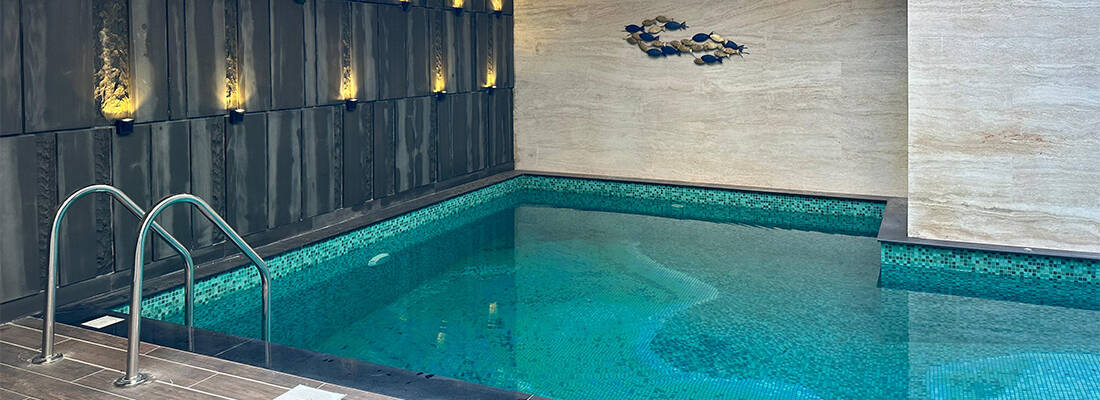
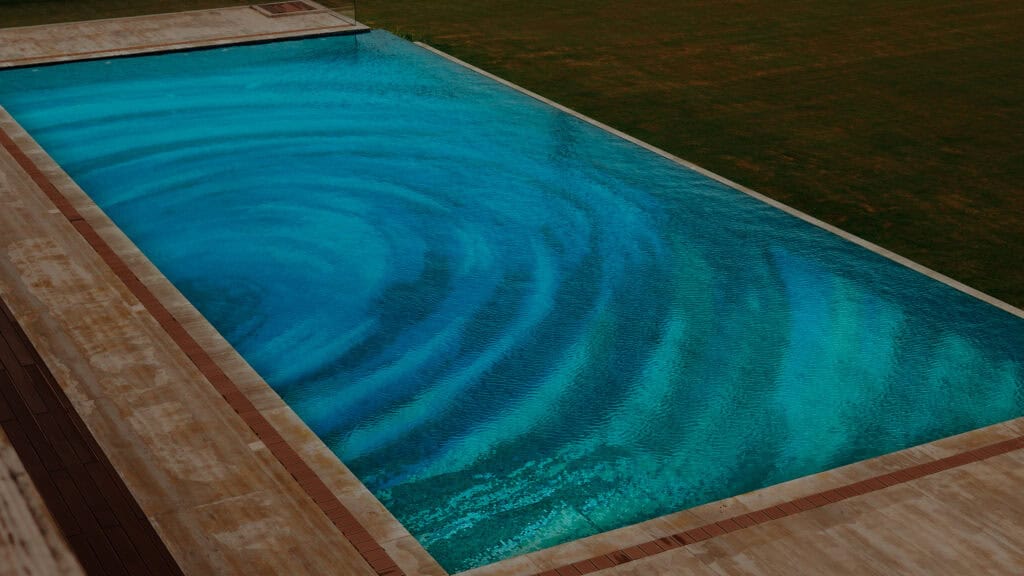
It is one of the most fascinating aspects of creating a mosaic for the pool around the world. No matter what you see in the studio, it will never look like that under the water. Water refracts light. Waves roll on its surface. Sunlight brings out highlights and shadows. Even the most perfect line seems to be moving under the water.
Pool Depth Changes Perception
A shallow ledge is easy to read because the mosaic is close to the surface. Small details and softer color changes can still stay visible. A deeper area is different. You are looking through more water, so fine details may become less obvious. Stronger shapes and clearer blue contrast usually work better there. That does not mean deep areas need simple designs. It just means the main forms should be strong enough to survive the extra depth.
Viewing Angle Changes the Pixel Pool Mosaics Design
Most people do not view a pool from directly above. They see it from a lounge chair, dining area, terrace, balcony, or window. These angles can change how shapes appear, so the main viewing points should be considered when designing pixel pool mosaics for bespoke geometric pools.
Sunlight Creates Movement
This mosaic will change its look depending on the time of day: morning, noon, or night. In the morning, the colors will seem a bit lighter compared to midday when the sun is bright. Also, the trees, walls, and pergolas near the pool will influence the surface due to shadows. This means that a computer rendering should be seen as an example, not a picture of the future pool.
From Design Brief to Hand-Cut Pixel Pool Panel
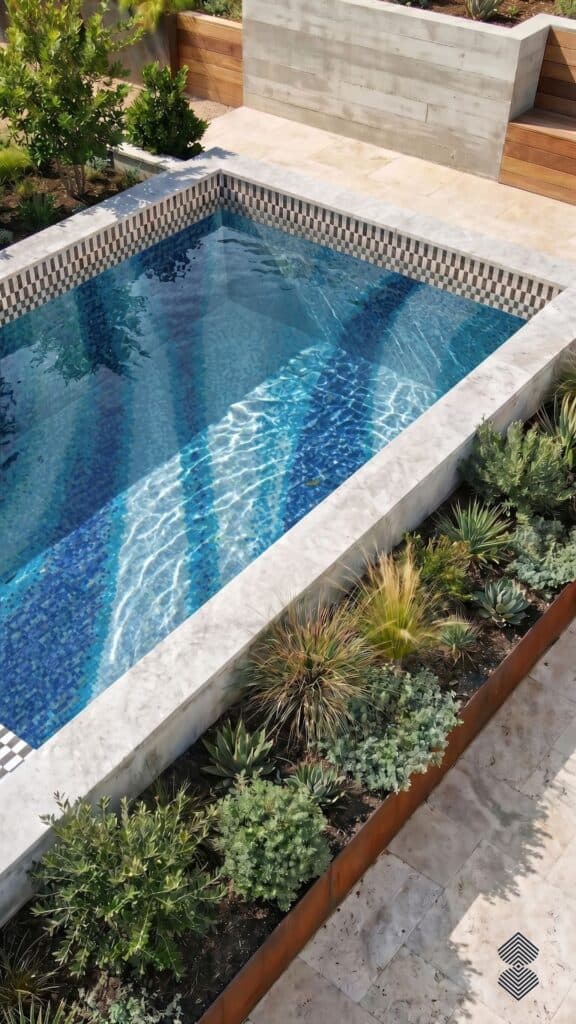
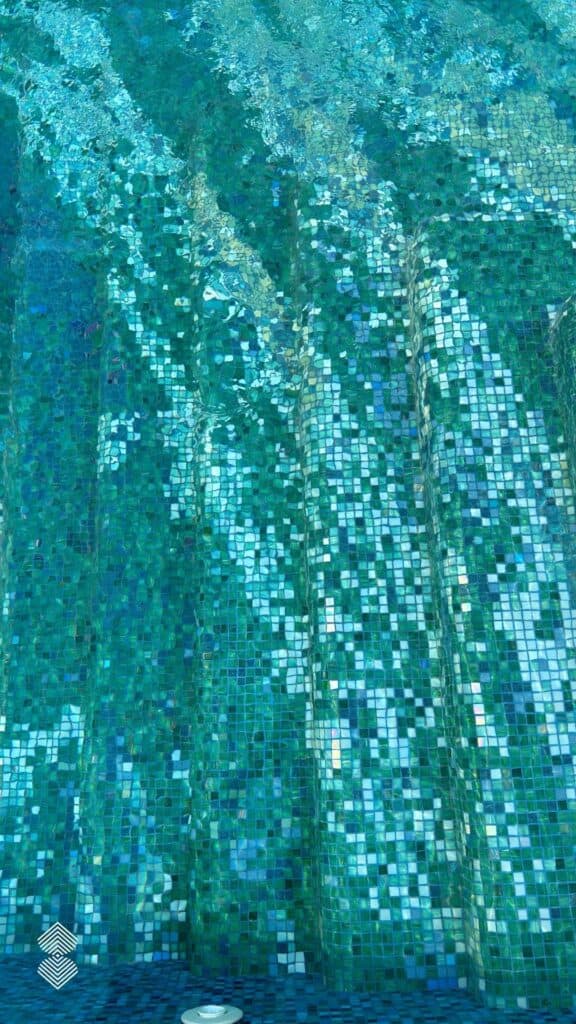
The finished pixel pool mosaics may look effortless, but there is a lot of work behind that clean grid. Everything starts with the project brief and actual pool dimensions. The client may share drawings, measurements, reference images, colors, or material samples. From there, the design team develops a pattern that fits the real pool rather than simply resizing an existing image.
The pool mosaic design production process often looks something like this:
Design Brief → Pool Dimensions → Pattern Design → Color Study → Material Selection → Tessera Mapping → Approval → Fabrication → Panel Mapping → Installation
Each step takes the design closer to the physical pool. What begins as a drawing eventually becomes a set of real tesserae that artisans can cut and arrange.
Studio Mapping for a Full-Scale Pool Install
Large pool mosaics cannot usually be delivered as one giant piece. The artwork needs to be divided into smaller sections or panels that installers can handle on site. Those panels need a clear map. Think of it like a very large puzzle where every section has a specific place in the pool. The studio needs to consider these points before providing any mosaic installation services:
- Floor dimensions
- Steps and risers
- Curves
- Drains
- Benches
- Slopes
- Waterlines
- Corners
- Panel joins
This matters even more with geometric pixel pool mosaics. If one panel shifts slightly, a straight line can break across the pool floor. Clear labeling and detailed installation drawings help maintain pattern alignment and prevent these issues.
Where a Pixel Mosaic Pattern Works Best
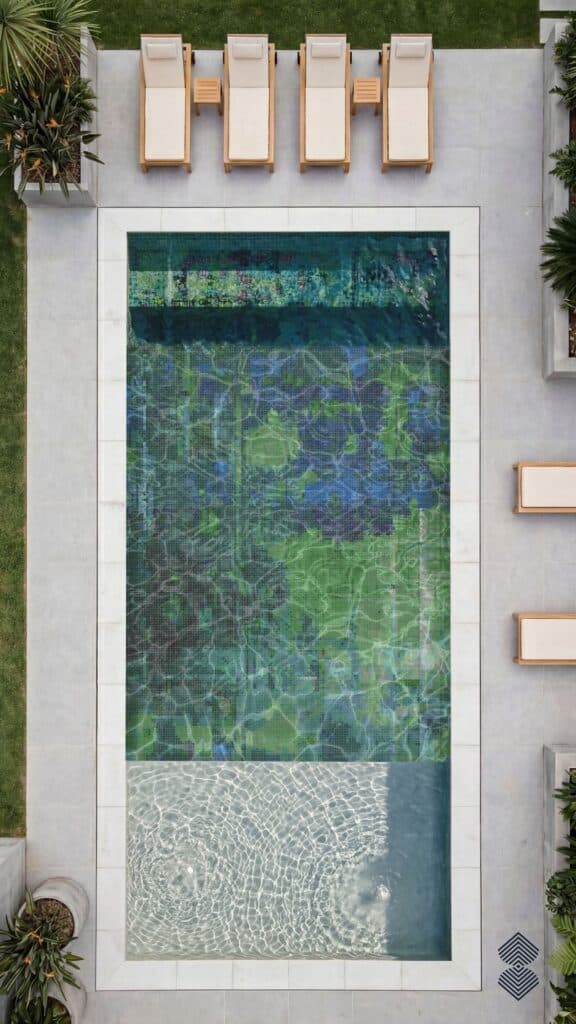
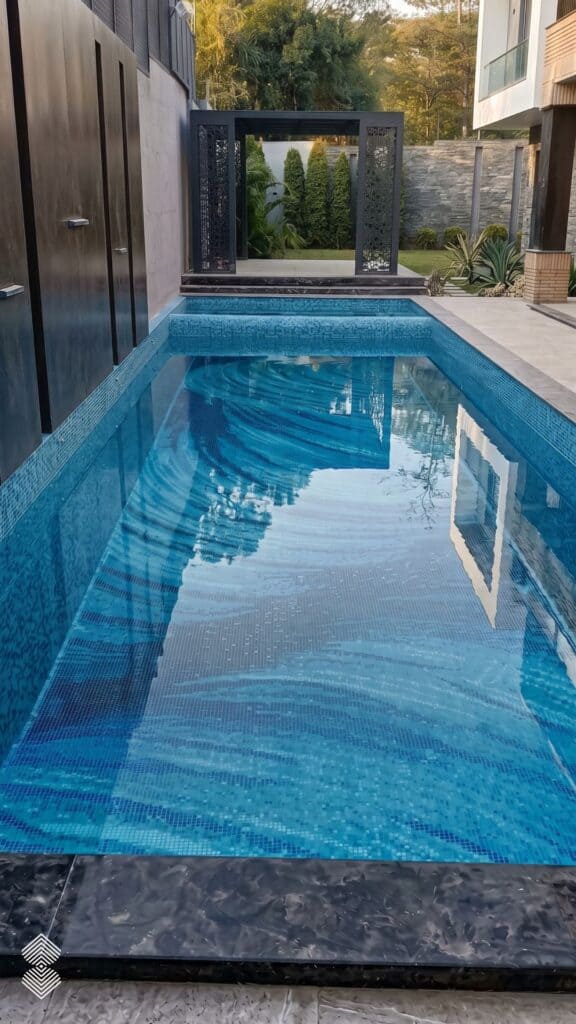
The right location depends on what you want the mosaic to do. It might become the main artwork on the pool floor, or it may simply add a geometric detail around the waterline.
Pool Floors and Deep-End Medallions
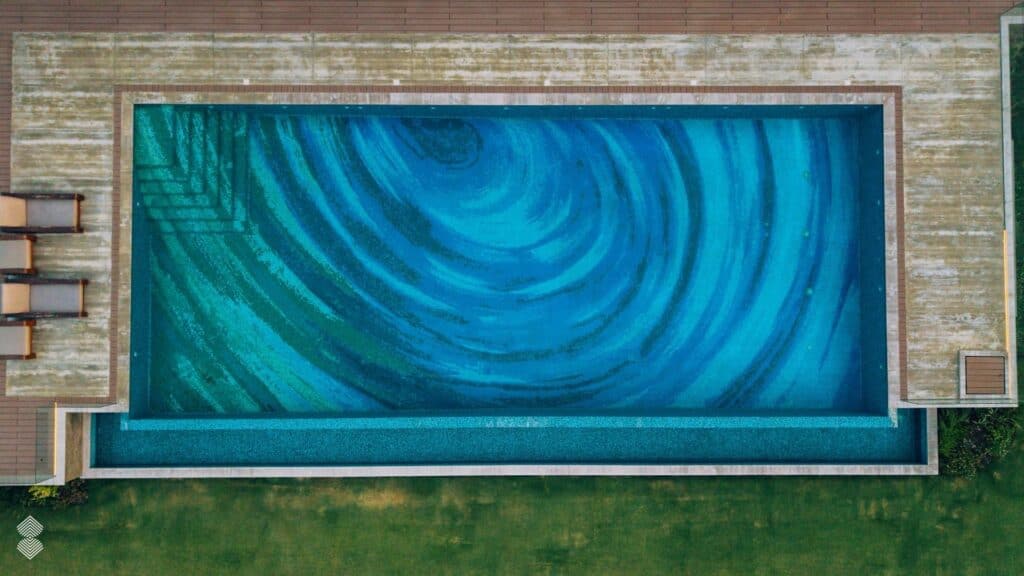
Full-floor mosaics work especially well in pools that people can see from above. Villa balconies, hotel rooms, rooftop terraces, and upper-level lounges can all give a clear view of the artwork. MEC’s green abstract mosaic art for pools is a good example of how an abstract design can turn the pool floor into a focal point. Once the design is underwater, color and movement add another layer to it.
A deep-end pool medallion is another option. Instead of covering the entire floor, you can place one bold pixel art mosaic for luxury swimming pools in a specific area and keep the rest of the pool simpler.
Waterline Borders and Step Details
A waterline is a great place for a smaller pixel pattern. Repeating blocks, stepped color changes, or a simple geometric band can add detail without taking over the whole pool. Moreover, steps and ledges can also carry smaller versions of the same design language. A color change across each tread can make the geometry feel more connected throughout the pool. You can also use pixel mosaics on:
- Spa walls
- Tanning ledges
- Submerged benches
- Infinity edges
- Water features
- Swim-up bars
The ocean mosaic for modern pools is another useful example for seeing how strong color can read through water. It also shows why scale matters once the design becomes part of a full pool.
Caring for a Geometric Glass Pool Mosaic
A pool mosaic does not need complicated daily care, but the whole pool system does need regular maintenance. Balanced water chemistry is especially important for pixel pool mosaics because it can affect the grout, finishes, and other parts of the installation. Cleaning should also remain gentle, as harsh chemicals may damage certain materials used in the pool.
Final Thoughts: Turning a Grid Into a Custom Pool
At first, pixel pool mosaics sound simple. Small pieces form a grid, and that grid becomes a larger design. But once you work with a real pool, the shape, steps, slopes, water depth, tessera size, materials, and light all affect how the pattern will look. That is why the best bespoke geometric pools start with the actual space. If you’re still exploring ideas, MEC AI Mosaic Studio can help you visualize different mosaic patterns, colors, and styles in your pool before moving into professional design. It gives you an easier way to see which direction feels right for the space.
Once you have a preferred concept for your pixel pool mosaics, MEC’s designers and artisans can develop it further using the pool’s exact dimensions, materials, tessera size, and fabrication requirements. The AI visualization provides a starting point, while professional design and handcrafting turn the idea into a mosaic made for the actual pool.
FAQs
What Size Pixel or Tile Works Best for a Pool Mosaic Pattern?
There is no single size that works for every pixelated pool tile pattern. With pixel pool mosaics, smaller tesserae create finer detail, while larger ones make the pixel effect more pronounced. Pool size also matters. A small spa can support finer details viewed up close, while a large resort or villa pool often needs bigger shapes that remain clear from a distance.
Is Glass Mosaic Safe and Slip-Resistant for a Pool Floor?
Glass mosaic can work on pool floors, but the material alone does not automatically make it slip-resistant. For pixel pool mosaics, surface texture, tessera size, grout joints, testing, and the exact product all matter. The safest approach is to choose materials specifically approved for the intended pool area. The pool designer and installer should review the technical data rather than relying on general claims about glass.
Can a Pixel Pool Design Match an Existing Patio or Interior Tile?
Yes. This is one of the biggest advantages of a custom mosaic. You do not need to copy the patio tile exactly. The pool design can simply borrow its colors, shapes, or proportions. For example, a beige terrace could inspire cream pixels inside a turquoise pool pattern. Black-framed architecture could also lead to darker lines or borders in the mosaic.
How Is a Geometric Pool Mosaic Installed by a Pool Builder?
For pixel pool mosaics, the studio normally prepares the design in smaller, clearly mapped panels. These sections follow the approved pool layout so installers know exactly where each part belongs. The pool shell, waterproofing, setting materials, grout, and joints must also meet the project’s technical requirements. With a pool geometric pattern, careful alignment is especially important because even a small shift can interrupt a straight line.
Does MEC Artworks Ship a Pixel Pool Mosaic Internationally?
Yes. MEC Artworks can prepare custom mosaic projects for international delivery. For bespoke pixel pool mosaics, the artwork can be created around the project’s exact measurements and divided into organized sections for installation. Clear panel maps and installation details help the local project team assemble the mosaic correctly.