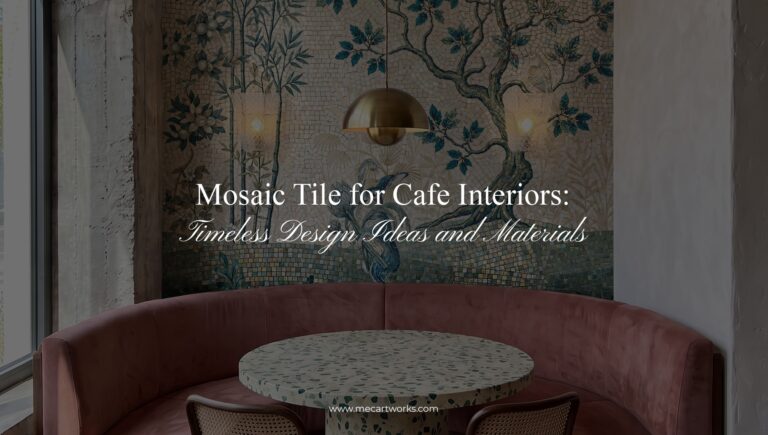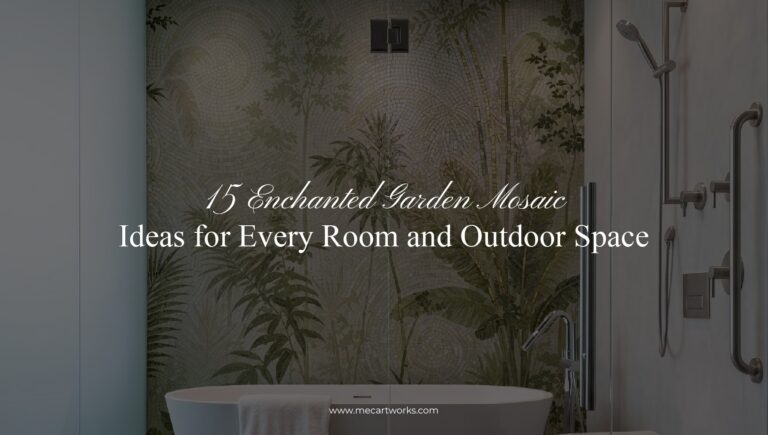

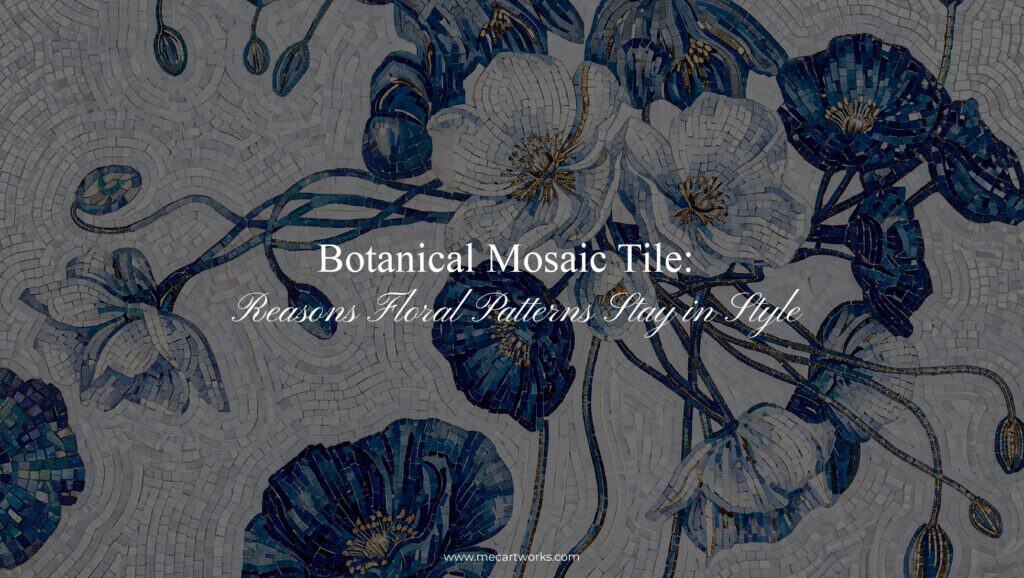
Embracing nature by incorporating it in your living space has always been a timeless concept. The addition of trailing vines, lush leaves and elegant petals, which artisans craft using sleek glass or natural stone, harmonizes nature with architecture in a lovely manner.
For designers and homeowners who wish to create a calming atmosphere for their master bathroom or want to infuse vibrant tones in the form of a kitchen backsplash, a botanical tile is an ideal choice. Let us closely explore why floral patterns remain so popular and have not become outdated. We will also analyze the prevalence of nature-inspired mosaics in modern houses as a wellness trend, and how you can add a botanical mosaic tile pattern to breathe life into an otherwise monotonous space.
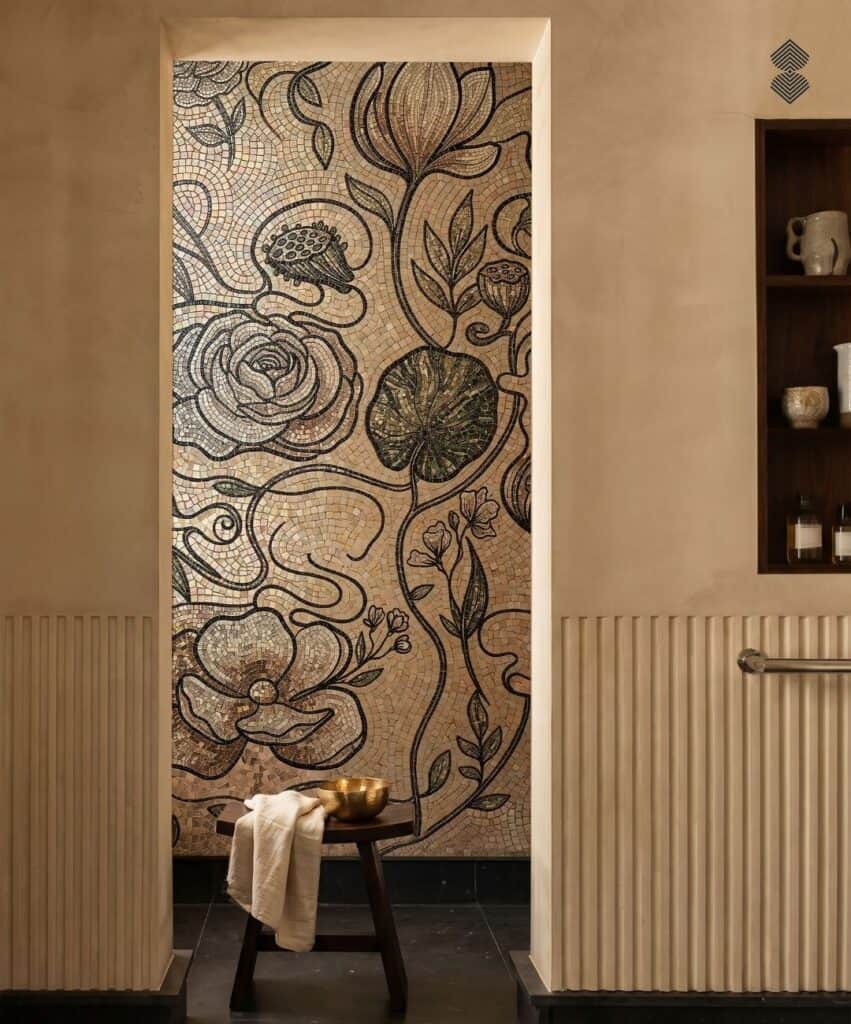
Table of Contents
What Is Botanical Mosaic Tile?
A botanical mosaic tile carries artwork that is created from small pieces of marble, ceramic, or glass. These tiny pieces are called tesserae. They are thoughtfully assembled together to build patterns related to plant life. You might be wondering what sets these designs apart from regular, mass-produced tiles.
Factory-made tiles comprise an identical print on their surfaces. Contrary to this, authentic mosaic art, which is highly time consuming, is built piece by piece, as our artisans cut every piece in a unique way. When a design entails genuine artistry, it offers visual depth, texture, and color tones that are unmatched. Normal, plain tiles can never replicate the sense of exclusivity that botanical mosaic art brings forth.
Think of these flower mosaic designs. These patterns reflect a form of art within which the shadow of all the vines and petals are given immense attention on an individual level. What this handcrafted process does is that it makes a botanical mosaic tile feel highly organic and refreshing; factory made tiles look flat in comparison.
Botanical Tile vs Floral Mosaic Tile: Flowers, Leaves and Vines
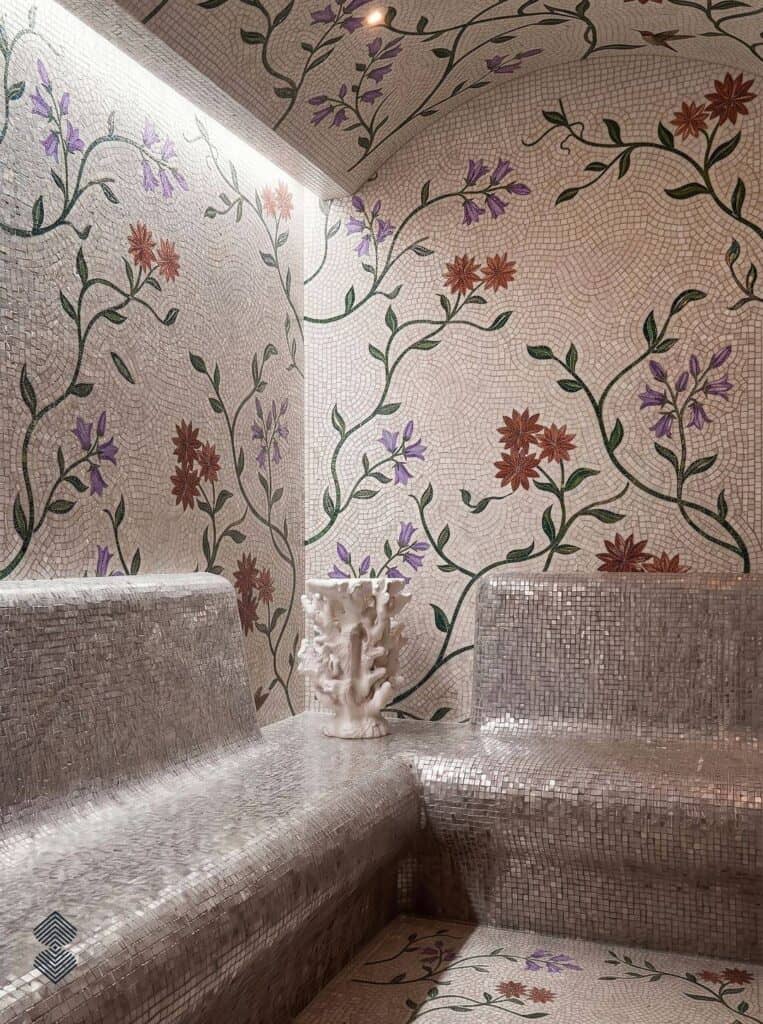
A general botanical tile pattern and a certain floral mosaic tile are basically two different things. These terms are frequently misunderstood and are deemed the same thing. When we say botanical tiles, they involve plant life in its entirety. This ranges from ivy vines and tree branches, to lush monstera leaves and palm fronds. The aim is to highlight greenery, earthy or textures that give off an organic vibe.
A floral mosaic tile, on the other hand, is mainly related to different flower arrangements. This could be intricate cherry blossom branches, vibrant wildflowers, a bouquet of fresh roses, or aquatic lotus flowers. The most creative way is to blend both these designs. When you merge lush greens with soft florals in a botanical mosaic tile, it brings forward the ideal balance of earthy texture and elegant colors.
Glass vs Marble Botanical Mosaic Tile
The material that you choose for your botanical mosaic tile matters a lot. It will ultimately dictate the final look of your living space. Glass and marble are generally the go to in this context. They create a very different impact.
Owing to the reflective and bright nature of glass mosaic tiles, they would be an ideal choice for darker places such as kitchen walls or enclosed showers where their reflection with light would add a shimmery effect.
Providing a soft, classic look and a matte finish, marble and natural stone, which mostly showcase neutral tones, give a unique personality to your design. Unlike glass, marble tends to absorb and diffuse light instead of reflecting it. A marble and stone botanical mosaic tile would go really well on grand entryway floors, earthy patios, or living rooms walls that make the area feel grounded.
1. Biophilic Interior Design: Why Botanical Tile Feels Calming Indoors
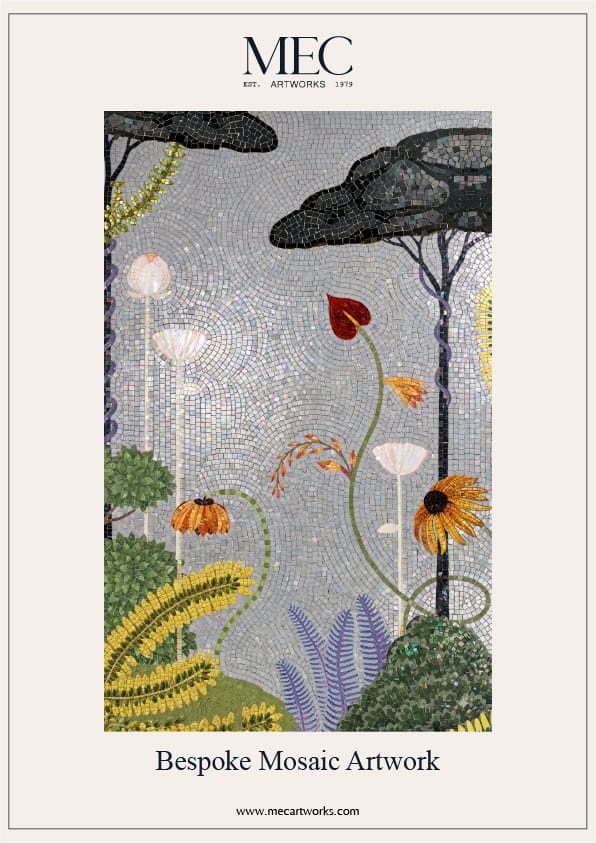
Minimalist artwork is taking the backseat as contemporary interior design has shifted towards building rooms that evoke a soothing feeling and makes us feel relaxed, both mentally and physically. Here is where biophilic interior design makes its entry.
What is Biophilic Design?
Being a unique approach towards architecture that prioritizes reconnecting individuals with nature, this concept reinforces the idea that human beings are naturally drawn towards natural surroundings. We are innately meant to be close to nature; this is why people automatically feel re-energized whenever they spend some time outdoors in nature.
Once you have a look at concepts such as those in the 14 patterns of biophilic design, you will learn that incorporating visual references to nature is actually so beneficial for our health. Plant-based sceneries, natural sunlight and organic environments do not just uplift us in terms of our mental well-being, but also help lower our heart rate, followed by immensely reducing everyday stress.
Botanical Mosaic Tile as a Biophilic Design Element
To welcome nature indoors, many people add indoor plants in their living spaces. However, they require regular maintenance, which can be an inconvenience. You constantly have to worry about watering schedules, providing them with the right amount of sunlight, and constantly having to work on keeping them alive.
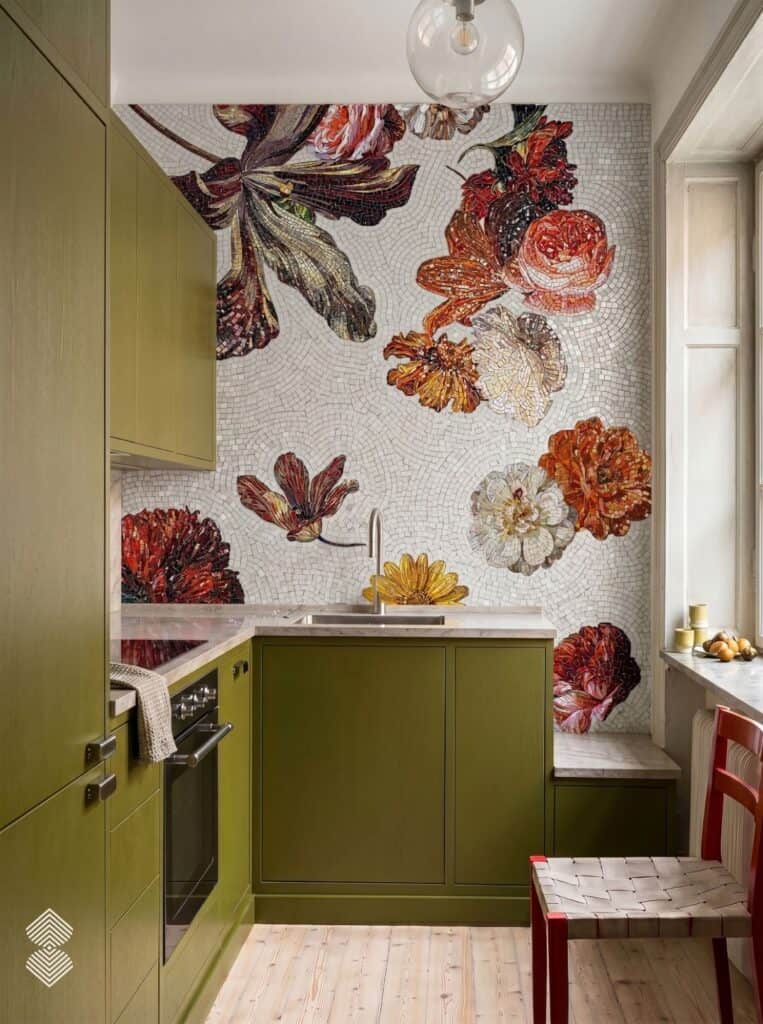
Just think about something that would be effortlessly permanent, needing almost no regular maintenance while acting as a centerpiece in your living space. A botanical mosaic tile will give you exactly that. Installing a botanical tile design in your house means bringing in what experts refer to as an “indirect nature pattern”.
This involves elegant vines, delicate floral curves and lush greens that immediately make your brain think that you are sitting outside in a garden. Such a simple yet wonderful way of making your living space feel like a soothing retreat and a safe space, right?
2. Floral Patterns in Roman and Byzantine Mosaic History
Interestingly, floral designs go way back. It is also something that will make you realize why a botanical mosaic tile is so well-loved in the present era. To figure this out, we would have to go back a few centuries.
Adding flowers and plants in the form of highly intricate stone mosaics was something that Roman designers and ancient Greek artisans loved doing. For their huge houses and public areas, these people enthusiastically incorporated laurel wreaths, captivating grape vines, soft field flowers, and acanthus leaves. Once you view our guide to ancient Roman mosaic motifs, you will be able to see these historical details closely.
As some time passed, artisans proceeded further and these skills were taken to the walls during the Byzantine Empire. Here, traditional Roman mosaic methods were utilized while also bringing shiny glass and gold to enhance the insides of huge cathedrals and palaces. This included symbolic trees of life and lush garden sceneries.
This rich history pertaining to floral designs goes on to show why homeowners continue to prefer a botanical mosaic tile for their space. The deep history attached to it is quite fascinating; these patterns will also always be viewed as a safe choice that will never go out of style.
3. Botanical Tile in Art Nouveau, William Morris and Modern Styles
With multiple art movements emerging throughout design history, plant themes have been recreated and reimagined to blend in with the mood of the present time.
Art Nouveau Tile and Flowing Floral Lines
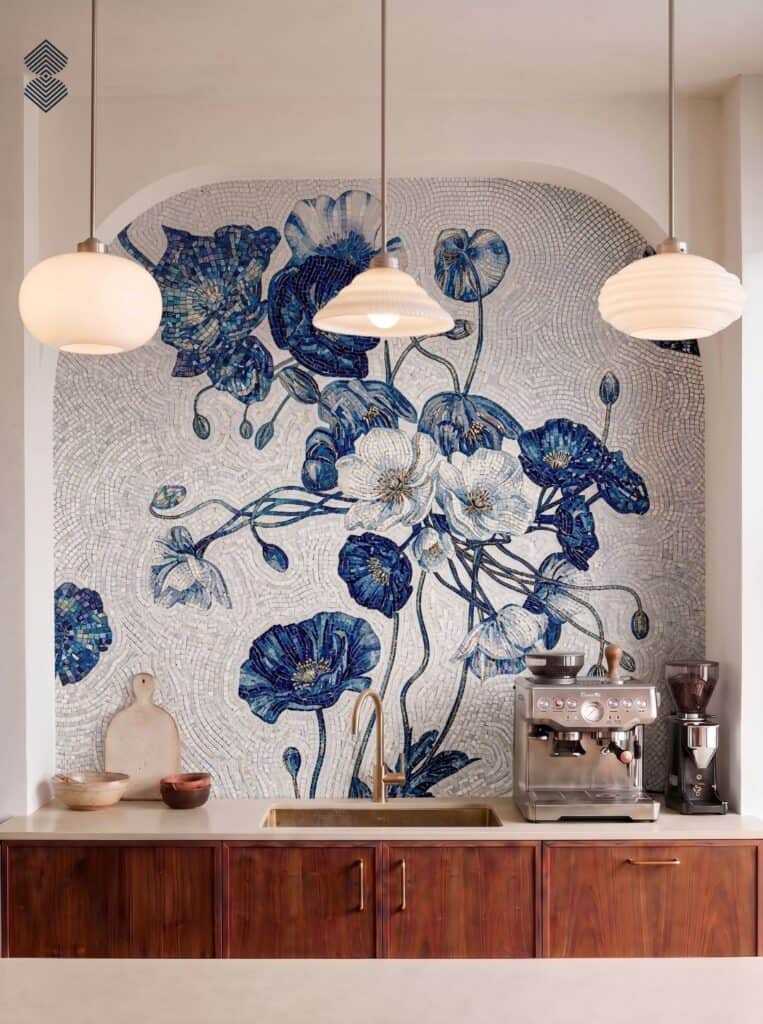
During the industrial era, fixed, straight and stiff lines were the standard. The Art Nouveau movement during the late 1800s and early 1900s went totally against such designs. Artists began to use fluid and asymmetrical shapes that were a core part of nature. It is not difficult to identify an art nouveau mosaic tile.
It generally showcases sweeping flower stems, huge lily pads, long twisting vines and bold orchids. For those who want to go for a vintage feel, can add this pattern behind their bathtub. Similarly, an art nouveau design would look quite striking when installed in a foyer.
William Morris Tile Patterns in Mosaic
A discussion pertaining to floral designs is incomplete without bringing up the Arts and Crafts movement which was formed by the popular artist and designer William Morris. His work has remained memorable, as so many people continue to get inspiration from his signature woodblock wallpapers and repeating patterns of dense foliage, fruit trees and marigolds.
Recreating his artwork and translating it into a glass or stone botanical mosaic tile gives you a space that feels like home. It is very cozy and warm. Arts and Crafts designs which contain deep forest greens, rich plums and soft creams have such a unique charm, which look ideal in cottages, traditional kitchen spaces and homes with a historical feel to them.
Modern Botanical Mosaic Tile with Minimal Color
It is understandable that Victorian, vintage and highly detailed patterns are not everyone’s cup of tea. Some homeowners and designers are into clean aesthetic. A modern botanical mosaic tile also offers a neutral and minimalist color palette with simple shapes.
Imagine having a bright white shower enclosure that displays a huge monochrobgvmatic black and gray leaf tile design that goes all the way to the main wall. Correspondingly, you can also go for a subtle blush and cream botanical mosaic tile behind your bathroom vanity. These modern styles look very sleek and make your space feel uncluttered yet very rich.
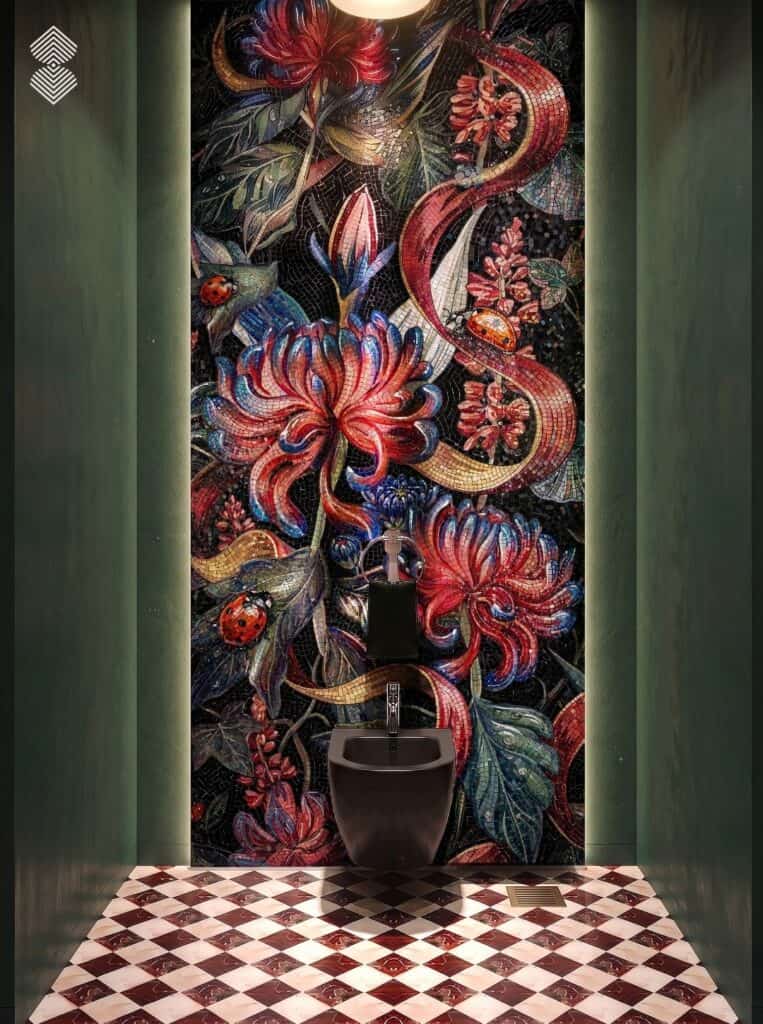
4. Hand-Cut Botanical Mosaic Tile for Curved Petals and Leaves
To make your renovation look like authentic art instead of just a regular upgrade, we need to talk about genuine craftsmanship. The very idea of nature radiates a fluid, gentle and soft energy. That is how plants and flowers feel like. When you opt for factory made square tiles, you get a very rigid look, which lacks the kind of softness that nature essentially has.
To make things look very realistic, our highly skilled artisans manually cut every single piece of mosaic tile to replicate the flowing vines and delicate petals of flowers in the most authentic way. For this purpose, special hand tools are used to shape the pieces of glass or marble in a way that looks very natural.
When the hand-cutting technique is used, it enables the artist to trace the intricate curve of a petal or the sharp edge of a leaf with complete precision. The Botanical Sanctuary Floral Glass Mosaic is one of our favorite featured projects, within which our artisans hand-trimmed thousands of small glass pieces. These pieces were then carefully aligned to encapsulate the exact way light interacts with wet flower petals. Such attention to tiny details is what makes your botanical mosaic tile a one-of-a-kind design that will last for decades to come.
5. Floral Backsplash, Bathroom and Floor Tile Ideas
A botanical mosaic tile is quite versatile. These patterns can be installed on flat walls, recessed niches, curved pillars and basically into any room of your house.
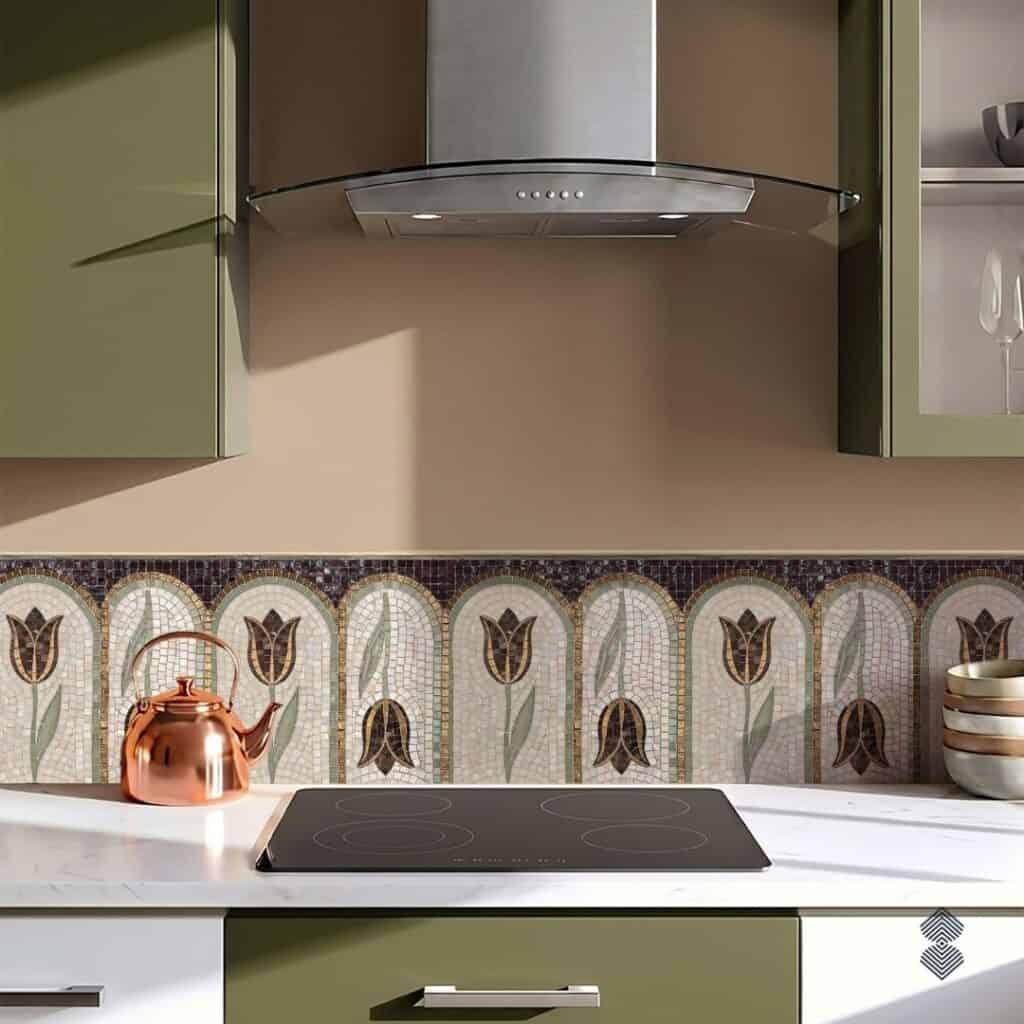
Floral Backsplash Tile for Kitchens
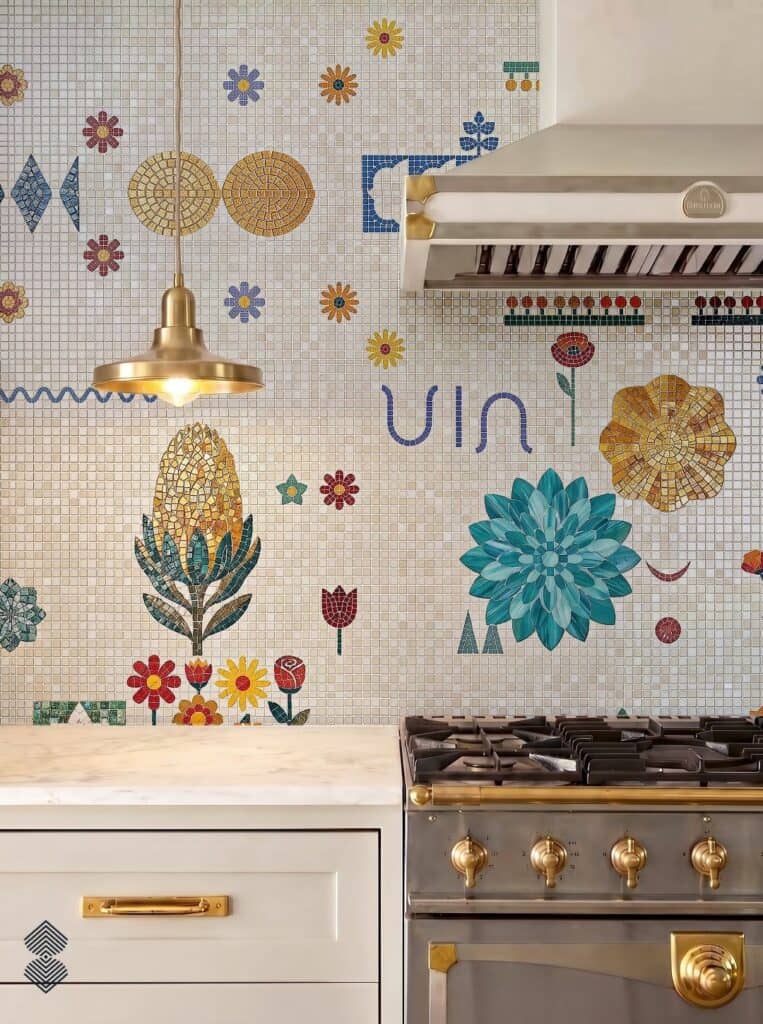
The kitchen can be an ideal place for you to display vibrant and captivating artwork. Let us have a look at some options that can be added to our cooking space. To explore more layout choices and styling inspiration for your kitchen, you can view our gallery of mosaic kitchen backsplash ideas.
| Design Option | Placement & Layout | Featured Motif / Aesthetic | Key Visual Impact |
| Full-Wall Floral Backsplash | Entire wall beneath the upper cabinets | Custom floral mosaic tile | Adds immediate warmth and character to plain, neutral cabinets |
| Framed Above-Stove Medallion | Directly above the cooking range | Picture-like framed mosaic inset | Creates a focused, artwork-style focal point |
| Classic English Garden Accent | Range backsplash or accent panel | Warm rose mosaic framed by soft green leaf tile accents | Brings a charming, natural garden feel in the kitchen |
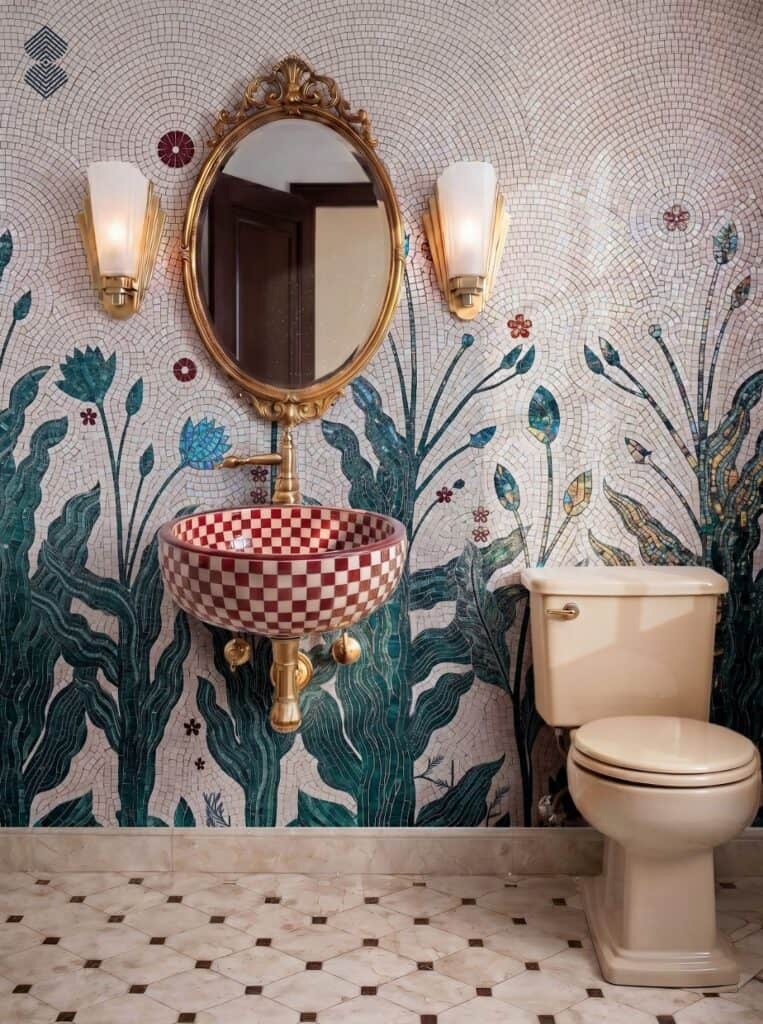
Floral Bathroom Tile and Shower Walls
Being a private space for our relaxation, bathrooms are a great place to add biophilic, nature inspired artwork. A main wall in your walk-in shower that is covered with a floor to ceiling floral bathroom tile mural, would add such a dramatic touch to your bathroom. Think about having a scenery of a rainforest canopy or flowing wisteria vines right next to you during your daily showers. So refreshing.
For some people, bold designs can get a bit overwhelming. If you are into an understated look, consider lining the inside of your shower with a bright botanical mosaic tile for just a slight pop of color. Alternatively, you can also incorporate soothing floral wall tile artwork right behind your bathroom mirrors. This would instantly elevate not just your bathroom space but your daily routine as well.
Floral Floor Tile for Entryways
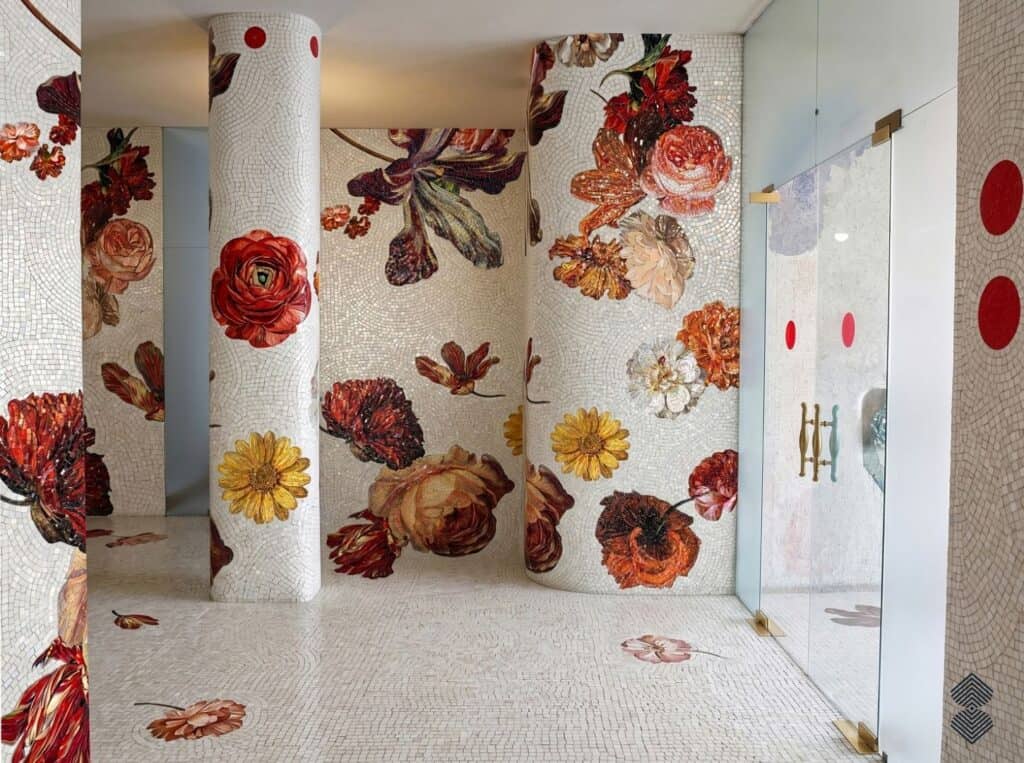
Plant patterns do not have to be limited to walls. Go beyond this. A custom floral floor tile can be your first choice when it comes to building a memorable first impression when someone walks in an entryway, a front foyer or a powder room for guests.
Hand-cut marble is such a great choice for areas with heavy foot traffic. Marble botanical mosaic tile patterns should be your top choice in terms of high durability and elegance. Installing a floral medallion into a regular natural stone floor replicates the vibe of historic Mediterranean villa floors that could easily handle frequent walking.
6. Botanical Mosaic Tile Patterns: Rose, Cherry Blossom and Leaf
You need to pick the right type of flower or plant for your final mosaic design; it will set the entire tone of your living area. Here are some trendy options to consider.
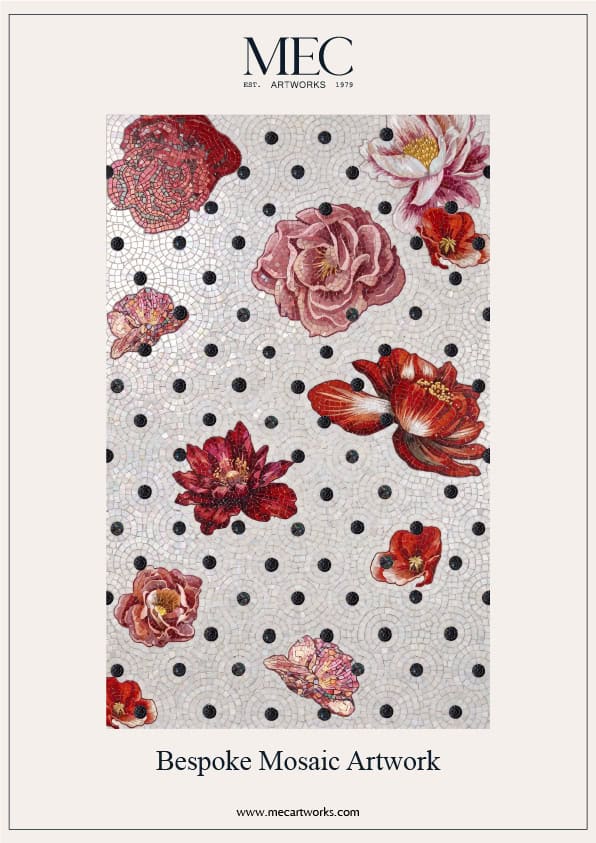
Rose Mosaic Designs
Rose is always going to be a classic depiction of elegance, beauty and romance. A rose mosaic would look beautiful in your master bathrooms, formal dining rooms and vanity areas. For a moody and dramatic look, a color palette of deep crimson and burgundy tones is what you should opt for. For those who want white roses or peach shades can go for a pale blush color palette. Such shades are perfect for a gentle, spa-like area.
Now, highly trained artisans who use hand-cut glass can also blend different tones of red and pink together, which adds a lot of visual depth to the botanical mosaic tile, making it look very real and three dimensional.
Cherry Blossom Mosaic Tile
For a bright, elegant and peaceful vibe, a cherry blossom mosaic is your ultimate answer. It is rooted in traditional Asian watercolor and ink paintings, normally showcasing dark tree branches that have very soft pink and white flowers.
Cherry Blossom mosaics work best as a bedroom accent wall or home spa. The delicate pink petals with a soft background makes your room feel spacious, airy and clean.
Leaf Tile and Tropical Botanical Mosaics
Not everyone is drawn towards very bright flowers. Some people like earthy greens and for that, a foliage-based leaf design is what you should take into account.
The interesting part of such leafy designs is that they are very diverse in nature and therefore, build totally different moods. For example, a tropical botanical mosaic tile that has banana leaves and huge palm fronds, followed by monstera plants, will give a jungle resort-like luxurious feel to your bathroom.
However, when you embed intricate woodland ferns or ivy, the space feels cozy, quiet and rustic. Similarly, a Mediterranean olive branch motif would offer a minimalist look.
Is Botanical Mosaic Tile Still in Style in 2026?
When we properly analyze the design trends in 2026, it is quite evident that people have chosen to move beyond regular mass-produced tiles. They want their living spaces to feel very personalized and exclusive. For this purpose, homeowners have been relying on natural textures and earthy tones which have now taken the center stage.
Considering that a botanical mosaic tile is the perfect combination of the beauty of nature and authentic historic artistry, it continues to be the top choice for designers and homeowners. It is viewed as a safe bet for those who want a bold vibe as well as for those who like minimalist patterns. The high quality that a botanical mosaic tile installation offers makes it a very valuable addition to your living space that also improves your wellbeing.
Design a Custom Botanical Mosaic Tile Pattern
People have different preferences for their homes as every house is built differently. The core point is that homeowners want their living space to reflect their personal taste. At MEC Artworks, we work on translating your dream vision into a handcrafted mosaic reality.
The team at MEC would be eager to recreate your favorite floral painting or match the mosaic artwork to your current architecture. We can also scale a botanical mosaic tile design to perfectly fit a curved wall or the specific dimensions of your space. Our artisans are ready to craft and arrange a custom botanical pattern made just for your home or project.
Frequently Asked Questions
Is botanical mosaic tile still in style?
Yes, botanical mosaic tile is absolutely still in style. It remains highly popular because it perfectly blends traditional artistic craftsmanship with modern biophilic design principles. Instead of chasing quick color trends that fade in a few years, plant and floral motifs offer a timeless, permanent connection to nature that looks great with both classic and modern home styles.
Where does floral mosaic tile work best in a home?
A floral mosaic tile feature works well almost anywhere you want to draw the eye. The most popular spots in a home include kitchen backsplashes (especially right behind the stove), main shower accent walls, bathroom vanity walls, entryway floor centerpieces, and even feature walls outside near swimming pools or patios.
Is glass or marble better for botanical mosaic tile?
Both materials are excellent, but they serve different purposes. Glass is usually better for wet areas like showers and kitchen backsplashes because it is completely waterproof, easy to wipe clean, and reflects light beautifully. Marble is incredibly durable and strong, making it the better choice for entryway floors, classic bathroom walls, and spaces that need a soft, natural, and earthy texture.
Can a botanical mosaic be made from my own design?
Yes, absolutely. At MEC Artworks, our skilled design team and master artisans can take your custom sketches, a piece of wallpaper you love, digital photos, or original paintings and convert them into a fully customized botanical mosaic tile artwork. We tailor every single detail and measurement to fit your specific space.