
Animal motifs are having a moment in interiors, but they’re hardly a new idea.
But when the idea is translated into mosaic, there is far more to consider than simply choosing an animal motif. The pattern, scale, colour palette, setting and level of detail can all shape how the finished artwork works within an interior.
In this blog, we’ll explore what a bespoke mosaic collaboration looks like, from developing an initial concept and refining the design to selecting materials, colours and details that suit the project.
Whether you are looking for a detailed artwork, a subtle animal-inspired motif or a completely bespoke design, there are plenty of ways to approach the theme.
Table of Contents
How Animal Mosaics Work as Interior Artwork
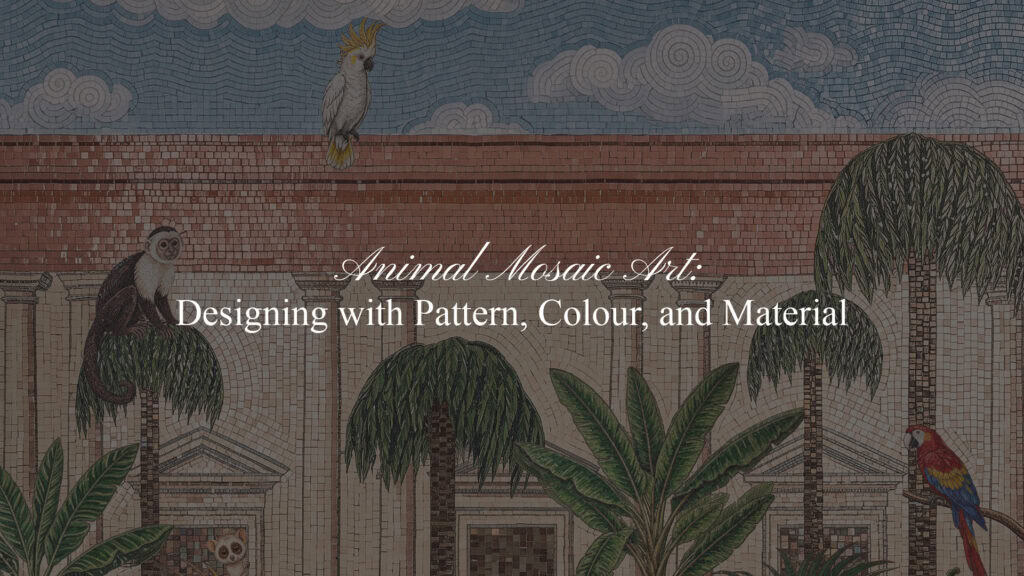
Animal mosaic wall art is particularly effective when the wildlife is treated as part of a larger composition rather than as isolated motifs.
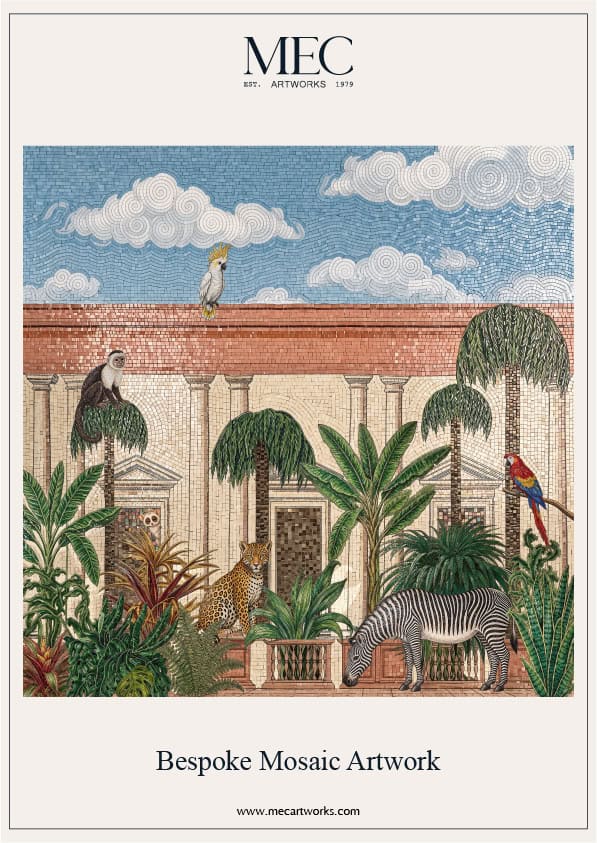
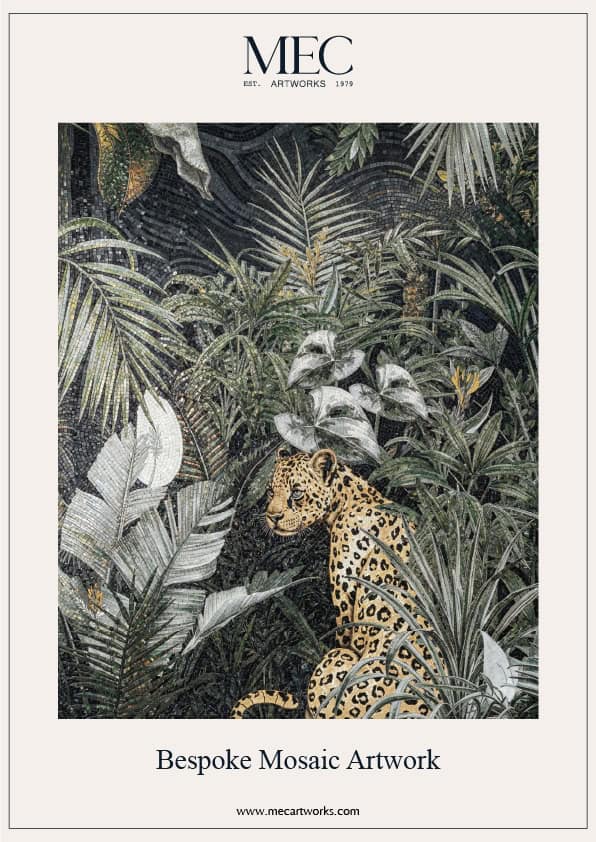
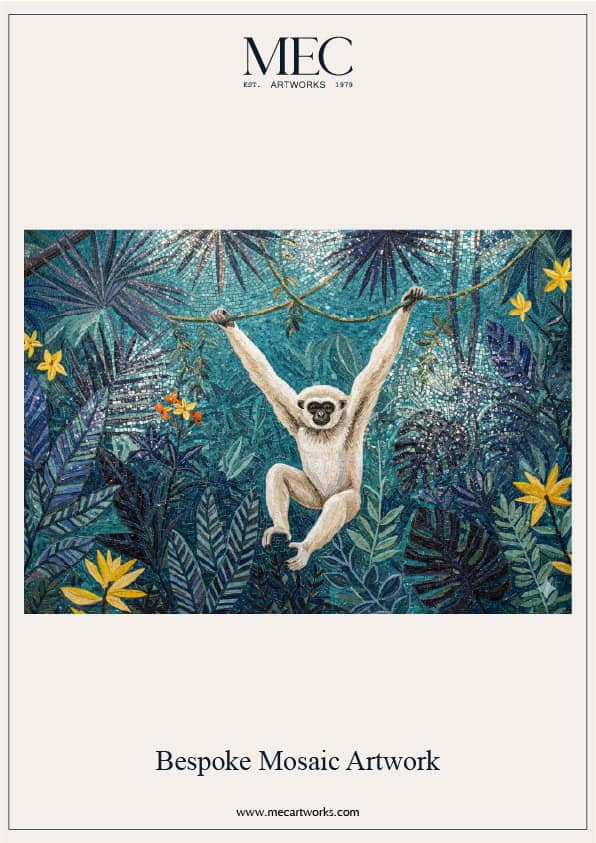
In this collection, the leopard, zebra, primates, and cockatoo each have a different position within the scene. The foliage creates connections between them, while the classical buildings and stonework give the composition a clear architectural framework.
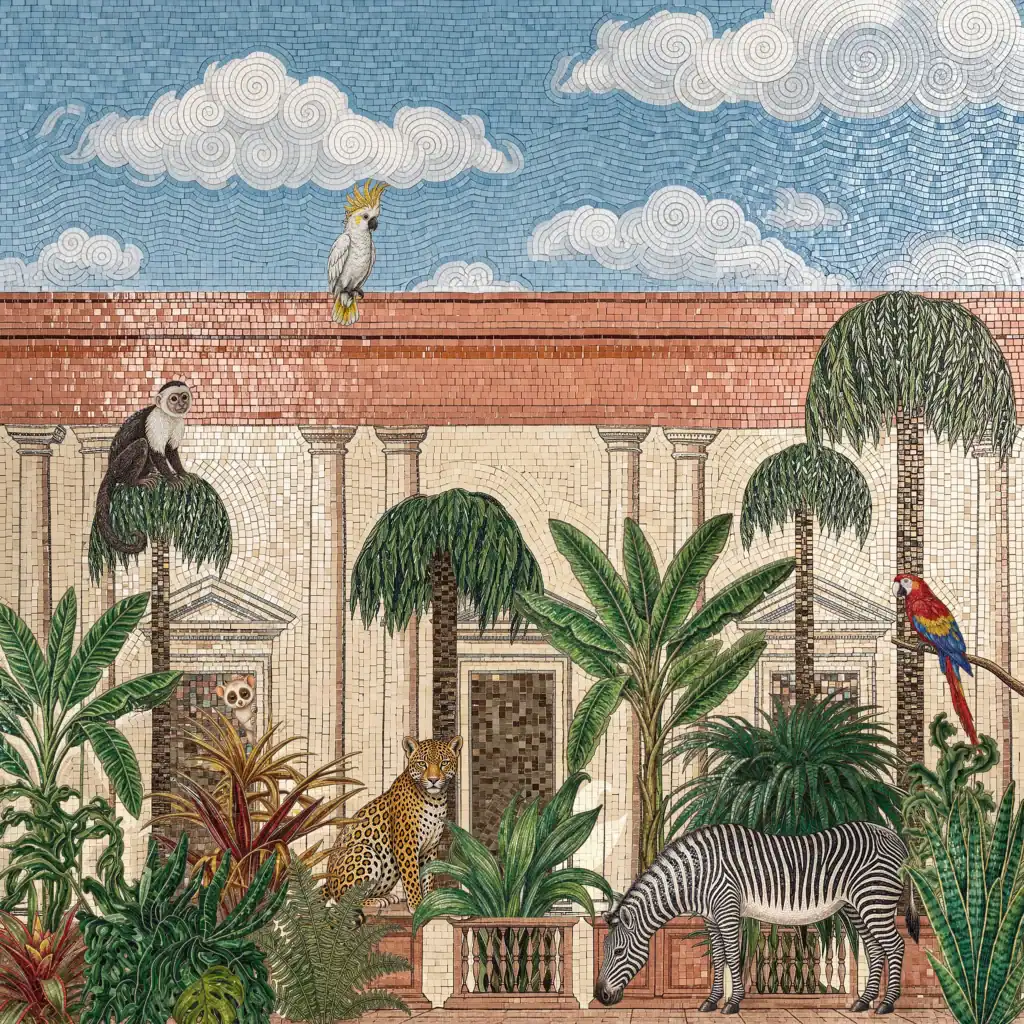
That balance is important in interior design. A successful wildlife mosaic should have enough detail to reward closer viewing without becoming visually chaotic from across the room.
Designing a Mosaic Around Architecture
One of the most interesting aspects of bespoke mosaic design is the ability to work directly with the architecture.
Columns, arches, niches, cornices, doorways, and changes in wall height can all influence the composition. Rather than seeing these as obstacles, a designer can use them to determine where particular elements of the artwork sit.
For example:
- A column can become part of a tree or architectural structure within the scene.
- A niche can frame a particular animal.
- An existing cornice can inform the mosaic’s roofline.
- A doorway can become an opening into the illustrated landscape.
- A wide wall can accommodate a panoramic composition rather than a repeated pattern.
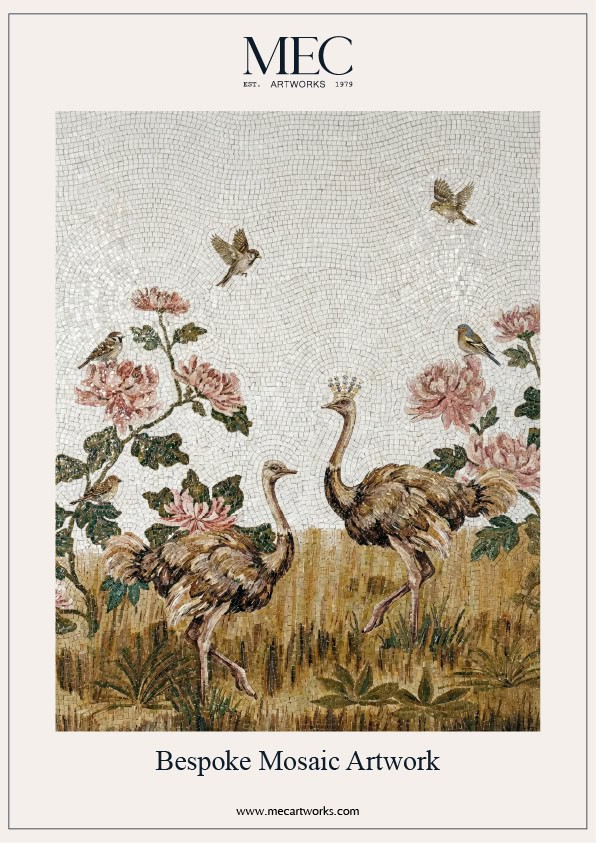
This is where design consultation becomes particularly valuable. Before fabrication begins, the artwork can be considered alongside the dimensions, sightlines, finishes, and architectural details of the interior.
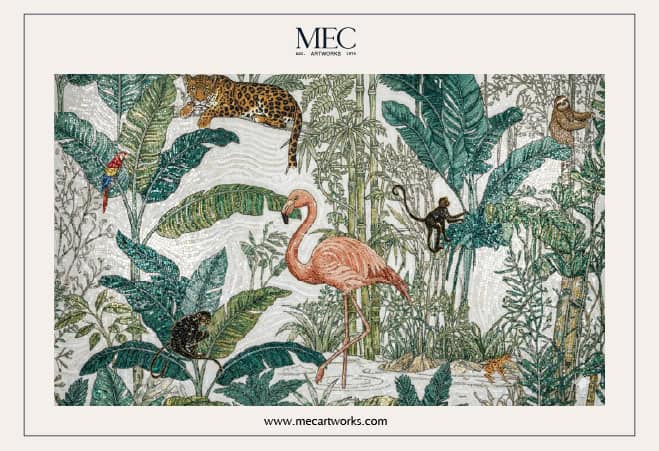
Our mosaic designers work through these considerations with clients across different project types and locations, helping translate an initial idea into an artwork that can actually work within the intended interior.
Using Animal Patterns and Architecture Together
Animal mosaics can bring a playful touch to architectural details without feeling out of place. Take the red-toned mosaics featuring llamas, for example, or the monkey design in rich shades of red.
Their strong patterns and colours can work beautifully alongside columns, arches, borders, or other classical details. The key is to let the animal design stand out while the architecture gives it a clear setting.
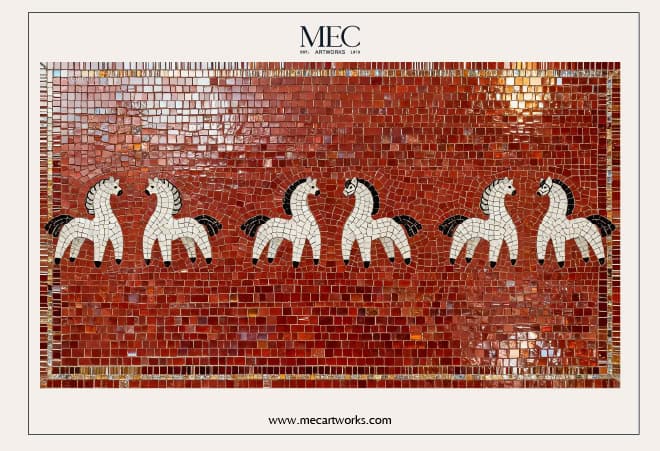
Our artists can adjust the scale, colour, level of detail, and placement of individual elements to suit the intended setting.
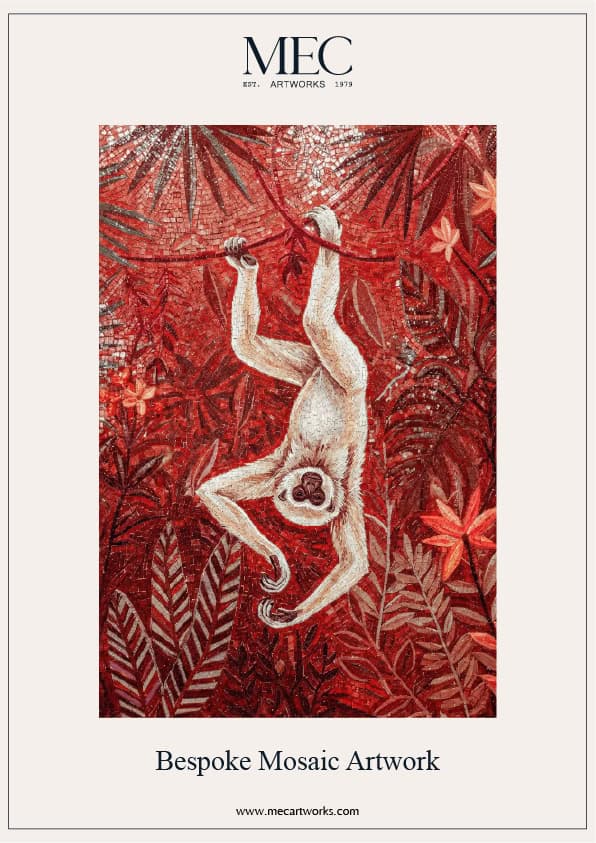
That flexibility is particularly useful when a mosaic needs to be developed specifically for a client’s wall rather than chosen from a fixed pattern library.
How Mosaic Materials Bring Animal Artwork to Life
The material itself plays a major role in how an animal mosaic is experienced. Marble can introduce natural variation into stonework, animal forms, and foliage, while glass mosaic can bring greater colour intensity and light reflection to feathers, skies, water, or tropical plants.
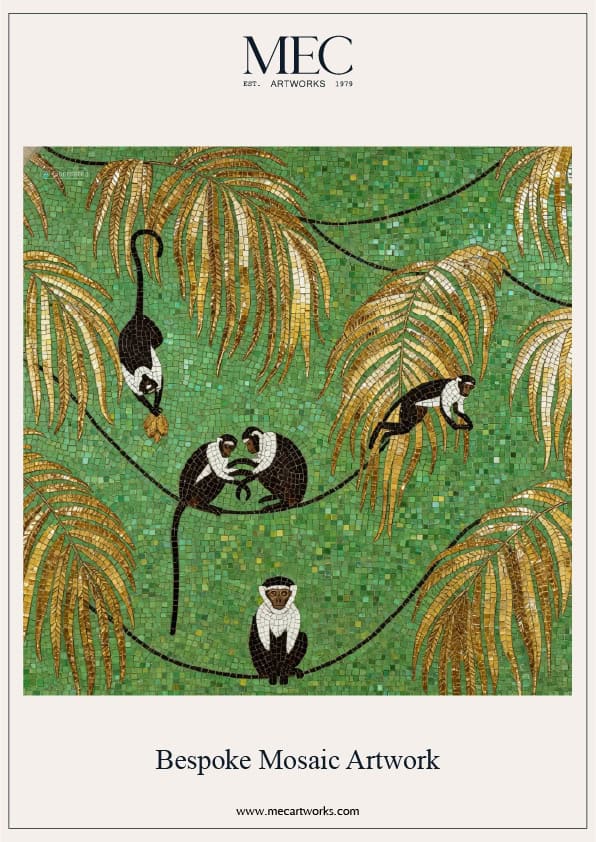
The choice is not simply about finding the right colour. Material, tessera size, surface variation, reflectivity, and cutting technique can all affect how the artwork reads.
Our mosaic artists are trained in techniques developed through specialist Italian expertise, giving them a strong foundation in the traditional craft while allowing them to work on highly detailed contemporary compositions.
That combination of craft knowledge and design flexibility is particularly important for bespoke work, where an artist may need to interpret everything from an animal’s fur and feathers to architectural stone and botanical textures.
Where Can Animal Mosaic Wall Art Be Used?
Animal mosaics can work across a surprisingly broad range of interiors.
The appropriate approach depends on the project. A residential dining room may call for a quieter botanical composition, while a hotel lobby can accommodate a much larger and more immersive scene.
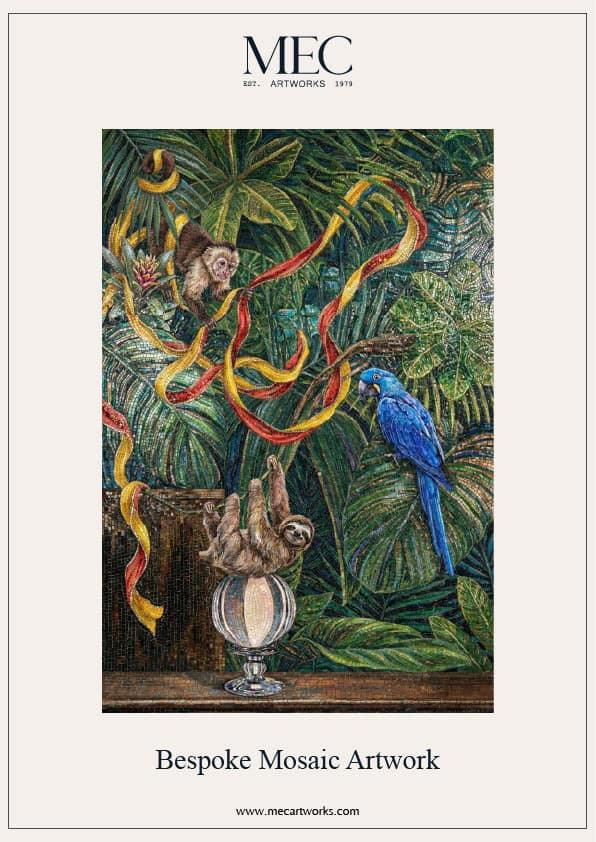
This is where working with a design team throughout the process can make a difference. We provide design consultancy to clients worldwide, helping determine the appropriate composition, scale, materials, and application before the mosaic moves into production.
How to Choose Colours for a Mosaic
Colour is one of the first things to consider when developing a mosaic artwork. It affects not only how the animals look, but also how the entire composition sits within an interior.
| Design Element | How it works in the composition |
| Animal Detailing | Crisp black-and-white zebra stripes and the leopard’s spots give the wildlife definition. |
| Background Tones | Cream, sand, and natural stone shades keep the architectural setting calm. |
| Botanical Greens | Emerald and sage foliage bring depth and contrast without overpowering the animals. |
| Accent Colours | Terracotta, ochre, and warm golden tones add small points of visual interest. |
The important thing is that colour does not have to be reproduced literally. A designer may want the leopard to feel realistic while making the surrounding foliage slightly more muted so the animal remains prominent.
Choosing the Right Mosaic Material for Each Application
The most suitable mosaic material depends on both the design and where the mosaic will be installed.
A beautiful material choice still needs to perform properly in its environment. This is particularly important for pools, bathrooms, floors, and other areas exposed to moisture or heavy use.
| Application | Material Considerations |
| Pools & Spas | Moisture resistance, compatibility with pool chemicals, suitable installation systems |
| Floors & Stairs | Durability, appropriate surface finish, slip resistance, and foot traffic |
| Bathrooms & Wet Rooms | Moisture resistance and suitability for shower and wet-area installation |
| Feature Walls | Greater flexibility in colour, texture, material combinations, and level of detail |
| Curved & Architectural Surfaces | Tessera size, cutting technique, and installation method become particularly important |
Glass is often useful where strong colour and light reflection are important, while marble and natural stone can create a more grounded relationship with architectural materials.
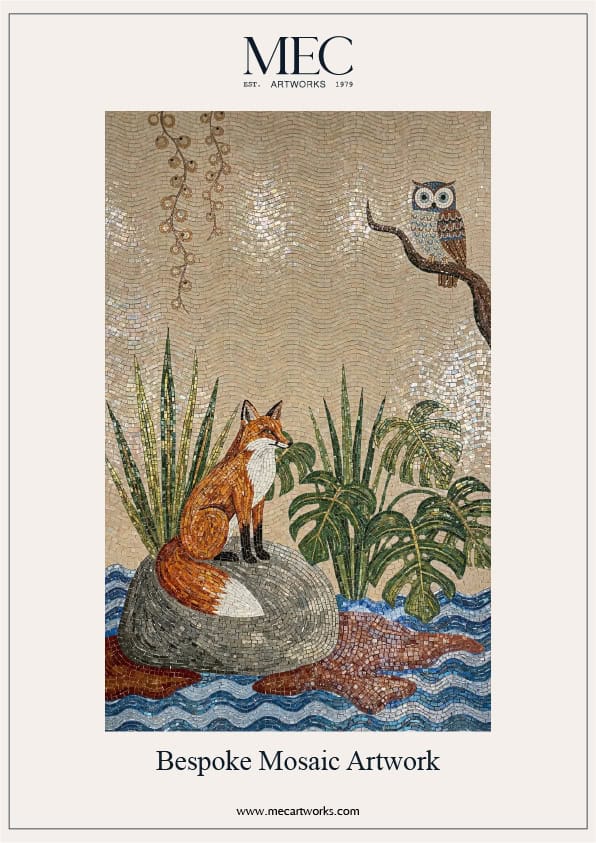
Our artists and designers consider these factors during development rather than treating material selection as a final step. With experience across residential, hospitality, pool, and architectural projects, we can help clients choose materials according to both the visual intention and the demands of the application.
How a Mosaic Artwork Is Designed: From Image to Finished Mosaic
Creating a detailed mosaic involves considerably more than transferring an image onto tiles.
A photograph, painting, architectural drawing, or client’s idea has to be translated into a composition that can be cut, assembled, transported, and installed as a physical artwork.
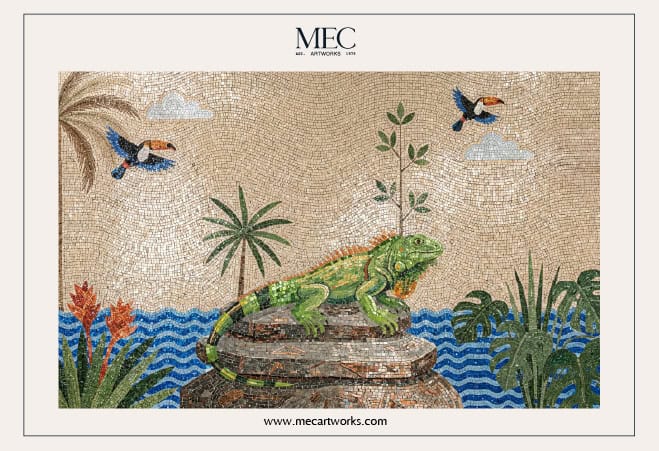
The Bespoke Mosaic Design Process
- Concept and reference
The starting point could be almost anything: a photograph, an existing artwork, an architectural drawing, or an entirely original idea from the client. - Compositional adaptation
The artwork is then developed specifically for mosaic. This includes considering the directional flow of the tesserae, as well as the size and placement of individual pieces.
Fine details may also need to be interpreted differently. In a wildlife mosaic, for example, the expression of an animal or the direction of its fur can depend on how the tesserae follow the form. - Material and colour development
The digital palette is translated into actual mosaic materials. Marble, stone, glass, and other options can be considered according to the desired colour, texture, and application. - Design renders and approval
High-resolution renders allow clients and design teams to review the proposed artwork before production. For architectural projects, the design can also be shown within the intended interior to help assess scale and placement. - Mosaic craftsmanship
Once approved, the artwork moves into production. Tesserae are cut and assembled piece by piece, with particular attention given to detailed areas such as faces, feathers, foliage, and architectural elements.
Our mosaic artists have been trained through specialist Italian expertise, combining traditional mosaic techniques with the requirements of contemporary bespoke projects. - Technical preparation
Large mosaics are generally divided into manageable sections before shipping. These sections are prepared on labelled mesh sheets alongside layout information, allowing the artwork to be reconstructed accurately during installation.
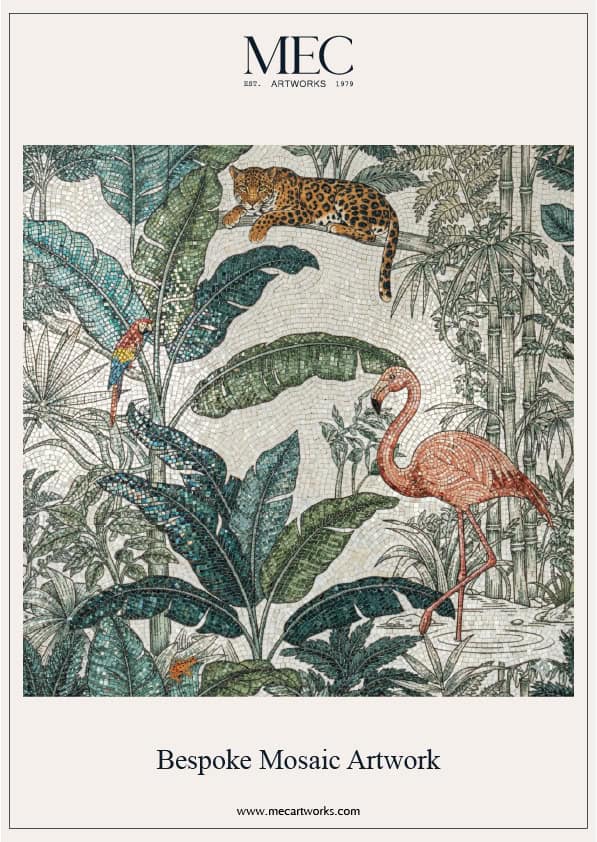
This combination of design development, traditional craftsmanship, and technical planning is what allows a complex mosaic to move from an idea to a finished architectural installation.
Collection Mosaic or Bespoke Mosaic: Which Is Right for Your Project?
Not every project needs to start from a blank page.
A collection design can provide an established starting point, while a fully bespoke commission allows the artwork to respond to a particular room, client, or architectural challenge.
| Approach | Best suited to |
| Collection design | Clients who like an existing composition and need limited adjustments |
| Fully bespoke | Original artwork, unusual dimensions, specific subject matter, or complex architecture |
| Hybrid approach | Existing collection artwork that needs changes to colour, scale, background, or composition |
For example, an artwork from our Animal Collection may already have the right visual character for a project. Instead of starting again, the composition could be adapted to suit a different wall dimension or colour palette.
Alternatively, a client may want an entirely new animal, landscape, botanical scene, or architectural composition.
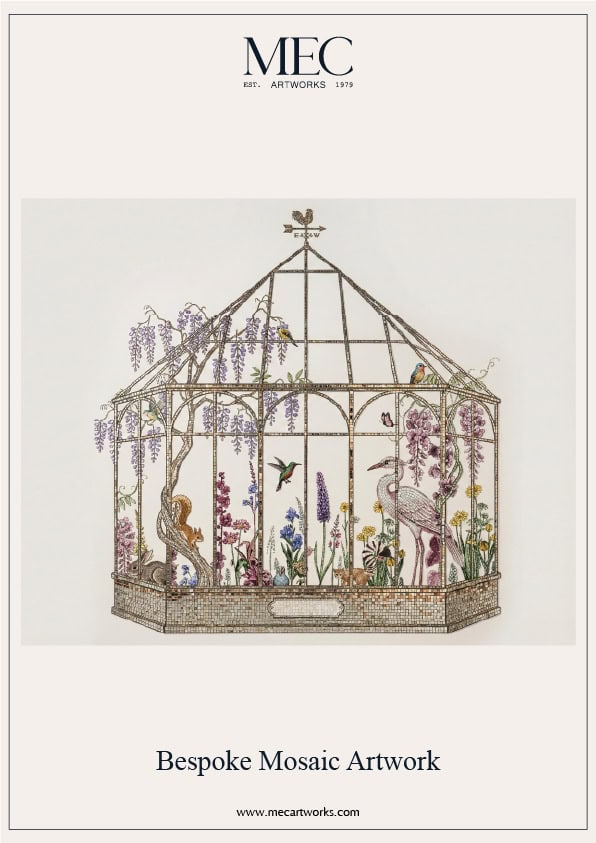
Our design consultancy is built to accommodate both approaches. We work with clients and design professionals worldwide to determine what makes the most sense for the project, from adapting an existing collection piece to developing a completely original mosaic.
For example, an artwork from our Animal Collection may already have the right visual character for a project. Instead of starting again, the composition could be adapted to suit a different wall dimension or colour palette.
Alternatively, a client may want an entirely new animal, landscape, botanical scene, or architectural composition.
Our design consultancy is built to accommodate both approaches. We work with clients and design professionals worldwide to determine what makes the most sense for the project, from adapting an existing collection piece to developing a completely original mosaic.
Mosaic Specification Checklist
These considerations are particularly important for bespoke mosaic art because the design may be created specifically for one architectural setting.
Our design consultancy works through these details with clients and design teams before production, helping identify potential issues early rather than leaving them to the installation stage.
- Dimensions & Scale: Wall size, artwork proportions, viewing distance, and sightlines
- Architecture: Niches, curves, columns, openings, fixtures, and other obstacles
- Substrate: Surface condition and suitability for mosaic installation
- Environment: Moisture, chemicals, traffic, UV exposure, and temperature
- Artwork Adaptation: Scaling, composition, colours, and level of detail
- Design Approval: High-resolution renders, material samples, and final artwork approval
- Installation: Section mapping, layout drawings, labelling, and contractor guidance
- Maintenance: Material-specific cleaning, care, and long-term maintenance
What Does a Full-Service Mosaic Design Company Provide?
Choosing a mosaic specialist is not only about finding someone who can produce the artwork. For a large architectural project, designers often need support before, during, and after fabrication.
At MEC, our services cover the project from initial concept through installation and after-sales support.
Our design team can assist with:
- Concept development and artwork adaptation
- Material and colour selection
- Custom colour matching
- Scale and composition adjustments
- High-resolution design renders
- Sample and material development
- Technical considerations for the intended application
Clients can work with us remotely from anywhere in the world, making the design process accessible even when the project and production facility are in different countries.
Global Installation Support
A large mosaic may arrive at a project in multiple sections. Each section therefore needs to correspond precisely with the overall artwork.
We provide:
- Section mapping
- Layout blueprints
- Labelled mosaic sections
- Installation information
- Technical support for contractors
This allows the installation team to understand how the individual sections come together and where each part belongs.
Designer Trade Support
For architects and interior designers, specialist support can also make the specification process easier. This is why we offer a trade program for designers looking for mosaic art.
Our designer-focused services can include:
- Trade pricing
- Dedicated project support
- Technical documentation
- Custom sample boards
- Material and colour guidance
- Bespoke artwork development
The aim is to give designers the information they need to specify mosaic with confidence, without having to manage every technical detail themselves.
Frequently Asked Questions
What is an animal mosaic?
An animal mosaic is a mosaic artwork that features wildlife as part of the design. It can be as simple as a single bird or animal, or as detailed as a full jungle or safari scene. Because the artwork is built from individual pieces of glass, marble, or stone, you get much more depth and texture than you would with a printed mural.
Can mosaic murals be customized to specific room sizes?
Absolutely. This is one of the main advantages of a bespoke mosaic. The artwork can be scaled or redesigned around the exact dimensions of your wall, floor, niche, or other surface. You can also adjust colours, backgrounds, individual elements, or even create a completely new composition.
At MEC, our design consultancy team works with clients worldwide to develop the artwork around their actual space, rather than simply making a standard design fit.
Are animal and botanical mosaics suitable for swimming pools and wet areas?
Yes, they can be. Animal and botanical artwork can work beautifully in pools, spas, bathrooms, shower areas, and other wet environments. The important part is choosing materials and installation systems that are appropriate for the conditions
For pools, for example, we consider factors such as moisture, pool chemicals, and long-term exposure when developing the mosaic.
How do I choose the right mosaic materials for high-traffic or outdoor applications?
Start with where the mosaic will be used. A material that works beautifully on a feature wall may not be the right choice for a busy floor or outdoor area.
Think about:
Traffic: How much footfall will the surface receive?
Exposure: Will it face moisture, sunlight, or temperature changes?
Surface finish: Is slip resistance important?
Appearance: Do you want the brightness of glass or the natural variation of marble and stone?
Our design team can help you choose the material based on both the look you want and the demands of the application.
Does MEC provide support for contractor installation?
Yes. We don’t simply send the finished mosaic and leave the contractor to figure it out. Large artworks are divided into labelled sections and supplied with layout information so the installation team knows how everything fits together.
We also provide technical and remote installation support for projects around the world, helping contractors with questions that may come up during installation.
How does the Designer Trade Program work for architects and interior designers?
The Designer Trade Program is designed to make specifying and developing mosaics easier for design professionals. It gives architects and interior designers access to trade-specific support throughout a project.
Whether you’re specifying a piece from one of our collections or developing something completely custom, you have a team you can work with throughout the process.