
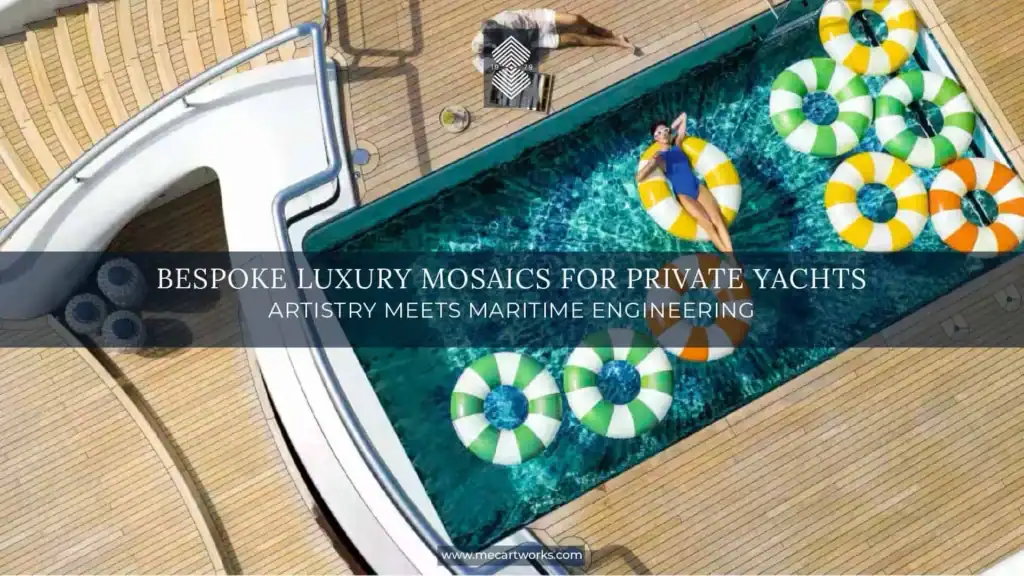
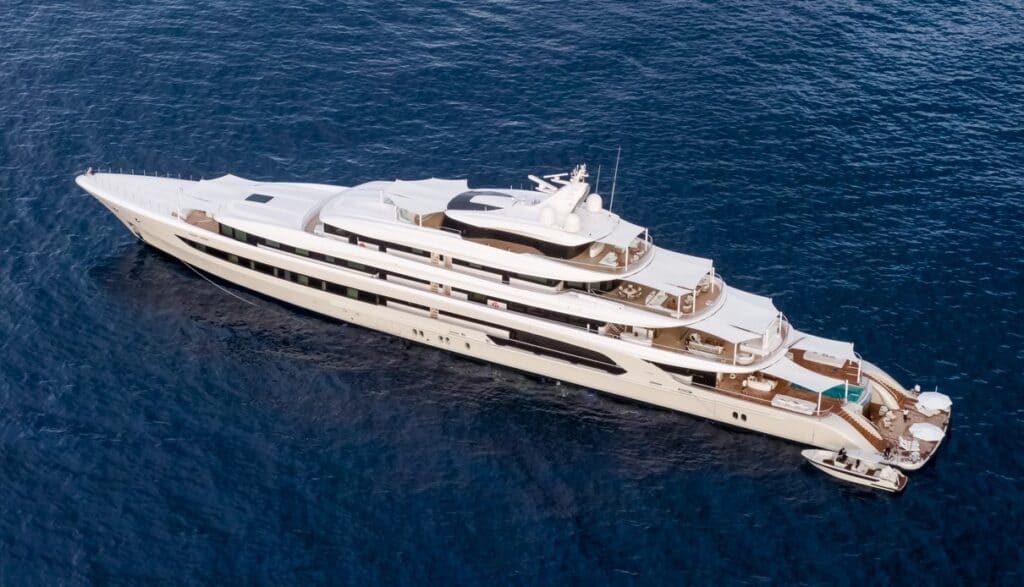
Yachting today represents more than travel. It reflects lifestyle, identity, and personal expression at the highest level. Modern superyachts are designed as private environments where architecture, engineering, and art come together.
This shift creates a new design challenge. Yacht interiors must go beyond visual appeal. They need to withstand constant motion, salt exposure, humidity, UV radiation, vibration, and strict marine safety requirements. That is where Yacht Mosaics stand apart.
A well-designed mosaic can transform a pool floor, spa wall, beach club, salon, or cabin into a permanent artistic surface. However, in a marine setting, every design decision must also perform under real-world conditions.
Because at sea, beauty alone is never enough. It must last.
Table of Contents
The New Standard in Superyacht Interior Design
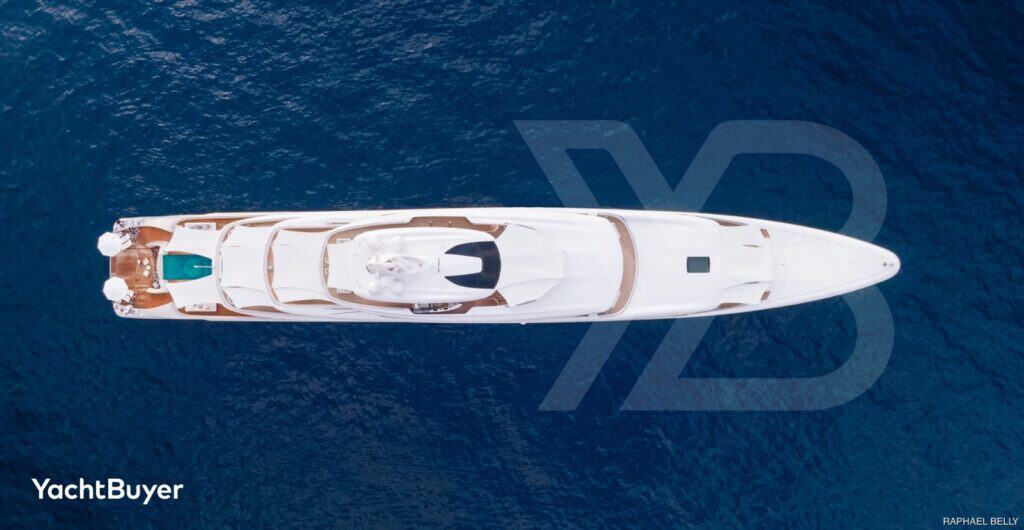
Superyacht interiors have entered a new phase. It is no longer just about premium materials. It is about creating immersive environments where design, performance, and personalization work together. Modern yacht interiors focus on:
- Personalization over repetition
Owners want custom spaces that reflect their lifestyle rather than catalog designs - Seamless flow between spaces
Interiors now transition smoothly between decks, spas, cabins, and lounges - Material performance in real conditions
Surfaces must handle moisture, vibration, and UV exposure without deterioration - Integration of art into architecture
Elements like decorative mosaic tiles are no longer decorative add-ons. They are structural design features - Light and movement interaction
Materials are selected based on how they react to sunlight, water reflection, and motion
In this context, custom mosaic tiles have become essential. They provide flexibility, detail, and durability that standard materials cannot match.
2026 Yacht Interior Trends: The Rise of Wellness Sanctuaries
Luxury yacht design has evolved beyond traditional finishes. While wood and stone still play a role, they no longer define modern interiors.
Today’s focus is on wellness, comfort, and emotional experience. This is where mosaics bring value. A custom mosaic can create:
- Pool murals that respond to light and water
- Spa environments that promote calm and relaxation
- Cabin features that add depth and personality
- Beach club mosaic flooring that feels like a luxury resort
- Custom branding, symbols, or geometric patterns
This aligns closely with superyacht spa & wellness design, where materials must support both visual calm and long-term durability.
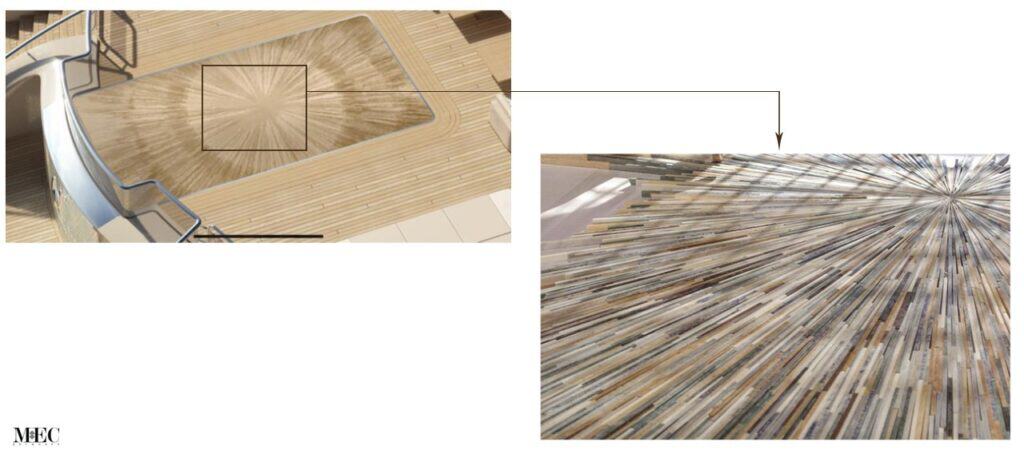
Where Bespoke Mosaics Work Best on Private Yachts
| Yacht Area | Best Mosaic Use | Key Design Need |
| Swimming pools | Submerged murals, color gradients, custom emblems | Water-resistant glass with a flexible installation system |
| Beach clubs | Statement flooring and feature wall designs | Slip-resistant surface with high salt durability |
| Spas | Relaxation walls and steam room finishes | Moisture control and calming palette |
| Cabins | Accent panels, niches, and headboard features | Lightweight construction with detailed craftsmanship |
| Bathrooms Spaces | Shower surrounds and vanity backdrops | Full waterproofing with easy maintenance |
| Deck areas | Border detailing and decorative medallions | UV resistance with anti-slip performance |
Engineering Mosaics for the High Seas: Durability & Performance
A private yacht is constantly in motion. Even at the dock, it reacts to waves, wind, engine vibration, temperature shifts, and humidity. Because of this, yacht mosaics operate under very different conditions than residential installations.
In a home, surfaces sit on stable foundations. On a yacht, nothing is truly static. Every material must adapt to movement and environmental stress.
Marine mosaic systems need to account for:
- Continuous vibration from engines and water movement
- Structural flex within the hull
- Strict weight limitations
- Exposure to salt air and marine conditions
- Prolonged UV exposure
- Moisture buildup and condensation
- Regular cleaning with chemical agents
- Fire safety regulations
- Curved and non-uniform surfaces
Lightweight Fabrication for Vessel Fuel Efficiency
Weight plays a critical role in yacht design. Every added material contributes to the overall load, which can influence balance, performance, and fuel efficiency over time.
While thick stone slabs may offer a luxurious look, they are often not practical for marine interiors. This is where lightweight yacht flooring becomes essential. When designed with controlled thickness and lightweight systems, they deliver visual impact without adding unnecessary weight.
For example, custom glass mosaic for superyacht swimming pools can create striking underwater designs without the bulk of large stone panels. Moreover, smaller tesserae adapt more easily to subtle curves and structural movement.
A well-engineered lightweight mosaic system typically includes:
- Thin, hand-cut glass tesserae
- Lightweight mesh or face-mounted sheets
- Marine-compatible backing systems
- Controlled adhesive application
- Minimal mortar buildup
- Pre-sectioned panels for efficient installation
The objective is clear: achieve a high-end aesthetic while maintaining structural efficiency.
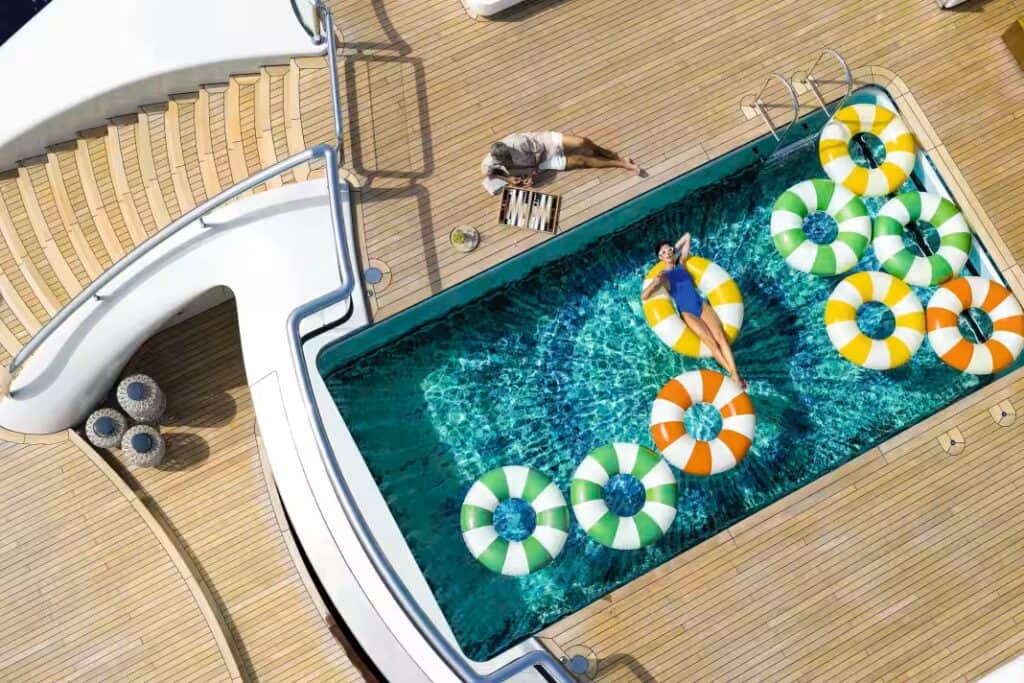
Vibration-Tolerant Bonding & Flexible Grout Systems
Yachts are constantly in motion. Engines, generators, wave activity, and hull flex all create continuous vibration. If the bonding system is too rigid, the mosaic may crack, shift, or even separate over time.
This is why vibration-resistant tile installation is a must for any marine environment. A successful installation depends on a system that can absorb movement rather than resist it. Key considerations include:
- Flexible adhesive layers
- Properly placed movement joints
- Careful substrate preparation
- Grout with elasticity
- Compatibility with waterproofing systems
- Ability to handle expansion and contraction
Mosaics have a natural advantage here. Smaller tesserae distribute stress more evenly compared to large-format slabs. Instead of placing pressure on a single surface, the load is shared across many pieces.
That is why hull flex-tolerant mosaics are ideal for curved bulkheads, yacht pools, and spa areas. When combined with the right installation system, they adapt more effectively to movement and maintain long-term performance. Moreover, for high-performance vessels, vibration-proof mosaic bonding for high-speed yachts ensures durability under extreme conditions.
Corrosion-Resistant Materials for Salt-Air Environments
Salt air may feel refreshing on deck, but it can be highly aggressive on materials. It corrodes metals, stains porous surfaces, and speeds up long-term wear. In both interior and exterior yacht spaces, material selection needs to be precise and performance-driven.
Glass performs especially well in marine environments due to its density, low porosity, and ability to retain color over time. Natural and marble stone can also deliver a refined look, but it requires the correct finish, proper sealing, and a clear maintenance approach to ensure durability.
Thermal Expansion Management in Changing Marine Climates
Yachts travel across different climates. A vessel may move between warm regions, temperate waters, and cooler environments throughout the year. These shifts cause materials to expand and contract, which can put stress on rigid surfaces.
Large panels often struggle to handle this movement. Mosaics perform better because they are made up of smaller units that can adapt more easily to change.
However, performance depends on proper planning.
Key considerations include:
- Smaller tesserae for improved flexibility
- Strategic placement of movement joints
- Proper substrate preparation
- Compatible adhesive and grout systems
- Adequate curing time before use
- Protection from moisture during installation
In the end, yacht mosaics require a balance of design and engineering. Without both, long-term performance can be compromised.
Signature Marine Material Library
The material palette for yacht mosaics should feel luxurious, but it also needs to behave well at sea. A yacht is not the place for random decorative tiles. Every material must justify its place.
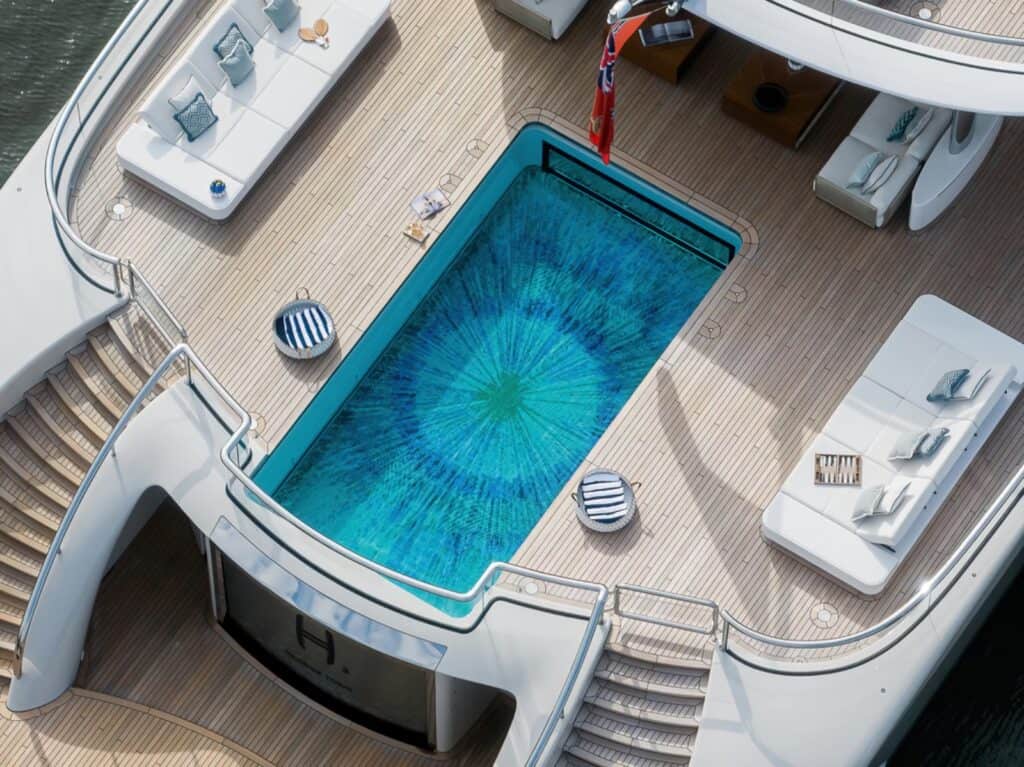
Non-Slip Mosaics for Onboard Himalayan Salt Saunas & Spas
Beach clubs and spa areas require surfaces that are both safe and comfortable. Wet feet, saltwater, sunscreen, and constant movement can make glossy finishes slippery and unsafe.
This is where antislip mosaic for yacht decks becomes essential. Mosaics naturally provide better traction than many large-format tiles due to their multiple grout lines. These joints help improve grip when properly designed.
For wet yacht environments, designers should consider:
- Honed stone instead of polished finishes
- Textured glass is suitable
- Smaller tesserae for enhanced foot grip
- Marine-compatible grout systems
- Easy-to-clean surfaces
- Proper drainage direction
- Comfortable barefoot feel
Stone and marble mosaics are especially effective in wellness spaces. Materials like beige limestone, soft white marble, green stone, and subtle charcoal tones create a calming atmosphere. When combined with warm lighting, the space feels like a private retreat, capturing the essence of wellness-focused yacht design. Additionally, non-slip mosaic tiles for yacht steam rooms and hammams ensure safety in wellness environments.
PIXL Technology for Seamless Underwater Pool Murals
Underwater surfaces reveal every detail. Even minor imperfections like sheet lines, grid patterns, or repeated layouts become more noticeable once submerged and exposed to light.
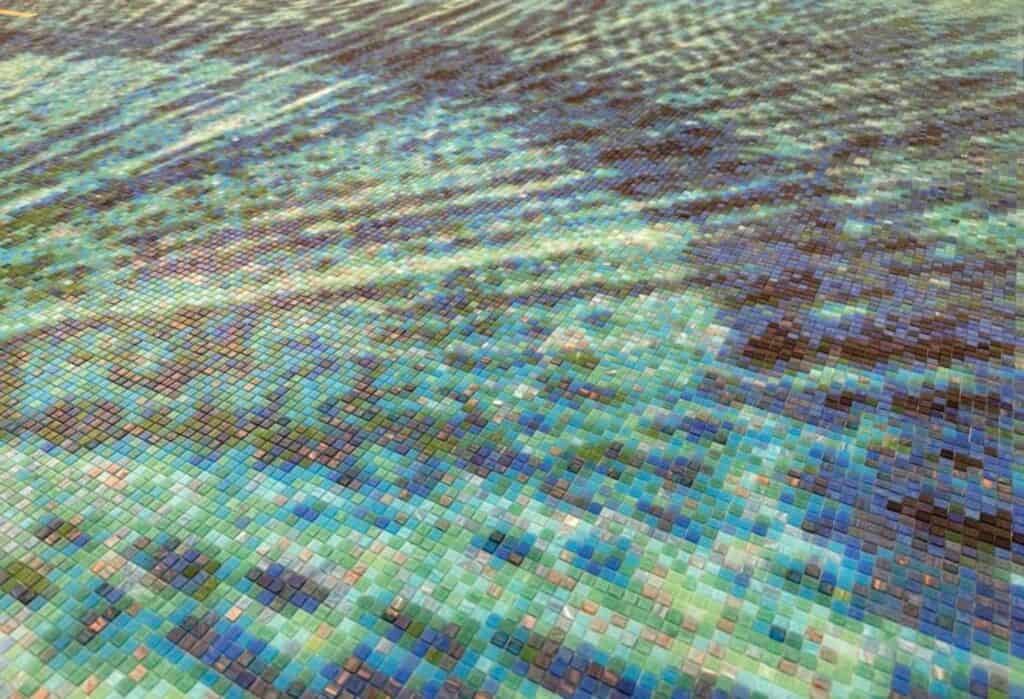
This is where advanced mosaic techniques make a difference. By using carefully placed small glass tesserae, designers can create smooth gradients, fluid transitions, and highly detailed imagery without visible interruptions.
This approach works especially well for:
- Ocean-inspired pool floors
- Coral reef–style murals
- Soft blue gradient compositions
- Underwater yacht logos
- Family crests
- Sea life mosaic art
These systems are often used in marine-stable mosaic murals for beach clubs.
Luxury Materials for Interior Spaces
Premium interiors often feature:
- Bespoke mother-of-pearl mosaics for luxury cabins
- Lightweight marble mosaics for yacht bathrooms
- Handcrafted mosaic focal walls for private vessels
These materials add depth, reflection, and visual richness without compromising performance.
Why Bespoke Mosaics Outperform Standard Marine Finishes
Standard marine finishes still serve a purpose. Panels, vinyls, veneers, and conventional tiles can perform well in many areas. However, they often lack the individuality, longevity, and artistic depth that a bespoke mosaic artwork project can offer.
Standard Finishes Often Repeat
Many yacht interiors end up looking alike because they rely on the same supplier catalogs. It’s common to see repeated marble-look panels, neutral finishes, and familiar spa tiles across different vessels. Bespoke mosaics break that cycle.
At MEC Artworks, every mosaic art project begins with a blank canvas. Instead of selecting pre-made options, you collaborate with a dedicated design team to create a solution tailored to your yacht’s architecture and vision. This approach gives you full control over design, materials, and color direction, resulting in a truly unique interior.
Mosaics Adapt Better to Curves
Large tiles and rigid panels often struggle to adapt to curved yacht surfaces. They require cuts that can disrupt the design and break the visual flow. Mosaics work differently. Made from smaller tesserae, they conform more easily to curves and contours. This makes them a more flexible and effective solution across a wide range of spaces.
Mosaics Distribute Stress
A single slab can crack under pressure, especially in a marine environment. A mosaic surface, however, distributes movement across hundreds or even thousands of small pieces. This built-in flexibility helps reduce stress and improve long-term durability.
When paired with the right installation system, the performance improves even further. That is why vibration-resistant tile bonding and hull flex-tolerant mosaics work so well together.
At MEC Artworks, this approach goes beyond design. Each mosaic tile is engineered for real-world marine conditions, with careful attention to material selection, backing methods, and fabrication techniques. The result is a surface that performs reliably without compromising on visual quality.
Mosaics Create Permanent Identity
A yacht is a long-term investment, and its interiors should feel timeless rather than temporary. Bespoke mosaics stand out because they are not driven by short-lived trends. Instead, they are designed with meaning and purpose.
At MEC Artworks, the design process focuses on translating the owner’s vision, lifestyle, and personal influences into a lasting surface. For example:
- An owner may choose geometric patterns in refined color palettes
- A coastal-inspired yacht may feature deep blues and crisp white tones
- A wellness-focused space may use soft greens and fluid, calming designs
- A family yacht may incorporate a crest or symbolic motif
Each of these choices turns a surface into something more than decoration. It becomes a story. That is the real difference. Standard finishes simply fill a space, while bespoke mosaics define it.
Final Thought: Where Art Meets Ocean Engineering
Designing for the sea changes the rules. A surface must do more than look refined. It needs to perform under constant movement, pressure, and time. As highlighted throughout this guide, bespoke mosaics offer a unique balance between visual elegance and technical performance in yacht interiors.
They adapt where rigid materials fall short and maintain their integrity where standard finishes begin to wear. More importantly, they bring something many interiors lack: a clear sense of identity. In a space where many designs start to feel similar, a custom mosaic creates something truly personal. It goes beyond decoration. It becomes a lasting expression of craftsmanship, intent, and individuality. And at sea, that distinction matters.
FAQ’s
Are yacht mosaics durable for long-term marine use?
Yes, when properly engineered, yacht mosaics are extremely durable. They are designed to withstand vibration, salt exposure, UV radiation, and moisture. The key is using the right combination of materials, adhesives, and installation systems.
What makes marine-grade glass mosaic suitable for yachts?
Marine-grade glass mosaic is non-porous, resistant to chemicals and salt, and maintains its color over time. It is ideal for pools, spas, and exterior areas because it does not absorb moisture or degrade easily.
Are mosaics too heavy for yacht interiors?
No, modern mosaic systems are designed to be lightweight. Solutions like lightweight yacht flooring and thin glass tesserae reduce overall load while still delivering a premium finish.
Can mosaics be safely used in wet areas like decks and spas?
Yes, when designed correctly. Antislip mosaic for yacht decks and spa areas uses texture and grout spacing to improve traction, making them both safe and functional.
How do mosaics handle vibration in high-speed yachts?
Mosaics perform well when paired with vibration-resistant tile installation systems. Flexible adhesives and vibration-proof bonding allow the surface to adapt to movement without cracking or failing.