
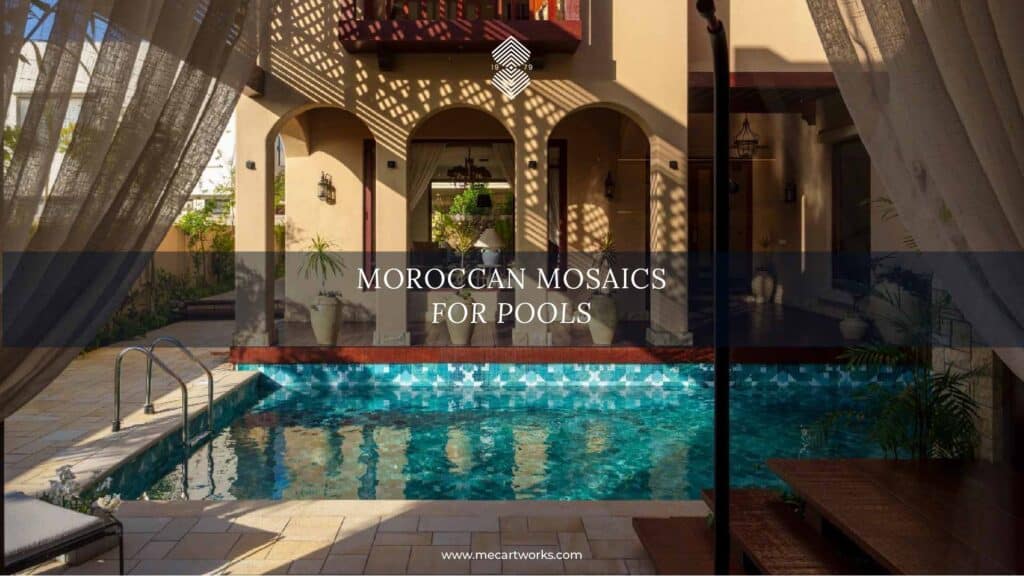
Moroccan pool mosaics are one of the most powerful ways to transform a swimming pool into an immersive architectural experience. More than simple decoration, these mosaics introduce pattern, texture, reflection, and atmosphere into the water itself. Whether you want a serene courtyard-inspired retreat, a vibrant resort-style pool, or a richly detailed spa environment, Moroccan mosaics offer endless design possibilities.
From intricate Zellige-inspired geometry and Arabesque motifs to deep cobalt blues, earthy terracotta tones, and shimmering glass tesserae, Moroccan pool tiles can completely redefine how a pool looks and feels. Water softens the patterns, sunlight adds movement, and every reflection brings the surface to life.
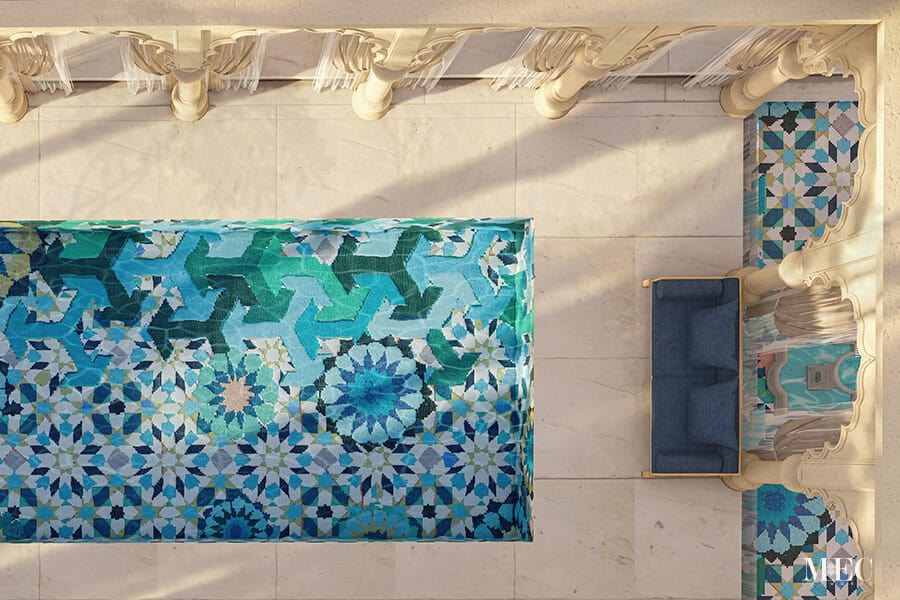
In this blog, you’ll discover inspiring Moroccan pool mosaic ideas categorized by design style, color palette, material selection, and pool application. From elegant waterline details to full mosaic murals, these concepts will help you create a pool that feels timeless, artistic, and deeply luxurious.
Table of Contents
Why Moroccan Pool Mosaics Feel So Timeless
Moroccan-style pool design feels timeless because it does not depend on quick trends. It comes from craft, geometry, architecture, and atmosphere.
The beauty of Moroccan design lies in its balance. It can feel ornate without feeling chaotic. It can feel traditional without looking old-fashioned. It can also feel luxurious without trying too hard. That quiet confidence is rare.
The Rich Heritage Behind Moroccan Mosaic Art
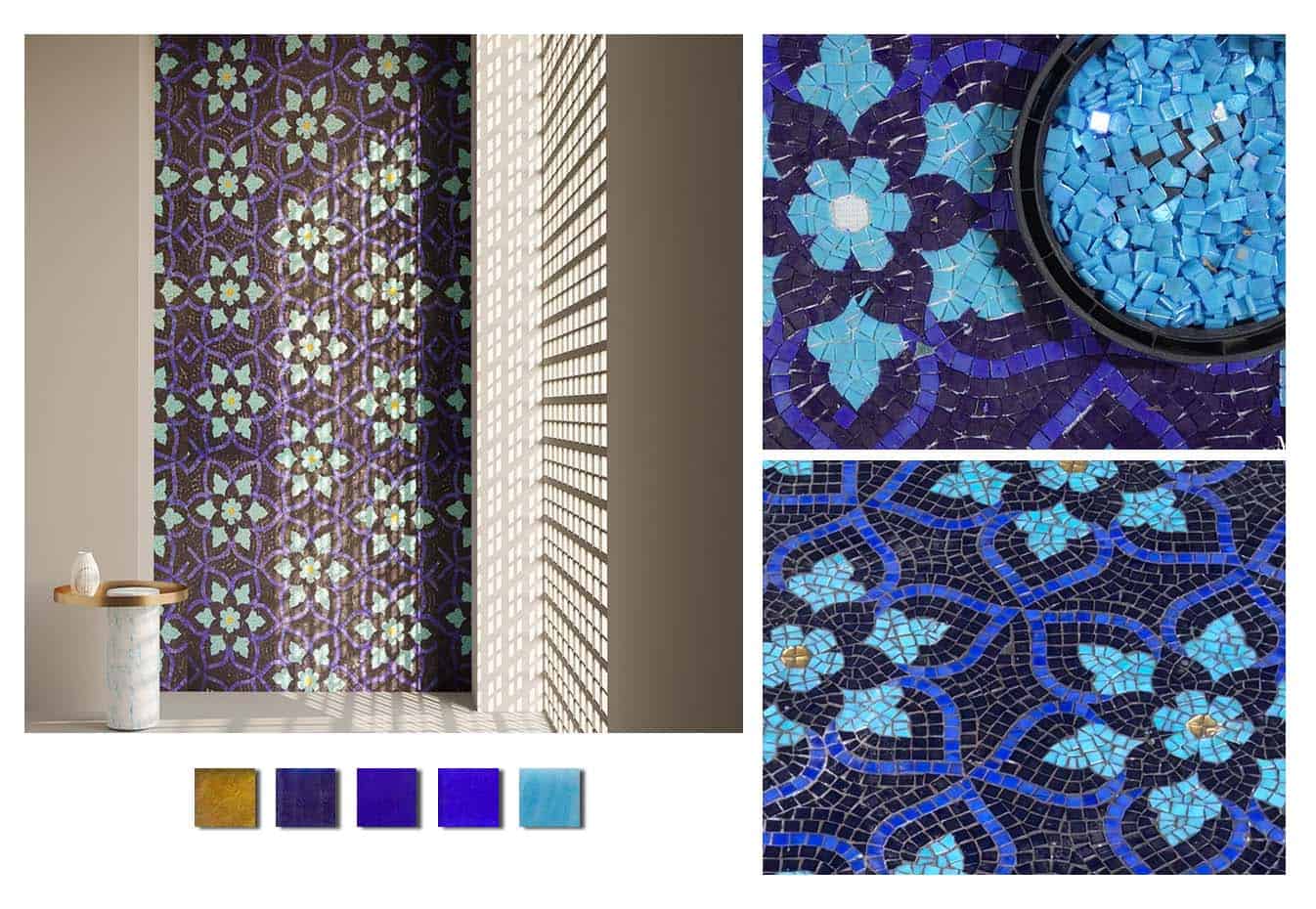
Moroccan mosaic art is closely connected to zellige, a traditional tile-making craft known for hand-cut geometric pieces, rich glazes, and complex pattern work. In historic Moroccan buildings, zellige appears on walls, fountains, floors, courtyards, columns, and architectural borders. The craft is not just decorative. It is architectural.
Each small piece plays a role in the larger composition. Stars, diamonds, crosses, polygons, and arabesque shapes come together through repetition and symmetry. The result feels ordered, calm, and deeply human.
This is why Moroccan mosaic tile patterns work so well around water. Pools already create reflection and movement. Moroccan mosaics add structure to that movement. They give the eye something to follow.
The Emotional Impact of Pattern, Reflection, and Water
Water changes how mosaic tiles behave. A dry tile has one personality. A submerged tile has another. Underwater, colors deepen. Lines become softer. Sunlight dances across the surface like a moving veil. A cobalt star pattern can look crisp in the morning and dreamy at sunset. An emerald glass mosaic can feel cool and garden-like during the day, then warm and mysterious at night.
That is the magic of custom aquatic mosaics. They do not stay still.
Moroccan patterns also create emotional comfort because they use rhythm. Repetition calms the eye. Symmetry gives the mind a sense of order. Curved arabesque details soften the edges of hard architecture.
Defining the Moroccan Pool Aesthetic
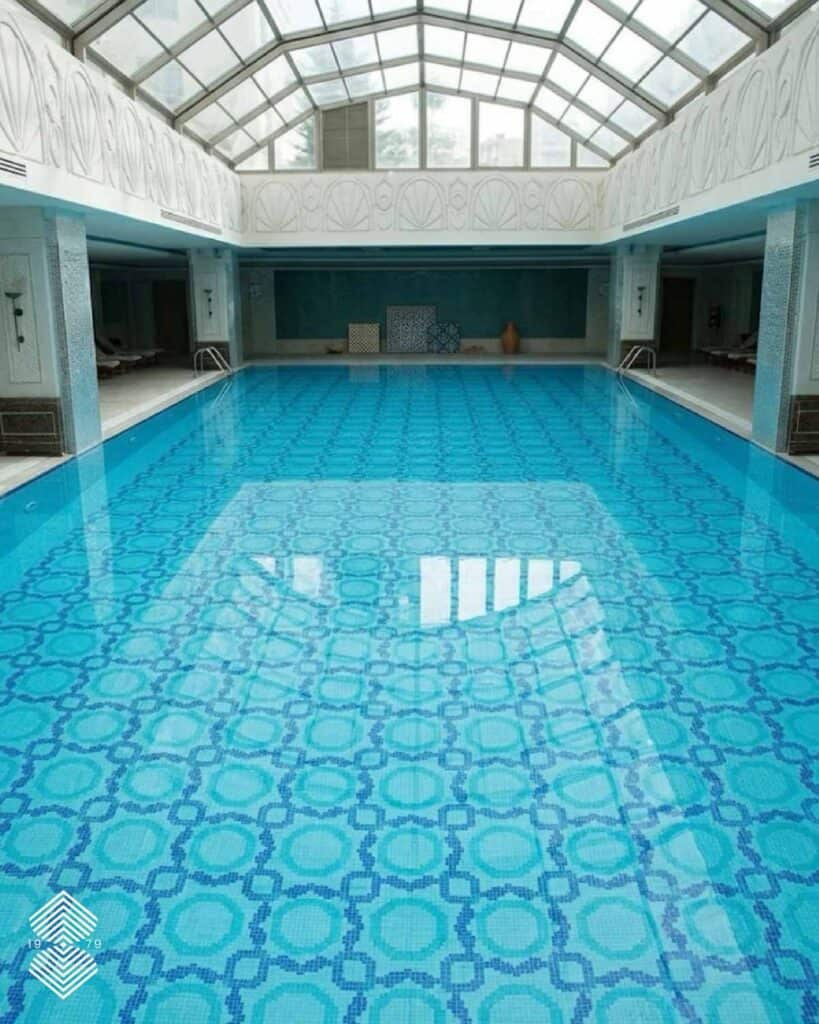
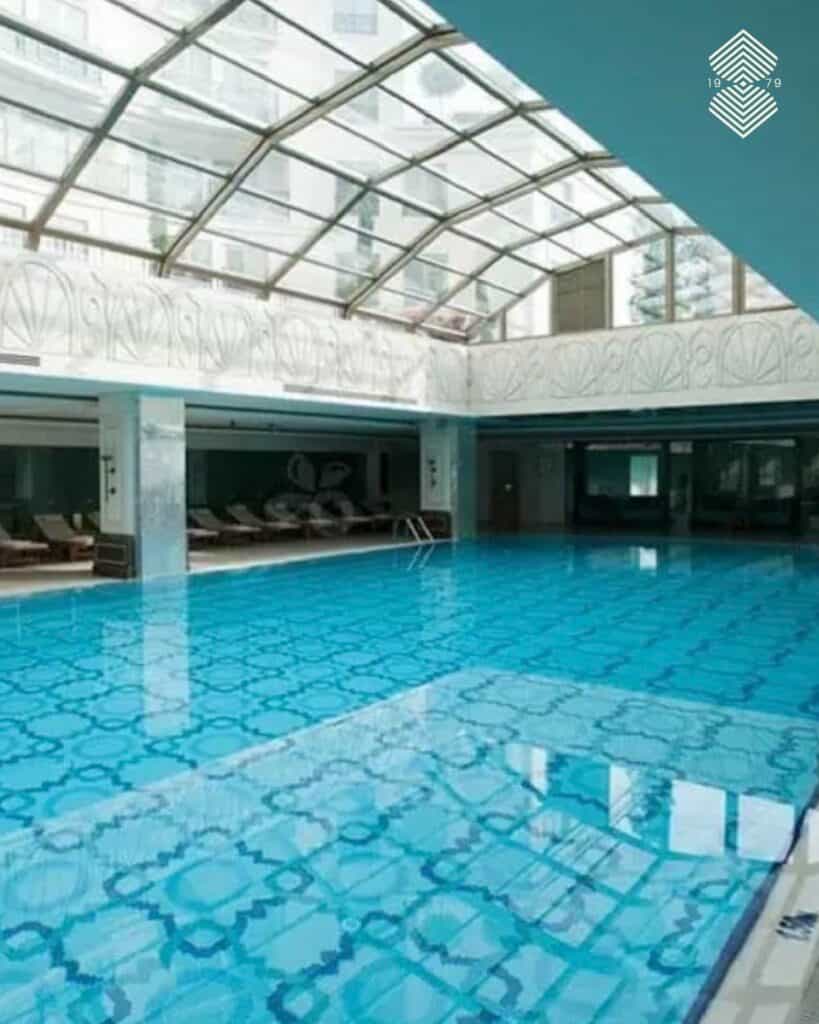
The Moroccan pool aesthetic starts with three things: color, pattern, and mood. It is not only about blue tiles or decorative borders. It is about creating an environment that feels layered and intentional. The tile should speak to the architecture. The pool should feel connected to the garden, lounge area, walls, fountains, and surrounding materials. When done well, everything feels like one story.
Signature Color Palettes for Moroccan Pool Tiles
Moroccan pool mosaics give you more color freedom than traditional pool finishes. Blue still matters, of course. Yet Moroccan design opens the door to greens, whites, terracotta, ivory, black, gold, and sand tones. Each palette creates a different feeling.
| Color Palette | Mood | Best Use |
| Cobalt blue and white | Fresh, classic, crisp | Riad-style pools, waterlines, courtyard pools |
| Turquoise and aqua | Bright, tropical, lively | Resort pools, family villas, sunlit spaces |
| Emerald and jade | Lush, spa-like, dramatic | Wellness pools, garden pools, hammam-inspired areas |
| Terracotta and sand | Earthy, warm, desert-like | Moroccan patios, neutral villas, and outdoor lounges |
| Black and white | Bold, graphic, architectural | Modern homes, luxury waterline borders |
| Deep blue and gold | Regal, rich, atmospheric | Boutique hotels, private spas, statement pools |
Trending Moroccan Mosaic Pool Tile Patterns
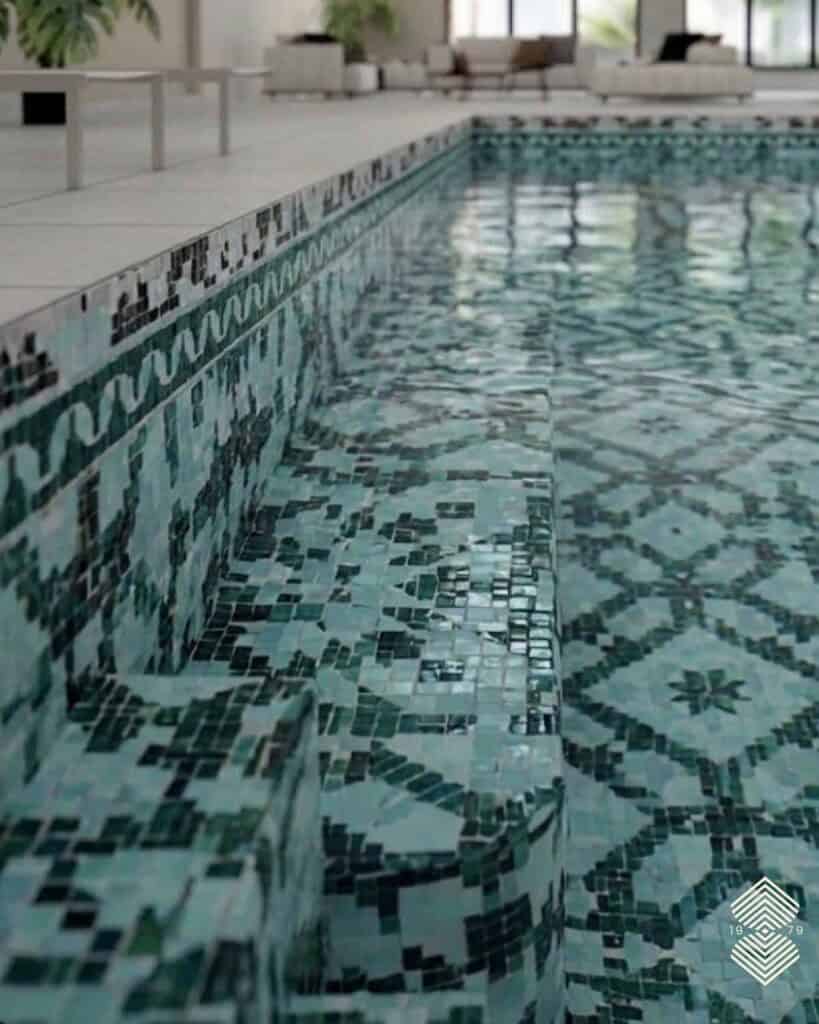
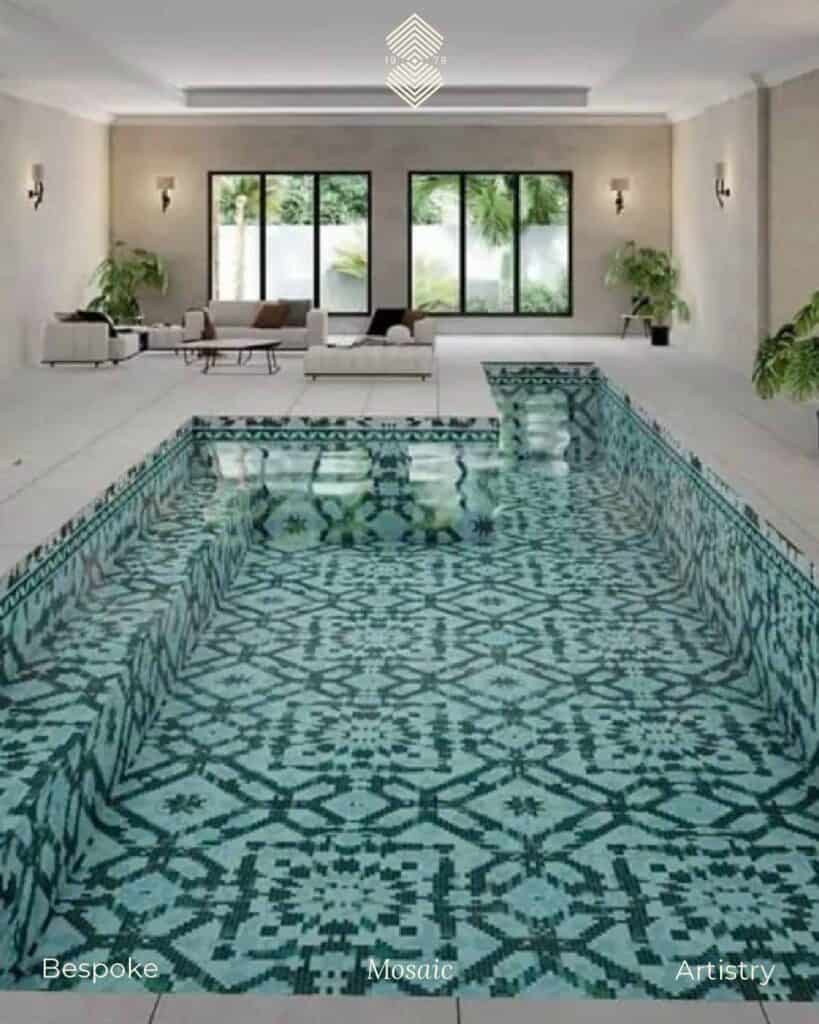
Moroccan pool mosaics are known for their rich mosaic geometry patterns, rhythmic repetition, and layered visual depth. These patterns bring movement and character to the water, transforming the pool into a more immersive and architectural space. Some common options for Moroccan pool mosaic styles are:
Classic Riad Style: Luxury Pool Mosaic Designs
A classic riad-style pool feels intimate, layered, and deeply atmospheric. Inspired by traditional Moroccan outdoor mosaic ideas, these include pools that often feature full mosaic interiors, geometric borders, tiled fountains, and rich jewel tones like cobalt, turquoise, and emerald. Smaller spaces work especially well because the intricate patterns feel immersive and luxurious rather than overwhelming.
Starburst Motifs for Traditional Moroccan Character
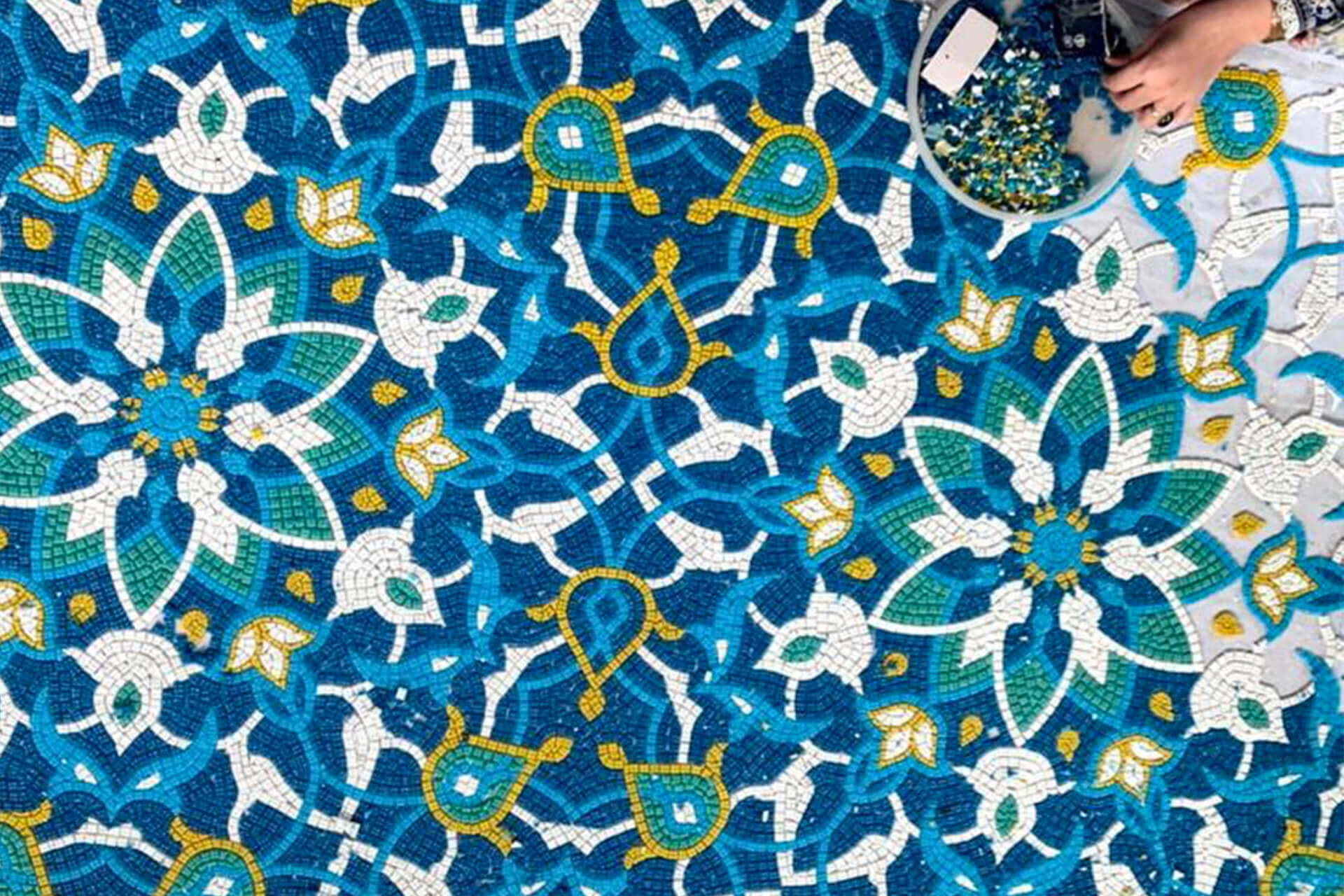
Starburst motifs are one of the most recognizable elements in Moroccan mosaic design. These radiating geometric forms create a sense of symmetry and movement, making them ideal for pool floors, medallions, and central focal points. Under sunlight and moving water, the pattern gains even more depth and visual energy.
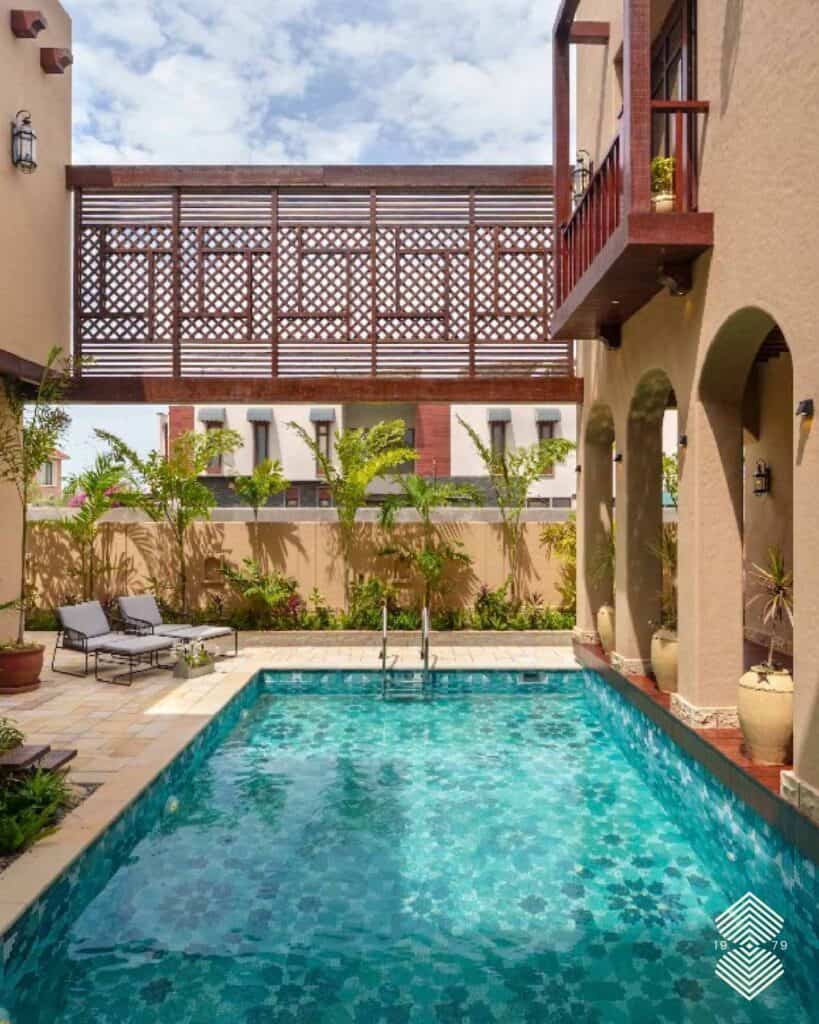
Arabesque Patterns for Flowing Decorative Movement
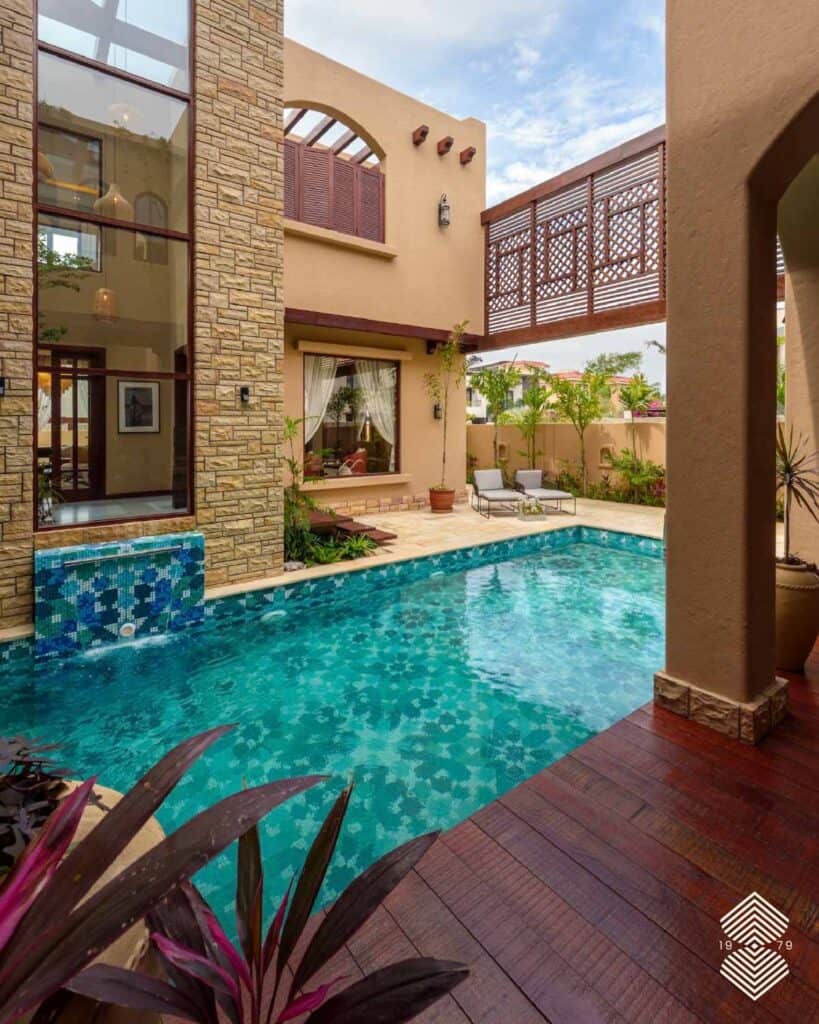
Arabesque patterns use repeating curves and interwoven geometry to create a softer, more fluid visual effect. In pool mosaics, these patterns work beautifully along waterlines, spa walls, and decorative borders because they mimic the movement of water itself. The result feels elegant, layered, and highly atmospheric.
Interlocking Geometry for Layered Visual Rhythm
Interlocking geometric patterns create a continuous visual rhythm across the pool surface. Inspired by traditional Moroccan tilework, these layouts use repeating shapes that connect seamlessly to form a unified composition. This style works especially well for larger pools where the pattern can unfold gradually across the water.
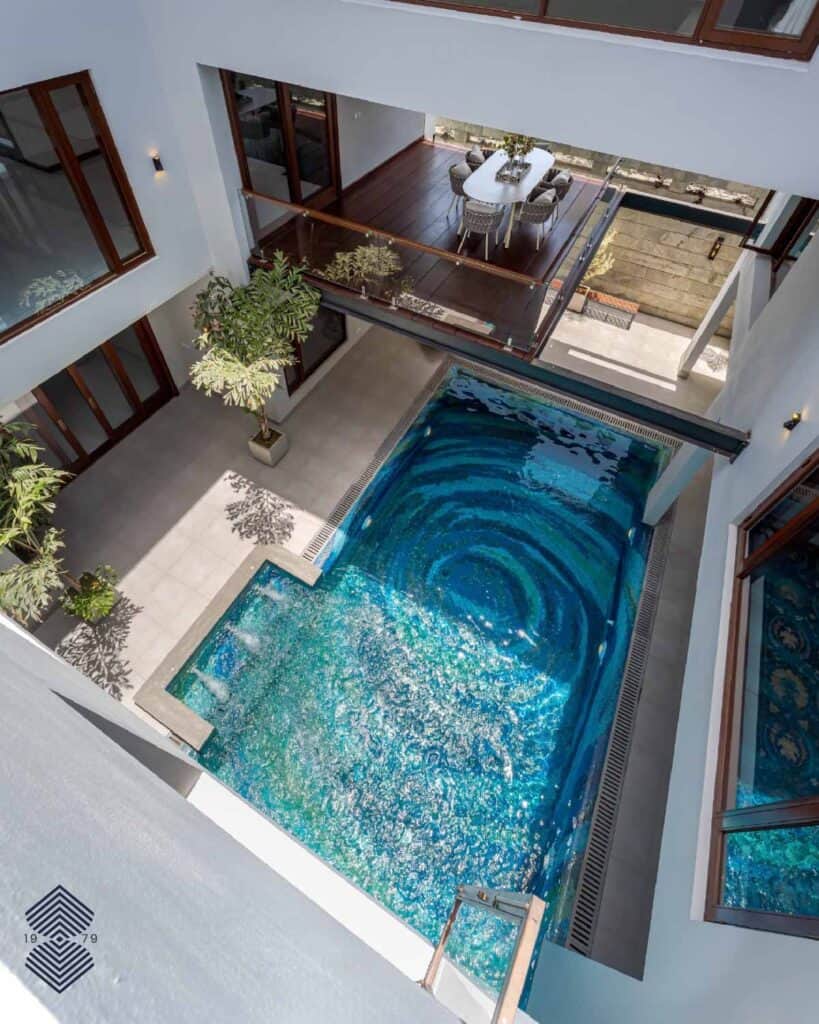
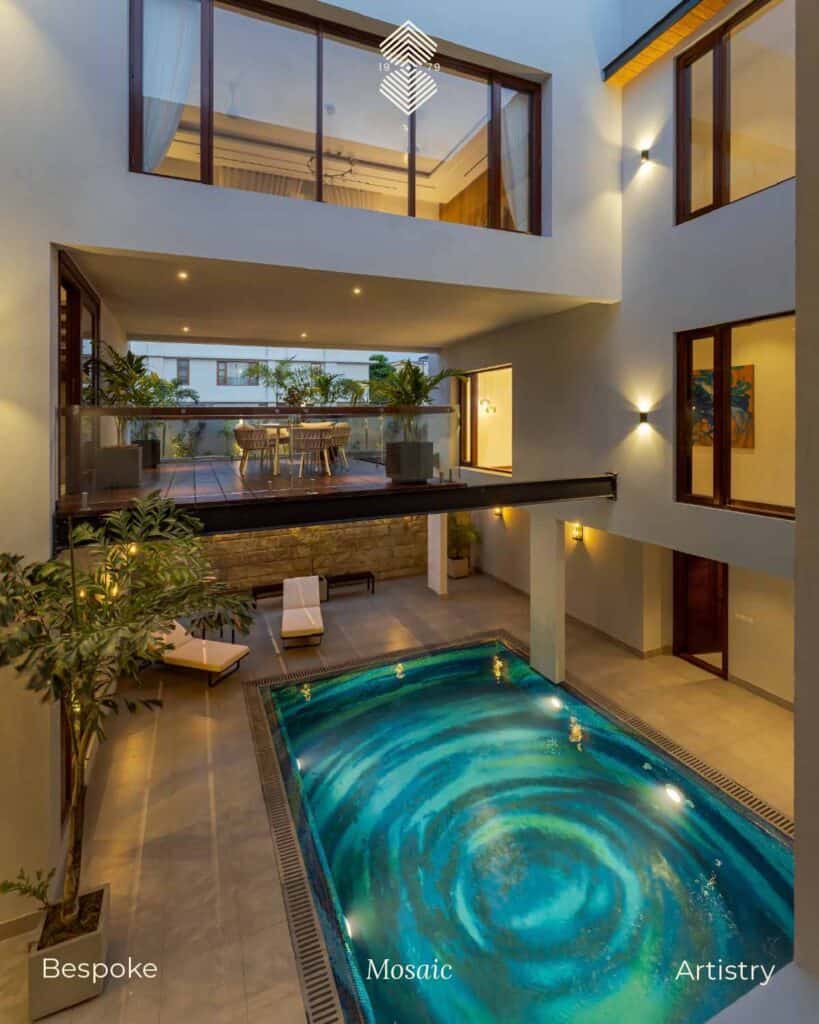
Diamond Layouts for Structured Elegance
Diamond mosaic layouts bring structure and clarity to Moroccan-inspired pools. Their clean symmetry creates a refined look that pairs well with both traditional and contemporary architecture. Depending on the color palette, diamond patterns can feel either bold and graphic or soft and understated.
Floral Motifs for Softer Mosaic Detailing
Floral-inspired mosaic motifs introduce softness into geometric Moroccan pool designs. These patterns often appear in medallions, accent panels, or decorative borders, helping balance stronger angular layouts. Combined with warm lighting and reflective water, floral details create a more relaxed and luxurious atmosphere.
Moroccan Waterline Pool Tiles & Decorative Borders
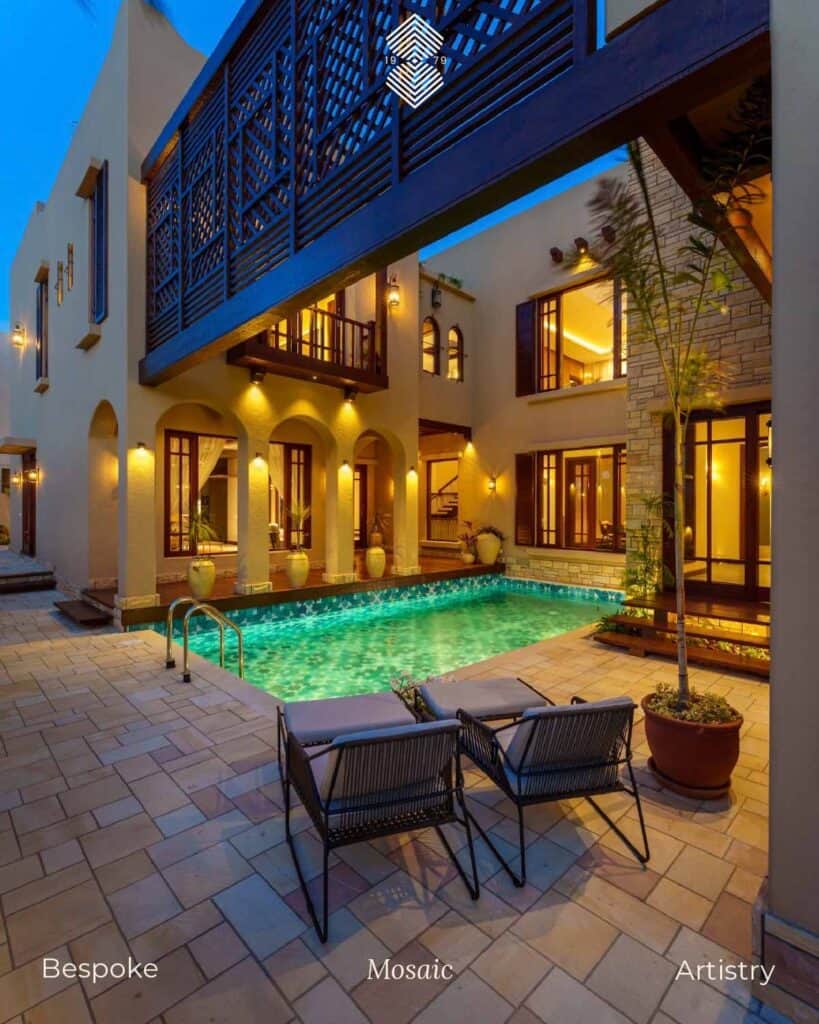
Decorative mosaic borders frame the pool and give the design a more finished architectural appearance. Moroccan-inspired borders commonly use repeating geometric bands, contrasting colors, or small Arabesque details to create visual separation along waterlines and pool edges. Even subtle borders can dramatically elevate the overall design.
Central Medallions for Pool Floors and Shallow Zones
Central medallions act as focal points within the pool, drawing attention to shallow ledges, entry areas, or the center of the basin. Moroccan-inspired medallions often combine layered geometry, star patterns, and contrasting tones to create a striking visual centerpiece. When viewed through water, the design appears softer and more dimensional.
Applications for Custom Pool Mosaics & Waterline Tiles
Moroccan pool mosaics do not have to cover every inch of a pool. They can appear as a full surface, a border, a step detail, a wall feature, or a fountain treatment. That flexibility makes them practical for many budgets and design goals.
- Full interiors are ideal for Luxury residential pools
- Waterline Borders
- Pool Steps, Benches, and Sun Shelves
- Outdoor Walls, Fountains, and Surrounding Features
Choosing the Right Materials for Moroccan Pool Mosaics
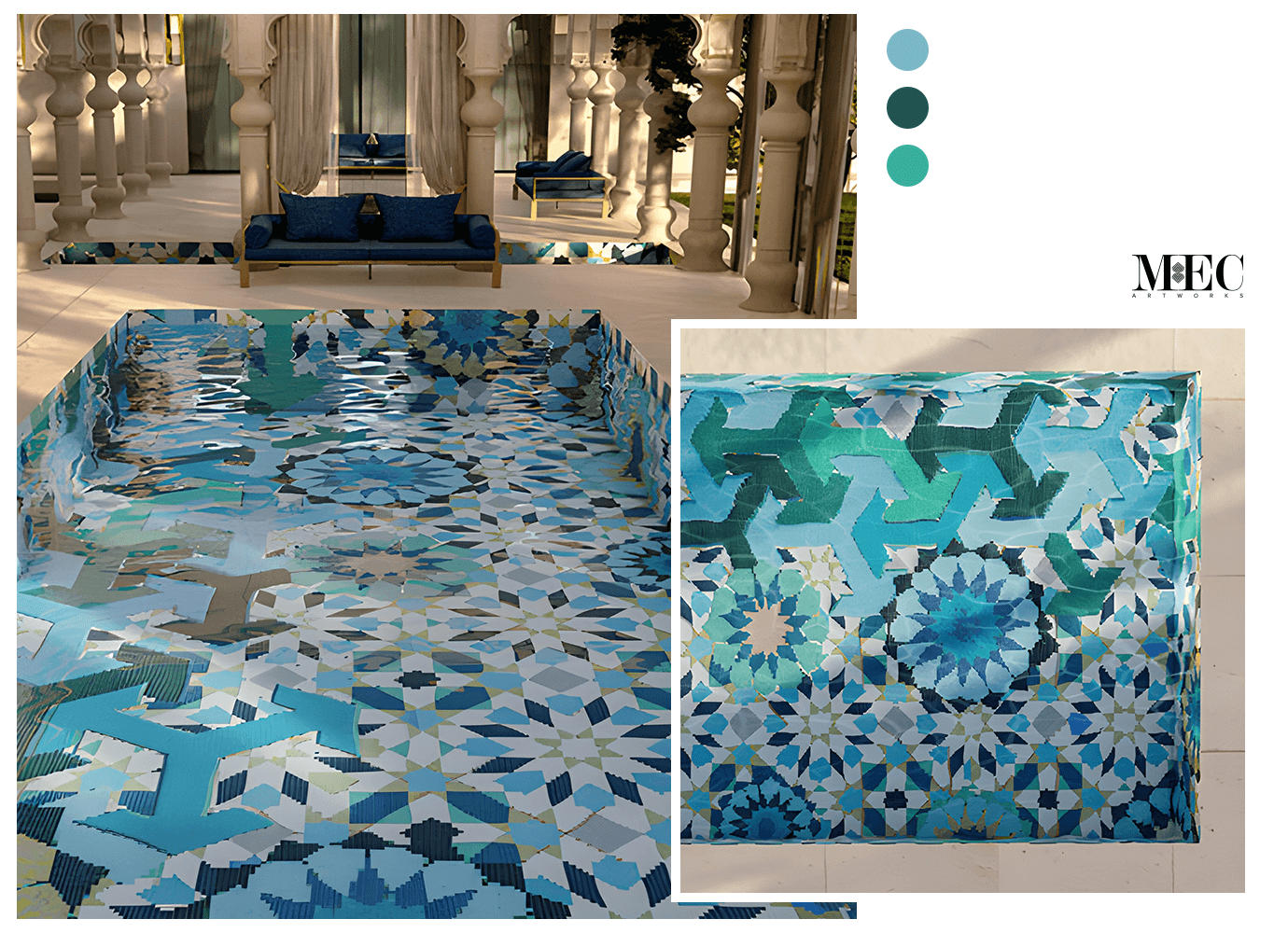
Materials can make or break a pool mosaic. A beautiful tile that cannot handle water, chemicals, UV exposure, or temperature changes will create problems later. The goal is simple: choose materials that look beautiful and perform well.
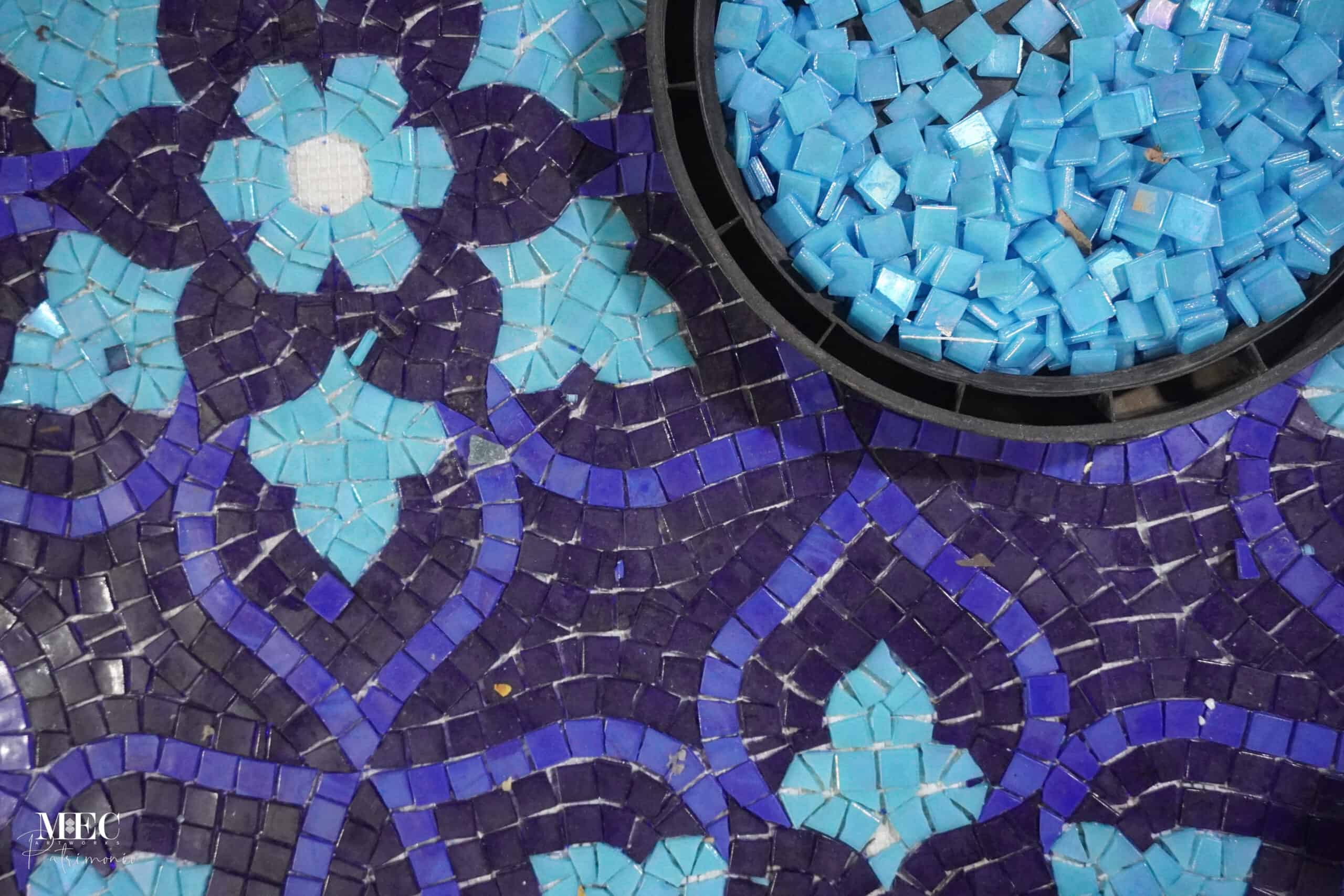
Hand-Cut Glass Mosaics for Moroccan Pool Mosaics
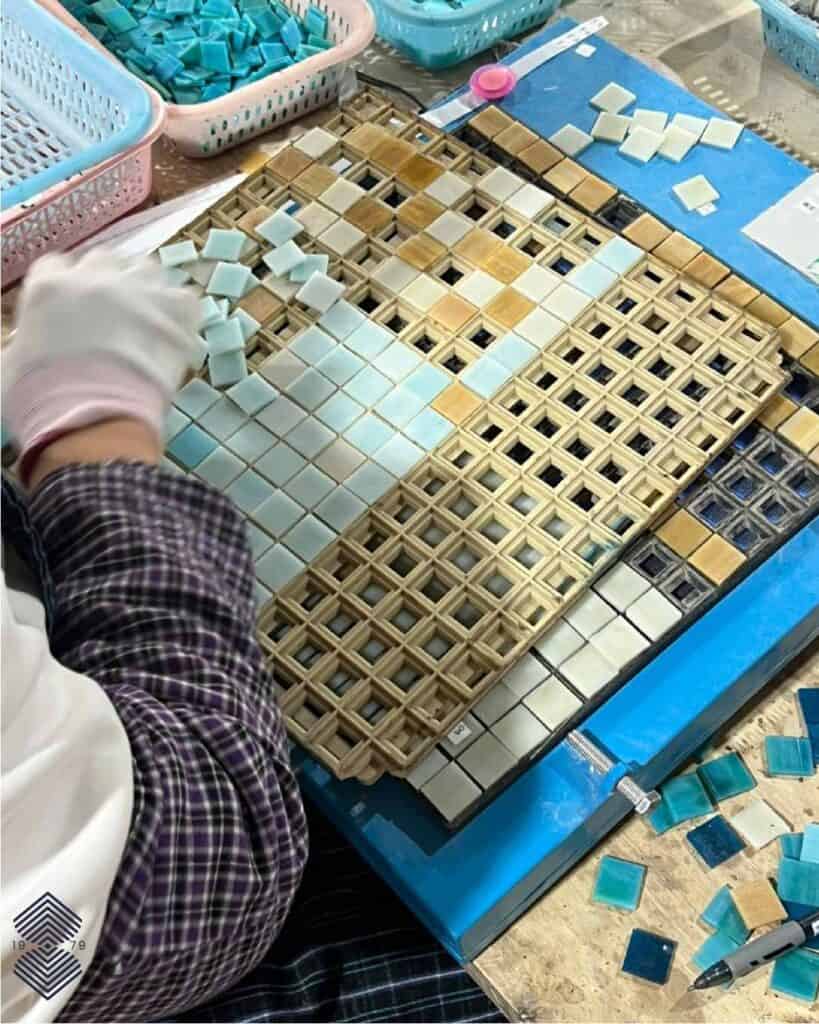
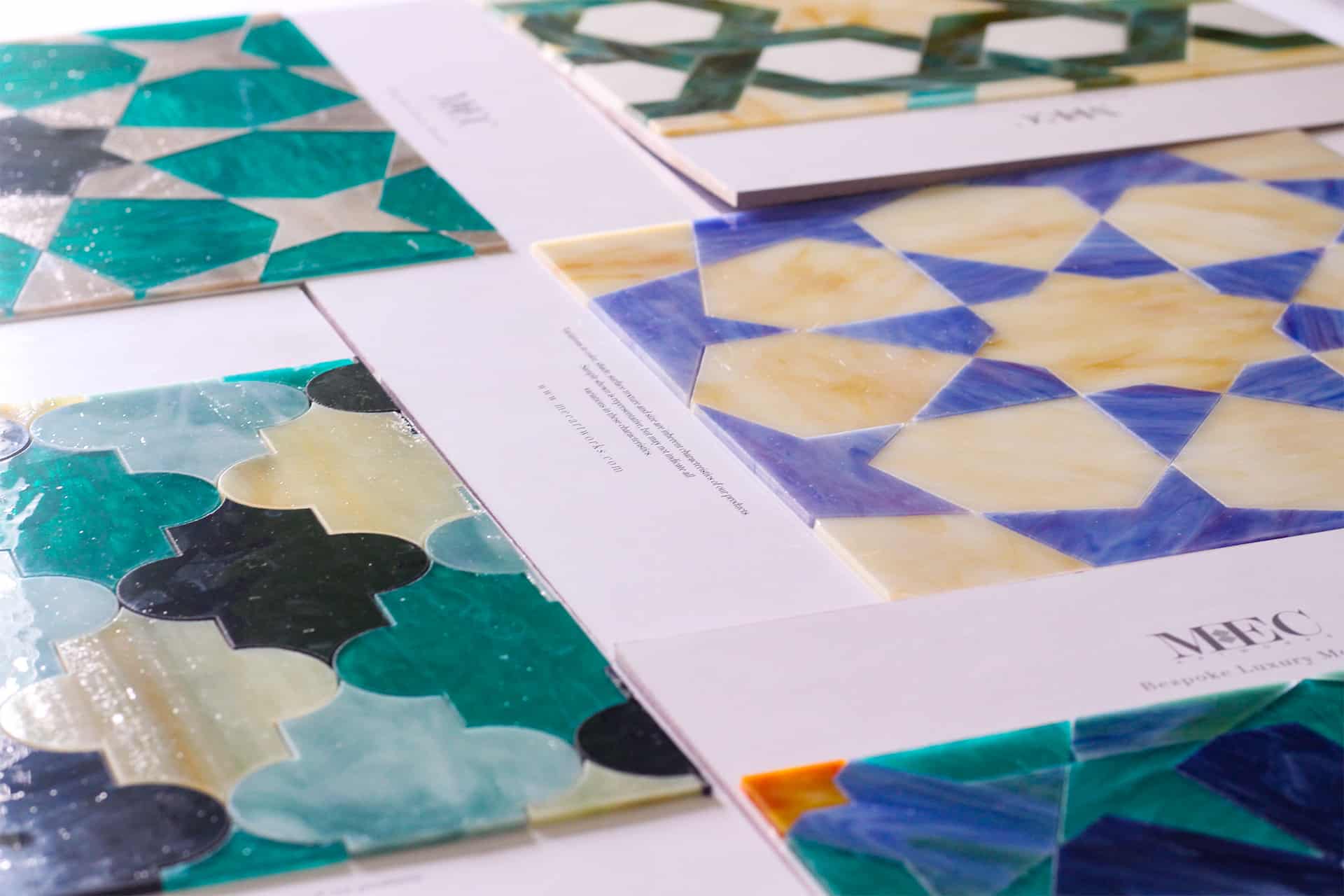
Glass is one of the most popular materials for luxury pool mosaics because it interacts beautifully with water. It reflects light, deepens color, and creates a luminous surface. For Moroccan pool mosaics, glass can make cobalt, turquoise, emerald, and aqua tones feel especially rich.
Natural Stone Mosaics for Moroccan Style Pools
Natural stone brings warmth and architectural weight. Marble, limestone, and travertine can support Moroccan pool spaces beautifully, especially around the pool. Stone works well for pool coping, decking, and courtyard flooring.
Zellige-Inspired Pool Mosaic Tiles
Many clients love the handmade irregularity of zellige. The slight color variation. The glossy surface. The imperfect edge. The sense that a human hand shaped it. However, traditional zellige may not always suit submerged pool conditions. That is why Zellige-inspired pool tile offers a practical design route.
It captures the look through:
- Tonal variation
- Glossy surfaces
- Moroccan geometry
- Slight irregularity
- Handmade visual character
- Rich color depth
For anyone asking “How to get the Zellige look in a swimming pool”, the safest answer is this: use pool-suitable materials that recreate the Zellige effect while meeting aquatic performance needs.
Common Design Mistakes to Avoid With Moroccan Pool Mosaics
Moroccan design has personality. That is a gift. It also means you need restraint. Too much detail can turn elegance into visual noise. The goal is richness, not clutter. Common mistakes to avoid are:
- Overcrowding the Space With Too Many Patterns
- Choosing Low-Quality Materials
- Forgetting the Surrounding Architecture
- Mixing too many bold colors
- Ignoring pool lighting conditions
- Overcomplicating waterline designs
- Choosing glossy surfaces for slippery areas
- Using mosaics without proper layout planning
- Using repetitive patterns without variation
- Ignoring scale and pool proportions
Why Designers and Homeowners Are Choosing Moroccan Pool Mosaics
Moroccan pool mosaics solve a common design problem: how do you make a pool feel unique without making it look overdesigned? The answer lies in balance. More than a pool surface.
A Moroccan mosaic is not just a finish. It shapes the mood of the entire space. It can make a pool feel:
- More intimate
- More luxurious
- More artistic
- More connected to architecture
- More memorable
- More relaxing
This is why Moroccan mosaics work so well in both homes and hospitality spaces. It blends heritage, luxury, and craftsmanship altogether with a modern pool design.
Choose MEC Artworks for Moroccan Pool Mosaics
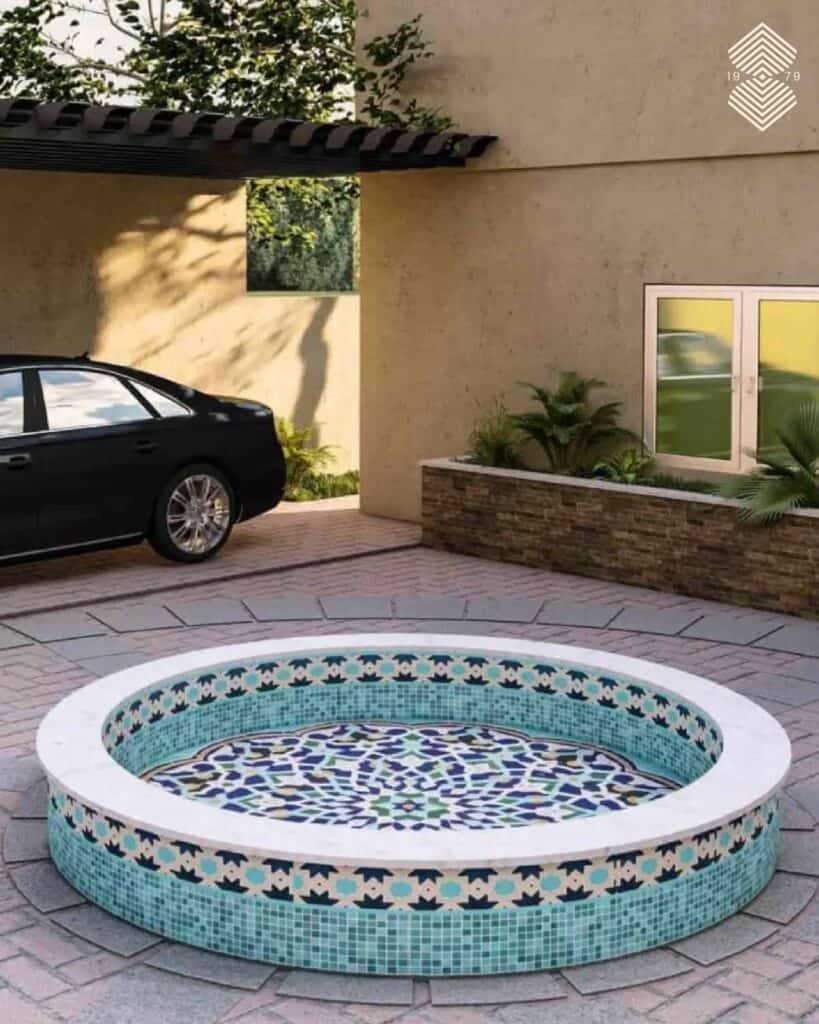
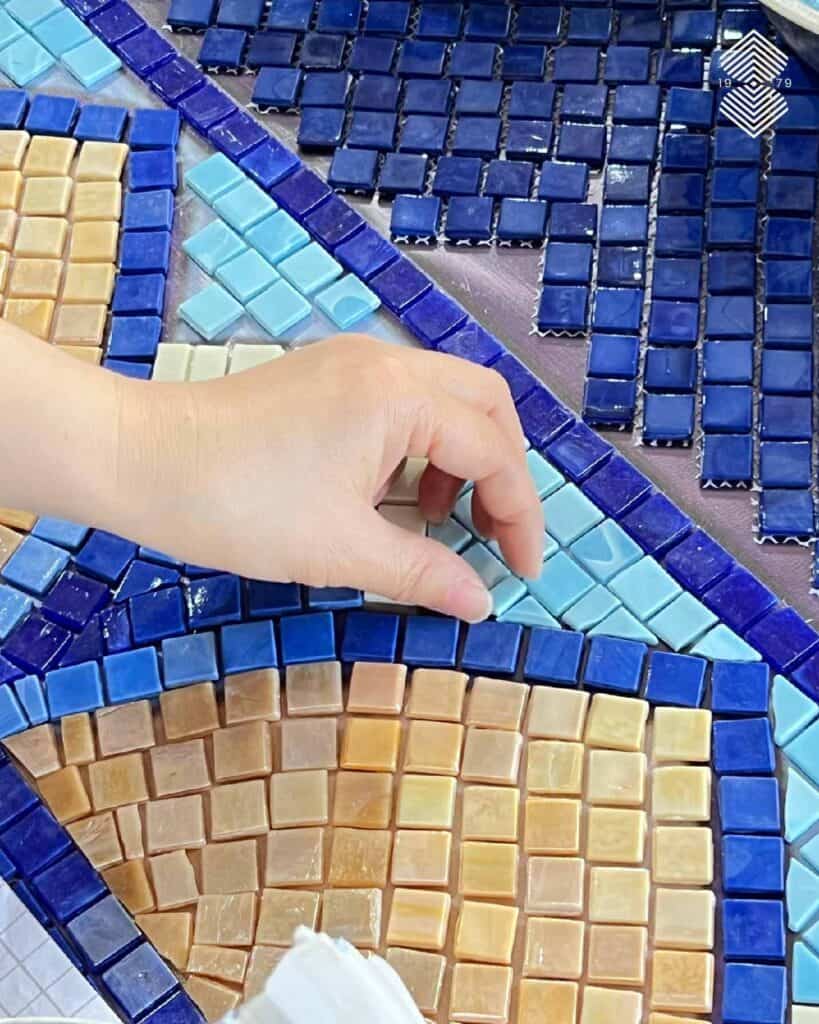
MEC Artworks approaches Moroccan pool mosaics as custom architectural art rather than pre-made tile patterns. Every mosaic tile art project is designed around the pool’s shape, surrounding architecture, lighting, and overall atmosphere. From Zellige-inspired layouts and Arabesque borders to handcrafted medallions and full-mosaic interiors, each detail is tailored to the space.
Beyond design, MEC combines handcrafted artistry with technical precision. Premium pool-safe materials, mapped installation-ready sections, and detailed layout planning ensure the mosaics perform beautifully across curves, steps, infinity edges, spas, and large pool surfaces. The result is a seamless outdoor environment built around craftsmanship, water, and light.
Final Thoughts: Transforming Pools Into Exotic Moroccan Escapes
A pool can be ordinary, or it can transport you. That is the real power of Moroccan pool mosaics. They bring geometry, craft, color, and water together in a way that feels both historic and fresh. They turn a surface into a story. They turn sunlight into movement. They turn a swimming area into a destination.
For some projects, the right choice may be a simple Arabesque waterline. For others, it may be a full handcrafted pool interior with jewel-toned glass and a dramatic Moroccan medallion. Both can work beautifully when the scale, material, and pattern feel right.
FAQ’s
Are Moroccan pool mosaics and luxury tiles suitable for modern homes?
Yes. Moroccan pool mosaics work beautifully in modern homes when the pattern and palette are refined. A minimalist villa may use a black and white Moroccan waterline, while a warmer contemporary home may choose turquoise glass mosaics with subtle geometric detail.
What colors work best for Moroccan-inspired pools?
Cobalt blue, turquoise, aqua, emerald, ivory, terracotta, sand, black, and white all work well. Blue and white feel classic. Emerald feels lush and spa-like. Sand and terracotta create a warmer, desert-inspired look.
Are handcrafted mosaics durable for swimming pools?
Yes, when the right materials and installation systems are used. Pool mosaic tile designs should be selected for water exposure, UV stability, chemical resistance, and long-term performance. Glass mosaics often work especially well in submerged pool areas.
Can Moroccan mosaic patterns be customized?
Absolutely. Moroccan patterns can be scaled, recolored, simplified, or expanded to fit the exact pool shape. Customization also allows designers to create unique borders, medallions, murals, and geometric floor layouts.
What materials are best for Moroccan pool mosaics?
Glass mosaics are excellent for pool interiors because they offer color depth and water-friendly performance. Porcelain can also work well. Natural stone adds warmth around the pool, although submerged stone applications need careful material selection.
Do Moroccan mosaics require special maintenance?
They require proper pool care, good water chemistry, and regular cleaning. The maintenance level depends on the material, grout, installation quality, and pool environment. Glass and porcelain are generally easier to maintain than porous stone.
Can Moroccan mosaics be used only at the waterline?
Yes. A Moroccan waterline border is one of the easiest ways to add character without covering the whole pool. Luxury pool waterline tiles with Arabesque motifs can create a strong visual impact with a relatively focused design area.