
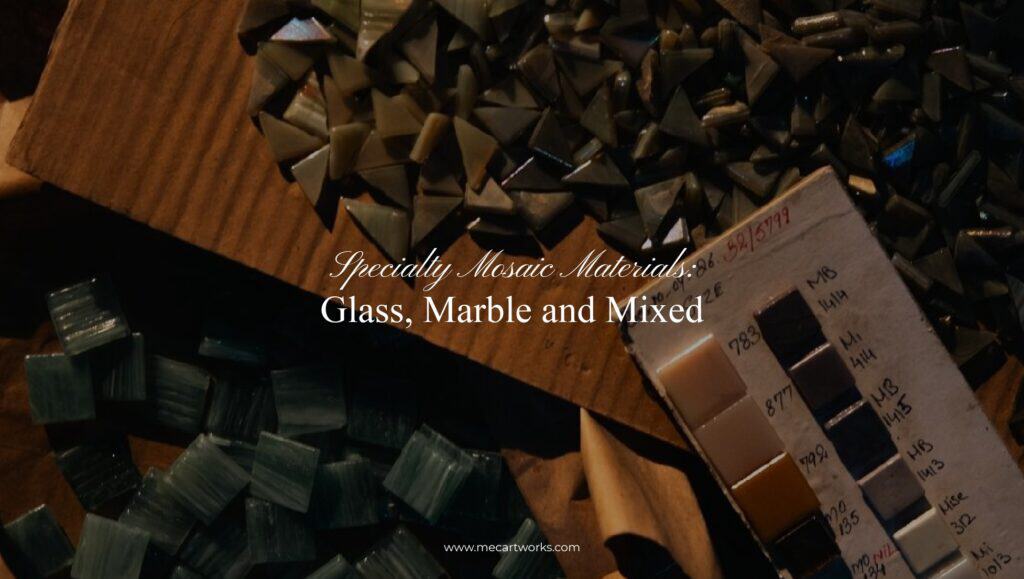
Specialty mosaic materials encompass unique glass, marble, natural stone, and finishes that allow for the creation of custom mosaic artworks. Our specialty mosaic materials are used at MEC Artworks alongside our core materials: glass and marble. Specialty materials provide extra colors, textures, and reflective qualities for our custom mosaics and help create artistic options that will enhance your property. However, selecting appropriate specialty mosaic materials does not only involve selecting an attractive finish.
You should take into account the location of your mosaic installation, intended use of the surface, and interaction of the materials with water, sun exposure, and daily use. In this blog post, we will discuss specialty mosaic materials that we offer, learn about their properties, and understand how to use them alone or combined with other materials in our custom mosaics.
Table of Contents
What Are Specialty Mosaic Materials?
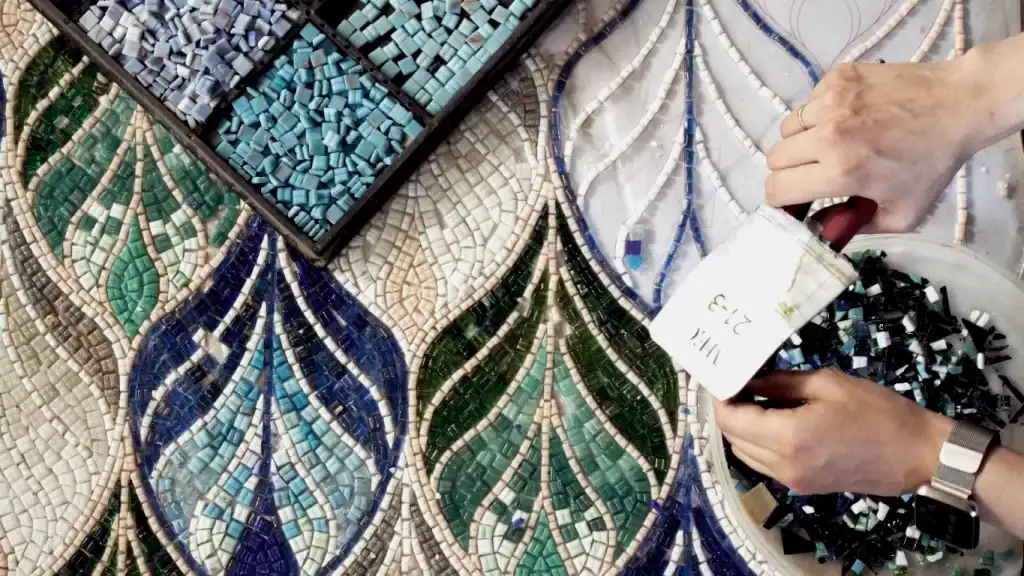
Specialty mosaic materials are chosen based on their unique colors, textures, patterns, and decoration. These materials offer something more than typical tiles, providing an artist with greater possibilities for creating a unique artwork.
So, in contrast to a usual pattern consisting of some repeated shapes and colors, a mosaic can be made using hand-cut marble and colored glass to create unique shading, flowing patterns, and even figurative elements. Materials themselves become part of an artwork, not just covering it.
It is especially important when working with natural stone. Since each piece of marble is unique in terms of veining and tonal variety, even two stones from one slab will differ from each other. Glass is another material that gives an artist an opportunity to create vivid color transitions, reflections, and translucency impossible to create using natural stone.
Specialty mosaic materials usually include four types of materials for any custom mosaic design:
Specialty Glass Mosaic Tile
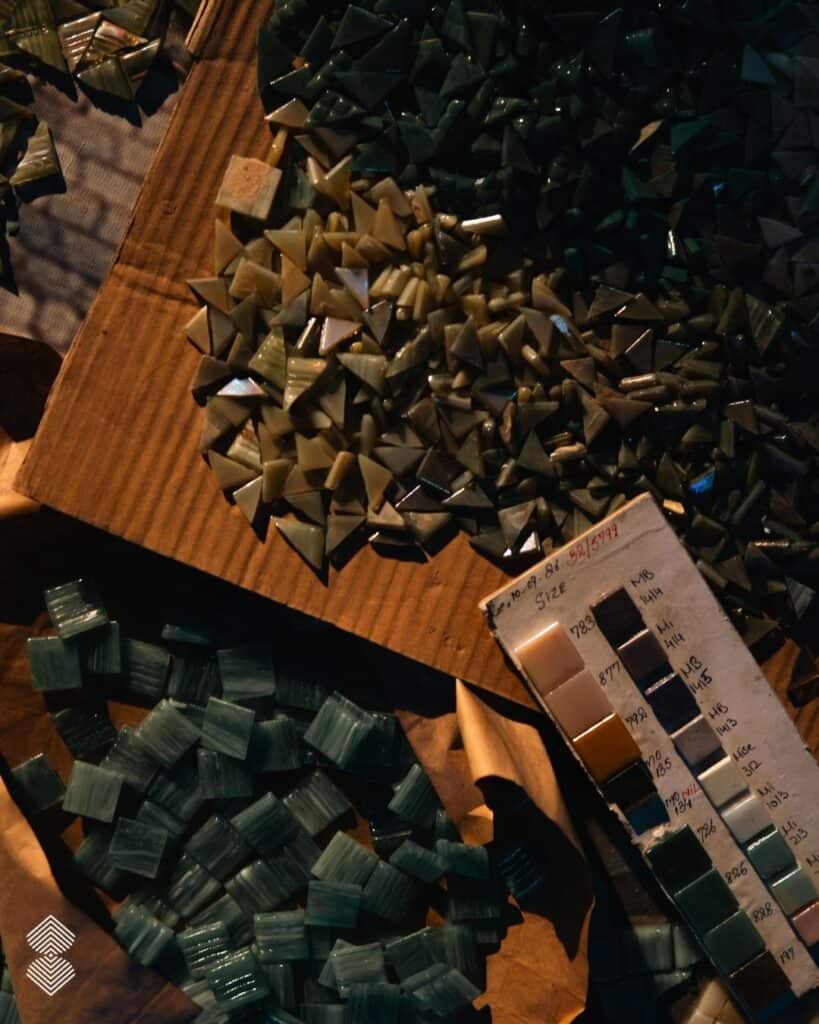
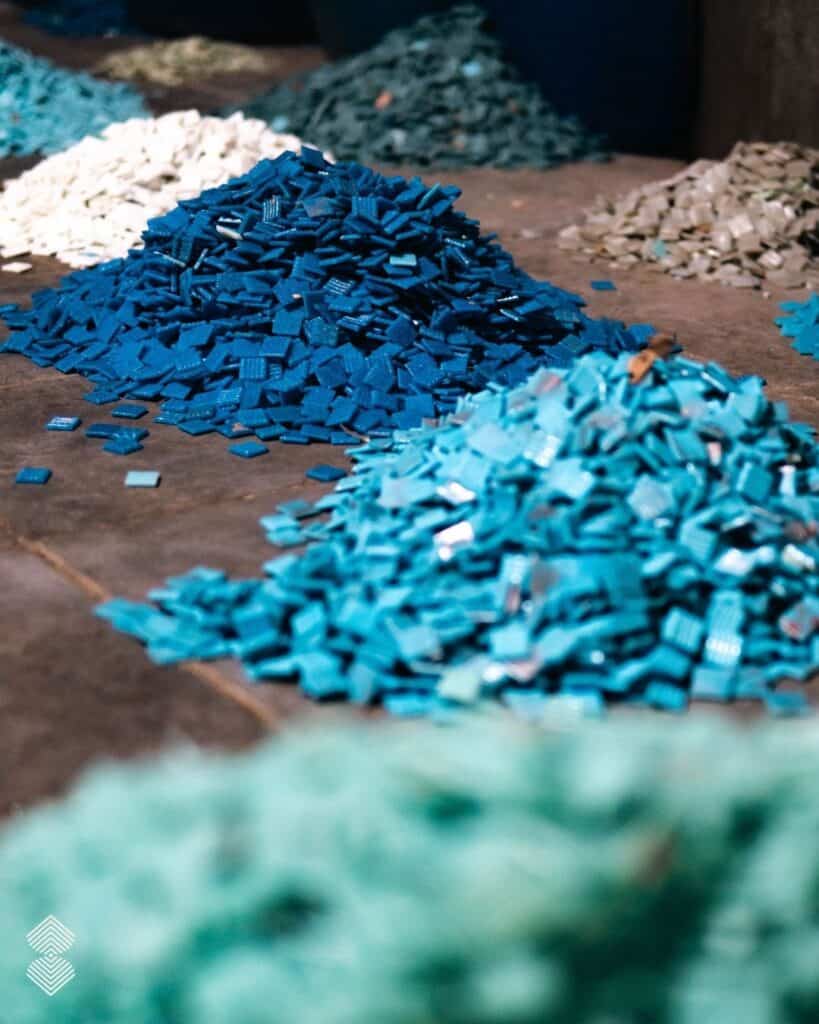
Among specialty mosaic materials, glass tiles stand out for their unique interaction with light, creating striking visual effects in mosaic art. While marble tiles depend on natural veining to give their appearance, glass mosaic tiles offer vivid colors, subtle tonalities, and transparency levels. These attributes make them great for swimming pools, wall murals, and artistic walls.
It is important to note that not all glass mosaic tiles yield the same effects. There are those with vibrant colors that form detailed patterns, while others reflect light and are transparent, depending on their light source. The glass color and texture are important when determining their appearance.
In designing custom mosaic artwork, these differences should be considered. In the case of botanical murals, layered green glass tiles will give more depth to the artwork, while tiny opaque glass tiles will capture finer details in the case of figurative artwork. For swimming pool art, suitable underwater glass materials are selected. You can explore our glass pool mosaic designs to see how glass can be used across pool floors, decorative borders, and other underwater compositions.
Some of the glass types we use in our mosaic designs include:
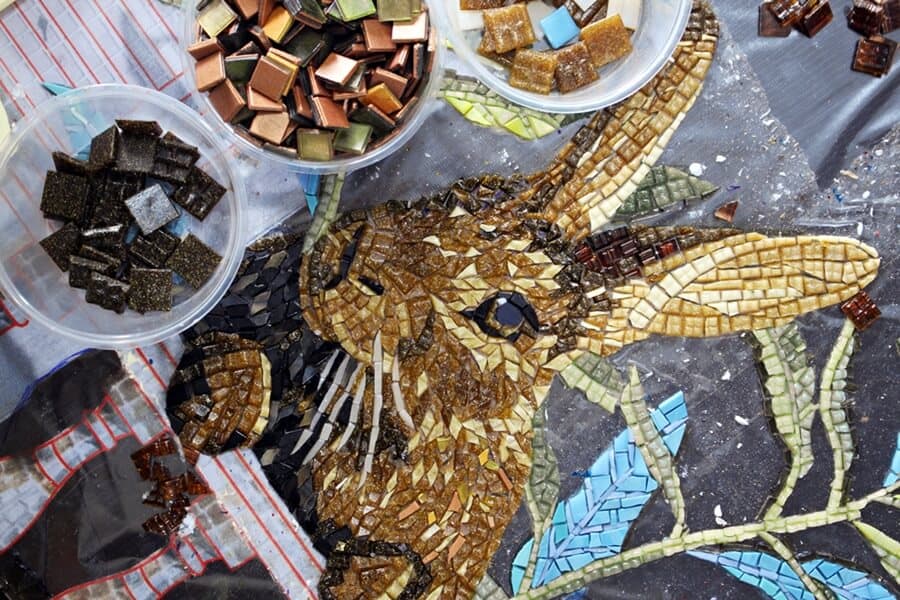
Jade Glass Mosaic
Jade Glass features beautiful greens of rich, natural minerals. Depending on its finish, it can be translucent or opaque and mimic the rich depths of jade stone. It includes celadon, emerald, olive, and forest green tones, which allow us to create smooth gradations of color.
These green tonalities are used in order to add layers and depth to botanical art or art inspired by nature. So, for example, darker green elements can create shadows under the leaves, and lighter shades will emphasize their edges. Jade glass mosaic looks perfect in projects like:
- Botanical murals: With layering greens for leaves and floral details.
- Bathroom walls: With rich green accent colors together with neutral stones.
- Feature walls: Where you need nature-inspired compositions with subtle color variations.
The final look of the design will depend on the lighting conditions, as translucent jade glass can become lighter under direct lighting, whereas an opaque finish can create a more uniform look.
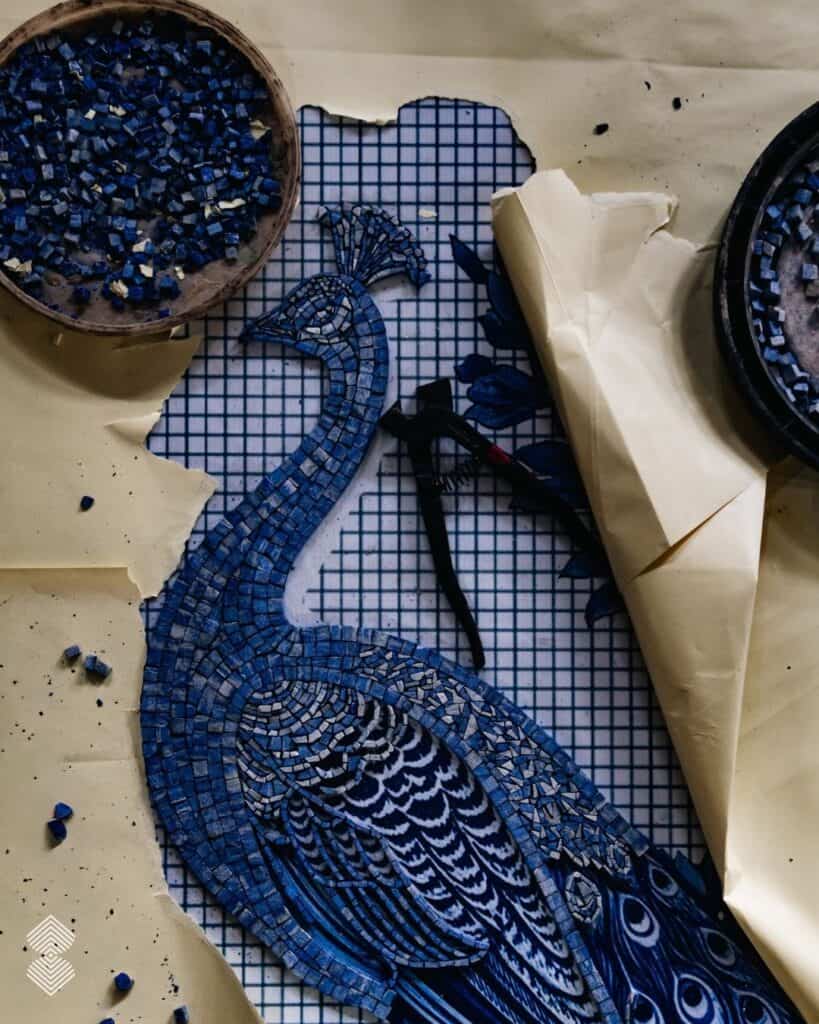
Smalti and Stained Glass Mosaic
Whereas jade glass allows for natural color differences, smalti and stained glass allow for an artistic approach to mosaics that is more traditional. The two types have rich colors, although their textures and their relation to light differ.
Smalti is a traditional opaque glass that is commonly used in Byzantine and Venetian mosaics. Its rough texture allows for varied reflections and works well for portraits, history paintings, and detailed murals.
A stained glass mosaic consists of pieces that are either transparent, translucent, or opaque. The color variety of such a mosaic makes it ideal for use in decorative panels, floral motifs, and artistic creations. We use smalti and stained glass depending on our requirements:
- Smalti: Works well for portraits, shading, and Renaissance-style mosaics.
- Stained Glass: Suitable for decorative murals, decorative patterns, and colorful panels.
- Diverse Glass Details: Various colors and tessera sizes allow for creating shapes and shading effects.
As both materials need special cutting and placement techniques, our designers choose the proper glass depending on details, lighting conditions, and the placement of the artwork.
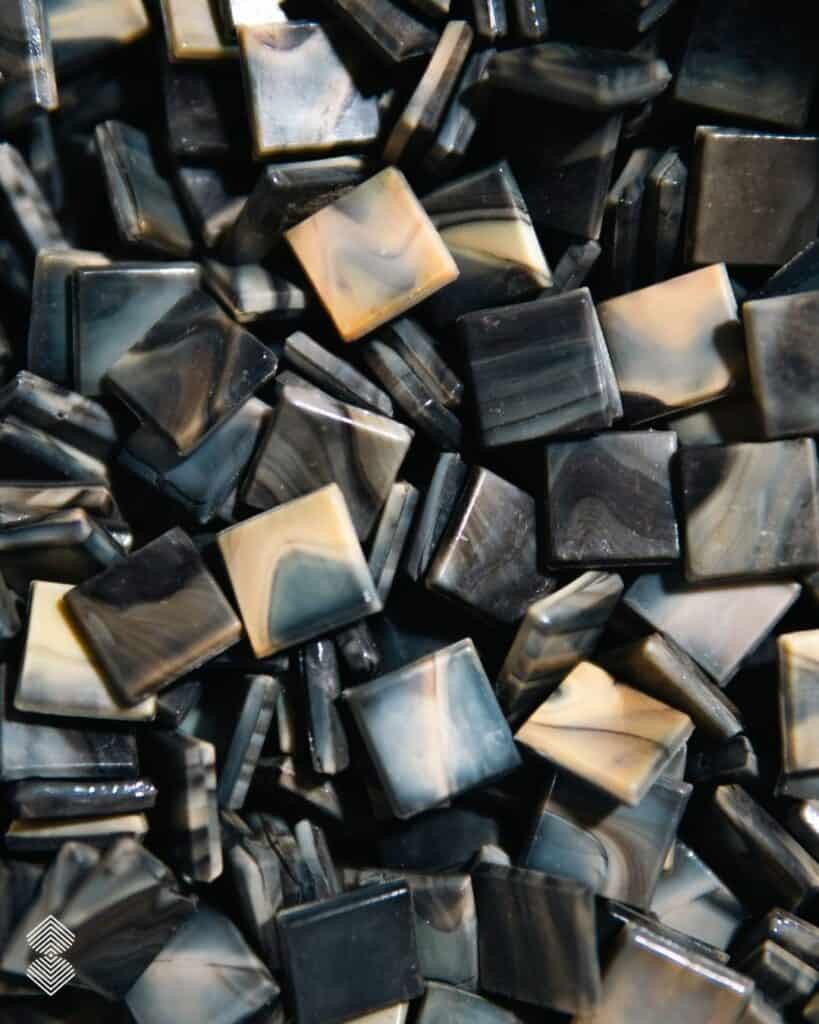
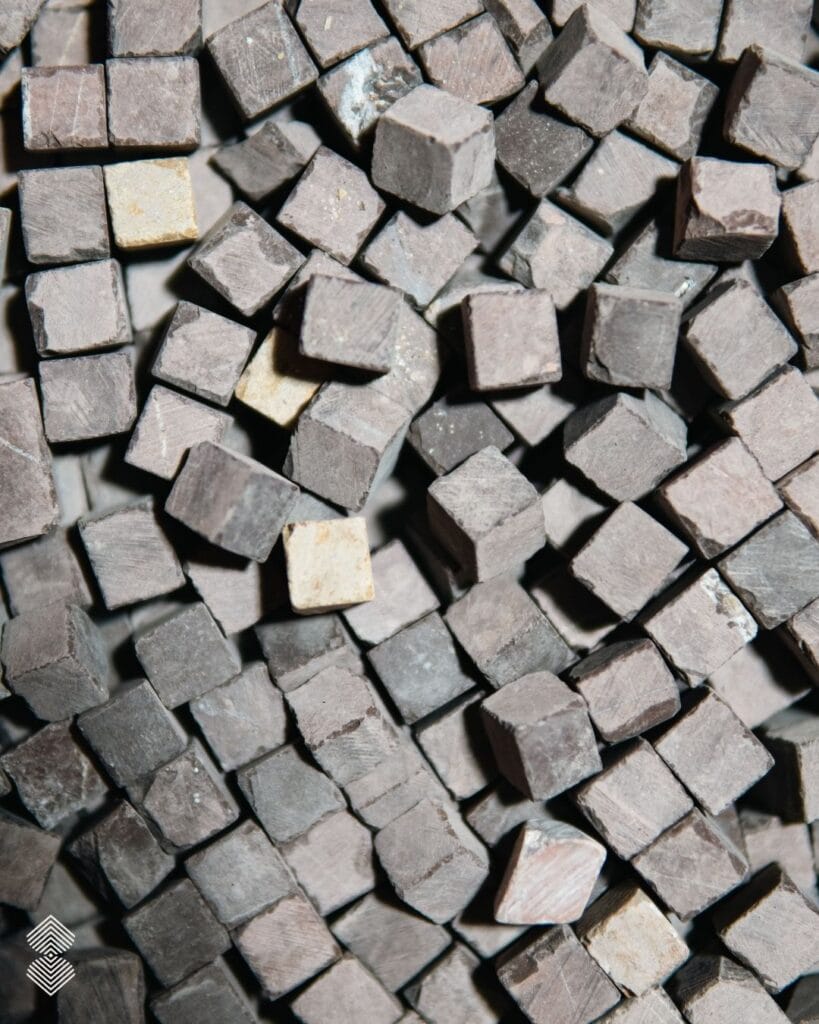
Mirror, Gold, and Metallic Glass Mosaic
Mirror, gold, and metallic glass introduce reflection and contrast into mosaic artwork. Unlike traditional colored glass, these specialty mosaic materials interact with surrounding light, creating highlights that shift with the viewing angle.
A mirror mosaic reflects parts of the environment around it, thus adding depth to decorative wall surfaces. The gold and metallic glass, on the other hand, add highlights in areas that could be used to emphasize borders, ornaments, and specific elements in the mosaic. We choose to use such finishes when a design requires an additional element without overpowering the artwork. Typical uses for the different finishes are:
- Mirror Glass: Geometric feature walls and interior decorative panels.
- Gold Glass: Borders, medallions, and highlights.
- Metallic Glass: Hospitality entrances, decorative niches, and architectural finishes.
It is important, however, to consider reflective finishes carefully since too much reflection may distract from the artwork. Some types of metallic finishes and mirror backings might also be unsuitable for wet locations.
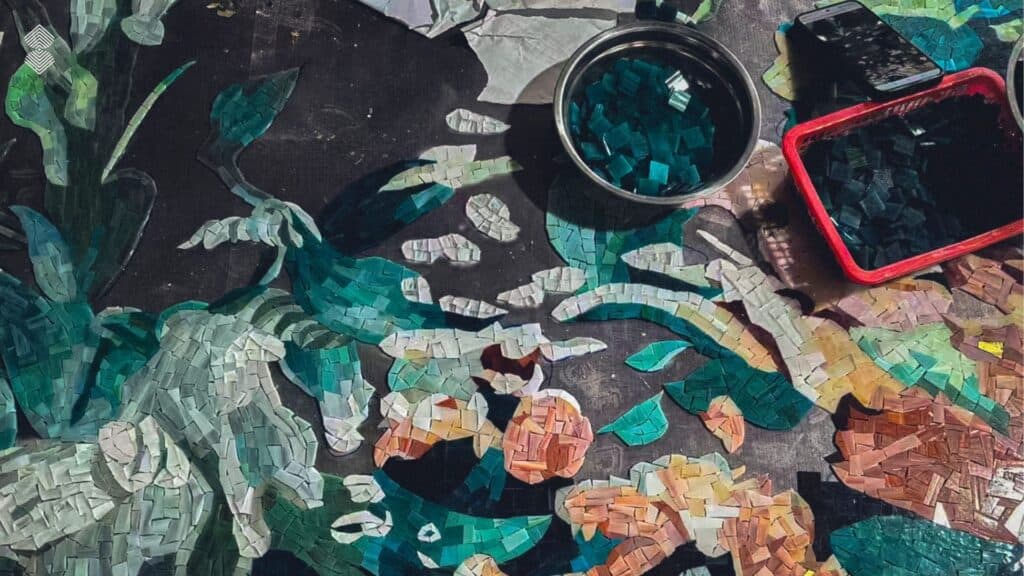
Iridescent, Frosted and Translucent Glass Tile
Not all glass mosaic requires gloss finishes. For example, iridescent, frosted, and translucent finishes provide more sophisticated and subtle looks that can be used in modern designs and artworks. Every type of glass affects light in its own way: iridescent glass provides color changes, frosted glass blurs reflections, and translucent glass adds visual depth because it allows some light to shine through it. The differences are as follows:
- Iridescent Glass: Provides smooth transitions between blue, green, silver, and violet colors depending on the angle of viewing.
- Frosted Glass Tiles: Have a soft and satin look, perfect for calm bathroom palettes.
- Translucent Glass: Provides visual depth due to its translucent texture.
For instance, we can use frosted aqua glass tiles along with iridescent accents as the finishing touch for the bathroom’s feature wall. Frosted tiles provide a calm background while iridescent details serve as accent elements. We analyze how these finishes will look in natural and artificial light. What is more, we assess how well they stand up to moisture, cleaning procedures, and sunlight.
Specialty Marble and Natural Stone Mosaic
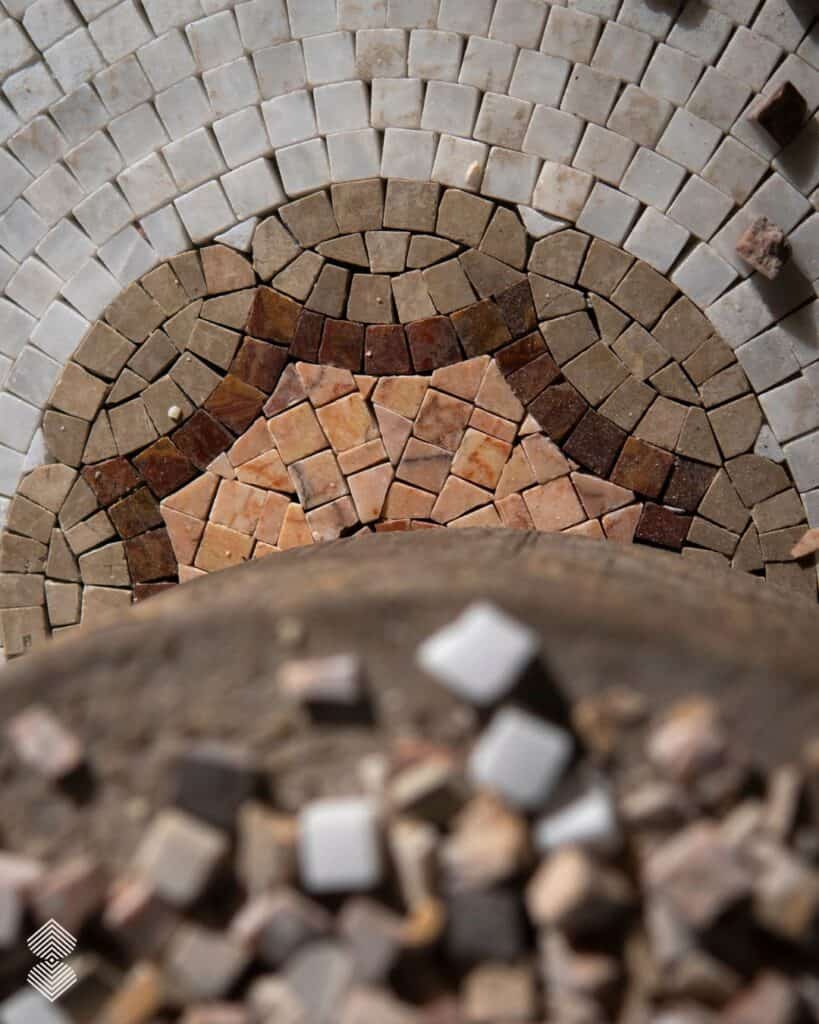
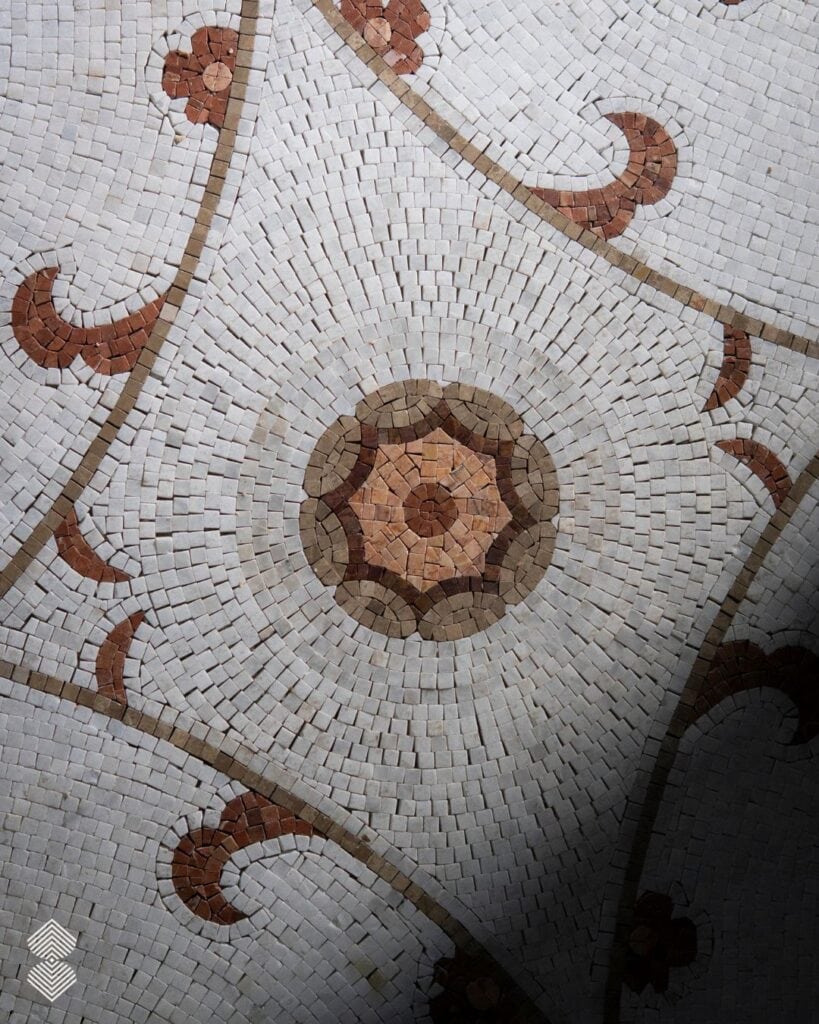
Color uniformity and reflectivity come with glass, but there’s always the option of working with natural stone if one wishes to infuse the mosaic with a special beauty. This beauty stems from the variation of the stone in terms of geological characteristics, veining, mineral formation, and gradual development of colors through natural processes.
The versatility of marble is that it can be easily cut into intricate shapes while retaining all its surface features, which allows it to be used both in geometric flooring and figurative murals. In our work, we use marble mosaic tiles as one of our specialty mosaic materials to create mosaic art compositions in which natural texture plays an important role.
Apart from marble, there are always onyx, travertine, limestone, mother of pearl, and various types of semi-precious stones to work with.
Onyx Mosaic Tile
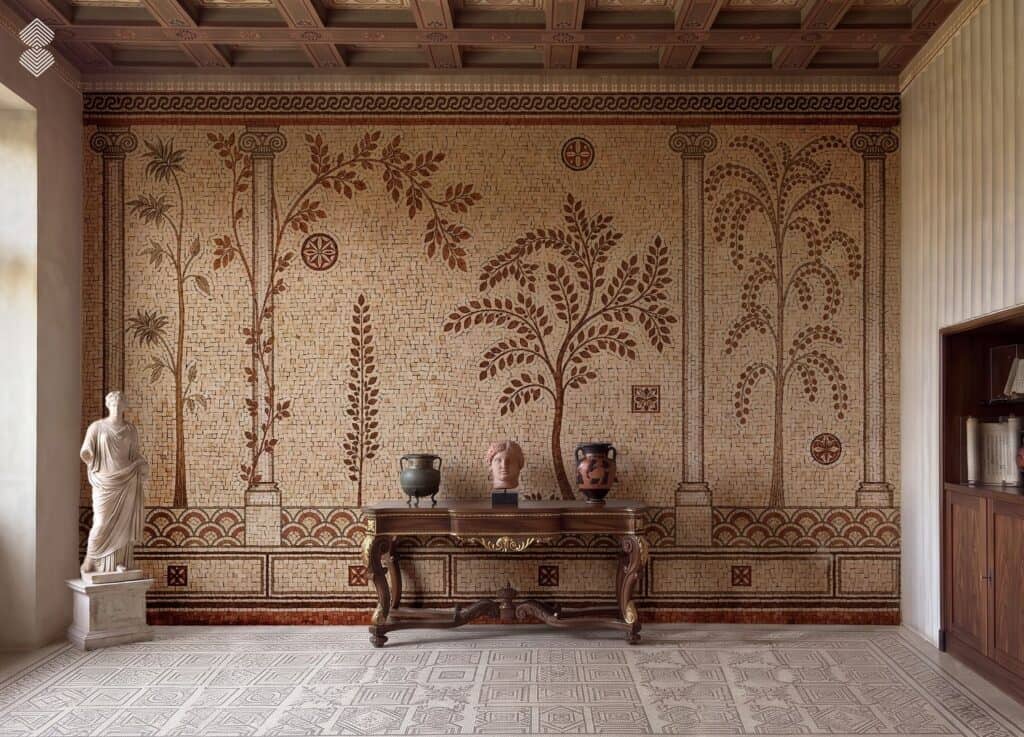
Onyx is characterized by flowing color bands and its transparency. Various shades of cream, amber, honey, green, and brown make onyx stand out because of its unique appearance, different from the usual marble. In architecture, decorative onyx usually means a calcite stone with color bands, not mineralogical onyx.
What makes onyx mosaic tile really special is the ability of thin parts of the stone to transmit light. If properly illuminated, it can become a bright feature, showing off natural patterns. Onyx mosaic looks great for:
- Feature Walls: Decorative panels featuring natural color bands.
- Backlit Niches: Illuminated details, showcasing the stone’s translucency.
- Geometric Mosaics: Onyx details combined with contrasting marble.
But onyx should be handled with care because it can be affected by acids, abrasions, and some cleaning agents. Before including onyx in custom mosaics, our designers assess the stone’s thickness and installation conditions.
Travertine and Limestone Mosaic
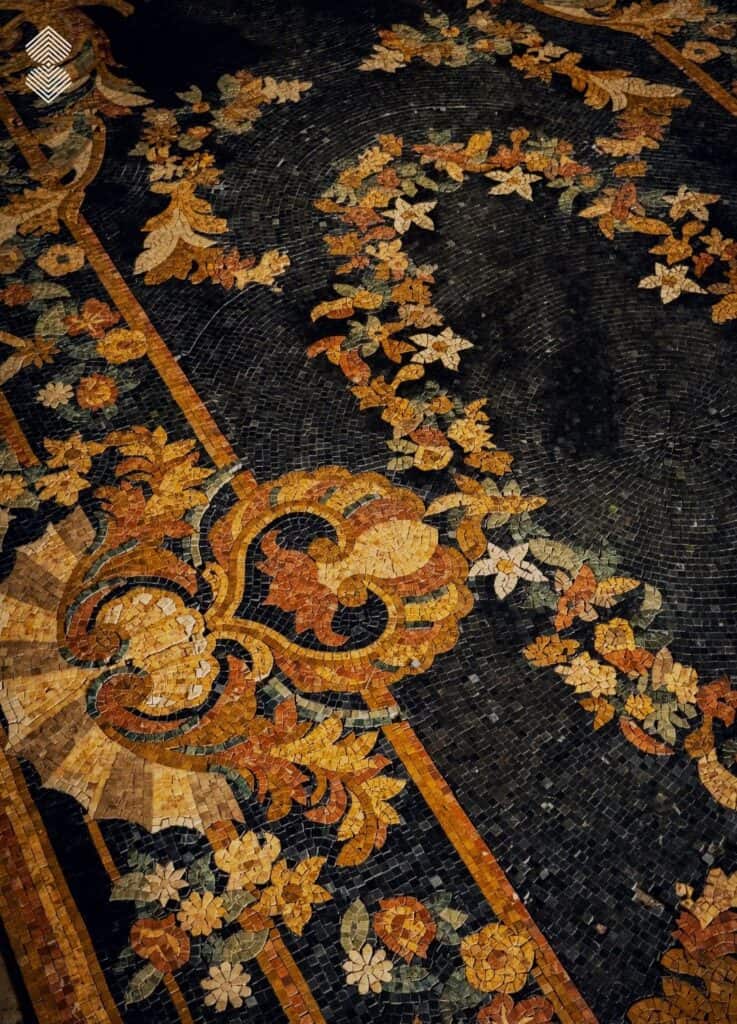
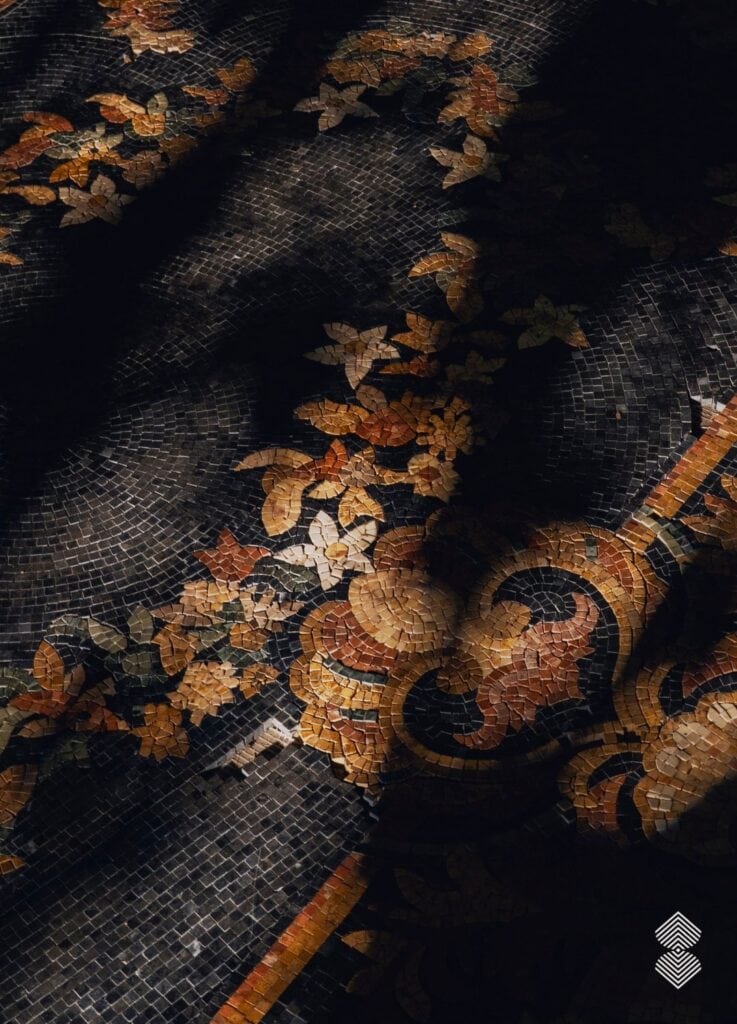
While onyx makes for exciting color movement, travertine and limestone provide a smoother feel as well as more earthy colors. Being very natural in appearance, these specialty mosaic materials may be used in interior design based on Mediterranean themes, as well as decorative walls and mosaic designs.
Natural pores in travertine give the characteristic surface texture of the material, along with colors ranging from ivory and beige to creamy. Limestone is more uniform, but sometimes comes with mineral patterns or fossils. These stones may be used in those works that require a natural and understated finish. Limestone mosaics may be used as a background for dark borders made of marble, while travertine may complement designs inspired by courtyards. Some applications of these materials are:
- Travertine Mosaics: Decorative walls, Mediterranean patterns, and selected floors.
- Limestone Mosaics: Geometric patterns, neutral backgrounds, and architectural designs.
- Mixed Stones: Light stones with contrasting marble borders.
These stones require special care and consideration when choosing the appropriate porosity, surface finish, and maintenance needs. In case of outdoor installations, moisture resistance is an important issue to consider.
Mother of Pearl and Semi-Precious Stone Mosaic
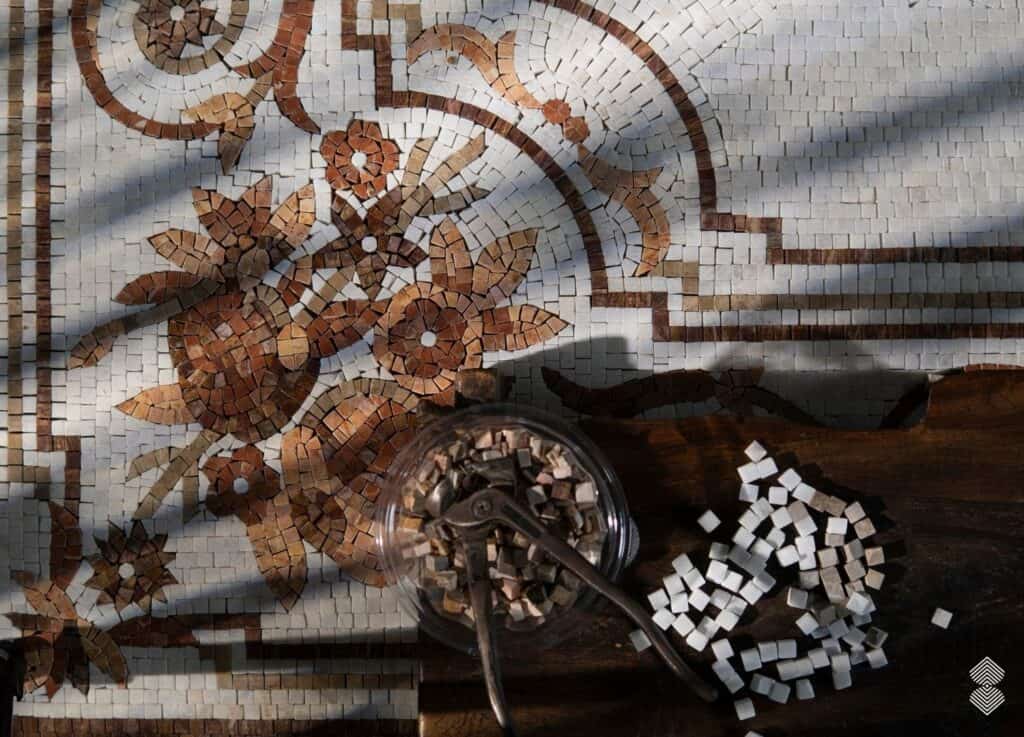
Mother of pearl and semi-precious stones add delicate hues and natural textures to mosaic art. Unlike marble, which displays veins, these materials can provide subtle highlights and ornaments that reflect light differently depending on the lighting.
Mother of pearl is made of nacre, a substance inside the shells of certain mollusks. This material provides a soft light reflecting in shades of white, silver, pink, blue, and green. The mother-of-pearl tile will give you a smooth, shimmering effect instead of the sharp reflection of mirror glass. This material is perfect for use as an ornament in large compositions. Small mother-of-pearl elements will emphasize petals of flowers painted on the marble background.
This mother-of-pearl mosaic tile proves that this material can be incorporated into a decorative mosaic composition. Special materials are ideal for:
- Mother of Pearl: Vanity backsplashes, floral decorations, and ornamental accents;
- Semi-Precious Stones: Geometric shapes, ornaments, and special decorations;
- Mixed Materials Mosaics: Subtle highlights combined with marble and glass.
Agate and decorative quartz are some examples of semi-precious stones used in specialty mosaic materials. They have unique coloring and mineral structures. Hardness, porosity, and maintenance also matter. Our designers take all these factors into account when selecting materials for custom mosaic designs.
Mixed Material Mosaic: Marble, Glass and Metal
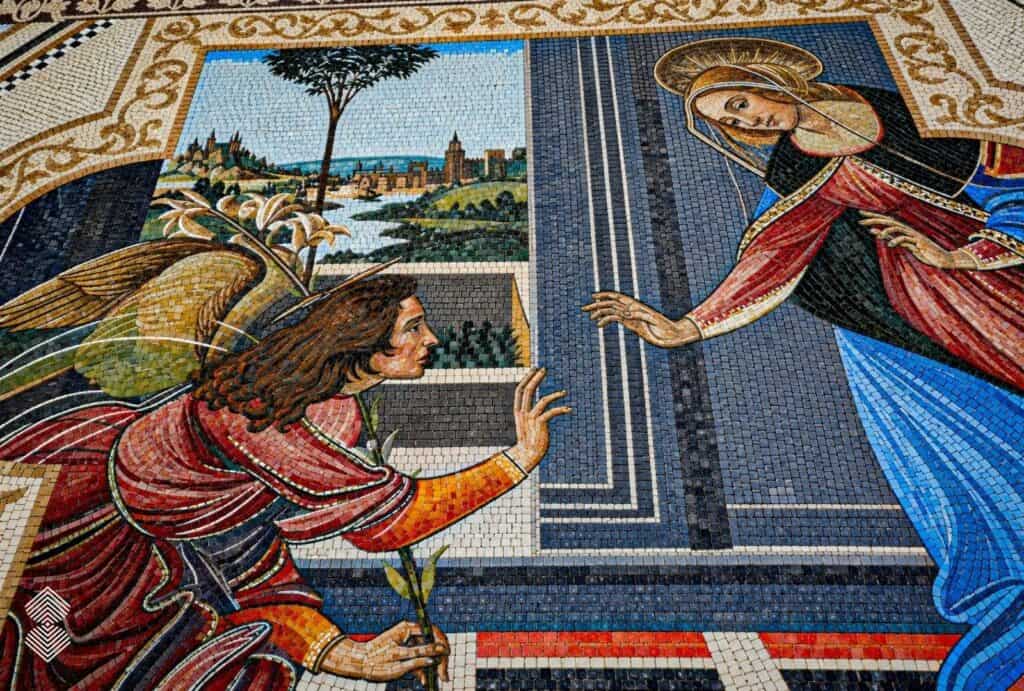
In some cases, one material alone cannot produce the full look that a client requires. While marble might offer the desired texture, it may not offer enough coloring. Glass would be able to offer a variety of vibrant colors but does not have the same natural look as marble.
It is here that mixed materials come into their own.
When used alongside marble and glass, metals are able to create artworks with contrasting surfaces and precise detailing. The materials complement each other through their ability to define various sections of the piece. Our design of mixed-material pieces takes into account the part that each material plays in the piece.
Marble and Glass Mosaic
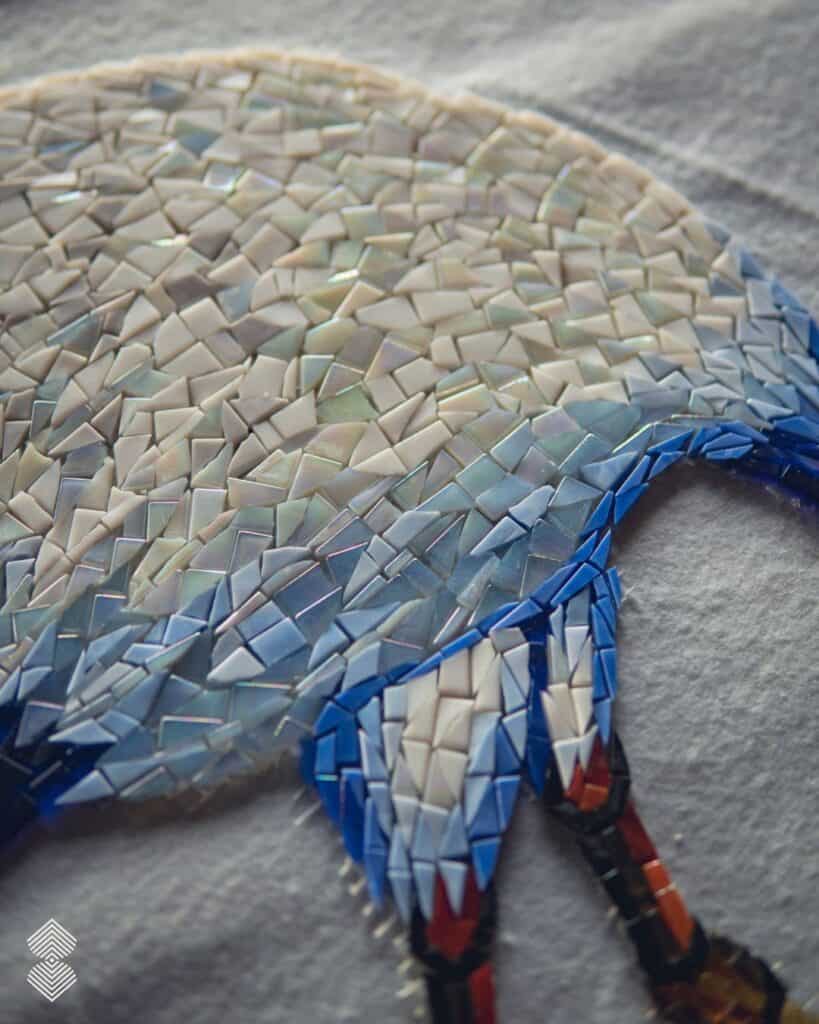

The combination of marble and glass is enhanced by the different textures and colors of these specialty mosaic materials. While marble has natural veins and a soft look, glass provides bright colors and reflective accents. The combination results in harmonious compositions that include both nature and art elements.
Such combinations are used for making botanical murals, decorations, and architectural elements. For instance, in the case of the floral mosaic, the background may be created by the light marble tiles, while the green pieces of glass will accentuate the leaves and details. The example of our marble niche with glass pool tile demonstrates the combination.
Brass Inlay Marble Mosaic
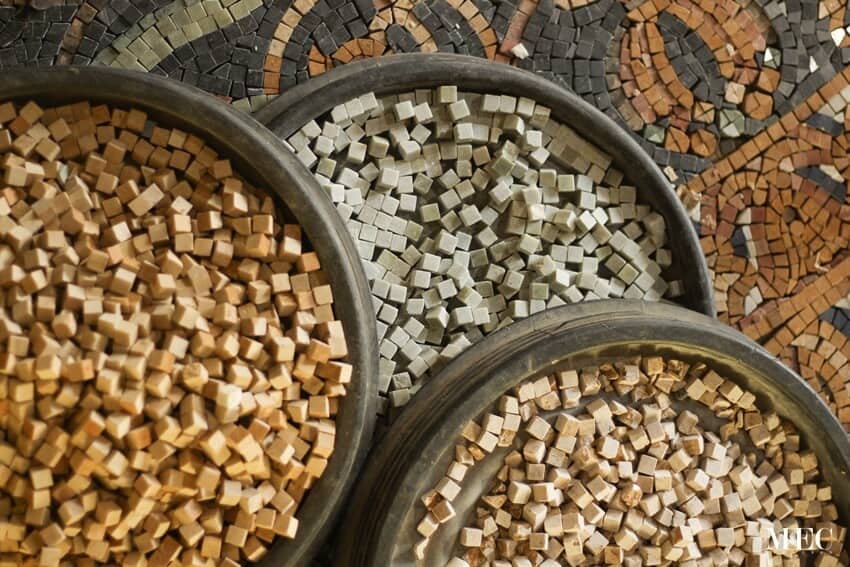
Hand-cut mosaic tesserae in warm gold, beige, and ivory tones, ready for intricate mosaic artwork.
The use of brass adds metallic warmth to the natural elements in marble art and allows contrast without overwhelming the natural stone look. The brass’s gold hue complements white, cream, black, and dark marbles.
We use brass inlay to create geometric patterns, decorative borders, and typography within marble. In the case of our London project, we have showcased how metallic features and typography can be incorporated into marble artwork through the brass inlay marble mosaic. Some applications of brass inlay include:
- Geometrical Patterns: Fine metallic lines that form shapes and borders.
- Typography: Metallic features that add emphasis to typography in the marble.
- Ornamental Flooring & Walling: Decorative elements for natural stone floors & walls.
But the problem is that brass inlay can oxidize due to humidity and weather conditions. Our designers take the installation place and wear & tear into account when choosing between brass and other metal mosaics.
Marble and Mirror Mosaic
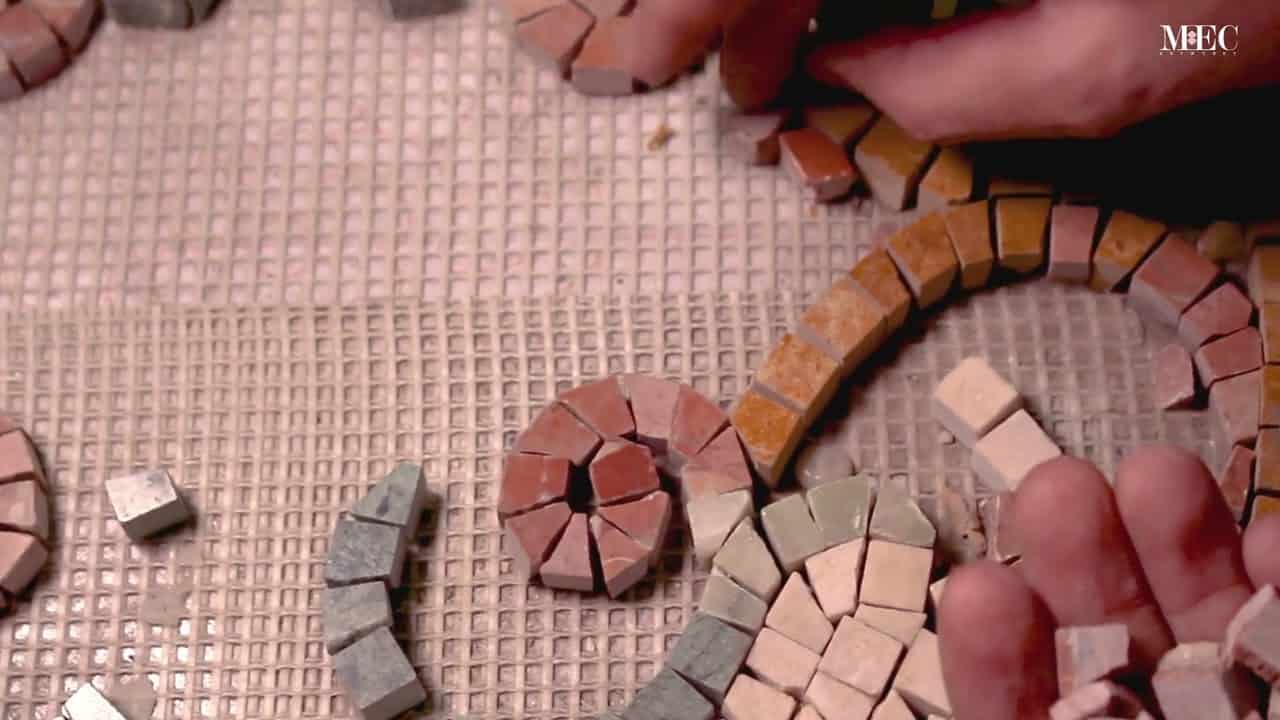
Marble and mirror are two specialty mosaic materials with different properties. While marble offers natural veining and texture, mirror reflects light and movement. Combining these materials creates a natural stone composition with reflective details.
For instance, the design may comprise a marble geometric wall in which mirror elements will be used in some specific intersections of the geometric patterns. As the light changes during the day, the mirror reflects the light without overshadowing the rest of the pattern. This combination of materials will be recommended for decorative purposes. Applications:
- Feature Walls: The patterns made out of marble stone with highlighted mirrors.
- Geometric Mosaics: The elements of mirrors used to highlight intersections and shapes;
- Decorative Panels: Marble and mirror combination for a natural effect.
It is important to pay attention to the proper placement of each piece since too much reflection can create a distracting element. We take into consideration angles of viewing and lighting for this purpose.
Mirror backing is to suit the conditions of installation, especially when there is moisture present. However, in the case of dry walls, marble and mirrors may become an elegant combination.
Which Specialty Mosaic Material Suits Pools, Showers and Floors?
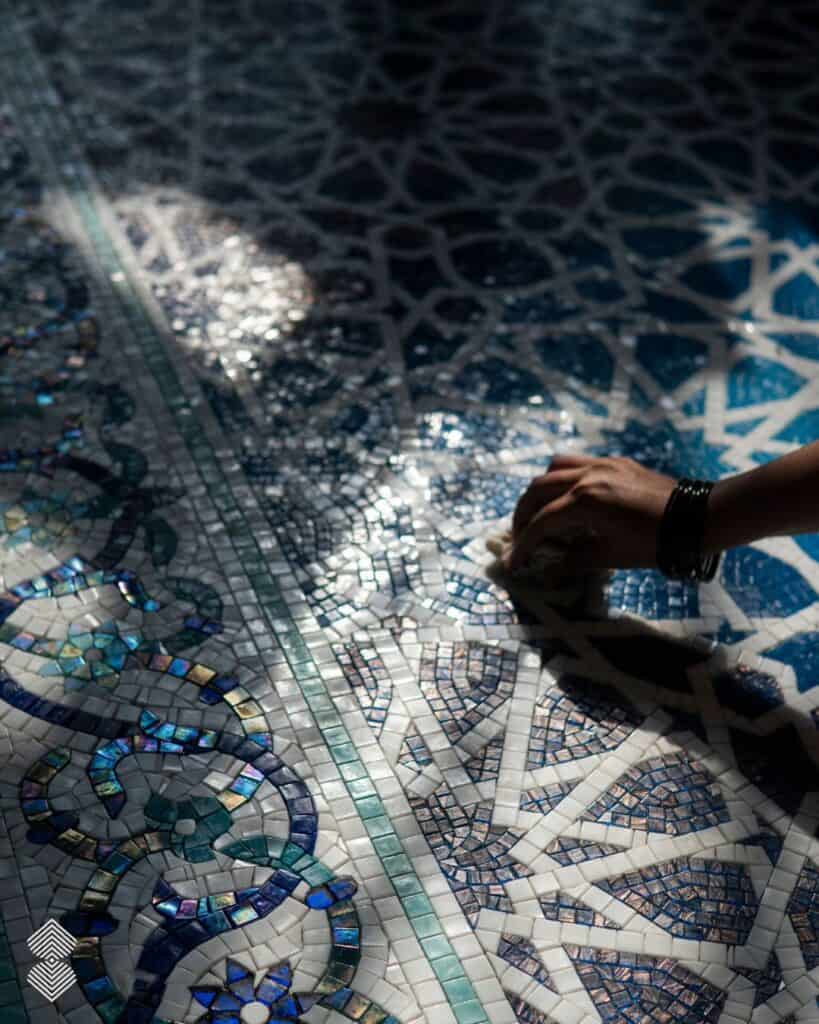
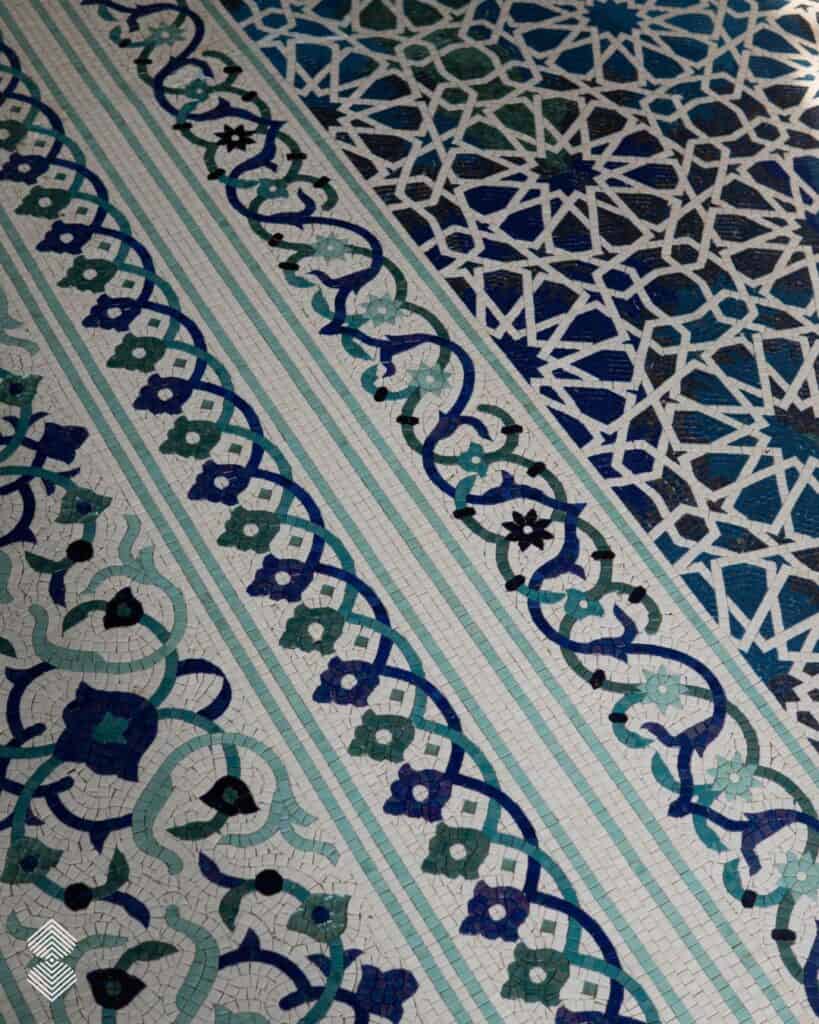
Selection of the appropriate specialty mosaic materials will depend on the place where they are to be used. While there are more choices for decorative walls, pools and wet environments will need materials that can withstand moisture and temperature changes. At MEC Artworks, we take all these aspects into consideration.
| Application | Suitable Material Options | Important Considerations |
| Swimming Pools | Approved glass mosaic tile | Continuous immersion, chemical resistance, compatible installation |
| Spas | Glass approved for spa conditions | Heat, water chemistry, thermal movement |
| Shower Walls | Glass, suitable marble, selected natural stone | Waterproofing, moisture exposure, cleaning |
| Shower Floors | Approved small-format glass or stone | Slip resistance, drainage, surface finish |
| Decorative Floors | Marble, selected limestone, suitable mixed materials | Foot traffic, abrasion, maintenance |
| Feature Walls (Kitchen & Bathroom) | Glass, marble, onyx, mirror, mother of pearl | Lighting, substrate, weight, cleaning |
These guidelines serve as general directions. The ultimate determination of whether the material is suitable is based on the particular product, installation system, and project circumstances.
How to Choose a Specialty Mosaic Material
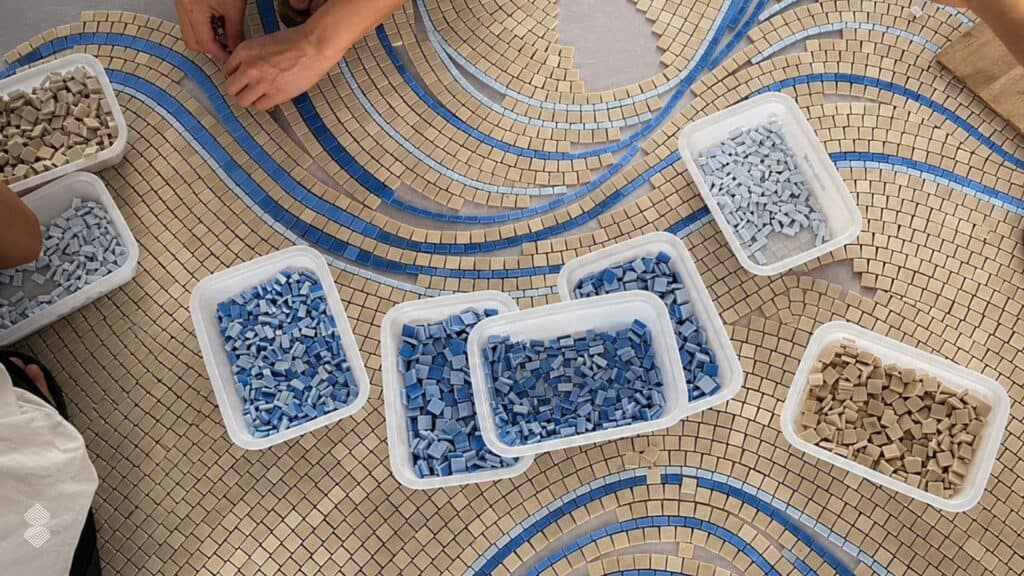
Selecting the appropriate specialty mosaic materials requires an assessment of your designs and installation areas. Glass produces colorful and reflective effects in pool and mural designs, while marble creates a natural look on floor and wall surfaces.
At MEC Artworks, our designers assess the dimensions, architectural designs, lighting, and installation considerations of your project before making material suggestions. We evaluate samples to see that the chosen colors, textures, and finishes complement each other. Our design approach focuses on producing custom mosaics rather than catalogs of tile designs to fit your material preferences.
Final Thoughts on Specialty Mosaic Materials
The special thing about the specialty mosaic materials we use is that each adds a unique element to the artwork. It could be the reflective nature of glass, the natural veining of marble, or the decorative details of other materials. The right combination of these materials can transform an ordinary surface into something unique. Contact us to explore material options and create a custom mosaic that reflects your design vision.
FAQs
Does MEC Artworks only make glass and marble mosaics?
No. Glass and marble are the key materials that we use for creating custom mosaics at MEC Artworks; however, there are times when we look into using some specialty mosaic materials, if needed by the design. Based on the design and application, these could be smalti, jade glass, decorative stone, mother-of-pearl, mirror, or even brass inlays. What is available will depend on what materials are available and how well they fit the design.
Which mosaic material is best for a swimming pool?
Specific glass mosaic tile designed for constant immersion is always a good solution for swimming pools. Such tile gives a lot of opportunities for choosing colors and creating gradations, designs, and artwork underwater. At the same time, not all types of glass are appropriate for installing in pools. In particular, the chosen glass should resist the given conditions of water chemistry and temperature as well as the environment.
Can marble mosaic be used in a shower?
Yes, marble mosaic tiles are among the specialty mosaic materials that can be installed in showers, provided the right stone, surface treatment, waterproofing, and installation techniques are used. Marble is a natural stone composed mainly of calcium carbonate, so it may absorb moisture and react to acidic cleaning products. Certain types of marble may also darken when wet.
Does marble mosaic tile need to be sealed?
Most marble mosaics will require an appropriate penetrating sealer, especially when dealing with potential stains. Nevertheless, all specifications will depend on the type of stone, the finish, and the conditions under which the mosaic is being installed. Sealer will help prevent some staining agents from penetrating into the marble but will not make it waterproof or safe from the effects of acidic cleaning agents. Some resources for the maintenance of natural stones can be found at the Natural Stone Institute website.
Can marble and glass be combined in one mosaic?
Yes. Marble and glass could be mixed in order to make unique mosaics with different textures, colors, and even reflective qualities. Marble usually serves as a good material for backgrounds, borders, or architectural patterns, whereas glass adds more colors and decorative elements. Yet, marble and glass can have different thicknesses and require different installation systems. If the environment is wet, both materials should be chosen accordingly.