
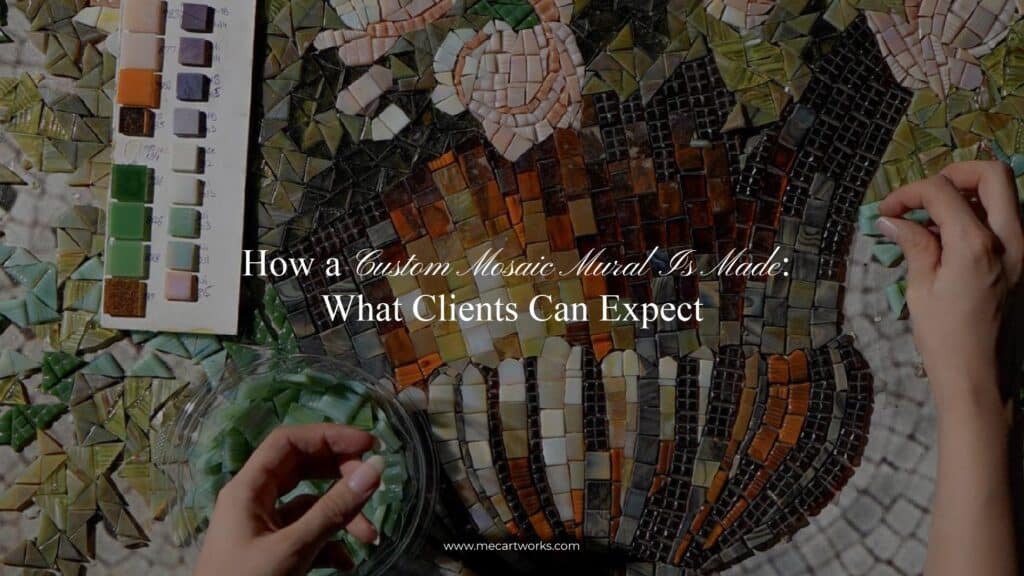
The process of a custom mosaic mural includes consulting, design approval, handmade manufacturing, shipping, and installation. The stages of creating a custom mosaic mural help translate your initial concept into an art piece that suits the architecture of your environment and matches your preferences.
When ordering a custom mosaic mural for the first time, you may find yourself asking many questions about it. Do I need a full design, or can I use my own photo? How do artists create their mosaics from the initial image using thousands of pieces of glass or marble?
In this blog, we’ll walk you through every step of creating a custom mosaic mural. We will discuss the data you should prepare, the process of creation by our designers, and the manufacturing and installation of your custom mosaic.
Table of Contents
What Is a Custom Mosaic Mural?
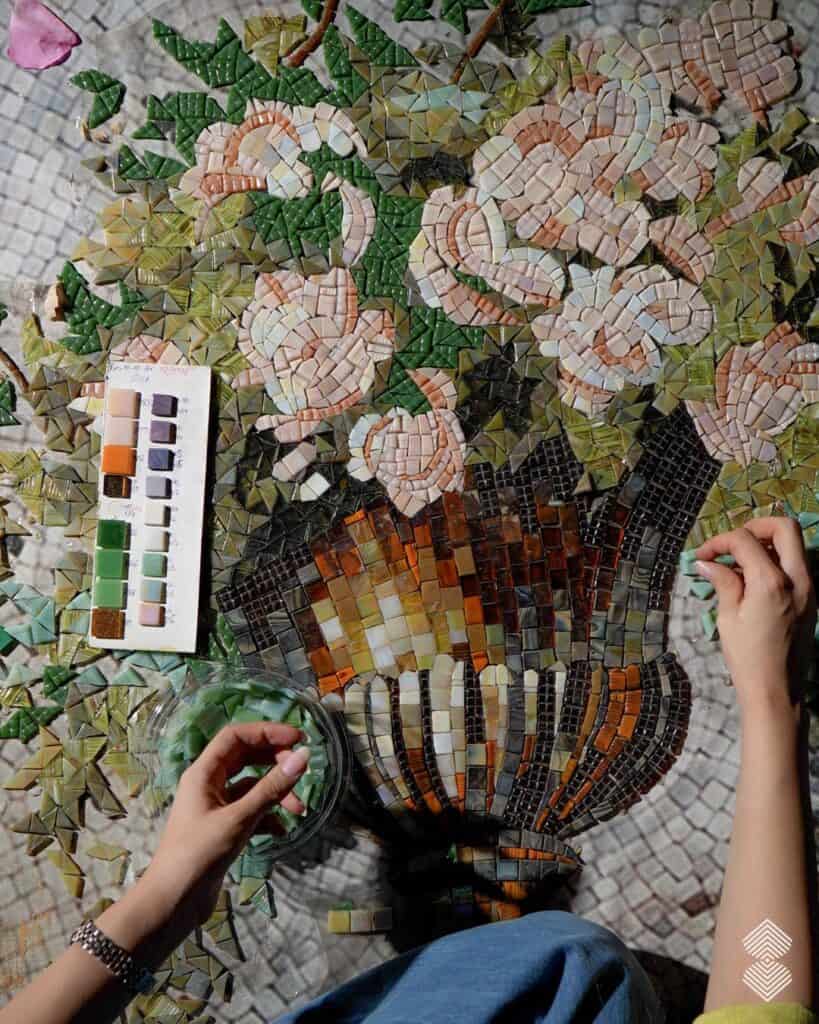
Mosaic art allows an artist to bring an artistic concept into reality through dozens or hundreds of glass and marble elements put in a particular order. Portraits, botanical, classical, and landscape images with unique colors and textures are created using hundreds of little elements called tesserae.
What distinguishes a custom mosaic wall mural is how artwork develops within the frame of your interior. There is no need to choose between existing patterns since you can develop your own composition according to your style or architecture and even your photo. Our designers will think of how the artwork will fit the place where it should be located.
Thus, a large mosaic wall mural for a hotel lobby will have big forms and an outstanding focal point attracting attention from any corner of the room. But the same artistic concept in a small bathroom can acquire a refined character, developing such delicate motifs as flowers.
The scale of the composition affects the choice of materials. Glass provides rich coloring and reflective elements, and marble has natural veining and colors. By balancing these qualities, our designers create mosaic wall art that complements the architecture and gives each space its own artistic character.
Mosaic vs Mural: What Is the Difference?
To be able to learn about the design process, it is important to first know what a mural is, what a mosaic is, and how they differ. While both can help turn an everyday wall into a piece of art, the difference lies in how the picture will be made. A mural is defined as an artwork created especially for walls or architectural surfaces using paint and brushes. A mosaic is a type of art where the picture is composed using individual pieces of glass, marble, or stones.
The combination of a mural and mosaic results in a mosaic tile mural, which means that instead of mixing colors with a brush, an artist will arrange and form the individual pieces in order to create patterns and give them shades and motion.
Below is the list of all the major stages involved in creating custom mosaic murals from idea to the installation of a finished artwork.
Step 1: Consultation and Design Brief
Every custom-made mosaic begins with an idea, and the first step is understanding your idea. The initial consultation allows us to discuss your idea, your personal artistic taste, and even the place where the piece of art will eventually be placed.
We do not require any design sketch to start working on your project. You may have a photograph of a wonderful landscape or a painting from the classical era, or you simply imagine how the floral tile mural will look in your bathroom. In any case, we will try to transform your inspirations into design guidelines.
To have a better understanding of your project, our designers pay attention to some important aspects:
- Design inspiration: Photographs, paintings, sketches, or mood boards that reflect your vision.
- Wall dimensions: The available space and proportions of the proposed mural.
- Colors and materials: Your preferred shades, surrounding finishes, and interest in glass or marble.
- Lighting and placement: How natural or artificial light interacts with the artwork.
- Installation environment: Whether the mosaic will be placed indoors, outdoors, or in a wet area.
For instance, consider the floral mosaics to be used behind a freestanding bathtub. Instead of just using flowers to fill the wall, we’ll investigate the position of the bathtub and fixtures and how the design is viewed. We do this in order to put the flowers in the right positions for visibility.
After the second phase, we’ll have a clearer idea of your expectations and what is needed. You can also explore our custom design process to see how we approach each commission.
Step 2: Mosaic Mural Design, Materials and Approval
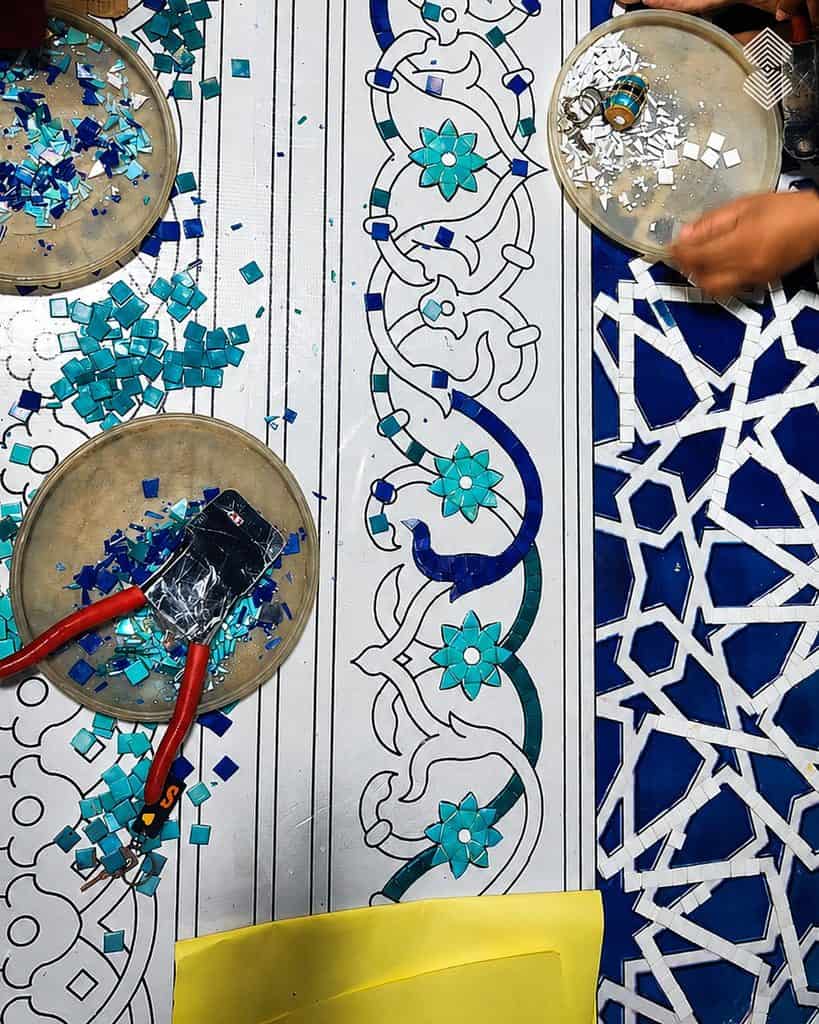
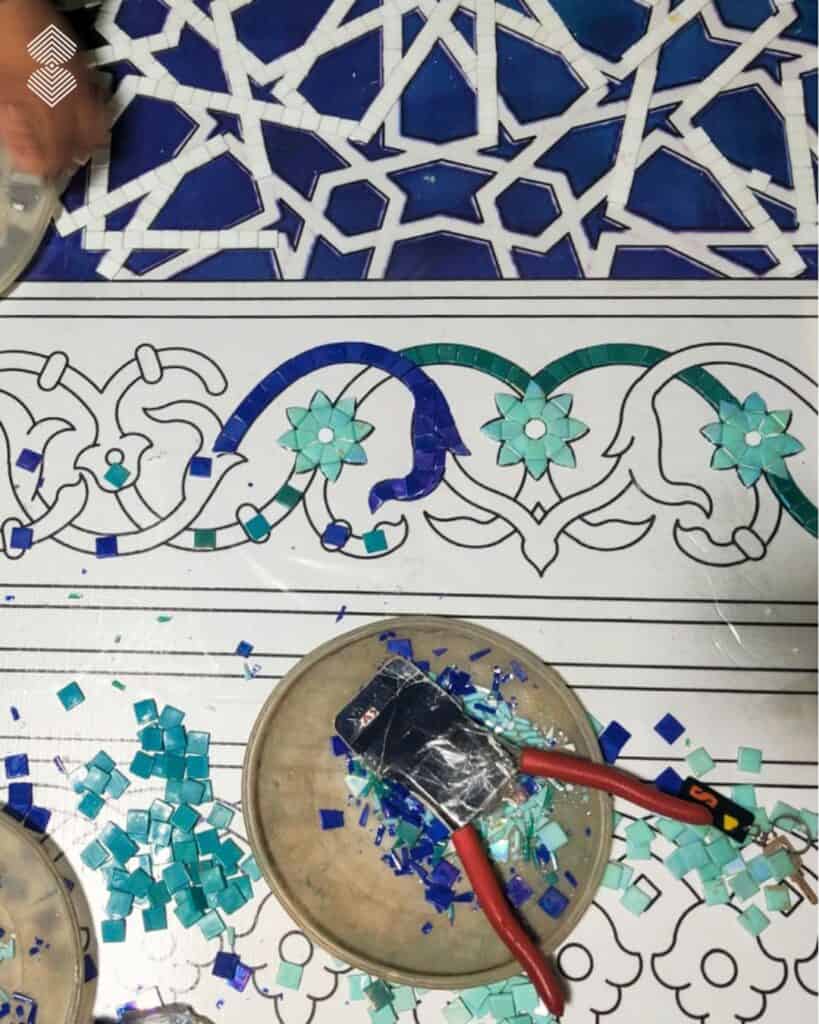
Once we understand your vision, our designers begin shaping it into a mosaic composition. This involves refining the colors, proportions, materials, and artistic details while keeping your original inspiration at the center.
Our mosaic artist design team considers how different materials and cutting techniques can bring your artwork to life:
- Glass Mosaic: Provides vivid colors, a mirror-like surface, and color blending for creating unique artwork.
- Marble Mosaic: Adds natural veining, gentle colors, and classic textures to create decorative artwork.
- Hand-Cutting: Enables our artists to cut every tessera individually to achieve fine detailing.
- Water Jet Cutting: Uses a powerful jet of water to produce fine detailing of the geometric pattern.
With the help of proper selection of materials and methods, our designers retain the beauty of your references in handmade mosaic art.
Previewing Your Mosaic Mural in 3D Renders
A flat design doesn’t always show how a mosaic will look in your space. That’s why our designers use 3D renders, when appropriate, to help you visualize the artwork’s scale, placement, and relationship with the surrounding architecture.
For example, if you’re planning a botanical mural behind a bathtub, a render can show how the flowers align with the fixtures and whether the composition feels balanced. You can also explore creative possibilities through our AI Mosaic Studio before finalizing your design.
When reviewing your mosaic preview, consider:
- Does the artwork fit naturally within the space?
- Are the main design elements clearly visible?
- Do the colors complement the surrounding materials?
- Is the composition balanced around architectural features?
These previews help you make confident design decisions before fabrication. However, the finished mosaic will have its own natural textures, reflections, and handcrafted details that digital images can’t fully capture.
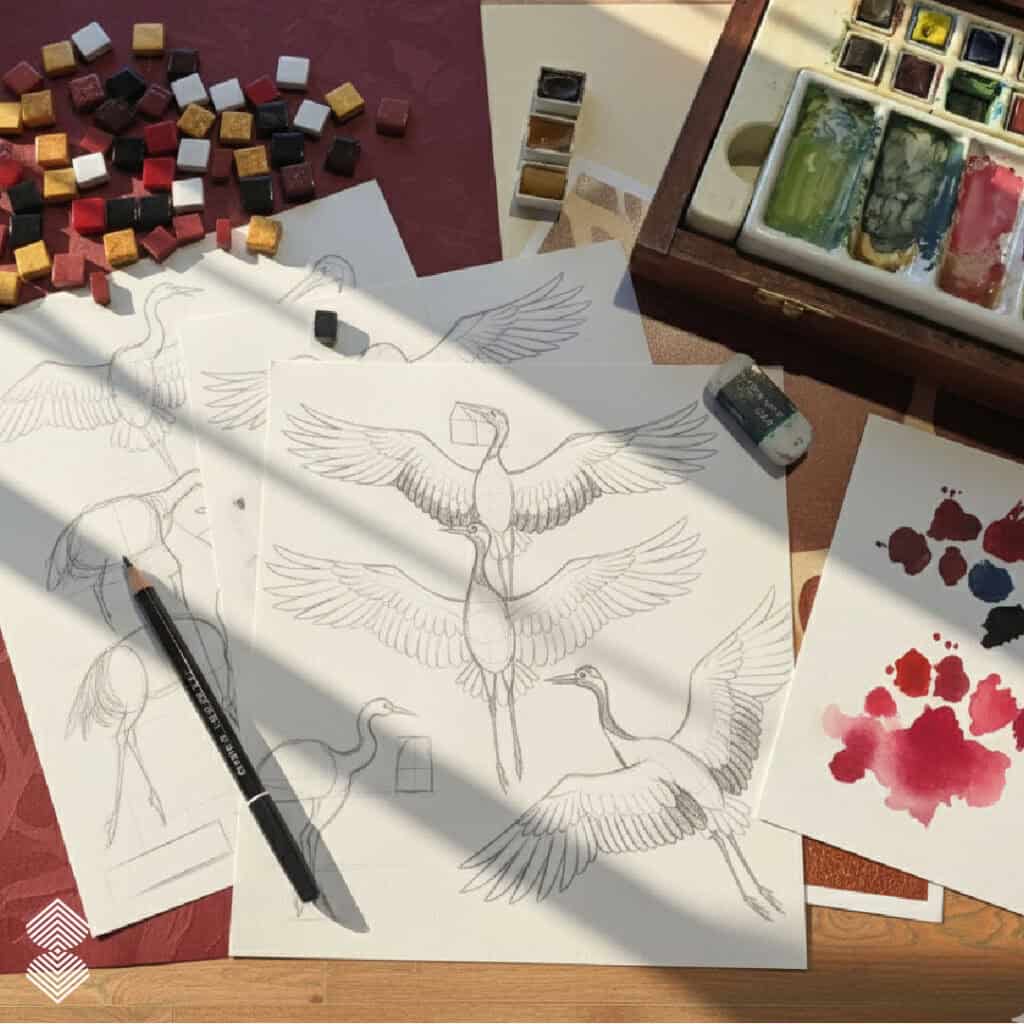
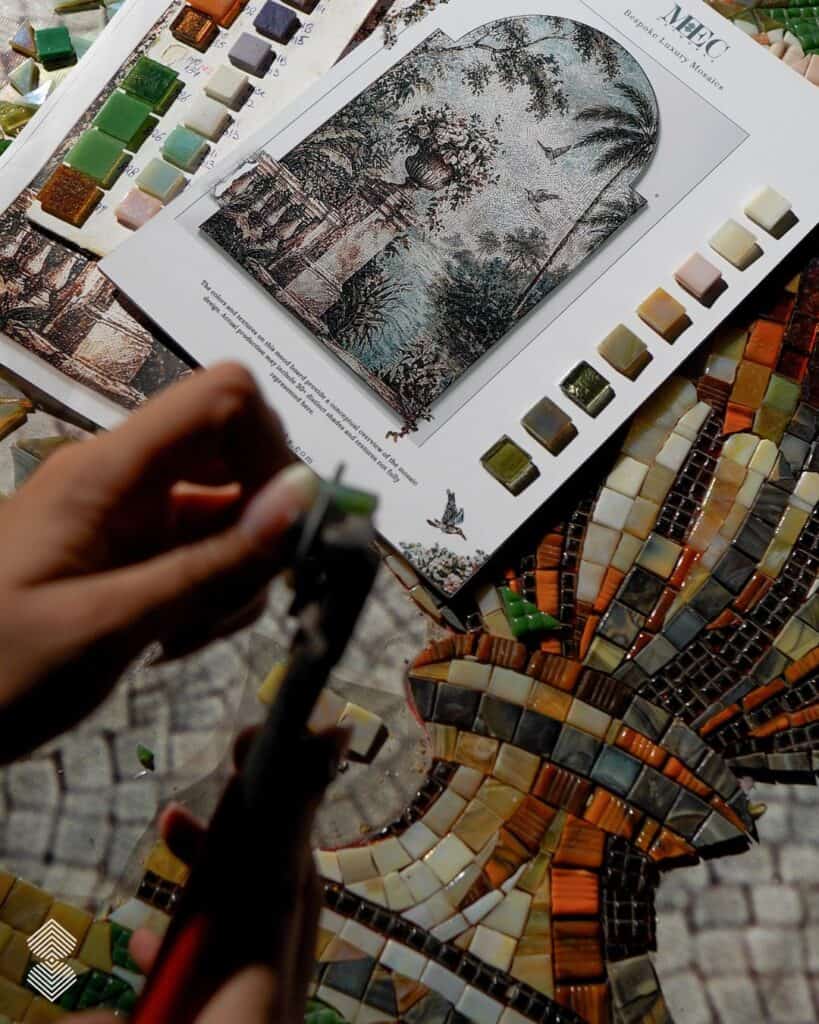
Mosaic Samples Before Production
In fact, glass and marble may be more vivid in reality than they seem on the screen; lighting will play a role in color rendering, and marble will have individual veining and other details.
We are ready to provide you with physical mosaic samples from all over the world before starting the mosaic production process, to allow you to check for yourself all details about the colors, textures, and finish of the materials that we use.
Our designers will assist you in choosing proper materials and matching them with the approved artwork and design concept. Once everything is done, we start working on the creation of mosaic art in our studio.
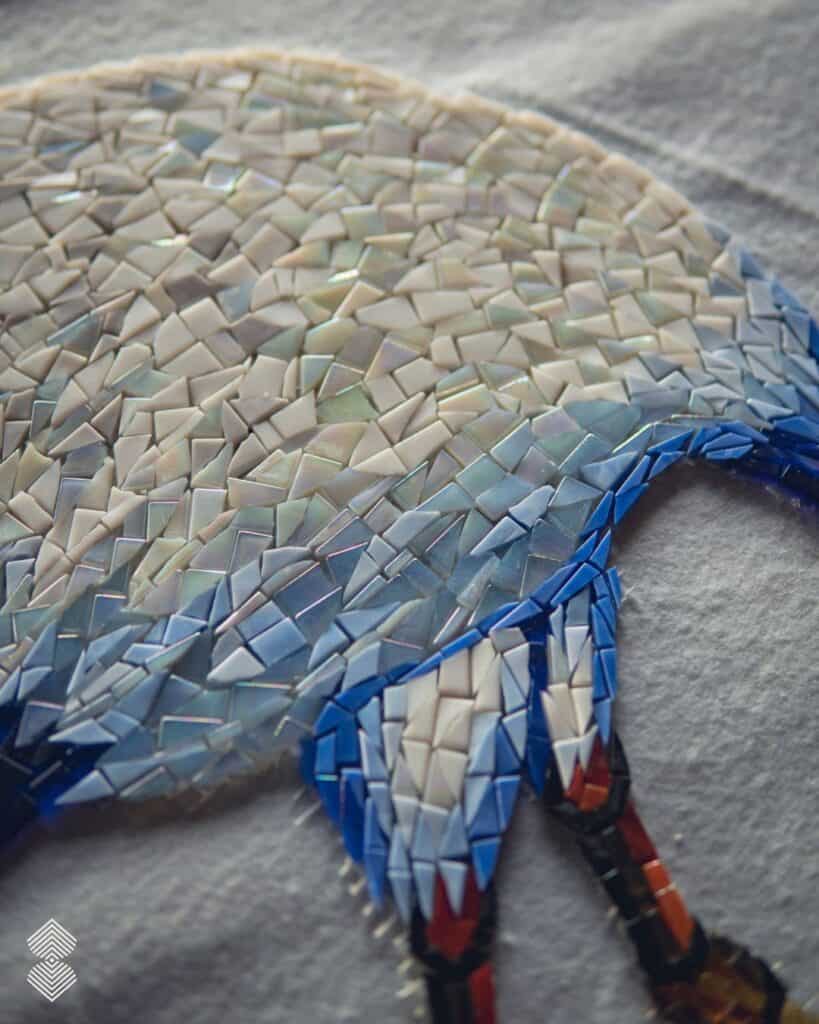
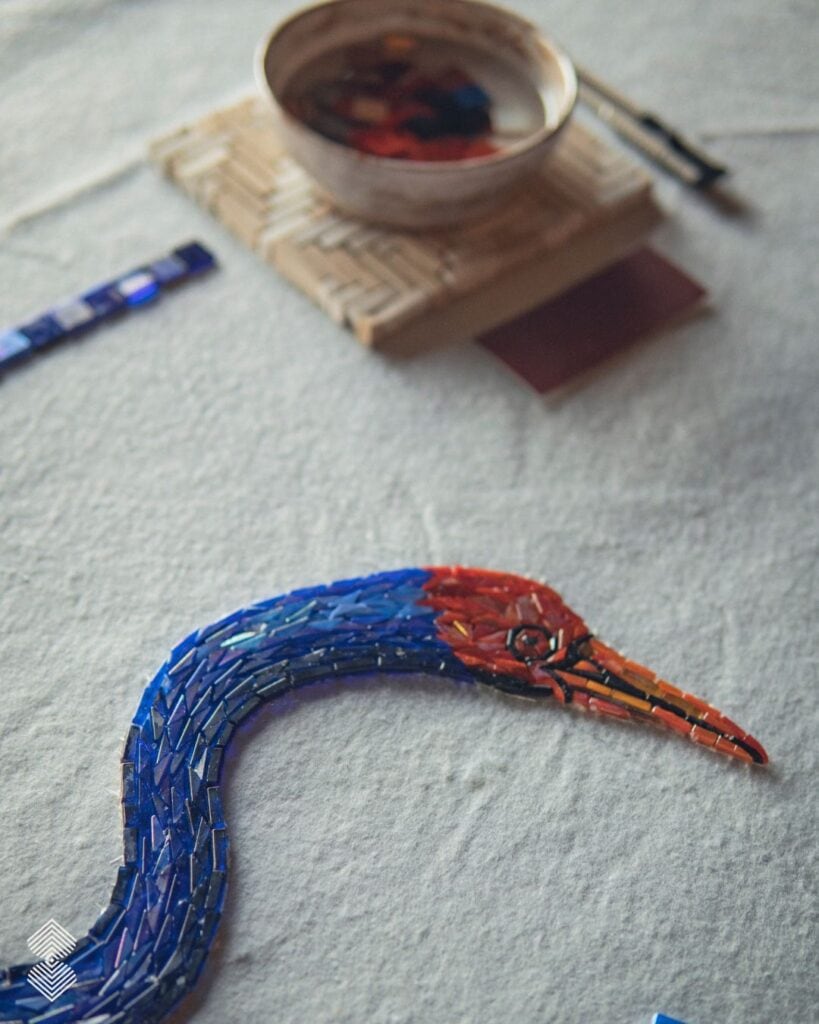
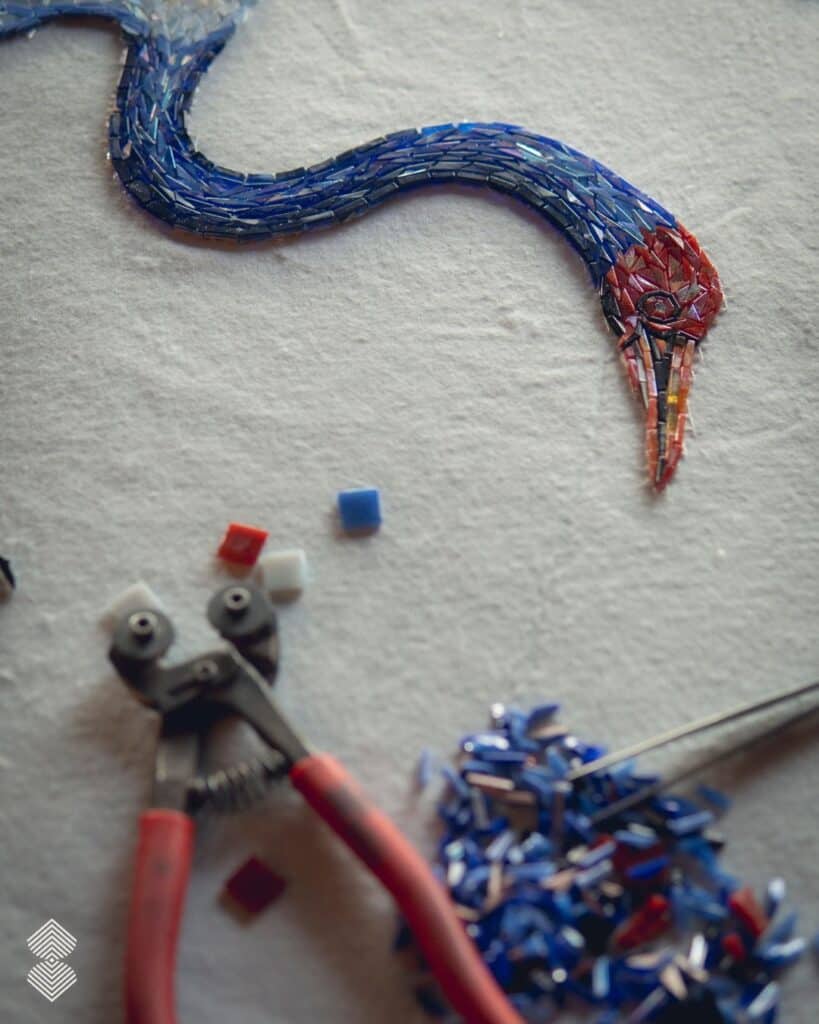
Step 3: How a Mosaic Is Made in the Studio
Once you approve the design and materials, our mosaic artists begin bringing your artwork to life. This is where the custom mosaic mural process moves from digital concepts to handcrafted glass and marble compositions.
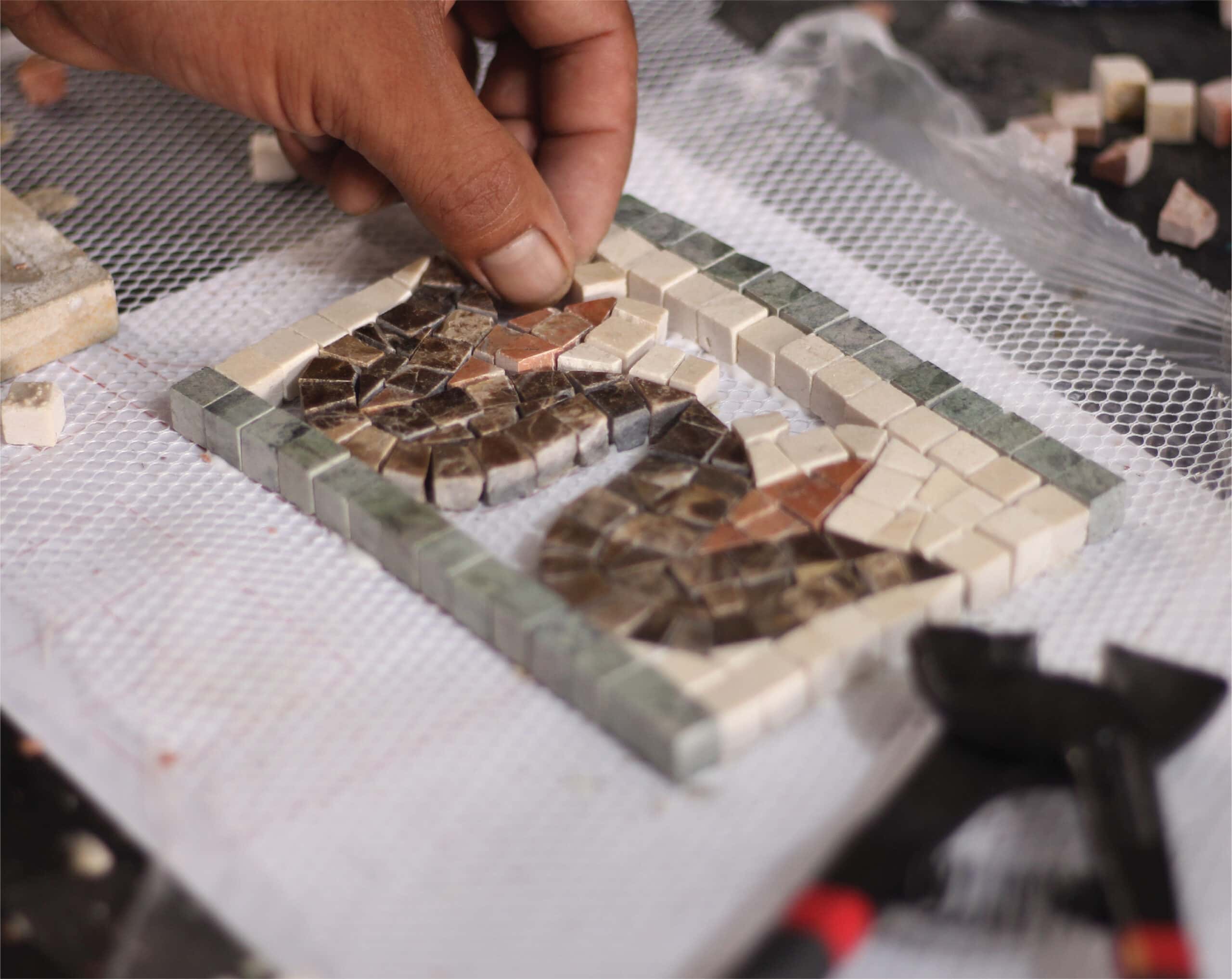
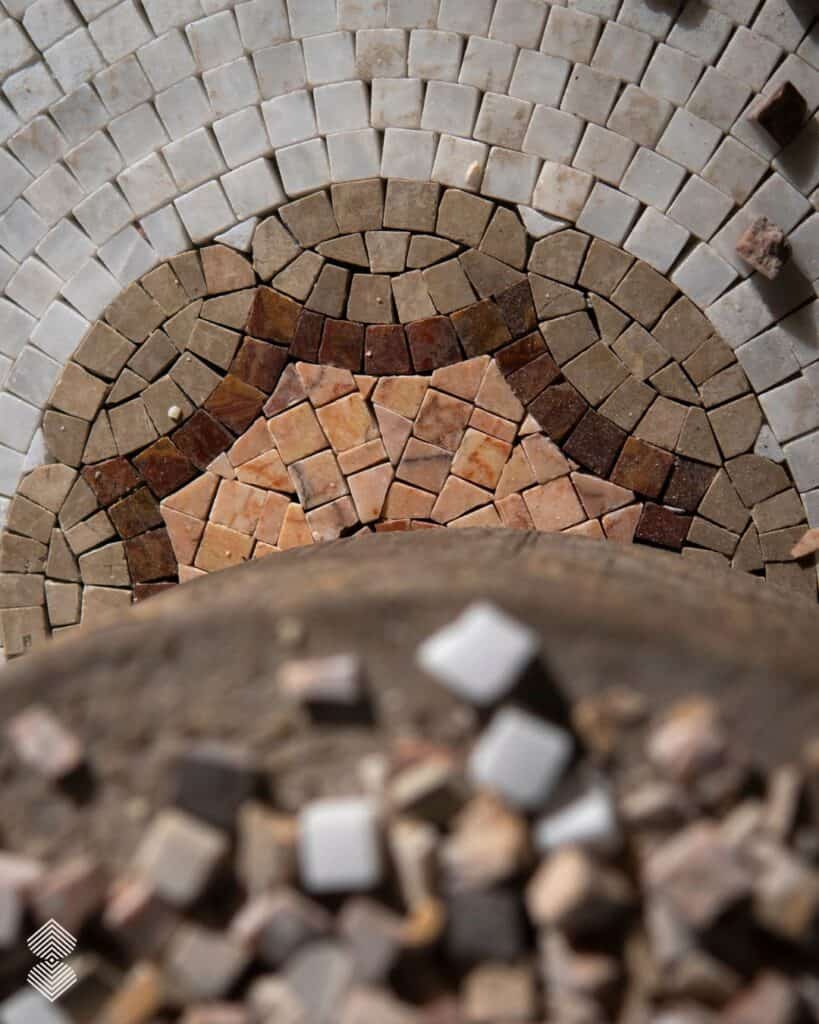
You might wonder: how is a mosaic made, especially when it includes detailed portraits, delicate flowers, or flowing landscapes? Our artists carefully cut and arrange individual tesserae, paying attention to every color, curve, and detail.
Here’s how the artwork takes shape in our studio:
- Translation of the Design: The artists examine the artwork that has been approved by the client and figure out how the design, with the particular shapes, colors, and other details, would be translated into separate tesserae. So, for example, a portrait would need smaller tesserae around the eyes, whereas a landscape could have broader arrangements for the background.
- Glass and Marble Hand Cutting: Each tessera is cut in accordance with the overall composition. Smaller tesserae are useful for capturing more detail, while larger tesserae can create more prominent patterns and smooth transitions. Waterjet cutting is another technique used depending on the needs of the particular design.
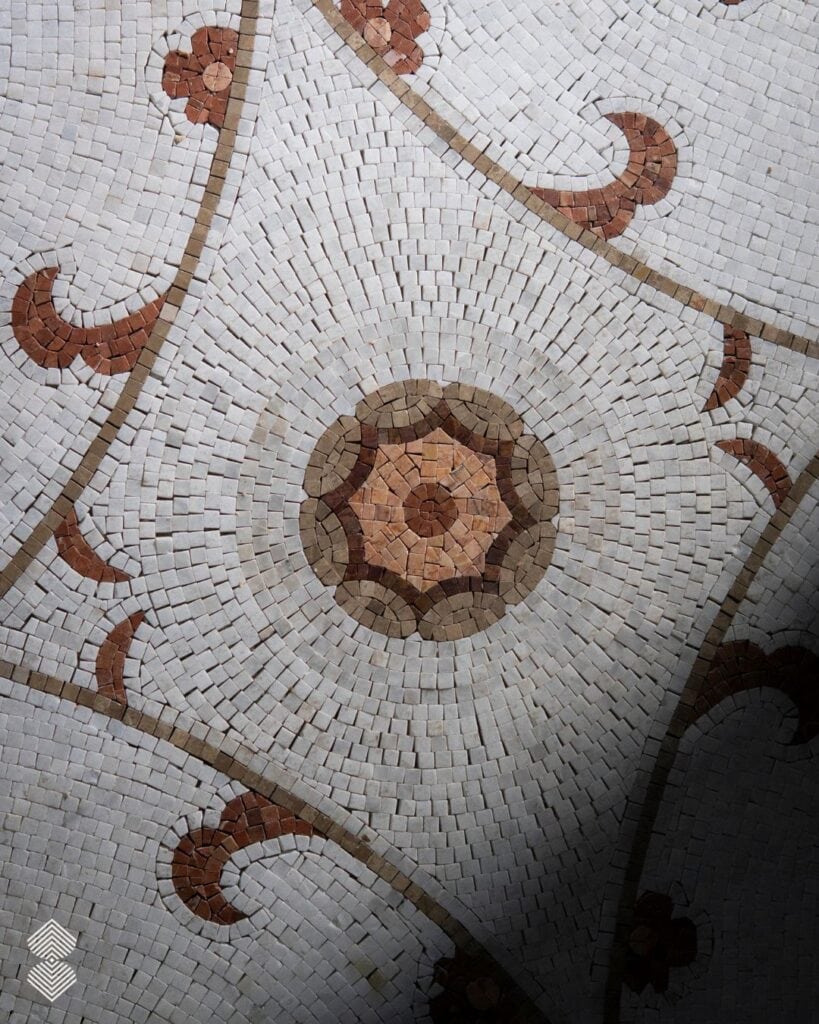
- Creating Flow through Andamento: In order to create a flow, the artists arrange the tesserae in certain directions. For example, curved pieces can follow the shape of ocean waves, flower petals, or flowing fabric.
- Coloring and Shading: Instead of painting, the artists arrange the pieces of different shades of glass and marble next to each other to create depth and highlights.
- Turning Photographs Into Mosaics: If your artwork is based on a personal photograph, our artists focus on preserving its important features, proportions, and expressions. Learn more about our custom photo-to-mosaic process.
- Preparation and Inspection of Mosaic Panels: For large-sized murals, we divide the art into sections that will be labeled to facilitate shipment and installation. Our team then inspects the coloration, details, and proper alignment of the panels with respect to the design.
During the creation process, our artists work towards accuracy and creativity. Each tessera plays an integral part in creating the texture, motion, and composition of the artwork.
Step 4: Delivery and Mosaic Installation
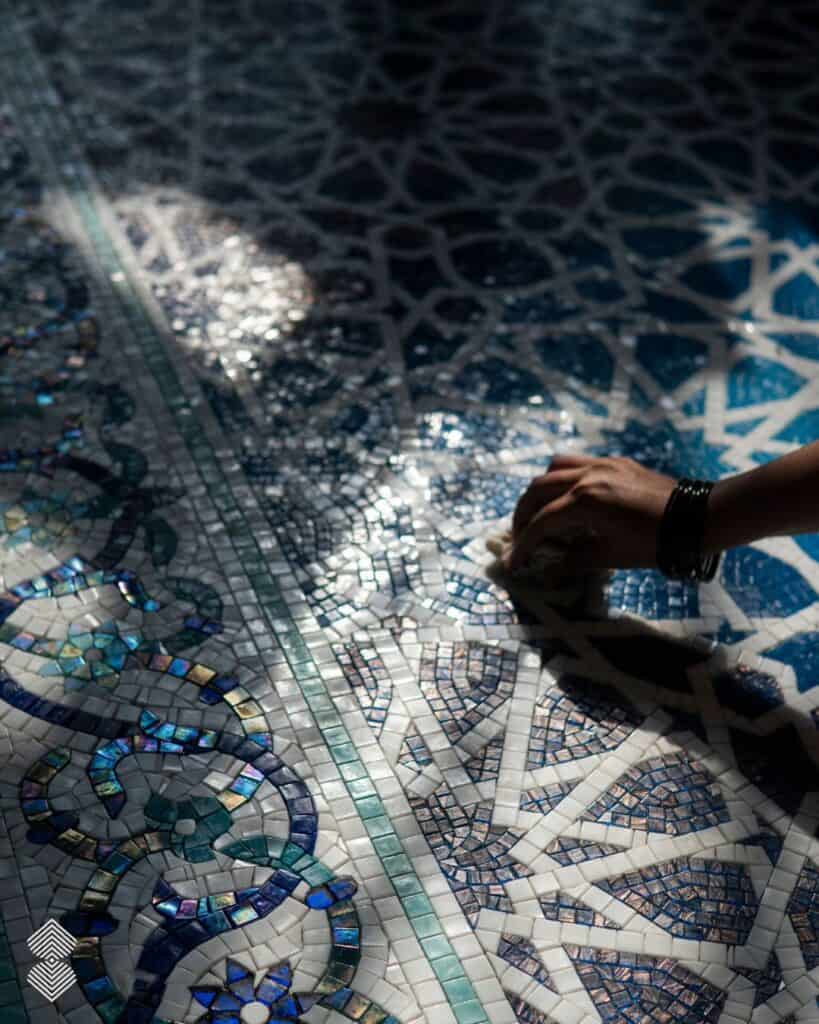
Once your mosaic reaches its destination, proper preparation and installation are essential to preserving its design and ensuring long-term performance. Here’s what you and your installation team should consider:
- Safe Packaging and Delivery: We safely package your finished mosaic for shipment. Larger murals are organized into separate labeled sections for proper identification during installation.
- Preparation of the Wall for Installation: Before installing a mosaic, the wall should be stable, level, and ready for the mosaic materials. Bathroom and shower installations should be properly waterproofed, while outdoor surfaces have other specific requirements as well.
- Adhesive and Grout Selection: The installer should choose an adhesive and grout that are compatible with the mosaic and substrate being used, as well as the environmental conditions. It is essential to provide movement joints and moisture barriers. Technical advice can be found from the Tile Council of North America regarding proper tile installation.
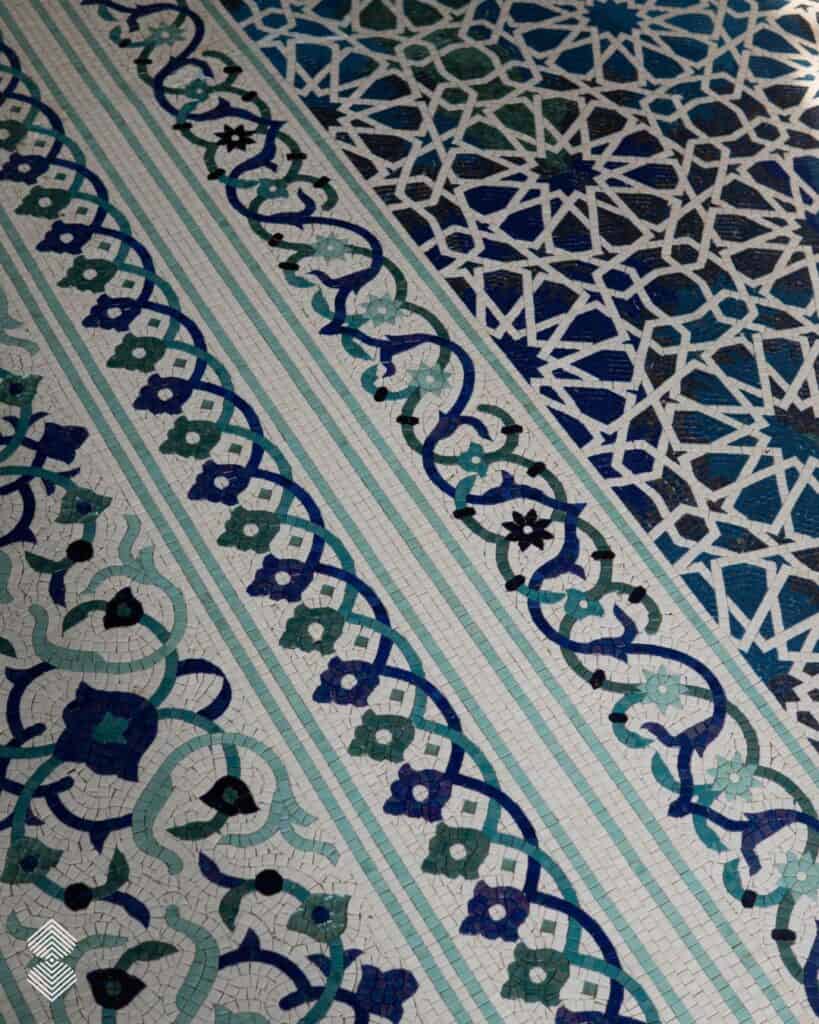
- Alignment of the Mosaic Panels: If you receive a custom tile mural installation in multiple pieces, the installer will use the labeling to align the mosaic according to the artist’s vision. This is especially necessary if the pattern, landscape, portrait, or architectural element is involved.
- Final Checks Prior to Installation: Before starting, it is best to check the dimensions of the wall, substrate condition, mosaic panel alignment, and specific materials used. You may want to hire a professional
At MEC Artworks, we develop and fabricate each mosaic with its intended application in mind. Proper mosaic installation then brings the individual sections together, allowing the finished artwork to become part of your space.
How Much Does a Custom Mosaic Mural Cost?
Wondering how much a mosaic mural costs? The price depends on your artwork’s size, materials, design complexity, and level of craftsmanship. Unlike standard tiles, each custom mosaic requires individual design planning and fabrication.
For example, a simple geometric mural may require less detailed cutting than a botanical scene filled with flowers, birds, and subtle color transitions. Even when both murals have the same dimensions, their production requirements can differ. Here are the main factors that influence the cost:
| Cost Factor | How It Affects Pricing |
| Artwork Size | Larger murals require more materials and studio work. |
| Design Complexity | Intricate patterns and figurative details need more craftsmanship. |
| Materials | Glass and marble selections influence material costs. |
| Tessera Size | Smaller pieces often require more detailed cutting and placement. |
| Shipping and Installation | Delivery location and site requirements affect the overall budget. |
At MEC Artworks, we evaluate these details to develop a quotation based on your project. Explore our custom mosaic pricing guide for more information, or share your design references and dimensions with our team for a personalized quote.
Final Thoughts: Bringing Your Custom Mosaic Mural to Life
Developing a custom mosaic mural entails going from your concept to the actual handmade artwork. All these stages, starting from consultations, approvals of the design, choice of materials, studio production, to installation, contribute to the final piece of art that will be created.
At MEC Artworks, we assist you in the development of custom mosaic murals by giving professional advice on colors, materials, proportions, and other artistic elements you might need while creating your unique piece of art.
FAQs
How long does a custom mosaic mural take?
The amount of time needed depends on the mural size, materials used, design complexity, and degree of detail. In case a figurative piece with elaborate hand-cut tesserae is required, this may take more studio time compared to an easy geometric pattern. The whole process involves consultation, design, approval, creation, and delivery. Site preparation and installation have their own set of requirements. Letting us know about your project and its construction time will help create the right timeline.
Can a mosaic mural be made from my own photo or drawing?
Yes. You can order a mosaic mural made from your personal photograph, painting, sketch, or digital art. We will interpret your idea using the right glass or marble tesserae. When designing a mosaic mural, we take into account the image’s proportions, colors, and important details. Some features might require some changes to be artistically incorporated into the final result. Explore our custom photo-to-mosaic process to learn more.
Can a tile mural go in a shower or outdoors?
Yes. You can use a tile mural in showers or on exterior walls when the materials are right for the job. Each situation requires different factors to be considered. Showers need the proper waterproofing material, adhesive, and preparation of the substrate. Outdoor mosaic walls have to be treated differently due to exposure to the elements like moisture and temperature. The appropriateness of the material needs to be verified.
Do I need a specialist to install a mosaic mural?
A professional installer who is experienced in mosaic work is highly recommended, especially in cases involving complex or large compositions. In the case of mosaic murals, there needs to be correct alignment and adhesive, and a proper understanding of the materials being used. If murals have been provided in pieces, there will be proper installation according to the intended order.
How do I care for a mosaic wall mural?
Routine care is dependent upon the type of material, finishes, grouting, and the installation areas. Each material will require its own form of cleaning. Do not use abrasives, as they may lead to scratches. Acidic cleansers may damage natural stone such as marble. If the installation was an outside area or a wet installation, then use the maintenance guidelines.