

Artaic vs. MEC Artworks: Robotic Precision vs. Hand-Cut Soul in Mosaic Design
The Evolution of Mosaic Art: Artisanal Craftsmanship vs. Modern Automation
Modern mosaic fabrication exists between two approaches: robotic automation and traditional hand-cut artistry. While both can create detailed mosaics, the process behind them produces very different visual results.
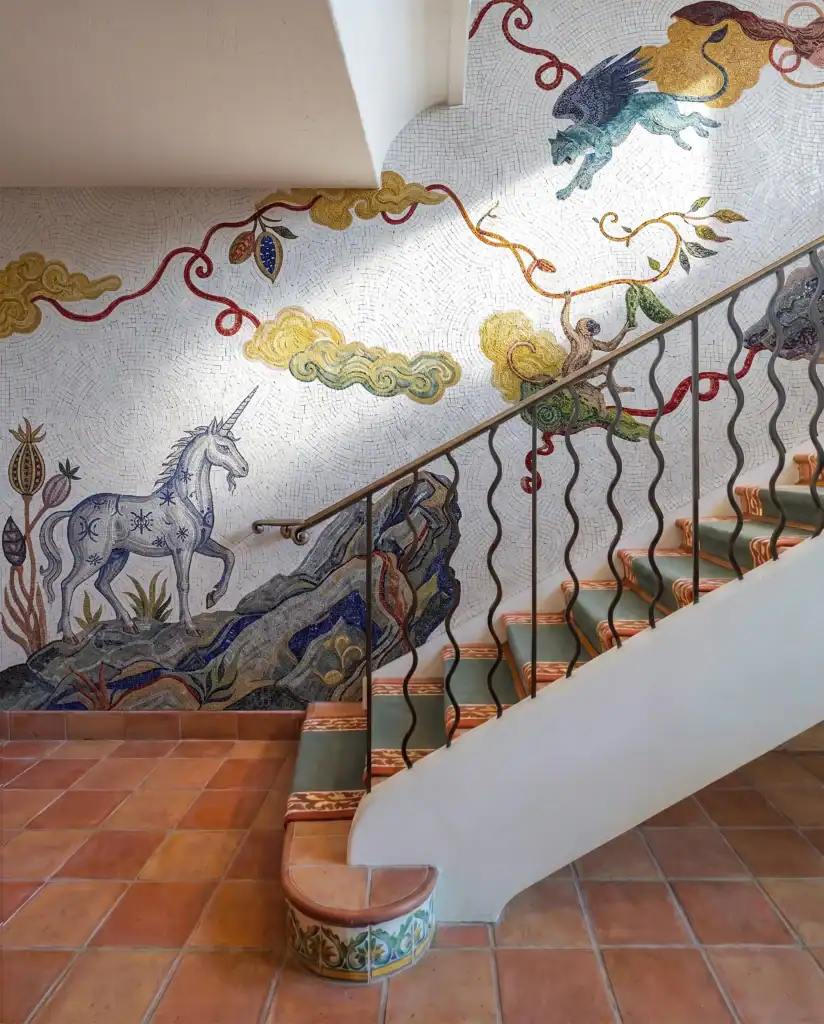
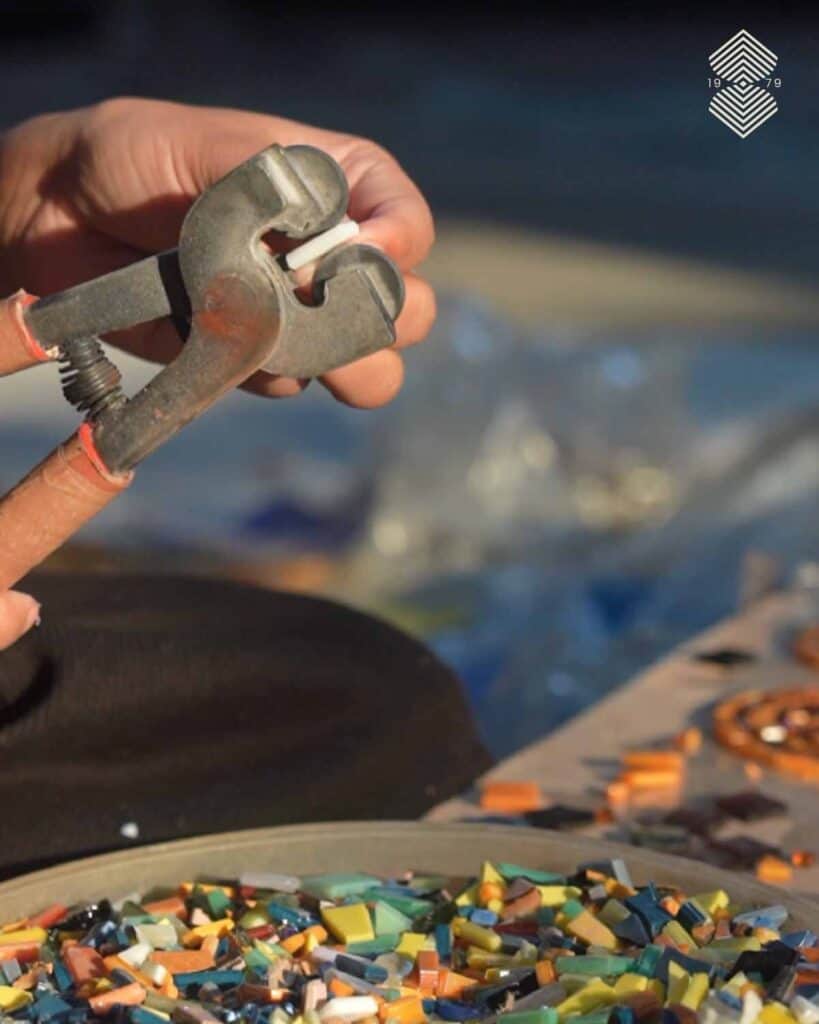
Artic’s model relies on robotic assembly systems and software-generated layouts with fast fabrication and repeated modular production. However, rigid grid systems can create visible pixelation and mechanical repetition. At MEC Artworks, every tessera is individually hand-cut and placed by artisans using traditional mosaic techniques. This handcrafted approach allows:
- Organic movement and flow
- Seamless artistic transitions
- Custom tessera shaping
- True bespoke craftsmanship
Rather than producing standardized surfaces, MEC Artworks creates mosaics designed specifically for each architectural environment.
Deep Dive: The Core Differences Between Robotic Assembly and Hand-Cut Artistry
| Feature | Robotic Mosaic Assembly | MEC Artworks Hand-Cut Craftsmanship |
|---|---|---|
| Tile Movement | Fixed grid alignment | Fluid andamento movement |
| Visual Flow | Pixelated transitions | Organic visual rhythm |
| Tile Shapes | Uniform standardized pieces | Custom hand-cut tesserae |
| Artistic Detail | Limited by machine geometry | Intricate curves and detailing |
| Material Compatibility | Flat vitreous glass & porcelain | Marble, smalti, gold leaf & mixed-media |
| Surface Texture | Consistent uniform finishes | Layered texture and depth |
| Design Flexibility | Modular production systems | Fully bespoke artistic compositions |
| Curved Surface Adaptation | Limited flexibility | Natural adaptation to curves |
| Visual Character | Mechanical repetition | Sculptural handcrafted appearance |
| Craftsmanship Approach | Software-guided automation | Artisan-led hand placement |
The Design Experience: Automated Scaling vs. Collaborative Mosaic Commissioning
Robotic mosaic systems typically convert artwork into digitally processed layouts focused on:
- Speed
- Replication
- Automated scaling
- Standardized production
At MEC Artworks, every mosaic is developed through direct collaboration between clients, designers, and artisans. Rather than relying purely on software interpretation, our artisans consider:
- Material behavior
- Architectural context
- Light and movement
- Artistic composition
This handcrafted approach creates bespoke architectural mosaics designed for long-term artistic and structural value rather than mass-produced replication.
Performance, Longevity, and Grout Aesthetics in Luxury Spaces
Robotic Mosaics: Standardized Grout Alignment
Robotic mosaics typically produce highly uniform grout spacing through standardized alignment systems. While technically precise, this can create a more rigid and mechanical appearance in luxury architectural spaces.
- Visible sheet effects
- Mechanical visual rhythm
- Overly rigid surface appearance
- Artificial repetition
MEC Artworks: Hand-Laid Heirloom Craftsmanship
MEC Artworks uses traditional hand-laid mosaic techniques where tesserae vary subtly in size, spacing, and orientation. This creates a more natural visual flow and stronger artistic continuity.
- Better visual blending
- Reduced visual rigidity
- Improved artistic continuity
- Sustainability luxury
- Long-term heirloom durability
Choosing Between Automation and Handcrafted Mosaic Artistry
Robotic mosaic fabrication works well for projects that prioritize speed, consistency, and large-scale repetition, such as:
- Commercial branding walls
- Fast-turnaround developments
- Standardized installations
- Budget-sensitive projects
However, luxury environments often require a level of artistic refinement that automated systems cannot fully replicate. MEC Artworks is especially suited for:
In these spaces, handcrafted mosaic artistry becomes part of the architecture itself, adding visual richness, depth, and long-term heirloom value.
Why Hand-Cut Mosaics Create Superior Luxury Pool Visuals
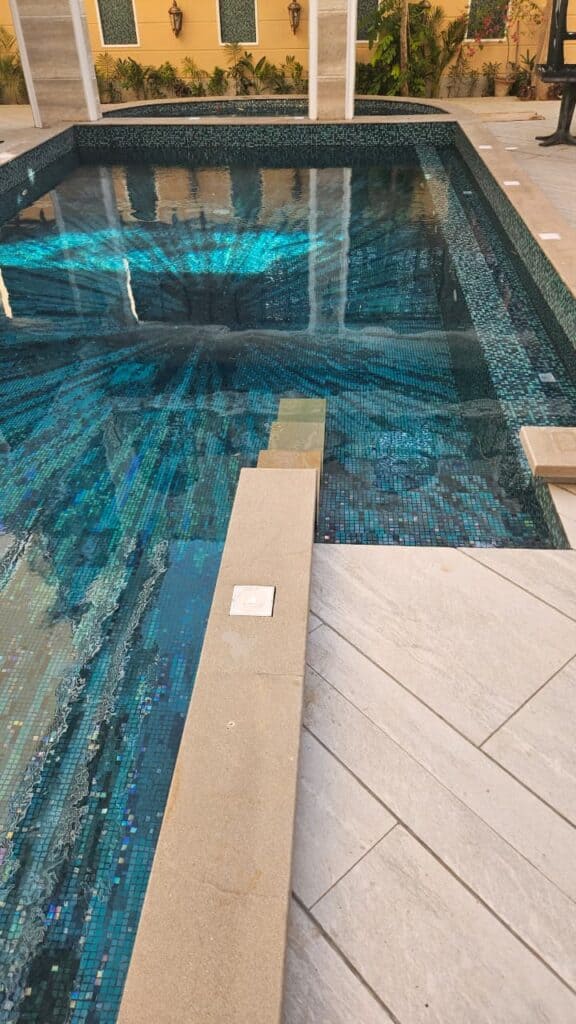
In robotic mosaic systems, modular sheet assembly and uniform spacing often create visible sheet lines, pixelated color blending, abrupt gradient transitions, and mechanical grout alignment that disrupt the seamless luxury pool aesthetic. Whereas mostly artisans use hand-cut placement techniques to control flow, spacing, and movement naturally across the pool surface. This handcrafted approach allows:
- Seamless underwater gradients
- Organic color transitions
- Reduced visible grid effects
- Curvature-responsive layouts
- True bespoke luxury pool mosaics
Using andamento-led placement and face-mounted fabrication, MEC Artworks creates pool mosaics that appear visually continuous underwater rather than mechanically segmented.
Comparative Breakdown: Choosing the Right Mosaic Approach for Your Architecture
| Artaic Robotic Mosaics | MEC Artworks Handcrafted Mosaics |
|---|---|
| Robotic pick-and-place automation | Fully hand-cut tesserae |
| Grid-based alignment | Traditional andamento technique |
| Standardized flat tile materials | Mixed-media artisanal materials |
| Software-generated scaling | Fully bespoke artistic interpretation |
| Standard modular systems | Bespoke luxury pool mosaics |
| Production efficiency | Heirloom-quality craftsmanship |
True Architectural Integration vs. Surface-Level Mosaic Application
The best custom mosaic design studio for luxury homes does more than create decorative surfaces. It designs mosaics that become part of the architecture itself. Automated fabrication systems are typically optimized for repeatability, standard sizing, production efficiency, simplified installation, and scalable replication. While effective for many commercial applications, this approach can limit architectural responsiveness and artistic integration.
At MEC Artworks, mosaics are developed specifically for the environment they inhabit. Our artisans carefully consider lighting direction, viewing angles, surrounding materials, curved geometry, surface transitions, and spatial proportions throughout the design process. Rather than simply applying a mosaic onto a surface, MEC Artworks integrates the artwork into the architectural narrative itself. This approach is especially valuable for luxury residences, boutique hospitality spaces, wellness environments, yacht interiors, feature staircases, and double-height feature walls.
Final Verdict: Elevating Your Architectural Narrative with MEC Artworks
Artaic represents the evolution of robotic mosaic tile fabrication through automation, speed, and digital precision. MEC Artworks represents the preservation and advancement of true handcrafted mosaic artistry.
The difference between robotic and handcrafted mosaic is ultimately the difference between production and interpretation. At MEC Artworks, mosaics are not assembled as pixel grids. They are composed as living architectural artworks through hand-cut precision, material intelligence, and centuries-old artistic principles like andamento. For clients seeking true luxury mosaic artistry, the human touch remains irreplaceable.
FAQ’s
What is the main difference between Artaic and MEC Artworks?
Artaic primarily uses robotic mosaic fabrication systems driven by software automation and grid-based assembly. MEC Artworks uses traditional hand-cut mosaic craftsmanship where artisans shape and place each tessera individually for greater artistic movement and customization.
Does a robotic mosaic cost less than a hand-cut mosaic?
In many cases, robotic mosaics can reduce production costs through automation and scalability. Hand-cut mosaics involve significantly more artisan labor, material customization, and artistic detailing, making them a higher-end architectural investment.
How does the lead time compare between automated fabrication and manual craftsmanship?
Robotic systems generally offer faster production timelines because much of the process is automated. Handcrafted mosaics require more fabrication time due to custom cutting, material preparation, and manual placement.
Can MEC Artworks replicate complex digital patterns or photos like a robot can?
Yes. MEC Artworks can interpret highly detailed digital artwork, gradients, and complex compositions through hand-cut tesserae and artistic placement. Unlike software posterization, artisans refine transitions manually to create greater depth and fluidity.
Which mosaic method is better suited for luxury swimming pools and wet areas?
Handcrafted mosaics are often preferred for luxury swimming pools because they allow greater material flexibility, seamless visual blending, custom gradients, and better adaptation to curved surfaces and architectural detailing.
What is "Andamento" and why can't artificial intelligence or robots replicate it?
Andamento is the traditional mosaic principle that controls directional flow and movement through intentional tessera placement. It relies on artistic judgment, visual rhythm, and spatial interpretation that cannot be fully replicated through rigid robotic grid systems or algorithmic calculations.