

Custom Mosaic From Vision to Reality: Our Photo-to-Mosaic Process
Hand-Cut Custom Mosaic From Photo Using Marble & Glass
Turning a meaningful photo image into a lasting work of mosaic tile art takes more than software. At MEC Artworks, creating a custom mosaic from a photo is a hands-on, carefully guided process. No filters. No auto-pixelation. Just human judgment, mosaic material knowledge, and craftsmanship refined over decades.
If you’re seeking a mosaic tile service that translates a high-resolution photo into a marble floor mosaic, feature wall, or custom swimming pool design, this page walks you through the process with clarity and transparency.
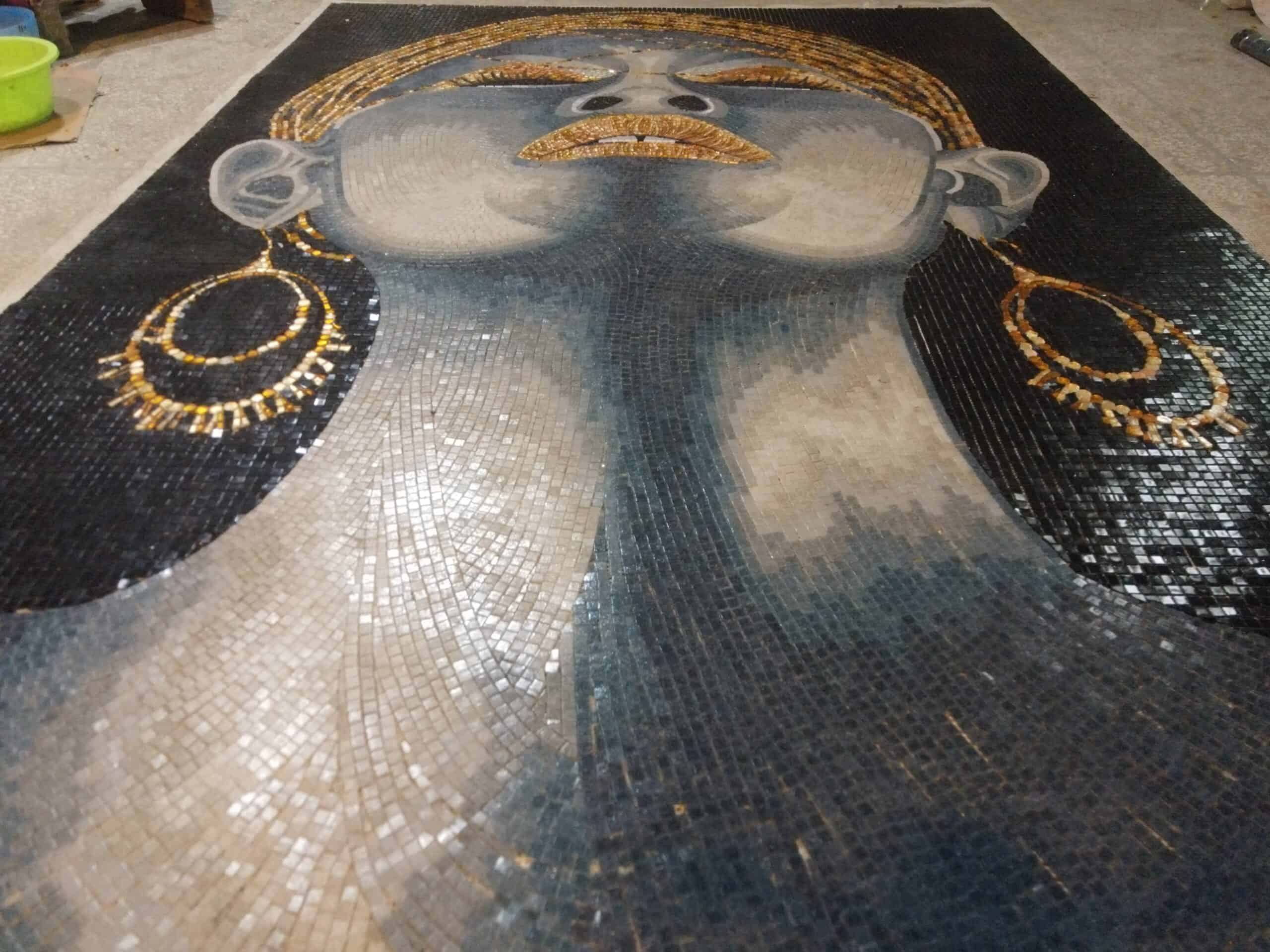
Handcrafted Precision Over Mass Automation
At MEC Artworks, every mosaic is crafted by skilled artisans, not automated factory lines. We hand-cut marble, stone, and glass to preserve natural variation and authentic surface movement. The result is mosaic art that reflects true craftsmanship, not mass production.
It’s Not an App. It’s a Hand-Cut Mosaic Process
Many “photo to mosaic” services rely on algorithms that convert images into rigid grids. The result often looks flat, pixelated, or artificial once translated into mosaic stone or tiles. But our MEC Artworks hand-cut mosaic tile approach is different.
We interpret your image artistically and structurally. Every photo is reviewed by a mosaic artist who understands scale, stone behavior, light reflection, and tile flow. Our goal isn’t to copy pixels; it’s to translate the essence of your image into real materials. That’s what makes the difference between a printed tile mural and a true hand-cut mosaic.
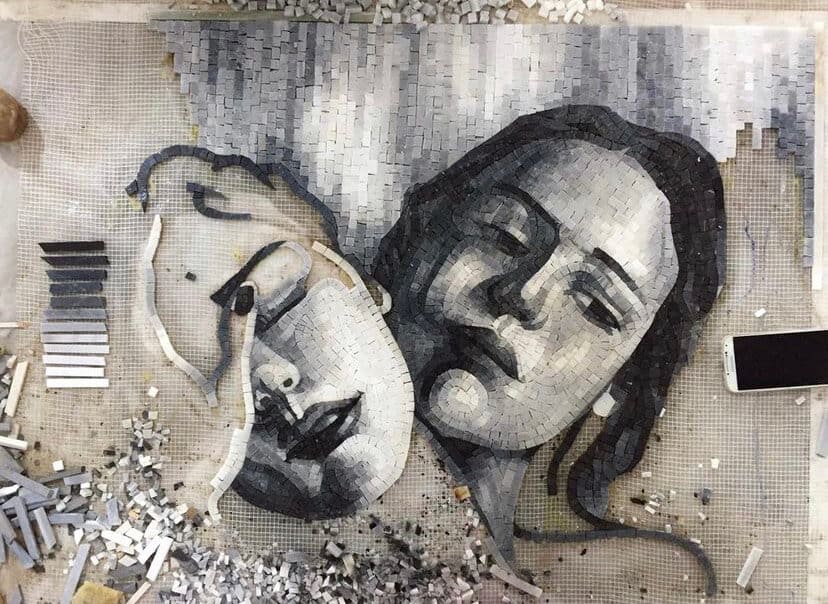
Craft Difference Printed Tile Murals vs Hand-Cut Photo Mosaic Art
Printed Tile Murals
- Lower upfront cost and craftsmanship
- Ink-based surface
- Prone to fading and wear
- Limited depth and realism
Hand-cut Photo Mosaics
- Higher craftsmanship investment
- Solid stone or glass throughout
- Color runs through the material
- Designed to last generations
Step 1: Free Consultation & Digital Rendering
You upload the photo. We do the heavy lifting.
Whether it’s a portrait, architectural image, logo, or landscape, the first question people ask is: Does the image look pixelated when converted to stone tiles?
Short answer: no; not when done correctly. We start by evaluating resolution, contrast, and focal points. If the design mosaic image needs adjustment, we refine it. That can include enhancing clarity, correcting color balance, or restructuring details so they translate cleanly into mosaic form. Next, we create a digital-to-mosaic rendering. This isn’t a generic filter. It’s a custom layout that shows how your mosaic design image will be interpreted using real tile sizes and shading techniques. Nothing moves forward without your approval.
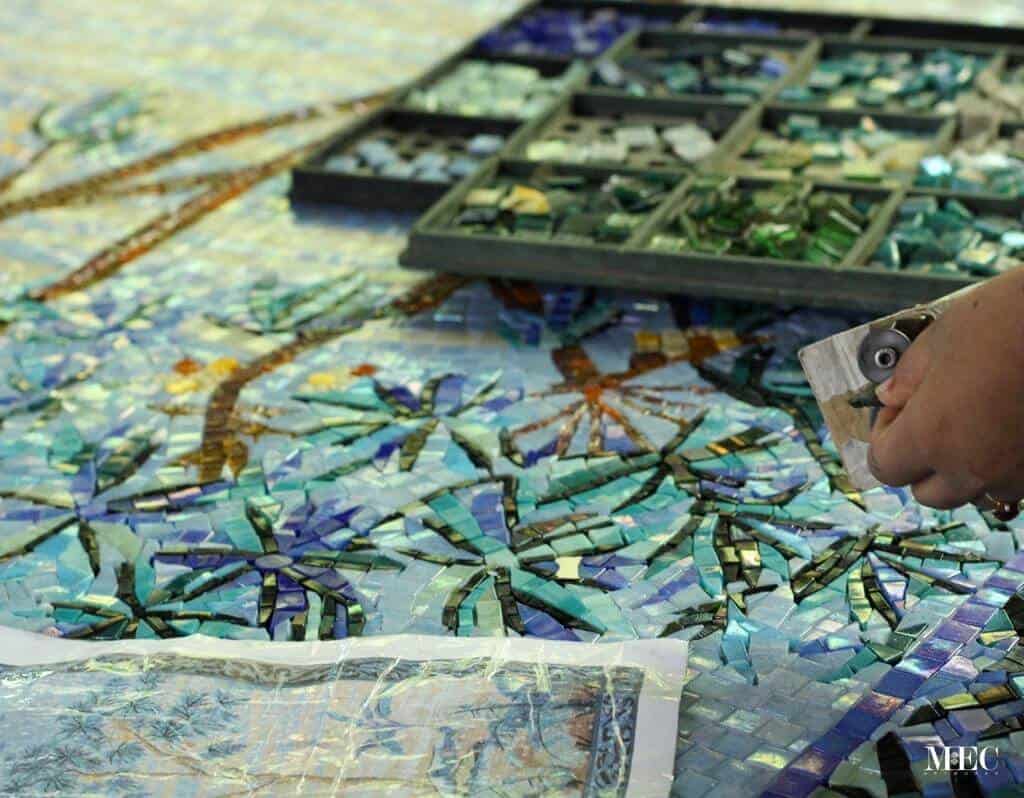
Step 2: Stone & Glass Tile: Material Selection for Image Accuracy
Pixels don’t exist in the real world. Marble stones or glass mosaic tiles do. Once the mosaic tile art design is approved. We select mosaic tile materials that best suit the image, position, and surface. This step is critical in the custom mosaic design process. We consider:
- Natural marble veining or glass tiles
- Color depth and variation
- Light reflection and finish
- Indoor vs outdoor placement
- Floor, wall, or wet-area requirements
Instead of forcing stone to imitate pixels, we let mosaic tiles and marble stones do what they do best: create depth, movement, and longevity. This is where a photo truly becomes a mosaic, not a tiled print. If you’re trying to turn a picture into a mosaic that will last decades, material choice matters as much as the image itself.
Step 3: Fabrication: Hand-Cut Mosaic, Tile by Tile
This is where hand-cut mosaic craftsmanship replaces machine-cut automation.
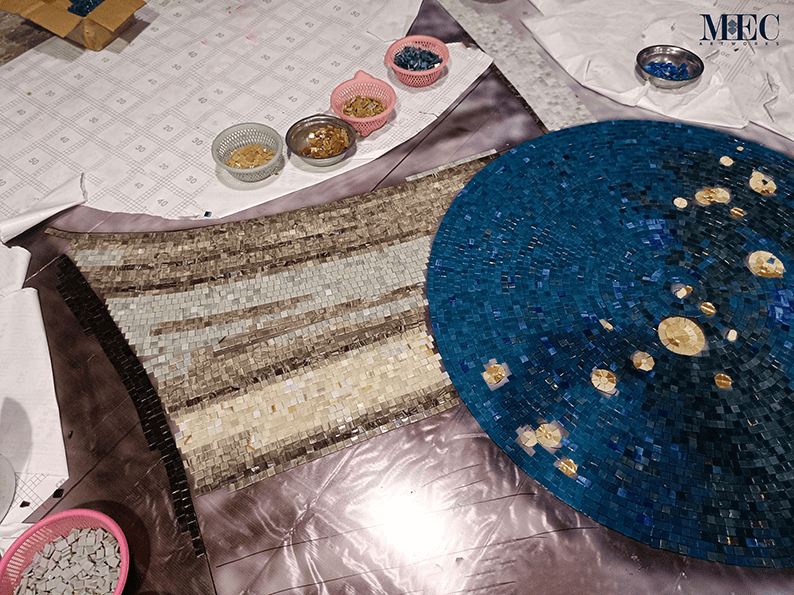
Every tile is cut by hand. No machines. No printed surfaces. Our artisans shape each piece based on the approved rendering, adjusting tile size and placement to preserve facial expressions, shadows, curves, and perspective. Throughout the mosaic tile fabrication process, we share updates and recommendations. You’re never guessing where your mosaic tile art project stands. Moreover, this is what separates a photo-to-mosaic service from a factory product. The mosaic evolves organically, guided by the human eye, not locked into a grid.
Mosaic Tiles Delivery & Installation Readiness
Once complete, your mosaic is carefully packaged and shipped worldwide. Each project includes clear installation guidance so your installer understands orientation, sequencing, and surface preparation.
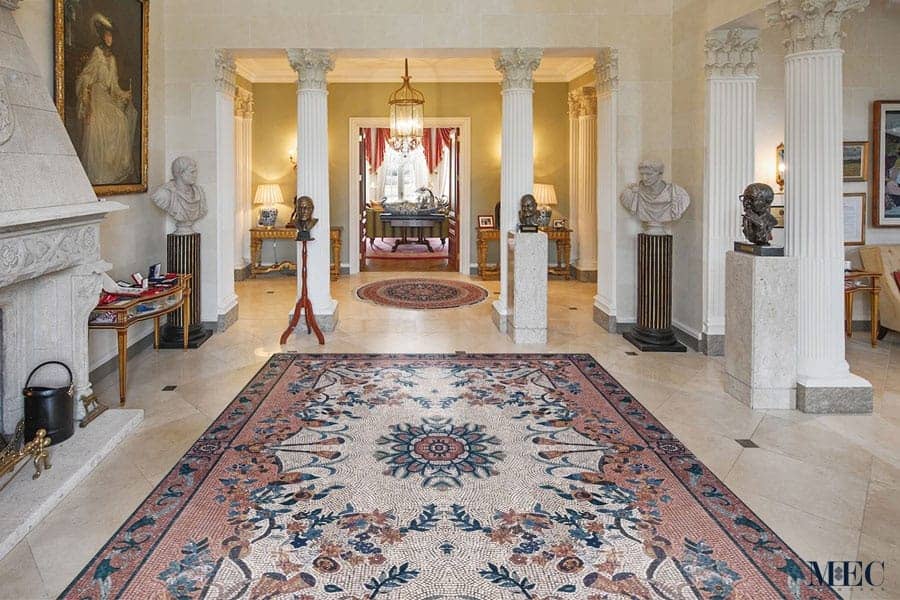
Whether it’s a marble floor medallion, bathroom or kitchen feature wall, or entryway centerpiece, the final result is a durable, architectural surface, not a decorative sticker.
FAQ’s
Will my custom photo to mosaic look pixelated once it’s made in stone?
No. A properly designed custom mosaic from a photo does not look pixelated. Unlike automated tools that simply convert an image to pixel tile grids, we manually reinterpret your image. Tile size, shading, and material variation are adjusted by an artist so details remain smooth and visually balanced in real stone.
Can you turn any picture into a mosaic, even if the photo quality isn’t perfect?
Yes, in most cases. When you turn a picture into a mosaic, resolution matters, but it’s not a dealbreaker. As part of our custom mosaic design process, we refine contrast, sharpen key areas, and restructure details so the image translates cleanly into marble or stone.
Do I get to see a digital rendering before committing to a photo to mosaic service?
Absolutely. Every photo-to-mosaic service we offer includes a detailed digital rendering. This shows how your image will translate from digital to mosaic form using real tile proportions. You review and approve the design before fabrication begins.
What’s the difference between converting an image to pixel tile software and a hand-cut mosaic?
Software tools that convert images to pixel tile layouts rely on rigid grids and uniform color blocks. A hand-cut mosaic uses variable tile sizes, natural stone shading, and human judgment. The result is depth, realism, and movement, not a flat, printed look.
How long does the custom mosaic design process take from image upload to delivery?
Timelines vary based on size and complexity, but most custom mosaic from photo projects follow this flow: digital rendering, material selection, hand fabrication, and delivery. You receive updates throughout, so you always know where your project stands.
Is a hand-cut photo mosaic more expensive than a printed tile mural?
Yes, and for good reason. Printed tile murals use surface ink and automated production. A hand-cut digital to mosaic conversion involves skilled labor and solid stone throughout. While the upfront cost is higher, the mosaic lasts decades and becomes a permanent architectural feature.