
A strong brand does more than sit on a website header or a business card. It shapes how people feel the moment they walk through a door. In luxury retail, hospitality, branded residences, and resort environments, that feeling is not accidental. It is designed down to the surface beneath your feet and the lettering on the wall.
So, for this, typography and logo mosaics are where brand identity gets its voice. The weight of a letterform, the spacing between characters, and the way a wordmark curves or stands upright. In print and digital, they communicate. In physical space, built into the architecture itself, they command. That is where the material conversation begins. Paint fades with foot traffic and sunlight. Vinyl lifts at the edges. Printed surfaces betray their age due to chemical cleaning.
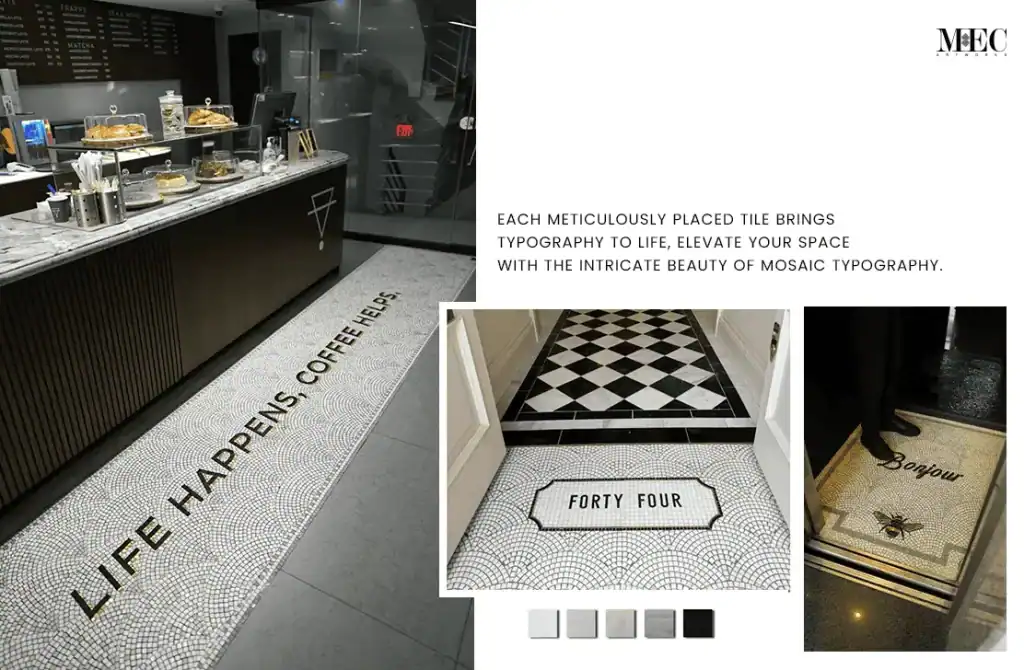
But a custom mosaic logo changes that entirely. Letters and marks are no longer applied to a surface. They are constructed within it tile by tile, with the same craft logic that has kept mosaics intact across centuries of cathedrals, palaces, and public monuments. The result is a typography logo design that does not wear away. It becomes the floor, the wall, the threshold. It becomes part of the building’s identity as much as the brand’s.
Table of Contents
Why Mosaics are the Ultimate Medium for High-Traffic Brand Identity
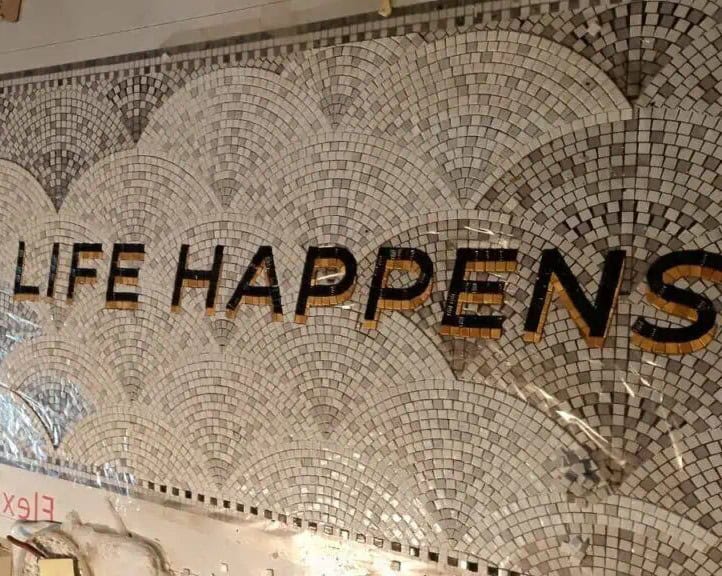
Precision in Mosaic Craftsmanship
In commercial settings, durability is not a luxury. It is a requirement. Entrances, lobbies, pool decks, restaurant floors, and reception walls all face constant pressure from shoes, rolling luggage, cleaning routines, and environmental exposure. A mosaic logo signage installation in these zones has to do more than look beautiful on day one. It has to keep performing.
That is where mosaic art pulls away from the pack. Because it is built from many small tesserae rather than one large printed face, the surface distributes movement and stress across the composition. The typography and logo mosaics result feels more architectural and less fragile.
A mosaic logo also gives you more than durability. It adds texture, shadow, depth, and rhythm. Guests do not merely see the brand. They experience it. Light moves across stone differently than it moves across print. Glass catches color in a way ink never can. That tactile dimension creates memory. Here is a quick comparison:
| Branding Medium | Visual Impact | Durability in Traffic | Water/UV Resistance | Luxury Perception | Best Use |
| Vinyl decal | Moderate | Low | Low to moderate | Temporary | Short-term promotions |
| Painted logo | Moderate | Low | Low | Basic | Interior low-wear walls |
| Printed tile graphic | Good | Moderate | Moderate | Mixed | Mid-range branded surfaces |
| Hand-cut mosaic logo | Exceptional | High | High | Premium | Permanent architectural branding |
Mastering the Curve: How We Replicate Complex Logos and Fonts Into mosaics
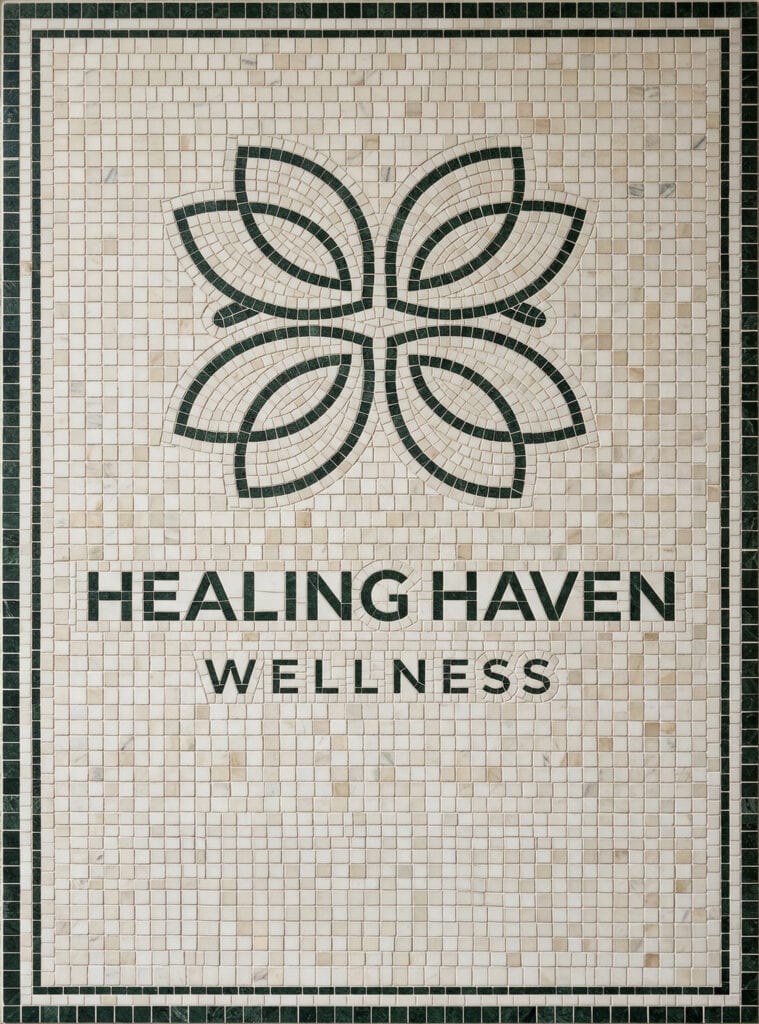
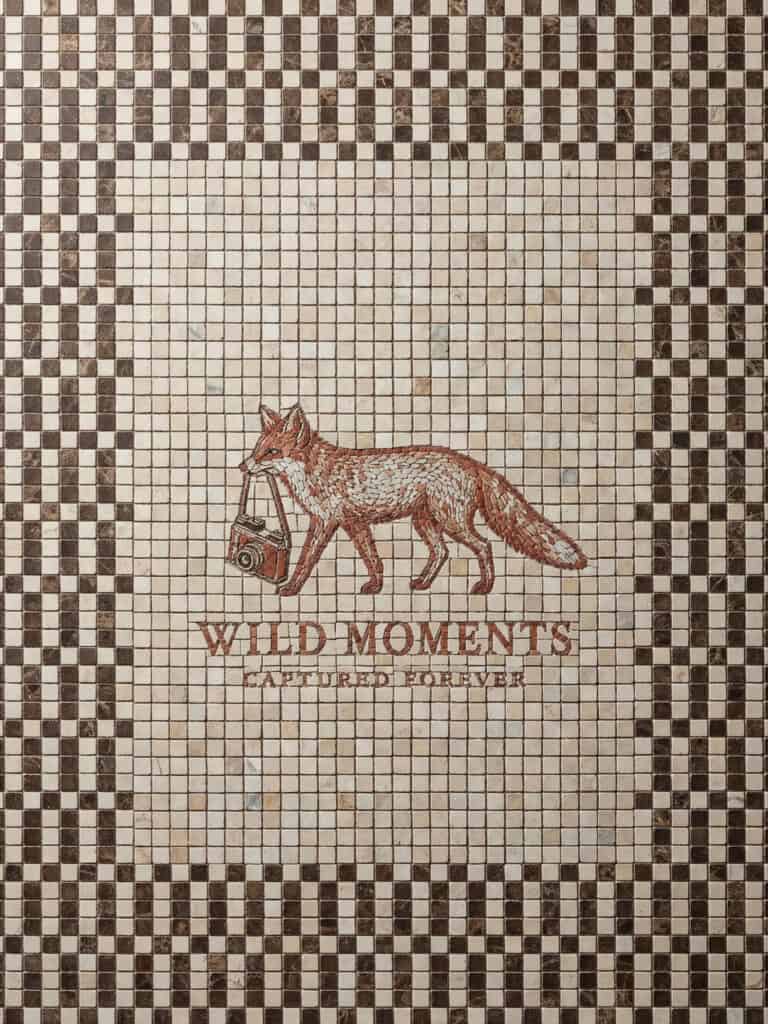
Hand-Cut Tesserae for Sharp Typography and Logo Mosaics
Typography is where many logo installations succeed or fail. A simple icon may translate easily. A custom typography and logo mosaics wordmark with narrow counters, tight kerning, sweeping strokes, or serif details is another story entirely.
Letters are surprisingly unforgiving. People notice when curves flatten, corners blur, or spacing feels off. That is why custom typography mosaics require hand-led judgment rather than a one-size-fits-all grid.
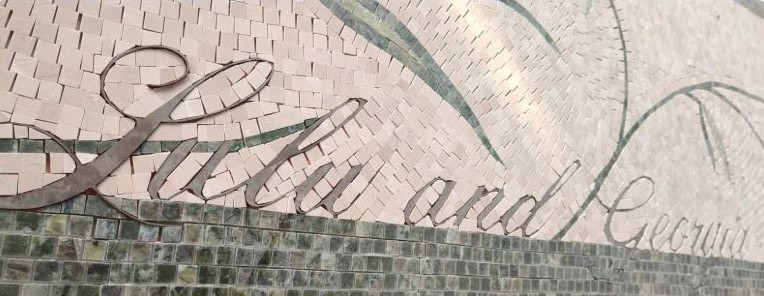
Basically, hand-cut tesserae allow the maker to respond to each letterform. A sharp “H,” a delicate ampersand, or a rounded script tail each demands a different edge logic. Instead of forcing every curve into rigid squares, the artisan adjusts the cut, direction, and placement of the pieces so the letter keeps its character.
The PIXL Advantage for Complex Multi-Color Brand Gradient mosaics
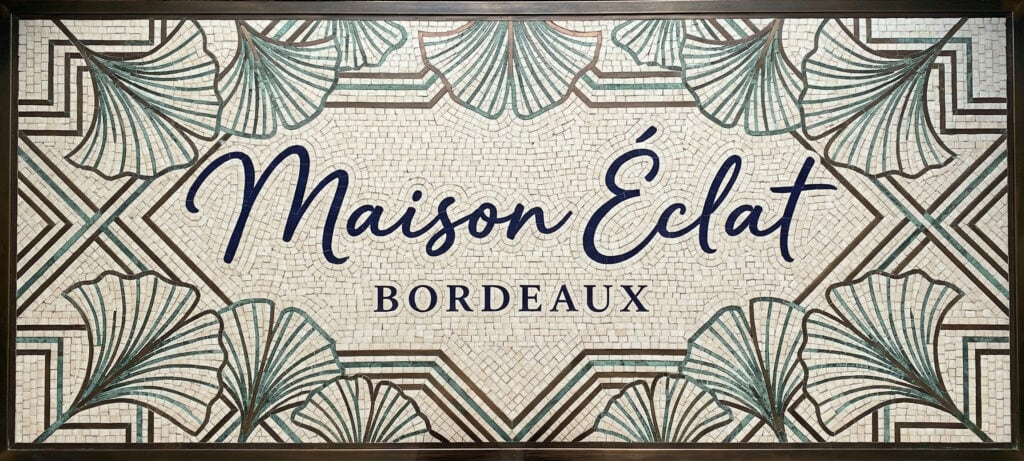
Modern branded typography and logo mosaics rarely rely on flat color alone. Many use layered tones, subtle fades, ombre shifts, or luminous transitions that are easy on a screen but difficult in hard materials.
A standard mosaic layout often breaks these transitions into obvious blocks. The result can feel pixelated, stiff, or dated. Even gradient-heavy logos need something more nuanced.
That is where carefully controlled mosaic gradient tiles become valuable. Rather than jumping from one strong tone to another, the design uses intermediary shades to soften the visual step between colors. In practice, that means the typography and logo mosaics feel more fluid and more faithful to the original artwork.
This universal language of color matters especially for:
- Hospitality brands with warm, atmospheric palettes
- Beauty and wellness brands with soft tonal transitions
- Tech and lifestyle brands with multicolor digital identities
- Resort and leisure brands using luminous blues, teals, and sunset gradients
Material Selection: Marble for Classic Luxury vs. Glass for Modern Vibrancy
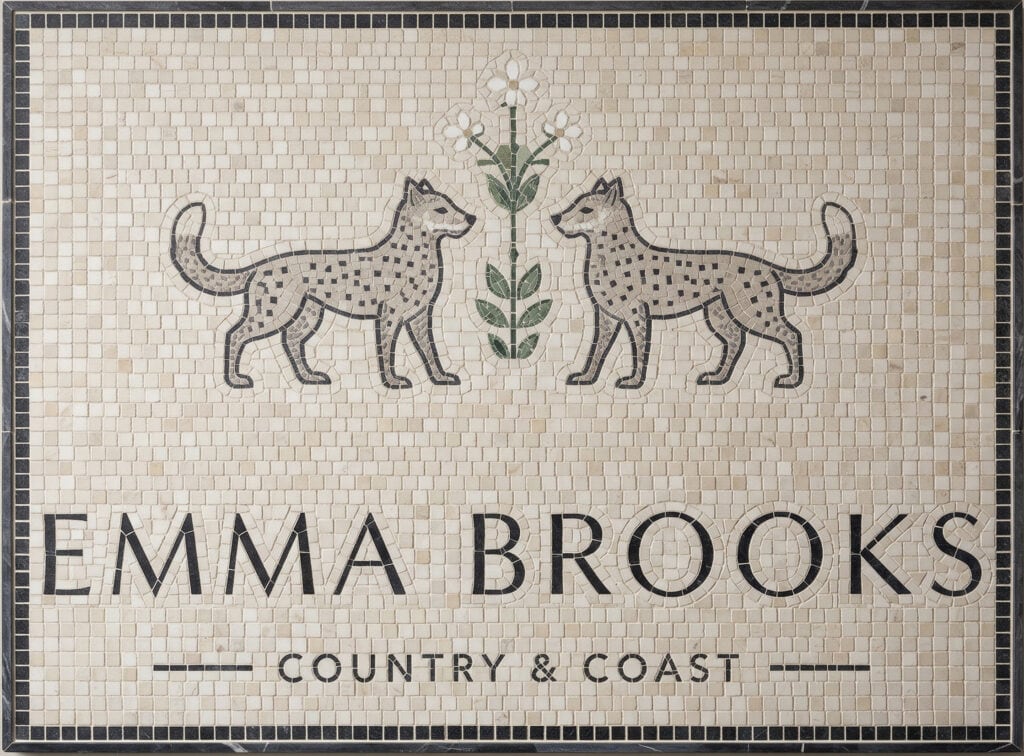
Not every brand should be rendered in the same material. A heritage jeweler and a beach club do not need the same visual temperature.
- Marble mosaic works beautifully for brands that want permanence, elegance, and a quieter form of luxury. It has natural veining, depth, and a softness that feels timeless. Moreover, it is used for architectural applications and comes in a range of finishes, including polished and honed.
- Glass mosaic tiles, on the other hand, bring saturation, brightness, and energy. It is especially useful for logos that need vivid color and high visibility in wet or sunlit environments. Pool branding, spa logos, and bright hospitality identities often benefit from its clarity and color retention.
From Entry Aprons to Feature Walls: Where to Install Typography and Logo Mosaics
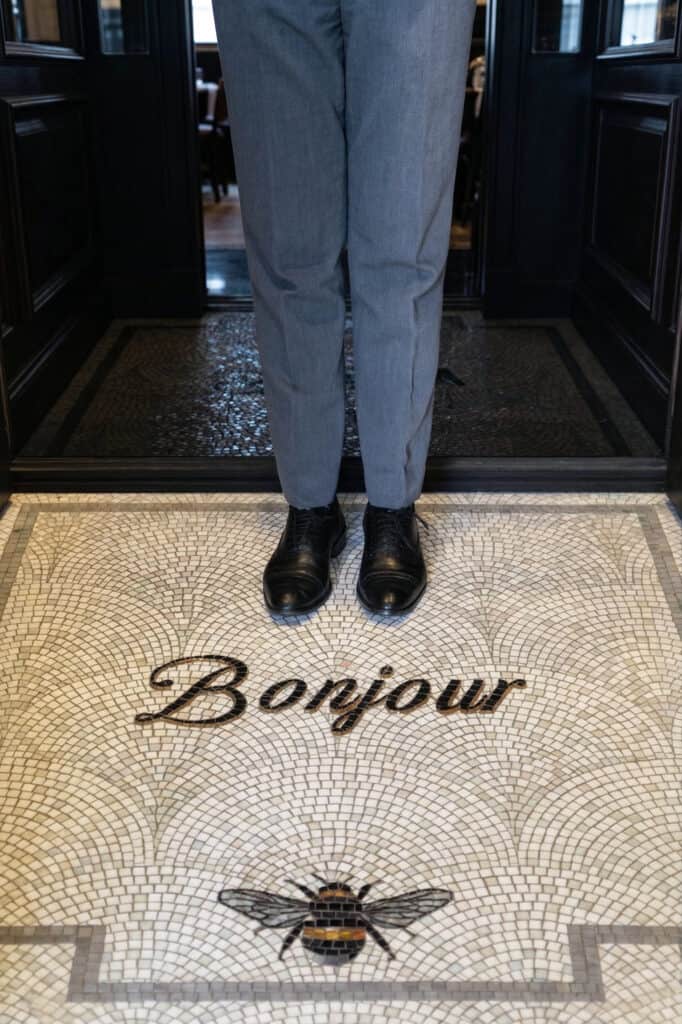
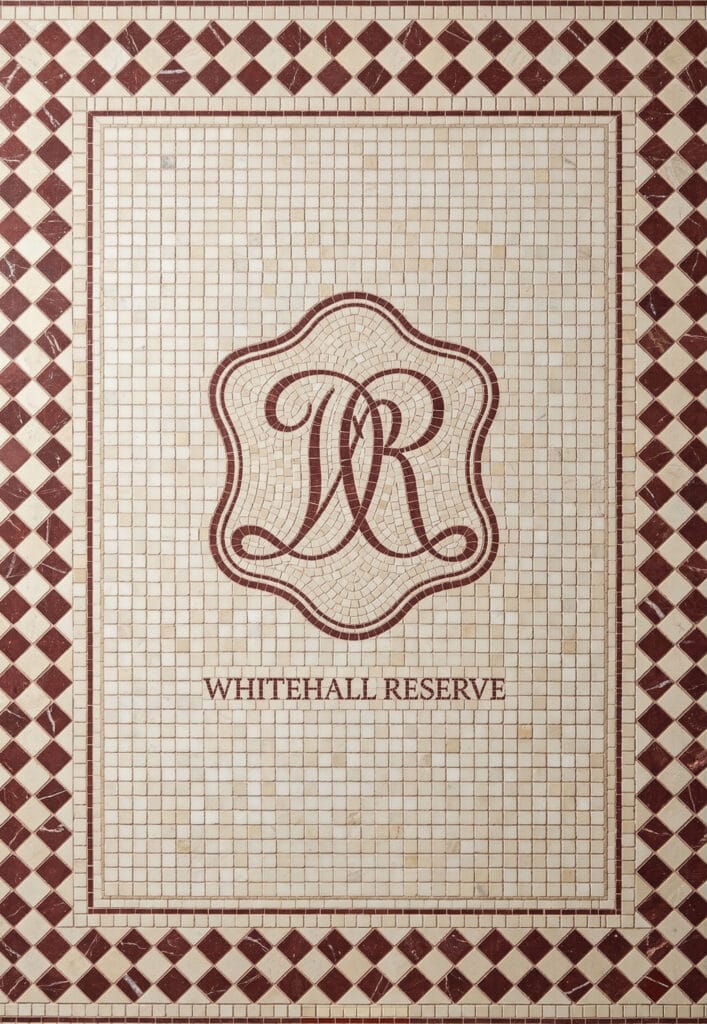
Integrating Mosaics in Commercial Projects
A well-designed typography and logo mosaics does not float awkwardly in space. It integrates with the project.
That means the logo should align with circulation, thresholds, sightlines, material palette, and lighting. In some interiors, the logo should announce itself boldly. In others, it should emerge more quietly as a discovered detail.
The smartest typography and logo mosaics in commercial installations coordinate early with architects, interior designers, and contractors. That collaboration helps answer key questions:
- Will the logo be seen first from above, straight on, or through water?
- Does the surrounding flooring pattern compete with the mark?
- Should grout lines recede or participate visually?
- Is the logo meant to be a focal point or a supporting branded element?
When those answers shape the design from the beginning, the result feels cohesive instead of pasted in.
Luxury Retail & Boutique Entrances
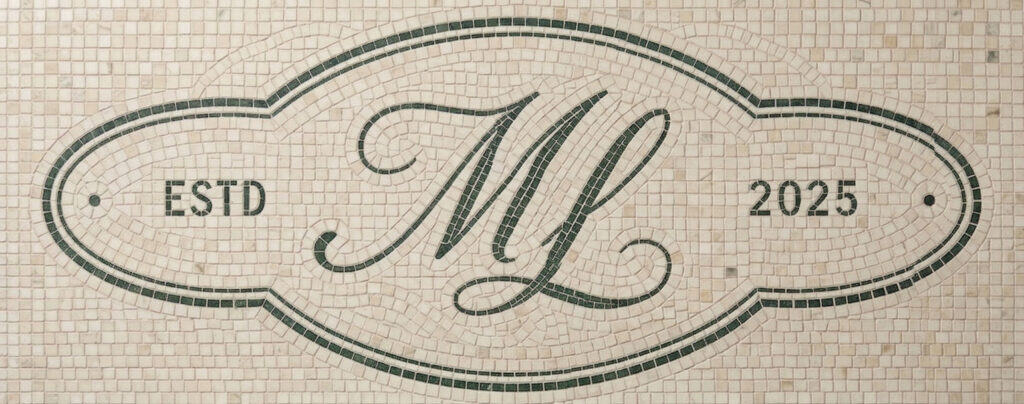
Boutique entries are high-stakes spaces. They create the first tactile brand impression. A logo mosaic at the threshold tells customers they have entered a curated environment, not just a store.
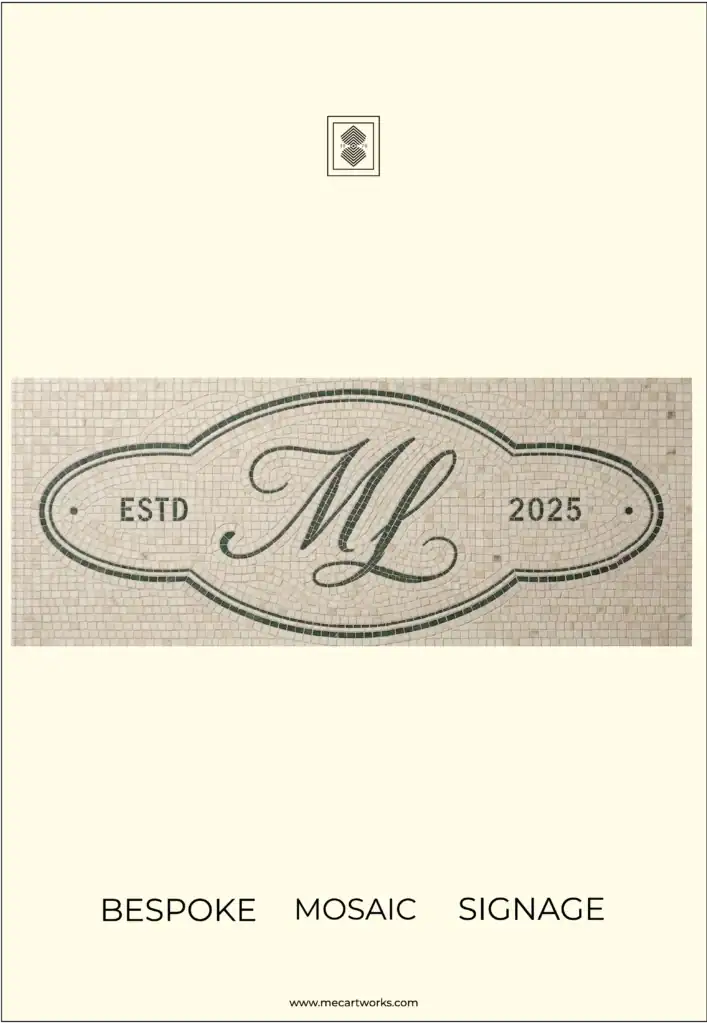
This works especially well with monograms, circular emblems, and elegant wordmarks. Because foot traffic is immediate in these zones, material finish and slip planning matter just as much as aesthetics.
Hospitality Lobbies and Restaurant Flooring
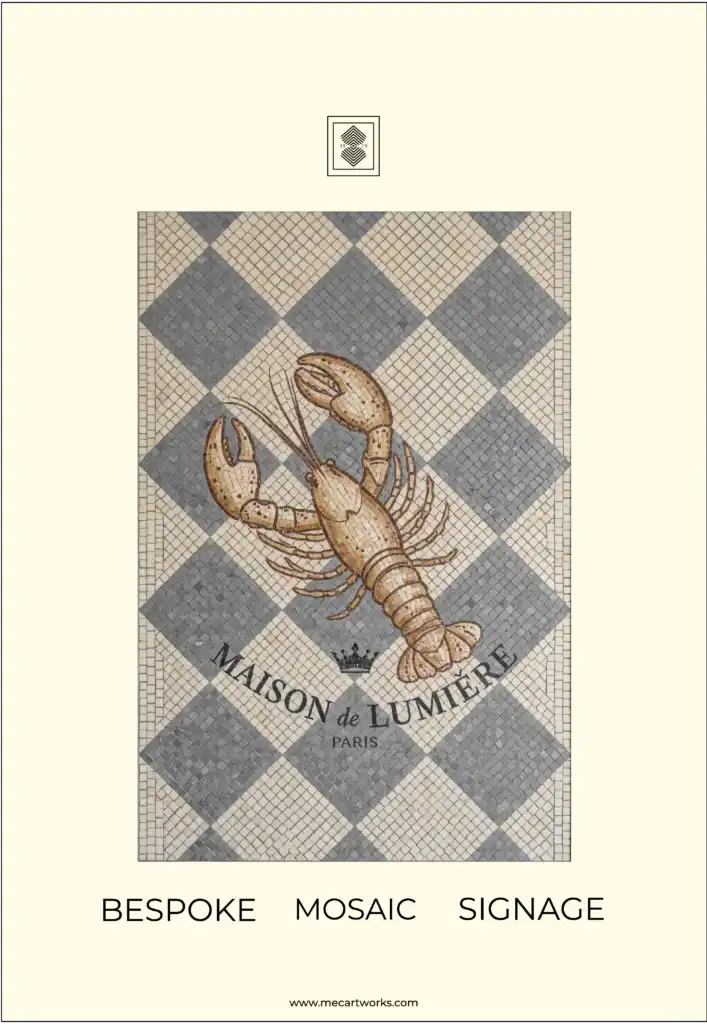
In hotels and restaurants, typography and logo mosaics can anchor the entire arrival sequence. It can sit beneath a chandelier, inside a vestibule, or at the center of a host stand area. In each case, the logo helps orient guests and deepen brand memory.
A floor logo feels ceremonial. A wall logo feels declarative. Used together, they create a layered identity system inside the space.
For restaurants, there is also a storytelling advantage. A bistro, café, or fine dining concept can use mosaic typography to echo the spirit of old-world craft, European elegance, or bespoke luxury. It gives the venue a sense of permanence that printed branding rarely achieves.
Pool Floor Branding for Resorts and Beach Clubs
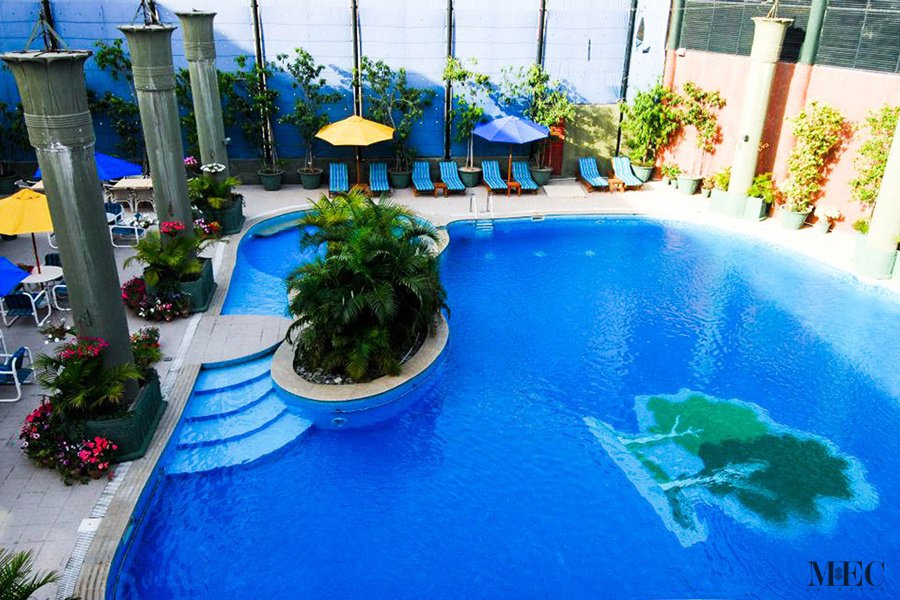
Mosaic pool branding is one of the most visually dramatic applications. A brand mark beneath water feels cinematic. It also has practical advantages when designed properly.
Glass and suitable pool-rated tile systems are widely used in submerged installations because they can handle moisture exposure and retain visual impact. Pool floor branding is ideal for:
- Luxury resorts
- Beach clubs
- Spa retreats
- Branded residential towers
- High-end rooftop leisure decks
The Digital-to-Mosaic Process: Ensuring Your Brand Colors Match
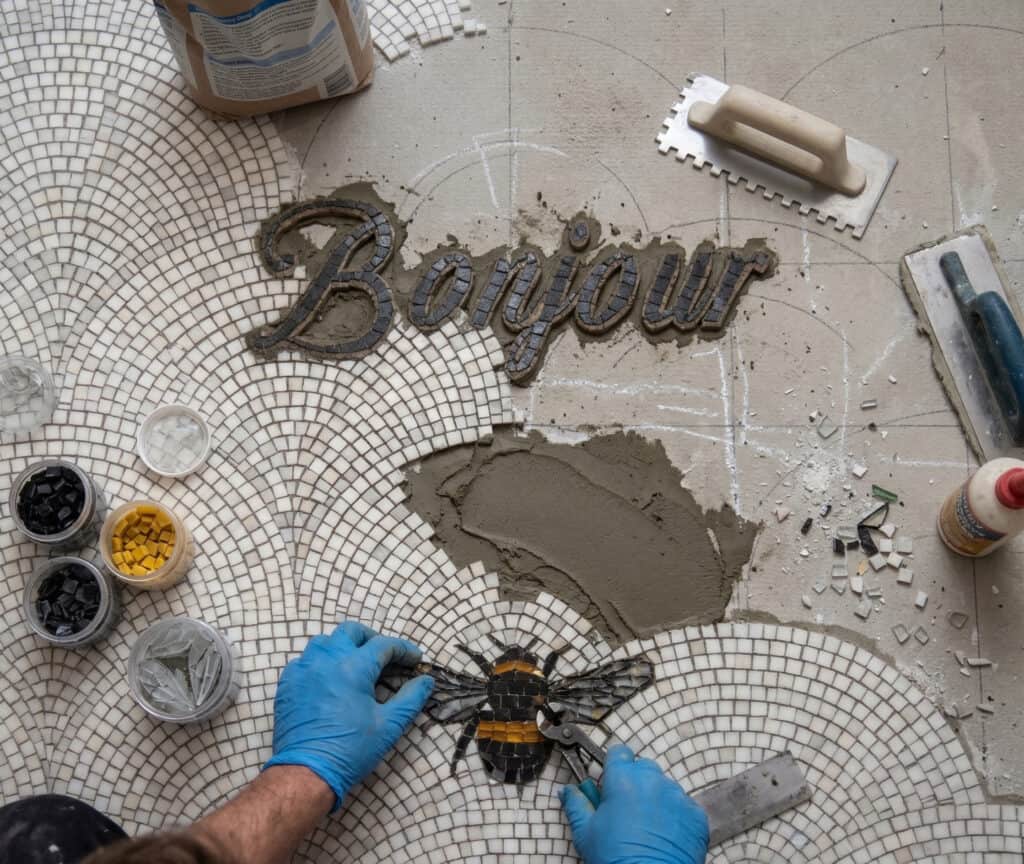
Color Mapping with our 100+ Tone Vertex Glass Library
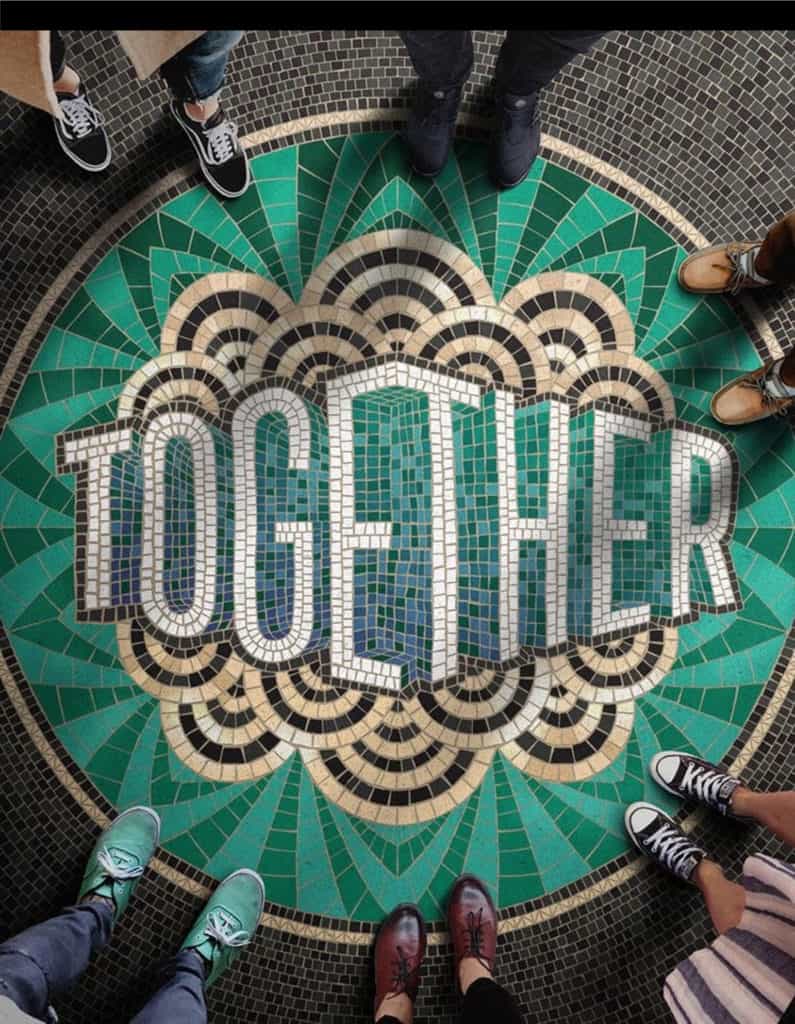
Digital brand files speak one language. Physical materials speak another. Your logo might begin life in Pantone, HEX, RGB, or CMYK values. Typography and logo mosaics, materials, however, exist as real surfaces under real light. In mosaic practice, color mapping usually involves:
- Reviewing the official brand palette
- Matching primary colors to available stone or glass tones
- Building transition shades for gradients
- Testing how colors look under project lighting
- Adjusting saturation for water, gloss, or surrounding materials
Scaling Logos for Architectural Impact Without Losing Resolution
A logo on a phone screen might be two inches wide. But a lobby logo might be twelve feet across. That change is not a simple enlargement. It is a translation.
Some marks improve at scale. Others expose weaknesses. Fine lines, tiny counters, narrow spacing, and low-contrast color transitions may all need adjustment when the typography and logo mosaics become a floor or wall feature. That does not mean changing the brand. It means preserving the brand’s legibility in a built environment.
A useful rule of thumb is this: a logo should be read at the distance from which it is meant to impress. A floor medallion in a hotel lobby needs one kind of clarity. A reception wall behind a desk needs another.
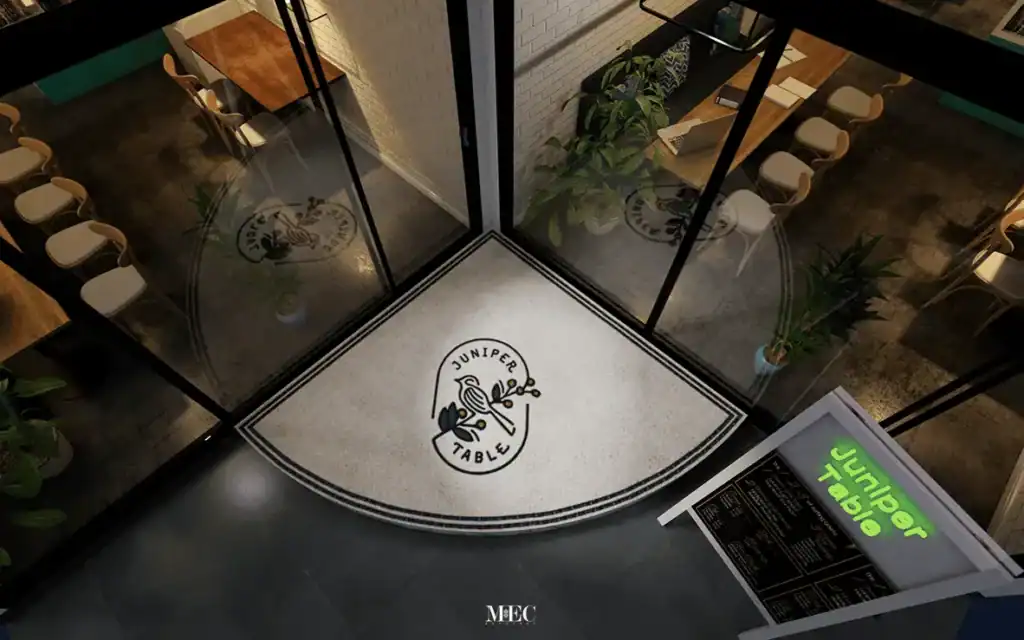
Digital Rendering and Pre-Fabrication Approval Protocols
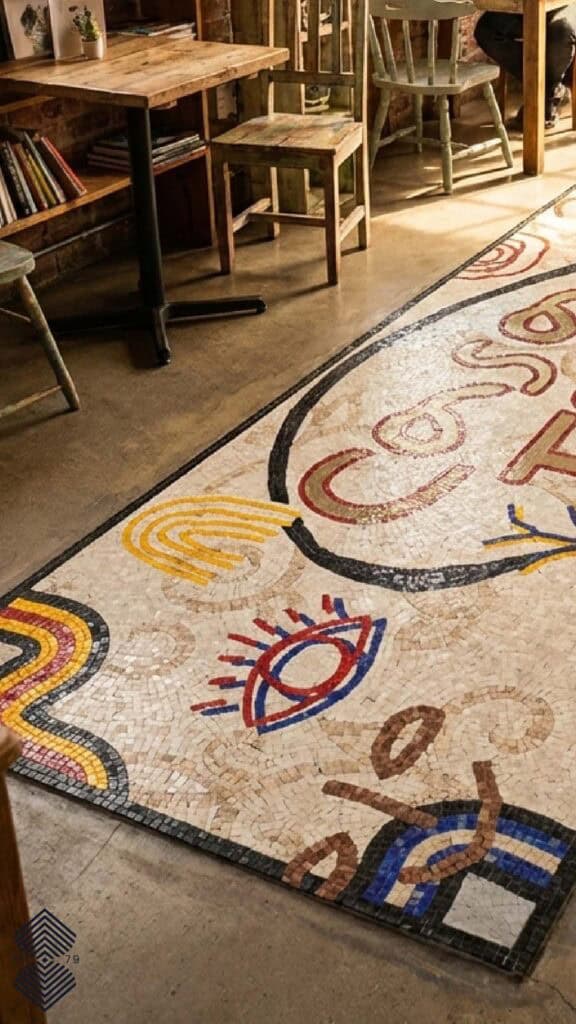
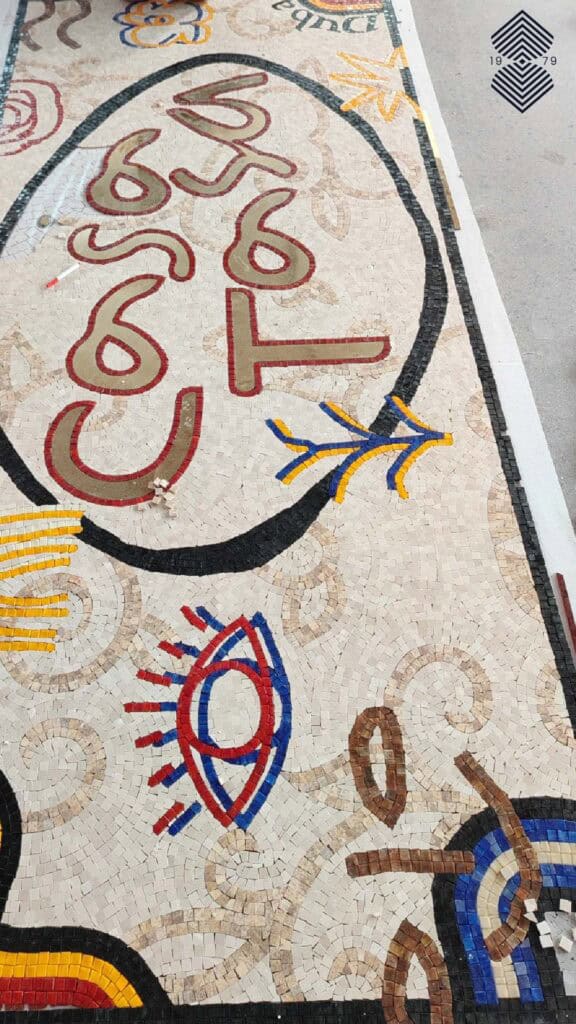
Before a single tessera is cut, the brand should be tested through renderings and approvals. This stage often includes:
- Vector file review
- Material selection
- Color palette proposal
- Mosaic interpretation drawing
- Scale study
- Rendered mockup
- Client approval
- Fabrication mapping
That process prevents the classic nightmare where a client expects one thing and receives another. It also allows refinements in typography and logo mosaics, while changes are still easy.
Built for Foot Traffic: Engineering Mosaics for Commercial Longevity
Beautiful branding is not enough if the floor becomes slippery when wet or wears poorly in public use. Safety has to sit inside the design logic from the start. In plain English, that means mosaic logo floors must be specified for real walking conditions, not just visual appeal.
Slip-Resistance Ratings for Logo Floor Installations
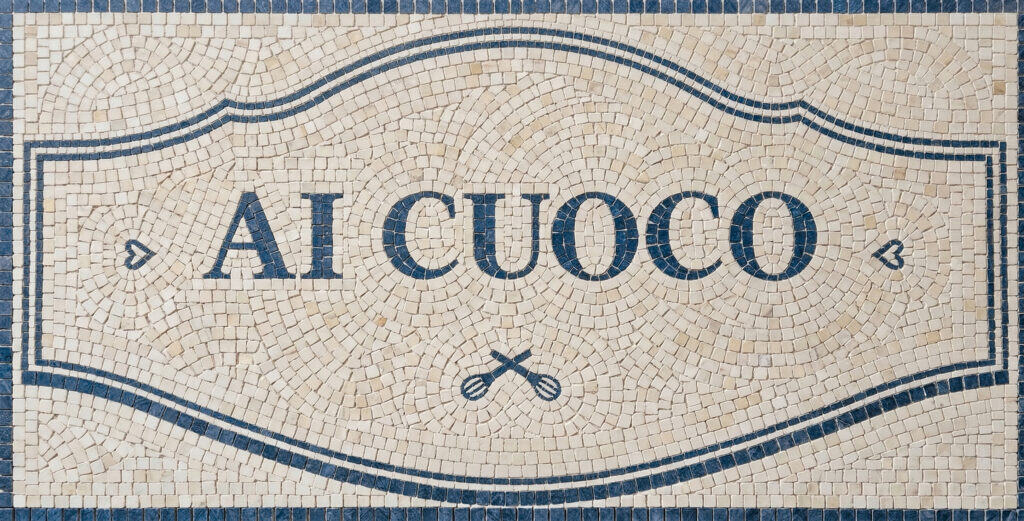
Slip resistance deserves more than a passing mention. It is central to responsible commercial design. For branded marble floor mosaics, that usually means choosing finishes and textures that suit the space:
- Honed stone for refined, lower-glare elegance
- Textured or matte glass/tile for wet areas
- Profiled surfaces where additional traction is needed
- Thoughtful drainage design in poolside and exterior applications
Typography and logo mosaics should invite attention. It should never invite a slip claim.
Chemical and UV Resistance for Outdoor and Poolside Branding
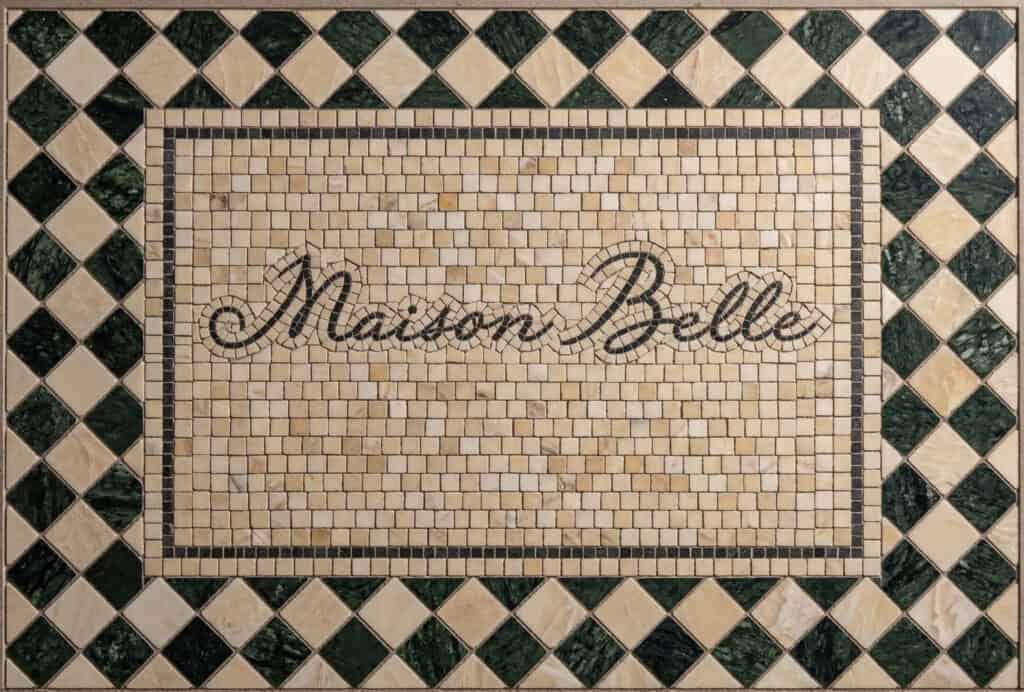
Outdoor branding faces a rougher life than interior branding. Sunlight, temperature shifts, chlorinated water, salt exposure, and aggressive cleaning routines all take their toll. That is why material selection matters so much. Tile and glass systems are often chosen in wet and exposed environments because they can offer fade resistance and compatibility with industry installation standards when specified correctly.
Protective Sealing for High-Wear Commercial Zones
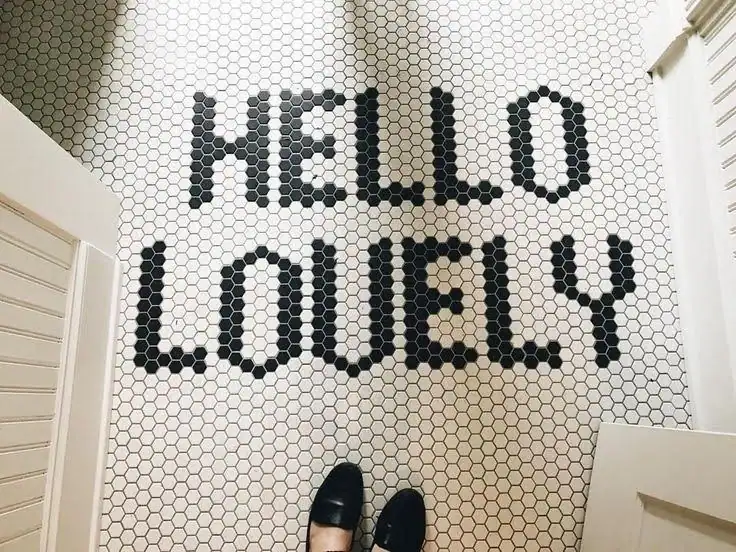
Sealing helps, though it is often misunderstood. Natural Stone Institute guidance explains that many stone sealers act as impregnators. They do not make stone stain-proof. They make it more stain-resistant. Topical sealers can also alter texture or build up on the surface. For high-wear commercial zones, the smarter path is usually:
- Choose inherently suitable materials first
- Use appropriate impregnating protection where needed
- Avoid relying on coatings to solve specification mistakes
- Match cleaning products to the material system
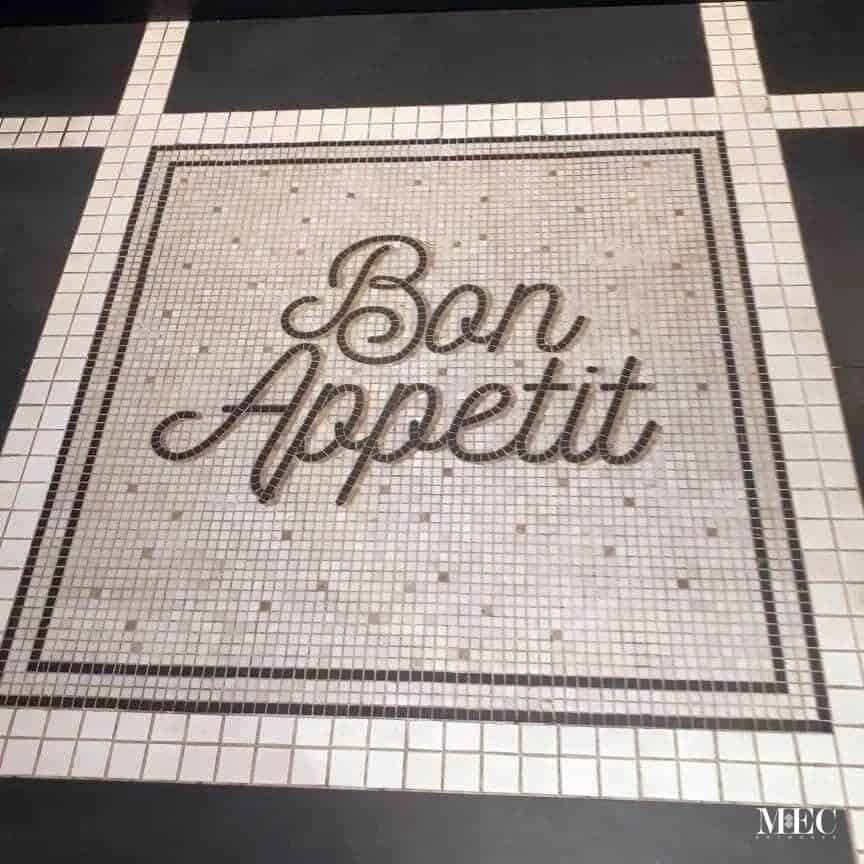
Typography and Logo Mosaics Project Case Study: Charmant Bistro Logo in Hand-Cut Marble Mosaic by MEC Artworks
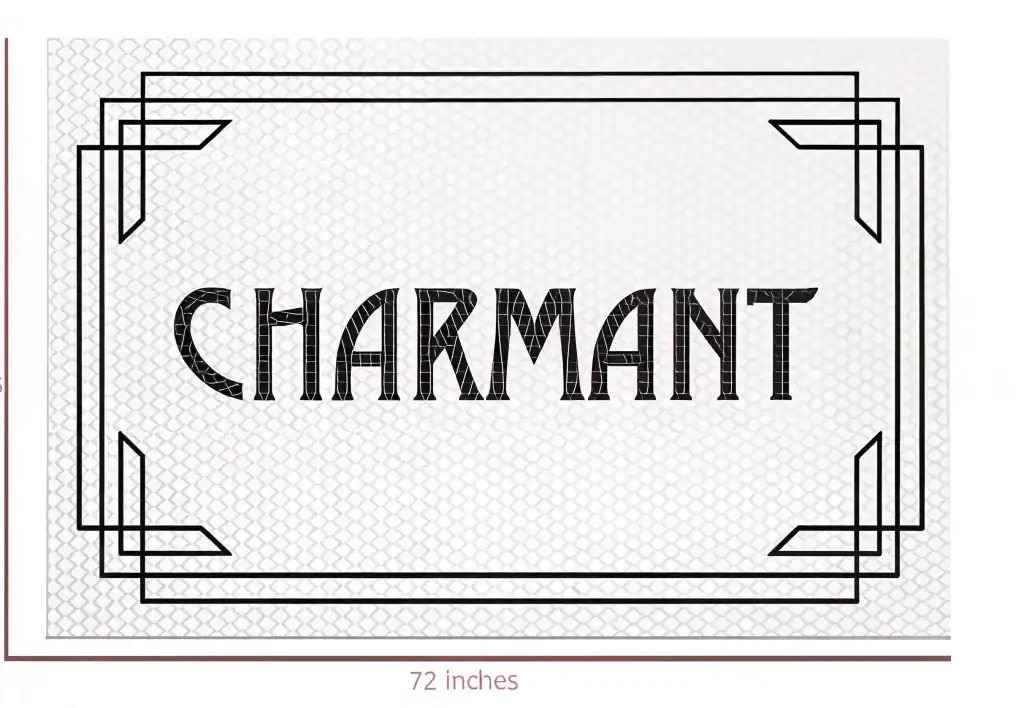
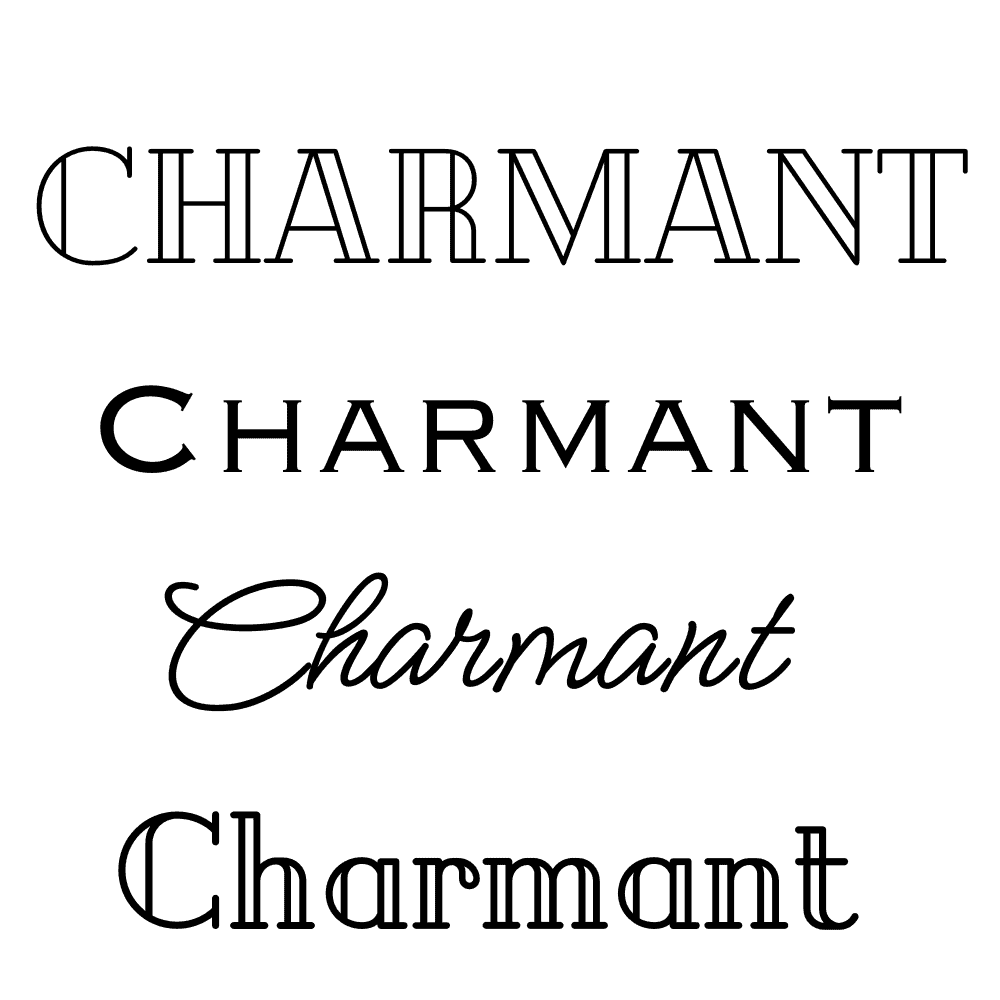
The Typography Challenge
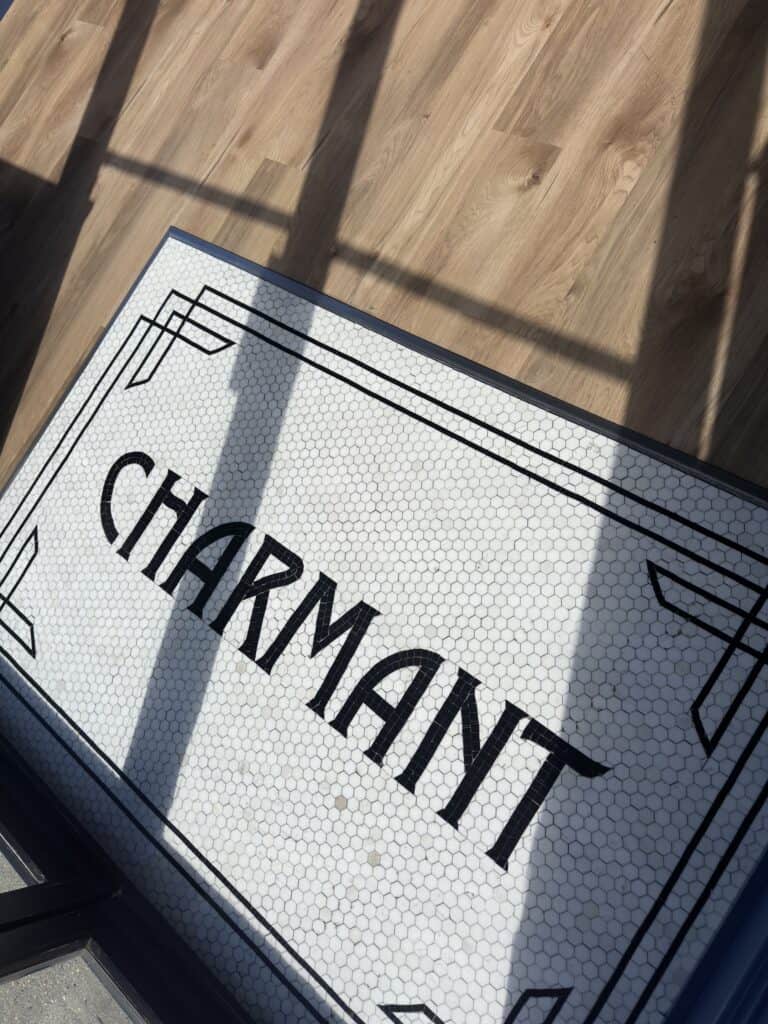
The Charmant project began when a New Orleans bistro approached MEC Artworks to transform its logo into a permanent black-and-white mosaic entry apron. While the idea seemed simple, typography mosaics require precision. The MEC design team applied its expertise in lettering, layout, and spatial balance to ensure every curve, spacing detail, and proportion remained clear and visually refined in a high-traffic entrance setting.
The Material & Fabrication Solution
Initially planned in porcelain tile, the design was re-evaluated by MEC Artworks to achieve better results. The team recommended hand-cut marble, allowing full control over shape, fit, and typography accuracy.
Through digital mock-ups, design presentations, and multiple layout options, our expert designer team guided the client toward the final composition. A custom marble border was introduced to enhance structure, contrast, and overall visual impact, ensuring the logo remained sharp and readable from the street.
Global Reach
Working within a tight pre-opening timeline, MEC Artworks managed the entire process from design to fabrication and delivery. The mosaic was produced in installation-ready, mesh-mounted sections, simplifying on-site placement. The finished entry apron successfully translated the brand into a lasting architectural feature. As the client shared: “It turned out beautifully!”
Seamless Delivery: Shipping Installation-Ready Logo Panels Worldwide
With a custom mosaic process, logo designs are often fabricated off-site and shipped in sections. At MEC Artworks, every typography and logo mosaic project is handled with a structured delivery system to ensure accuracy from studio to site. Large pieces are divided into logical, numbered parts so the installer can reconstruct the full image without guesswork.
That process usually includes:
- Final approved shop drawing
- Sectioning of the design into manageable panels
- Backing or mounting strategy based on the application
- Numbered installation map
- Protective packaging for global shipping
- Handling guidance for installers
The goal is simple. The installer should not have to “figure out” the art on site. With MEC Artworks’ installation-ready delivery, each mosaic arrives as a complete system, ensuring smooth installation and precise brand representation.
Final Thoughts: Custom Typography and Logo Mosaics
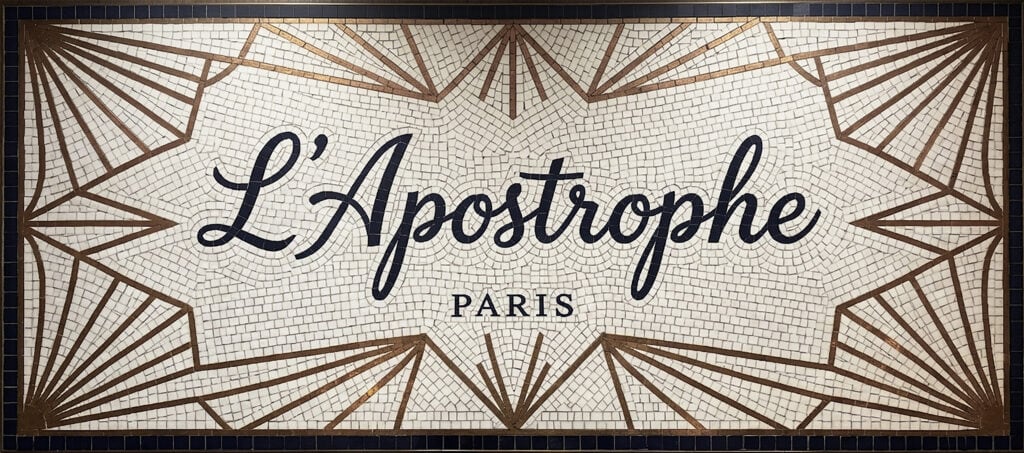
Typography and logo mosaics go beyond surface-level branding. They transform your identity into something permanent, tactile, and built into the space itself. With the right balance of design precision, material selection, and expert execution, a logo is no longer just seen; it’s experienced.
FAQ’s
Can you replicate small, intricate text in a mosaic format?
Yes, though not every font behaves the same way in Mosaic. Small, intricate text can be replicated when the letterforms are studied carefully and translated by hand rather than forced into a rigid grid. Very thin strokes or extremely tight spacing may need subtle refinement so the text reads clearly at the intended viewing distance. In practice, the best results come when the designer treats the mosaic as a material interpretation of the type, not a blind copy-paste from a digital file.
How do you ensure the mosaic colors match our brand’s Pantone or HEX codes?
The process starts with your official brand files and color references. From there, the palette is mapped against available stone, glass, or mixed-media options. At MEC Artworks, this stage is handled by a dedicated team of designers and color coordinators who specialize in translating digital colors into physical materials with precision. In architectural mosaics, the final match also considers lighting, finish, grout tone, and viewing conditions, ensuring the typography and logo mosaics result stays accurate and consistent in real-world environments.
Is a logo mosaic durable enough for a high-traffic storefront entrance?
Yes, it can be. In fact, that is one of the strongest reasons to use Mosaic in the first place. Storefront entrances face abrasion, moisture, dirt, and repeated cleaning. Properly specified tile and stone systems are supported by long-standing materials. The key is to choose the right finish, setting system, grout, and slip-appropriate surface for the traffic level and exposure conditions.
Can I turn a signature or handwritten note into a mosaic?
Yes. Signatures, handwritten notes, and bespoke Islamic calligraphy can translate beautifully into mosaic art. They often create more emotional impact than a standard corporate logo because they feel personal and one of a kind. The trick is to preserve the rhythm and gesture of the handwriting while adjusting stroke weight and spacing so the design remains readable in stone or glass. It is a little like turning a sketch into architecture. You keep the soul, then strengthen the structure.
How is a large logo divided for shipping and installation?
Large logo mosaics are typically divided into numbered panels or mapped sections. Each section is planned so the design reassembles accurately on site without guesswork. Installers receive a layout map, section labels, and handling guidance. This system protects the design during transit and makes large-scale installation more efficient. In other words, the logo arrives as a coordinated kit, not a pile of art pieces.