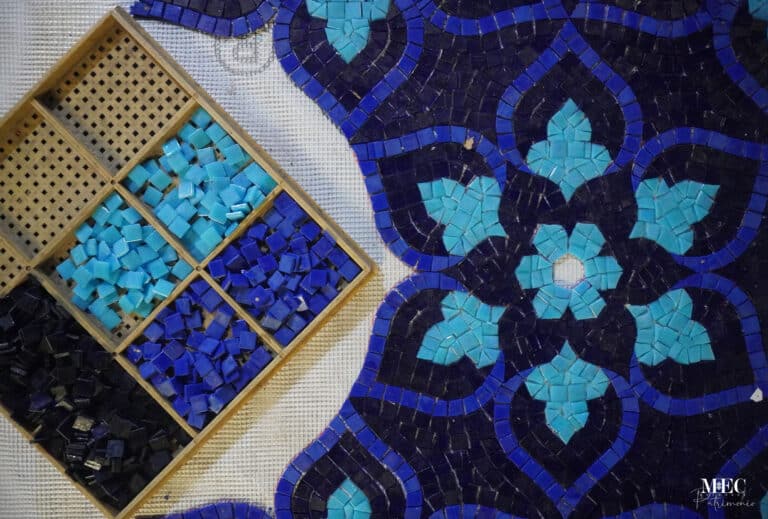


Our tile accent wall collection brings together ideas for designers, artists, and homeowners looking to give a room a distinct focal point. Explore floral mosaics, geometric patterns, soft color gradients, and detailed murals for bedrooms, kitchens, bathrooms, living rooms, and more. Each design offers a different way to use color, shape, and texture across a wall.
Additionally, some mosaics create a calm backdrop behind a bed or vanity; others draw the eye with bold patterns and intricate imagery. Browse the collection below to compare styles, then consider how a design’s scale, colors, and materials could work with your room’s light, furnishings, and architecture.
| Tip: To make the process easier, explore your wall ideas with MEC AI Studio and preview how a mosaic wall design could look in your new or existing space. |
Table of Contents
What Is a Tile Accent Wall?
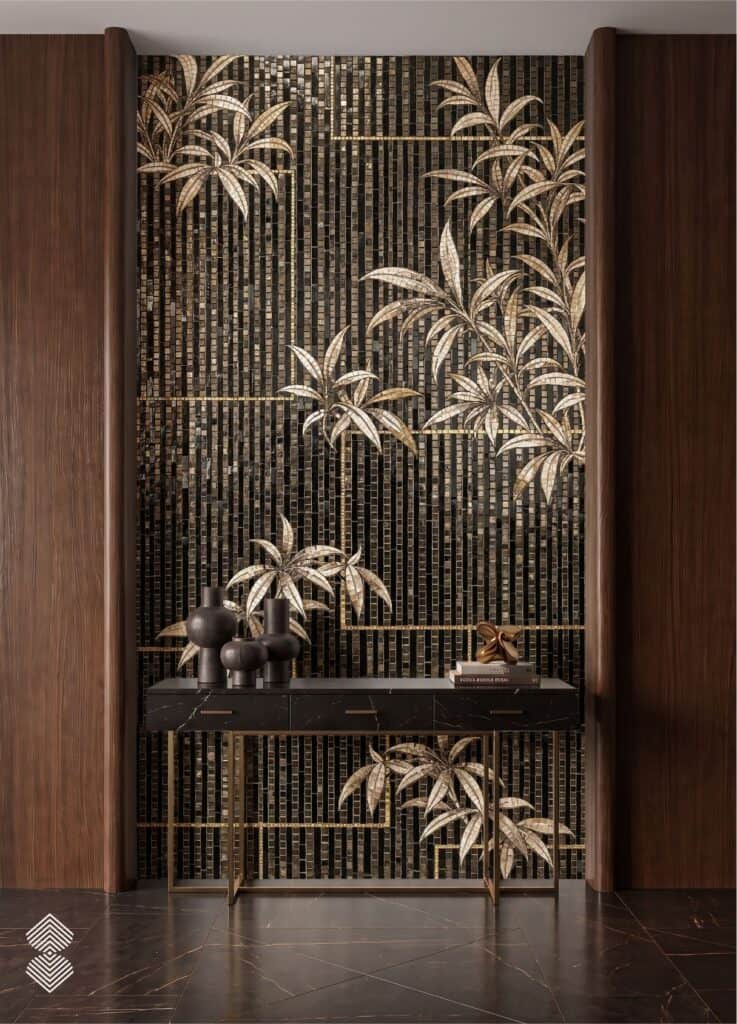
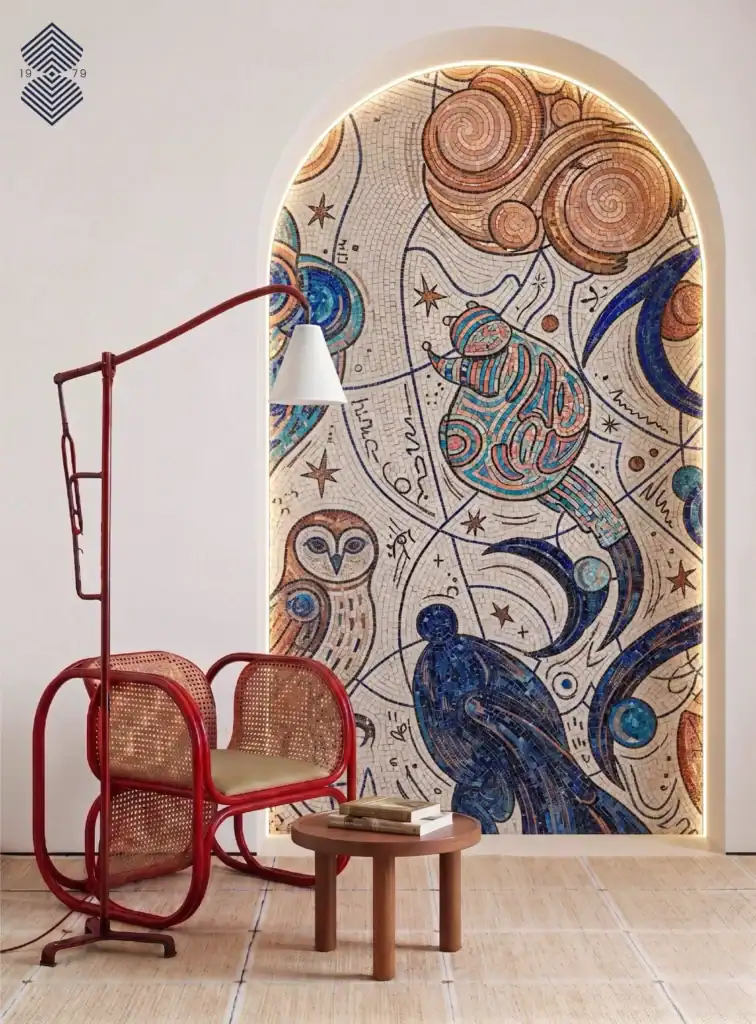
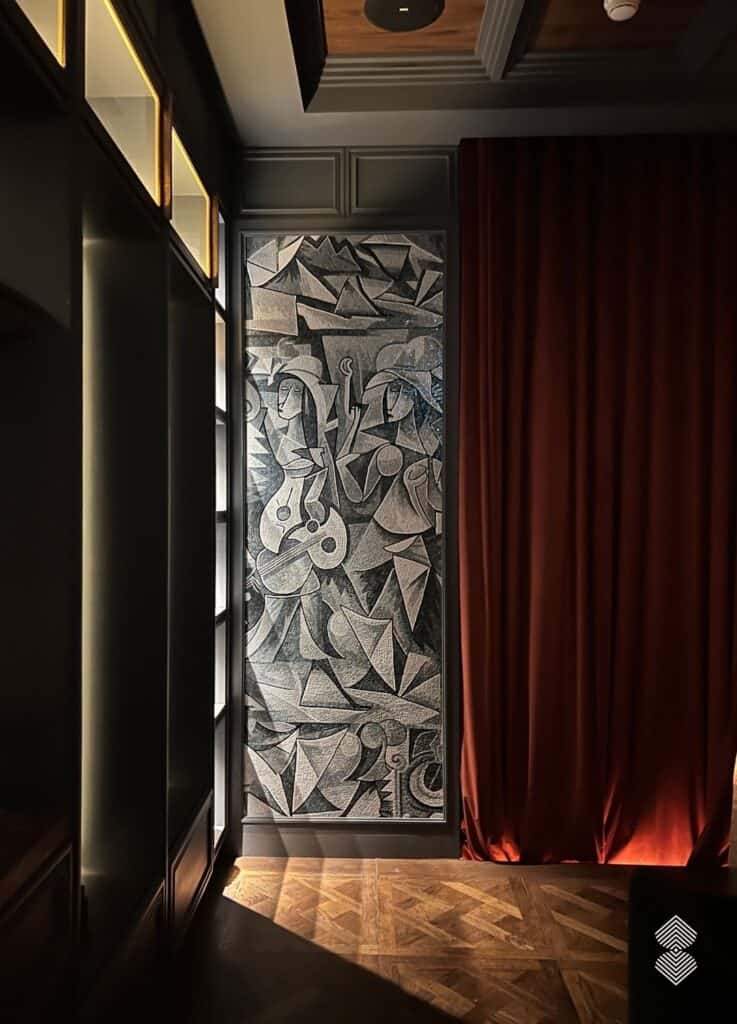
A tile accent wall is a wall or a part of it that is tiled as a means of creating a focal point in the design. An accent wall design can be used on the whole wall, around a fireplace, behind a vanity, or as part of a panel within another wall.
Accent wall tiles may refer to any tiles that are used as accents for a wall, whether they are ordinary square ceramic tiles or a complex mosaic design. Mosaic is created using small elements called tesserae. Because of the size of this type of tiles, it allows the designer to create detailed designs and gradients of colors.
It’s important to consider the purpose and place of the design before you decide on the particular style or materials. An accent wall behind a bed will accommodate more details than a tiny alcove. The material for a shower wall should be selected accordingly.
For more inspiration, explore MEC Artworks’ collection of decorative mosaic tiles. Keep in mind that when choosing between them, the ideal accent wall tile is one that suits the particular environment, appearance, maintenance, and installation method required.
Below are 20 tile accent walls to help you make your choice.
| Design Tip: Every design in this collection can be customized for your space. Our designers can adjust its colors, scale, and layout to suit your preferred space or room. Connect with us today to discuss your ideas. |
1. Bedroom Accent Wall Behind the Bed
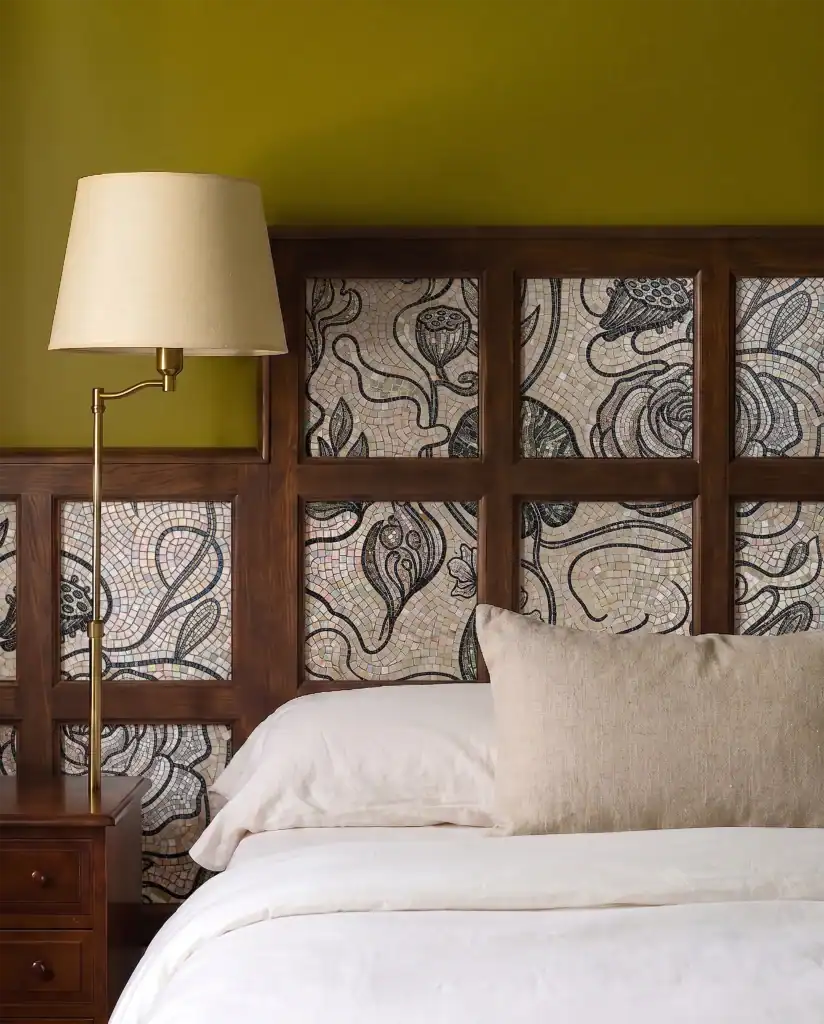
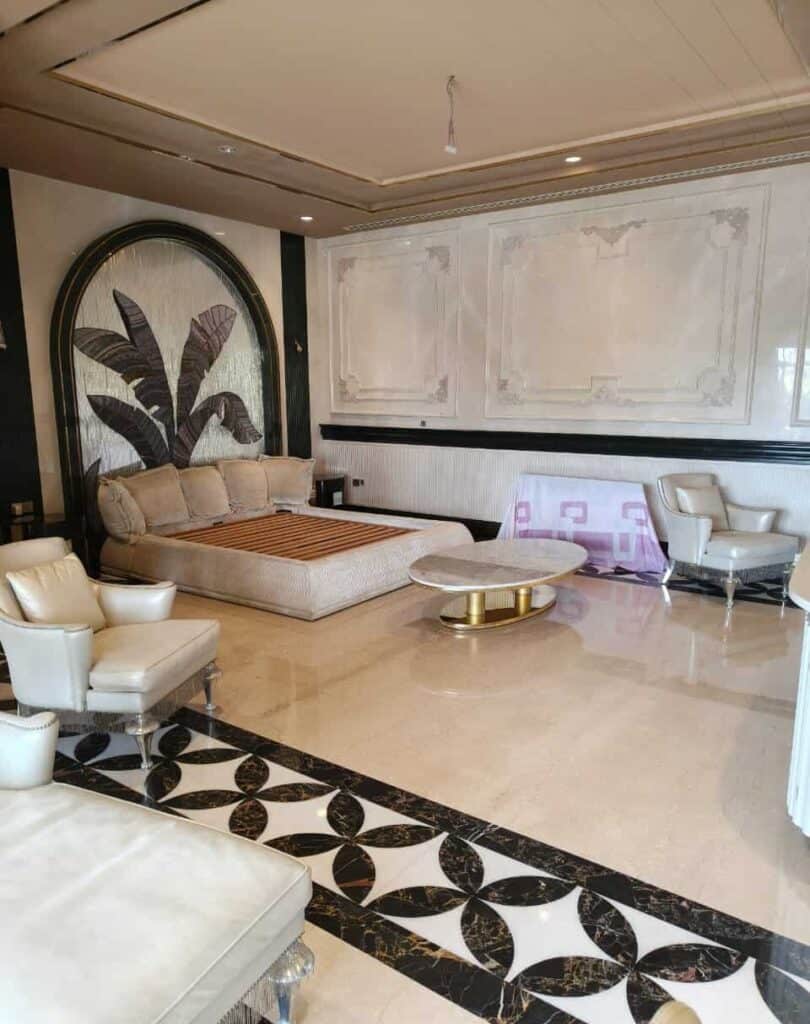
A bedroom accent wall situated behind the bed serves as a great focal point. It may function as an alternative headboard, increase the visual length of the bed, or simply decorate the wall without the need to clutter the space with additional furniture.
The accent wall behind the bed needs to correlate with the bed frame, bed sheets, and bedside lights. Moreover, for bedrooms, a low-contrast botanical pattern will usually create a calm background, and a more contrasting geometric pattern will make a plain bed look like an architectural piece. In case the wall is wide, a central panel will balance better than a pattern that ends sharply on the borders.
For example: The Opaline Rosetta Mosaic Panel is one example of a botanical panel that can inspire a bedroom feature wall. Do not forget about the scale: a design viewed from afar requires a clear shape and composition.
2. Fireplace Tile Accent Wall
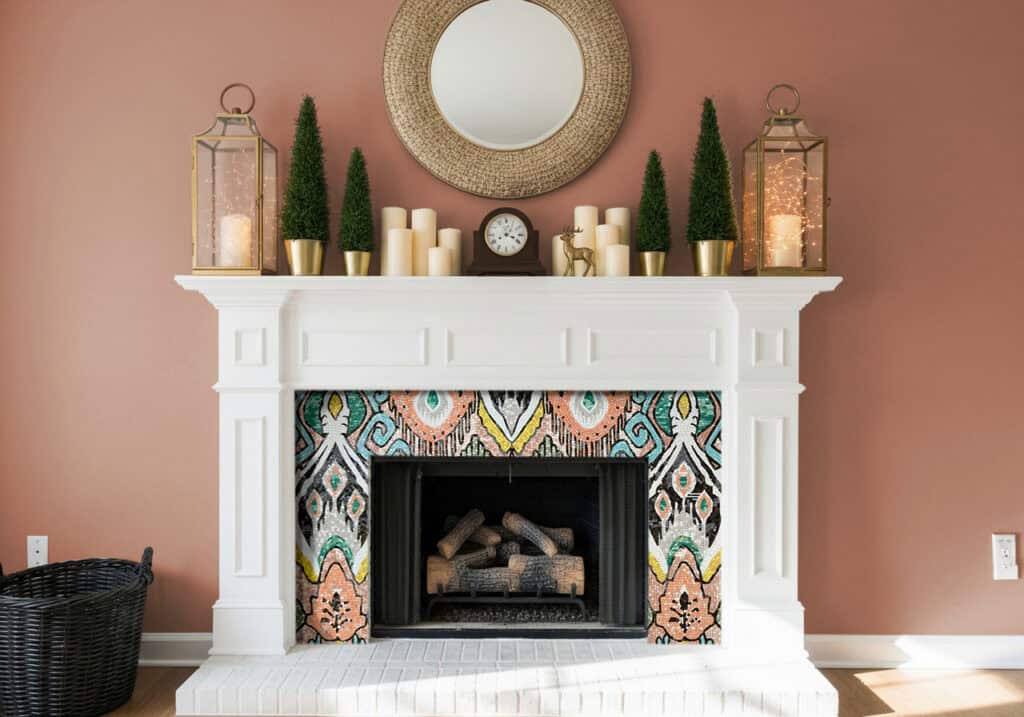
The fireplace is always an integral part of the room. Mosaic tiles let you shape the fireplace surround by extending it upward, widening it, or adding a decorative pattern. However, prior to picking the design, make sure you are aware of the manufacturer’s recommendations for the fireplace and local regulations concerning the materials that should be used nearby.
Among the most successful fireplace tile designs, you may find those that fit the mantel and other materials in the room. Colored mosaic glass tiles may add accents of color to the neutral environment. The modest choice of color palette may save the fireplace from becoming too noticeable in comparison with the rest of the furnishings in the room.
One of the possible directions in creating the fireplace decoration may be the Bohemian Radiance Fireplace Mosaic. With the use of geometrical shapes and ornamentation, this unique design combines life, creativity, and craftsmanship.
3. Tile Accent Wall for the Living Room
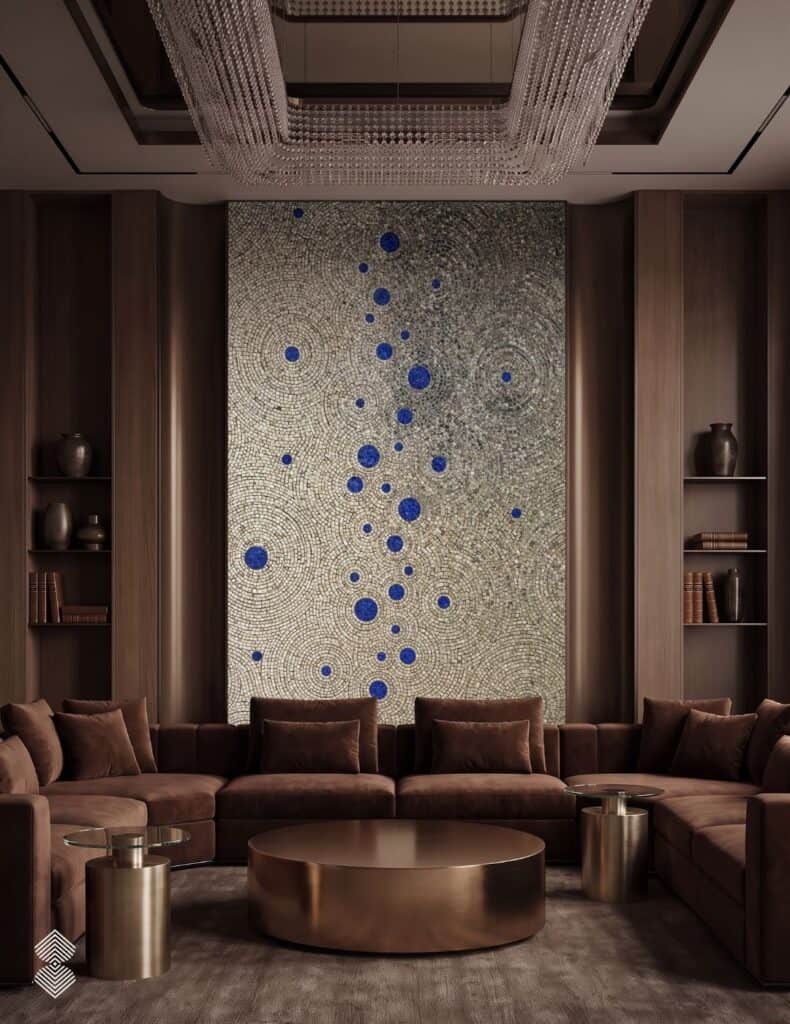
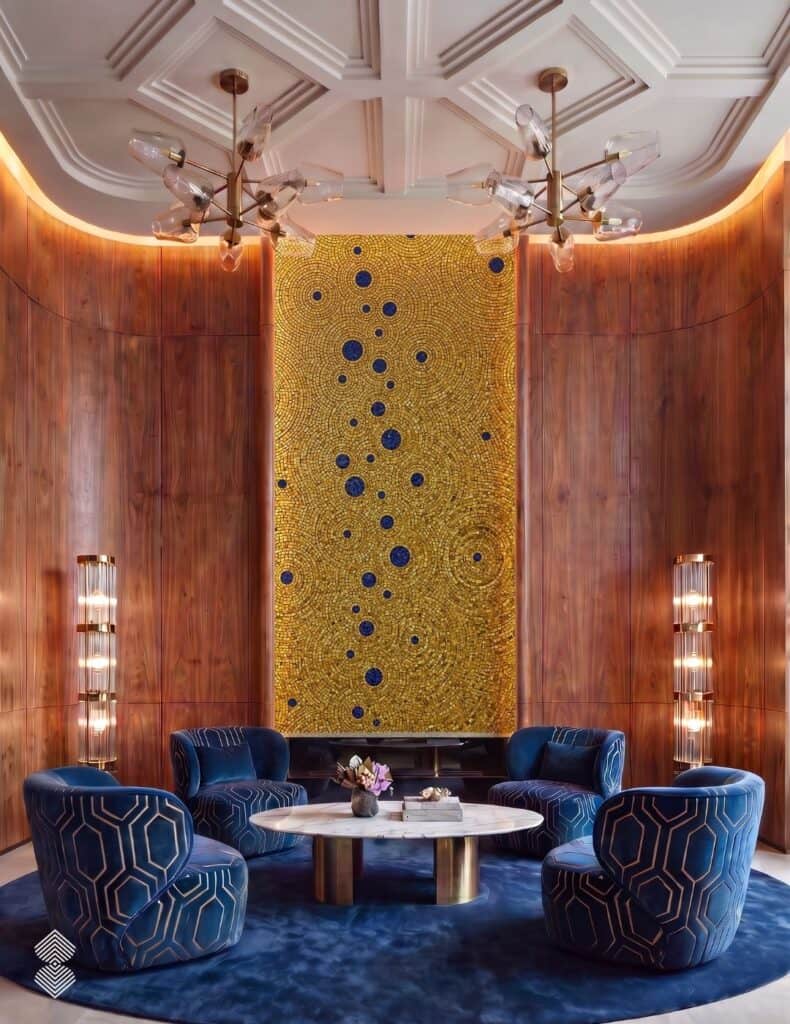
In the living room, the accent wall can be positioned behind the couch, behind a media station, or to emphasize a blank wall. The primary task here is to ensure harmony between the wall and other things that are present on the wall. A round panel, for instance, can create a focal point on the wall without covering the whole wall.
A landscape or botanical mural design can be used to attract attention over a bigger space of the wall. In case the wall is situated behind the TV set, the accenting pattern should not be located right behind the TV. Browse these living room accent wall ideas for more ways to think about placement and scale.
And our Circular Mosaic Wall Art Concentric Panel creates an imposing wall mural of concentric rings, with a collection of blue balls cascading down the middle. It creates a striking feature wall with an abstract look from a distance and intricate workmanship up close.
4. Dining Room Accent Wall
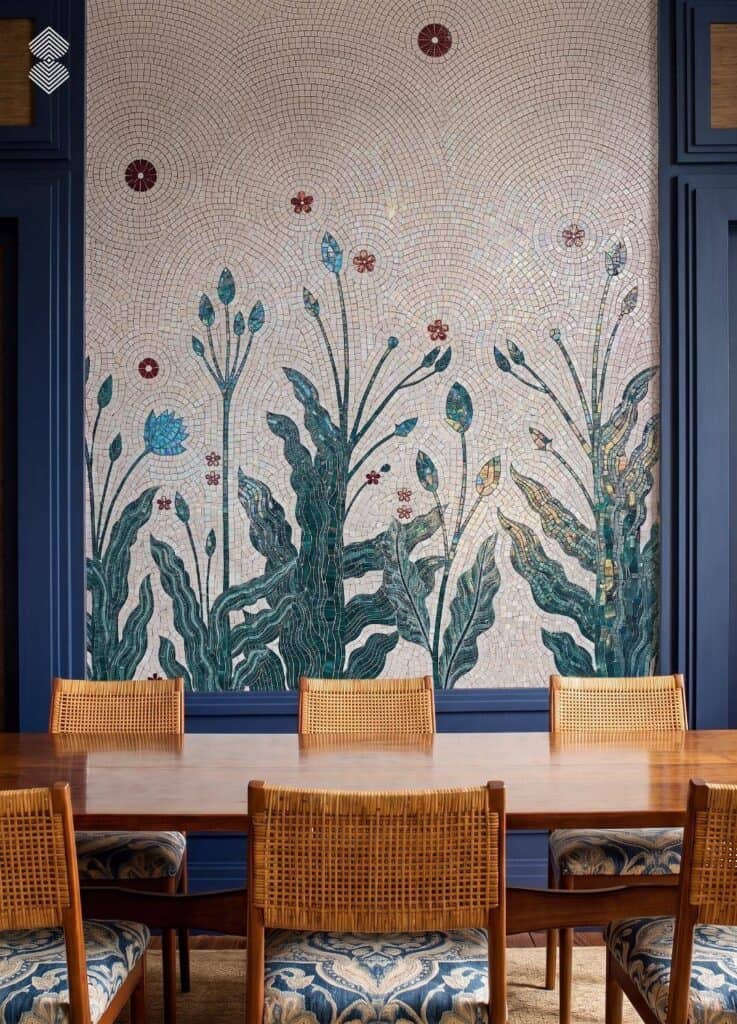
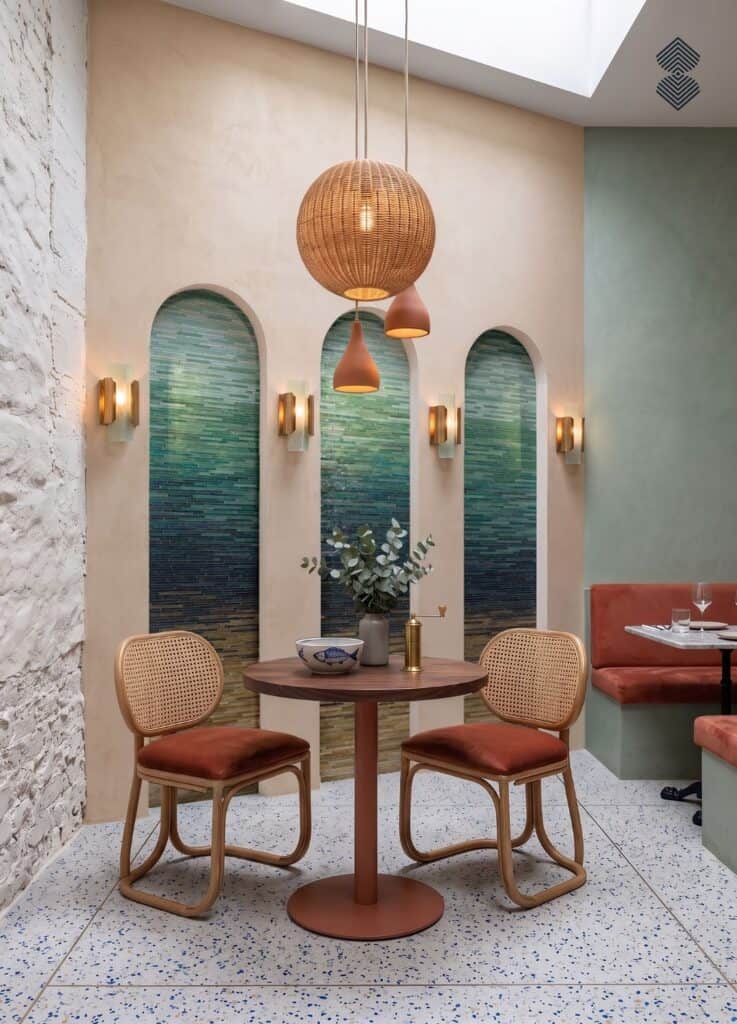
The dining room wall will contribute to your meals and get you into the dining mood. The tiles can add color and pattern, but ensure that there is no glare on the dining table. Mural art in the large dining room will help to differentiate the space from the rest of the room without putting up a wall.
The lighting in the room will also determine how you will want the finish to be. The gloss finish will reflect the light from the pendants in the room, while the matte finish will give you a neutral tone. You should also think about the size of the pattern.
For this, our Botanical Wall Mural Mosaic composition begins by filling a tall vertical space with tall plant stems and flowers. The background is pale cream and set in a radiating fan shape, making this painting look like a garden in full bloom. Best for large dining spaces.
5. Kitchen Accent Wall Tile
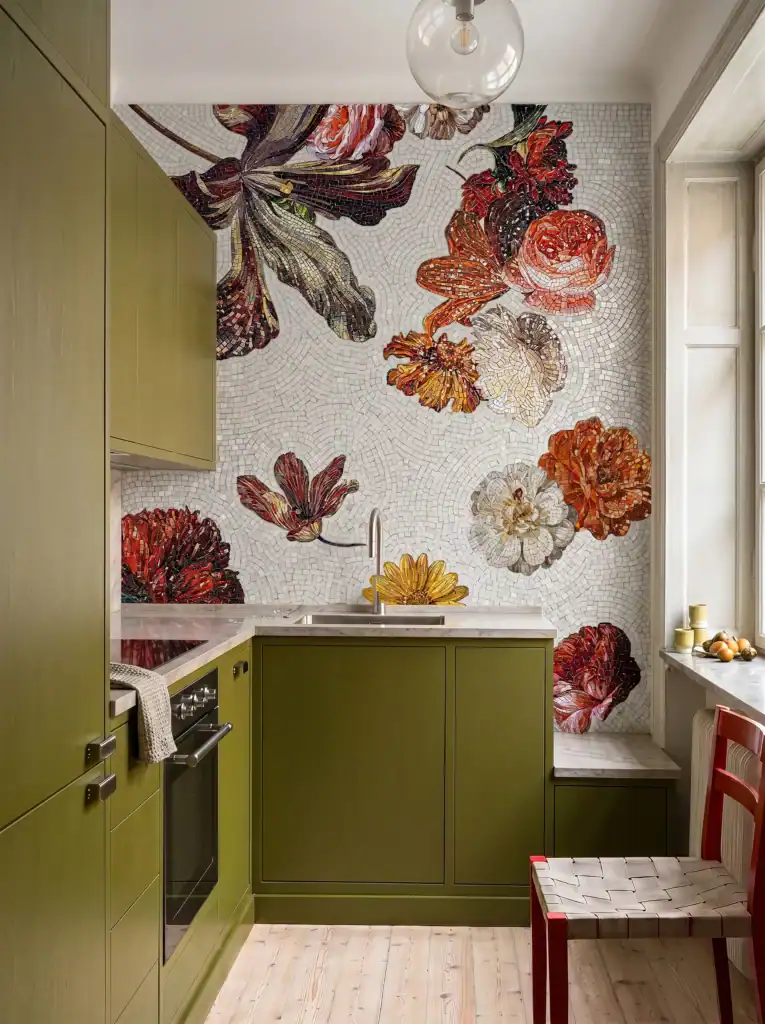
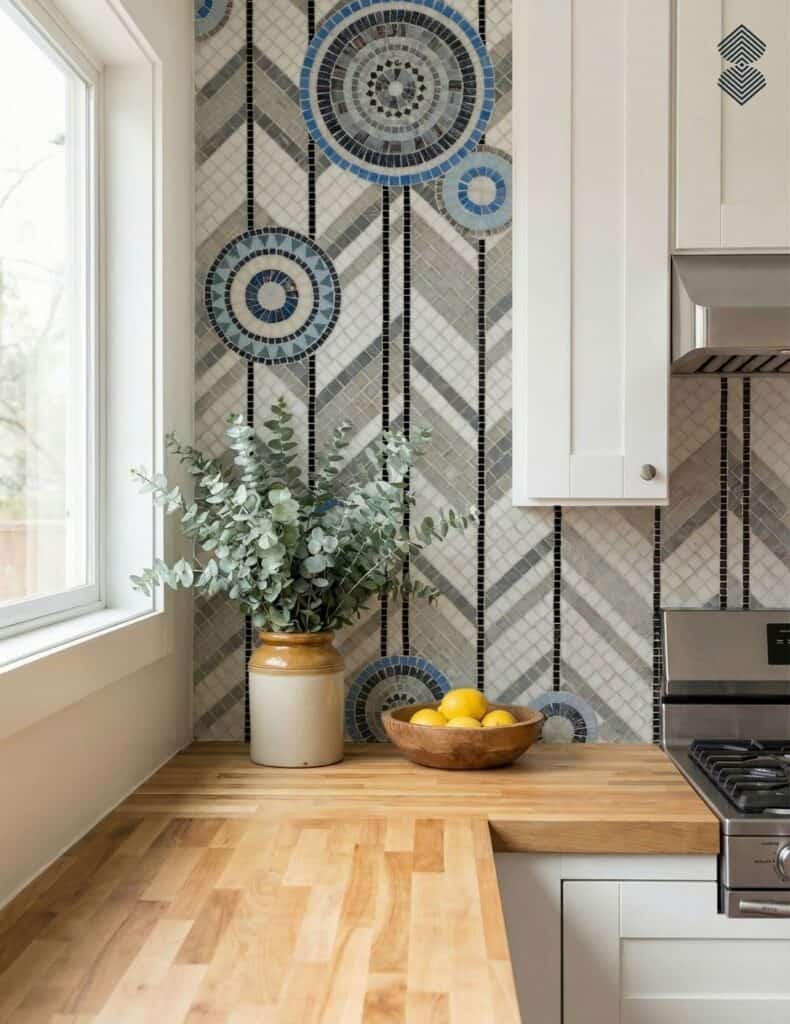
A kitchen wall behind a breakfast bar, a feature wall ending an island, or a wall outside the work zone will bring your character into the kitchen. Backsplash walls are practical, but a feature wall is more creative, allowing a larger design or more expressive patterns. Consider what the wall must endure. Walls around sinks and cooking areas require finishes suited to their environment and maintenance as recommended by the manufacturer. A mural behind open shelving requires some of the design to be shown to understand its pattern.
Our Marigold Sonata Mosaic Backsplash is an elegant botanical work of mosaic art that glorifies the richness of flowering blossoms. With large-sized flowers in colors of warm amber, marigold, ivory, burgundy, and blush, this backsplash converts kitchen spaces into artistic ones by means of a graceful flow of floral pattern.
6. Bathroom Accent Wall Tile
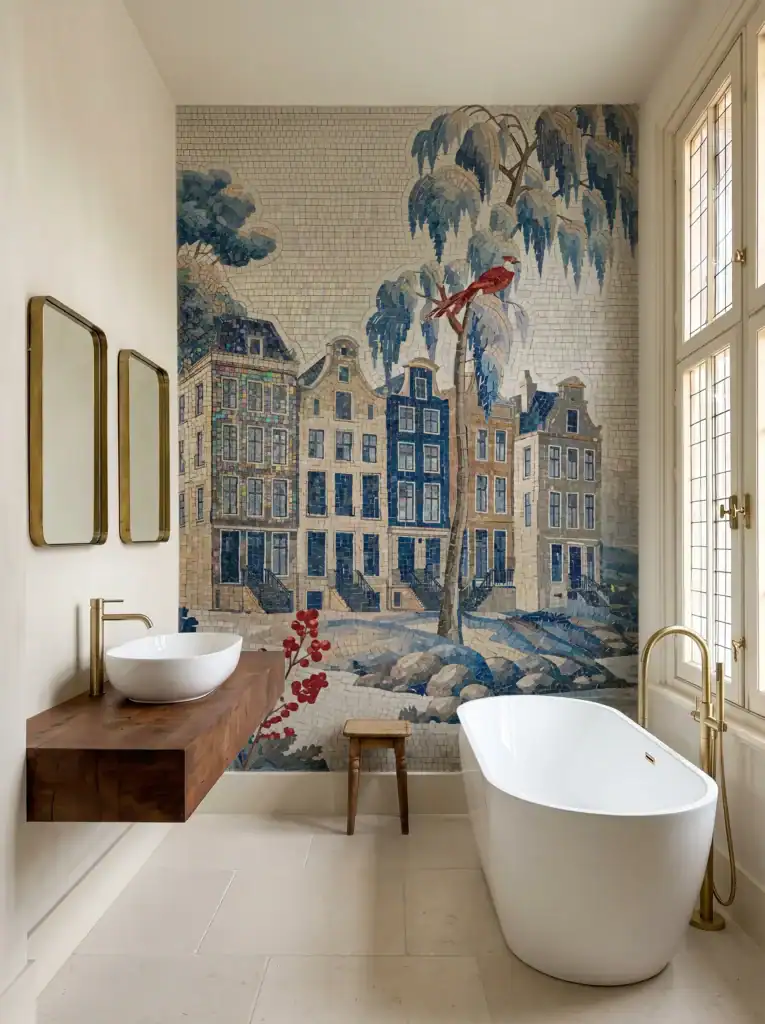
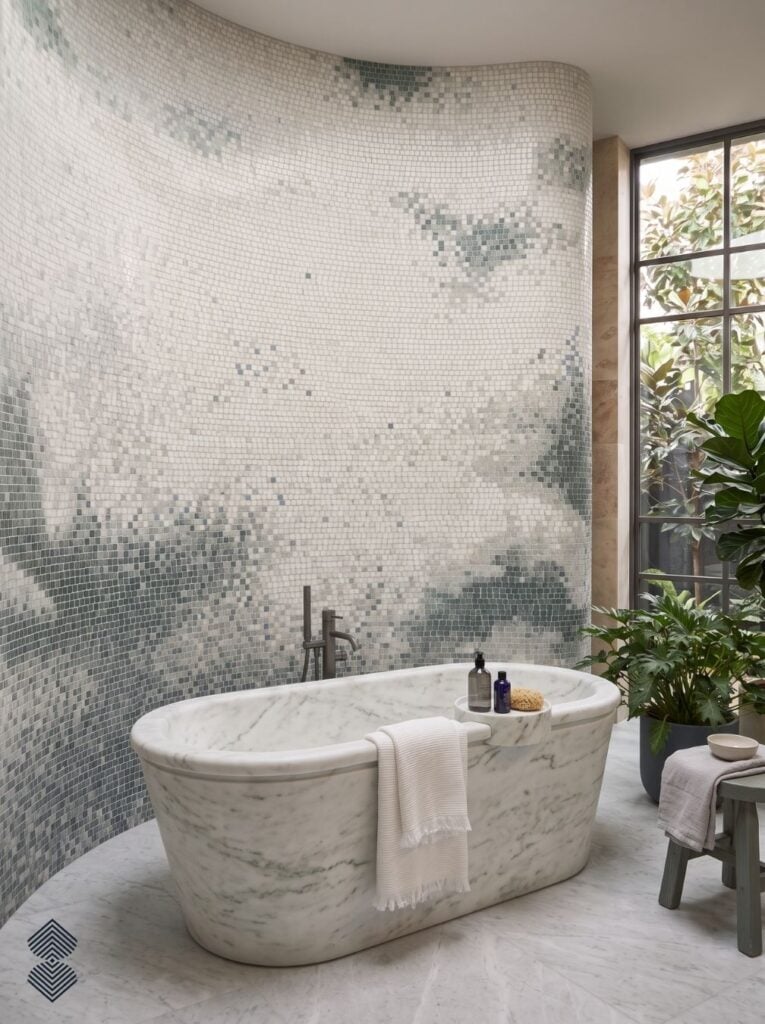
A bathroom accent wall can introduce color and texture to an environment that may consist mainly of hard and neutral-colored surfaces. It can be located behind a vanity, surrounding a standalone bathtub, or even highlighting a wall opposite the entrance. When decorating a small space, a single focal point can have more effect than decorating all walls with a bold pattern.
The placement of the accent wall needs to depend on the size and proportions of the room. Vertical patterns can create an illusion of height, while horizontal compositions can visually widen a wall. Mosaics made from glass can reflect more light, while those made from stone will provide variety and a natural touch.
Our Wisteria Haven Bathroom Mosaic Wall reflects the eternal beauty of a historic canal scene highlighted by the flowing blue wisteria flowers and the vibrant red of a beautiful songbird. Crafted using the mosaic technique, the piece combines the elegance of classic European buildings with natural botanical components. For more detail on choosing finishes, formats, and colors, see the guide to mosaic tile materials.
7. Shower Accent Wall Tile
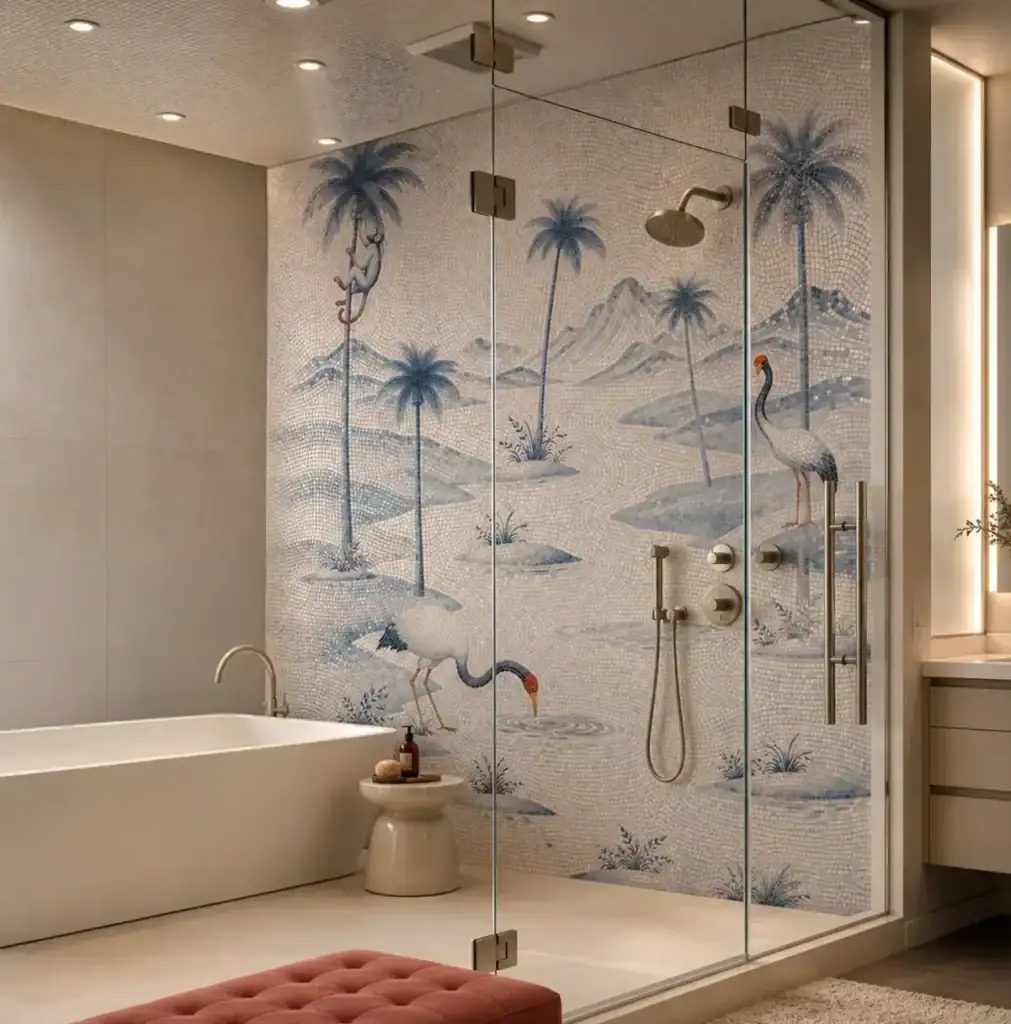
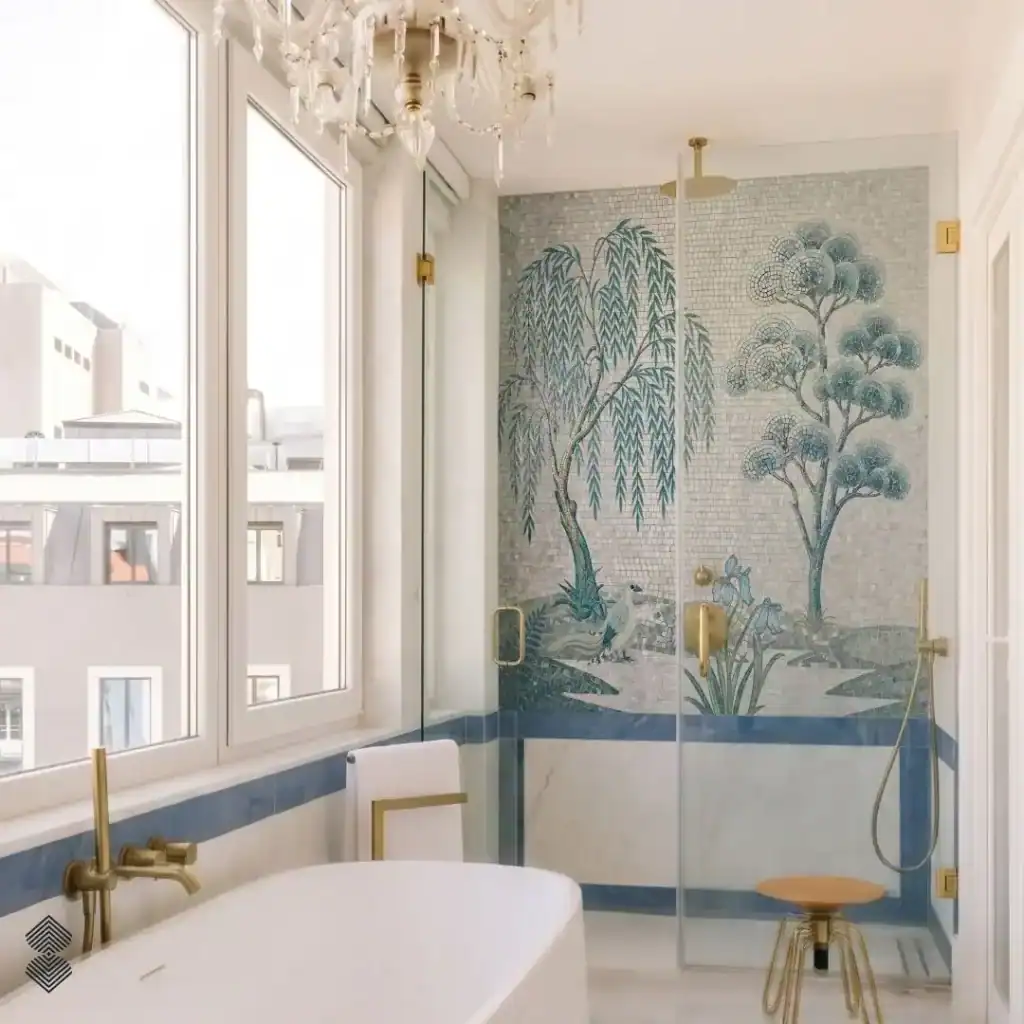
The shower stall provides a suitable environment for feature walls due to the enclosed nature of the stall. The feature wall could have a mosaic design behind the fixtures, incorporate a repeating pattern on the back wall, or use a narrow design panel alongside simpler tiles.
For any tile feature wall within shower areas, an appropriate construction of the wet area assembly is required. Tiles and grout alone cannot keep the wall waterproof; rather, it is the waterproofing system and substrate that keeps the wall waterproof. According to the Tile Council of North America, specific techniques apply to the construction of shower assemblies, which is reiterated by the Ceramic Tile Education Foundation, which further emphasizes that tiles alone are not waterproof.
In our tile accent wall collection, Siren Isle Shower Wall Mosaic converts any interior environment into an idyllic tropical paradise with handmade mosaic artwork in blue and white colors. Cranes, palm trees swaying in the breeze, distant mountains, and streams combine together to make up a tranquil scene based on traditional scenic illustration. You can also explore some more bathroom shower tile ideas when comparing patterns and layouts.
8. Shower Niche Tile Ideas
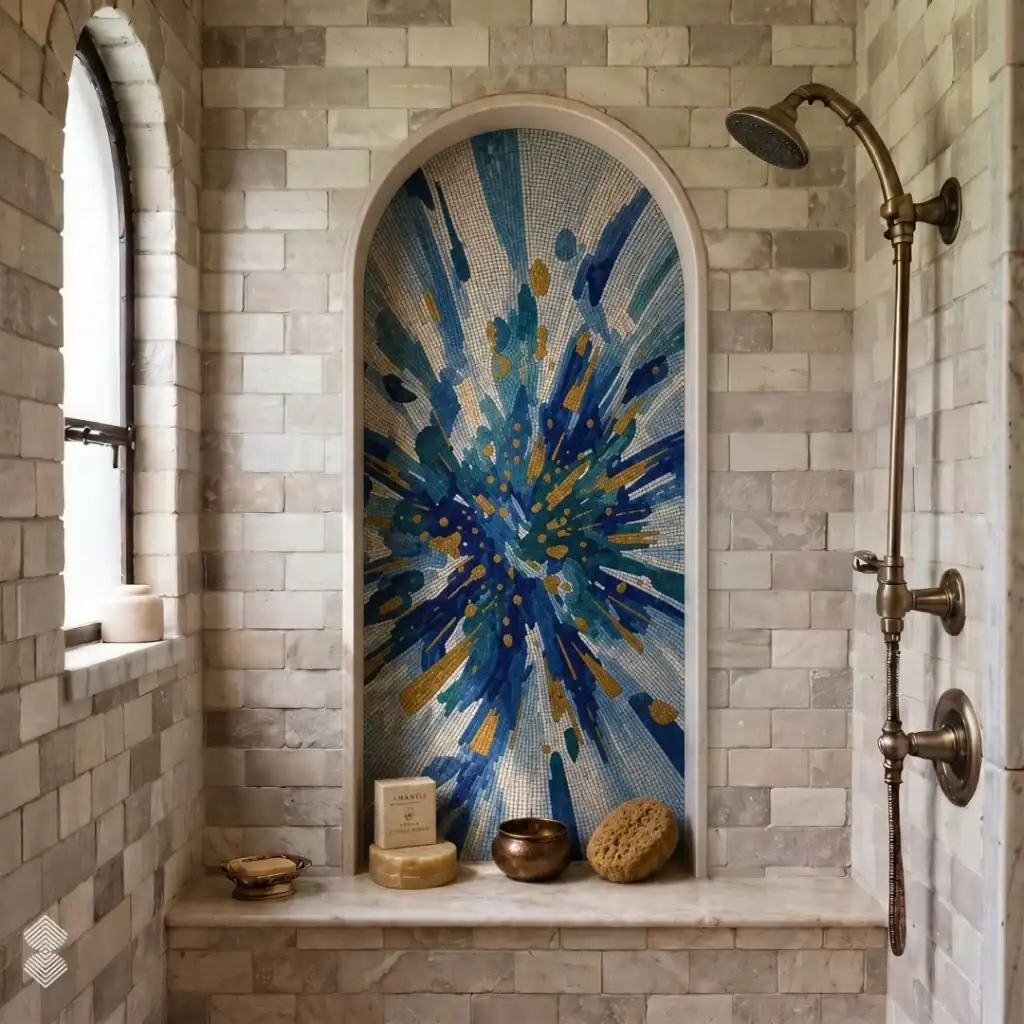
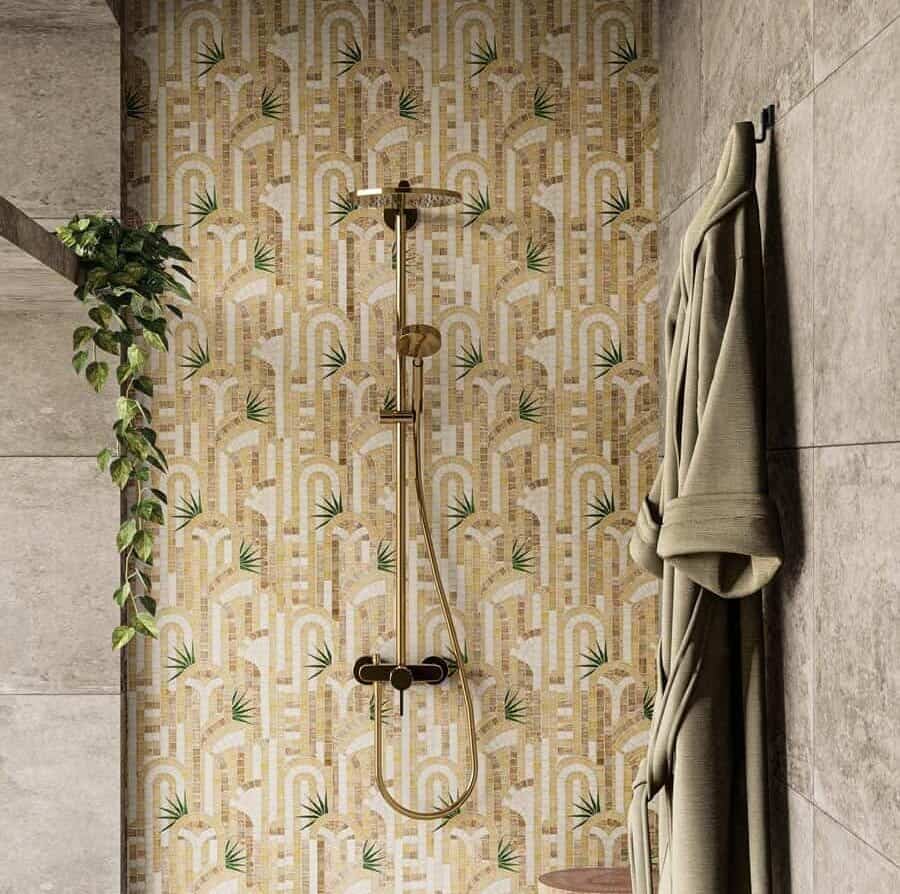
The shower niche is a tiny thing, but it can have an interesting design effect. The niche has its distinct lines, so it can be used for a contrasting mosaic, framed design, or color change that would contrast with the overall shower wall.
Moreover, the design of the niche requires special consideration. The pattern of the tiles has to go into the corner neatly, while the shelf itself should be inclined as per the installation system so that the water runs off the shelf and doesn’t stand there.
The Supernova Mosaic turns a concave arched niche in the shower into a stunning visual centerpiece through its explosive effect of colorful rays. Multiple layers of cobalt blue, turquoise, teal, aqua, white, and gold elements extend to the center. This perfectly contrasts with the neutral bathroom background.
9. Powder Room Accent Wall
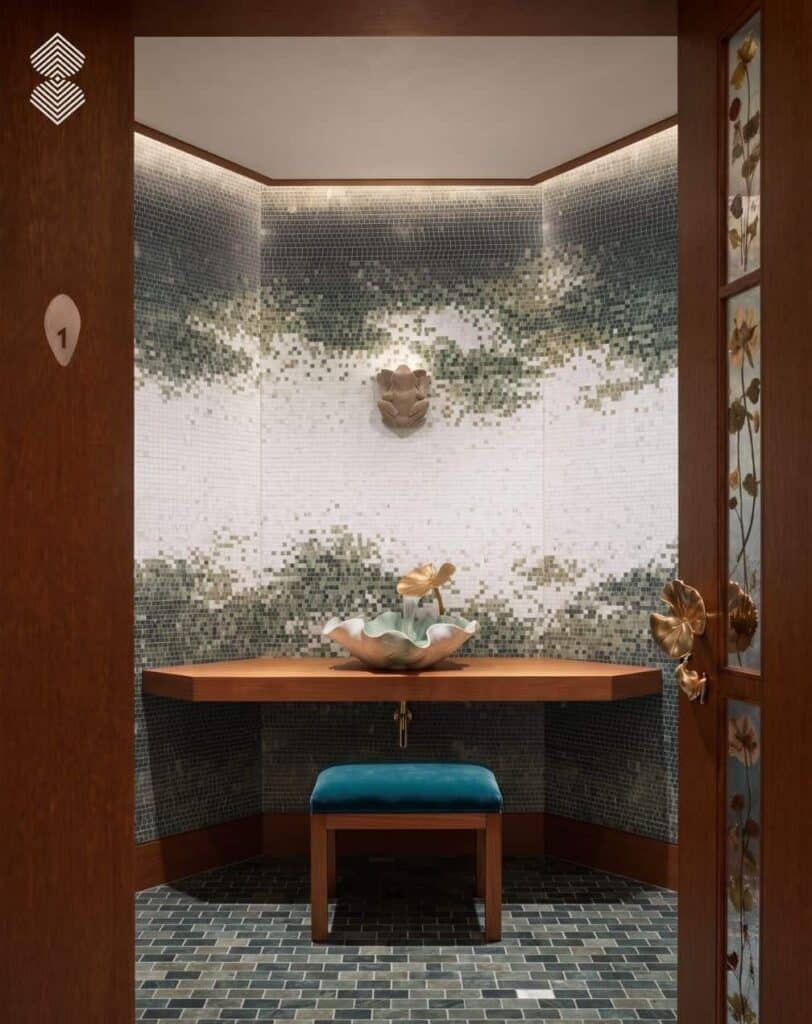
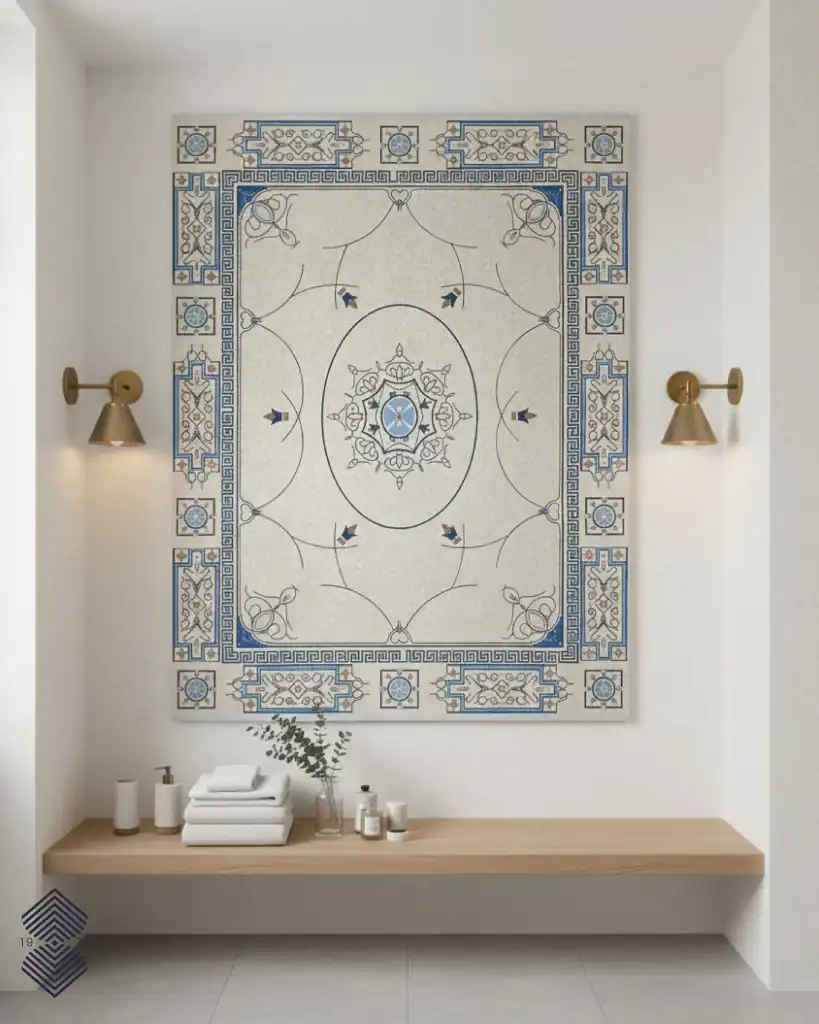
A powder room is an ideal choice for testing out your bold wall design ideas because there tends to be fewer fixtures and a smaller amount of wall space. Bold patterns behind your vanity can create a sense of thoughtfulness within your room, whereas simpler designs can provide textures without overcrowding the room.
Keep in mind the positioning of the mirror and lighting that will go above your chosen pattern. A large mirror may end up covering your mural’s focal point; therefore, mapping it out before creating your plan would be essential. You will need to ensure that your mosaic remains visible by placing its details outside the reach of the mirror.
Our Green and White Powder Room Wall Mosaic creates a color haze over a tiny washroom. That starts with a deep green hue close to the ceiling and fades into a mixture of green spots, finally becoming white by the level of the countertop. The fading looks like mist covering a pond and fills all walls of the alcove with a minimalistic design.
10. Entryway Accent Wall
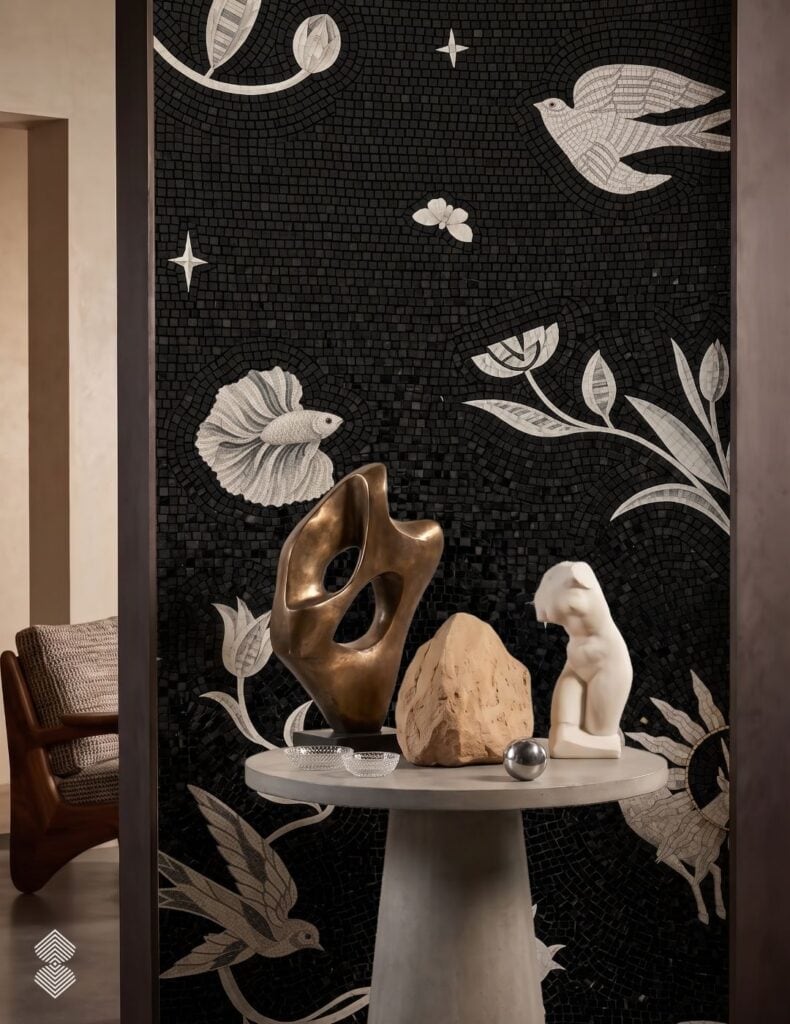
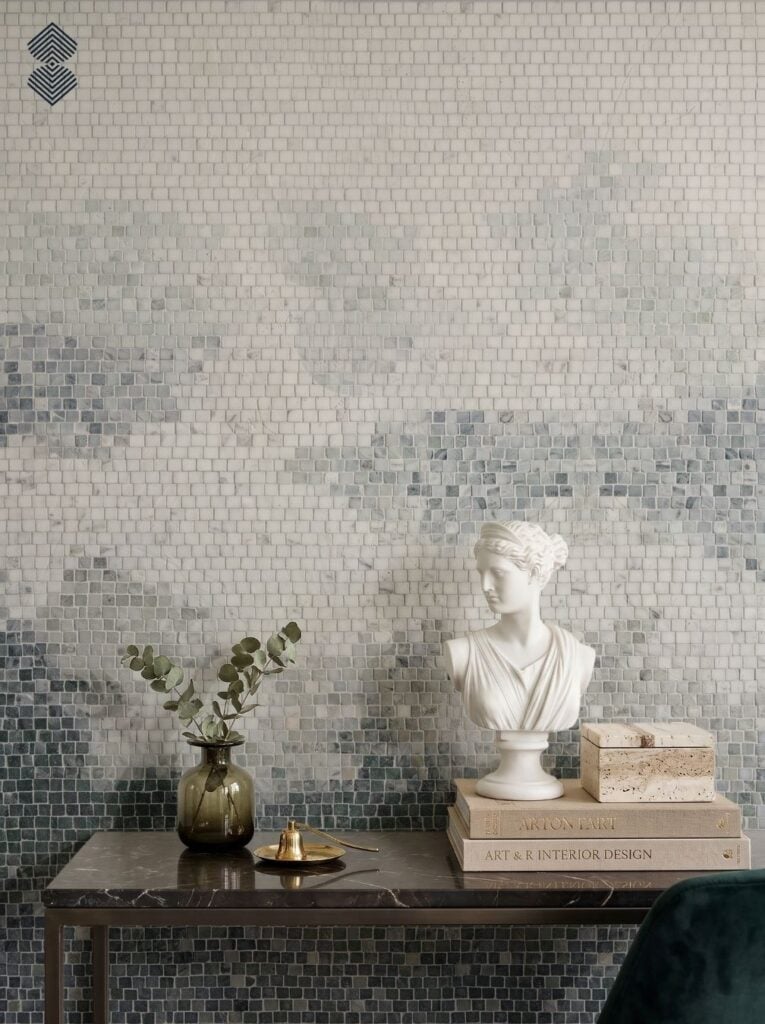
The wall at an entryway serves as an introduction and can be used as an indicator of the move into the house. Tiles are a strong material that creates a tough-looking surface; however, the specific material has to depend on the exposure of the wall and its maintenance. In case you plan to incorporate a bench or hooks for coats into the design, keep in mind their influence on it.
Using a gradient will expand the feeling of openness in a narrow entryway; for example, our Sage Gray Gradient Wall Mosaic framed panel will serve as a focal point. You can also repeat some features from a floor, runner on a staircase, or even a lighting fixture. The repetition of one element will link the entrance to the entire house.
Moreover, if you would like to have a detailed wall entrance, you could try using A Black-and-White Nature Mosaic. Such a nature mosaic turns a high wall into a night garden, where every bird, flower, and fish is made out of pale stones and placed on a black background. This work seems like one whole picture rather than separate images.
11. Hallway Accent Wall
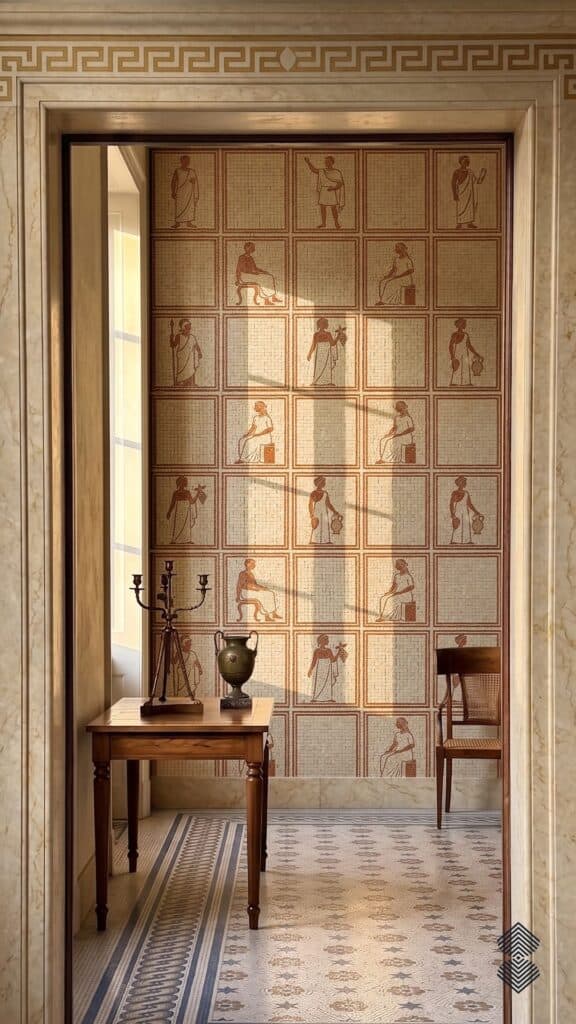
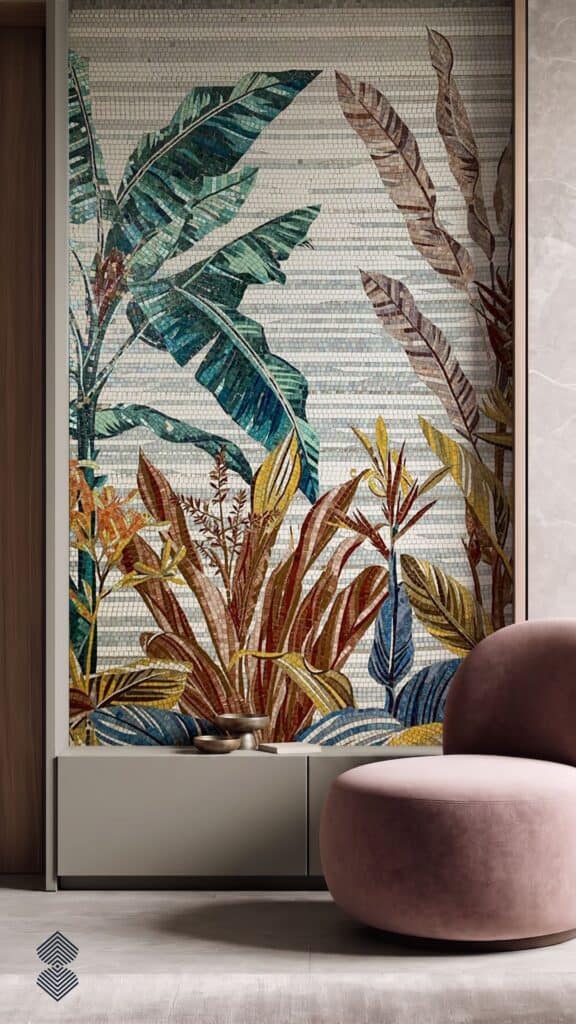
While hallways are usually considered transitional spaces, an accent wall of tiles adds another dimension to the room. Use a wide section of the wall to emphasize the entrance, or use the end of the hallway as the main focal point. Repetition of elements will provide a way to organize movement through the rooms.
Lighting plays a key role in the hallway. If there is not enough natural light coming into the hallway, a heavy and dark design might feel too intense. A lighter color scheme, glossy surface, or a more open composition should ensure the brightness of the room. Check whether the wall is prepared for this addition before installation.
If you are passionate about a classical figure panel, then you can use Roman Figures Grid Wall Mosaic, whereby a range of classical figures is portrayed on an entire wall panel on a light limestone background. This mosaic is a series of portraits that appear like a frieze made up of separate sections.
12. Staircase Accent Wall
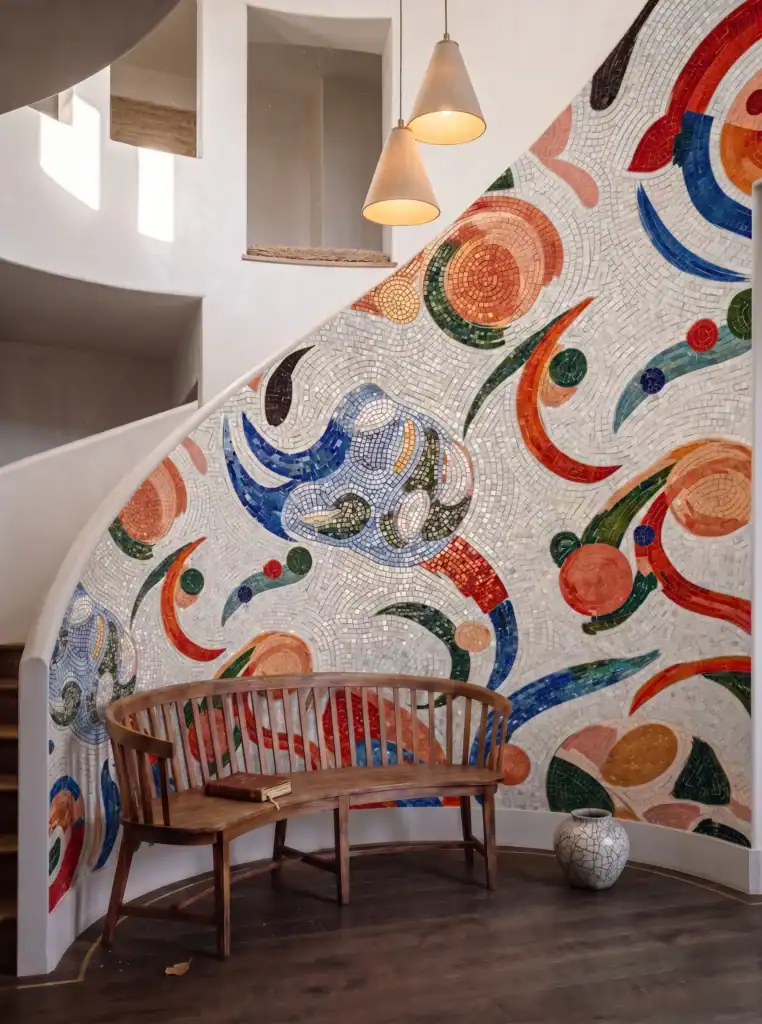
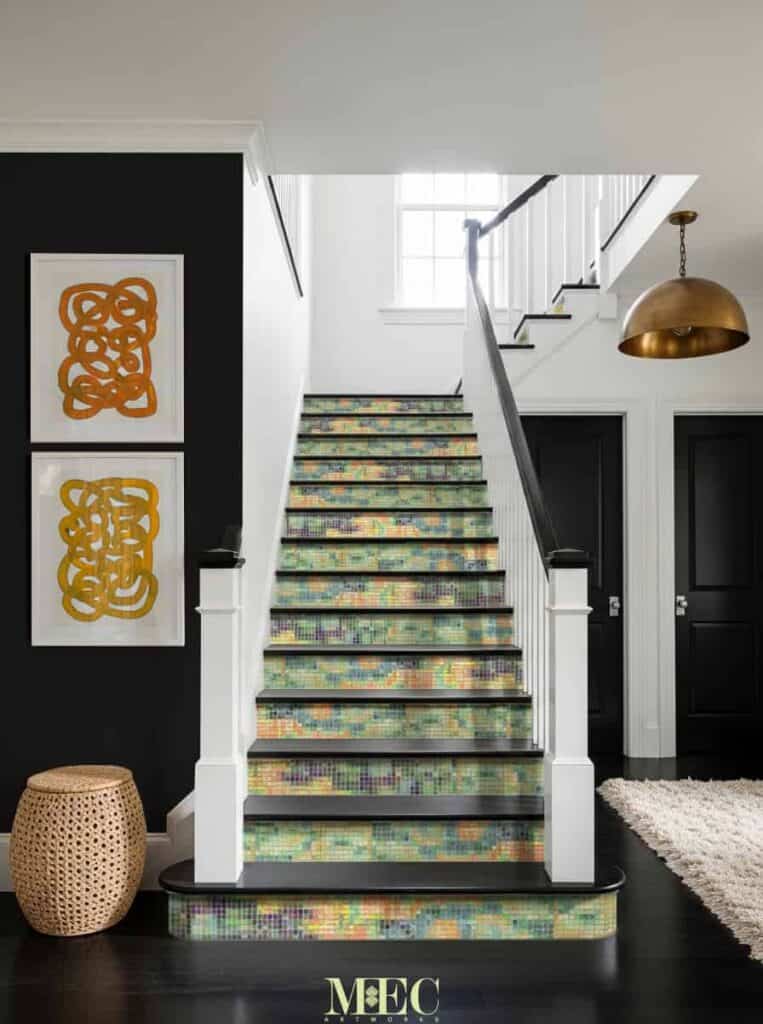
The staircase wall provides both height and movement, allowing the design to develop as viewers go up the stairs. An expansive mural can run along the staircase line, while a series of smaller panels could develop into a rhythmical pattern along a high wall. As the viewing perspective changes with each step, make sure to test the design at various levels.
Linking the wall design to the staircase elements can be achieved by using a common color scheme, a common motif, or even a border that repeats the decorative patterns found in the risers. Make sure that the composition is clear not only from the lower landing but from the top level as well. One possible example of this kind of wall decoration can be the Venetian Chroma Mosaic Stairwall.
Other related ideas can be seen in mosaic stair risers that continue the pattern onto the steps.
13. Outdoor Accent Wall
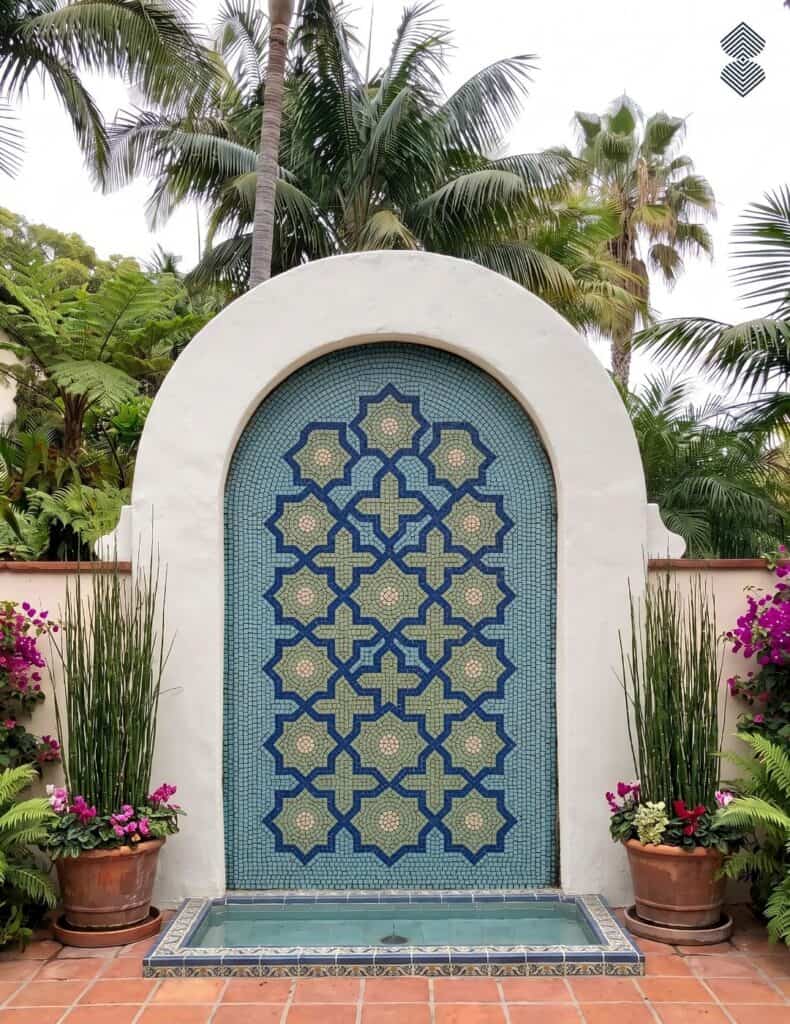
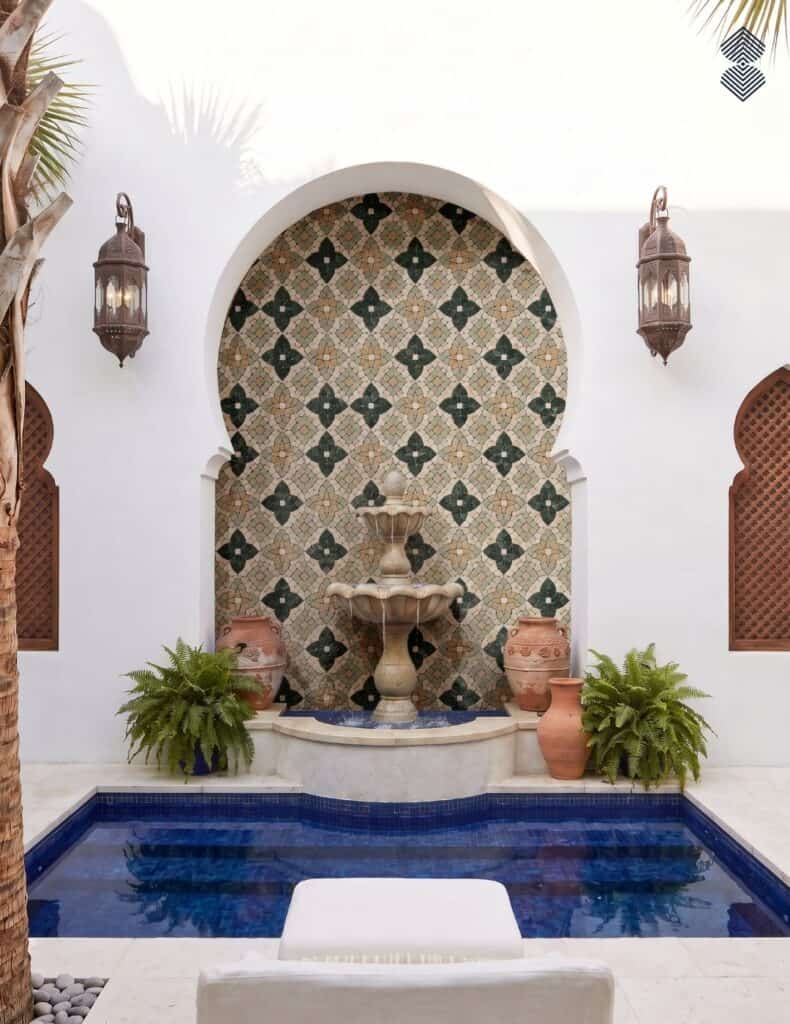
An accent wall using tiles outdoors can serve as a focal point in the garden, on a patio, in a courtyard, or by the swimming pool. It may be located behind a seating area, around a fountain, or simply as an addition to a boundary wall. An outdoor area will put the material under different climatic conditions such as temperature changes, direct sunlight, and moisture. Thus, it is important that the material and the installation system fit the particular place.
Make sure the installer takes into account climate conditions, wall construction, drainage, wall movement, and other factors. A good example for an outdoor wall is a Blue Star Mosaic Wall Fountain. With a repeat pattern of eight-pointed stars and crosses in a hand-cut mosaic that creates a geometric pattern from top to bottom of the mosaic panel.
Or else you can explore these outdoor wall mosaic ideas to compare murals, patterns, and feature surfaces.
14. Geometric Accent Wall
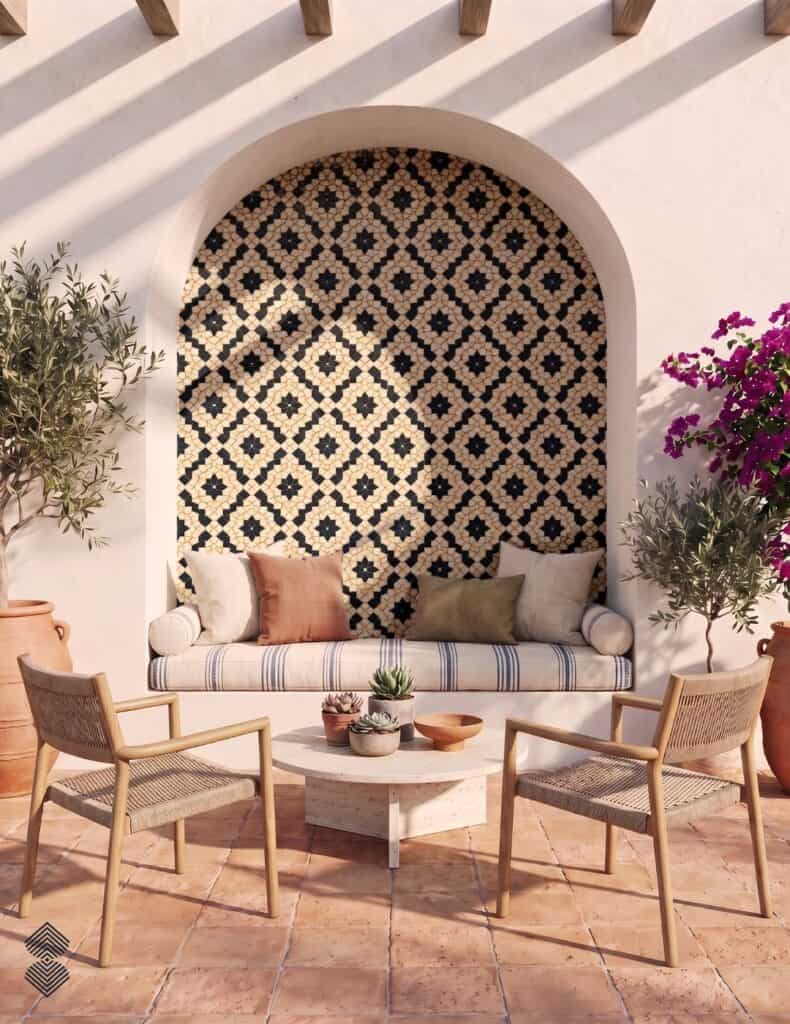
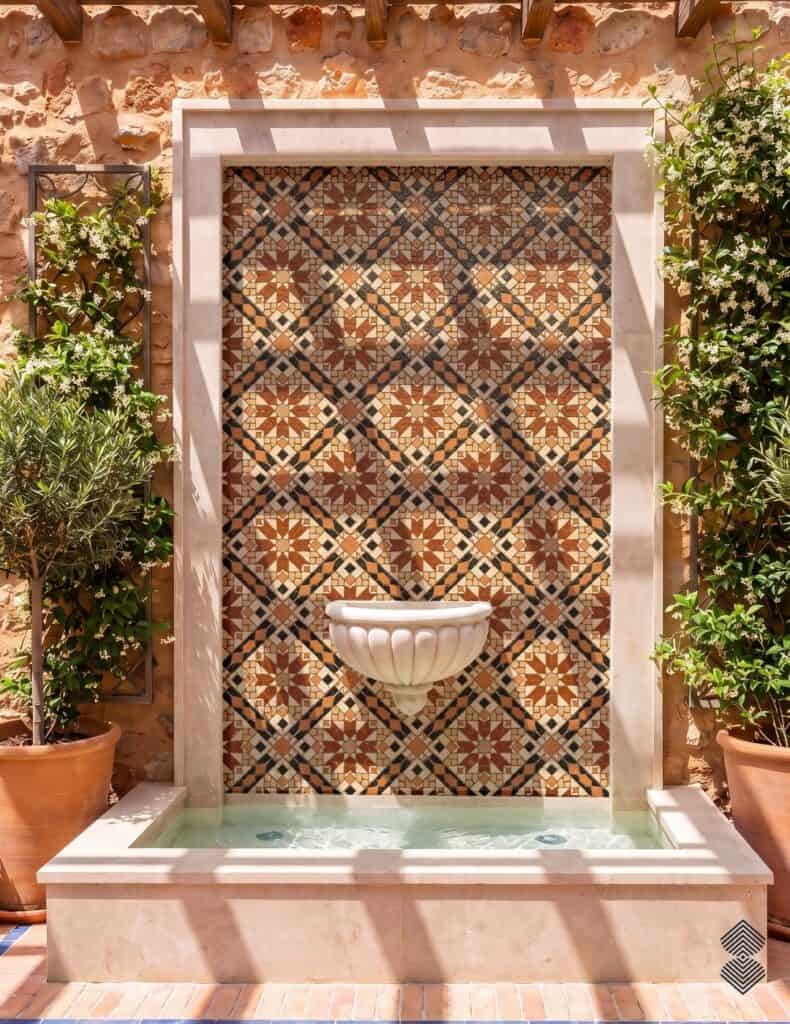
Using geometric shapes such as repeated diamond, arch, circle, or interlocking shapes creates a strong architectural rhythm for the accent wall tiles. The patterns may run across the whole wall or be confined to a small section of the wall with a border around it.
The proportions of the room will influence the type of geometry used. While vertical shapes will draw the eye up, horizontal shapes will emphasize width. In a room that is already decorated with patterns on the floor and other fabrics, a simple pattern should be used.
An example of the use of the decorative geometric approach would be the Moroccan Geometric Mosaic Wall Art. Designed to decorate an arch niche with a latticework of cream and black diamonds, with a tiny star and a honey-colored border that glows when illuminated. It is created to enhance an outdoor courtyard wall or any niche where there needs to be an in-built seating arrangement.
15. Gold Accent Wall
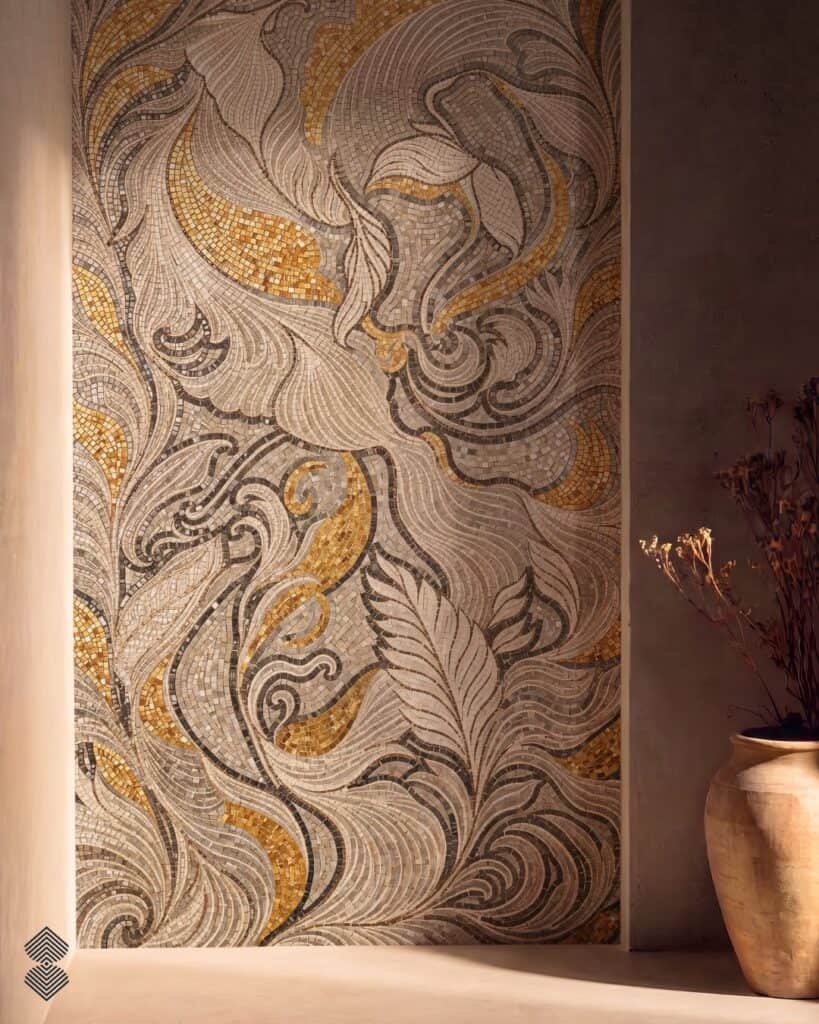
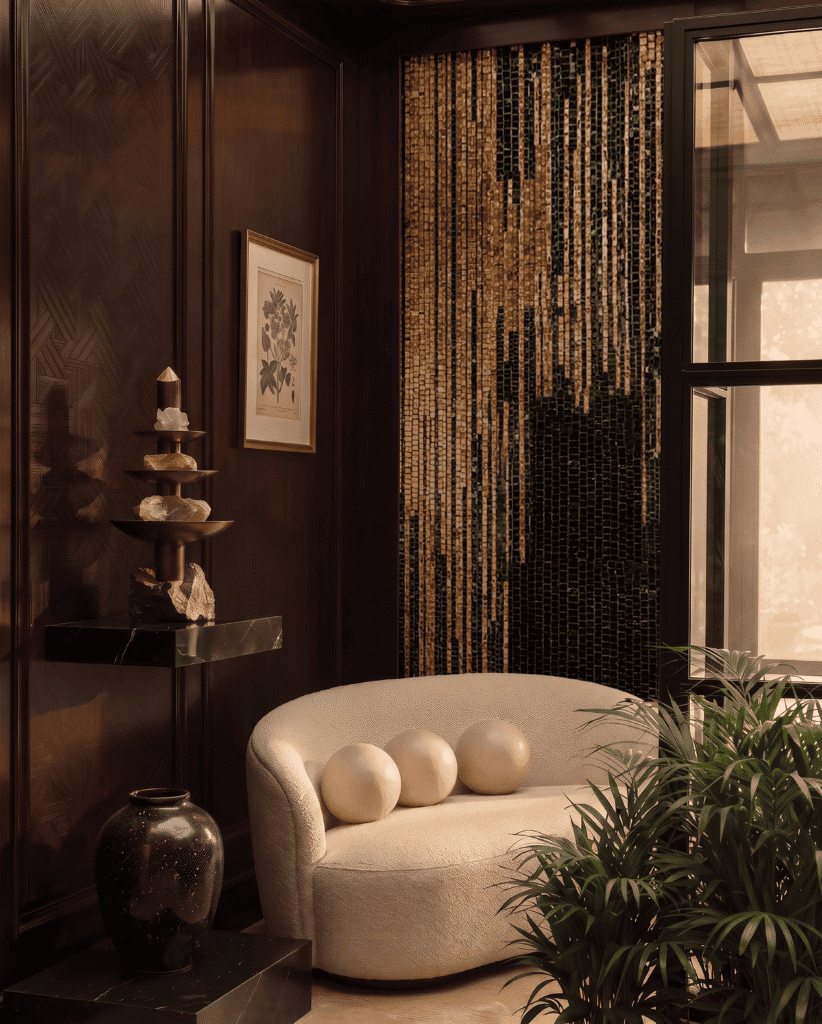
Gold gives a warm hue and creates a focal point without having to have the entire wall coated in a metallic color. Just a couple of pieces in gold will create borders, accentuate a motif, or make an area glow when there are darker hues in the background. The use of gold should be dependent on the surrounding colors and light available.
Gold is best combined with subdued colors such as black, white, stone, or even blue in order to avoid a clashing effect with the hanging lamps or mirrors. Like our Gold Feather Wall Mosaic, it offers inspiration for using gold as part of a shaped motif to cover a tall, rectangular-shaped panel with plumes and tendril-like forms.
16. Marble Accent Wall
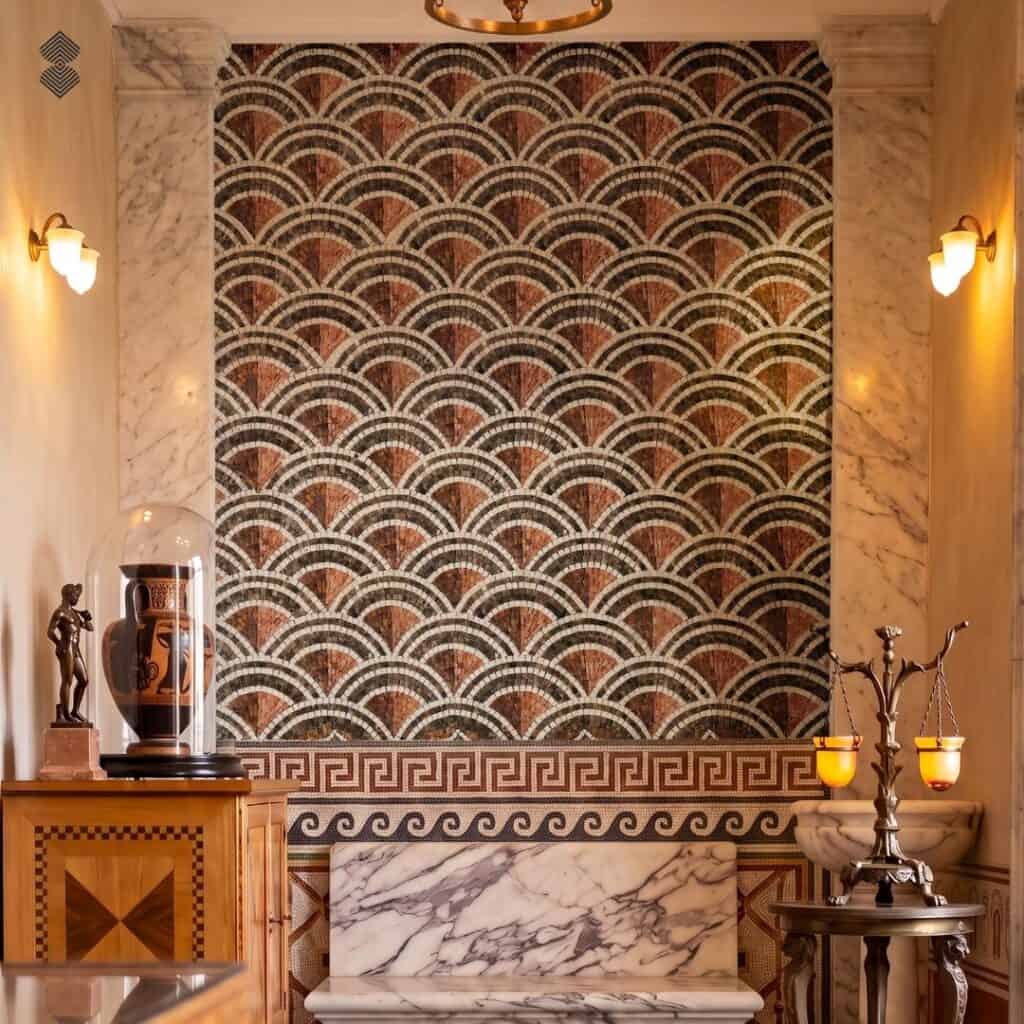
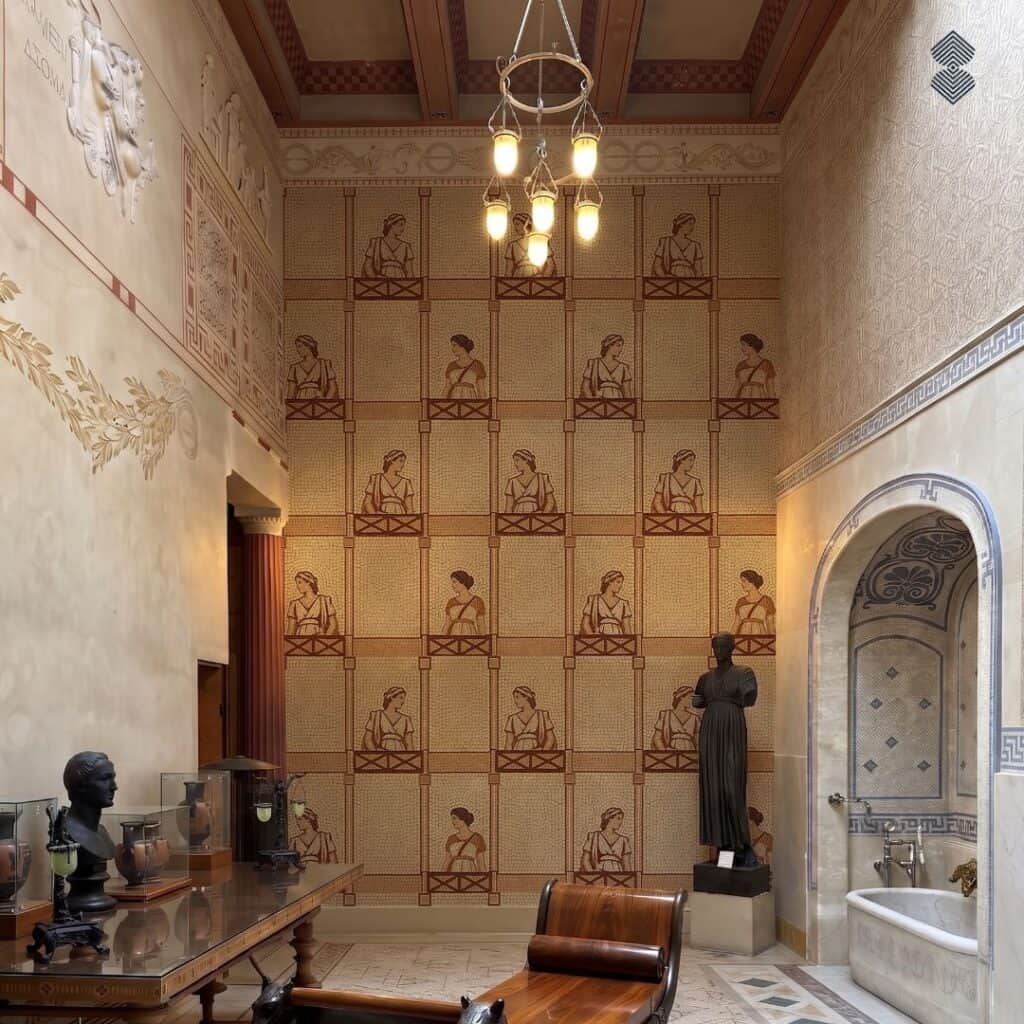
Marble brings natural variation to an accent wall. Veins and tonal shifts make each piece visually distinct, which can give a room depth even when the palette stays restrained. A mosaic of marble could be used to create different designs with the use of small marble stones, such as borders, fans, floral designs, etc.
Natural stones may require maintenance that is not the same as ceramics or glass. It should be inquired whether the supplier or installer uses any method of sealing, cleaning products, and their effect on the stone used. Testing the material is advised for the effects of lighting on color and veining.
For example, our classical Roman Scallop Wall Mosaic Panel covers a complete feature wall with a repeating fan design created by close-knit rows of tesserae that radiate outwards. The scalloped layers give the impression of overlapping shells arranged in regular bands.
17. Waterjet Tile Accent Wall

The waterjet cutting technique is based on a highly accurate cutting procedure that forms curvaceous patterns and designs in tiles. It can form sharp edges for medallions, patterns, and borders. Sometimes it is possible to combine cut elements and plain fields of tiles in order to emphasize the pattern.
This procedure will be appropriate for designing walls when higher accuracy is required than just straight cuts. It can be used when you need to put a motif around an architectural element or when you need to create an interlocked pattern.
The Arco Waterjet Tile Wall Mosaic is a clear reflection of the sophisticated waterjet technology that has been used in the production process of such a piece of artwork. The contrast created by the curved pieces and colors creates an attractive mosaic.
18. Floral Tile Accent Wall
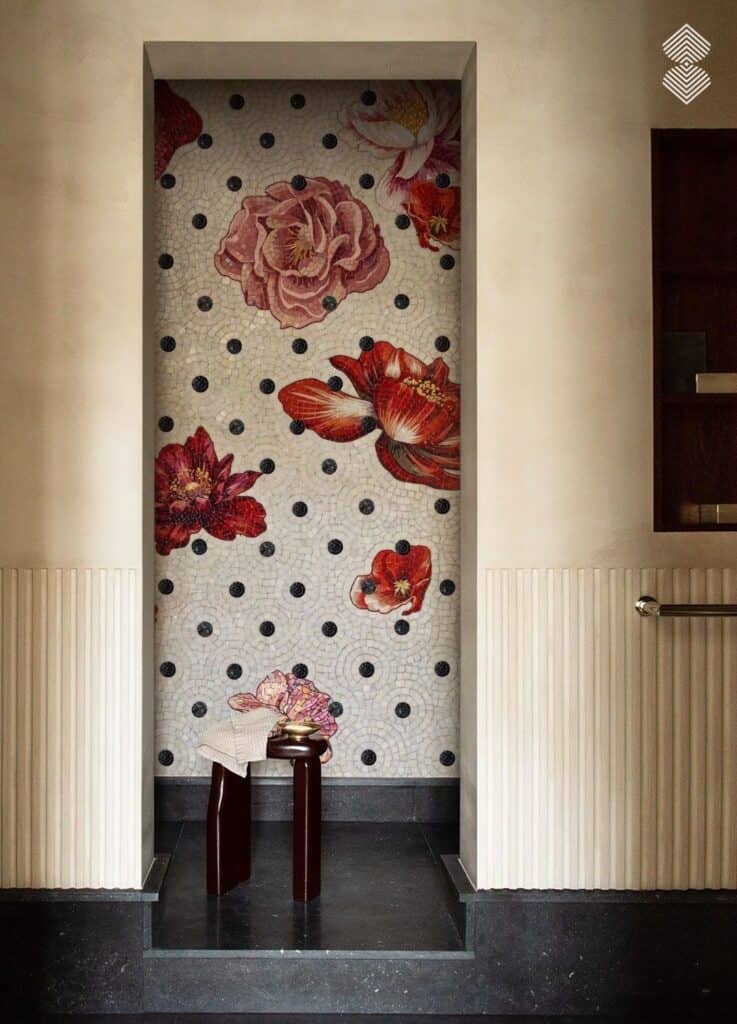
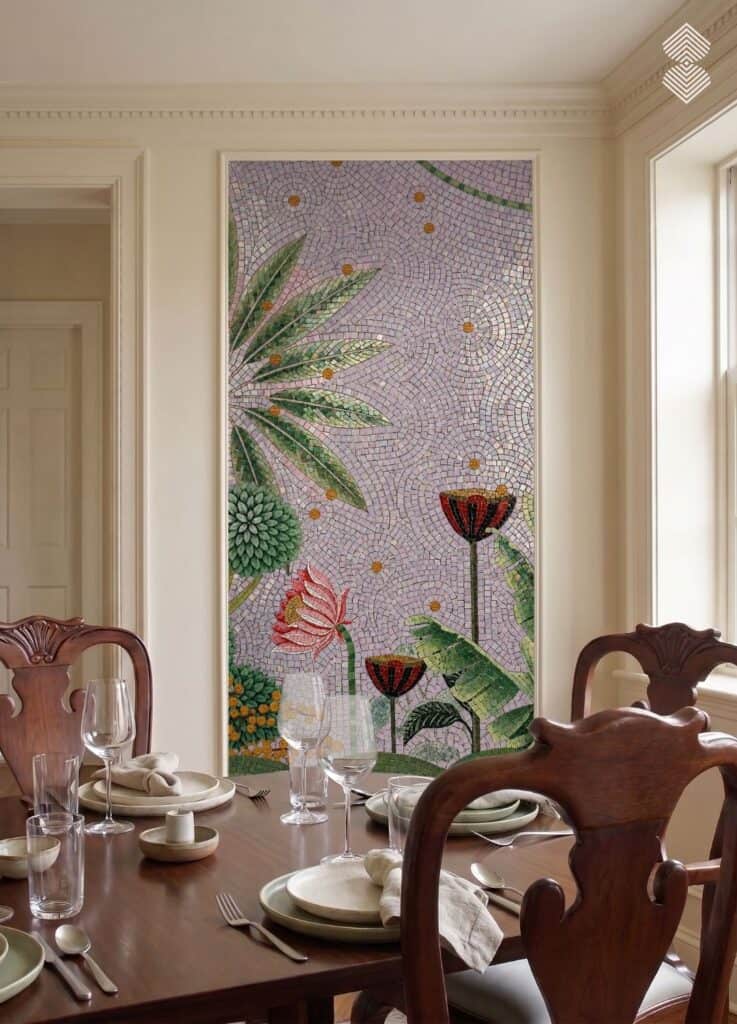
A floral wall is either traditional, contemporary, or whimsical, depending on the motif size and style. Large floral motifs offer a distinct focus area. Botanical motifs in small sizes can be used to achieve a finer pattern. Leaves and stems will assist you in creating flow on a larger wall.
Arrange your wall design keeping in mind the arrangement of furniture in the room. Floral mosaic designs can look great behind a bathtub, dining table, and even a console. When there is a lot of activity in terms of fabrics, go for simpler colors or an open design. Like from our collection, Tropical Floral Mosaic Panel and Rose and Polka Dot Mosaic Panel will work well as decoration for a small bathroom or powder room nook, or an entrance alcove with a narrow vertical wall.
19. Mosaic Wall Art and Murals for an Accent Wall

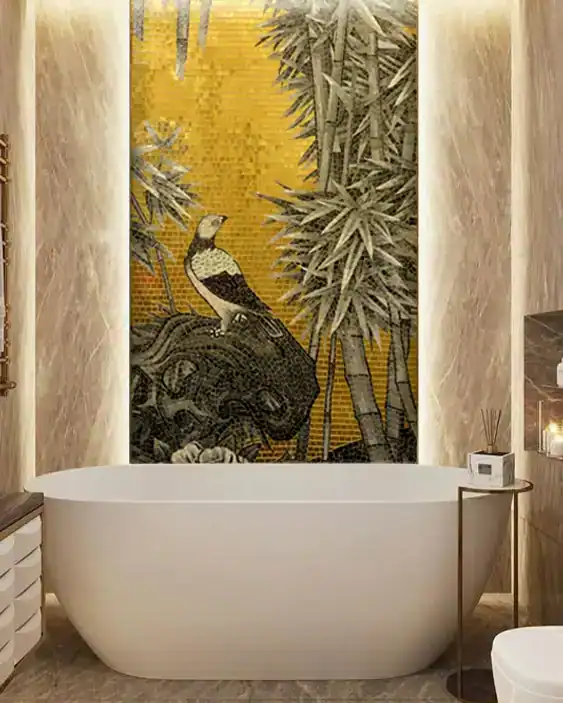
The mosaic mural transforms the wall into an image rather than depending solely upon the repeated pattern. This image could be anything such as a bird, a landscape, a tree, a figure, an abstract composition, or something completely different. Artisans construct the entire image using several pieces that allow them to utilize color variation and directional differences to achieve movement and detail.
The mosaic wall art is most effective if the composition matches the viewing distance. A large mural on the living room wall allows the artists to add finer details to the work as compared to the small panels used in a hallway. The appropriate subject matter for the particular space is also essential.
The Tropical Bird Mosaic Wall Art offers one example of an image-led feature. The design displays an exotic bird that is sitting in the midst of the foliage with details of multi-layered leaves and blossoming flowers.
20. Ombre Tile Accent Wall
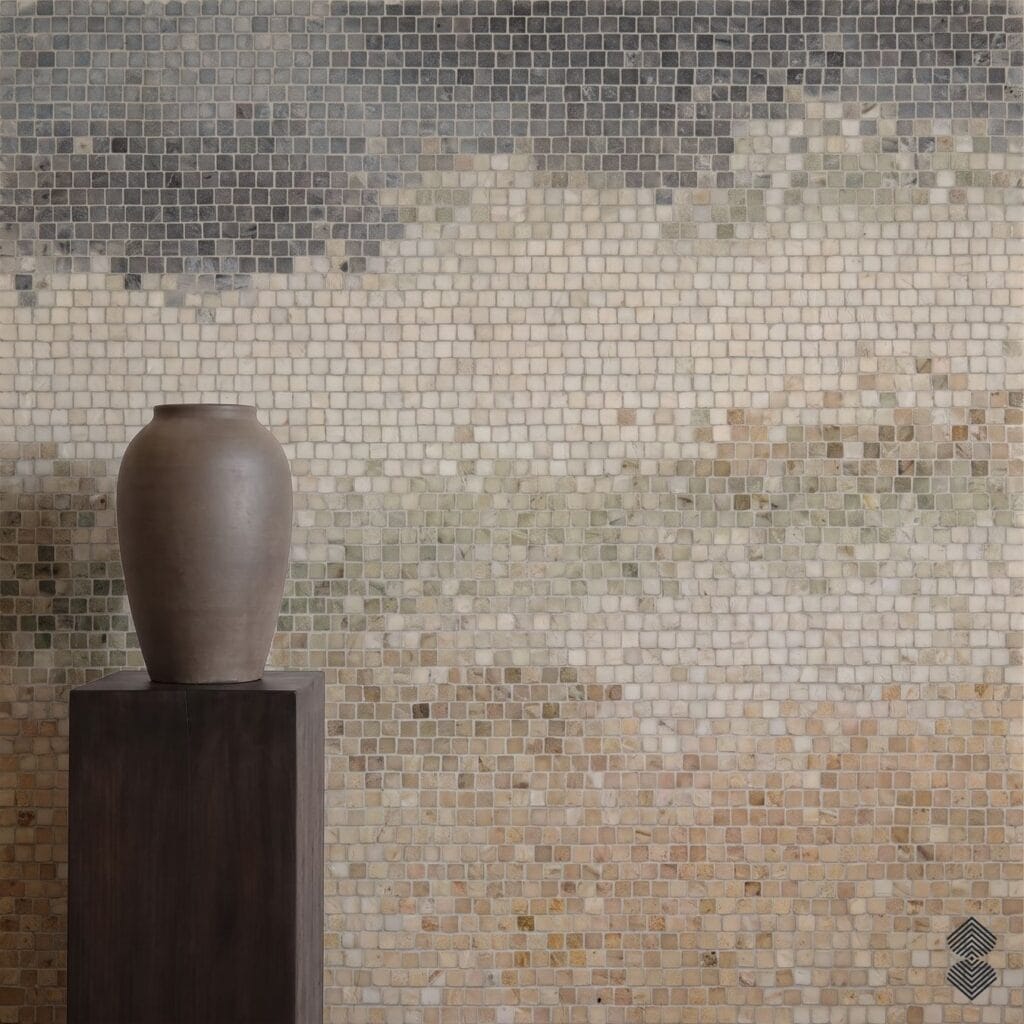
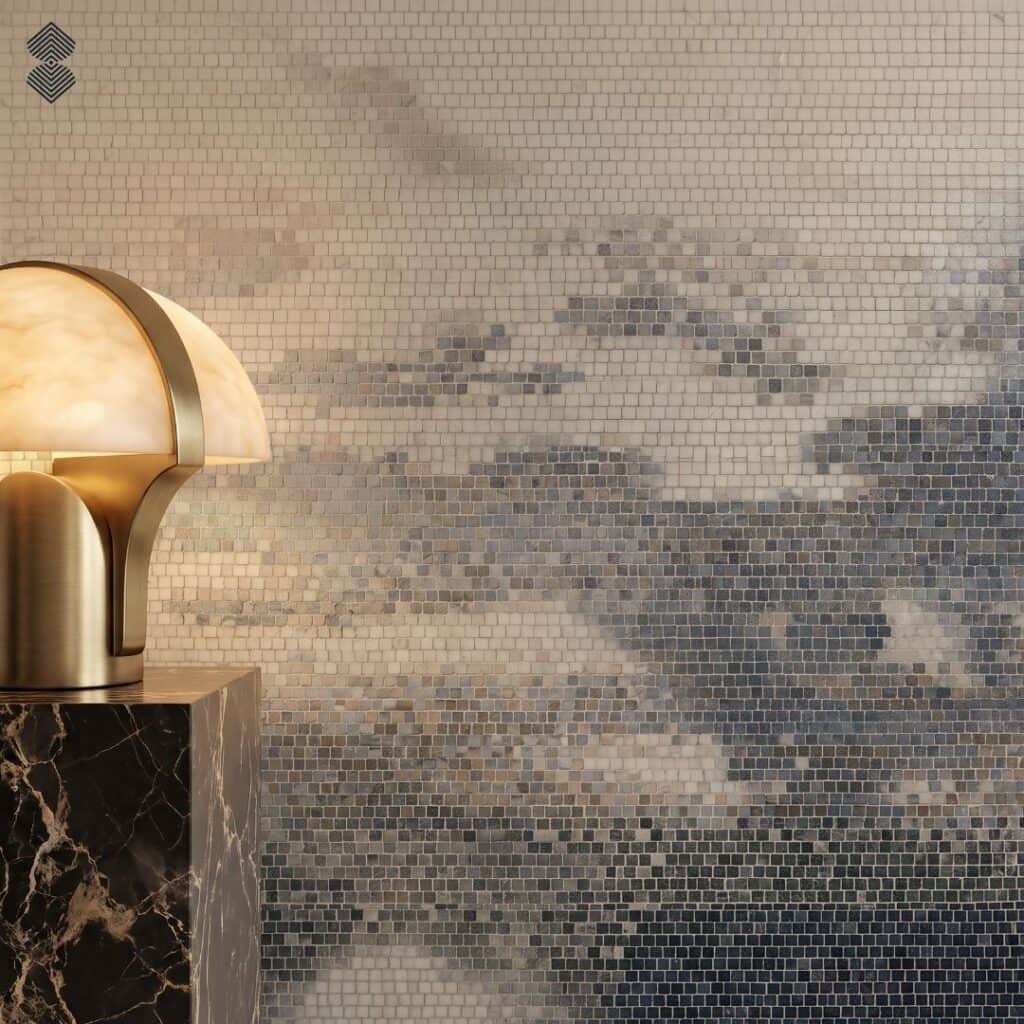
An ombre wall transitions slowly from one shade of color to another. This transition could be from a darker to a lighter shade, from one color to another adjacent to it on the color wheel, or from a bright to a dull color. In the case of mosaic wall tiles, even slight variations can produce an ombre effect.
The orientation of the gradient makes the difference in effect. An up-down gradient would have the effect of drawing the gaze upwards, while a side-to-side gradient would make the wall appear wider. The Charcoal to Sand Gradient Wall Mosaic offers a neutral-toned example.
Explore more ombre tile ideas before deciding on a color path. Bring samples to the room and observe them during various times of the day, as natural light and artificial lights make a difference in the shades.
Final Thoughts on Custom Mosaic Tile Accent Walls
An accent wall tiled to perfection may be the answer you’ve been looking for to unite colors, materials, and architecture in your room into one unique element. Custom tiles will give you the freedom to create a design based on your wall size, pattern preference, and level of detail you wish to reveal.
See what custom tile mosaic art is offered by MEC Artworks and let us help you create a perfect accent wall. Let us know about your ideas and inspirations.
FAQs
Are accent walls out of style in 2026?
Not necessarily. It is possible for accent walls to be effective provided that they look like part of the room’s design story. What we now see in this discourse is not the use of an accent wall simply because there should be a wall that contrasts with the others, but rather the idea of incorporating the accent wall purposefully using materials, textures, architecture, or patterns.
What is the best type of tile for an accent wall?
There is no ideal tile that suits all walls. You have ceramics and porcelains to choose from. Glass adds reflective light. Marble provides color variation. Mosaics will be useful where you want intricate patterns and curves or any images. You must consider the location of your wall first and then go about comparing the rest.
Can you put mosaic tile on an accent wall?
Indeed. The mosaic tiles may be used to decorate the whole wall, create a central panel, and make borders and niches decorative. Due to the smaller sizes of their parts, such decorations will follow the curvatures and architectural features of walls. Nevertheless, one should choose the right substrate for the design, do the proper layout, and choose the necessary installation materials for this particular wall location.
Which wall should be the accent wall?
Select a wall in the room that is functional. This wall could be situated behind the bed, around the fireplace, highlight the vanity, or even at the end of the hallway. Consider the view of the room through its primary entry point and seating area to determine which wall stands out the most. Choose a wall that is not going to be covered up by any cabinet, door, or furniture.
Can a tile accent wall go in a shower?
Yes, as long as the construction of the shower incorporates a proper waterproofing system and the tile and mortar used are approved for the application. Tile and mortar alone cannot prevent water from penetrating the structure that lies behind the wall. Follow the manufacturer’s instructions and get it done by a professional tile installer.