


Nature has a way of calming you down that is truly remarkable. A walk in the woods. Bare feet on warm stone. The sound of water moving over pebbles. Your body understands those signals before your brain does.
Now imagine bringing that feeling indoors, without turning your home space into a literal greenhouse.
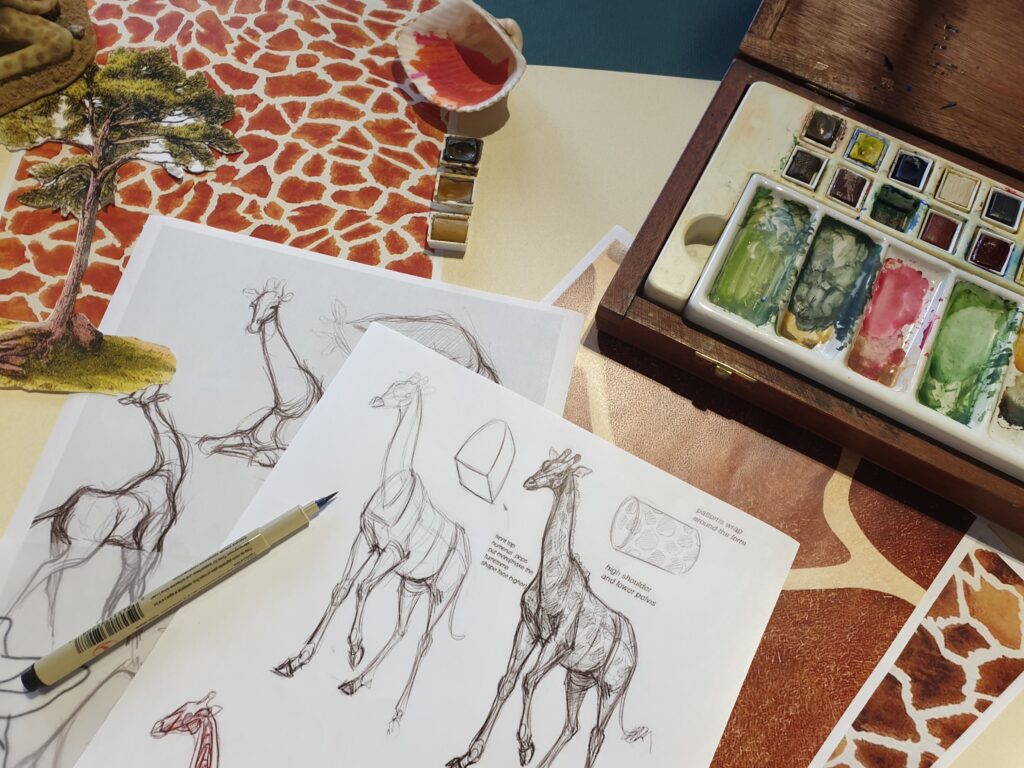
That’s where nature-inspired mosaic patterns with earthy tones and textures come in. These textured mosaic tiles just don’t “decorate” a surface. Instead of loud colors or rigid symmetry, these mosaic tiles draw inspiration from landscapes, leaves, stone layers, water movement, and botanical forms. When paired with earthy tones, mosaic patterns, and tactile surfaces, the result feels timeless rather than trendy.
This blog guides you through the what, why, and how of earthy-toned mosaic patterns, colours, textures, placement tips, custom design options, and maintenance. If you’re considering textured mosaic tile ideas or planning botanical-inspired surfaces, this article will give you clarity and confidence.
Table of Contents
What Defines Nature-Inspired Mosaic Patterns?
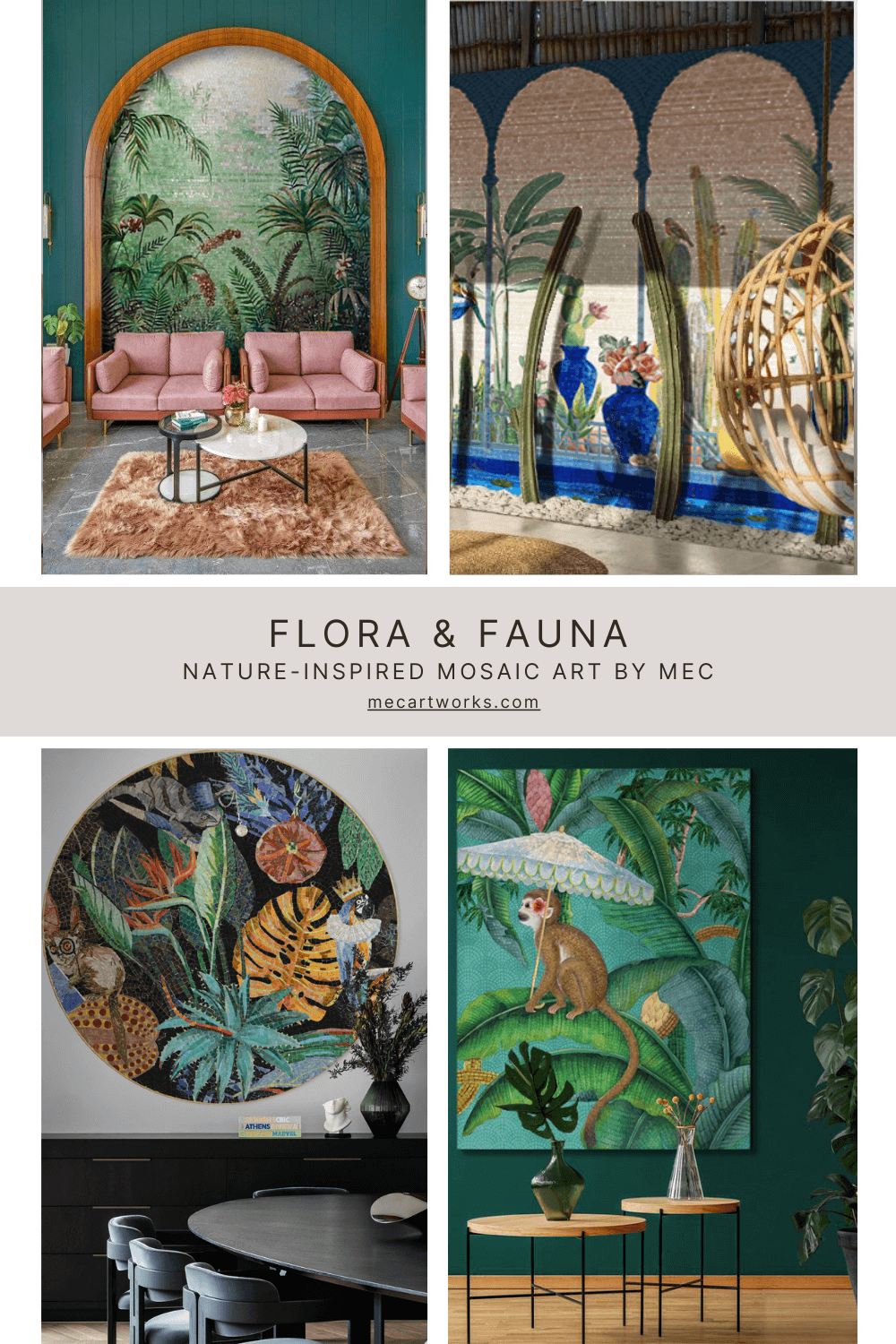
Nature-inspired mosaic patterns are designs that borrow their structure, rhythm, and color from the natural world. Instead of perfect symmetry or rigid geometry, they lean into:
- Organic flow (like currents, dunes, wind-swept sand)
- Natural repetition (like leaf veins, ripples, or scales)
- Soft gradients (like sunsets on stone or fog on mountains)
- Textural variation (like pebbles, bark, weathered rock)
These mosaic tiles can still look polished and intentional. They just don’t feel “sterile.” From interior feature walls to outdoor mosaic tiles for pools, patios, and exterior walls, this design approach connects architecture with nature in a way that feels intentional rather than decorative.
Nature-Inspired Mosaics vs. Geometric Mosaics
Geometric mosaics rely on clean rules: straight lines, repeated motifs, exact spacing. Nature-inspired mosaics use a different playbook:
- Nature repeats, but never copies.
- It balances variation with harmony.
- It creates patterns that feel found, not forced.
- Asymmetry that still feels intentional.
- Gradual color transitions, not harsh contrasts.
That’s why nature-inspired patterns with earthy tones, textures, and mosaic artwork with tropical themes work across.
Why Earthy Tones Feel So Good
Earth tones don’t scream for attention. They invite you in.
When you build a mosaic palette around mineral and soil-based hues, you get something designers love: timelessness. Bright, high-saturation trends come and go. Earthy tones and mosaic patterns tend to age gracefully.
Biophilic design research also connects nature-forward environments with better comfort and well-being. Reviews and studies on biophilic strategies repeatedly emphasize the value of natural materials, nature references, and sensory comfort in built spaces. And if you like hard numbers, an article summarizes and reports benefits, including a 15% productivity boost after adding plants to an office environment. That’s not mosaic tiles specifically, but it supports a bigger point; people respond to nature cues.
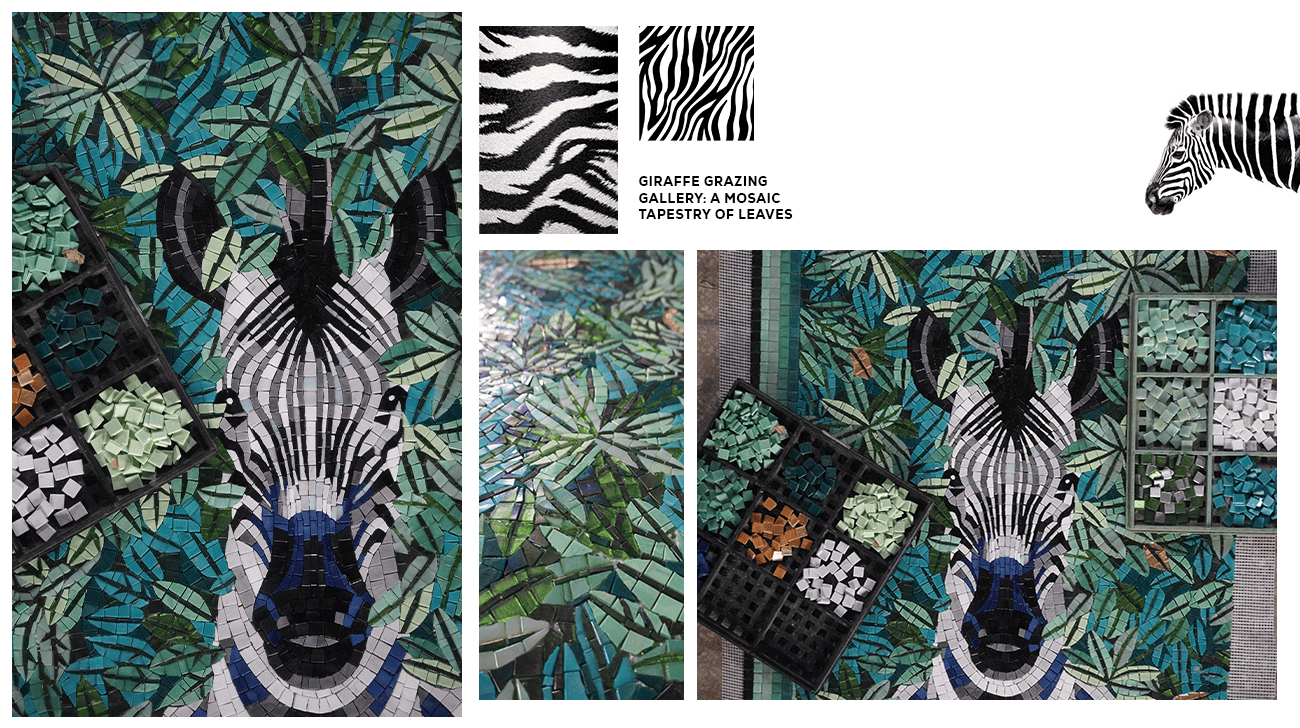
At MEC Artworks, we’ve spent years watching people fall in love with nature-inspired mosaic patterns, what biophilic design is all about. There’s something special about them. Maybe it’s the way they make a room feel alive. Or how they remind us of weekend hikes and ocean waves.
Earthy Color Palettes for Nature-Inspired Mosaic Patterns
Earthy doesn’t mean “all beige, all the time.” It means your colors feel like they belong in a landscape or in a nature panorama.
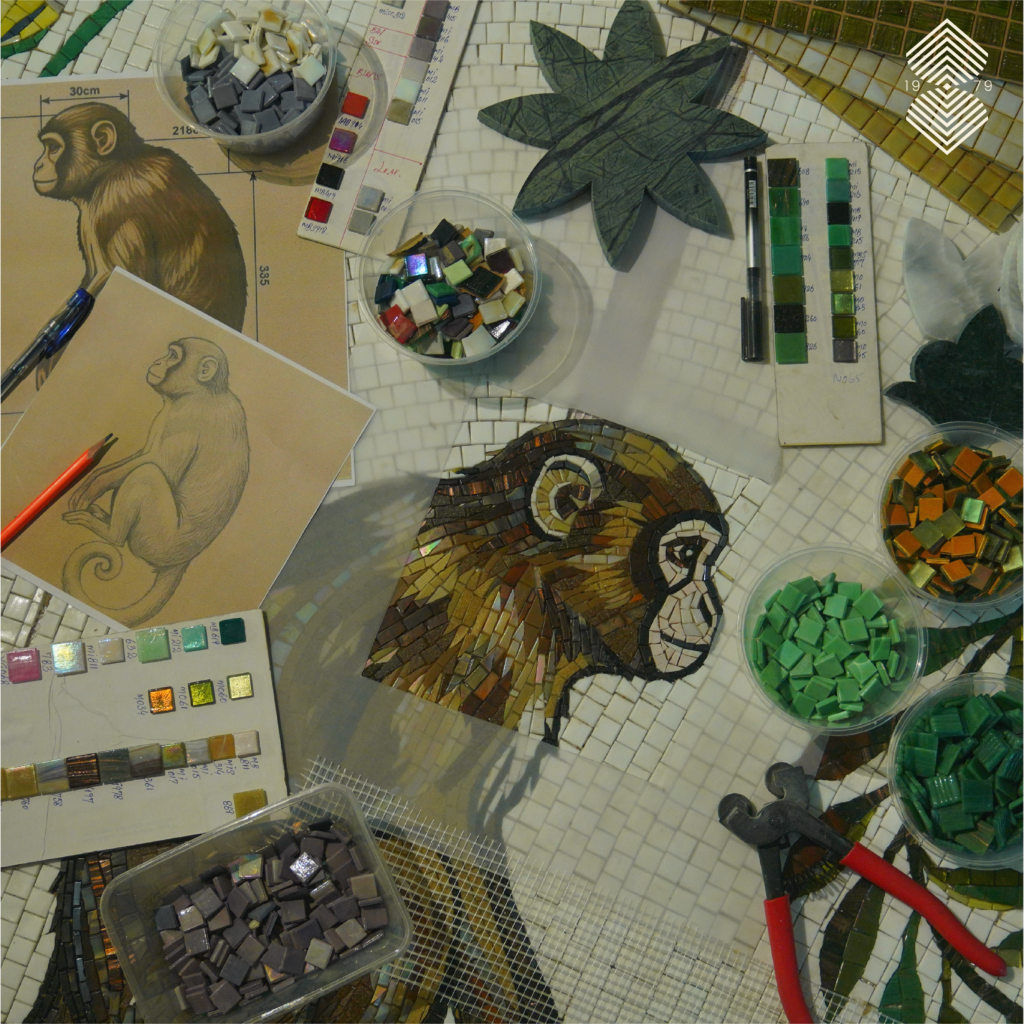
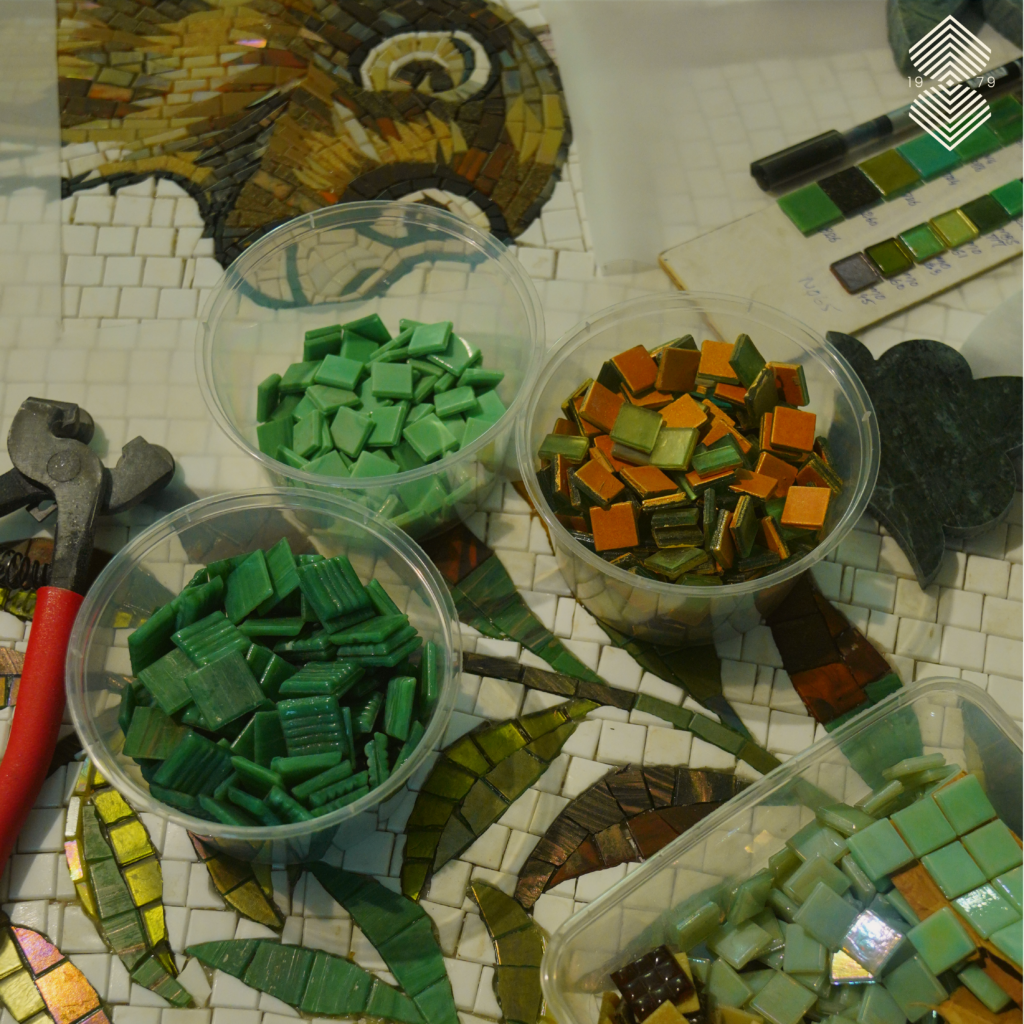
Neutral & Grounded Palettes
These are the “deep breath” colors:
- Warm white
- Linen
- Sand
- Putty
- Greige
- Soft mushroom brown
They work beautifully as nature-inspired mosaic patterns for outdoor walls, as well as for:
- Large floors
- Shower surrounds
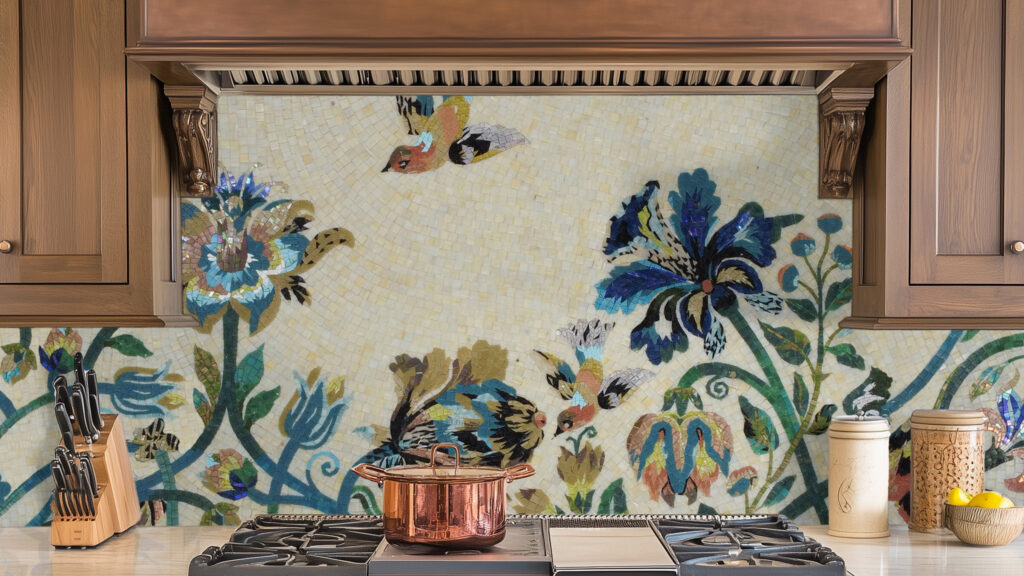
- Mosaic tile for kitchen backsplashes
- Minimalist feature walls
Stone & Mineral Tones
These colors carry visual weight without feeling heavy:
- Slate gray
- Basalt charcoal
- Limestone cream
- River-rock mixed grays
- Smoky quartz tones
These shades work especially well in marble wall mosaic patterns and natural stone mosaic installations, when you want a surface to feel architectural. Think fireplaces, entryways, and modern powder rooms.
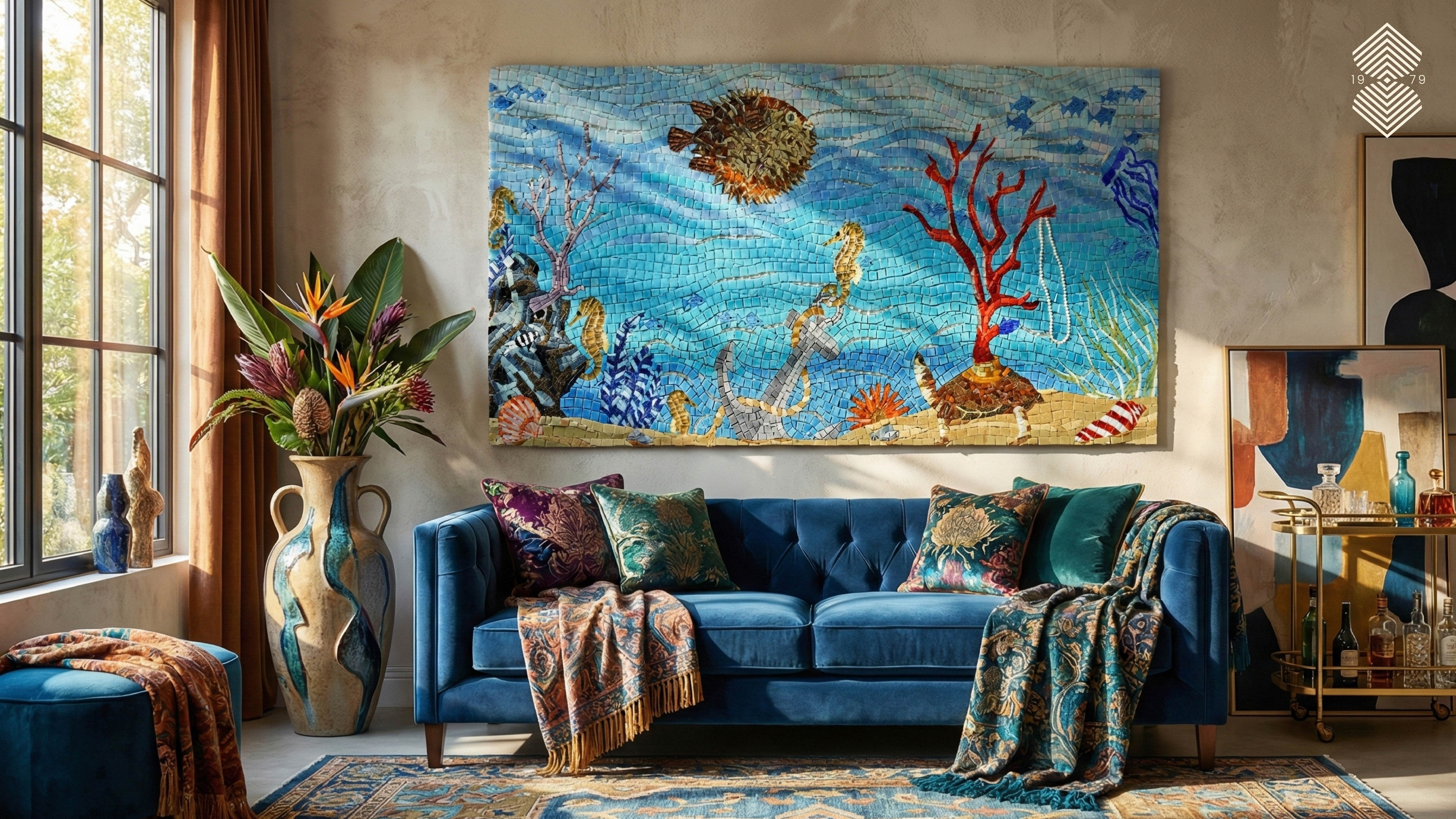
Clay & Soil Shades
These add warmth and a handcrafted vibe:
- Terracotta
- Rust
- Ochre
- Cinnamon brown
- Burnt sienna
They pair naturally with textured mosaic tile ideas, especially in:
- Kitchen niches
- Mediterranean-style garden mosaic mural
- Accent borders
- Artistic murals
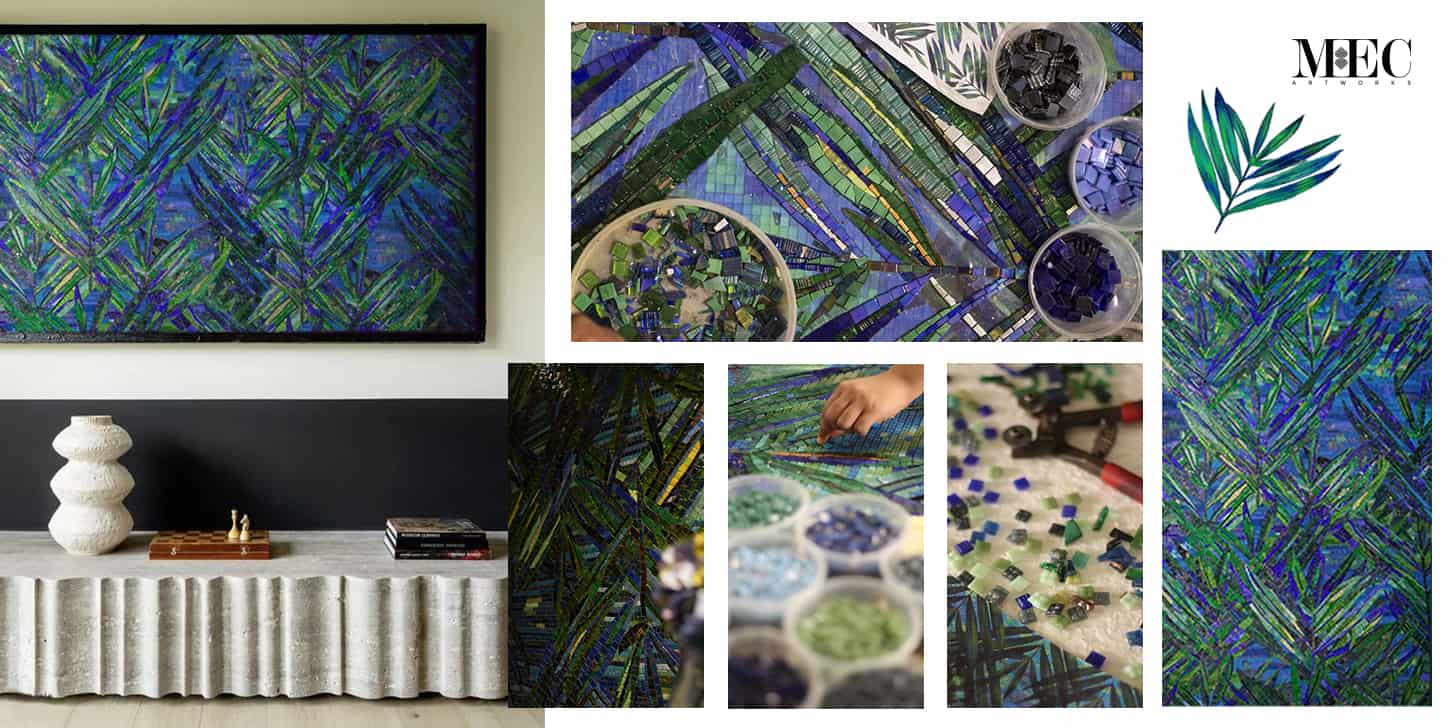
Botanical Nature Accents
You don’t need neon to create contrast. Botanical color palettes often introduce muted accents inspired by plants and water:
- Moss green
- Sage
- Sea-glass blue
- Muted teal
- Soft olive
Used sparingly, these hues elevate botanical mosaic ideas without overpowering the design.
| Tip: If you’re unsure, start with a neutral base. Add one accent tone. Then add one “shadow color” (like charcoal). That trio usually sings. |
Textured Mosaic Tile Ideas: The Secret Behind Nature Mosaics
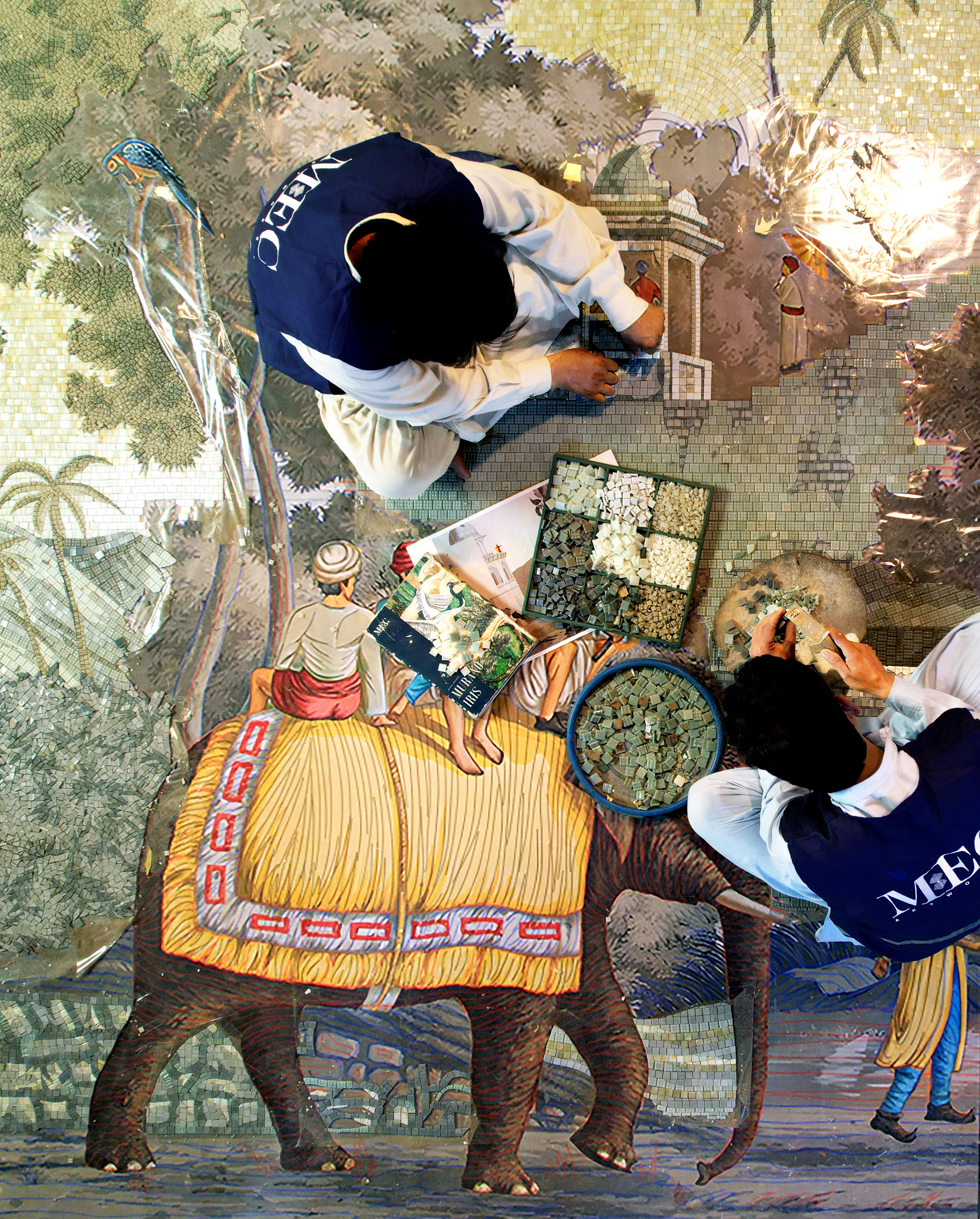
If color is the melody, texture is the bassline of any mosaic tile design. You may not notice it at first. Then you realize the whole room feels richer. Moreover, earth tones and natural textures must work together to create a design that is harmonious with its surroundings.
Matte vs. Polished Finishes
- Matte mosaic tiles evoke an organic, modern, and calming aesthetic. They hide water spots better, too.
- Polished mosaic tiles bounce light and have a luxurious look. They can also show smudges and scratches more easily.
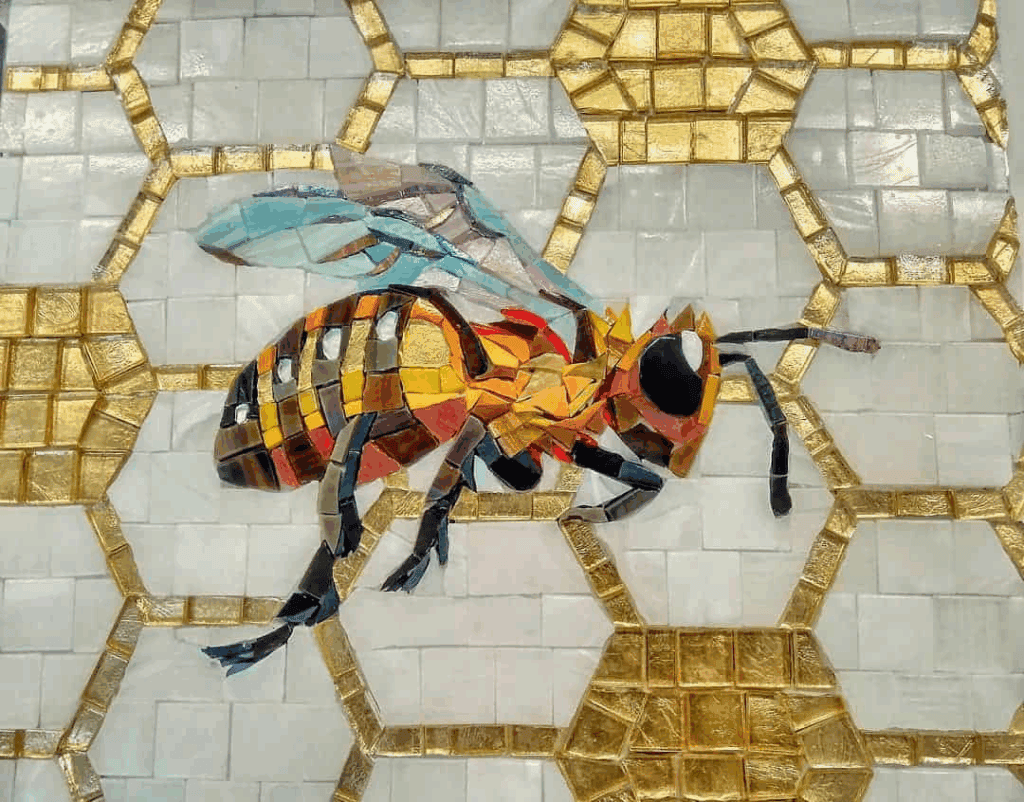
A smart approach mixes both. Imagine a mostly matte stone mosaic with botanical bliss Murano glass mosaic pieces. The result looks like sunlight glancing off wet rock.
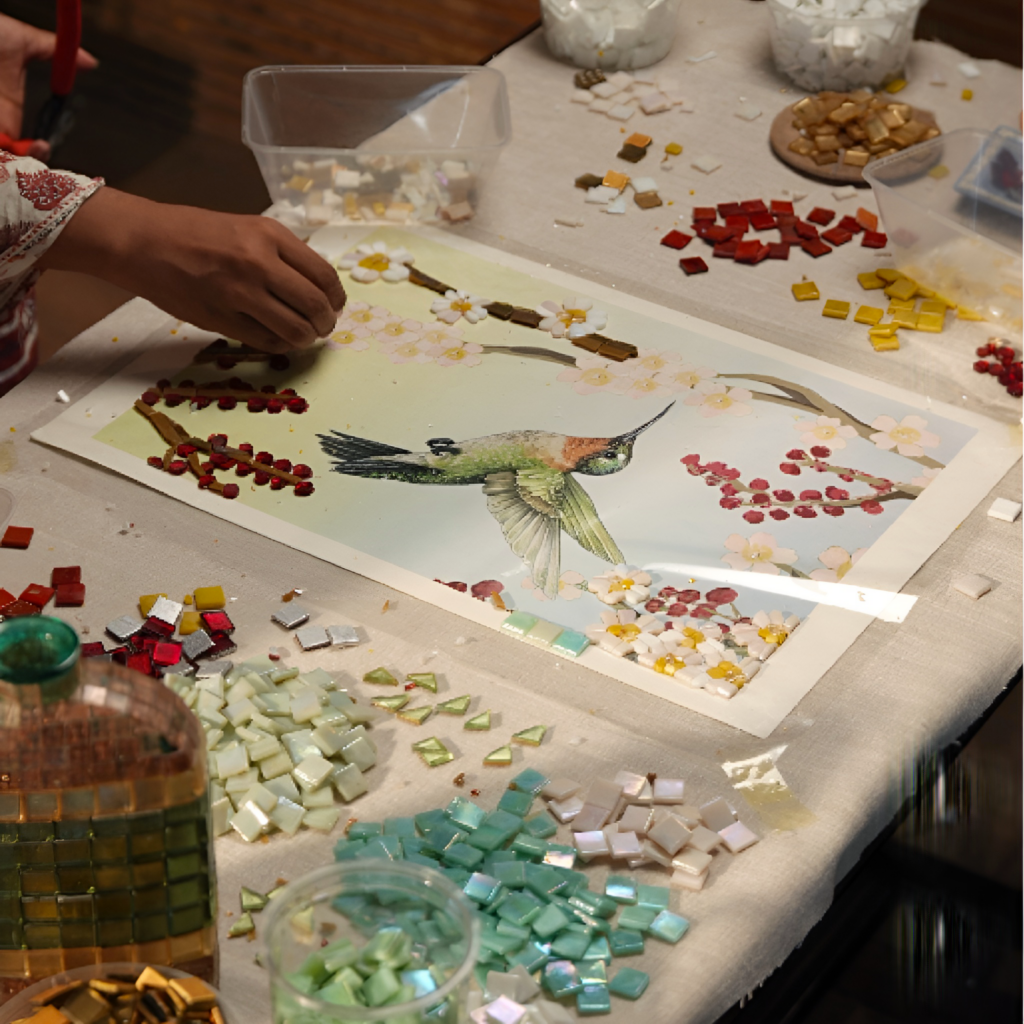
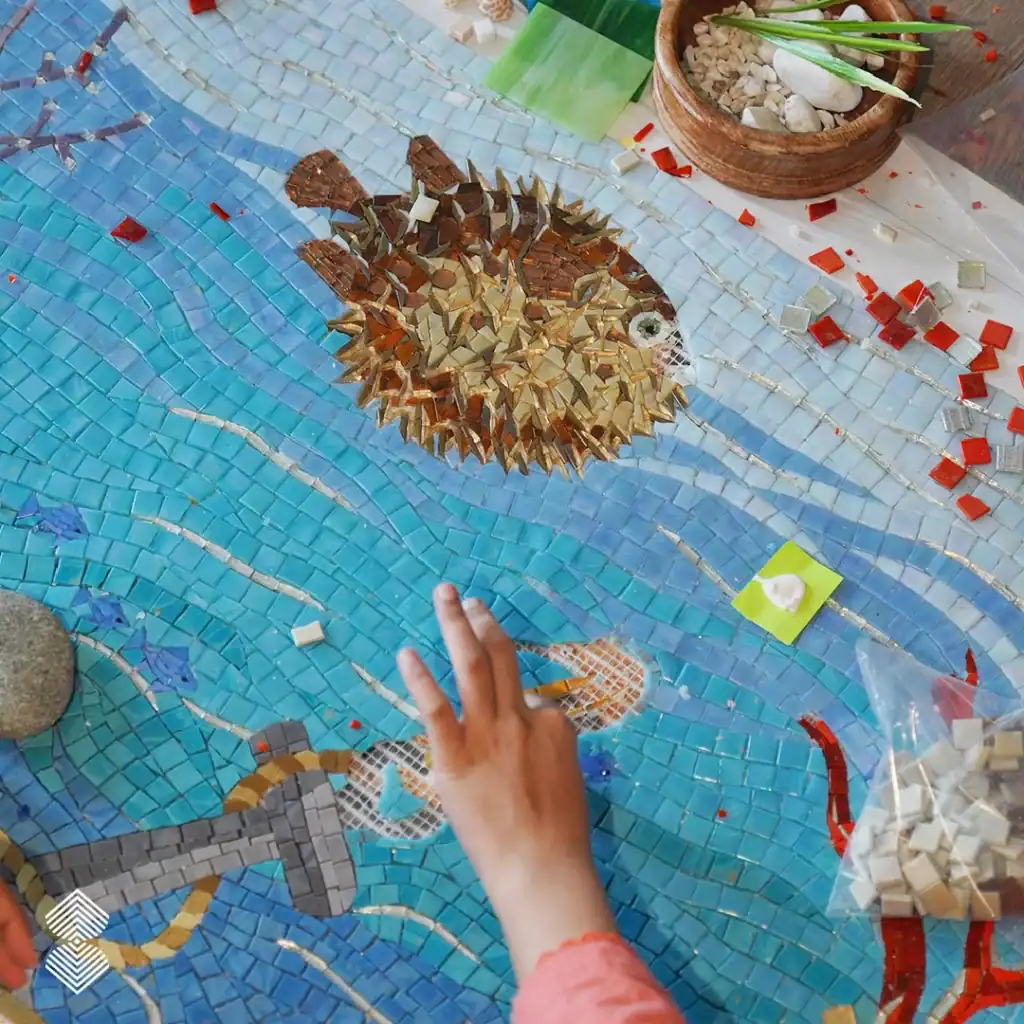
Hand-Cut Tesserae and Organic Edges
Hand-cut (or hand-finished) tesserae often have:
- Slight size variation
- Tiny edge chips (in a good way)
- Micro-shadows between pieces
This “imperfect perfection” is central to textured natural stone mosaic patterns for patios and gardens.
Layered Texture and Relief
Some mosaic tiles vary in thickness slightly. That creates a tactile surface and dramatic shadow play, especially on walls with angled lighting.
Where it works best:
- Feature mosaic walls
- Fireplace surrounds
- Spa-like shower walls
- Artistic niches
Where to be cautious:
- High-traffic floors (unless designed for it)
- Surfaces that need easy wipe-down (like behind a greasy cooktop)
Materials Used in Nature-Inspired Mosaic Patterns
Material choice isn’t just aesthetics. It affects durability, porosity, maintenance, slip resistance, and cost.
Natural Stone Mosaic Tiles
Natural stone mosaic remains a cornerstone of organic design. Other common options:
- Marble
- Limestone
- Travertine
- Granite
- Slate
Marble mosaic patterns with earthy tones and texture are especially popular for showers, baths, vanities, and shaded outdoor spaces.
Why people love them: Natural veining and subtle variation make patterns feel authentic.
Watch-outs: Many stones are porous. They need sealing in wet or stain-prone areas.
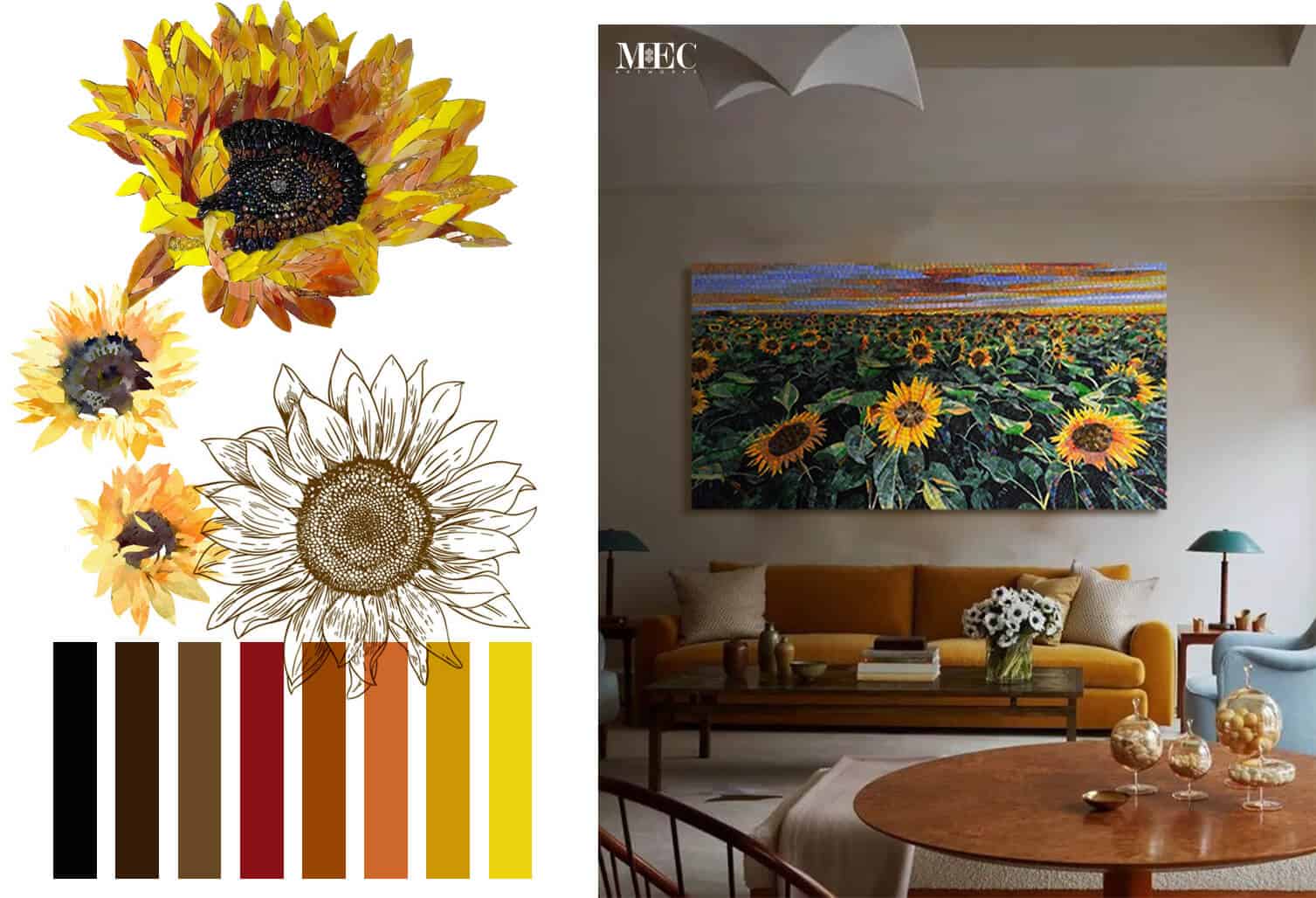
Ceramic Mosaic Tiles
Ceramic can mimic stone, clay, or cement. It’s versatile and often budget-friendly. Best for:
- Backsplashes
- Decorative wall mosaic tiles
- Moderate-traffic floors (depending on rating)
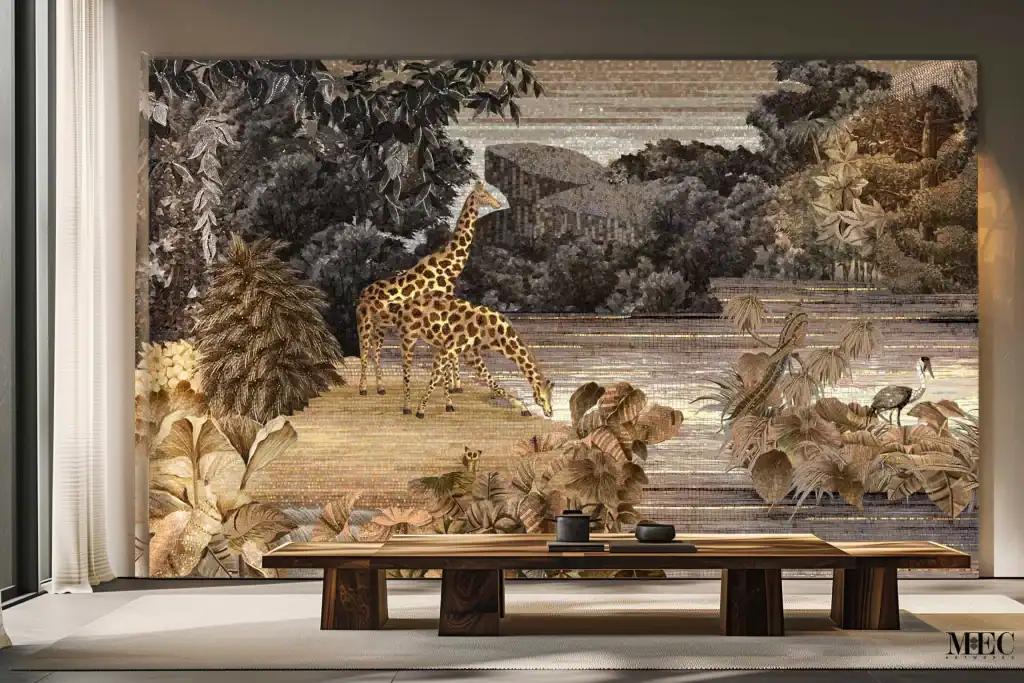
Porcelain Mosaic Tiles
Porcelain tends to be denser and less porous than ceramic. It’s a strong pick for:
- Mosaic tiles for swimming pools, patios, and exterior walls
- Wet areas such as showers and spas
- High-traffic commercial flooring
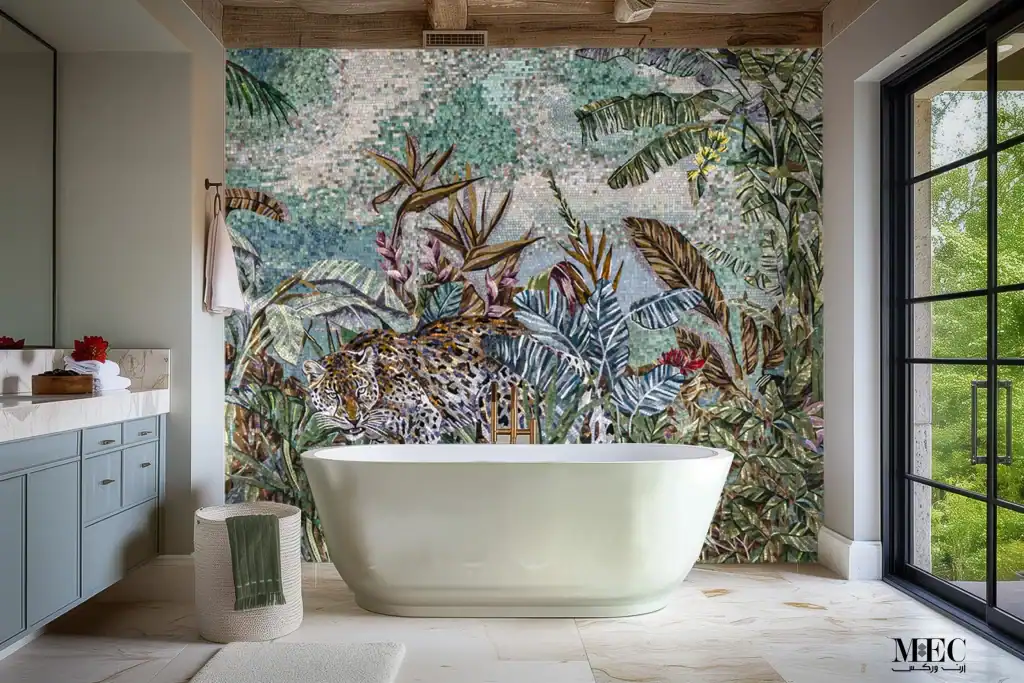
Glass Mosaic Tiles (in earthy tones)
Glass doesn’t have to be shiny turquoise. You can use:
- Frosted glass
- Matte glass
- Smoky neutrals
- Sea-glass tones
Use glass to:
- Enhance the botanical pool mosaic tile
- Introduce light play into darker palettes
- Add contrast without overpowering the stone
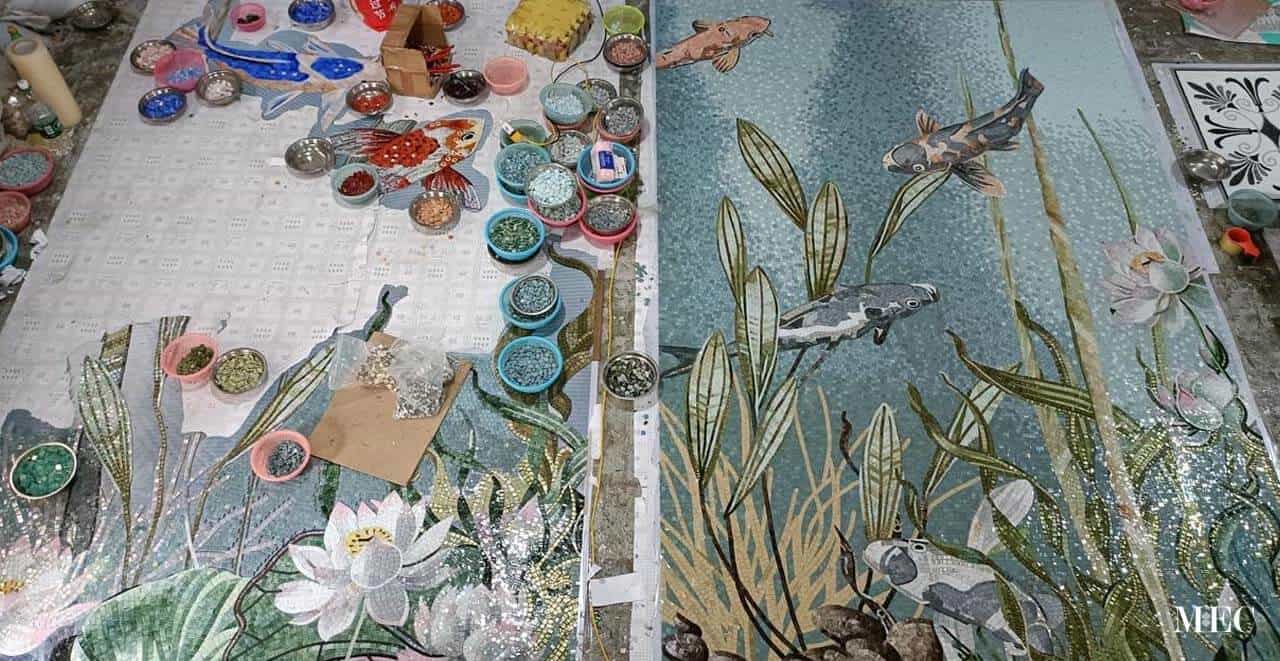
Sustainable and Recycled Mosaic Tiles
Recycled glass mosaic tiles have grown in popularity. They can look earthy, modern, and slightly luminous like a beach pebble with light trapped inside.
Table: Material Comparison for Nature-Inspired Mosaic Patterns
Here is a quick nature-inspired mosaic material table for you:
| Material | Best Look & Feel | Best Locations | Key Strength | Main Watch-Out |
| Natural stone | Organic, timeless, mineral-rich | Floors, showers, feature walls | Authentic variation | Needs sealing; can stain |
| Ceramic | Flexible, many finishes | Walls, backsplashes, light floors | Budget-friendly | Glaze can chip; it varies by quality |
| Porcelain | Clean, durable, modern-earthy | Floors, wet areas, outdoors | Low porosity | Can feel less “natural” if printed |
| Glass (matte/frosted) | Depth, light play, soft shimmer | Walls, accents, niches | Water resistant | Can scratch; shows residue |
| Recycled glass | Earthy-modern, eco-appeal | Walls, accents, and some floors | Sustainable option | Specs vary by brand |
Popular Nature-Inspired Mosaic Pattern Styles
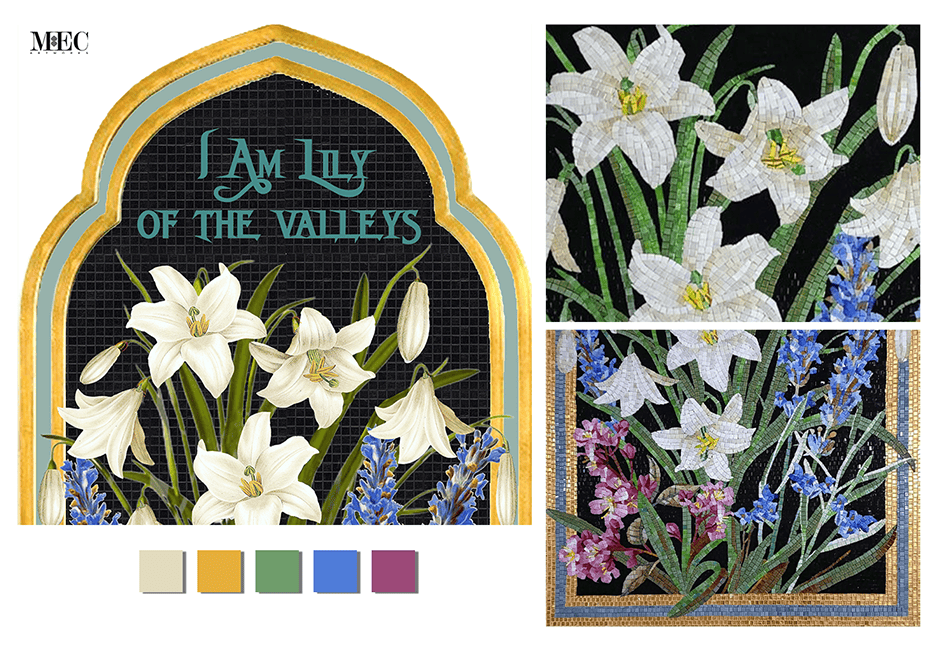
Nature offers endless inspiration, and mosaic design allows that inspiration to be interpreted in many subtle ways. Beyond flowing forms and pebble textures, several other nature-inspired mosaic patterns have gained popularity for both outdoor and indoor spaces.
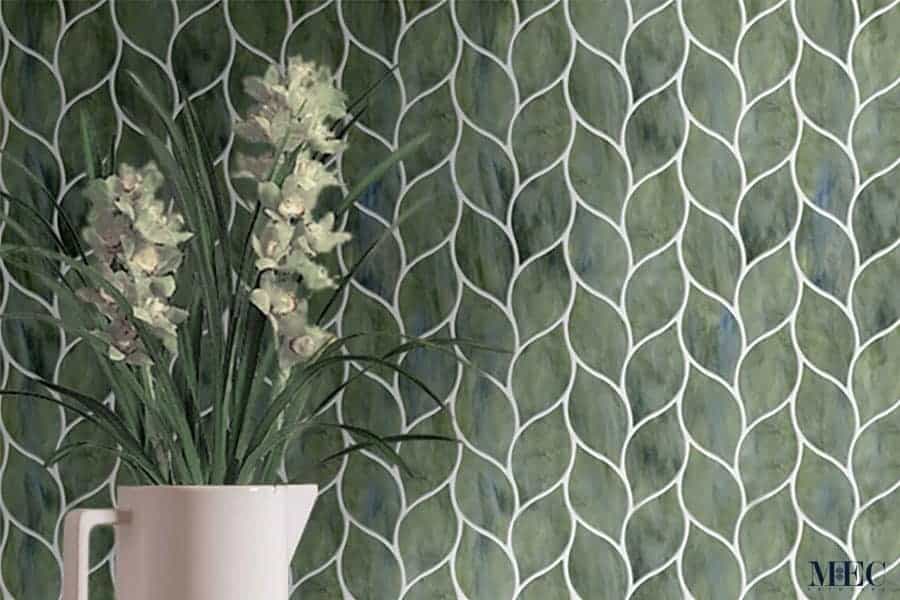
Leaf Mosaic Tile Patterns
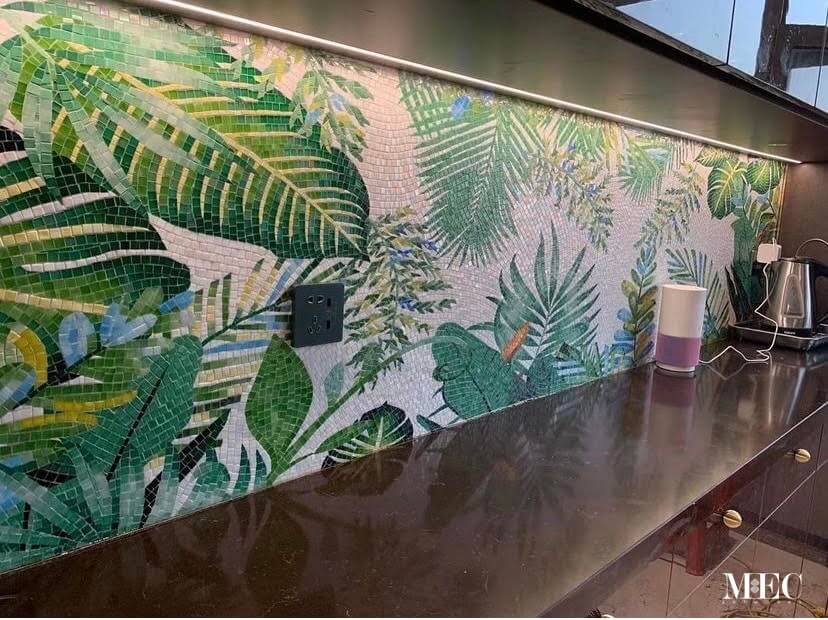
Leaf-inspired mosaic tile pattern translates botanical forms into elegant surface designs without feeling literal or decorative. These patterns often feature:
- Repeating or overlapping leaf shapes are arranged in a gentle motion.
- Vein-like detailing that mimics natural leaf structures.
- Soft transitions between greens, stone tones, and muted neutrals.
Leaf mosaic tile designs work beautifully for bathroom feature walls, spa areas, and calm kitchen backsplashes where nature-inspired details enhance daily routines.
Mosaic Flower Patterns
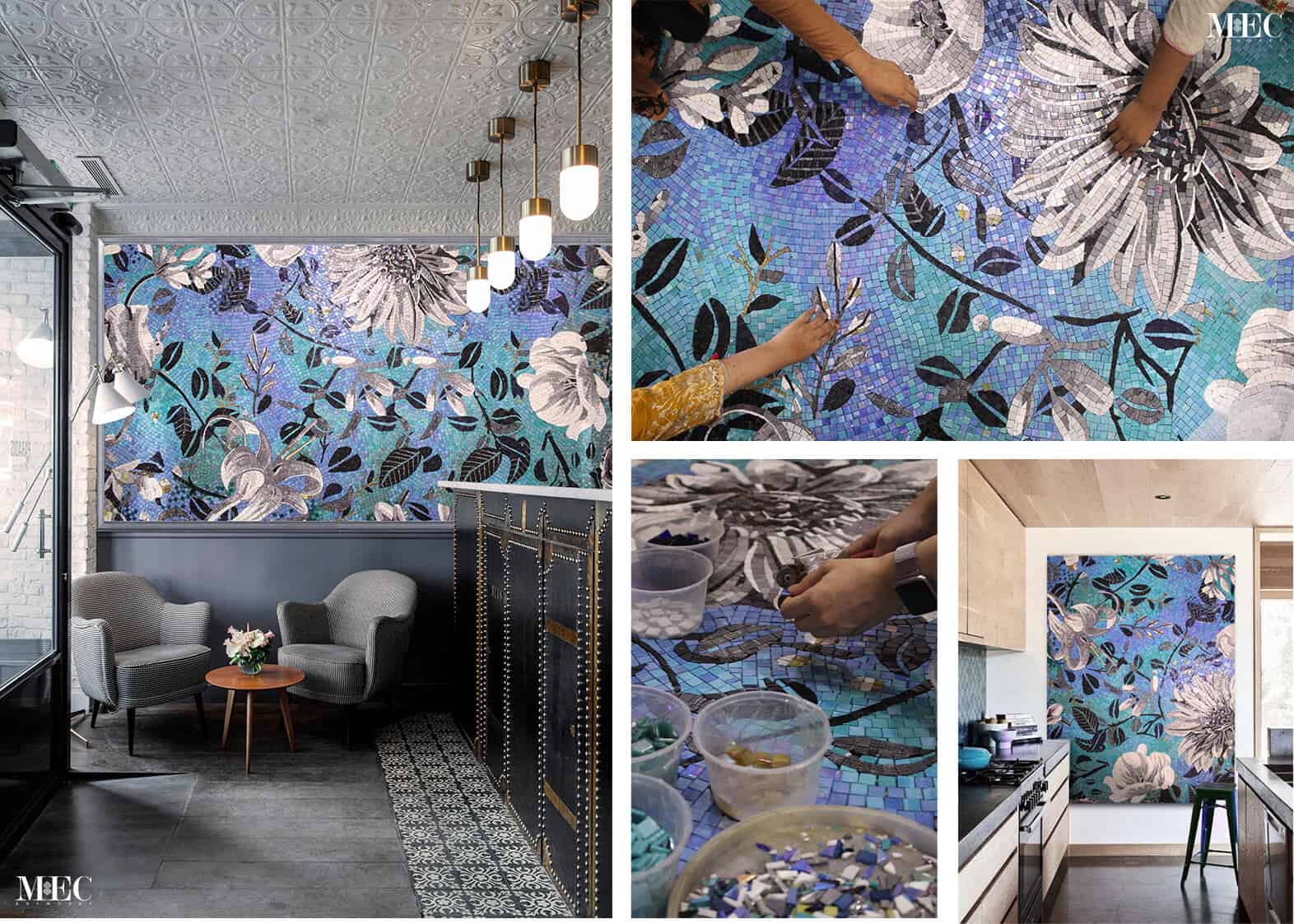
Modern mosaic flower patterns focus less on realism and more on abstraction. You’ll often see:
- Stylized floral outlines blended into stone backgrounds.
- Subtle petal-inspired geometry rather than bold imagery.
- Earthy palettes that keep the design refined and timeless.
These mosaic tiles are especially effective for flower mosaic patterns for bathroom feature walls, where they add softness without overpowering the space.
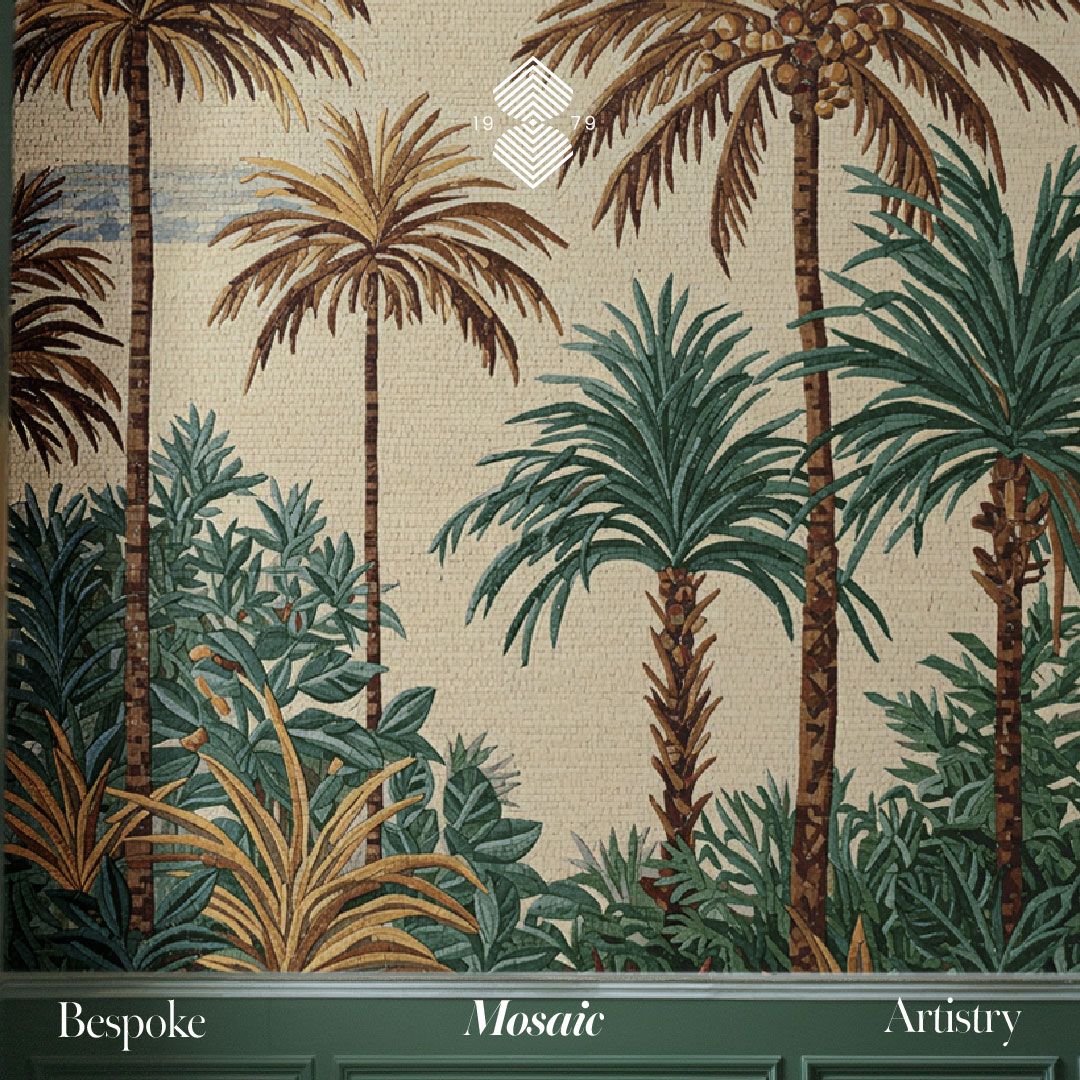
Mosaic Tree and Branch-Inspired Patterns
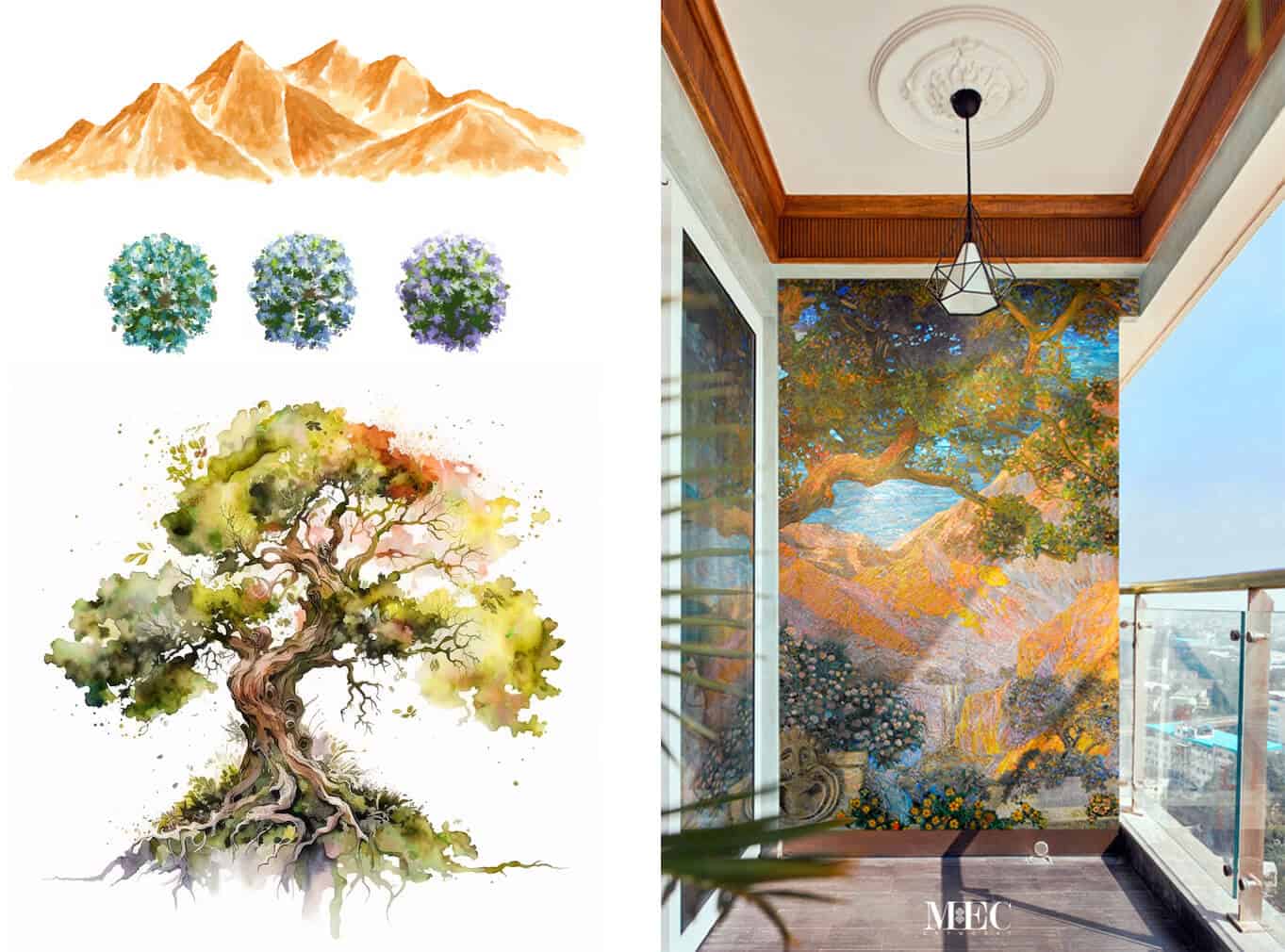
Tree-inspired mosaic tiles often appear symbolic rather than literal. Common designs include:
- Vertical flowing patterns suggesting tree trunks or branches.
- Organic linework that echoes natural growth paths.
- Layered stone tones to create depth and movement.
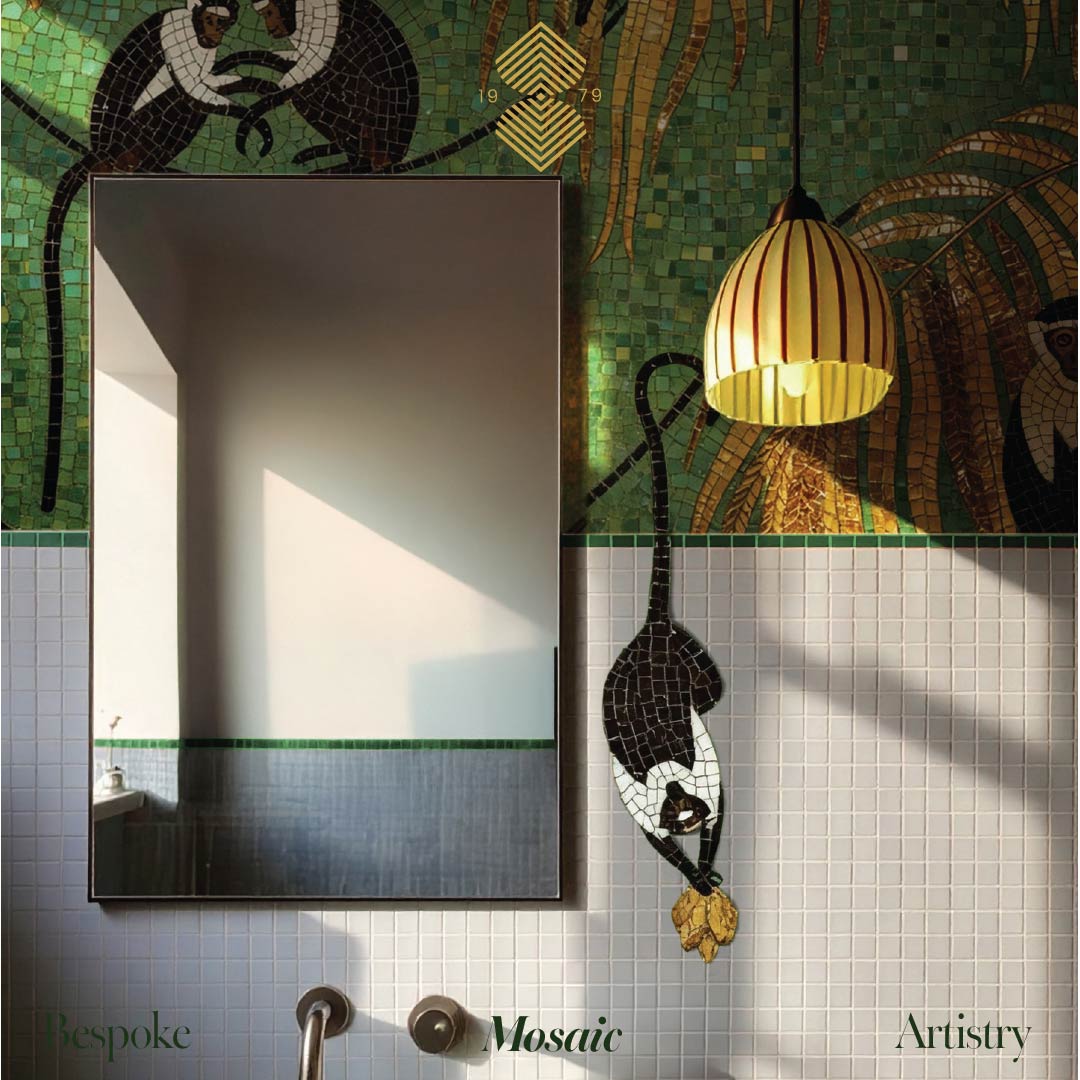
A palm tree mosaic pattern works well for outdoor feature walls, entry areas, and quiet reflection spaces where vertical movement enhances architectural height.
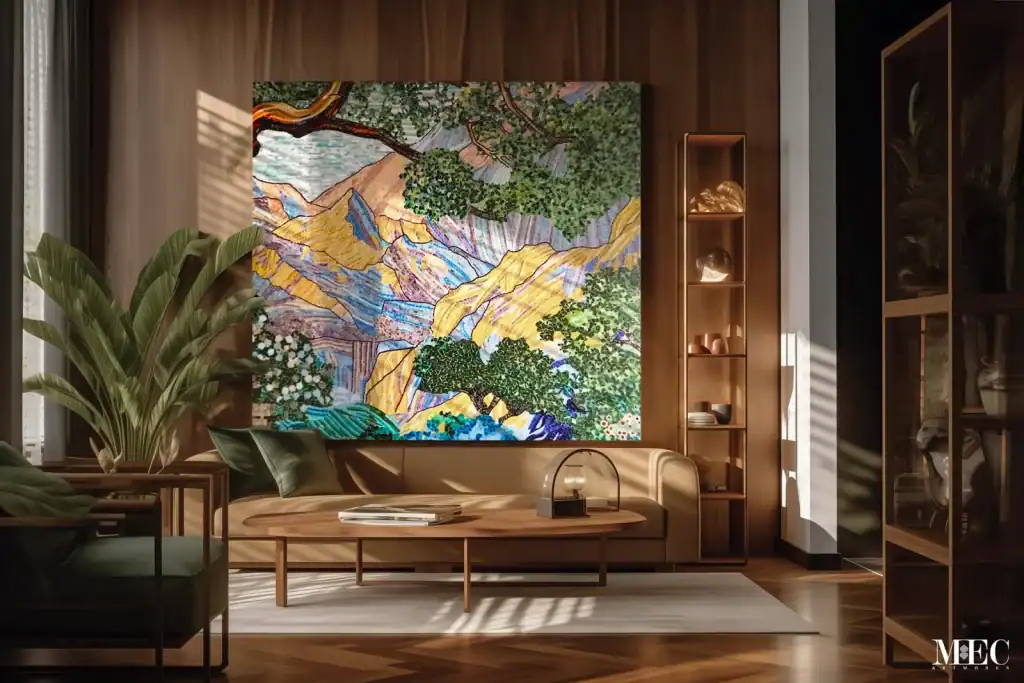
Mosaic Landscape-Inspired Design Patterns
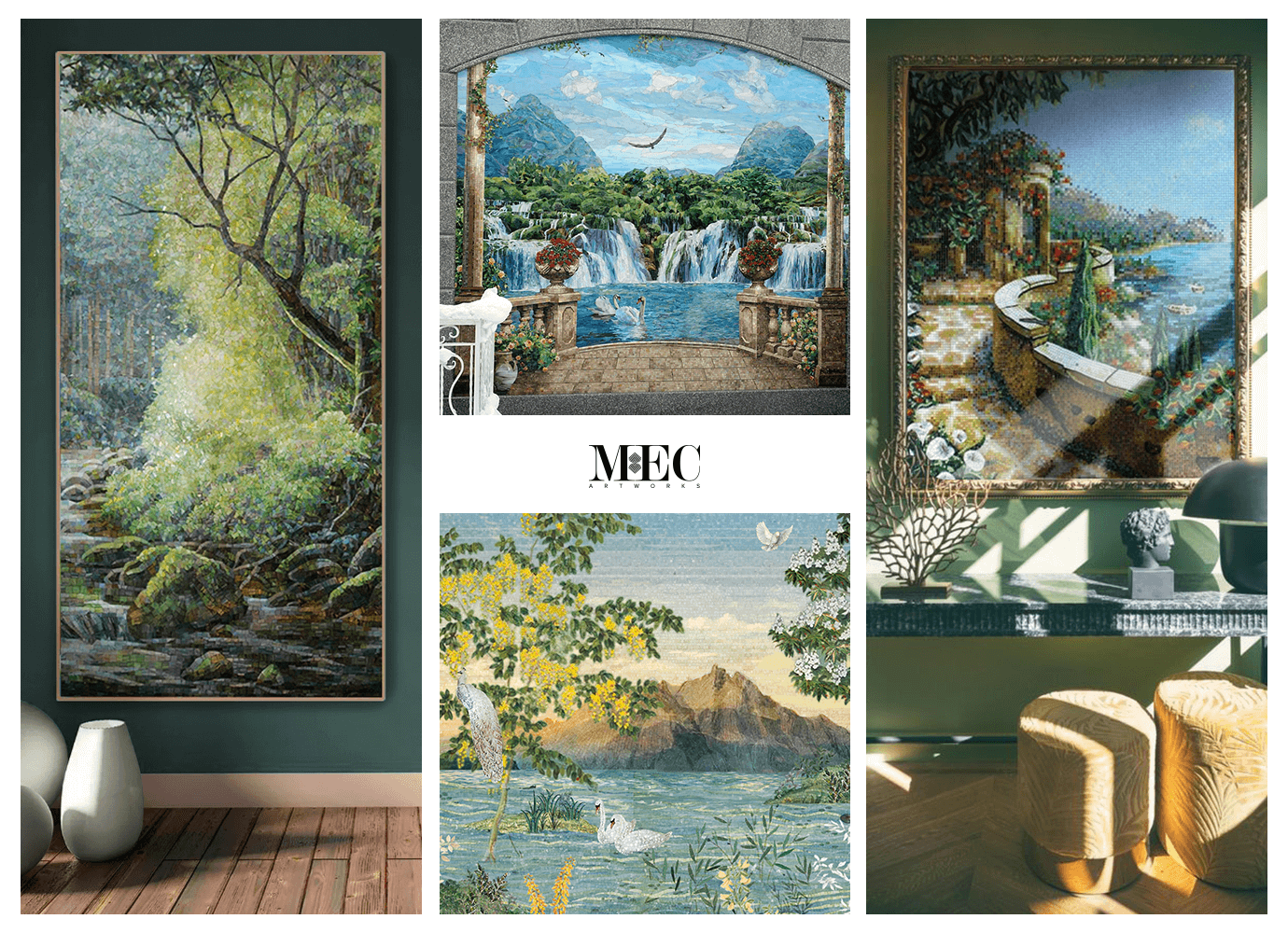
Landscape-inspired mosaic tiles bring together multiple natural elements into one composition. These designs often reflect:
- Layered stone tones resemble hills, valleys, or horizons.
- Gradual color shifts that suggest distance and depth.
- Horizontal movement is inspired by land formations.
A mosaic landscape pattern is ideal for large-scale walls, courtyards, and expansive outdoor surfaces where storytelling through texture becomes part of the architecture. See other visually stunning landscape mosaic art ideas.
Organic flow and Free-form Patterns
These designs look like:
- Water currents
- Smoke trails
- Wind-shaped dunes
- Topographic contours
Design trick: Use small tiles (like 10–20 mm) to smooth curves. Large pieces can look blocky.
“Wabi-sabi” Speckle and Mineral Scatter
Think terrazzo energy, but hand-cut mosaic tiles. Small, scattered stone or glass pieces look like mineral flecks in rock. Use it when:
- You want a modern look.
- You still want warmth.
- You hate overly busy patterns.
Where Nature-Inspired Mosaic Patterns Work Best
Some mosaic tiles belong front and center. Others shine as subtle supporting characters.
Living rooms and Feature Walls
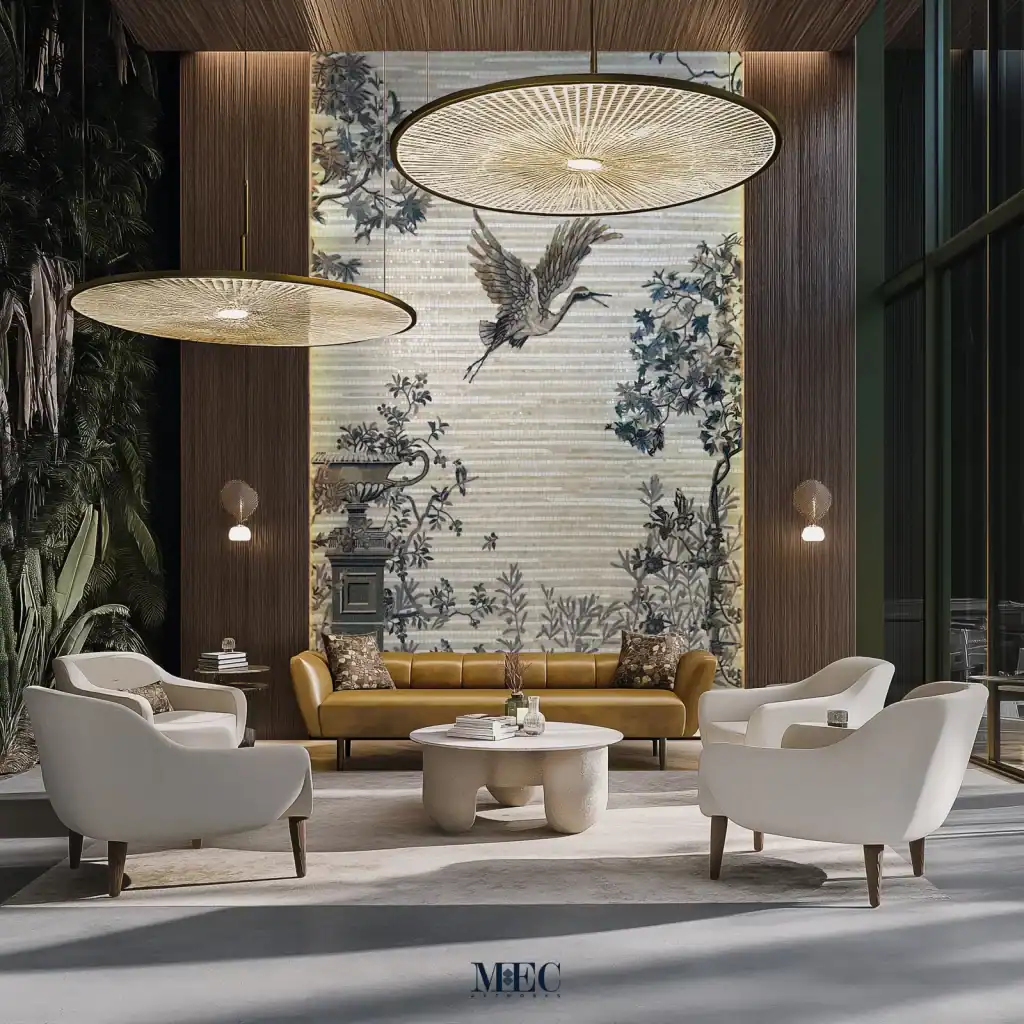
A nature-inspired mosaic wall can replace artwork. It’s functional and beautiful.
Great placements:
- Behind a console
- Around a fireplace
- In a double-height wall niche
Keep it readable: Use larger pattern moves in big spaces. Tiny, busy mosaic tiles can look like visual static.
Bathrooms and Wellness Spaces
Bathrooms love earthy mosaic tiles. Stone + water makes sense. The textures also boost that spa vibe.
Best applications:
- Pebble mosaic shower walls
- Feature walls with leaf or floral motifs
- Vanities accented with marble mosaic patterns
Kitchens and Dining Areas
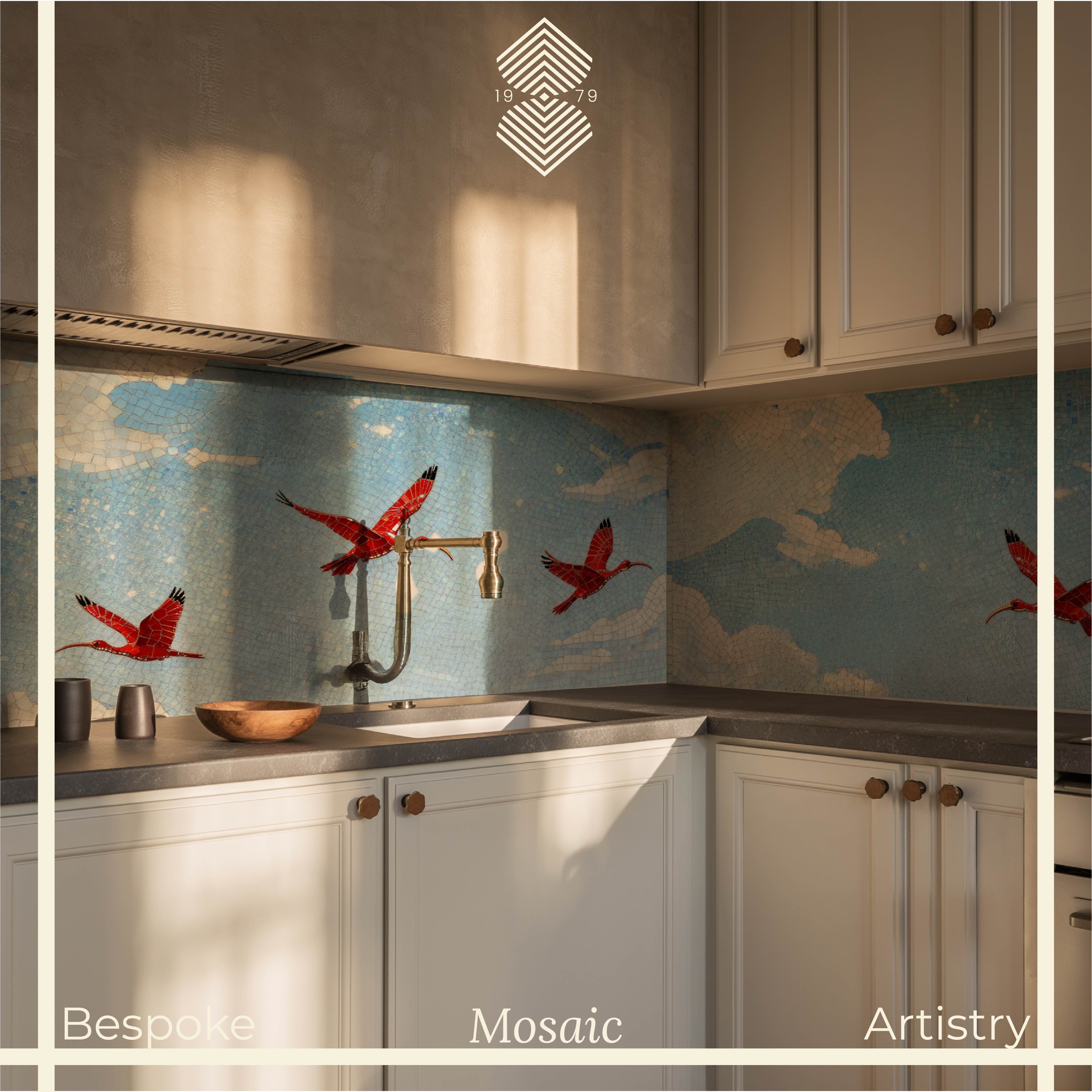
Mosaic tiles in kitchens work best as:
- Botanical mosaic patterns for kitchens and bathrooms on backsplashes
- Accent panels behind shelving
- Island or bar-front cladding
Choose materials and grout colors wisely. Light grout near cooking zones shows stains faster.
Outdoor Walls, Patios, and Gardens
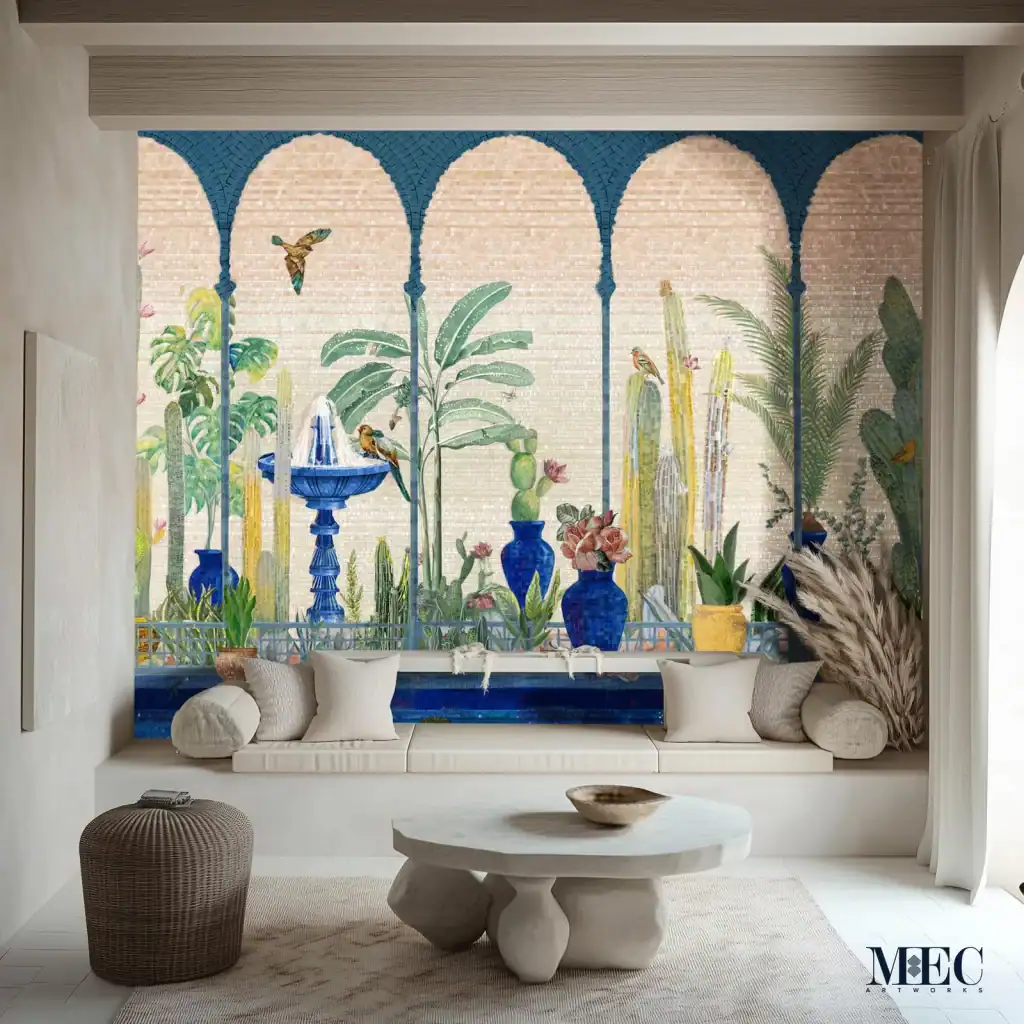
Nature-inspired mosaic tiles feel most authentic outdoors. They are widely used for:
- Outdoor mosaic wall art
- Boundary and feature walls
- Garden/patio outdoor mosaic tiles
- Exterior seating and dining zones
Pools and Water Features
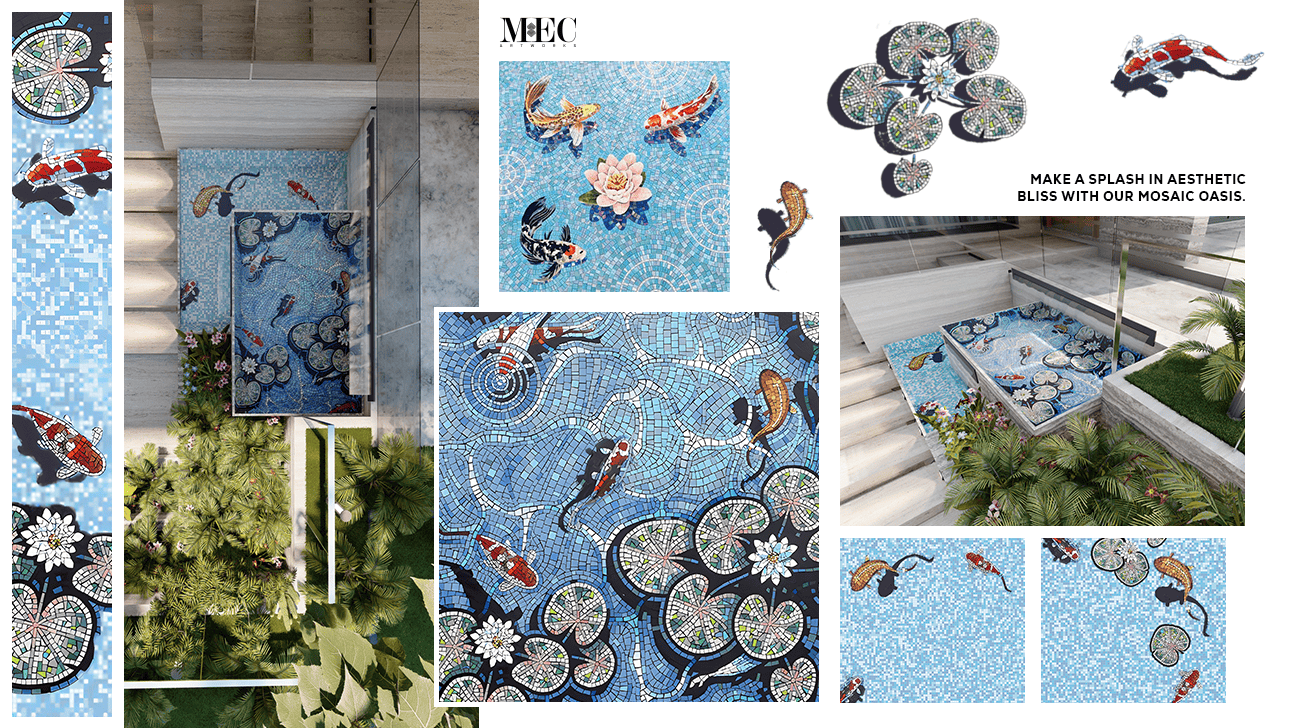
Water enhances texture and color depth. Common uses include:
- Botanical series pool tile
- Pool wall accents
- Step and waterline detailing
Nature-Inspired Mosaic Flooring vs. Plain Stone Flooring
Both can look stunning. They just tell different stories.
Visual Depth and Movement
- Plain stone slabs feel calm and continuous.
- Mosaic flooring adds rhythm, detail, and personality.
If you want a surface to be the “quiet backdrop,” choose slabs. If you want it to be a talking point, choose glass mosaic tiles.
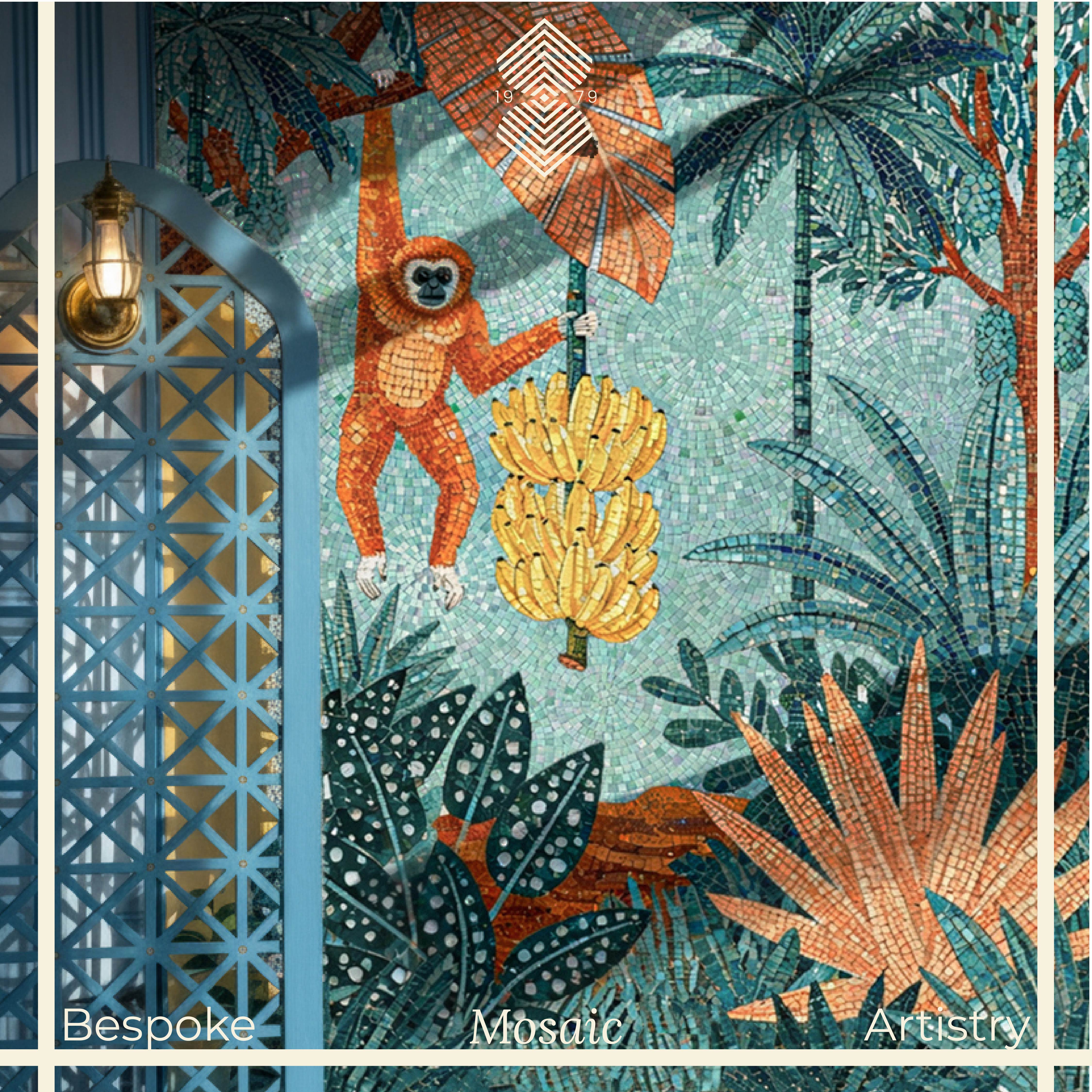
Customization and Design Freedom
Mosaic tiles give you customization options like:
- Borders
- Medallions
- Flowing gradients
- Murals and imagery
- Area “rugs” without fabric
Slabs give you:
- Consistency
- Faster installation (often)
- Fewer grout lines
Practical Performance
Mosaic floors can improve traction because grout lines add grip. That’s useful in wet spaces.
However, more grout also means more cleaning effort. Trade-offs happen. Choose the trade-offs you can live with.
Advantages of Nature-Inspired Mosaic Patterns with Earthy Tones and Textures
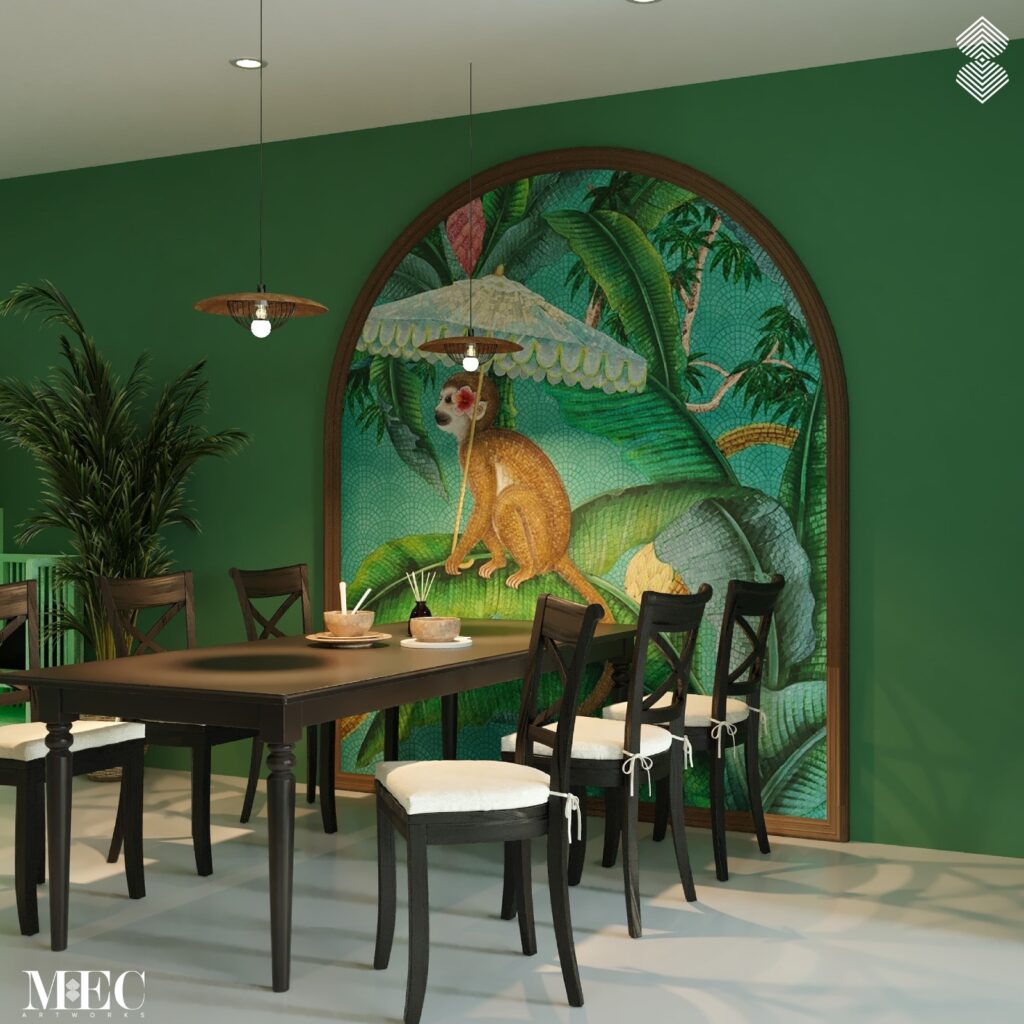
Let’s make it plain. These decorative mosaic tiles deliver real-world benefits.
- Timeless style: Earth tones resist trend burnout.
- Emotional comfort: Through natural resource references.
- Better visual balance: Organic patterns soften harsh architecture.
- Flexible design range: Works with modern, rustic, coastal, Japandi, and classical mosaic styles.
- Light-friendly: Earthy mosaics look great in both natural and warm artificial lighting.
- Tactile comfort: Texture makes spaces feel more human.
Moreover, earthy hues and abstract mosaic tiles don’t force a theme. They simply create an atmosphere.
Maintenance and Care for Earth-Tone Mosaic Surfaces
Good news: mosaic upkeep doesn’t need drama. You just need the right habits.
Daily and Routine Care
- Sweep or vacuum grit often (grit scratches).
- Mop with warm water and a pH-neutral cleaner.
- Rinse if residue builds up.
Natural stone care guidance commonly recommends pH-neutral cleaners to protect stone surfaces.
Sealing Natural Stone Mosaic Tiles
If you use porous stone (like limestone or travertine) in wet or stain-prone zones, sealing helps. General timing people follow:
- Seal after installation once grout cures (follow product instructions).
- Re-seal based on wear and exposure (often every 1–3 years, depending on product and use).
Always follow the sealer manufacturer’s specs. Stone types behave differently.
Grout Care and Color Preservation
Grout colour is the savior of mosaic tiles. It holds the mosaic together visually and structurally. Tips:
- Use a grout sealer where appropriate.
- Clean spills quickly, especially oils and acids.
- Consider stain-resistant grout options if you hate maintenance.
Crafting Nature-Inspired Mosaics with MEC Artworks
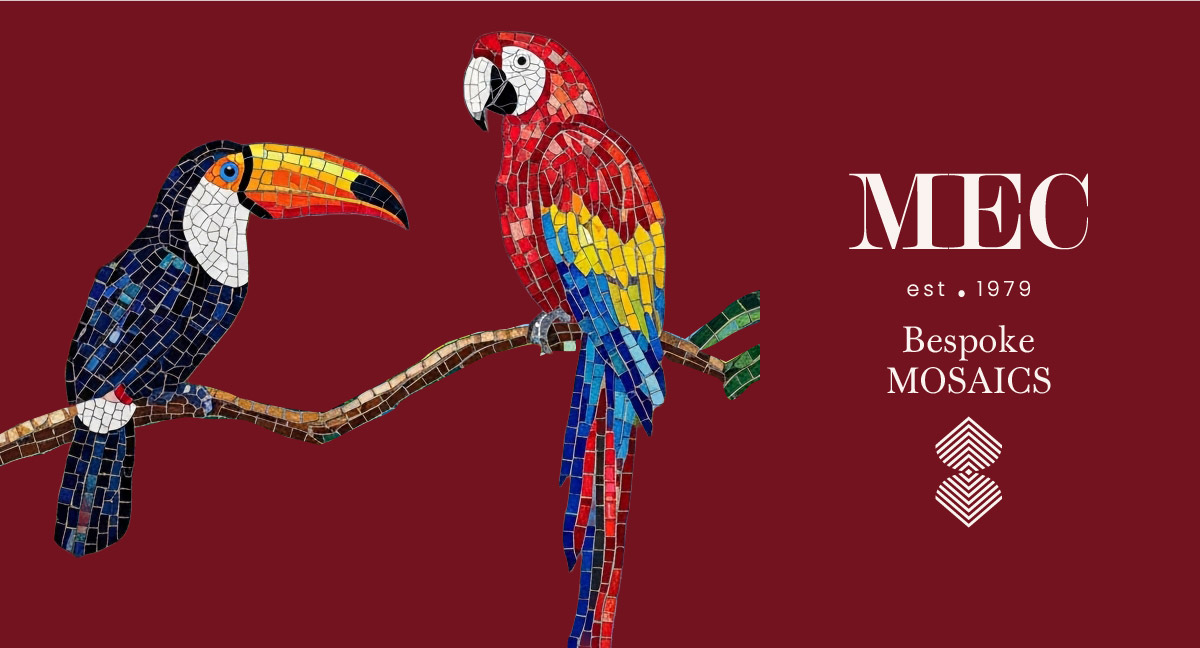
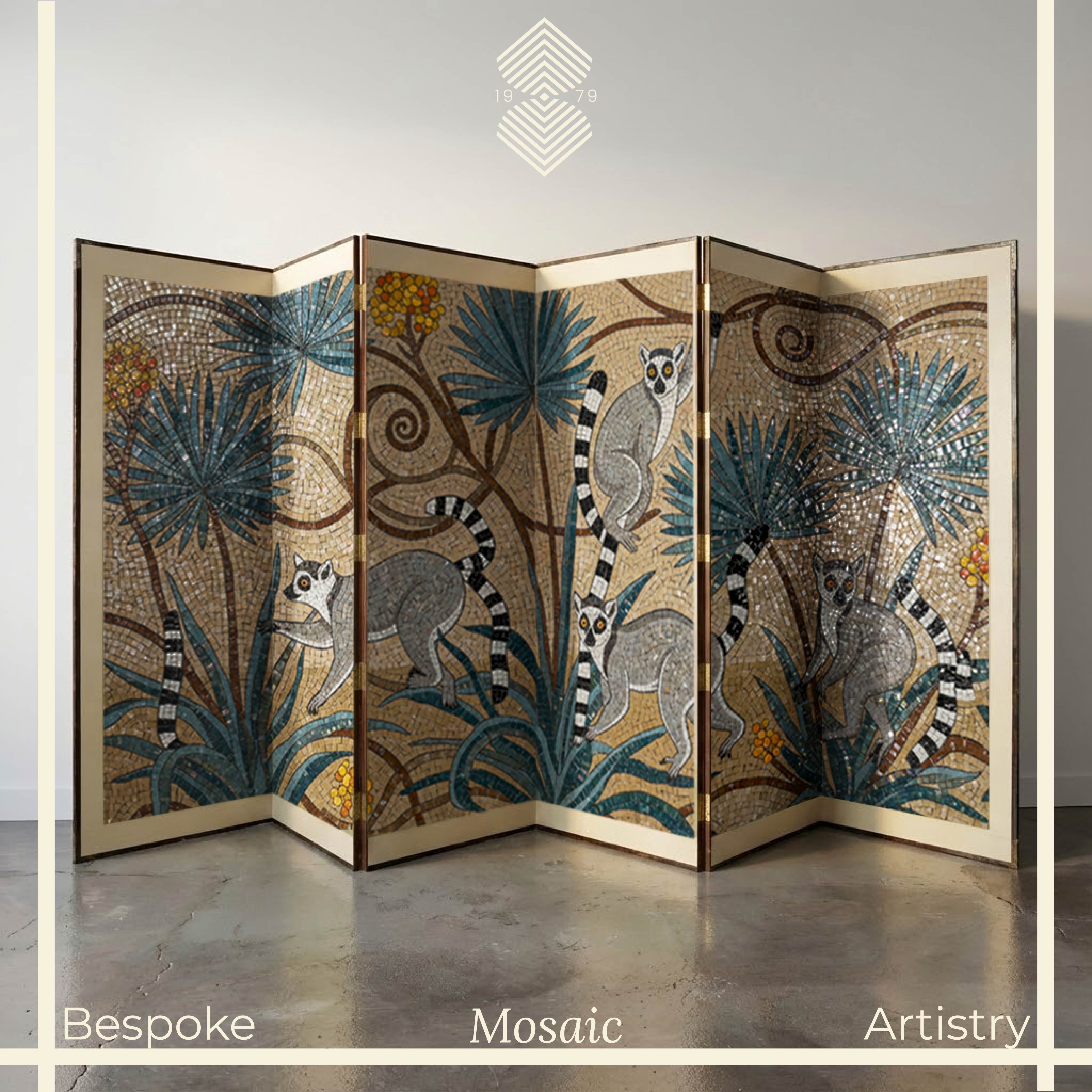
At MEC Artworks, nature-inspired mosaic design is never treated as a surface-level trend. It’s approached as a form of artistic expression rooted in material honesty, texture, and balance. Each mosaic begins with an understanding of:
- How natural light interacts with texture.
- How earthy tones behave across large and small surfaces.
- How organic patterns should flow within architectural boundaries.
From marble mosaic patterns with earthy tones and texture to handcrafted glass mosaic installations, MEC Artworks focuses on creating mosaic tiles that feel connected to their surroundings. Every design respects proportion, material integrity, and the quiet beauty found in nature itself.
Whether the project involves botanical pool mosaics, outdoor mosaic wall art, or interior feature walls, the goal remains the same: to translate nature into enduring mosaic art that feels intentional and refined.
Conclusion: The Enduring Beauty of Nature-Inspired Mosaic Patterns
Trends often chase attention. Nature never does.
That’s why nature-inspired mosaic patterns continue to resonate across interiors, exteriors, and landscapes. When combined with earthy tones, mosaic patterns, natural textures, and thoughtful craftsmanship, mosaic tiles become more than decorative elements. They become part of the space’s emotional language.
From botanical mosaic patterns for kitchens and bathrooms to outdoor mosaic tiles for pools, patios, and exterior walls, organic mosaic tiles create environments that feel calm, grounded, and timeless. Texture adds warmth. Earthy colors add balance. Nature provides the blueprint. And when mosaic design follows that blueprint carefully, the result is art that doesn’t just look beautiful; it feels right.
FAQ’s
Which earthy tones work best for mosaic patterns?
Browns, greens, beiges, grays, and terracotta are winners. These colors appear everywhere in nature. At MEC Artworks, we love mixing warm and cool tones. Sage green with sandy beige. Charcoal gray with rust orange. Nature mixes colors fearlessly. So should you.
Can flower mosaic patterns work in small bathrooms?
Yes! Small spaces actually benefit from focal points. A flower pattern on one wall draws the eye. We did a tiny powder room with a single orchid design. Guests remember that bathroom. Size doesn’t limit beauty. Keep the rest simple. Let the mosaic shine.
Do leaf mosaic tile designs look dated?
Nature never looks dated. Leaf patterns have existed forever and will continue forever. Trendy designs come and go. Geometric patterns feel very 2010s now. But leaves? Timeless. We installed leaf designs in homes, built old and brand new construction. Works in both.
What’s the best location for outdoor mosaic wall art?
Somewhere visible that gets natural light. Garden walls, courtyard features, pool surrounds, entryway exteriors. We love spots where sunlight hits at different angles throughout the day. The mosaic changes mood with the light. Avoid areas with constant water spray unless using specialized materials.
Are textured natural stone mosaic patterns slippery?
Actually, texture usually increases grip. Smooth tiles get slippery when wet. Textured surfaces provide traction. For pool decks and patios, we specifically choose rougher textures. Safety first, beauty second. Luckily, you can have both.