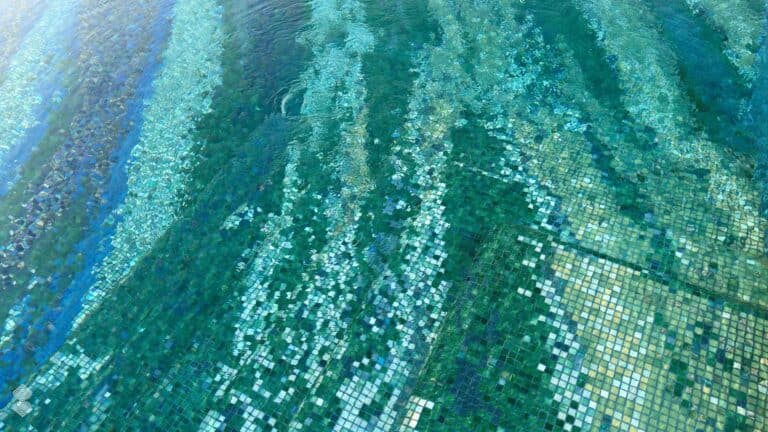


Moroccan-style fountains are bringing fresh color and pattern to outdoor spaces. An arched mosaic wall can frame the water and turn a simple basin into a striking focal point. The designers might use blue and cream tiles arranged in an eight-point star or horseshoe arch, with a lion-head spout as the centerpiece. The pattern can make a bold statement or take a quieter form that suits a contemporary residential space.
In this blog, we’ll explore six new Moroccan mosaic fountain designs for courtyards, gardens, patios, and poolside settings.
Table of Contents
What Is a Moroccan Mosaic Fountain?
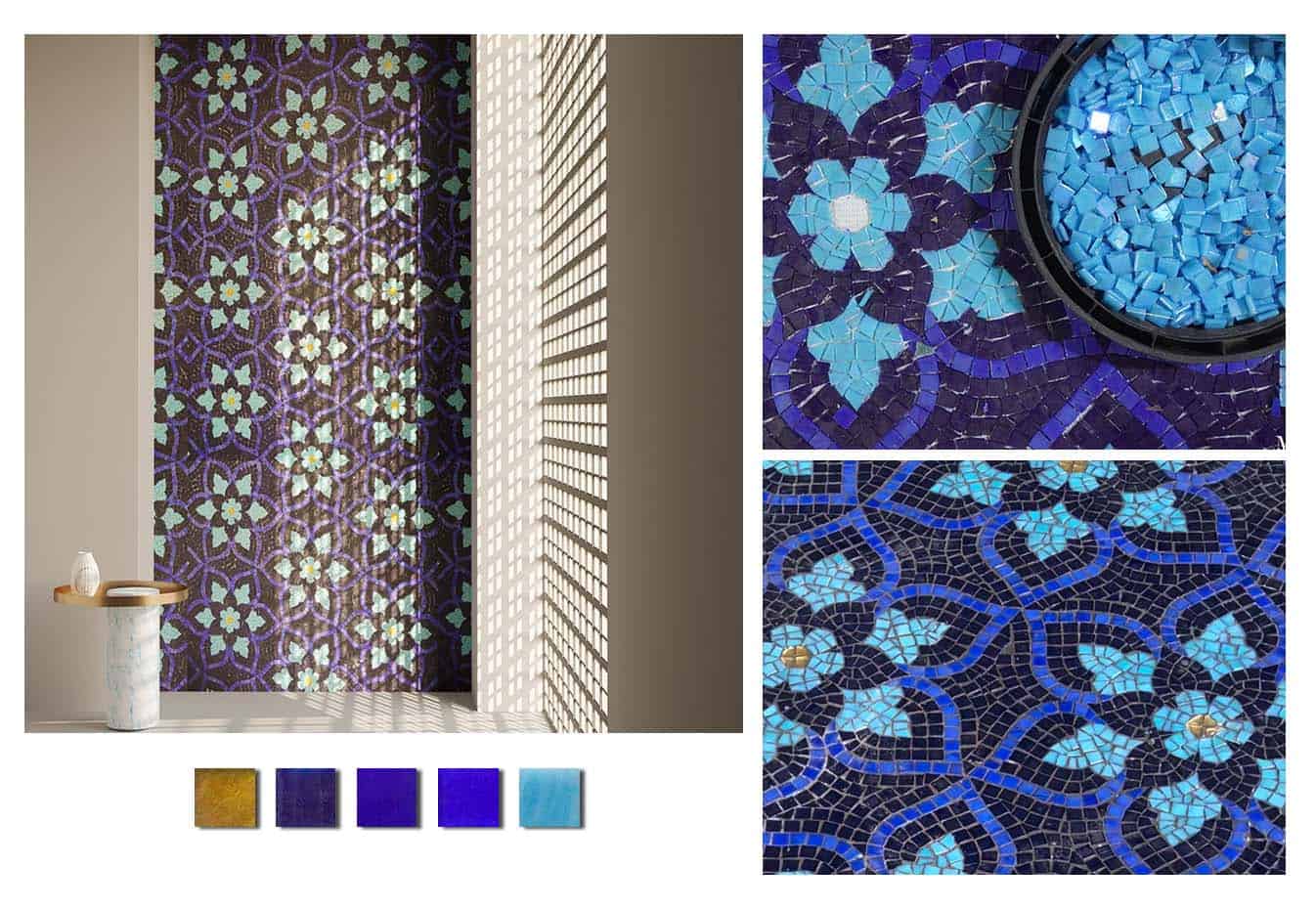
A mosaic fountain combines a water outlet and basin with a decorative surface made from small pieces of tile, glass, or stone. In a wall fountain, the mosaic usually sits behind or around the spout. Water then falls into a basin below, runs across a channel, or enters a nearby pool.
Zellij is often used for Moroccan geometric tilework. The craft is associated with shaped ceramic pieces arranged into complex patterns. A modern mosaic fountain can draw inspiration from this visual tradition while using materials selected for its intended location. The pattern might include stars, interlocking shapes, or bands that follow the curve of a niche. These details give the fountain rhythm and help it relate to nearby architecture.
Explore six of our Moroccan-style mosaic wall fountain designs, from geometric star arches to lion-head spouts. Each design brings its own blend of pattern, color, and character to courtyards, gardens, and poolside spaces.
1. Moroccan Star Arch Fountain Over a Pool
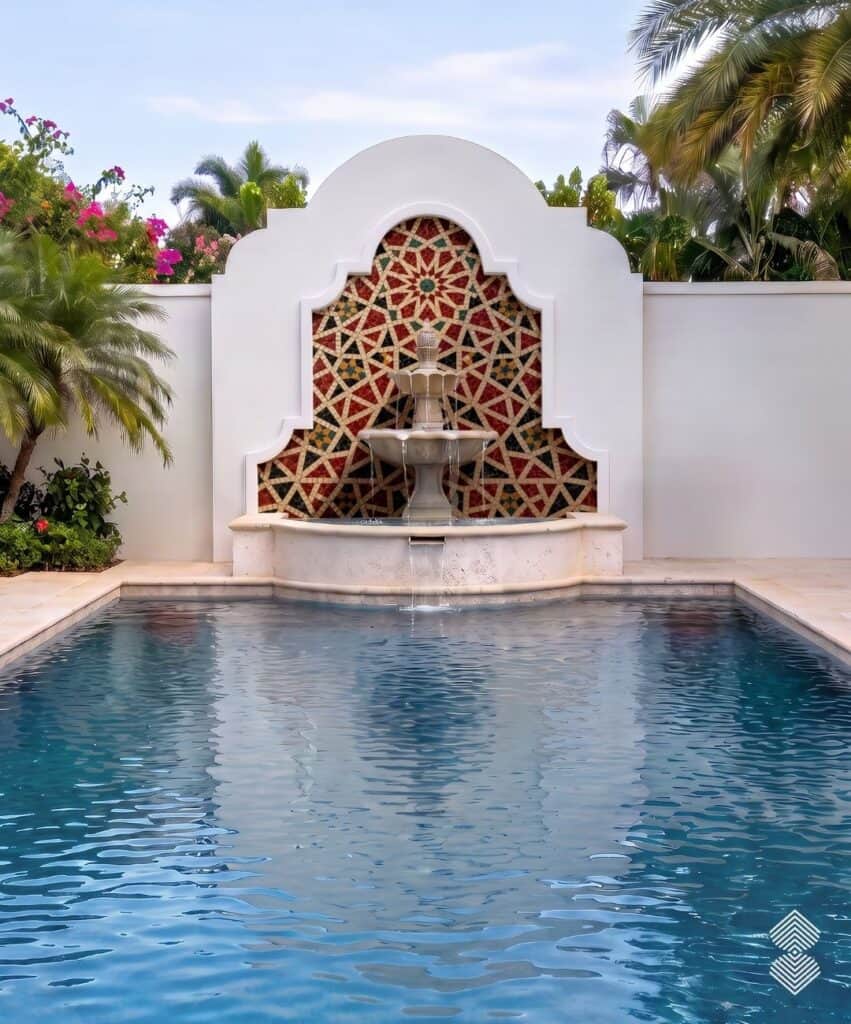
An arched fountain can turn a plain pool wall into a focal point. In our Moroccan Star Arch Fountain, repeating geometric shapes draw the eye toward the spout and down to the water. A narrow border traces the arch and gives the pattern a clean finish against the surrounding wall.
Think about where you’ll see the fountain most often. A bold star pattern with clear contrast reads well from across the pool, while smaller details come into view as you approach. Our star fountain has size options of 5ftx7ft, which give you a starting point for comparing proportions.
- Choose an arch that suits the wall. A tall, narrow arch fits a compact niche. A wider arch feels more at home along a long pool edge.
- Check the pattern from your main viewing spot. Look at the design from the deck or a nearby window to see whether the stars remain clear at that distance.
- Pick up a detail from the pool tile. Repeat a border color or use a related geometric shape to connect the fountain with the pool.
2. Lion Head Mosaic Wall Fountain
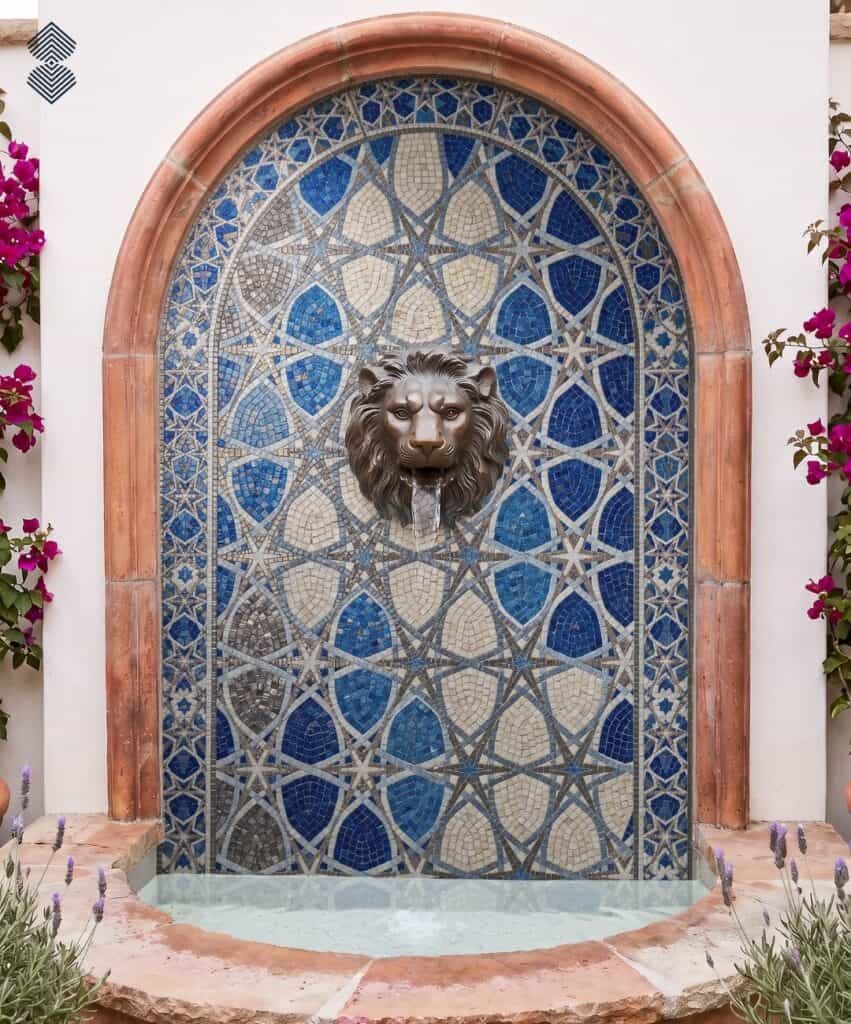
The sculpted spout is the first thing you notice in our Lion Head Mosaic Fountain. A lattice of blue, cream, and gray stars frames the bronze lion head. Water flows from its mouth into the basin below, giving the geometric design a clear center.
This design works especially well on a wall you approach head-on, such as the far side of a courtyard or the end of a garden path. From there, you can see how the face lines up with the arch and the water below.
- Give the lion head room to stand out. Use a quieter area of tile around the face so the star pattern frames its sculpted details.
- Line up the arch, spout, and basin. A shared centerline helps the three parts feel like one feature when viewed from the front.
- Plan for the sound of a single stream. Ask your fountain specialist how the drop height and basin shape will affect the sound, especially near seating.
3. Moroccan Pool Wall Fountain With Three Spouts
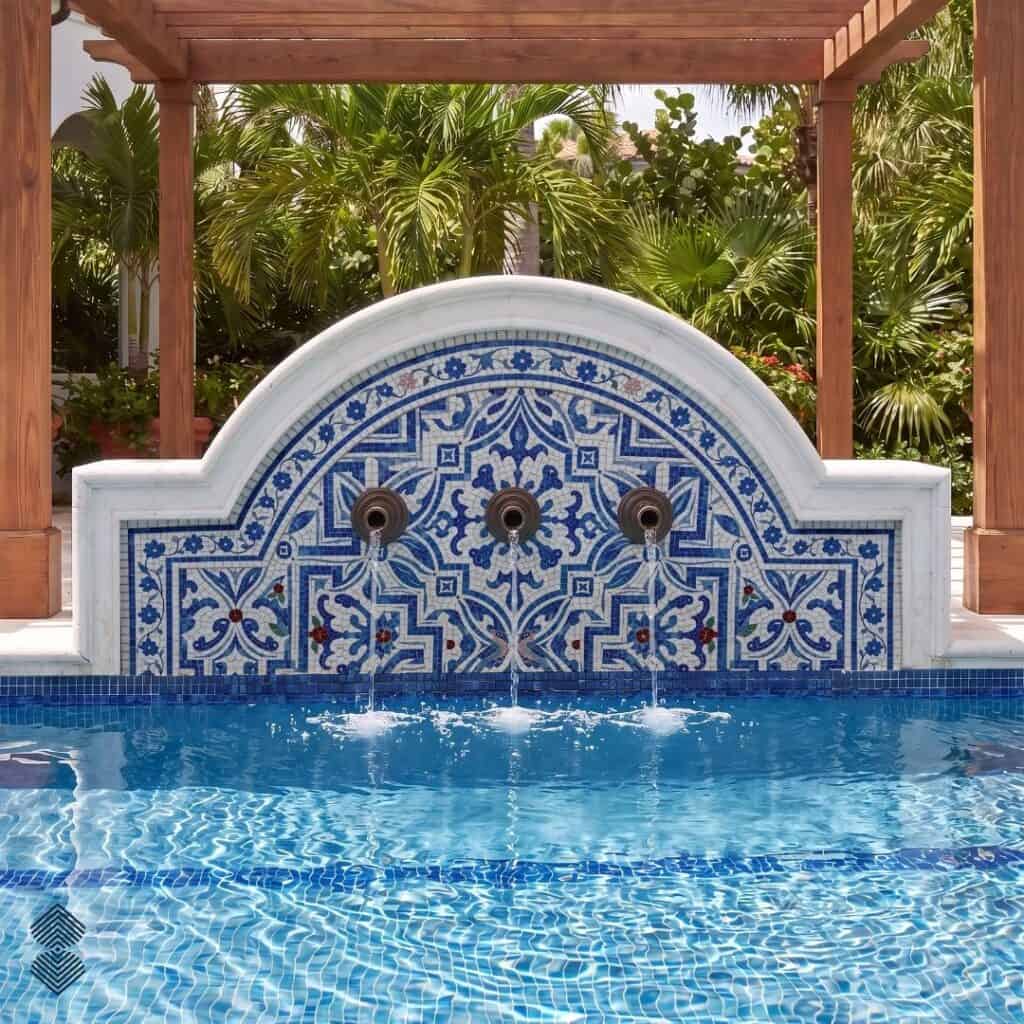
Our Arched Moroccan Mosaic Wall Fountain places three spouts within one patterned arch. The center stream anchors the composition, while the outer two draw your eye across the wall. It’s a good fit for a broad pool wall with enough room for each stream to remain distinct.
The width of the wall and the shape of the pool should guide the layout. A scaled sketch helps you check how the mosaic, outlets, and pool edge line up before the mosaic goes into production.
- Mark each spout on the drawing. Show its position and where the stream should land in the pool or basin.
- Check how the pattern meets the outlets. Place the openings so they work with the geometric shapes and leave room for the border.
- Include the features around the fountain. Show nearby steps, lighting, seating, and walkways to check how the water feature fits the deck.
- Review all three streams together. Ask your fountain specialist to confirm the flow and splash area before finalizing the mosaic layout.
4. Tiered Mosaic Fountain in a Courtyard Niche
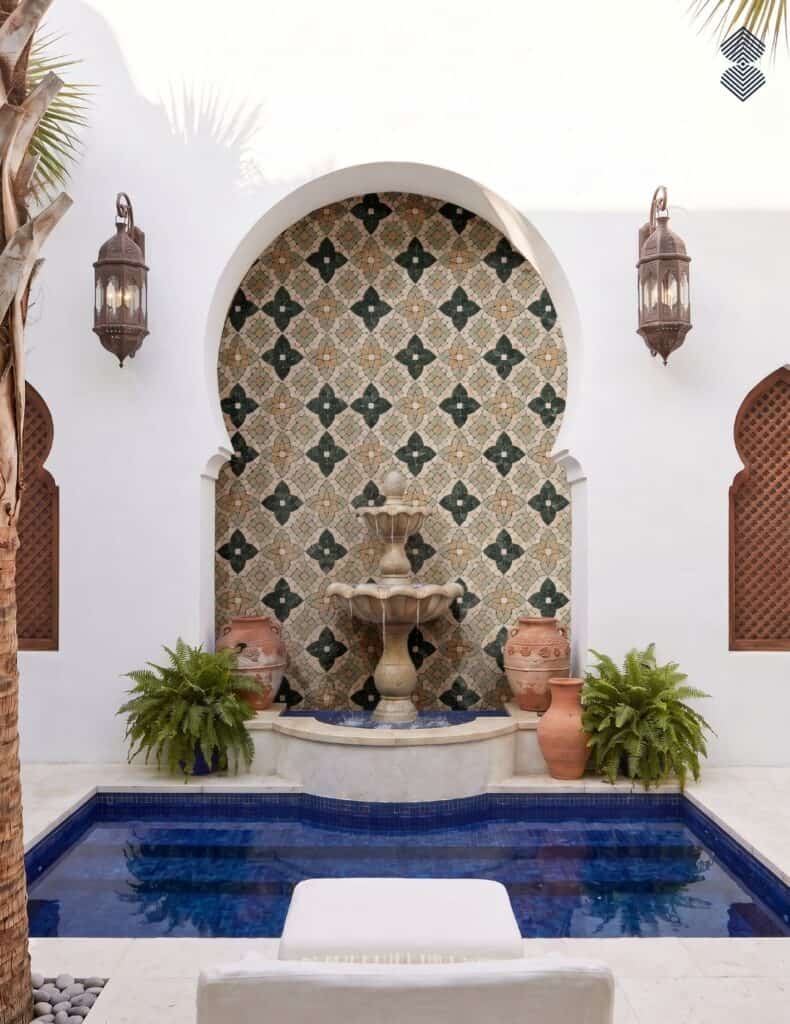
The Moroccan Arch Mosaic Wall Niche frames a tiered stone fountain inside a horseshoe arch. Hand-cut dark green and sand tiles form four-petal rosettes against a pale stone background. The diagonal repeat runs from the base to the top of the arch, giving the fountain a patterned backdrop you can see between and around the bowls.
For a courtyard or poolside wall, we can adjust the scale of the pattern to suit the arch and the fountain. In a narrow recess, smaller rosettes leave room for several full repeats. In a wider niche, a larger pattern can make the green and sand tones easier to see from across the courtyard.
- Follow the curve of the arch. Lay out the diagonal rows so the rosettes stay balanced as the niche narrows near the top.
- Keep the pattern visible. Mark the bowls and basin on the drawing so you can see how much of the mosaic will show around them.
- Plan access early. Leave a clear route to the pump and plumbing before finalizing the basin and tile layout.
5. Blue Moroccan Tile Arch for a Garden Wall
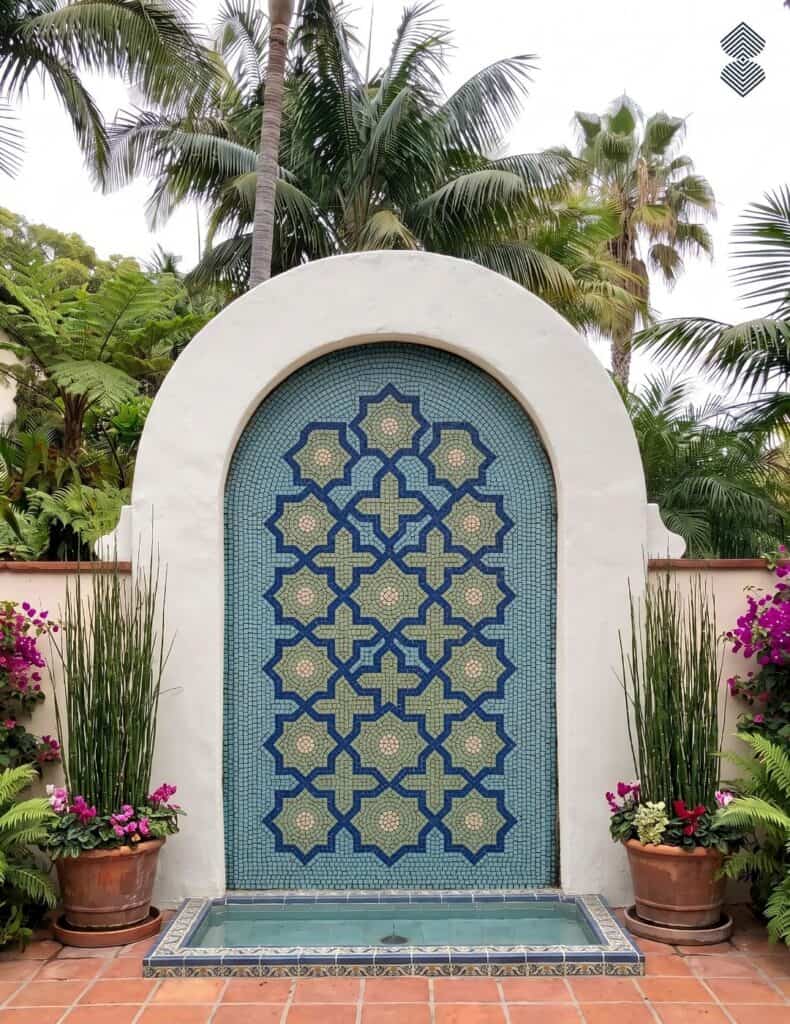
Cobalt blue gives a garden fountain a clear outline against green foliage or pale stone. A dark border can trace the arch, while softer blues and cream bring out the shapes inside it. A single spout within the arch and a basin below carry that composition from the wall down to the water, just like our Blue Star Lattice Mosaic Wall Fountain.
Look at the garden from the path or seating area before choosing the pattern. Large shapes and a limited palette can hold their own beside dense planting. A simpler garden wall gives you more room to use intricate Moroccan mosaic tile.
- Test the blues beside the surrounding stone or paint. Compare samples in sun and shade to see how much the contrast changes throughout the day.
- Use cream to bring out the geometry. A few light shapes can make the stars or diamonds easier to see through the foliage.
- Allow room for plants to grow. Leave enough space around the arch so branches and leaves don’t obscure the border or sprout over time.
6. Moroccan Wall Fountain in Warm Earth Tones
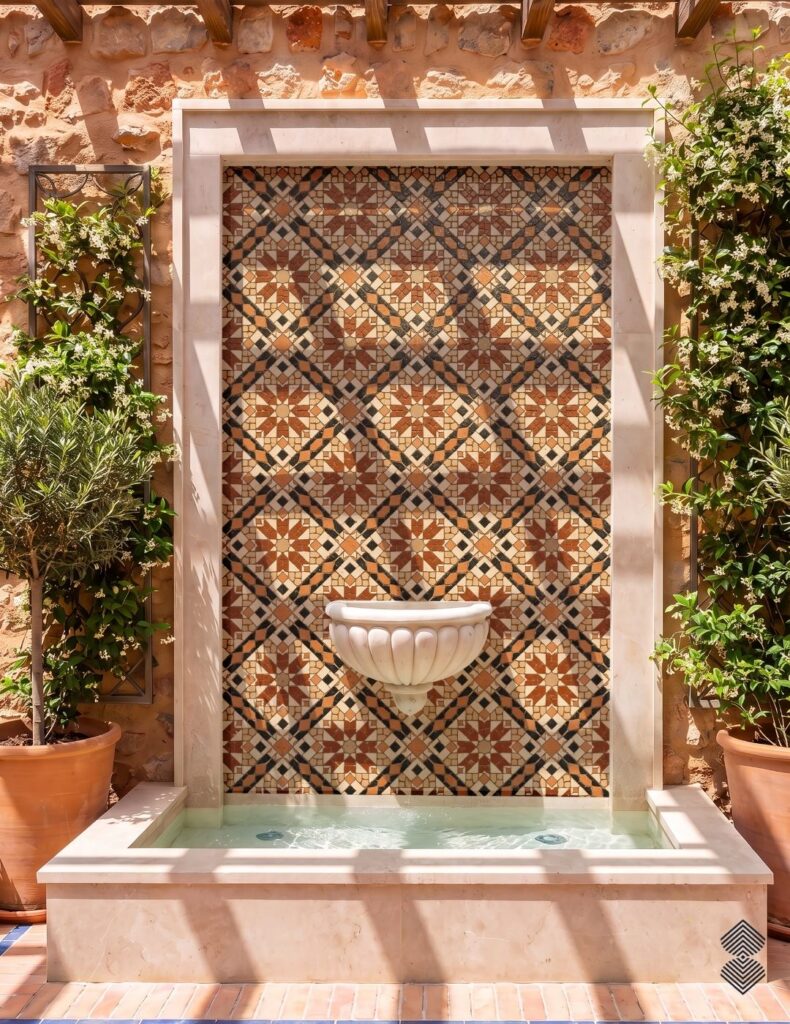
Our Terracotta Star Pattern Mosaic Wall Fountain pairs warm terracotta and tan with cream outlines and charcoal accents. Hand-cut tiles form eight-point stars and diamonds across a tall panel above a carved stone basin. The cream keeps the pattern clear against the pale stone surround, while small touches of charcoal give the star centers more definition.
From across the courtyard, the diamonds read as one continuous pattern. Up close, you can see the individual stars and the small triangles that shape their points. Terracotta, moreover, can pick up the color of nearby brick, clay planters, or warm paving, helping the fountain feel at home in the courtyard.
- Borrow a color from the courtyard. Start with the shade of a brick wall, stone coping, or clay planter.
- Use charcoal sparingly. Keep it at the star centers and diamond points so terracotta and cream remain the main colors.
- Check the stone for the splash zone. Ask your supplier whether the specific stone suits the area around the basin. The Natural Stone Institute offers resources on stone selection.
Where to Put a Mosaic Fountain: Courtyard, Patio, or Poolside
The best location depends on how the fountain will be seen, heard, and maintained.
| Location | Design opportunity | Planning point |
| Courtyard | Create a central focal point | Consider views from doors and windows |
| Patio | Add a quieter feature near seating | Check splash and sound at close range |
| Poolside | Link the mosaic wall to the pool | Coordinate wall, water level, and spouts |
| Garden wall | Add color among plants and paving | Consider visibility through foliage |
| Spa area | Create a sheltered, intimate setting | Plan access for maintenance |
For pool projects, consider how the fountain relates to the waterline tile, coping, and deck. The wall can match the pool mosaic, repeat its colors, or create a contrasting feature. Or our Moroccan pool mosaics explore ways to use related patterns across waterlines, walls, steps, and fountain treatments.
Commission a Custom Moroccan Mosaic Fountain
A custom fountain can follow the proportions of your courtyard, pool wall, garden, or patio. Start with the site dimensions and a few reference photos. Then decide whether you want a star pattern, an arched niche, a lion-head spout, a row of outlets, or a quieter geometric border.
Before the design moves forward, bring together the key project details:
- Wall and basin measurements
- Photos of the installation area
- Desired arch or wall shape
- Preferred colors and pattern references
- Spout locations and number of outlets
- Pool, basin, or drainage information
- The name of the professional coordinating plumbing and installation
A well-planned Moroccan wall fountain should feel connected to its setting. The mosaic can echo the pool tile, frame an existing niche, or give a plain garden wall a new focal point. In each case, the pattern, water, and architecture need to work together. Share your space and design ideas with MEC Artworks to explore a custom mosaic fountain for your project.
Final Thoughts on Moroccan Mosaic Fountains
Start with the spot where you’ll enjoy your fountain most. Across a pool, a bold star pattern can give the far wall a clear focal point. Beside a patio bench, a small arched niche with a gentle stream can bring the tilework close enough to appreciate. In a courtyard, warm terracotta and cream can tie the fountain to the stone or brick already around it.
If one of these Moroccan mosaic fountain designs feels right for your space, share a few photos, rough wall measurements, and your favorite colors with MEC Artworks. Our team can help you shape the mosaic around the arch, spout, and basin so the whole feature feels at home.
FAQs
Can a mosaic fountain stay outside all year?
It depends on the mosaic materials, installation system, local weather, and the fountain’s plumbing. Outdoor exposure can include sun, rain, temperature shifts, and freeze-thaw conditions. Ask the mosaic supplier and installation professional to confirm that the selected materials and setting system suit your climate. In places with freezing winters, the fountain may need seasonal preparation. A fountain or pool professional can advise whether to drain the basin, protect the pump, or take other steps. The Natural Stone Institute is one resource for stone-related guidance, but the project team should assess the specific materials and site.
How do you clean a mosaic wall fountain?
Follow the care instructions for the specific tile, grout, and stone. In general, remove leaves and debris from the basin, clean the water system as directed, and avoid harsh products unless the material supplier approves them. A soft brush and a suitable cleaner may help with routine surface cleaning. If you notice loose tiles, cracked grout, staining, or leaks, ask a qualified installer to inspect the feature. The right repair depends on the cause. Cleaning alone won’t solve a problem with the substrate, waterproofing, or plumbing.
Can a mosaic fountain be added to an existing wall?
It may be possible, but the wall and plumbing need assessment first. The structure must be suitable for the feature, and the design needs a plan for the water outlet, basin, drainage, and waterproofing. A fountain professional and installer can confirm what changes the site requires.
Who handles the pump and plumbing for a wall fountain?
The project should identify the responsible fountain or plumbing professional before fabrication begins. The mosaic designer can plan the artwork around the spout locations, while the plumbing specialist determines the pump, water lines, and related system requirements.
Confirm who supplies and installs each part. Responsibilities can differ by project, and clear coordination helps avoid changes after the mosaic is made.
How big can a custom mosaic fountain be?
The size depends on the wall, the fountain design, and the installation plan. Our current listings include examples at 4 by 6 feet and 5 by 4 feet, while another star-pattern design lists larger size options. A custom fountain should be measured for its actual site rather than selected by a single standard dimension.