
Toucan Mosaic Mural in Ljubljana: A Tropical Glass Wall Design
“We wanted the three walls to feel like one tropical scene, with the toucan as the focal point and the foliage connecting each surface.”
— MEC Design Team
Overview: Created for our client Tea Kos, an architect, the mural spans 300 square feet, or about 27.9 square metres, across three interior walls around the indoor pool and spa area. We planned the artwork around one curved wall, one bathroom-adjacent wall, and one wall with doors, giving each surface a distinct role within the wider scene. The curved wall gave the toucan a natural focal point, while plants and butterflies carried the tropical theme onto the adjoining walls. We adjusted the foliage around curves, corners, and door openings so these architectural features became part of the layout.
The result is a connected toucan mosaic mural design that draws the eye from the central bird into the surrounding greenery, revealing different details as you move through the space.
Starting with the Toucan Mosaic Mural Design
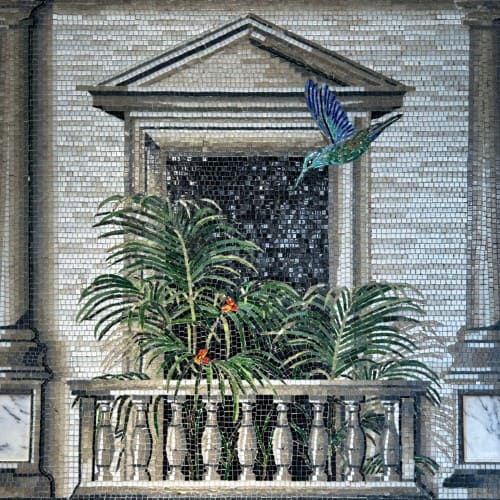
Tea came to us with a clear reference. She liked the Tropical Toucan Glass Mosaic Art and could see how its bird-and-foliage imagery might bring life to the indoor pool area. The existing artwork offered a useful starting point: a recognizable toucan, tropical leaves, and a small butterfly set within a glass mosaic scene.
For this commission, however, the goal was not to reproduce the product design at a larger scale. The existing artwork had been composed for a smaller format. A mural extending across three walls called for new decisions about proportion, spacing, and how the scene would continue around the room.
We began with the curved wall as the main visual anchor. Its shape suggested a natural place for the toucan to remain the central subject. From there, the design could move toward the adjoining surfaces through foliage and smaller details. This gave the composition a clear center while allowing the other walls to take part in the story.
Working from a known design can help establish a direction quickly, but it still leaves important choices open. Which elements should remain? Which should change? How much detail can the room hold? Tea’s responses helped us answer those questions with the actual space in mind.
When We Added More, the Design Needed Less
As the project expanded from a feature wall to three walls, we explored a fuller tropical scene. We introduced additional birds, plants, and other elements to extend the original artwork across the larger area. This early concept helped Tea see how a more elaborate mural might look.
Tea appreciated our work but felt the composition had become too crowded. She shared a visual reference that clarified her preferences: keep the toucan, include a few butterflies, and reduce the other animals. Her feedback helped us focus on carrying the original story across the walls with fewer distractions. We revised the design around four key choices:
- Keep the toucan as the focal point: We retained its position on the curved wall, giving the scene a clear center of attention.
- Connect the walls with foliage: We used botanical forms to carry the tropical setting across the adjoining surfaces.
- Add movement with butterflies: We included a few butterflies to guide the eye without competing with the bird.
- Leave room around the details: We introduced open areas so the main subjects could stand out.
A Tropical Mosaic Color Palette with a Personal Touch
We built the mural’s tropical color palette around the toucan, surrounding foliage, and delicate butterflies. Layered greens gave the botanical areas depth, while the bird’s contrasting colors established the main focal point. Across three walls, we balanced these stronger accents with quieter passages, keeping the scene connected without making every area equally bright.
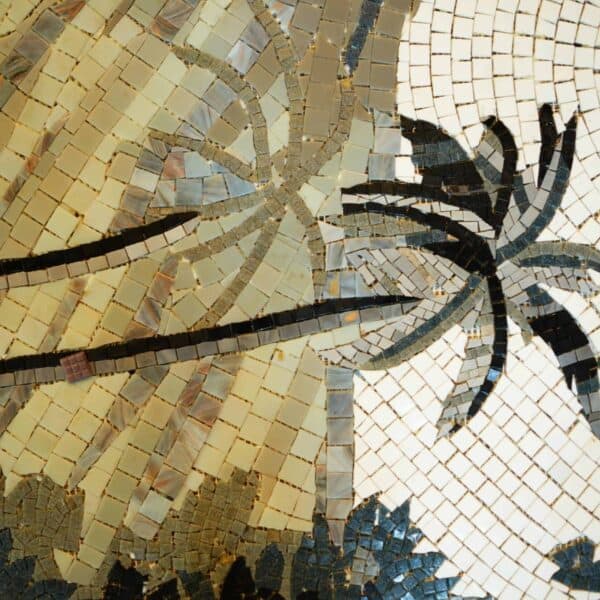
Working in glass mosaic tiles allowed us to introduce small color shifts within each subject. We used individual tesserae to separate overlapping leaves, define the toucan’s outline, and shape the butterfly wings. These transitions helped us create detail within the selected palette while preserving the calmer composition Tea preferred. We refined the colors around three priorities:
- Layered botanical greens: We used tonal variation to distinguish leaves and carry the tropical setting across the walls.
- Focused color accents: We kept the toucan prominent while allowing the surrounding details to support it.
- Softer butterfly shades: We adjusted this smaller accent to reflect Tea’s preference for a paler color.
The butterfly became a memorable part of that process. Tea approved the design direction but explained that she was not particularly fond of orange. She shared an orange-and-cream butterfly photograph as a reference and asked us to explore a paler shade.
We passed her preference to our production team and shared progress photographs as the detail developed. For us, this small adjustment shows how personal a tropical palette can become. We kept the character of the original design while softening one detail to better suit our client’s taste. The butterfly remained a small part of the mural, but its revised shade helped make the wider artwork feel more like hers.
The Challenge: Adapting a Tropical Design to Three Different Walls
The original Tropical Toucan artwork had been designed for a smaller area. Tea’s pool and spa project called for a much broader composition, spread across three walls with different shapes and architectural features. A simple enlargement would not have addressed the curve, the varied wall dimensions, or the openings in the space.
Our first task was to understand the room before deciding how the artwork should travel through it. Tea shared a floor plan, marking the walls she wanted to include. We requested photographs and measurements so we could better understand the staircase, the curved wall, and the relationships between the surfaces. Those details gave us a working picture of the architecture and helped us consider the artwork as a whole.
The project also raised an artistic question: how much of the original scene should carry across the expanded area? We explored a larger version with additional birds, plants, and tropical details. That proposal showed the possibilities of the wider composition, but it also helped clarify what the client wanted to avoid. The answer was not to fill every section. The design needed room to breathe.
From Concept to Design: A Tropical Mosaic Mural Across Three Walls

Wall 1: The Curved Toucan Feature Around the Pool
We placed the toucan on the curved wall to give the mural a clear focal point. Its distinctive beak, posture, and silhouette draw attention, while surrounding foliage frames the bird. We arranged these elements to follow the curve naturally, allowing the scene to unfold as viewers move through the room. This wall anchors the artwork and introduces the tropical story that continues across the adjoining surfaces.

Wall 2: Continuing Beside the Bathroom and Spa Area
We used the bathroom-adjacent wall to extend the tropical scene without adding another dominant subject. Botanical forms and selected butterfly accents carry the design beyond the curved feature. We balanced these details with quieter areas, keeping the toucan as the main focus. This section gives the mural a gentle transition, connecting the surrounding space through shared colors and leaf shapes.

Wall 3: Designing Around Doors and Openings
We planned the third wall around its doors and openings, positioning the artwork so key details would remain clear. We adjusted the foliage near edges to avoid awkward cropping or crowded passages. We also shared a revised window-wall section with Tea for review. These changes helped us carry the tropical scene around architectural interruptions while keeping its spacing and visual connection with the other walls.
Designing for Curves, Measurements, and Real Architecture
A design that spans different walls must answer to the building as well as the artwork. The curve, staircase, wall dimensions, doors, and window area each affected how the composition could be arranged. We needed the design to work with these conditions, not simply sit on top of them. After Tea approved the general direction and the project moved toward production, we prepared detailed drawings. We requested another measurement check, with particular attention to the third wall. Tea asked to review the drawings in metric units, so we provided them in the format she needed. Once the dimensions were confirmed, our team could proceed with the production file.
The measurement review mattered because the wall artwork included architectural transitions. Even a modest difference in dimensions can affect how a motif meets an edge or opening. Confirming the measurements gave the team a stronger basis for preparing the artwork and helped the design reflect the actual space. We also adjusted a section of the window wall to account for the extended area and shared that change with Tea. A custom mosaic mural is shaped by these practical decisions as much as by its imagery. The artwork must preserve its focal point while responding to the wall’s usable surfaces.
“Careful measurements help us shape the artwork around each curve, opening, and wall transition while keeping the full composition balanced.”
— Design Team
From Approved Tropical Mural Design to Fabrication
Once the main composition and measurements were agreed, we prepared detailed production drawings and references for cutting and fabrication. These files translated the approved artwork into guidance the production team could use to create the glass mosaic. The design presentation and production drawing served different purposes: one communicated the visual direction, while the other supported the work of making the piece. Tea remained part of the process through visual updates. Photographs helped her see the mural taking shape and gave her a chance to review details such as the butterfly color. This remote collaboration connected the client and the production team across countries through drawings, measurements, presentations, and progress images.
As fabrication continued, the completed mosaic was mesh-backed, packed, and prepared for international dispatch to Slovenia. That is where the confirmed project story ends.
Our Designer’s Perspective: Letting the Main Idea Lead
“We let the toucan lead the story, then carried the tropical feel across the three walls with foliage and butterfly details.”
— MEC Artworks Design Team
For us, the central lesson of this tropical mosaic wall mural is that a strong design does not need to use every idea available to it. The first expanded concept showed how the scene could grow. Tea’s feedback showed us how it could become more focused. We kept the toucan at the heart of the composition and used the butterflies and botanical details to support it. The curved wall gave the bird a clear home, while the adjoining walls extended the tropical mood through selected elements. By making each wall part of the same story without filling every area with a new subject, we gave the artwork a more considered rhythm.
We also learned how personal a small detail can be. Tea’s preference for a paler butterfly color guided a specific production choice and helped the design feel more like her own. It was a modest adjustment within a large project, but the final response showed how closely a client can shape the character of a custom mosaic. When we adapt an existing artwork, our goal is to understand what first made it appealing and then decide how that quality can work in a new space. In Ljubljana, the toucan remained the recognizable starting point. The room’s architecture, Tea’s reference, and the three-wall layout shaped everything that followed.
FAQs
How was the Tropical Toucan design customized for this project?
We adapted the original artwork to cover a much larger area and respond to three different walls. Tea asked us to retain the toucan, include a few butterflies, and reduce the number of other animals. The revised composition used botanical details to carry the tropical theme across the adjoining surfaces.
How did the design work across the curved wall and adjoining walls?
The curved wall was planned as the main focal area for the toucan. The bathroom-adjacent wall and the wall with doors continued the theme through selected foliage and butterfly details. Each surface had its own architectural conditions, so the composition was adjusted around the room rather than simply enlarged.
Can a custom glass mosaic include a specific color preference?
Yes. Tea requested a paler butterfly shade because she did not prefer orange. She shared a reference photograph, and we communicated her preference to the production team. Progress photographs let her review the details as the mosaic was being made.
How can a client and design team coordinate a mosaic project internationally?
This project was coordinated through a floor plan, photographs, measurements, visual presentations, metric drawings, and progress photographs. These materials helped Tea and MEC Artworks review the design and dimensions remotely, while also supporting planning with the local installer.
Verified Client Reviews & Experiences


 Trustindex verifies that the original source of the review is Google.
 Trustindex verifies that the original source of the review is Google.
 Trustindex verifies that the original source of the review is Google.
 Trustindex verifies that the original source of the review is Google.
 Trustindex verifies that the original source of the review is Google.
 Trustindex verifies that the original source of the review is Google.
 Trustindex verifies that the original source of the review is Google.
 Trustindex verifies that the original source of the review is Google.
 Trustindex verifies that the original source of the review is Google.
Create a Custom Tropical Mosaic Wall Mural
Share your wall dimensions, interior photographs, and a few references with MEC Artworks. Tell us where the artwork will be viewed from and which existing finishes matter most. From there, we can explore a mosaic design whose scale, color, and movement belong to your space.