

Most design trends boomerang through time, and this one’s straight from the 50’s.
It’s no surprise that niche magazines are heralding the comeback of marble terrazzo in interior design. Its use aligns perfectly with the ethos of the modern home owner, sustainable yet crafty.
In this article, we’ll explore the fascinating history of terrazzo, its versatile applications in modern spaces, and why it continues to be relevant in 2026.
Table of Contents
History of Terrazzo
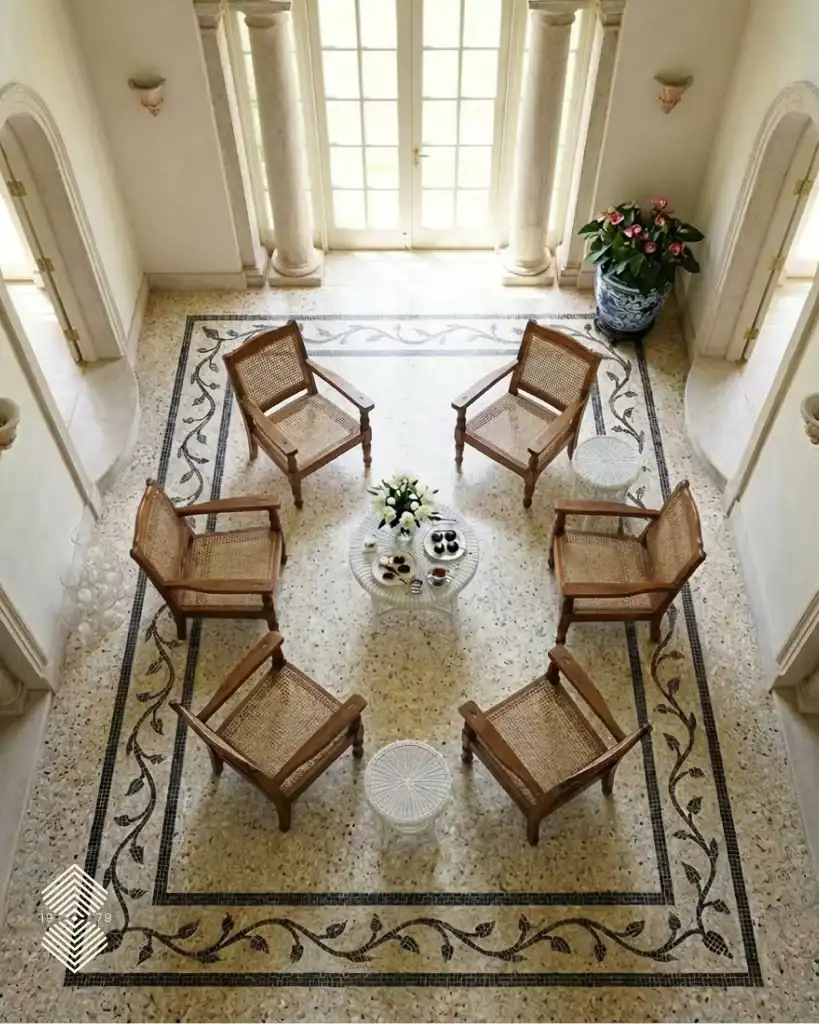
The material actually dates back to 16th-century Venice, where clever artisans, called terrazieri, were trying to solve a practical problem.
They had leftover marble fragments from grand palaces and cathedrals, and instead of throwing them out, they embedded the bits into clay floors, refined them, and suddenly these scraps became something beautiful and long-lasting.
In other words, terrazzo was born out of necessity.
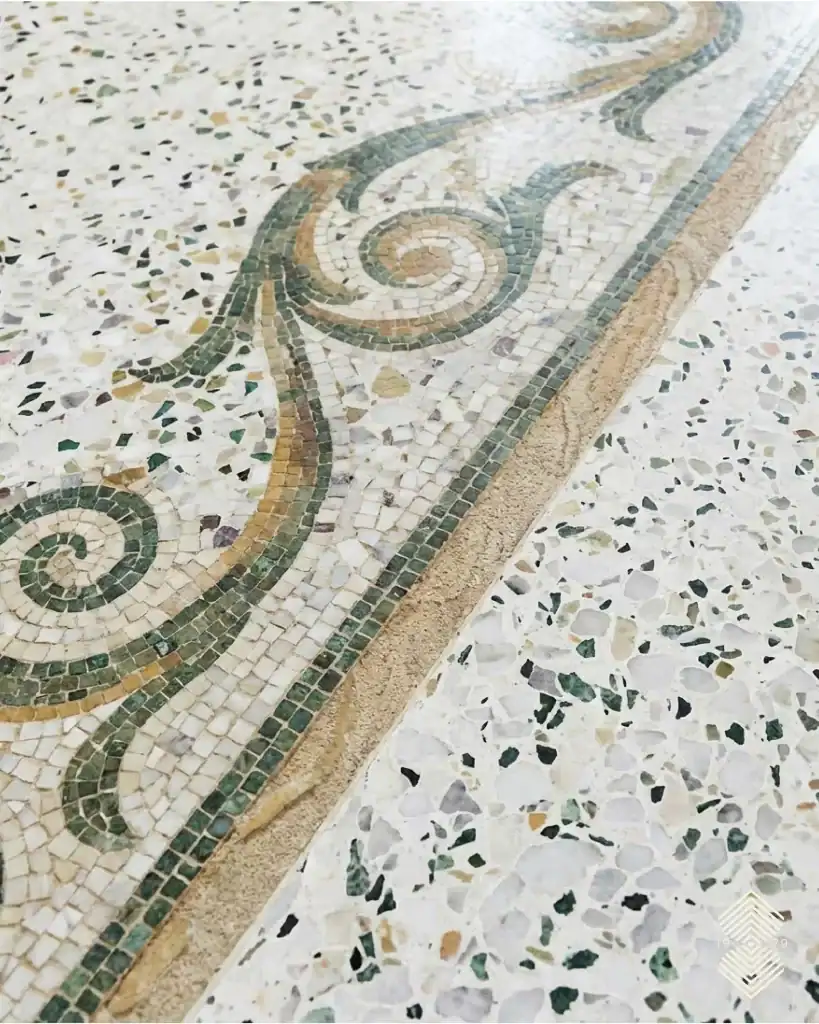
Over time, terrazzo became more than just a way to reuse leftover stone. Their speckled patterns can cleverly mask everyday wear and tear, making them well-suited for high-traffic areas without sacrificing style.
Terrazzo Material Composition
At its core, terrazzo is a composite material, but calling it just that feels almost unfair. Terrazzo is less about what it’s made of and more about what it becomes once all the elements come together.
Traditionally, it’s poured in place and then polished to a smooth, stone-like finish, creating a surface that feels unique.
What gives terrazzo its signature look is the mix of materials embedded within it, including:
- Marble chips
- Quartz fragments
- Granite pieces
- Glass
- Occasionally shells, metals, or recycled stone
Each of these aggregates is suspended in cement or resin, then ground and polished until the surface reveals a scattered, almost confetti-like pattern. No two terrazzo surfaces are ever identical. That unpredictability is part of the charm.
The end result is a kaleidoscopic material that can be used in a multitude of ways. At MEC, we take this inherent eco-friendliness a step further by integrating sustainability into every aspect of our design process. From selecting materials to creating patterns and detailing, we prioritize choices that are responsible as well as durable.
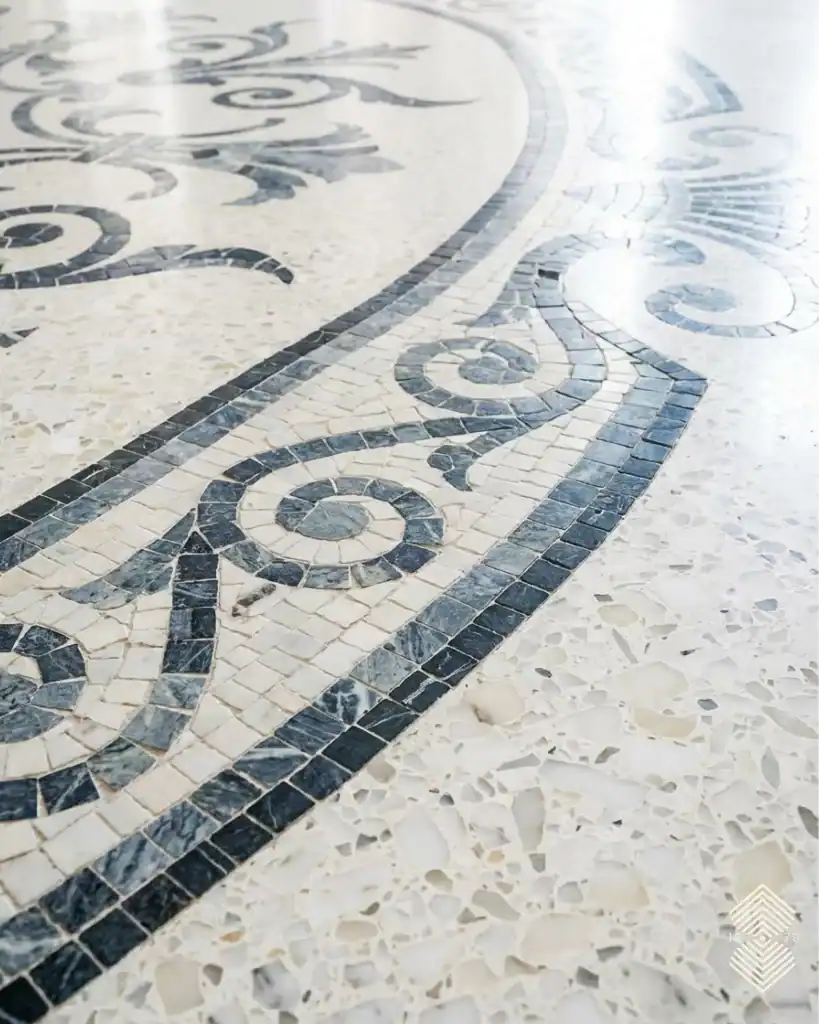
Paired with mosaic, terrazzo adds dimension and beauty. It is often used as a backdrop in this pairing. The artistic potential expands dramatically with this combination because each tile can incorporate unique chip combinations, gradients, turning walls, floors, or furniture into miniature canvases.
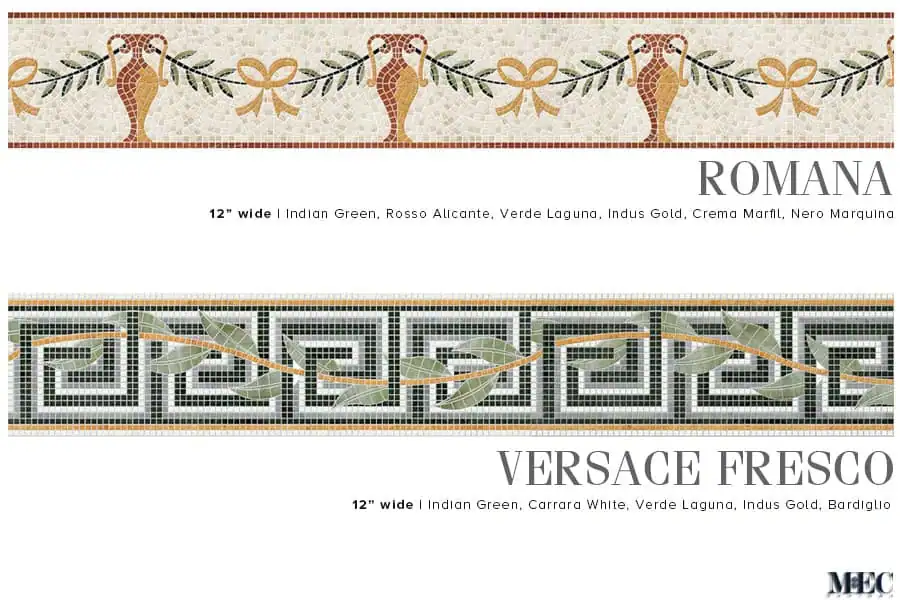
These mosaic borders can be sharp or soft, graphic or barely there, depending on how they’re used. Sometimes they guide movement through a space; other times they simply slow the eye down. The above example highlights some of the borders from our catalog.
Decorative borders complement terrazzo floors by accentuating their patterns and creating a defined edge.
Why Designers Choose Terrazzo
The futuristic ideals of interior design seem to waver in 2026, as nostalgic elements like terrazzo make a striking comeback. Contemporary designers are turning to terrazzo because it’s endlessly adaptable, it can feel modern, playful, or timeless depending on how it’s used.
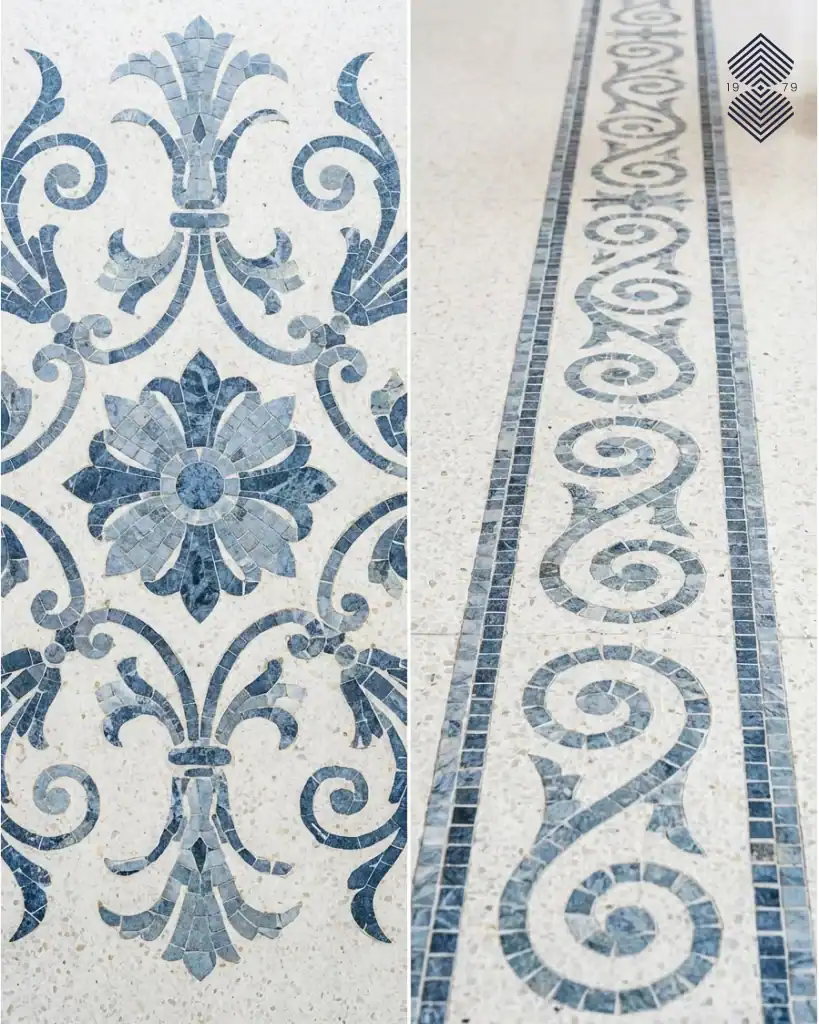
Choosing terrazzo mosaics for modern interiors is as much about practicality as it is about design. Durability is one of their strongest selling points. They resist scratches, stains, and the wear of heavy foot traffic, making them perfect for spaces that need to perform as well as they look. Their smooth, sealed surfaces are incredibly low maintenance.
A simple wipe-down is often enough to keep them looking pristine, and they rarely require specialized cleaning. Design flexibility is another advantage, the size, color, and distribution of the chips can be tailored to create anything. Sustainability in contemporary interiors is increasingly relevant this year, and terrazzo fits perfectly with this trend.
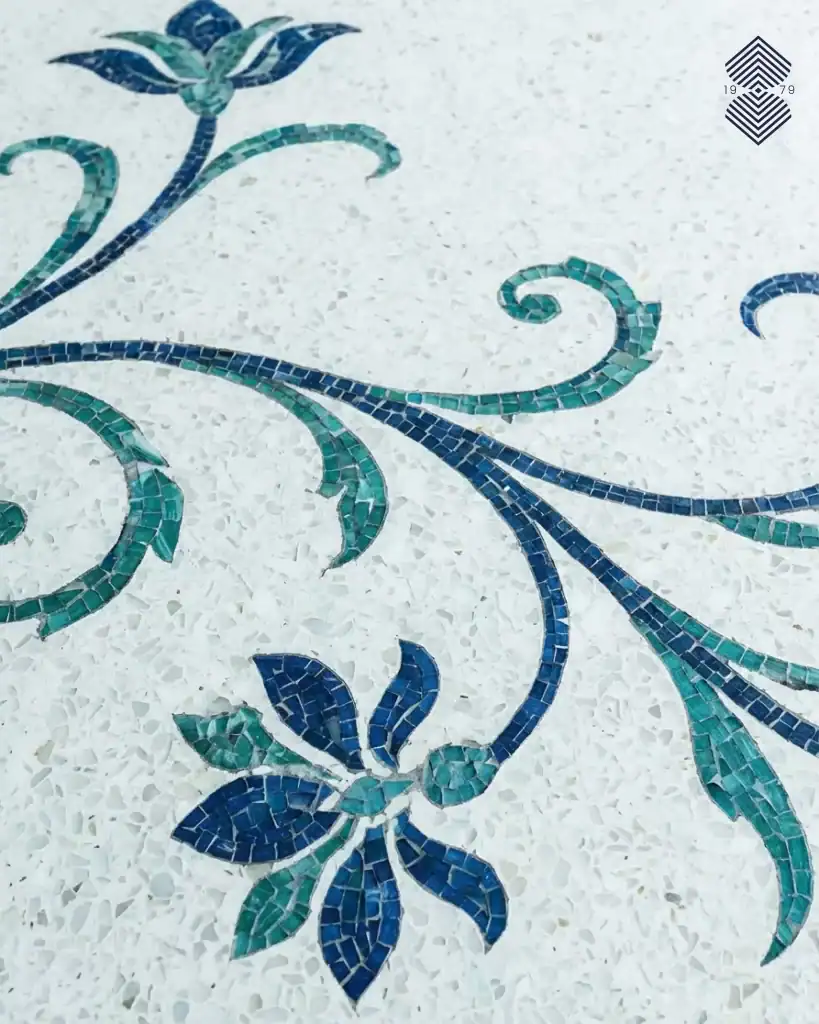
Cost can vary widely depending on whether you choose cement or epoxy, the complexity of the chip layout, and the labor involved. Even so, when you factor in the lifespan and minimal maintenance needs, terrazzo often proves a cost-effective choice over time.
Maintenance is another area where terrazzo shines. Because mosaics have fewer grout lines and a polished surface, they are easier to clean than more traditional mosaics, which can trap dirt and require more frequent scrubbing or re-grouting.
Mastering Terrazzo: Tips & Tricks for Perfect Use
Designing with Terrazzo can be tricky. The way you choose colors, chip sizes, and patterns can completely change how a room feels, from calm and modern to bold and playful.
A little planning goes a long way: thoughtful choices make your space feel balanced, polished, and full of character without ever feeling chaotic. Let’s break down the key tips to get it right.
1. Keep Your Design Balanced
When designing with terrazzo mosaics, balance is key. Terrazzo is visually striking, so it’s important not to let it dominate the space. Pairing terrazzo with neutral materials, such as plain tiles, natural stone, or wood, helps anchor the design and gives the eye a place to rest. This creates a harmonious environment where the terrazzo can shine without feeling overwhelming.
2. Choose Chip Size Thoughtfully
The size of the terrazzo chips can completely change the feel of a space. Larger chips tend to create a more sophisticated look, they’re elegant without shouting for attention. Smaller chips, on the other hand, can feel retro or busy, adding energy but sometimes making a space feel denser. Think about the mood you want to create and the room’s scale before choosing, sometimes a mix of sizes can even work beautifully if balanced carefully.
3. Explore Custom Mosaics
One of the best things about terrazzo is how customizable it is. With custom mosaics, you can pick the colors, patterns, and even how dense the chips are. This control means your design can be truly one-of-a-kind. Don’t be afraid to experiment. minimal changes in pattern or color can make a huge difference in how the space feels.
4. Plan Your Color Strategy
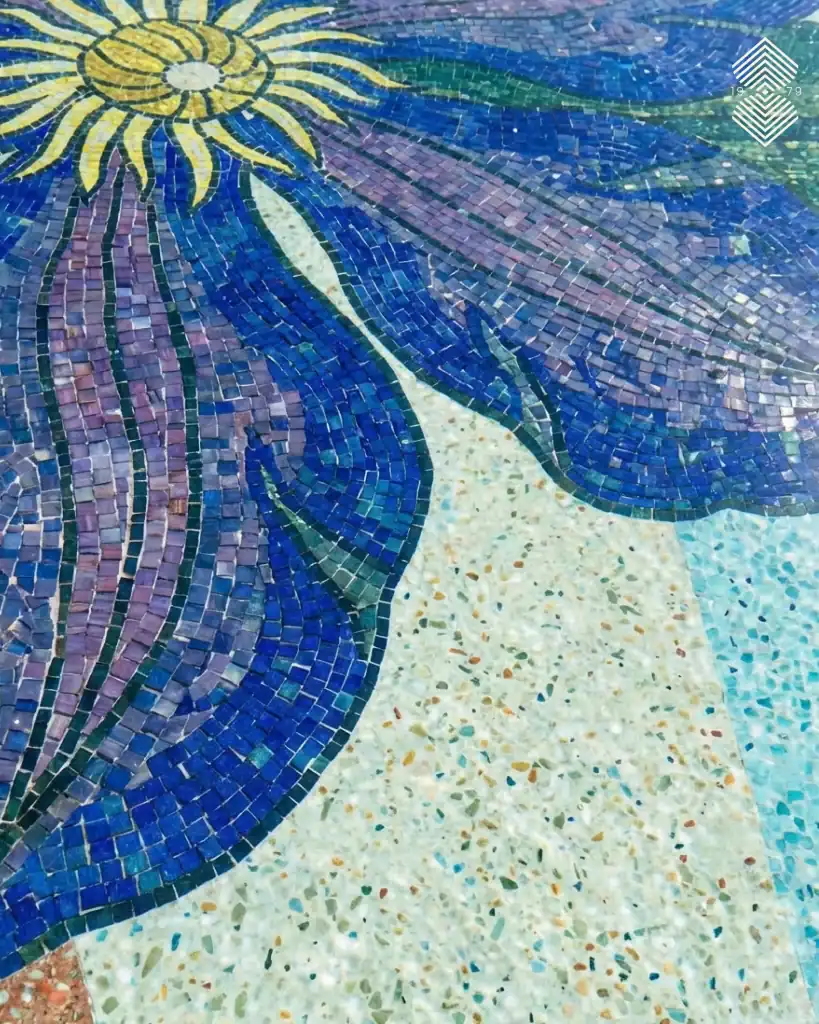
Color psychology is key in mosaic design. Muted tones in terrazzo create calm, minimalist, or modern interiors, while bright, bold chips bring energy, playfulness, or a retro vibe. Think about the emotion you want your space to evoke and let that guide your color choices.
5. Embrace Limitless Possibilities
Terrazzo mosaics are incredibly versatile. You can play with color, pattern, chip size, and placement to create anything from understated elegance to bold statements. The key is to think creatively but also maintain balance, so your space ends up both beautiful and livable.
Terrazzo Pool Designs & Ideas
Terrazzo has emerged as a top contender in pool design for 2026 and its possibilities are wider than you might think. Here’s how designers at MEC are putting it to work.
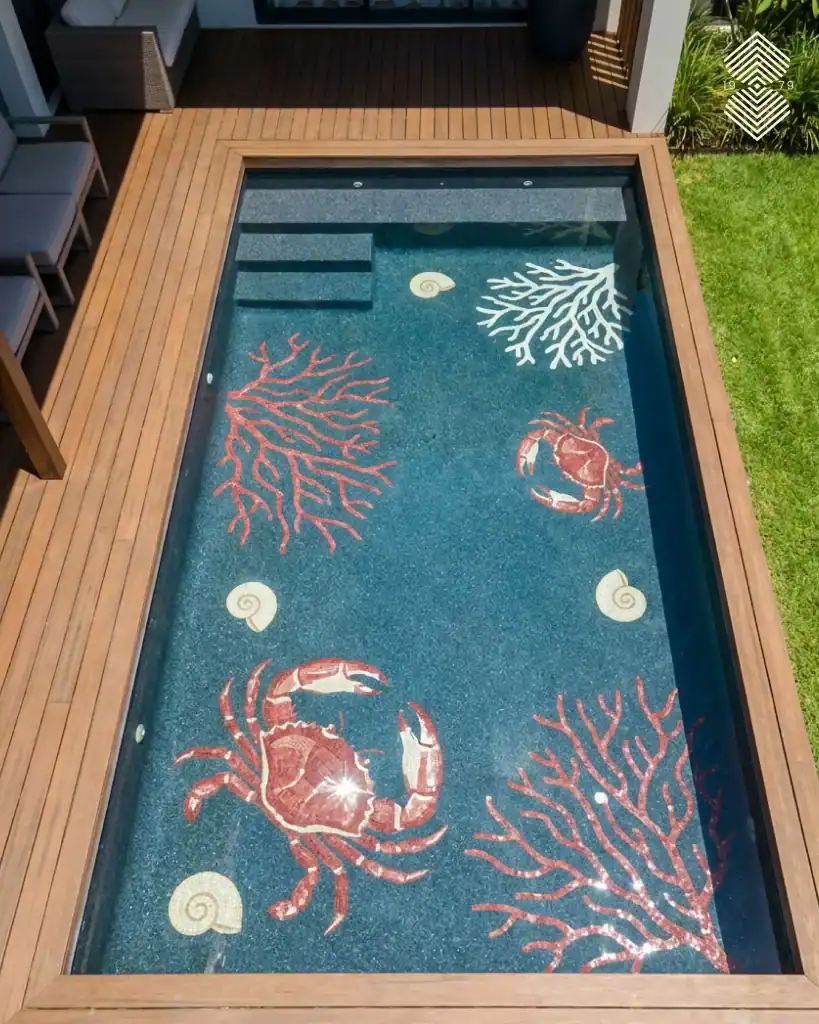
The edges, walkways, and surrounding areas of a pool often carry more impact than the pool itself. Terrazzo provides an interesting way to define those spaces while keeping them functional. One approach is to place a motif mosaic at the center, set against a terrazzo backdrop.
The terrazzo adds character and texture, allowing the mosaic to command attention without overpowering the space. In this way, the pool floor or wall becomes a powerful visual statement.
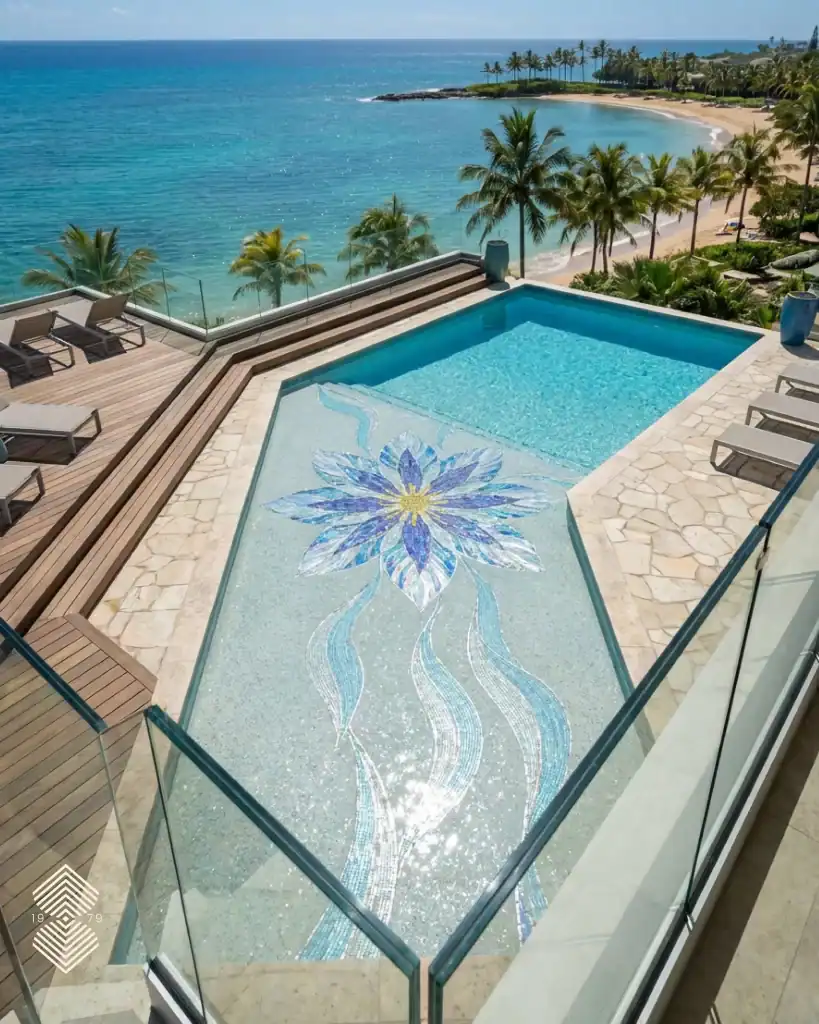
Terrazzo can also define steps, ledges, or seating areas with subtle shifts in color or aggregate size, guiding movement and creating points of visual interest. Light, water, and reflection interact with these surfaces, giving the pool a dynamic presence.
Small mosaic accents along edges or corners can introduce punctuation and playfulness, allowing designers to experiment without disturbing the overall composure of the space.
If you’re looking for inspiration in pool mosaic design, explore our three-part mosaic installation for a designer villa on Jumeirah Beach, spanning the pool border, a sunken area, and a statement mural.
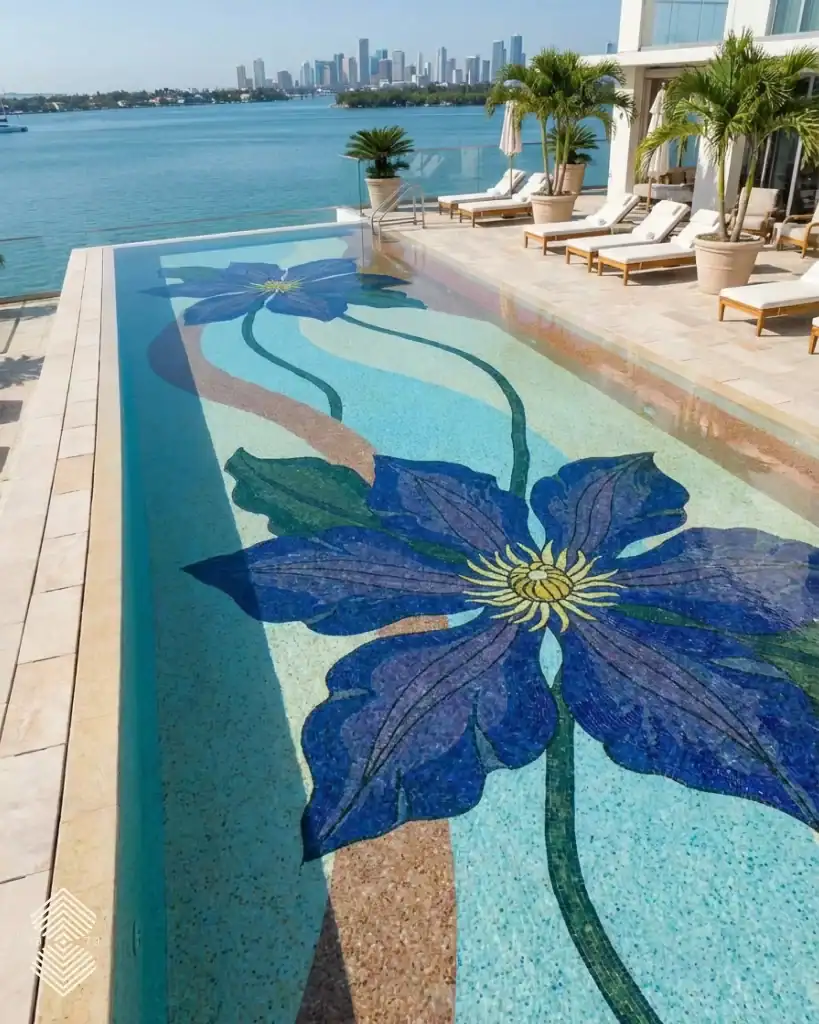
One of terrazzo’s lesser-known qualities in pool design is its ability to soften space. Despite its durability, it introduces a gentle visual rhythm that calms the water’s surface and brings balance to the surrounding architecture.
Beyond terrazzo, MEC also works with a wider mix of pool mosaics. There are pixel-style designs, marble mosaics, and even classic motifs and medallions, each with its own personality. It simply gives more room to experiment, whether the goal is something modern, traditional, or somewhere in between.
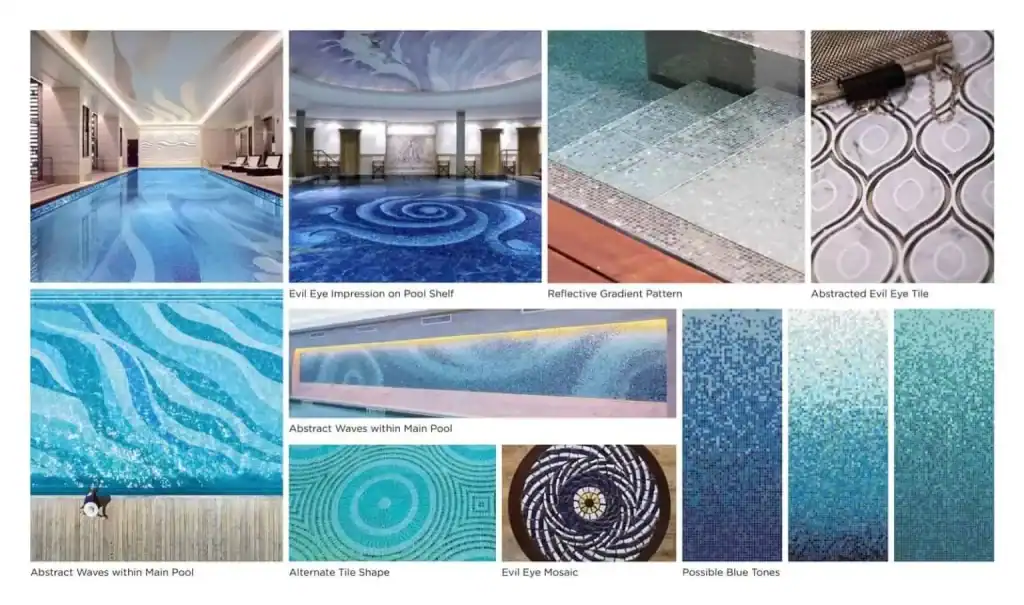
For a closer look at how these pool mosaics come together in real spaces, you can watch the video from our YouTube channel below.
Terrazzo’s Relevance in 2026
It’s exciting to see how terrazzo is being reimagined in modern design, especially with new takes like Marmoreal. Instead of tiny chips, this version uses bigger, colorful pieces of marble to create bold, eye-catching surfaces.
Designers are putting it on countertops, walls, and even sinks to give spaces a fresh and lively look. It feels like a new twist on a classic trend that still reunites with terrazzo’s roots.
Nostalgia plays a powerful role here. Terrazzo taps into memory while still feeling current.
This material carries a retro soul but visually matches with modern design trends.
Designers are also embracing terrazzo because it answers a growing desire for texture over decoration. Instead of adding more objects to a space, terrazzo builds interest directly into the surfaces themselves.
There’s also an unexpected influence from public and commercial spaces. Cafés use terrazzo to signal creativity and durability at the same time.
Terrazzo allows designers to think at both the macro and micro scale, designing expressive, animated spaces that are visually impactful, economically controlled, and one-of-a-kind.
What are terrazzo mosaics?
Terrazzo mosaics are decorative flooring or wall patterns made from chips of marble, quartz, granite, or glass set in cement or resin. They are polished to create a smooth, elegant surface often used in modern and traditional interiors.
How are terrazzo mosaics made?
Terrazzo mosaics are made by embedding small pieces of stone, glass, or marble into a cement or resin base. Once the mixture sets, the surface is ground and polished to reveal a seamless mosaic pattern.
What is the difference between terrazzo tiles and terrazzo mosaics?
Terrazzo tiles are pre-cast sections of terrazzo, whereas terrazzo mosaics are typically custom patterns created on-site using small chips. Mosaics offer more design flexibility and intricate patterns compared to standard tiles
Are terrazzo mosaics durable?
Yes, terrazzo mosaics are highly durable, resistant to stains, and can last for decades with proper maintenance. They are suitable for high-traffic areas such as kitchens, hallways, and commercial spaces.
Can terrazzo mosaics be used outdoors?
Terrazzo mosaics made with cement-based binders can be used outdoors, but epoxy-based terrazzo is recommended for indoor use only due to UV sensitivity. Proper sealing and maintenance ensure longevity in exterior spaces.
Are terrazzo mosaics eco-friendly?
Yes, terrazzo mosaics are considered eco-friendly because they often use recycled materials such as glass and stone chips. Their long lifespan also reduces waste compared to other flooring options.