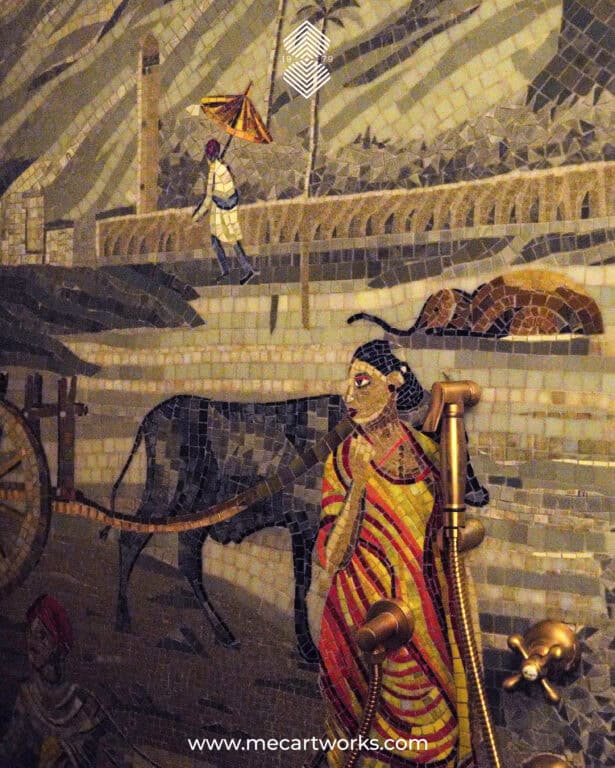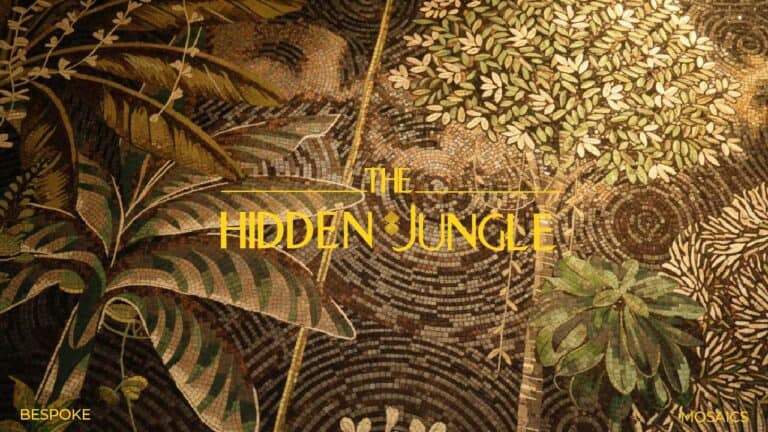

Narrative art appears everywhere, in illustration, animation, and textiles, but its translation into mosaic has a distinct charm.
This type of art is an age-old tradition first found on cave walls in Lascaux, a site in Southwestern France, where early humans used simple images to tell stories of hunting, daily life, and rituals.
Designers at MEC Artworks continue this tradition, turning stories into world-class mosaics.
Table of Contents

Mosaics have served as powerful storytelling tools for centuries.
This article explores the value of story mosaics in 2025. The global mosaic scene is brimming with inspiration for your next piece. We’ll also highlight case studies from the designers at MEC Artworks, who expertly translate clients’ visions into stunning mosaics.
How Are Narrative Mosaics Used in Modern Interiors?

This handcrafted ceiling mosaic was created by our team of designers at MEC. A glass mosaic of birds in flight across a ceiling introduces a quiet sense of wonder. When placed above, it feels almost alive, as if the sky has opened within the room. This adds a spacious feeling to the room, as opposed to the limiting feel a plain, monotonous ceiling would impose.
The drifting birds create a feeling of total serenity, drawing the eye upward and lightening the space. Designers often use these mosaics as statement features to add cultural depth and individuality to an area.
Each mosaic tells a story, whether inspired by history, faith, or nature, like the Celestial Flight artwork, expressed through a creative lens.
How Are Narrative Mosaics Used Around the World?
Let’s take a closer look at global mosaic artworks and how they can serve as inspiration for your next piece.
Expressions of narrative art have grown in popularity worldwide. From vandal-style street art to illustrative murals, each artist has their own story to share.
In the early 2000s, the long-standing artform of narrative mosaics found its place in the post-graffiti period, on the unglamorous walls of New York city’s subway systems.

Here, snapshots of six foot tall van goghian figures are depicted on mosaic panels in the subway. This is Jane Dickson’s beloved work, Revelers (2008) Jane’s work is almost technicolor-like, considering the context of its subterranean backdrop. It serves as a thinking piece for the hurried passerby. If we look at it from a design perspective, it shows the magic of custom art pieces bedazzling public spaces.
The artwork displays New Yorkers with party props in festive motion. These revelers are memory-stained illustrations. The use of a delectable color palette communicates a familiar joy to its admirers. The pops of golden-yellow murano tiles and the confetti-like aesthetic enrich the space where these artworks are located.

These story mosaics use colors to indicate emotion, assemblage to show story, and texture to add a feel of reality. This kind of mosaic work is more dimensionally-appropriate for spacious places.
There is inspiration all around, even underground in tunnelways, and Jane’s work is a playful example of storytelling through glass mosaics. Although Revelers is a one-of-a-kind legacy work, life-sized figure mosaics are a great option to explore if you’re looking to enrich your space. Maximalist mosaics can be an interesting addition to any home’s interior.
What are figure-centric mosaics?
Figure-centric mosaics focus on human or animal forms as the main subject, rather than abstract patterns. They can portray historical scenes, everyday life, or imagined characters, capturing emotion, movement, and personality.
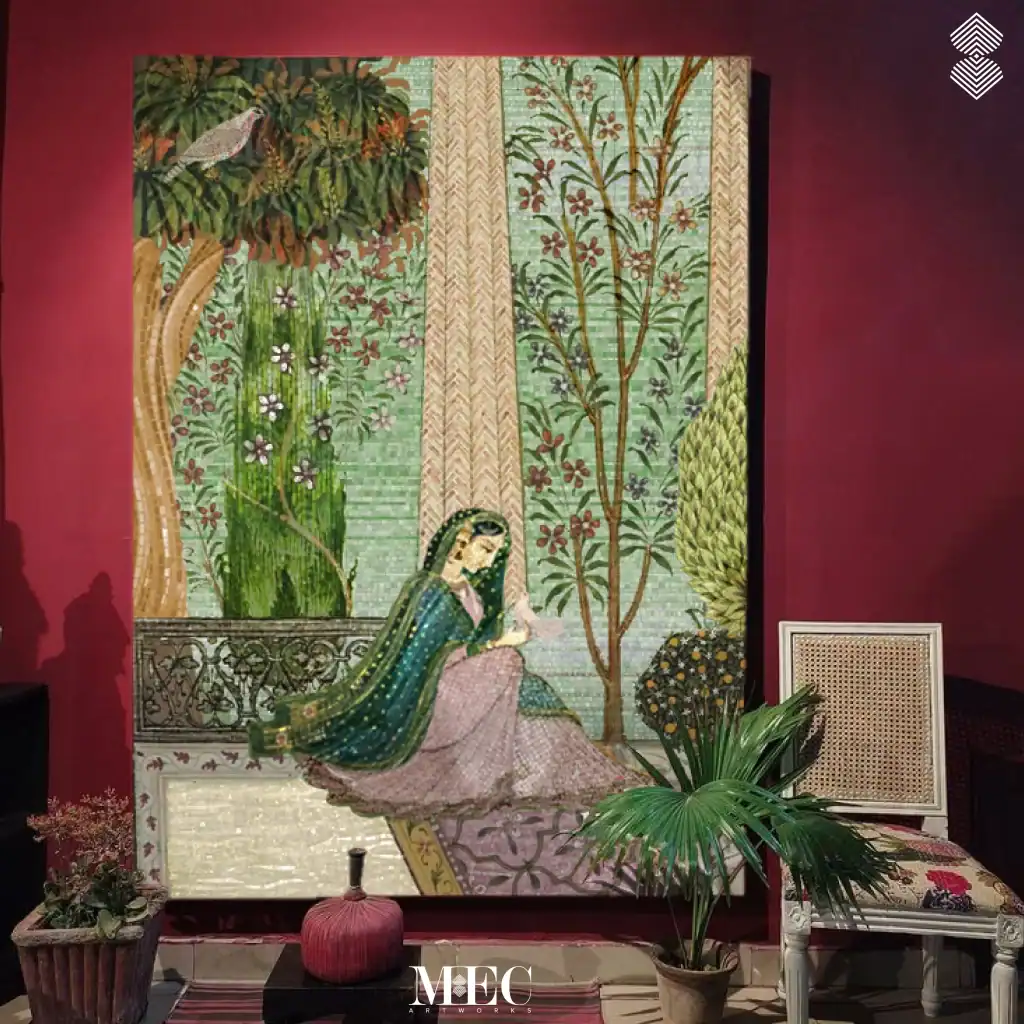
In the mosaic tiles space, there’s a lot to explore. You are one enquiry away from commissioning an art piece for your home.
How Are Narrative Mosaics Created?
If you’re curious to learn more about how these artworks come to life, let’s walk through the process that takes place in our studio, step by step.
We’ve had clients commission work with interesting sources of inspiration, from travel souvenirs to printed fabric.
How do we bring their vision to life? Well, if a client brings an artwork on paper or a set of notes, we translate it into a finished mosaic through a clear, simple process.
1. Appointment & Consultation
We begin with an in-store or online appointment to review the artwork and discuss the design, scale, and placement.
2. Concept & Material Selection
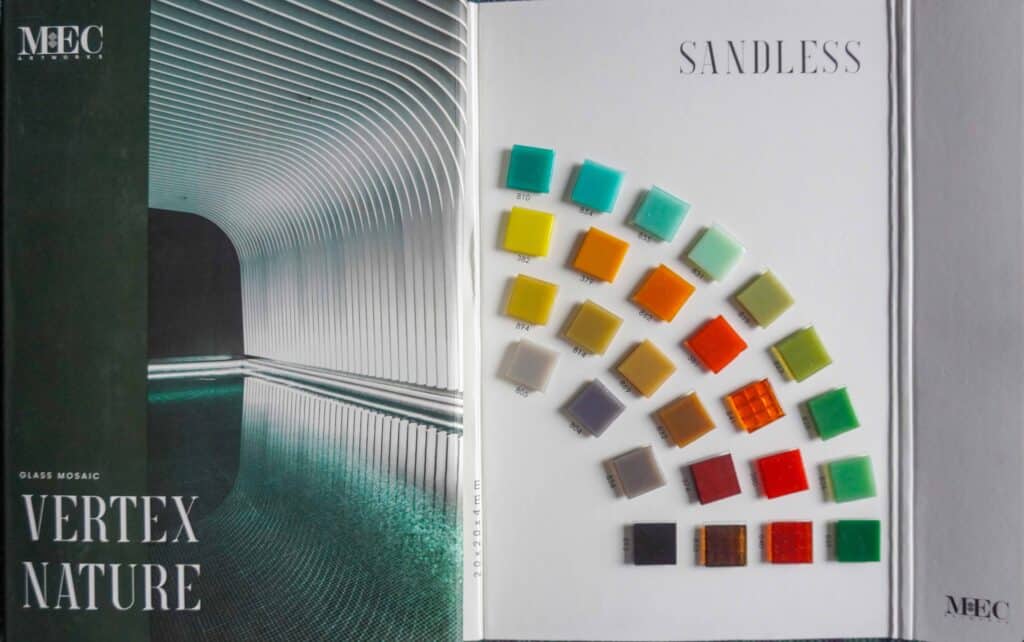
Our designers create a concept sketch and select suitable materials, glass, stone, or ceramic, based on color, texture, and durability. Here are some samples from the MEC studio.
3. Digital Mock-Up
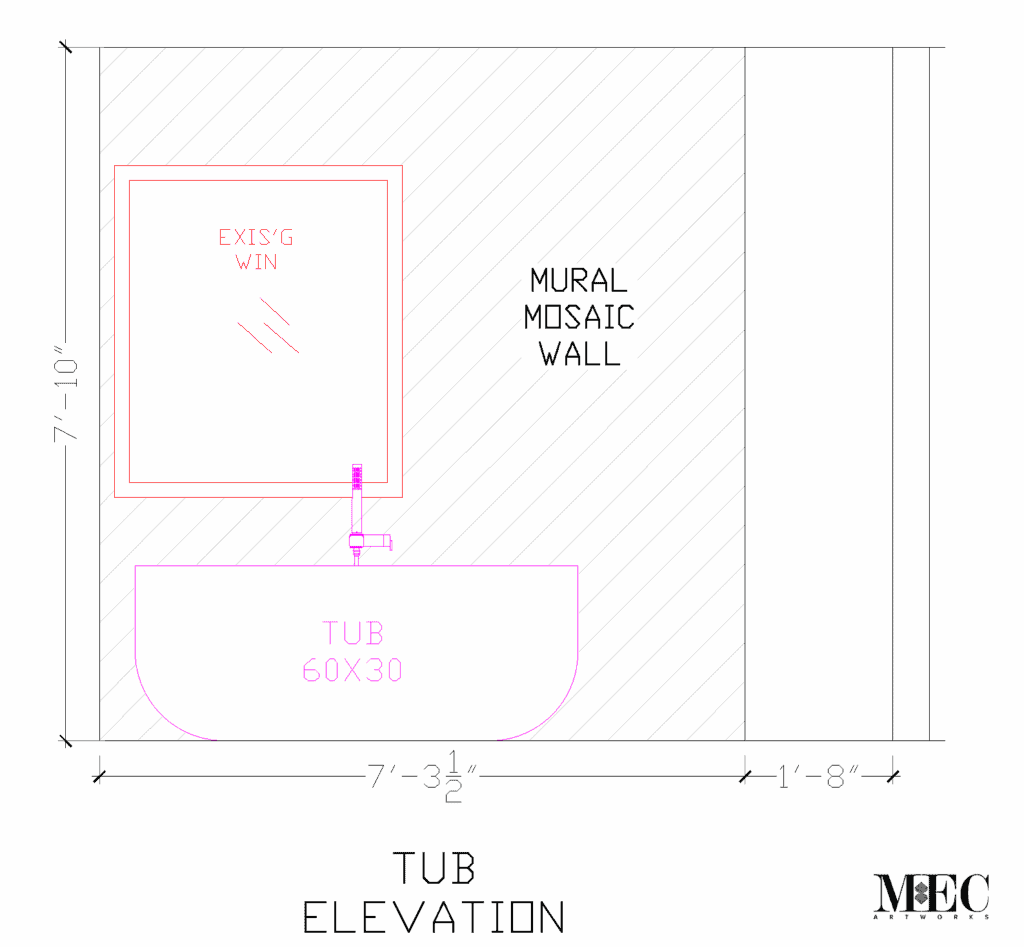
We present a digital mock-up to show how the design will look at full scale and suggest any necessary technical adjustments. (The one below is just a teaser, our real mock-ups are way more sophisticated!)
4. 3D Visualization
Photorealistic 3D renders are produced so the client can visualize the piece in context, on a wall, ceiling, or floor, and request revisions if needed.
5. Fabrication
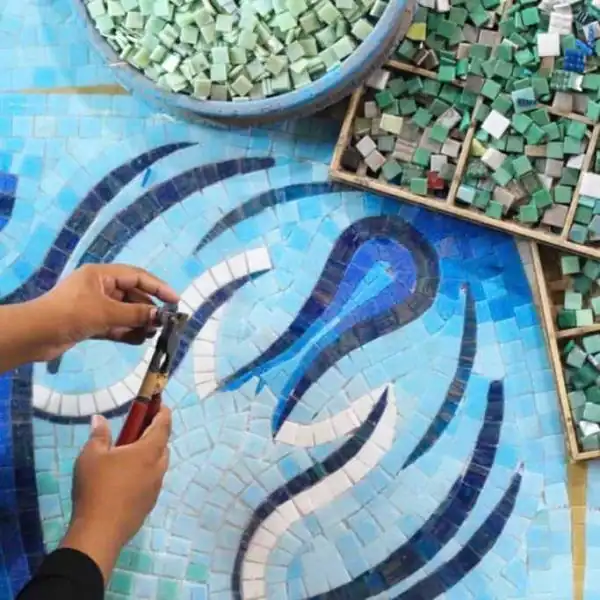
Once the final design is approved, we move to fabrication, our favorite part, arranging each tessera according to the approved layout.
This photo shows our design team at MEC collaborating on a mosaic assembly, one of the last steps of the process.
We then install the mosaic, grout and finish the surface, and perform a final quality check.
Lastly, we provide care instructions and aftercare support to ensure the art piece ages beautifully.
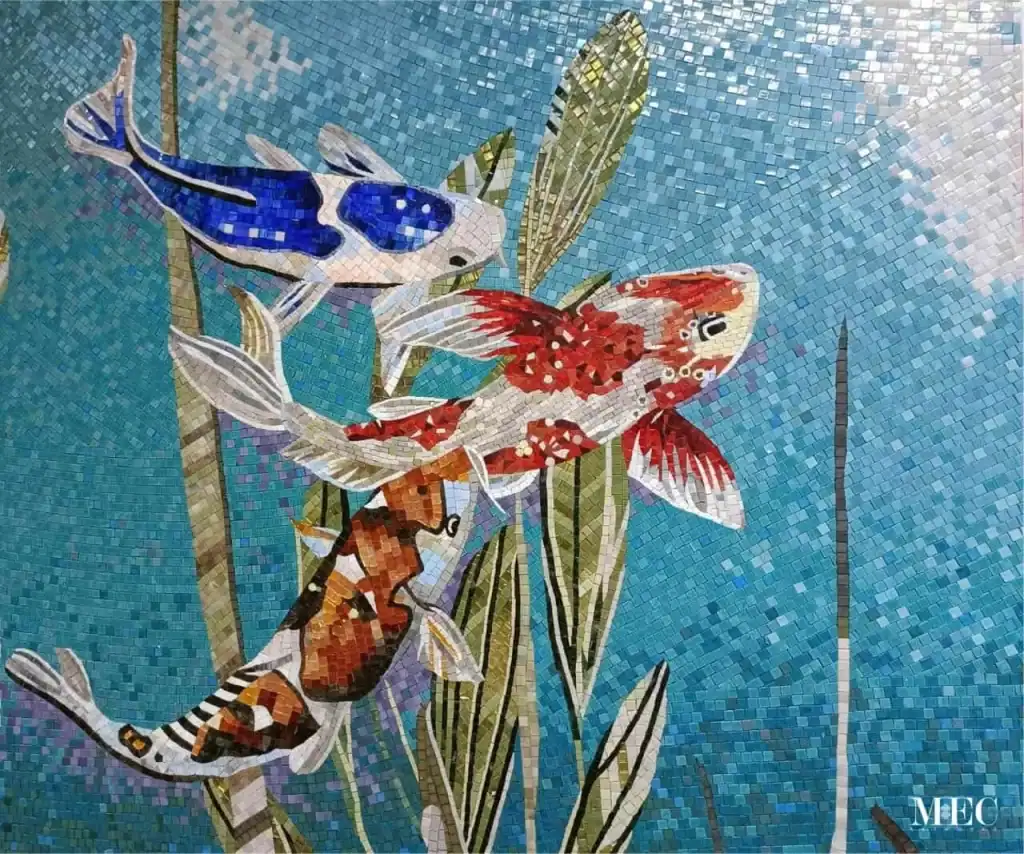
Here’s the assembled final version of MEC’s Koi Fish mosaic.
The pearlescent quality of mosaic materials makes them a captivating medium for visual narratives. To understand the color and material selection process better, watch this video:
Literary Inspiration for Mosaics
The childhood bedtime stories and on-screen adaptations that we grew up watching and listening to so fondly were a goldmine of art.
We can find narrative-rich mosaics in some childhood literary classics. For instance, we can spot somber stone compositions in Sultan’s palace in the architectural delight that is Arabian Nights (1885). The infrastructural design elements of Aladdin’s palace may have been lost to European translation but there is still evidence of mosaic art.
From the Burton translation of “Aladdin; or, The Wonderful Lamp,” found in the Sacred Texts Archive.
“…and the palace was finished by next day, and the genie carried him there and showed him all his orders faithfully carried out, even to the laying of a velvet carpet… all its stones being of jasper and alabaster, Sumaki marble and mosaicwork”
The bulbous marbled pillars, thick gold detailing, and maghreb-inspired framework all point to Arabian culture. In our mosaic catalog, our Marrakesh-inspired artwork stands out because of the unique color combinations and designs.
Here’s a Moroccan-style Trellis Islamic Mosaic Doorway created by our artisans.
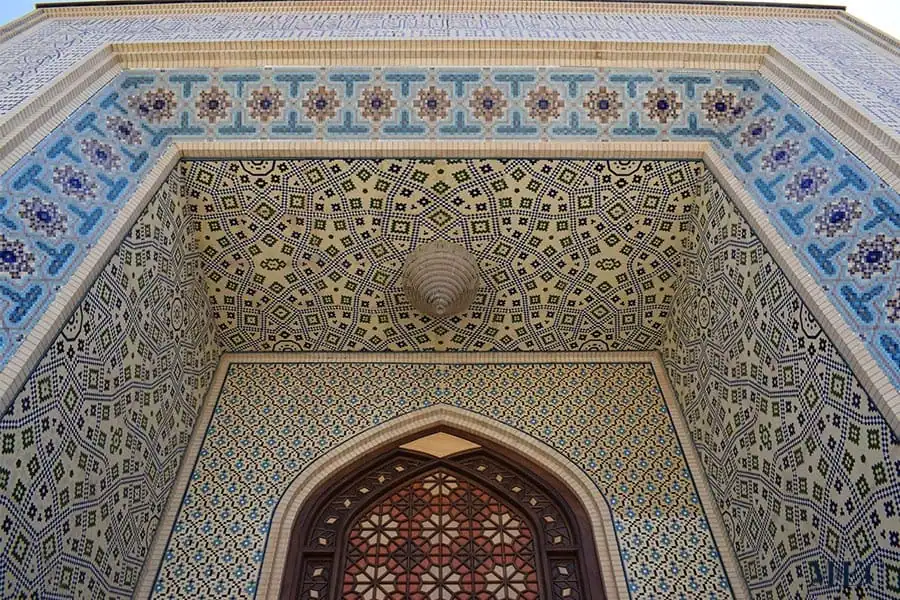
These centuries-old types of mosaics continue to dominate interior and exterior design as we edge toward 2026. The most familiar type of Islamic mosaics can be spotted on archways, as well as wall ceilings.
The great thing about commissioning such an art piece is that you can be hands-on in the creative process with our consultants and designers. You can take charge of color-palettes, texture, and assemblage when designing such mosaics.
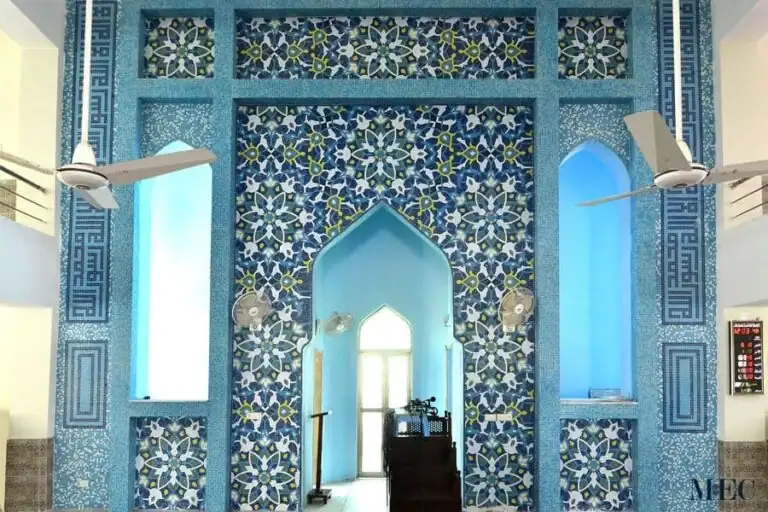
Here’s a modern manifestation of Islamic mosaic art made by one of the mosaic artists at MEC. The blues and greens are trademark colors in Islamic mosaic design. We used glass to create this archway.
We find strong proof of narrative-focused mosaics in animation-set decor like the mosaic flooring the genie whips up in the grand palace of Agrabah.
That mosaic could arguably represent a narration of destiny, magic, and opulence. These ancient, fictional, and contemporary art works represent the time-defying value of custom mosaic art pieces and how they remain a premium addition to any residential and commercial space to this day.
If you’re looking for a genie-style renovation, get in touch with one of our representatives today.
Commissioning a Narrative Mosaic: Where to Begin?
Mosaic-heavy walls can be a refreshing alternative to minimalistic interior design.
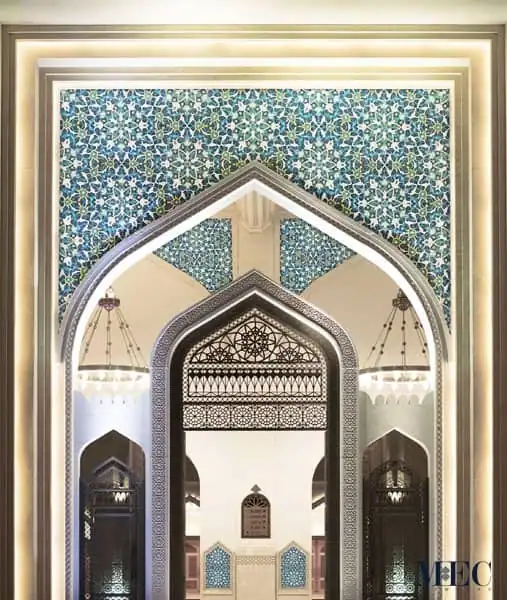
Many small-scale zellij mosaic art pieces have been commissioned to inter-continental design teams, their commissioners dazzled by the arabesque assembly of colorful glass and marble.
Everyone has a story to tell and mosaic art is a spectacular way to do it.
Why Mosaics Make Perfect Heirlooms
In a world full of mass-produced art, narrative mosaics stand out as timeless, durable, and deeply personal pieces. Unlike painted works, they can last for centuries, capturing stories that endure.
Here are some creative examples.
- Family Tree Panels: Illustrate generations using symbolic motifs, portraits, or initials in glass and marble.
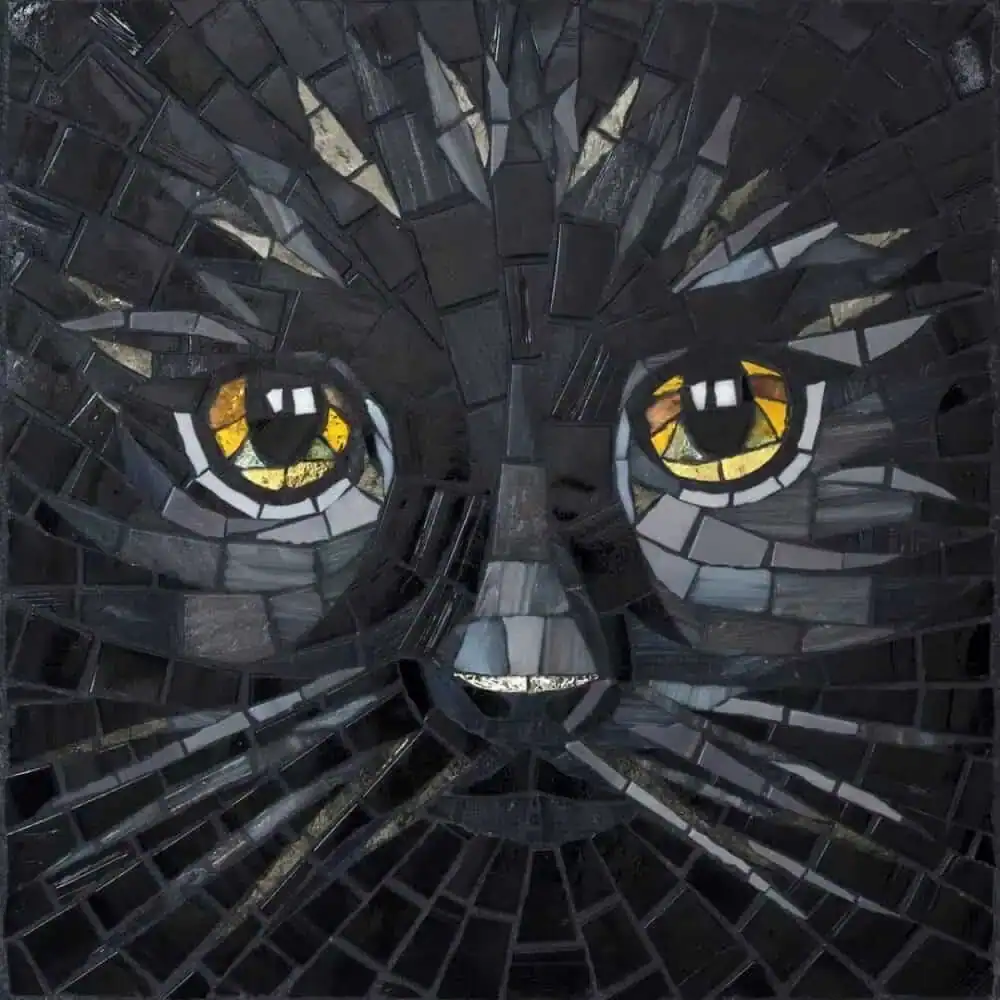
- Pet and Companion Tributes: Celebrate beloved animals with stylized or realistic depictions. Take a look at this black cat mosaic piece by MEC.
- Memory Domes: Create ceiling or dome mosaics depicting life stories, hobbies, or dreams in motion.
- Custom Storyboards: Sequential panels that tell a family story like a visual diary.
- Time Capsules in Tiles: Incorporate tiny objects, dates, or inscriptions into mosaics that can be “read” for generations.
- Interactive Floor Mosaics: Paths or stepping stones that mark family journeys, travels, or milestones.
With their durability and narrative depth, these mosaics transform memories into art meant to last for generations, creating truly unique family heirlooms.
Have a Story to Tell?
The multitude of colors, shapes, and texture allow narration to flow in mosaics in a way other mediums don’t. This is why mosaic tilework is used all over the world for storytelling.
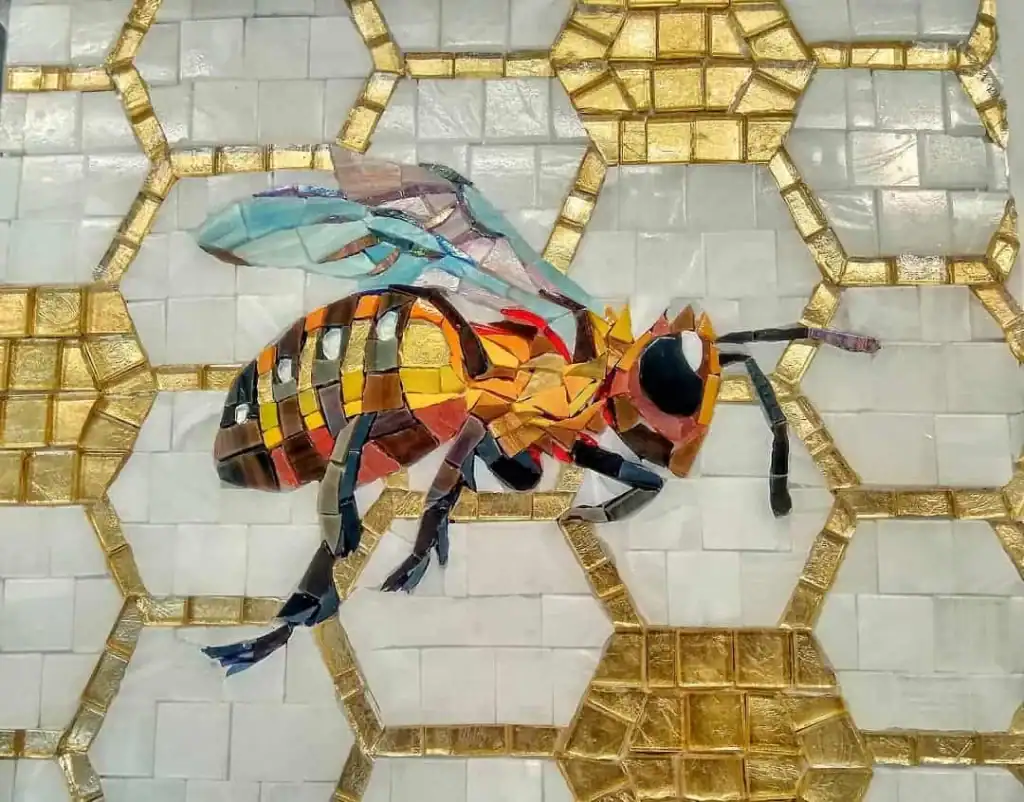
This is a hand-cut glass mosaic featuring a bee and honeycomb design, enriched with 24k Oro glass tiles. This can be a sweet addition to your baby’s nursery or playroom.
Modern design asserts a no personalization position, the absence of prints and vibrant palettes, and absolutely no handicrafts. But hand-cut mosaics can illuminate a space unlike any other decor item.
“In the case of not obeying the rules of design, something becomes incredibly personal. It becomes your own, and it becomes also something that nobody else shares because it’s your own eye.” — Robert Couturier
Mosaic artists know how to transform personal experiences into stunning mosaic wall mounts, murals, dazzling pool borders, and decorative panels that nail each client’s vision.
FAQs
Are narrative mosaics considered an investment for interior design?
Yes, their durability and artistic value make them lasting and often appreciating additions.
Are narrative mosaics only suitable for ceilings?
No. They can enhance walls, floors, and furniture as well, instructing visual flow, highlighting focal points, and including cultural or symbolic stories throughout a space.
What is a narrative mosaic?
It’s an art form with a long history, where tiles communicate stories through color, pattern, and design.
How long does it take to create a mosaic?
The timeline varies depending on size, complexity, and materials, but a detailed figure-centric mosaic can take anywhere from several weeks to a few months, as each tile is carefully placed to nail form, expression, and color nuances.
What materials are typically used in mosaics?
Designers most often use glass, stone, and ceramic tiles. Glass allows for luminous effects and precise color control, stone provides natural texture and durability, and ceramic offers versatility and ease of shaping. Materials are selected based on the factors like desired aesthetic, longevity, and how they interact with light to bring the narrative to life.
Can traditional Islamic mosaic designs be used in modern homes?
Yes. Designers today adapt zellij and arabesque patterns using glass or stone tiles to create interior features like walls, ceilings, and floors. These adaptations preserve the mosaic’s historical significance while adding elegance to contemporary spaces.
What do the colors in Islamic mosaics symbolize?
Traditional Islamic mosaics frequently use gold, green, and blue to symbolize divine presence, the heavens, and tranquility. These colors, combined with reflective materials like glazed tiles, stone, and glass, enhance the spiritual narrative.