
Have you ever found yourself looking at the dragon-themed wall mosaics that show up in so many pan-Asian restaurants? There’s deep historical context to these artworks, coming from Europe’s early, stylized visions of China and East Asia.
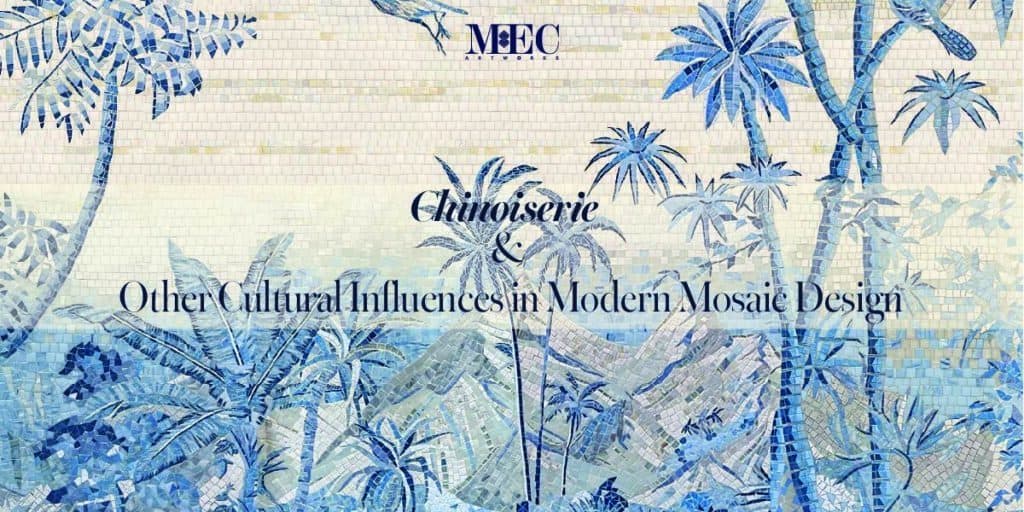
This is part of a design tradition known as Chinoiserie, a liberal take on Chinese and Asian culture. It’s also a celebrated design practice at the MEC Artworks studio.
Table of Contents
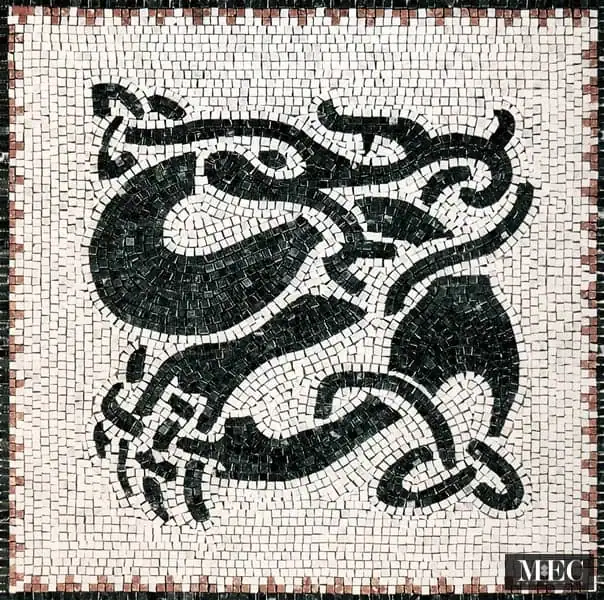
These spirited representations have since found their footing in modern interior design. The flying dragons, exaggerated nature profiles, and oriental color schemes continue to enchant design enthusiasts.
There are varied expressions of chinoiserie art, but each variation shares the same artful imbalance and a dramatisation of its subjects. This design tradition is unique as it takes a detour from realism and offers an imaginative interpretation of Chinese culture.

Here’s a chinoiserie style wall mural featuring a dragon at a restaurant in Istanbul.
Key Features and Characteristics
Here are some noticeable traits of chinoiserie art.
- Stylized flora and fauna like peonies, cherry blossoms, cranes, exotic birds
- Dreamlike Asian terrain with pagodas, bridges, and winding rivers
- Use of rich colors like blues, reds, greens, and gold accents
- Mythical creatures such as dragons and phoenixes
- Porcelain-inspired motifs and lacquered surfaces
- Whimsical, fantasy-driven scenes rather than realistic depictions
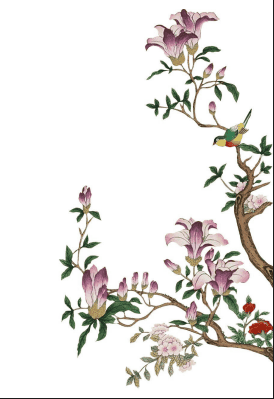
The stylized flora shown below is an example of Chinoiserie art. These are concept designs made by our designers, staying true to the tradition.
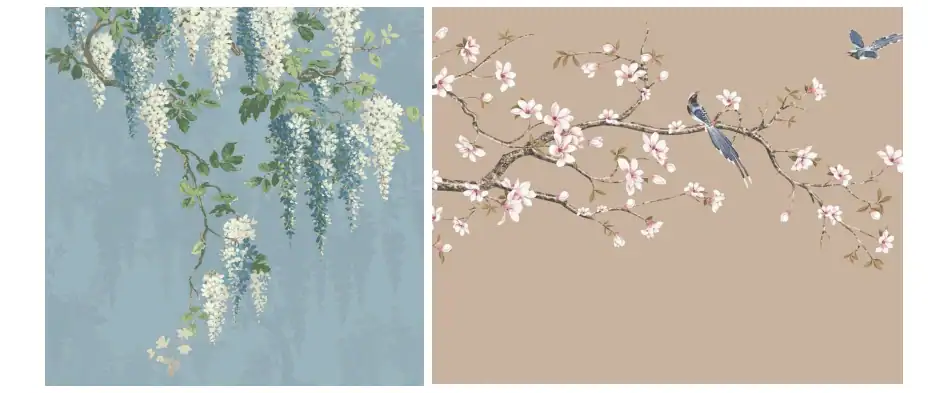
The bird in flight and the branched-out flowering tree perfectly capture the essence of Chinoiserie art. The color palette is soothing and gentle, offering viewers a sense of relief in this art piece.
Birds are often depicted in mosaic art, with chinoiserie and non-chinoiserie design principles. Here’s a list of inspiration if you want to learn more.
How are Chinoiserie Mosaics Made?
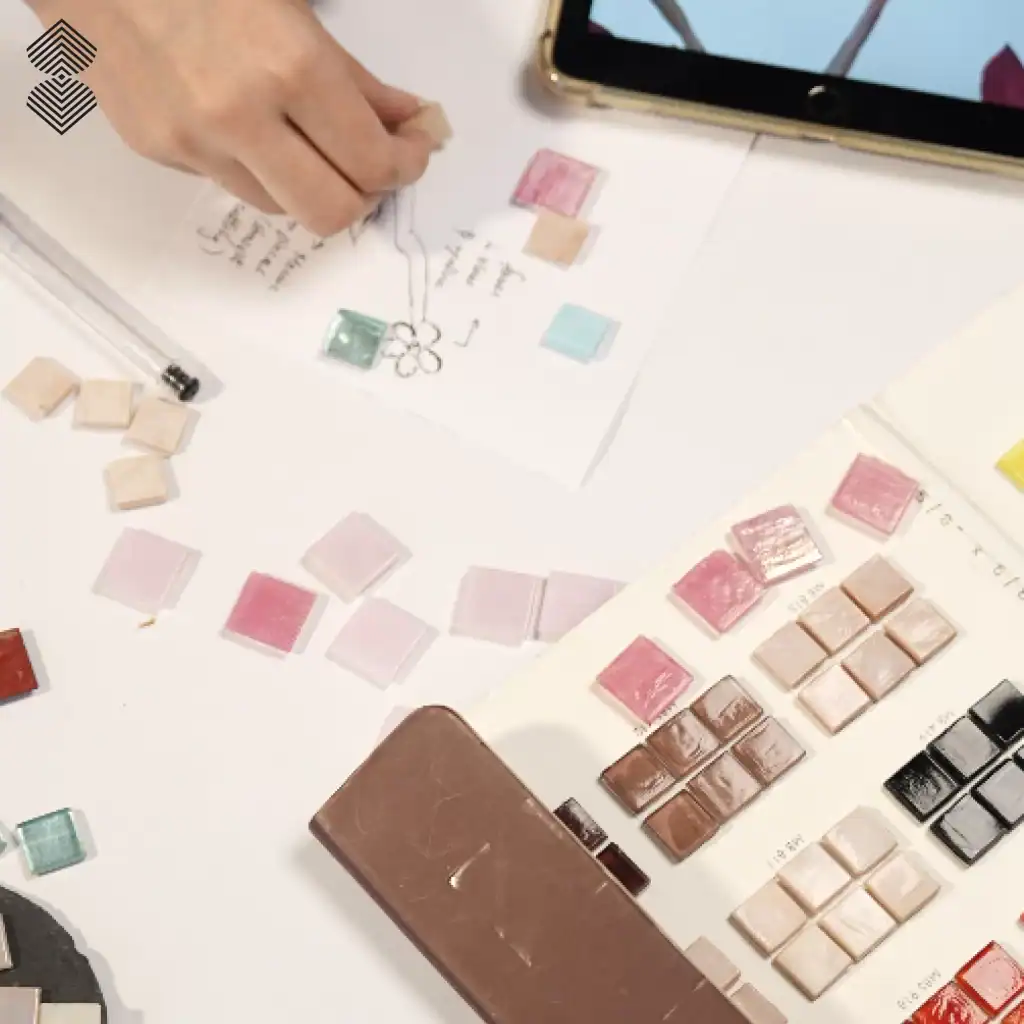
To translate these chinoiserie paintings into marble and glass mosaics, our artisans first consult with the client to discuss in detail the color strategy, style preferences, and customization options. This is a hands-on process, where the client co-creates the design with the informed opinions of our artisans.
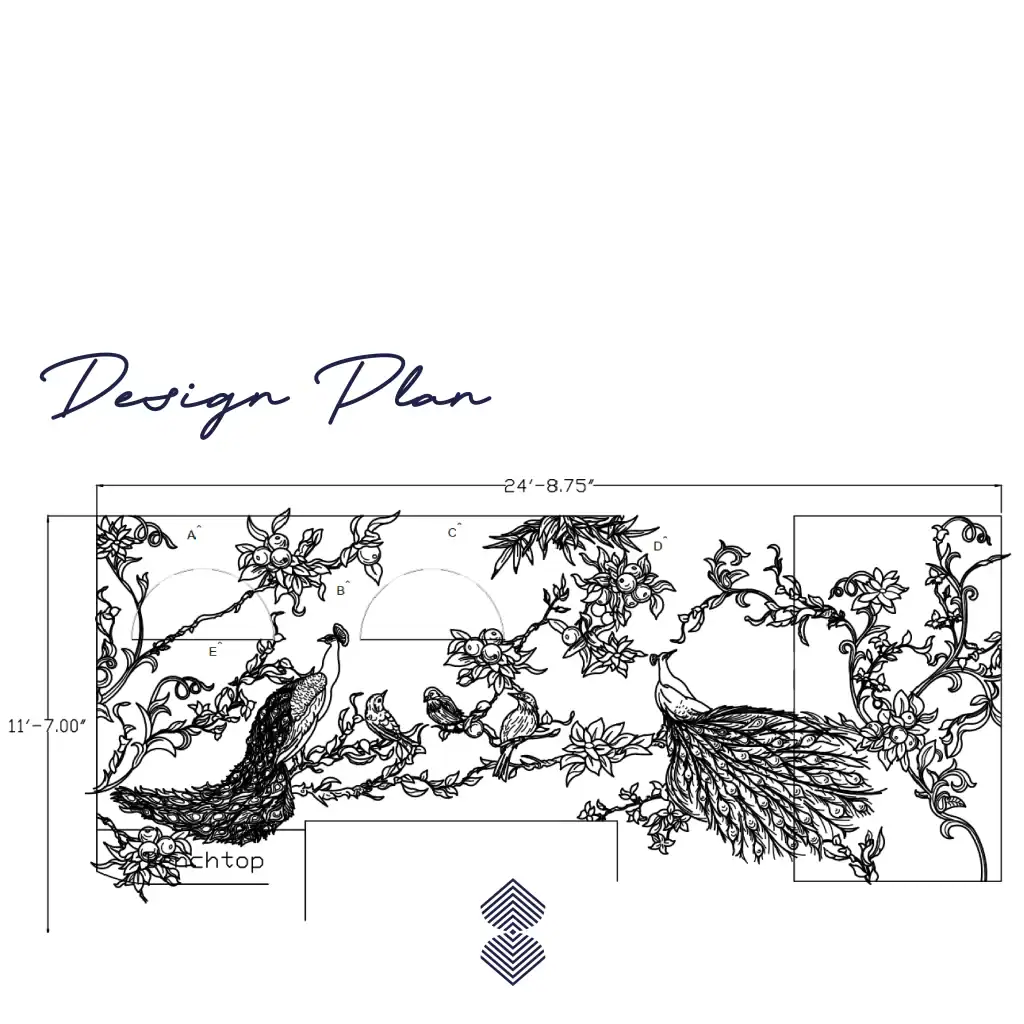
Here’s what a design plan looks like. The client offers their feedback, our designers make the required revisions, and then we move on to the color strategy.
This is often a collaborative process between the commissioner and our designers, who make sure to perfect every detail and to nail the execution. Chinoiserie comes with a color palette of its own but some contemporary villa designs take complete creative liberty with it and use unconventional colors as well.
Here’s how we approach mosaic making at MEC:
Mosaics: The Perfect Medium for Chinoiserie
Some of the earliest mosaic-like art, found in Greece thousands of years ago, were made from shellfish dyes, oceanic debris, and lime mortar. The glossy, dazzling effect central to this medium has since been enhanced with more reflective materials and a wider, deeper color palette.
This morphosis has allowed many different design traditions to be translated onto mosaics. The narrative-rich nature of the medium is why mosaic art is arguably one of the best formats for artistic translation.
Here’s one of our autumnal chinoiserie design concepts ready to be translated on a handcut mosaic artwork.
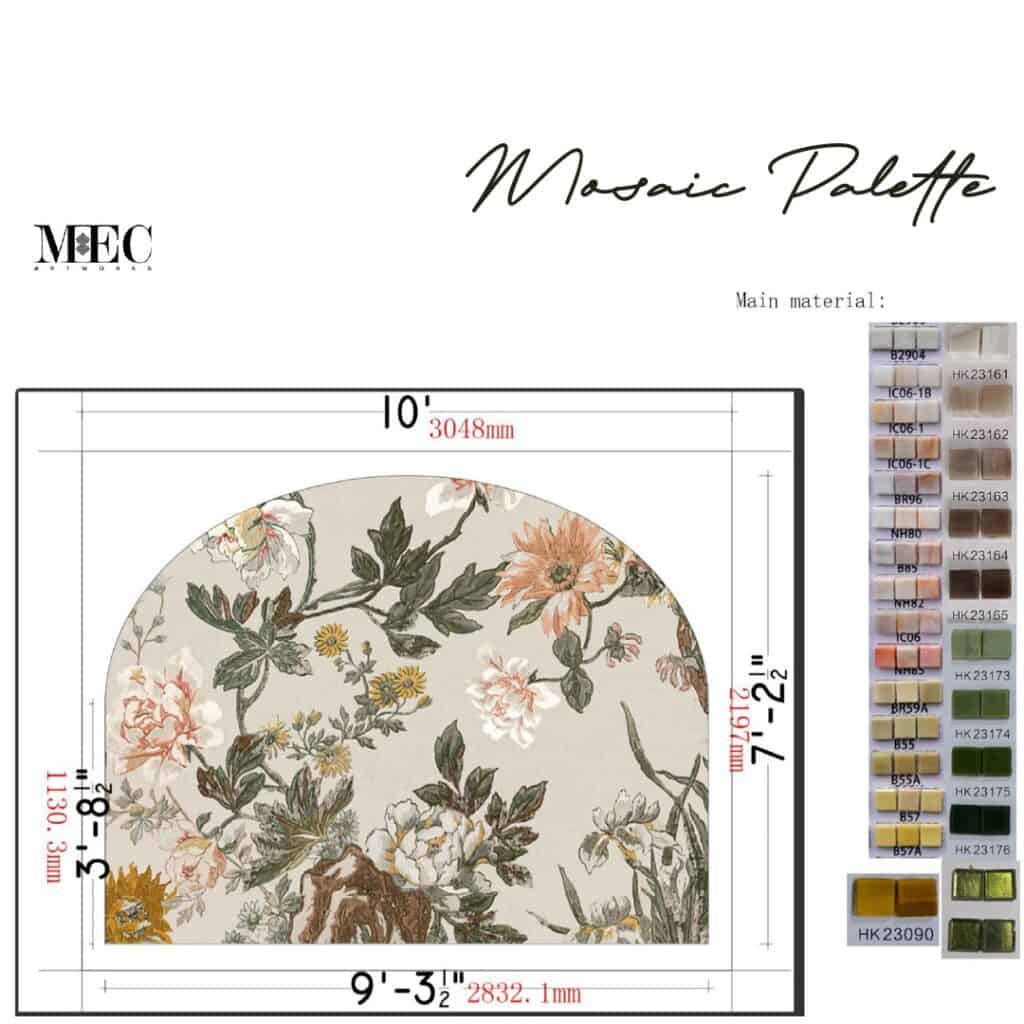
Chinoiserie benefits from mosaic representation because it enhances the whimsical themes of the design tradition through iridescent glass tesserae and playful compositional arrangements.
Where Mosaic Materials Come From, and the Cultural Stories They Carry?
In Chinoiserie, cobalt blue has been the flagship shade. It has existed for centuries and has been used to create these larger than life paintings and mosaics. The early French designers who first envisioned this type of art did get the color scheme right.
For centuries, cobalt blue pigments were used in China, with much of the material historically imported from Persia (modern-day Iran) and India. In 2025, colorants aren’t sourced directly by mosaic makers, the colored Murano glass is imported from Italy.
What Are Some Common Colors in Chinoiserie Art?
- Cobalt Blue – a deep, vibrant blue; often used in porcelain-inspired motifs, teacup designs, and architectural details.
- Imperial Red or Vermilion – bold, warm red; communicates luck and vitality.
- Jade Green – soft to rich green; nature-specific color, stylized foliage, and East Asian gardens.
- Gold or Gilded Accents – metallic highlights; represents luxury, extravagance, and decorative drama.
- Cream / Ivory / White – base tones; used in porcelain, lacquer, and backgrounds to even out brighter colors.
- Soft Pink / Rose – delicate floral motifs, peonies, and blossoms; adds elegance and romanticism.
How is Chinoiserie Used in Interior Design?
Most industry experts would agree that no pan-Asian restaurant earns its five-star reputation without stellar interior design, often chinoiserie-centric. Think of wall murals with fantasy characters and rich color schemes that instruct the diner’s eye and set the mood.
The creative team at our studio works closely with each client, ensuring the color palette chosen reflects the client’s preferences while staying true to the theme of the design.
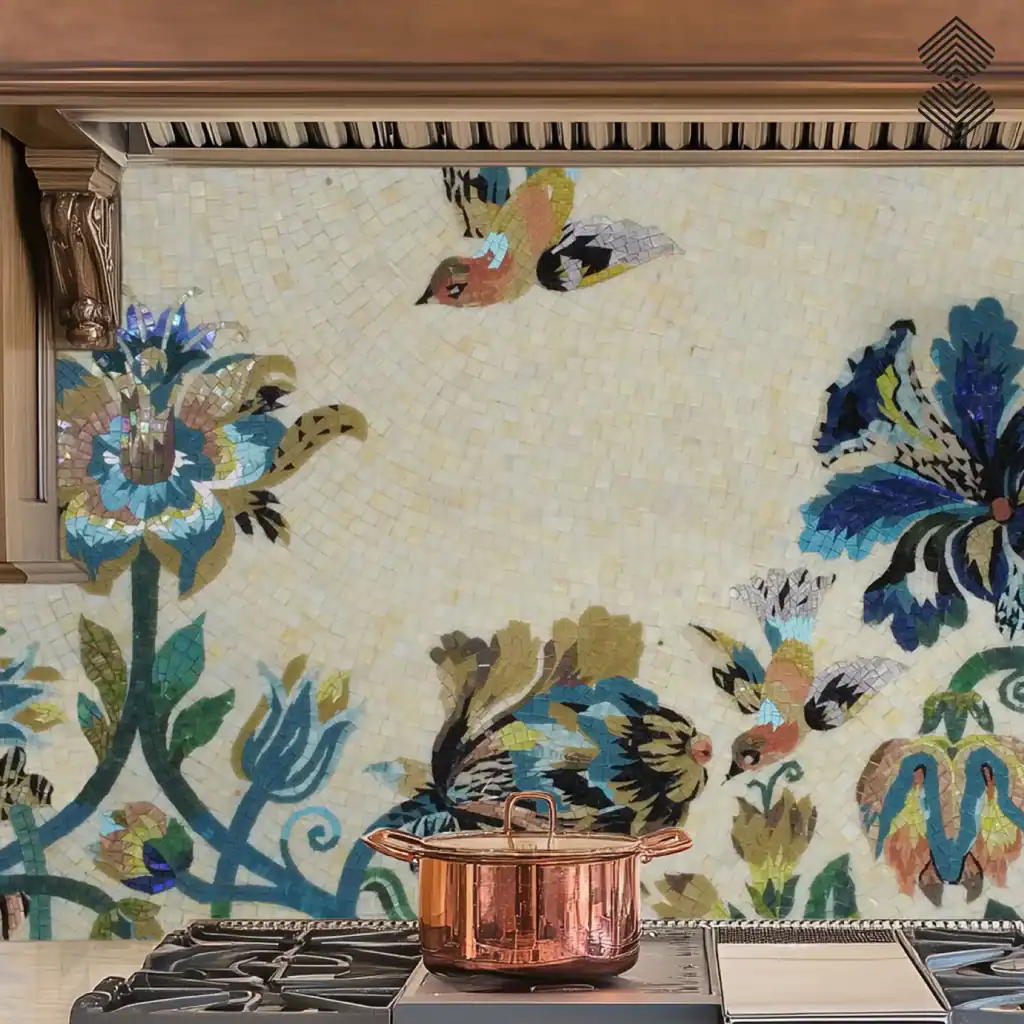
Chinoiserie can be translated across many mediums like painting, digital prints, and mosaics. In terms of design demand, Chinoiserie has remained a top contender and will continue to as we enter 2026.
Its commercial use cases are plenty, such as Michelin-star restaurants, boutique hotels, and celebrity Los Angeles mansions. There’s a catalog of motifs to explore, from exotic birds to oriental floral arrangements, you can even commission a mosaic with a personal touch to it.
There are also understated expressions of this type of mosaic art, most commonly found in homely interiors. Chinoiserie mosaics gives homeowners an opportunity to reinforce culture, add vibrancy in their homes, and to celebrate a centuries-old design tradition.
You can find some chinoiserie designs in ourkitchen backsplash mosaic catalog.
Chinoiserie art ranges from gaudy to subtle. If we look at more subtle options, there are depictions of Asian-specific birds, trees, and floral arrangements in this. Take this Sage Green Bird Mural for example.
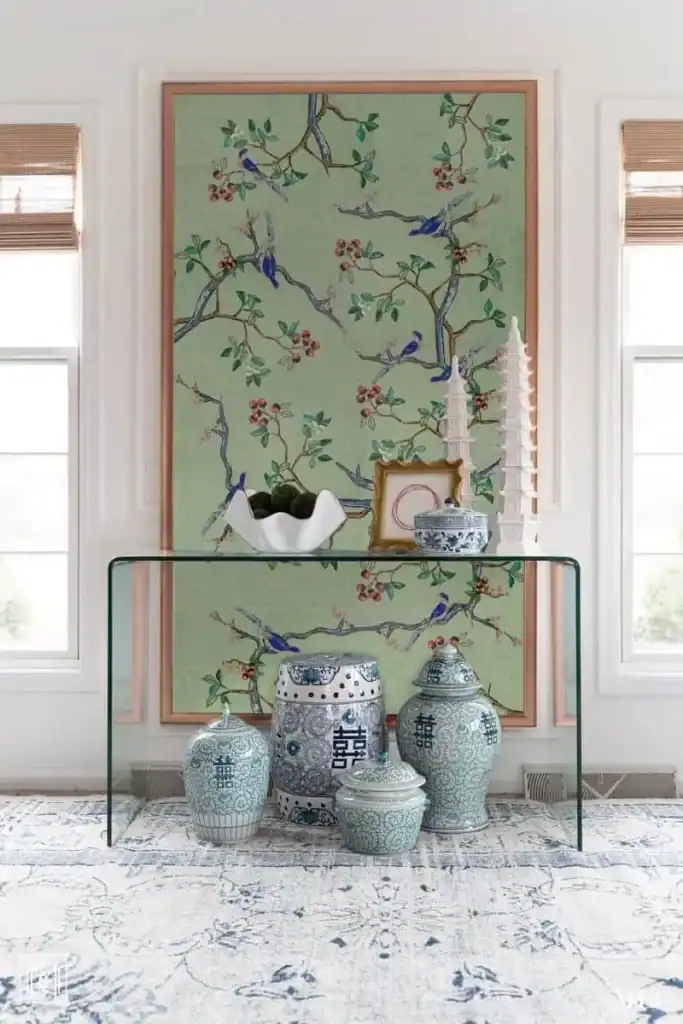
This type of design has an understated and subtle look to it when compared with the print fiasco that has taken over interiors in recent times. MEC artisans know how to do print design right, without it feeling too overwhelming to the eye.
If we look at more stylized nature profiles, we find Chinese culture influences. This mosaic shows white plum blossoms, specific to the Asian region. The blunt branches show an exaggerated look, the colors of choice are also chinese-centric.
What Are Nature-Inspired Chinoiserie Mosaics?
Nature-based chinoiserie mosaics use elements of nature such as waterbodies, flowers, birds, and terrains specific to Asia. There are versatile mosaics to choose from, traditional or contemporary, allowing clients to select what catches their eye and resonates with their aesthetic.
These types of mosaics tend to fit perfectly in serene spaces. Spas and galleries for commercial uses and living areas for residential ones.
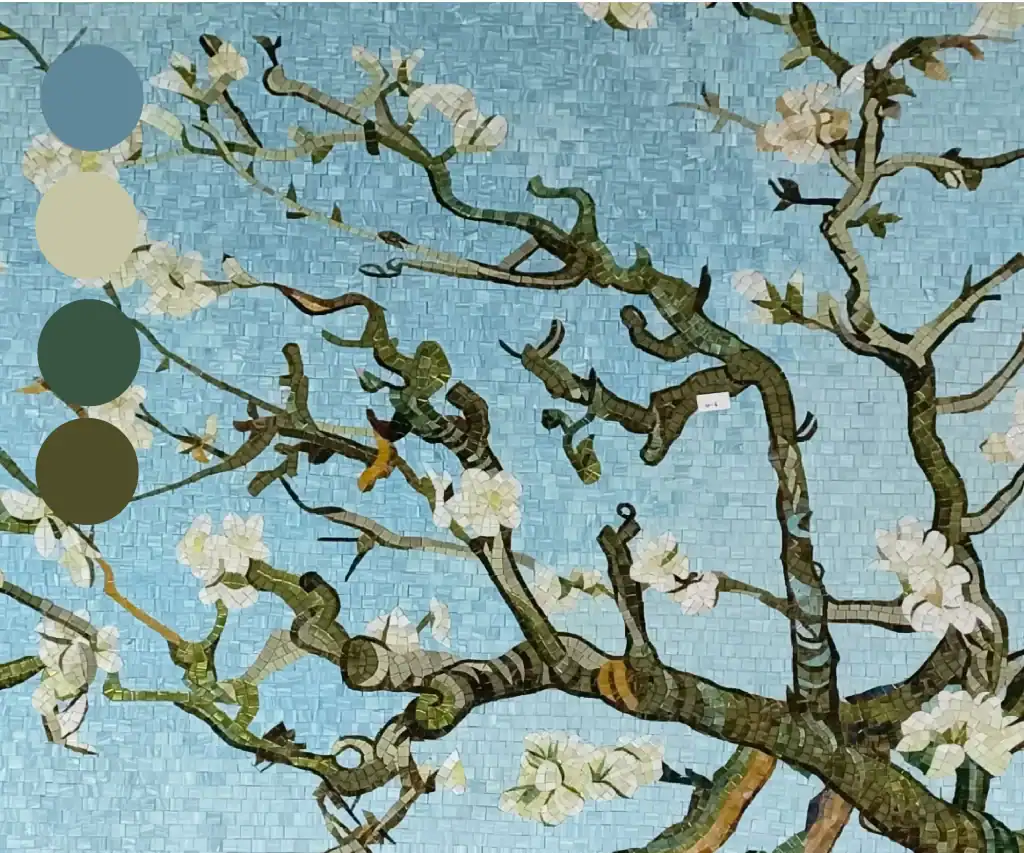
This is a design inspiration for one of our clients who requested a chinoiserie-style mosaic following a custom color palette, our design time executed the concept design perfectly. The colors complement each other beautifully, and reinforce harmony.
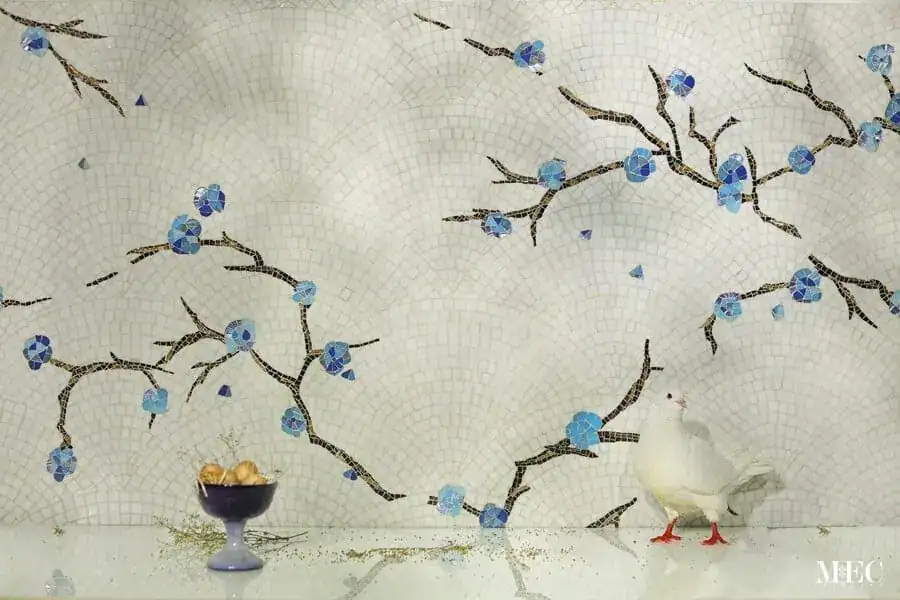
The following is a recurring color combination that we observe in chinoiserie art, blue and white.
The floral placement on this one gives a clean, polished look to the mosaic.
Broader Asian Influences in Mosaic Design
In mosaic design, Asian influence extends beyond chinoiserie. If we look at Japanese mosaics, we find deep cultural context. For example, the wabi-sabi emblem, bamboo textures, and pink sakuras all represent their place of origin.
There are commonalities but Asian culture is incredibly versatile. There’s a lot more than what meets the eye. These cultural influences have each found their own place in interior design.
To take an example, Jaali screens and artworks are unique to India and Pakistan. Mosaic artists often replicate the specific lattice geometry of jaalis using marble work..
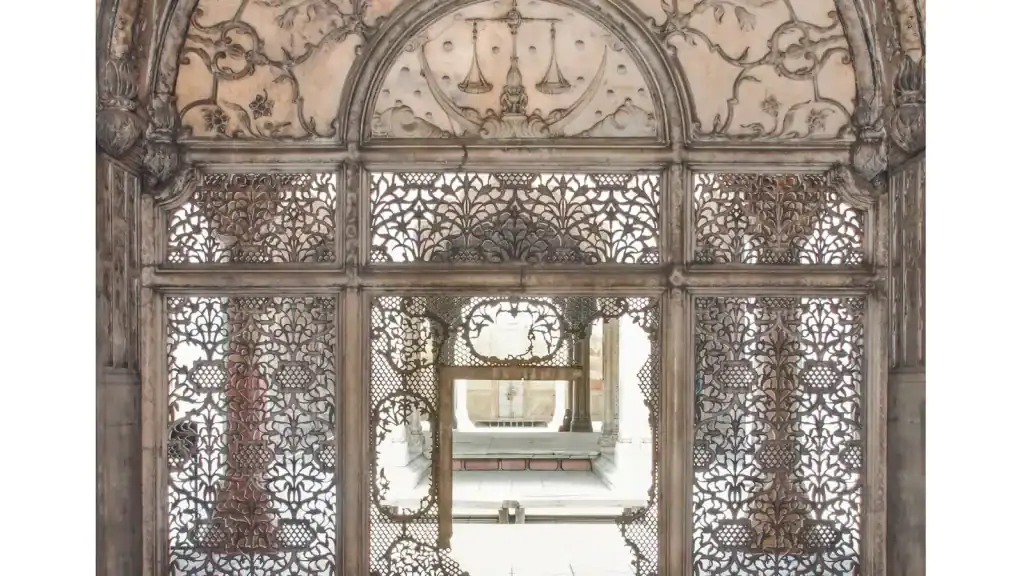
This image showcases exquisite Jaali work, as featured in Architectural Digest. This type of work can be found in mosaics as well. Like chinoiserie, this type of art is subject to translation across various mediums.
Dating from the Indo-Islamic times, Jaal screens are often used in South Asian homes and public places to add a sense of familiarity and mystique. These mosaic artworks have generated fanfare over the centuries and are highly sought after for their commercial and cultural value. There are both traditional and contemporary versions of this ancient design with a wide range of use cases.
These can be found in mausoleum entryways, mughal-time forts, and princely estates. In the present day, you can find similar artwork at the MEC studio where we translate these designs onto marble mosaics. Here’s one of our vintage-style pieces.
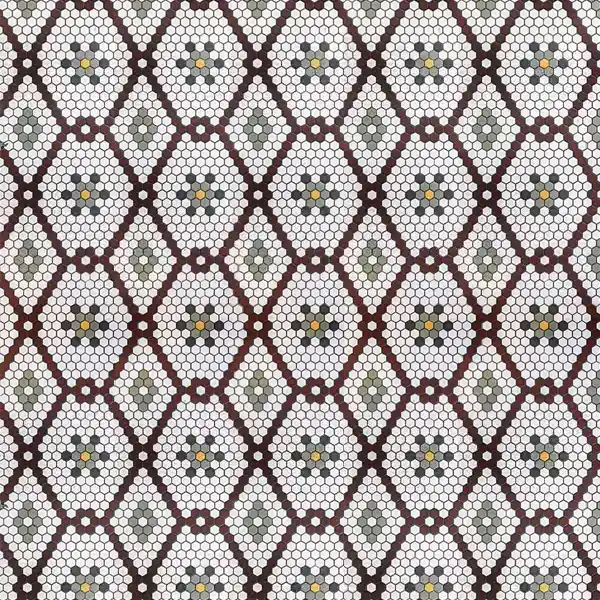
You can browse through some marble designs here. An entire catalog of mosaics awaits.
If we redirect our focus to other cultural influences in modern mosaic design, we find many Japanese influenced art. Here is a Japanese mosaic featuring a Sakura tree in full bloom.
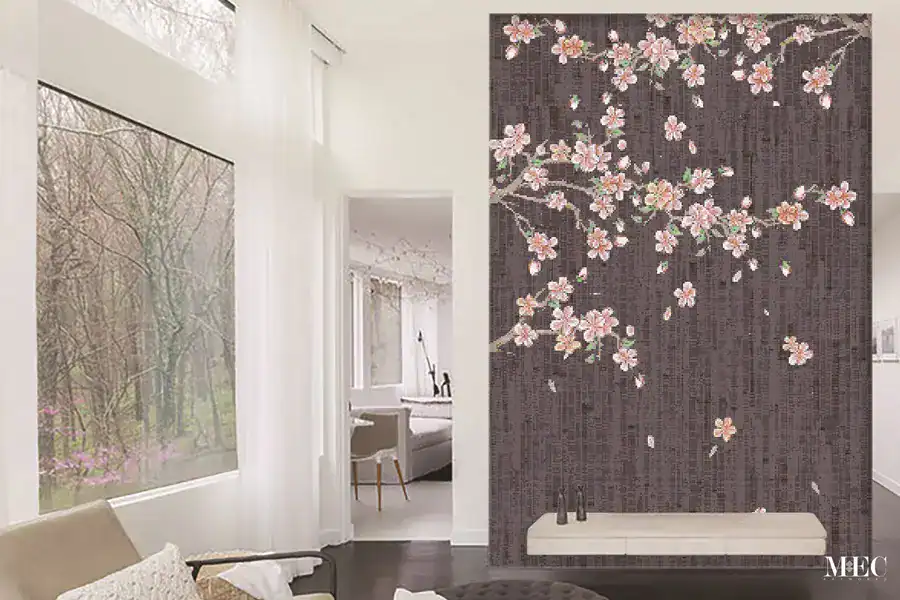
This realistic representation of East Asian culture is more delicate as compared to maximalist designs. The cherry blossom tree is beloved globally and native to Japan. This illustrates how culture and art go hand in hand in art design.
Fusion Chinoiserie Mosaics
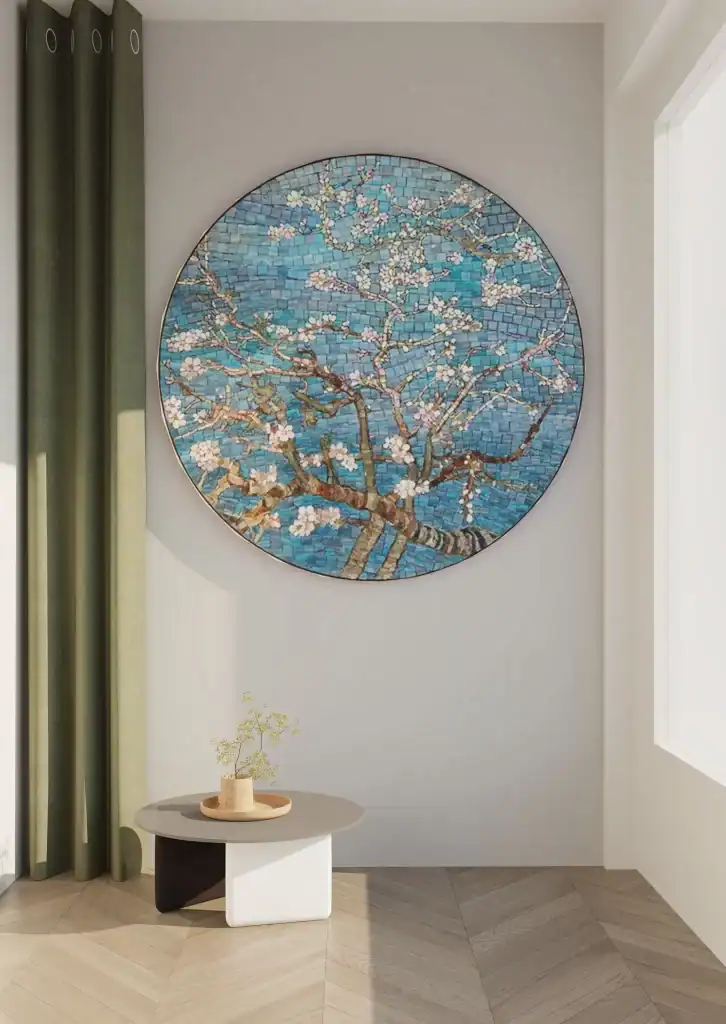
What exactly are fusion chinoiserie mosaics? These are chinoiserie designs with a modern/global twist. The origins of this design tradition are already rooted in the fusion of the East and West.
The following mosaic is an example of a fusion chinoiserie mosaic. The art itself pays homage to the tradition, but its assemblage and medium are more contemporary. An artwork like this can add textural depth to any interior.
Why Chinoiserie and Asian Influences Matter in Modern Interiors?
There’s a dire need for more cultural specific design trends as we edge into 2026. Modern interiors need to be revitalized in terms of artwork and mosaics seem to be the ideal way to go about it.
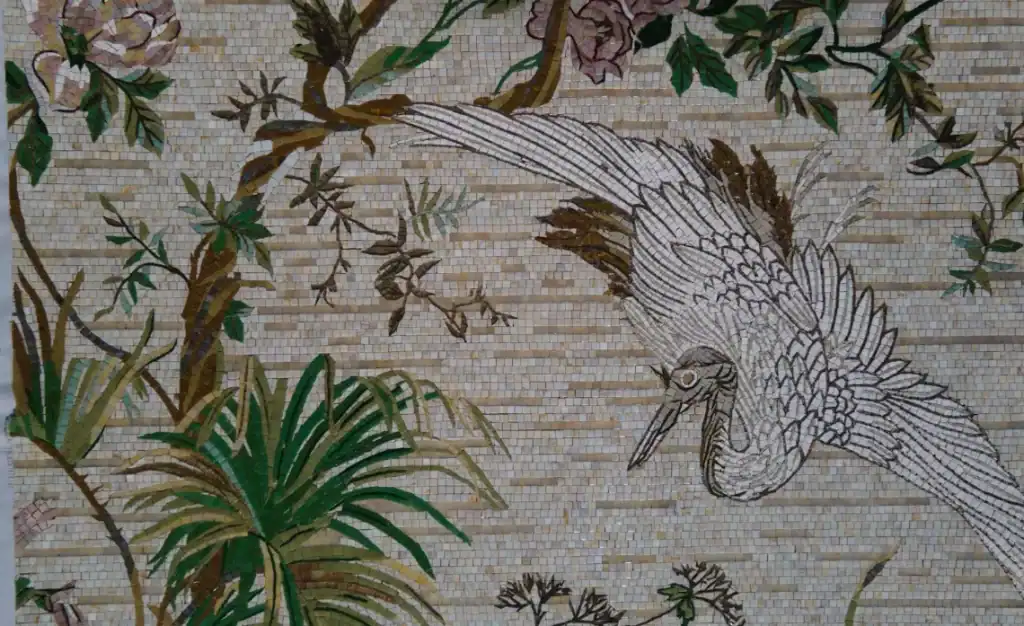
The Heron bird depicted below is specific to the East Asian region. Its stylized re-imagining is an example of Chinoiserie design. Mosaics like this one can conjure vivid images of the exotic East. MEC Artworks translates this imagery beautifully into a world-class mosaic.
Modern Chinoiserie adapts beautifully to smaller spaces. Using accent walls, decorative mosaics, or furniture with subtle Asian motifs can bring cultural depth without overwhelming the room, making interiors feel curated and beautiful.
Chinoiserie Mosaics: How to Commission a Piece?
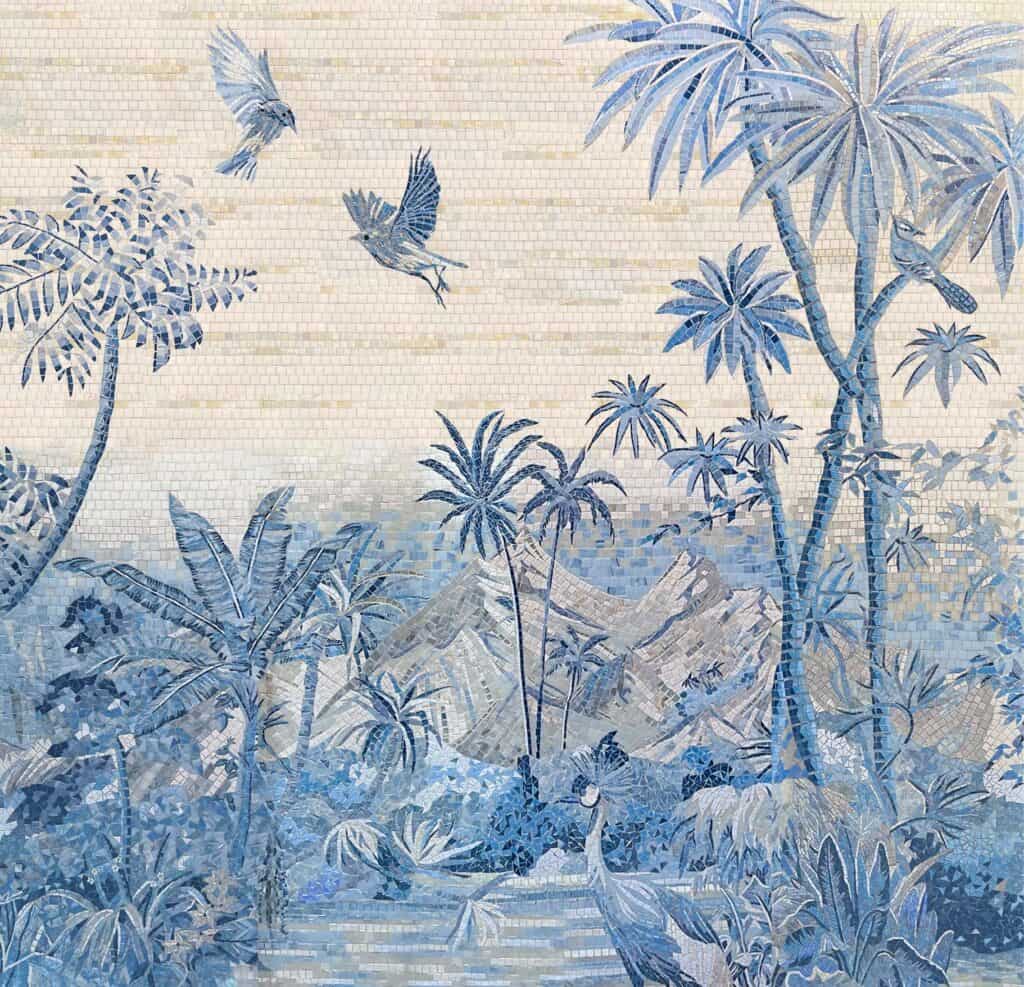
You can bring a piece of East Asia to your home or business with our detailed chinoiserie-themed mosaics. These can serve as luxury art pieces that will leave visitors spell bound.
Why is mosaic art a popular medium for cross-cultural design?
Mosaic art allows for detailed pattern work, rich color blending, and textural depth, making it ideal for translating diverse cultural motifs into visual art. It’s a versatile medium that bridges historical inspiration with modern day creativity.
Q: How can beginners incorporate Chinoiserie elements into DIY mosaic projects or home decor?
You can add Chinoiserie to DIY mosaics or home decor by using simple motifs like birds, flowers, or pagodas, and sticking to soft colors like blues, reds, and golds for a classic look.
Q. How Long has Chinoiserie Been Around?
Chinoiserie has been around for about 400 years, starting in the 1600s in Europe, when European artists and designers started creating decorations inspired by Chinese art and culture.
Q: Why are geometric lattices popular in modern interiors?
They add texture, rhythm, and elegance to spaces, and can be adapted to both traditional and contemporary styles
Q. What distinguishes East Asian mosaic styles from South Asian ones?
East Asian mosaics favor minimalism and nature-based motifs, while South Asian mosaics lean toward vibrant colors, dense ornamentation, and complex geometric patterns.
Q: What kinds of frames or surfaces can mosaics be displayed on?
Mosaics can be placed on walls, floors, tables, mirrors, trays, and even outdoor spaces like gardens. Frames can be wood, metal, or built directly into the surface, depending on the design.
Q: How can Asian-inspired elements enhance contemporary homes?
Asian influences, including Chinoiserie motifs, introduce balance, harmony, and a connection to nature. Features like bamboo, lotus patterns, and heron imagery can transform minimalist spaces into serene, sophisticated interiors.
Q. How do I commission a Chinoiserie mosaic?
To commission a mosaic, first choose the design, size, and location. Then contact an artist or studio, discuss materials and budget, and approve a sketch before the work begins.
Q. Can I suggest my own ideas for the mosaic?
Yes! MEC artists welcome your ideas. You can mix colors, patterns, or themes to create a truly unique piece.